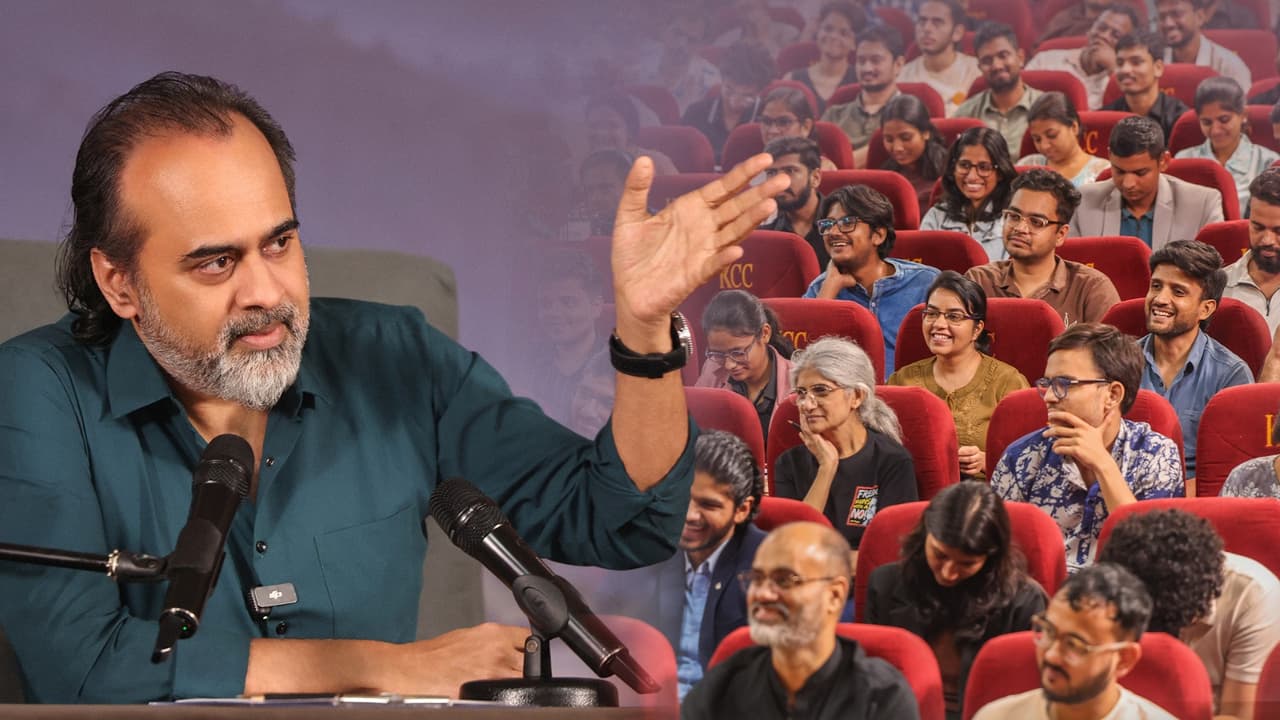
Many of us interrupt, rush to make our point, or change the topic when a conversation comes too close. We call it a lack of patience or discipline. But impatience in a conversation is often fear: when what we hold within is borrowed belief, every question could shatter it. The same confusion makes us take our instincts and feelings as ourselves, though they are only the body’s chemistry. If we looked honestly at what we hold, would a question still feel like an attack?




Acharya Prashant: Nothing purifies you more than this and nothing is more difficult to remember and accept than this. It is a very strange method but this is the only method. All other methods are just humbug. What is the method towards purity?
Questioner: I heard you say that when people say, put the ego aside, don’t pay any attention. I thought maybe I misunderstood. I thought the practice was to see the falseness of my actions — I say one thing; I do something different, and, in that way, reduce the ego,

Speaker: The real meaning of deceptive behaviour or false behaviour is that it is arising not from a pure mind but from a conditioned mind. Now, from a conditioned mind, whatever behaviour arises, even if it is morally sound, it deserves to be called a fake behaviour.

Question: Acharya Ji, Pranaam! I am damaging my future with my own hands.
Revenge is a mistake built upon another mistake. The first mistake was, “He took it from me—my peace, my pride, my respectability.” That was the first mistake to think that way. And the second mistake is, “I can get peace back by snatching it away from him.”

There is really no pleasure deeper than not getting disturbed when the entire world is conspiring to disturb you. This deepest pleasure is called joy.


Questioner (Q): Acharya Ji, how to remain conscious of my actions when hormonal imbalance overpowers my ability to opt for conscious behavior over compulsive behavior? And since it happens only at certain intervals, I am actually conscious of the facts. I don't know if that is sufficient or whether anything…

Each of us deserves to be the highest that he can be. Each of us deserves to be liberated from our mean concept of ourselves. That alone is the definition of care. If you care for someone, then don’t let them remain what they are. You get this?
Loneliness and aloneness are not so much about the other; they are about the relationship you have with yourself. If you have been living a life that your best self, that your internal honesty cannot approve of, then you will be very lonely. Your relationship with yourself would be fraught


People are entitled to comment on your speech, on your looks, on your clothes. But when it comes to your deep, deep value, nobody else should ever be judging you. Only you can be your own judge. Be your own good judge, strict judge, and then you will not be


Questioner (Q): My question is related to criticism. In the corporate world, we usually hear that we need to take criticism positively, healthy criticism that is. But there could be people around me who are jealous of me and criticize me because of their vested interests. So, how do I

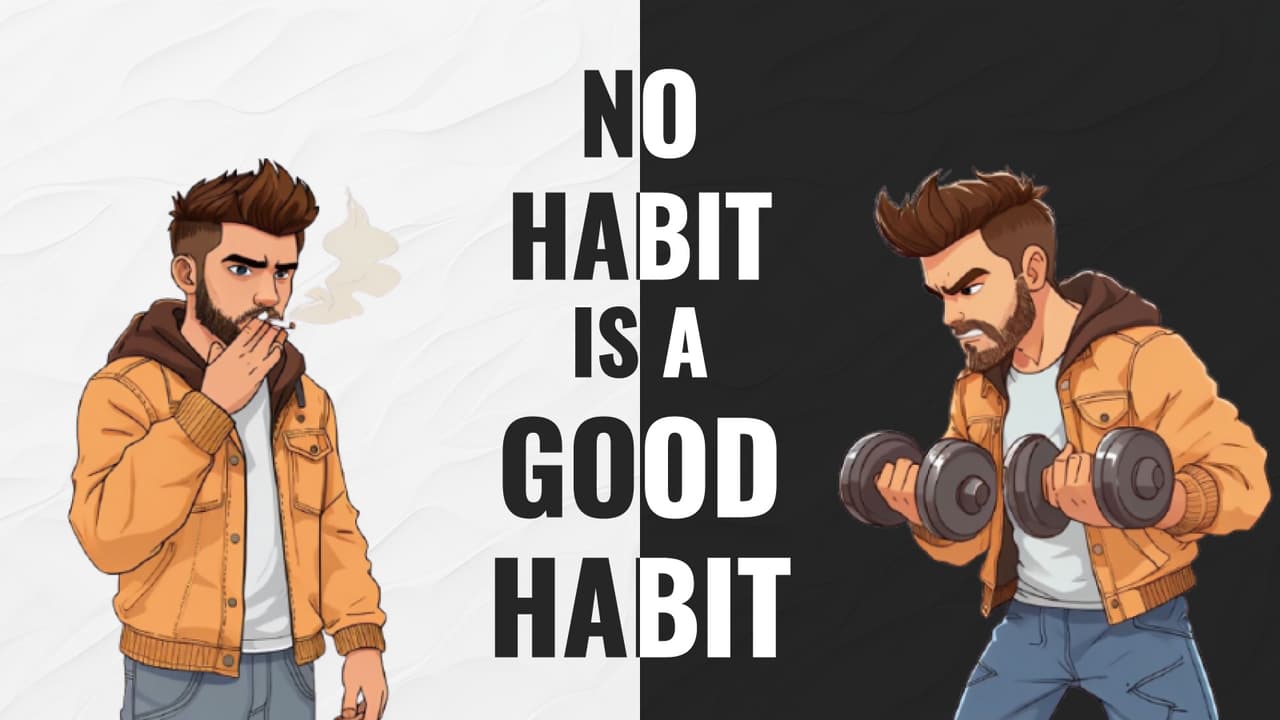
In habit, there is no decision-making involved, right? You just do it. So, habit is not the problem. The problem is that we are habituated to the wrong things. Habits should be where there is really only one right decision possible. In all those matters be fully habituated.

Questioner (Q): Acharya Ji, my hormonal imbalance overpowers my ability to continue with conscious behaviour and forces me to continue with compulsive behaviour. How to be more conscious of my actions?



Yes, we are animals. We are animals, and animals can get extremely violent if they discover their mates being stolen away.
There was one board I once read. It said, “How to be cautious of dogs?” It particularly warned against disturbing dogs on two or three occasions. One, when they…

Question:I am a Maths teacher and I feel like I am forcing the students to learn something that they probably don’t choose to learn. Also, I feel that should I just give away this identity of a teacher because I have a feeling that this doesn’t suit me and



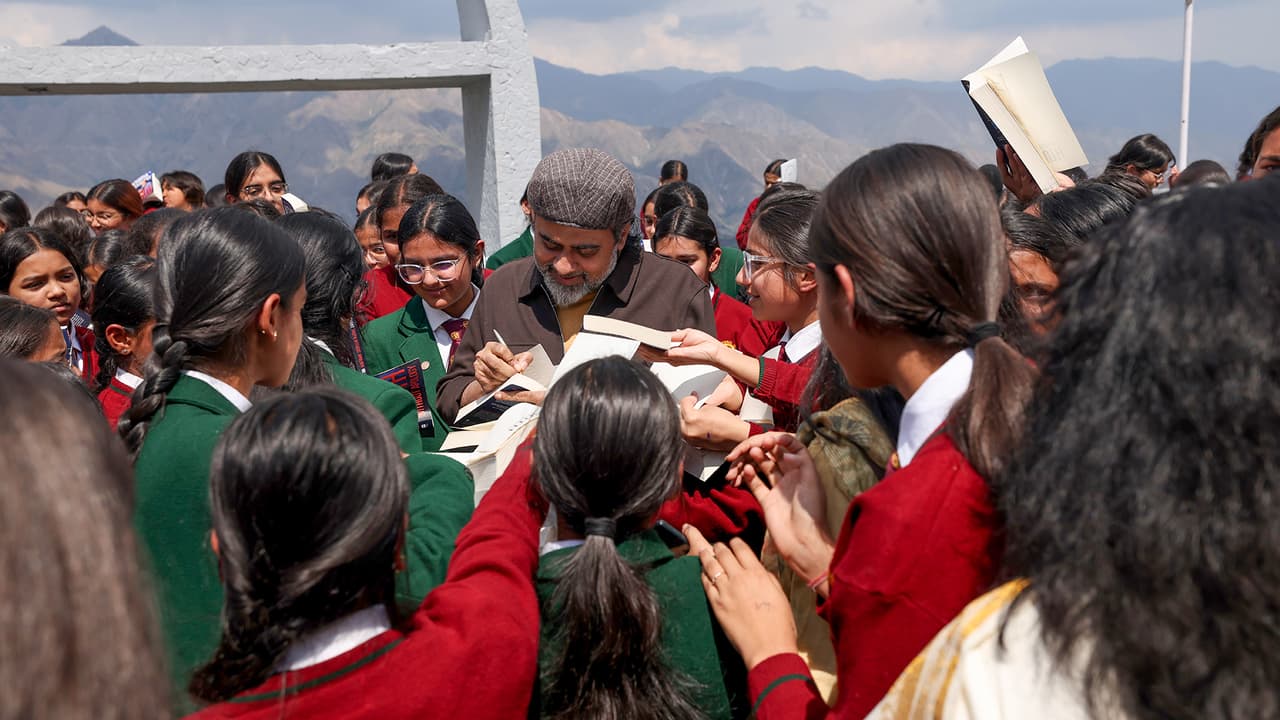
Many of us promise our parents high marks, and when the result falls short, the guilt can feel heavier than the exam itself. But no one controls results; they depend on far too many things outside us. What is in our hands is our intent, our effort and our honesty with what we study. The Bhagavad Gita says the same: our right is to action alone, never to its fruit. What if the only promise we made was to study honestly and with love?

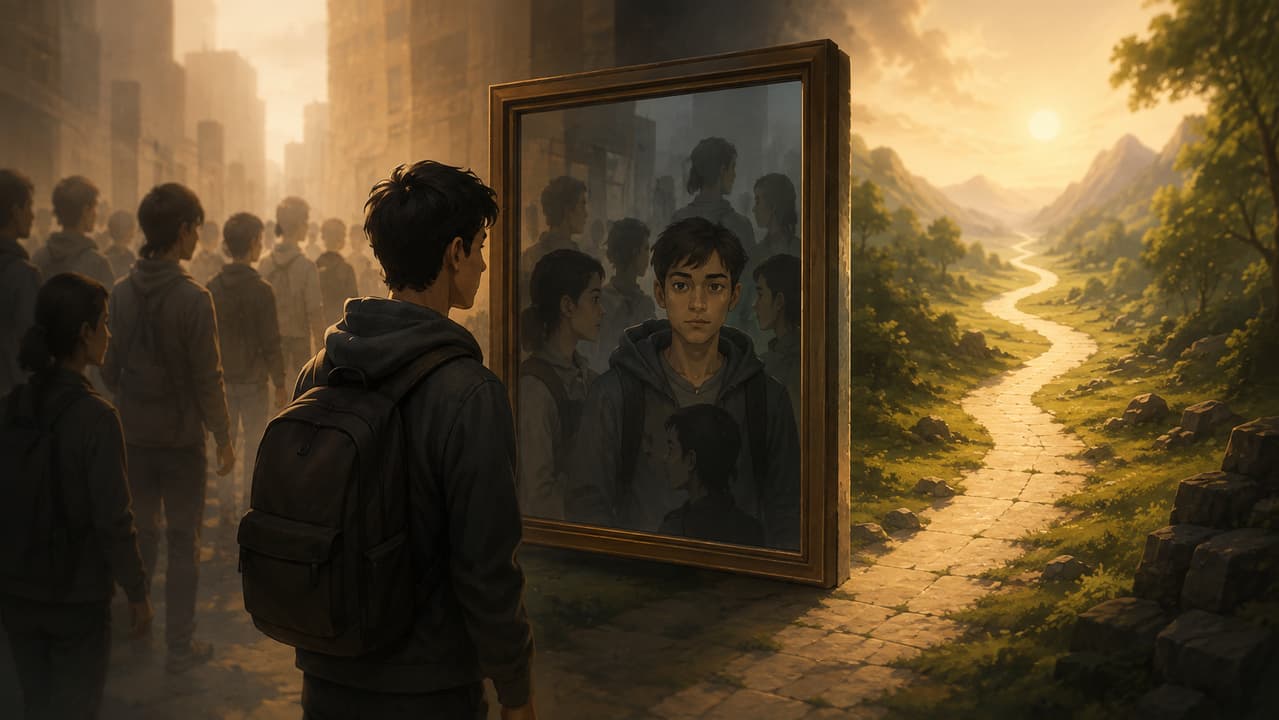

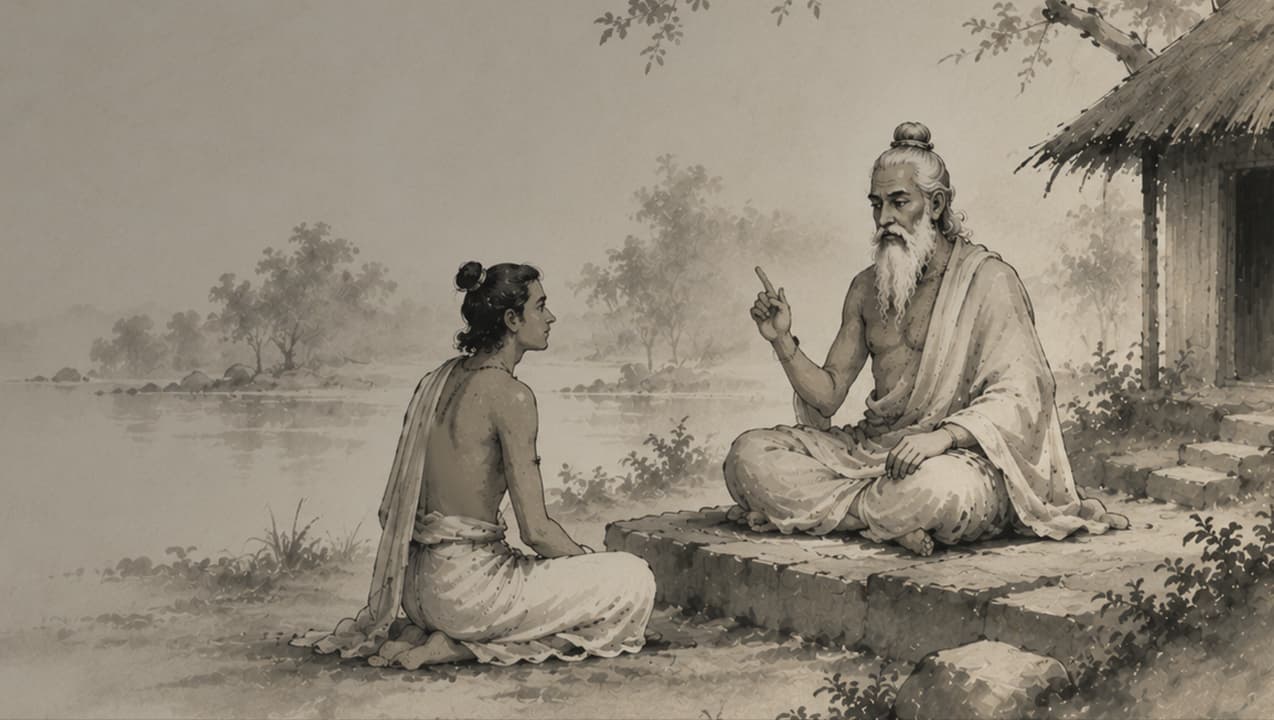


Superhero films appeal to our desire to escape inner inadequacy through external power. The fantasy of an ordinary, fearful person becoming extraordinary reinforces the ego’s belief that more strength, money, possessions, or status will bring happiness. Consumerism follows the same pattern, endlessly adding objects to fill an inner void. Real freedom does not come from becoming more powerful or acquiring more, but from honestly seeing and understanding the ego that feels incomplete.


Spirituality does not replace the fear of ghosts with belief in God. It asks us to question the mind that creates both fear and belief. Ghosts, gods, and stories can all become projections of imagination. The spiritual path begins by dropping assumptions, investigating “Who am I?” and understanding the source of suffering. With attention, right knowledge, and self-inquiry, fear loses its power and one becomes inwardly free.


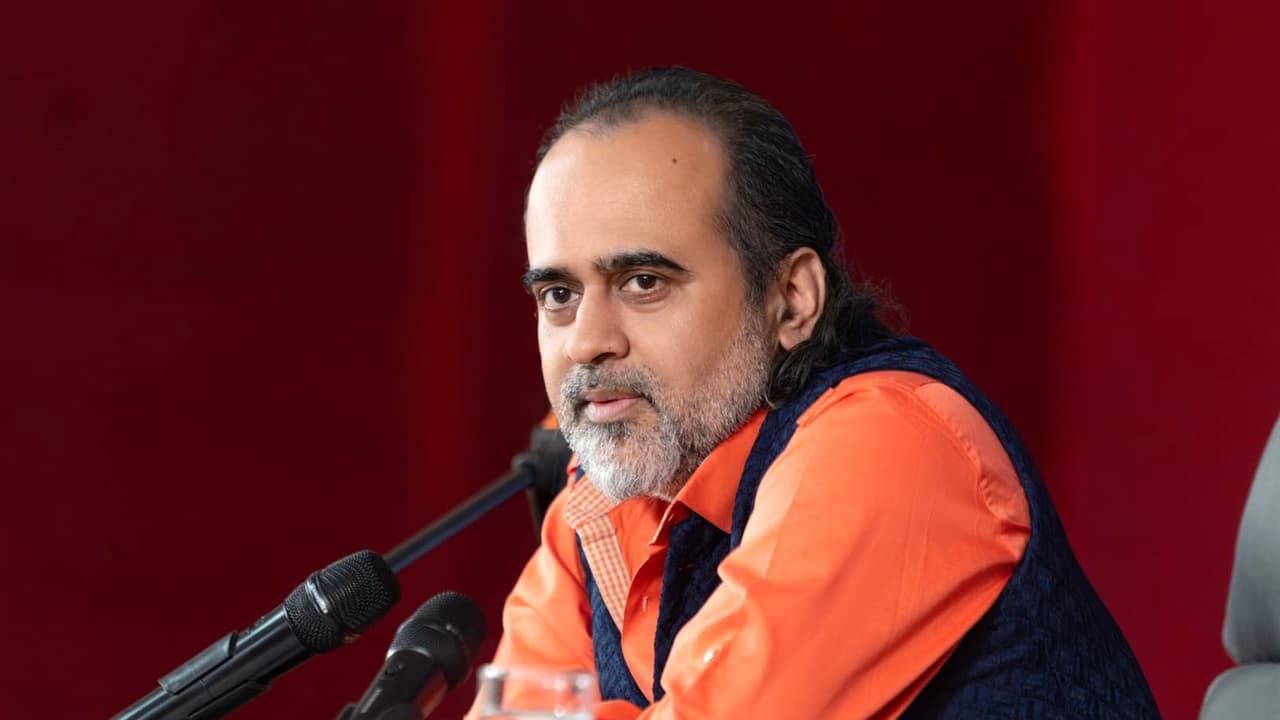

Real love is not measured by comfort, agreement, or preserving relationships at any cost. It is revealed when one has the courage to challenge falsehood, embrace uncomfortable truths, and even risk a relationship for another's freedom and growth. Truth is not a fixed destination but a continuous rejection of illusion. Genuine relationships, mature guidance, and authentic scriptures all serve as mirrors that help us see and dissolve our own falseness.
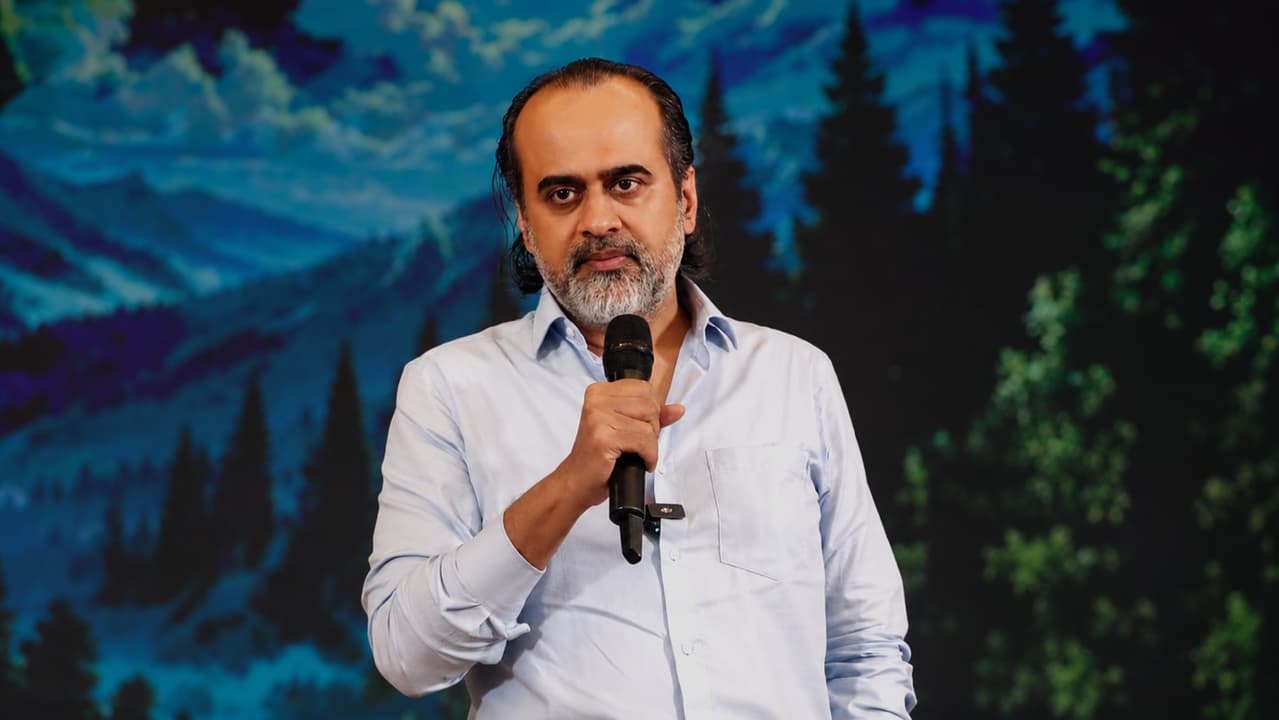
The biggest weakness of modern education is not that it fails to keep pace with technology, but that it neglects self-knowledge. Students are trained to build identities around qualifications and careers, making them rigid in a world that demands constant change. Real adaptability, innovation, and lifelong learning come not from acquiring more skills, but from understanding oneself and letting go of fixed identities.

Reaction is an instinctive, unconscious response rooted in ancient survival mechanisms, while response arises from consciousness and understanding. Our biological instincts evolved for survival, but modern life demands that we move beyond them. Emotional reactivity makes us predictable and controllable, allowing others to manipulate our emotional triggers. True freedom lies in pausing before reacting, examining emotions, thinking deeply, and responding consciously rather than living as slaves to instinct.
Bullying hurts deeply only when it is allowed to define one's inner identity. External abuse may wound the body, but lasting psychological wounds require inner participation. While OCD, anxiety, depression, schizophrenia, and other mental health conditions deserve proper treatment through psychiatry, lasting freedom demands self-knowledge.
How will anybody know you really well? So even if others validate what you are saying or doing, does that hold any value? The only person who can know me well is 'me'. If I have to ask somebody, I'll ask myself. But that would require you to be impartial — "Nirmam", that’s the word from the Gita. That will require a certain detachment from oneself — a love for Truth rather than for personal weaknesses. Your first relationship is with your own inner Truth. And it's the most powerful source of validation.
Society favors extroversion more than introversion because introversion is dangerous for capitalist consumerism. Why would someone spend a lot of money in the markets if they enjoy their own company? That’s why the entire media is full of characters that glorify extroversion and try to sell you a philosophy that promotes reckless consumption. Be very mindful; it will destroy you.
Don’t live out of habit, live out of wakefulness. Your action must not be habituated action; your thought must not be a pattern-based thought. Your thought, your action must come out of your understanding. Don’t depend on habit.
The trouble is, we do not use our eyes to look at ourselves. We depend on others' opinions, which are totally external. If you don’t know what you are doing, how will others know? General awareness can be taken from others, but not self-awareness. If somebody comes to you, listen to them, but do not allow their words to become your self-image.
In our daily lives, we find people using the word Ji as an affirmative statement or while addressing people. Though, it has just become as social norm, there is a profound meaning behind it that conveys of beauty and auspiciousness. It is a reminder that one is beyond the body and the mind; beyond all names and forms. And instead of being identified with the body and the mind, there is something better to be identified with—‘Sri’- a Sanskrit word standing for Ji in vernacular.
Whatever you call a ‘good habit’ is as dead as a ‘bad habit’ because any habit is a regular pattern followed without consciousness or understanding. Habits are for those who are half-asleep, as they prevent you from living fully and acting consciously. To break it, simply pause, observe, and ask yourself, 'Is this happening because I am aware and conscious, or is it just because of my patterns?'
Always know how impure you are. Never…
The mind of a sage is continuously sensing a reality beyond appearances, a reality beyond limits. There is a constant realization that all the diversities share commonalities and there is something beyond the diversities that contain all the diversities. This feeling is being given a poetic manifestation in this particular verse. What matters here is the sense that there is something definitely beyond; that which is perceivable, all that which can be experienced between the Earth and the sky is of little importance compared to that.
You see, you must first respect the facts of your addictions; they are doing you some good. These things exist because there is nothing better in your life. Addictions fill a deep inner void. The TV shows, videos, drugs, or other things didn’t force themselves into your life; you sought them out. The videos don’t suddenly pounce at you after midnight—you are the one clicking the app, scrolling, choosing, and binge-watching.
You will have to live with the consequences of what you are and pay the price. You cannot be selective about pain and pleasure. Your patterns give you pleasure, and you don’t complain. But when those same patterns bring pain, you say, 'I want to get rid of my pain.' Teachers offering miraculous solutions only numb the pain. True change in behaviour comes from bearing the pain, not resisting it. Your entire training is to resist it. Don’t resist it. Take it. Let it come.
Questioner: Acharya Ji, I…
Revenge is: thinking…
Questioner (Q): In spite of being fully aware of the consequences, why do people engage in self-harming behavior? Why do people stay in toxic marriages, relationships, friendships, get into addictions, do substance abuse, or get into other miscellaneous self-harming activities?
Acharya Prashant (AP): See, nobody engages in self-harm knowing fully…
Is it…
Questioner: Yesterday we did this play on –‘What is the intention?’ So we live in more of a conscious mind. So we can figure out some conscious things. How then can we go deeper and know what the real intention is?
Acharya Prashant: From the conscious, you will know the…
Questioner (Q): Namaste Sir. My question is, how to deal with the toxic people in our daily life, where sometimes their behaviour adds negativity and upsets my life? And how to deal with such situation and how to stay positive when I am dealing with such personalities?
Acharya Prashant (Q):…
In fact,…
Acharya Prashant (AP): So, there is the type of behaviour that we call as ‘compulsive behaviour’, and she’s rightly…
Question: How to get rid of addictions like smoking, overeating?
Acharya Prashant: Do you overeat when you are sleeping? Do you feel an urge to smoke when you are sleeping? Do you feel an urge to smoke, even when you are deep in relaxation? When do you feel like smoking?…
Questioner (Q): How should I control my emotions so that they don’t become too extreme? For example, every time I achieve my goal I feel very happy, but when I fail I curse myself and start crying. So, how can I behave in a neutral way?
Acharya Prashant (AP): Remember…
When someone calls us ugly or dumb, it can feel as if our confidence has been taken away. But others are outsiders; they cannot know us as well as we can know ourselves. The trouble begins when we do not know ourselves, so we start looking at ourselves through others’ eyes. Self-knowledge here simply means being honest with ourselves about where our likes, fears and desires come from. What would change if we looked at ourselves directly, and not through others’ opinions?
Physical weakness does not stay physical. It becomes mental weakness, and the ego, which turns everything into an identity, starts saying “I am weak” because that line brings support and spares it responsibility. Visible strength works even unused: it keeps the opponent outside wary and silences the one within, who can no longer claim to be helpless. Keeping the body strong is therefore a spiritual matter, not vanity. Are we holding on to weakness because it is convenient?
A world champion asks why she cannot sleep when a teammate outperforms her, and why even big wins leave her restless. The restlessness is not a problem but unspent energy, a sign that we have more to give. When every bit of our time and attention goes to what we have chosen, there is no surplus left to worry with. The right fight is never only against an opponent; it is against the ego within. What would it mean to fight so fully that nothing is left to celebrate or mourn?
We often defend a bad choice by pointing to a worse one: stay dishonest or starve, keep the wrong grip or stop playing. But the real trouble is not the option we picked. It is the option we never let ourselves see. Action does not need greed or attachment to find its energy. The third way begins by rejecting both false choices, without knowing what comes next. Which of our everyday choices are really false dilemmas?
Struggling to choose between a secure job and the path you actually feel drawn to? This isn't really a question about careers. It's about why other people's opinions have so much power over you in the first place. Real clarity doesn't come from finding the 'right' choice. It comes from honestly looking at your own fear, again and again, until it stops running the decision for you.
Climate change is more than an environmental crisis—it is a crisis of human choices. Our patterns of consumption, consumerism and endless pursuit of more are putting increasing pressure on the planet. But meaningful change does not necessarily begin with new technology or stricter policies. It begins with a deeper question: what are we willing to change within ourselves?
वेदांत को केवल इसलिए सही या श्रेष्ठ नहीं माना जा सकता कि वह किसी विशेष परंपरा से आता है। विज्ञान जहाँ भौतिक जगत की वस्तुनिष्ठ जाँच करता है, वहीं अद्वैत वेदांत सीधे मनुष्य के ‘मैं’, उसके दुख, बंधन और मुक्ति की पड़ताल करता है। इसकी कसौटी वैज्ञानिक प्रमाण नहीं, बल्कि अपने जीवन में इसकी सच्चाई को देख पाना है। किसी दर्शन को मान लेना नहीं, बल्कि उससे स्वयं को मुक्त करना ही उसका वास्तविक उद्देश्य है।
Science can examine material claims, but Advaita Vedanta deals with the subjective self, ego, suffering, bondage, and liberation—areas outside science’s objective framework. Vedanta need not be accepted because of one’s religion or tradition; its value lies in whether its insights can be personally verified and help free one from suffering. The ultimate responsibility is not toward any philosophy, but toward oneself: to live a truly free life.
Knowledge alone cannot transform life; it can become another object of the ego. True knowledge is self-knowledge—a mirror that exposes and destroys false ideas about oneself. Ravana may have been knowledgeable, but without self-knowledge, knowledge can become a tool for exploitation. Wisdom is not something to acquire; it is innate. Self-knowledge is the process of unbecoming unwise by clearing away the nonsense we have gathered.
कई तरह के डर—अकेले पड़ने, छवि खोने या छोटा समझे जाने—की जड़ अक्सर अतीत में बनी पहचान और कहानियों में होती है। शरीर की हाइट जैसी चीज़ों को समस्या मानकर उनसे जूझने के बजाय उनकी अप्रासंगिकता को समझकर आगे बढ़ना चाहिए। अतीत को दबाने से मुक्ति नहीं मिलती; उसके करीब जाकर अपनी स्मृतियों, धारणाओं और पुराने पैटर्न को निष्पक्षता से देखना ज़रूरी है।
Question: Why do I feel lost?
Acharya Prashant: Because, you are asking this question.
We ‘think’ that we are lost, equally, we ‘think’ that we are not lost. The same place from where the thought, the perception of being lost, or not lost arises, that place is the same place…
Friendships naturally change as people follow different paths in life. When you remain focused on your true purpose, you stop clinging to those who only accompany you briefly. Instead of dwelling on memories or fearing others' intentions, examine your own expectations and self-deception first. Honest self-awareness brings clarity, wiser relationships, and the freedom to move forward without resentment or attachment.
A true relationship is not built on need, possession, or emotional dependence, but on a shared commitment to Truth and inner growth. A worthy companion reflects your reality like a mirror rather than performing a role to please you. Real love is effortless, rooted in one's nature, not expectations. When your highest commitment is to excellence and Truth, relationships become a natural outcome—not the purpose of life itself.