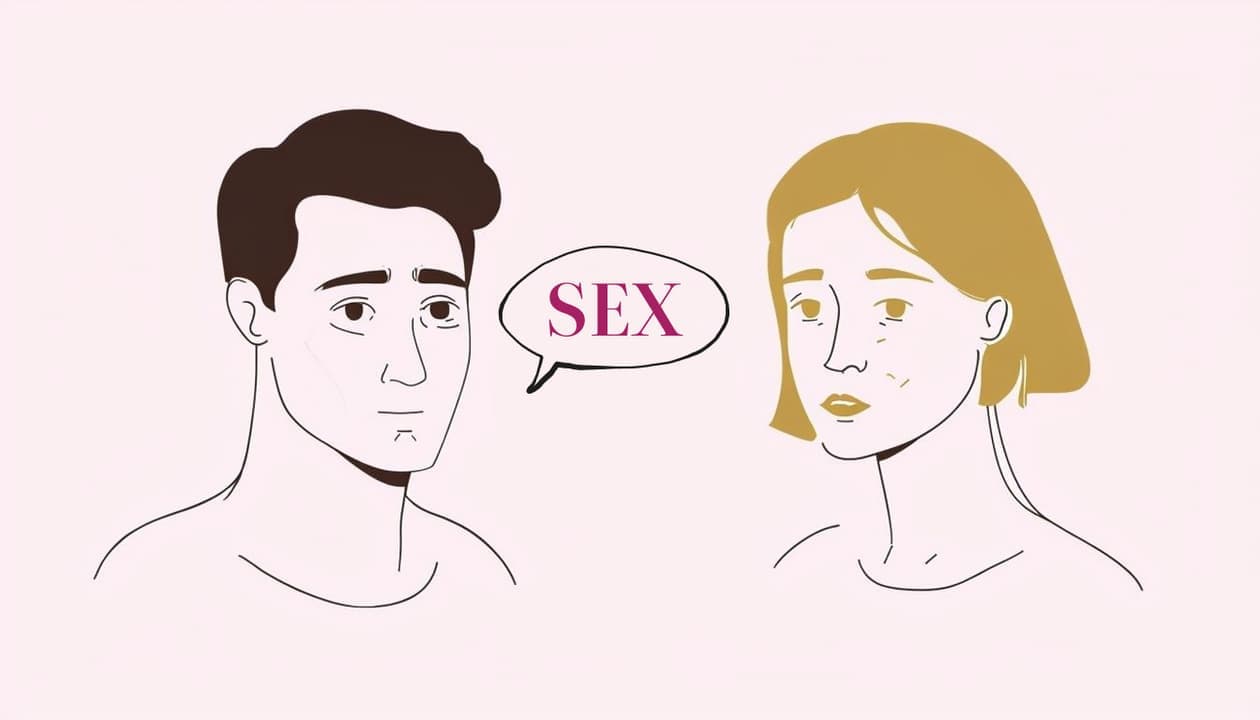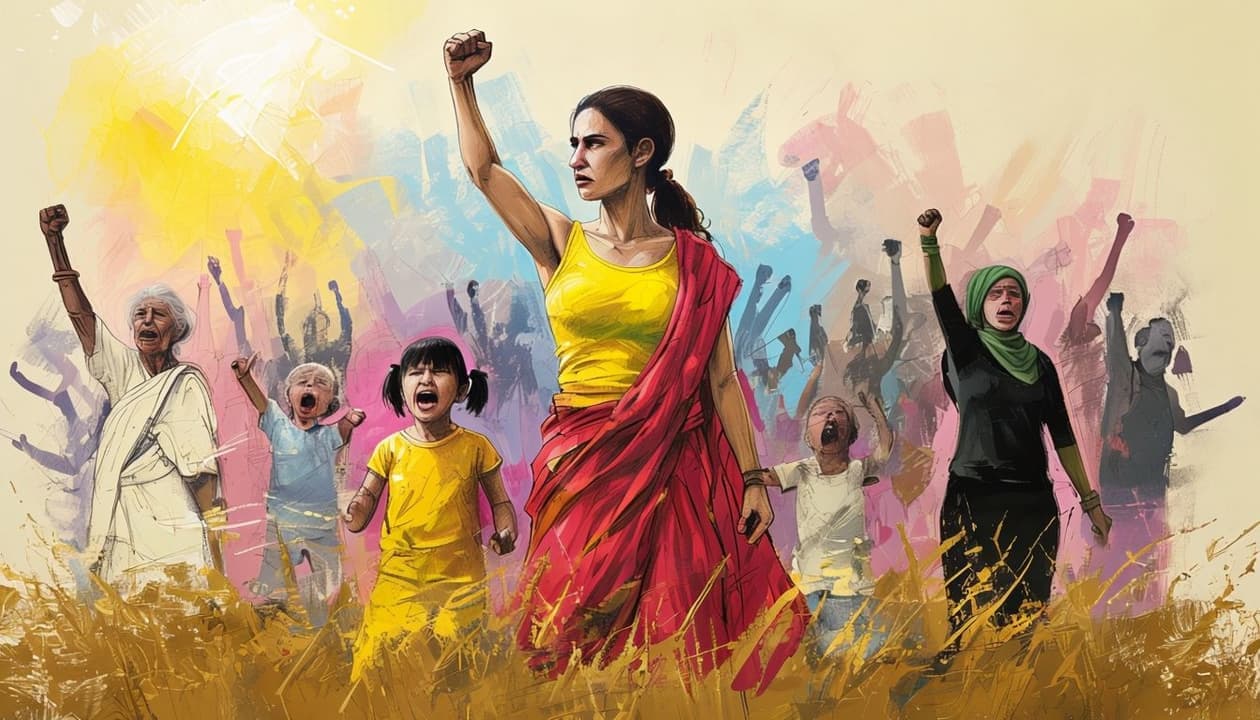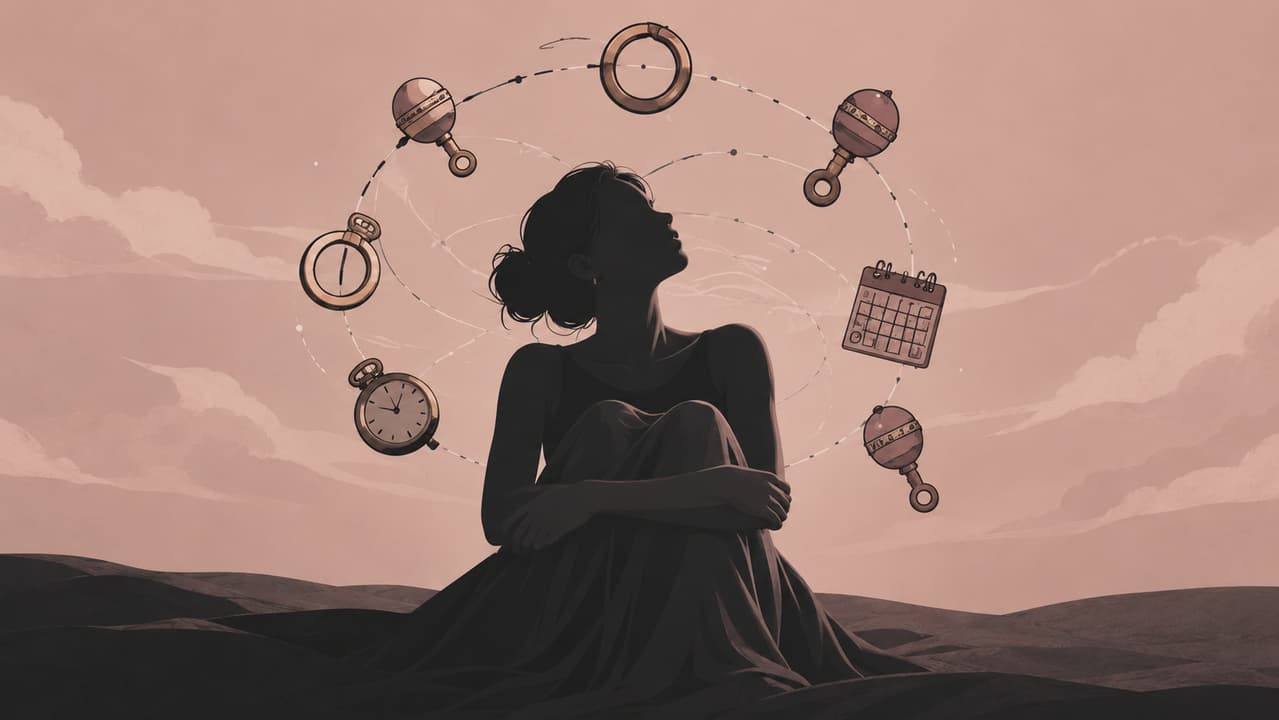
A modern woman calls herself liberated, yet lives anxious — anxious about age, desirability, marriage, motherhood. Acharya Prashant exposes this anxiety as proof that feminism never touched the real wound: centuries of conditioning that reduced women to bodies for pleasure and reproduction. External equality isn't enough. True freedom demands she reject the entire inheritance of tradition and simply become human — not woman, not wife, not mother by decree, but free.
Migration can arise from genuine needs such as safety, education, livelihood, or environmental conditions, as well as from the ego's pursuit of greater consumption and fulfilment. The challenge is to distinguish between these motives with wisdom rather than ideology. Fair, impartial screening, mutual respect between migrants and host societies, and practical integration create a balanced approach that is both humane and responsible.

True revolution begins with inner transformation, not merely with protest. Lasting social change is possible only when individuals cultivate self-knowledge, integrity, and personal responsibility. Replacing governments or demanding reforms without examining the mind that sustains the same patterns only repeats history. Awaken yourself first, educate others with clarity and compassion, and let conscious citizens, not unconscious crowds, become the foundation of a better society.


Vedanta reveals that freedom is impossible as long as the ego seeks to preserve itself. Meditation may bring temporary calm, but real transformation begins only when the false sense of individuality dissolves. Whether through devotion or knowledge, every genuine spiritual path culminates in the complete dissolution of the seeker into Truth. Liberation is not the experience of Truth by an individual—it is the end of the individual who wants to experience Truth.



The crisis exposed by the NEET paper leak goes far beyond examination malpractice. When society teaches young people that a single rank determines their worth, corruption, desperation, and broken trust become inevitable. Lasting reform requires more than stricter systems—it demands a transformation in how education, success, and self-worth are understood by students, parents, teachers, and society.
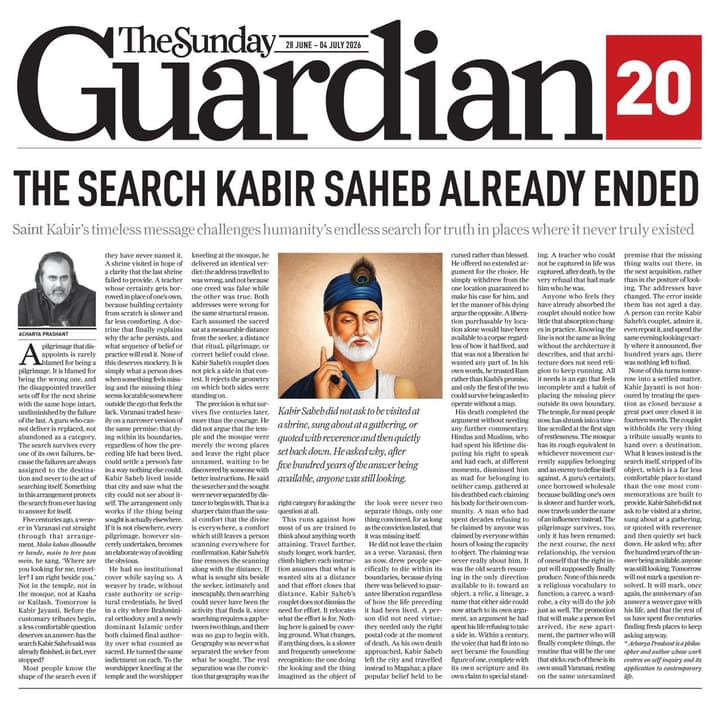
Kabir Saheb's message questions the very act of searching for fulfilment outside oneself. Whether through religion, relationships, success, possessions, or identity, people keep assuming that what is missing lies somewhere else. The problem is not the destination but the belief that fulfilment exists at a distance. Real freedom begins when the search turns inward, recognising that the seeker and the sought were never truly separate.
Human beings are born into uncertainty, surrounded by beliefs, identities, and social conditioning that offer ready-made answers to fundamental questions. Real spirituality begins not with accepting collective or personal beliefs, but with honestly examining one’s own suffering, fears, and false identities. The journey is not toward comforting ideas, but toward self-inquiry, where truth is discovered through questioning, observation, and the gradual rejection of illusion.
Will another revolution really change anything, or are we just changing faces while keeping the same consciousness intact? The article argues that societies often rush toward rebellion because it feels easier than responsibility. We blame systems, governments, and institutions, but the deeper crisis lies in the collective ego that creates them. Without inner education and self-understanding, every revolution risks becoming another cycle of the same story.
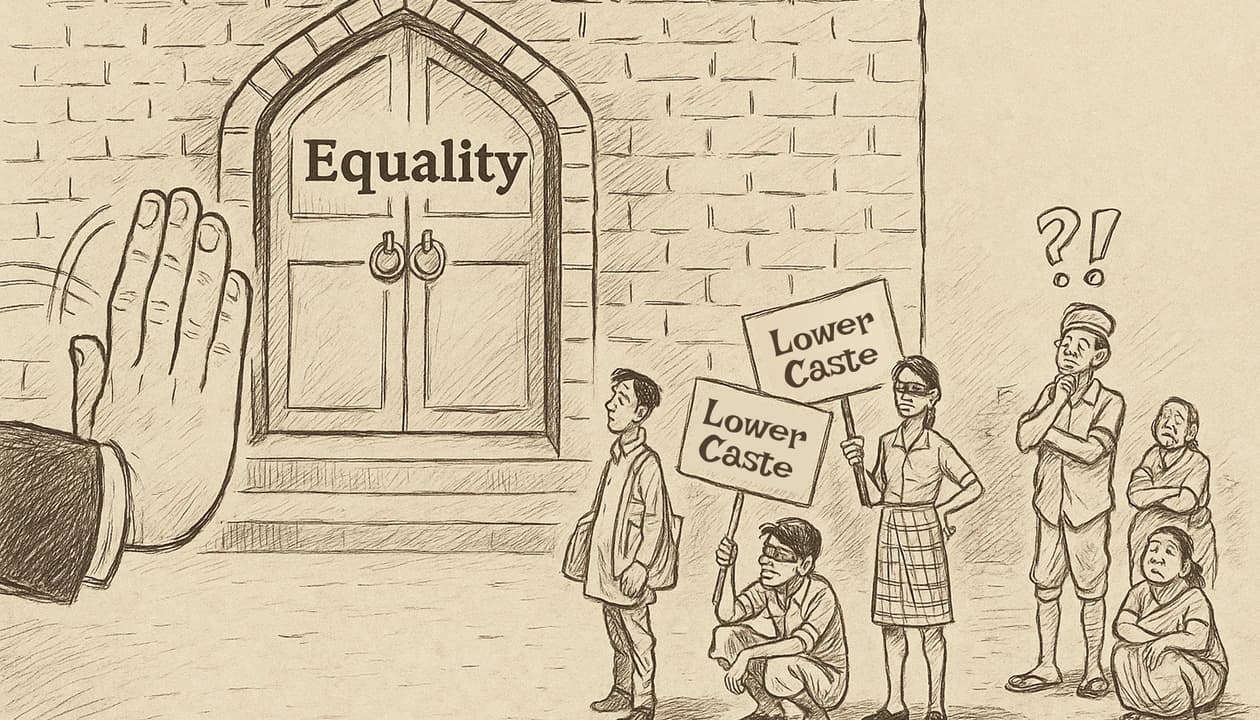
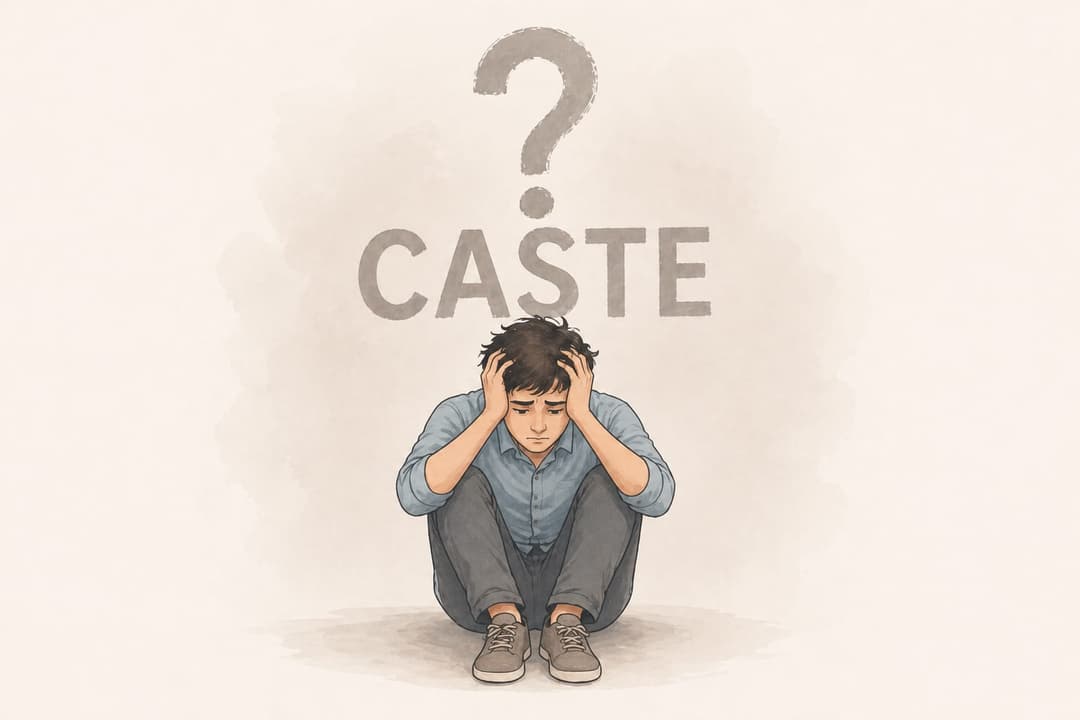
Do you still feel the need to know someone’s caste? That urge itself is the problem. Caste exists neither in the body nor in consciousness; it is a construct of the mind. Society keeps it alive because the ego thrives on division. Until you see a person simply as a person, caste will persist. The real solution lies in understanding and dropping inner ignorance.
The one who is religion-less. A real Hindu does not have any religion. To go beyond all religions is to be a Hindu. There are religions that are on one plane, and then there is Sanatan Dharma, which is another dimension — the eternal religiousness. Liberation from religion is religiousness. Sanatan Dharma is awakened intelligence.

Mojud – The man with the inexplicable life
There was once a man named Mojud. He lived in a town where he had obtained a post as a small official, and it seemed likely that he would end his days as inspector of weights and measures.
One day when he…

Listener: (Reading a quote of Acharya Prashant from a quote-calendar)
What lies beyond mind?More mind.What is more mind?What and lies and mind.Questions, perceptions on the concept of the mind.
Acharya Prashant: Any question about beyondness would be a useless question because the question itself is coming…

Questioner (Q): Why do we forget?
Acharya Prashant (AP): The question is, "Why do we forget? Why forgetting is a property of the mind?"
Do not ask, "Why do we forget?" Just remember that we forget. Because when you forget then you don’t ask this question that, "Why do we…

Our mood is always dependent on others and situations. Results have not been up to your expectations. So now you require a morale booster, some motivating speaker. The moment that fellow is gone, your energy also goes away. But there is another way of living. Deep within myself, I find a point that no external situation can touch. Whatever happens, happens on the surface. That will remain stable, uninvolved, a non-participant. Then you are really free.

If you are religious, then shouldn’t you be truly religious? Religion is about a total commitment to the Truth. You’ll have to recognize that the objective of religion is not to attain heaven, not to please a holy figure, but to come to your own inner Truth. All good books exist to awaken your consciousness. When it comes to you and the Truth, do you want somebody in between? And wherever you spot fakeness, falseness, hollowness or ignorance, drop it.

There is a search within the human being, always for the greatest, the absolute, and that is what differentiates humans from animals. India was fertile, and there was abundance. You had ample leisure, and in that leisure there was space for intellectual inquiry. The sages and the seers would talk to each other purposelessly. And from that purposeless discussion, from silent observation of life for hours, days, months, and years, came those insights that you today recognize as Indian philosophy.

This has always been a hugely profit-making sector of all economies, just that it has always been a small sector controlled by the priestly class. Now the attempt is to make this sector really big and on an organized scale, because the profits are very tempting, and there is no quality control. There can be no external auditor. All kinds of objections, audits, and scrutinies are ruled out. Getting it? So it’s a very tempting sector.

Shri Krishna is saying: the mind is conditioned to move towards objects and perceive only their surface, periphery, or form. Develop the practice of penetrating further. Let Truth be your practice. The moment you would look at something, and you are in no position not to look at things being embodied, you would look at things. Nobody said that you have to practice lust. Lust just comes. You might be a total fool, an utter retard, and still you will find yourself getting sexually excited once you reach a particular age. Did you need some practice? No, you didn’t. It just happened. But if you are to understand lust, if you are to cross over, if you are to be a master of your body, then it will require a lot of practice, and that will necessarily and obviously tell you about your predicament.

If you leave yourself weak and vulnerable, you are submitting to the ecosystem of rape. What’s worse? It won’t even be reported. The first thing is: empower yourself through education, through exposure, through wisdom. When it comes to sexual urges, no lessons of morality really succeed. You’ll just be left complaining to the benevolent power up there, “You know, I’m such a pious woman. Why was I violated?” Because that’s how it happens in the jungle. That’s the answer. That’s all.

You know, if your husband is gone, your finances are gone. Therefore, you will guard your husband very, very strongly, very possessively. It’s not love, it’s dependence. In love, you often allow the other to fly free. But if you are acting as that possessive wife or girlfriend or whatever, that is also because you are dependent, and that is violence, is it not?

The biggest problem is when we succeed in these little acts of charity, goodness, kindness. Had you succeeded in somehow persuading the kids away, you wouldn’t even have raised this question, and a self-awarded sense of morality and righteousness would have held you high. That’s the whole problem. When you said the kids wouldn’t go away because it is a festival and it is crackers, then do we really understand why the kids wouldn’t go away?

Truth enlightens, so it is attractive. Maya enthrals, so it is sometimes even more attractive. Where to go — that is the battle.

Religion is the way that brings the lost mind back to its center, its home. That is religion.

You have inflated the reproductive process much beyond its worth. Psychologically, a girl carries it throughout her life as something big, whereas it's nothing — just another process in the human body. And because of the stigma you have attached to this purely biological thing, countless women suffer silently because they can't openly talk about gynaecological problems. Indian philosophical systems have zero space for any belief, assumption, or tradition. So, obviously, this culture has to be outrightly rejected.

Acharya Prashant: That's why the rājasika mind is better than the tāmsika mind. The rājasika says, “I’m not alright. I need to do something to become better. I feel inferior. I feel incomplete. I need to rise. I need to achieve.” That’s the rājasika mind. The rājasika mind at least…

A lot of negative attitudes towards women today are claimed to be sanctioned by religion. The reason is that religion has been a victim of contamination. And this contaminated, mainstream, and false religion becomes a tool to exploit women. On the other hand, real religion is a woman's best friend because its effects are emancipation and empowerment. Therefore, when real religion shows up, it will deeply frustrate the traditional kind of religionists.

For change to happen, somebody has to be a change agent. But if that agent starts thinking, “I’m not exploited; I benefit from this discriminatory system too,” then who will demand change? My employer earns 11X from my intellectual labor, pays me X, and saves 10X. But that X enables me to run my household and fulfill my dreams. So, will I ever rise and rebel? The system bribes you into submission. The exploiter incentivizes the exploited to stay exploited.


Just because we don't hear gunshots doesn't mean that things are peaceful between partners or between parents and kids — especially daughters. Not at all. There are clear boundaries and those boundaries have been mined. As long as you remain within the boundaries, you will entertain the illusion that you are free and loved. Try to step out, and you'll be blown to pieces. So, the violence was always cooking but you didn't see it because you were blinded by your emotions, need for security, and conditioning.

Vedanta says that the body of the woman is her cage, just as the body of the man is the man's cage. Vedantic feminism would say, ‘Disown your physical self — you are much beyond that, girl.’ As long as you identify with the body, enjoy being called a girl or woman, there’s no freedom for you, and the same goes for the man. Saying, ‘I am the woman, I am the man’ is the real problem. Equality is a high ideal, but liberation is the purpose of life.

The human mind suffers because it does not understand what’s going on within itself. The mind longs for understanding and liberation from bondage. And the responsibility is on the human being to gain that understanding and that freedom from bondages. This responsibility is called Sanatan Dharma — founded on self-inquiry, ‘Atma-Jigyasa.’ It is a philosophy of the mind that gives a purpose to life.

The building is raised on a weak foundation, and now you want to penalize everybody who comes and shakes it up even a little? You don't do this. Why did you allow this building to stand on such a weak foundation, and now you are trying to protect it through legislation? What kind of stupidity is this?

We don't really look at a woman as a human being, but rather as her physical identity. Even in murder, we fail to see the human being. The sexual lenses are always on. Sri Ramakrishna Paramhans, the great saint, used to say that the ordinary person is driven by two objectives — kanchan (money) and kamini (lucrative girl). Sex is not so much a need of the body, it's a need of the mind. Unless this thinking changes, we'll have to live through the pain of seeing more such incidents.

There is no morality really there. Though, being human beings, you want to frame it in moralistic terms. We want to kind of pretend that the action has some kind of moral basis to it. But there is no moral basis. Really, there is no moral basis.

What’s happening in the Israel–Iran case is mostly about religion. Israel–Iran relations were far more cordial until 1979, when Iran got a new Islamic constitution, and Iran declares Israel as the “Little Satan” because Israel is a Jewish country. Had both these countries been Muslim, would there be a strife? Had both these countries been Jewish, again, would there be a strife? But we want to close our eyes to the bare fact that religion gone wrong is the worst thing possible to human beings.

Now comes the deeper symbolism of Shivlinga. It says—look, if you have taken birth, then you are there in the body. But even while living in the body, you have to live as if you are without a body. So, the shape of the Yoni that you see in the Shivalinga is actually the world or the body, and this Lingam that you see in the middle of it is the Consciousness—the Consciousness which is located in the body.

It is our animal tendency to be territorial and to really want to control the other gender — so that we can maximize our own pleasure. When you own something, then there is a sense of security and that's why men want to control women's sexuality. You can dispel that by understanding that you can have no lasting pleasure by owning anything — including a person of the other gender.

Religion concerns itself with ‘Ego and its liberation!’ That’s all. In the name of religion, if you are talking about planets and stars, about fruits and vegetables, wear this, don’t wear that, eat this, don’t eat that, the house should face this direction, and a thousand other things that you associate with it, then all that is some kind of tribal superstition. Religion has nothing to do with these things.

Acharya Prashant (AP): The Ego wants to hedge its bets. Because it is born in insecurity and gains its sustenance from insecurity, therefore insecurity is its very life-stuff. Now look what happens, if insecurity is the life-stuff of the Ego then what kind of security will it seek? It…

Questioner: Sir, I have been reading Krishnamurti and Vivekananda for the past three years and having learned from them, I genuinely feel that the teachings of such great teachers should be at the core of our education system. I personally feel that my decisions regarding my career and life would…

Questioner (Q): Good evening, sir. My question is, recently there were huge protests going on in Iran against the imposition of the hijab. There were many people who talked about the hijab as an imposition on women; while others, including women, consider it to be their right of choice—whether…

Caste is something that the Upanishads actively dismiss. So many of our saints came from the so-called lower castes and tried to purge Hinduism of its nonsense, but still, caste continues for two reasons. First, a human is born with an innate tendency to divide and separate. And second, a light has to be awakened in him, and that effort is called real education. We do not receive that education today.

Caste is not in the body, it is just in the mind. If you are interested in somebody’s caste, you are a casteist! You meet someone, the person is standing in front of you — assess him as good, bad, or whatever — but why do you want to know his caste? Caste should have been relegated to the museums and the history books by now. Drop it right now! But to drop it, you will need to have self-knowledge.

Religious violence is not about a handful of terrorists; it's an entire ecosystem of passive toxicity supported by lakhs of people. When toxicity is beamed to you on TV and social media, you don't resist. And one day, it explodes into active violence. This is because we're still animals who live without understanding ourselves — this is called ignorance. Therefore, we need wisdom literature to help us transcend our animal disposition.

Before you go to the Quran, you must first be in a condition to understand what it is saying. The center of the Quran is Tauheed – Oneness. The Quran can be understood only when you, as the ego-mind, are connected to the same source that blessed the Prophet. Otherwise, you will misinterpret it. You are so full of ego that you want to remain what you are. By remaining what you are, if you apply your intellect to the scriptures, you will obviously distort them.

We talk about the 10, 20, or 100 indulging in active rioting but not the thousands and lakhs passively supporting them. If those thousands disappeared, would these few rioters survive? Had they known that displaying perverse attitudes in religion’s name would lead to social rejection, would they still dare? We fight because we are animals from jungles, sharing instincts with beasts. We require the Bhagavad Gita to transcend our animal disposition. Otherwise, we will remain violent.

No woman ever chooses to menstruate. It happens. So how can she be held guilty, responsible, or unclean? It is quite unfortunate that it has become a taboo for so many women. The genesis of the whole thing lies in the concept of physical purity. And that refers not merely to menstrual discharge but to all kinds of discharges that the body emits. It’s not a matter of spirituality; it’s a matter of hygiene and aesthetics.

Rape is not just sex without consent. Even if consent is given out of fear or greed, the act should still be called rape. And this is happening everywhere. Human beings can behave far better—or far worse—than animals. Animals mate for reproduction, but rape, from the rapist’s perspective, is recreation or entertainment for pleasure.

To lead is to not be a fool. You're not there to—to charm people. You must first of all go within and figure out: what do you have for the other? It is great disrespect to the other, and injustice, to speak to him or her or even approach him before being internally sorted. I do not know my own life. I do not know the source of my own motivations. I do not know where my own desires come from, and I want to infect the other with the same desire in the name of leadership and motivation?

The Gita is useful because its setting is extremely relatable. Just like us, Arjuna does not know himself—he's a victim of multiple identities and all kinds of conditioning. Therefore, the Gita is about letting Arjuna know who he is, and this illumination enables him to do what he must. So, first of all, see that you are Arjuna. Then, step by step, verse by verse, there will be some resolution.

Some say 'God', others say 'Allah', and some say 'Ram'; all three refer to the same entity. If a name or sound reminds you of the nameless one, it's wonderful. The problem arises with self-appointed meanings. The purpose of religion is to convey the truth, not obstruct it. You have a variety of flutes, but there is one music. Religion is that music.