Rape, Social Stigma, Dependency

Acharya Prashant

8 min
41 reads
Rape, Social Stigma, Dependency
You know, if your husband is gone, your finances are gone. Therefore, you will guard your husband very, very strongly, very possessively. It’s not love, it’s dependence. In love, you often allow the other to fly free. But if you are acting as that possessive wife or girlfriend or whatever, that is also because you are dependent, and that is violence, is it not? This summary has been created by volunteers of the PrashantAdvait Foundation

Questioner: My name is Nasima Muzawar. So before asking my question, I had to say this thing about the Nirbhaya rape case. One of the lawyers commented on the victim, “Agar mithai ka dabba khula hoga to cheentiyaan to aayengi na.” So about that, I have to ask, does the rise in rape cases depend on what the woman wears, the clothing?

Acharya Prashant: Do you have a mental asylum in Goa? You go there, and you'll be recording all kinds of statements? Should we be discussing those statements? Do we need to glorify those statements with this stage? Somebody comes and says, “Mithai ka dabba hai khol ke chalegi to cheentiyaan aayengi.” Some madman is uttering something. Why should you be bothered? Are you a mithai ka dabba? What kind of analogy is this, “Mithai ka dabba?”

I understand somebody is making that statement. That statement tells about that person, not anything about you. A madman is uttering gibberish. You listen to the gibberish. That gibberish tells you something about the madman, not about the woman the gibberish is aimed at. Not getting it?
Any idiot can say anything. Learn to ignore. When it comes to wisdom teachers of the world, I'm probably the most trolled one, most hated one. They're all the time hurling abuses at me. Even as we sit here right this moment, there would be somebody making a video, “Acharya Prashant exposed.” Do I need to bother?

And now that I'm talking to you here on this stage, when this goes out again, they'll take clips and say, “You know, he’s misleading all the gullible girls of this country. Now there will be no more Sanskari. Kill this man.” They actually send death threats. Do I need to bother? Then why do you bother?

See, at most they can succeed. That’s fine. They’ll bring an end to your life, right? Your life comes to an end, but at least it would be a life well-lived. What’s the point in elongating your life when that life is only drudgery?

You’re always in chains and living a long life, what dignity is there? Simple; you can kill me, but you cannot stop me.

Nobody’s going to kill you. Don’t worry.

Questioner: Hello sir, my name is Saundarya Patil, and I have a question regarding the Nirbhaya rape case, and almost many rape cases that followed have a similar kind of relation with that. Sir, in the Nirbhaya rape case there were six accused men. One among them was a 17-year-old boy. But still, I don’t know why the judiciary system said that he is a juvenile. But if the rapist does not consider the age of the female he is assaulting, then why does the Indian judiciary system look after, why does the Indian judiciary system care about the age of that boy to say that he is a juvenile? Do we actually need that statement when the mindset of that 17-year-old boy is so horrible that we can just end his life for that mindset, First of all?

Acharya Prashant: You are very right here, but we have to understand the position of the judge on this. The judge cannot change the law on his own. If the law says that a juvenile cannot be punished in such and such way, what can the judge do? The maximum that the court can do is clearly say that this person is definitely guilty, but as per the existing provisions of the law, he cannot be punished, or he can be punished only till this point. That’s the maximum that the court can do. So we cannot blame the court here. Are you getting it?

But yes, the law can be amended. The law can be amended because if a 16- or 17-year-old is committing a rape, then in his own eyes he is not a juvenile.

If you are just a juvenile, how are you so needful of sexual intercourse? That kind of urge does not characterize a juvenile, or does it? So when it comes to offenses like murder or rape, it would be my opinion that nobody should be considered a juvenile, at least not a teenager. Maybe if you are 8 or 10 or something, you can be kind of pardoned or sent to a reform home or something. But if you are a teenager and you commit a murder or rape, then I don’t think that physically, mentally, existentially you can be called a juvenile. But we cannot blame the court.

And also, even if you amend the law, it cannot be applied retrospectively, which means if the law has been changed today, you cannot apply it to a back date. So what can we do? Maybe all those rules were made in better times when people below 18 usually didn’t turn out rapists. But times have changed. So probably laws need to change.

Two of you have spoken of the Nirbhaya case here. We know how horrible, how gruesome, and you must have been kids when that happened, right? That was more than 10 years back. You would have been little girls at that time. And I can imagine the imprint, the scar it left on your mind. I can see that. But also, please understand nobody is going to offer you security, right? There is no benevolent power out somewhere, whether in the family, in the society, in the political system, the judicial one, or even up out there in the skies. There is no benevolent power anywhere for you. You are on your own. Every single creature is on her own. I am on my own. You are on your own. That does not mean that there can be no love. Yes, love is possible, but not between dependent beings.

When you are dependent, then first of all, you are miserable. Secondly, you also become exploitative.

I am dependent in some way. Just for the sake of the example, I am dependent on this mic right now. You see what I am doing to it? You see what I am doing to this mic? What am I doing? Clutching it with all determination, all care. Can I afford to let it slip? So when you are dependent on somebody, you clutch. And then all the time you are peeping into his phone, “I’ll not let him slip away.” And then you think that’s a joke. The man is looking at another girl, and the girlfriend gets jealous and angry and says, “You stop looking at her. Come to me.” You think of that as some kind of biological nature. No, that is not biological nature. That’s a social system that has handicapped you.

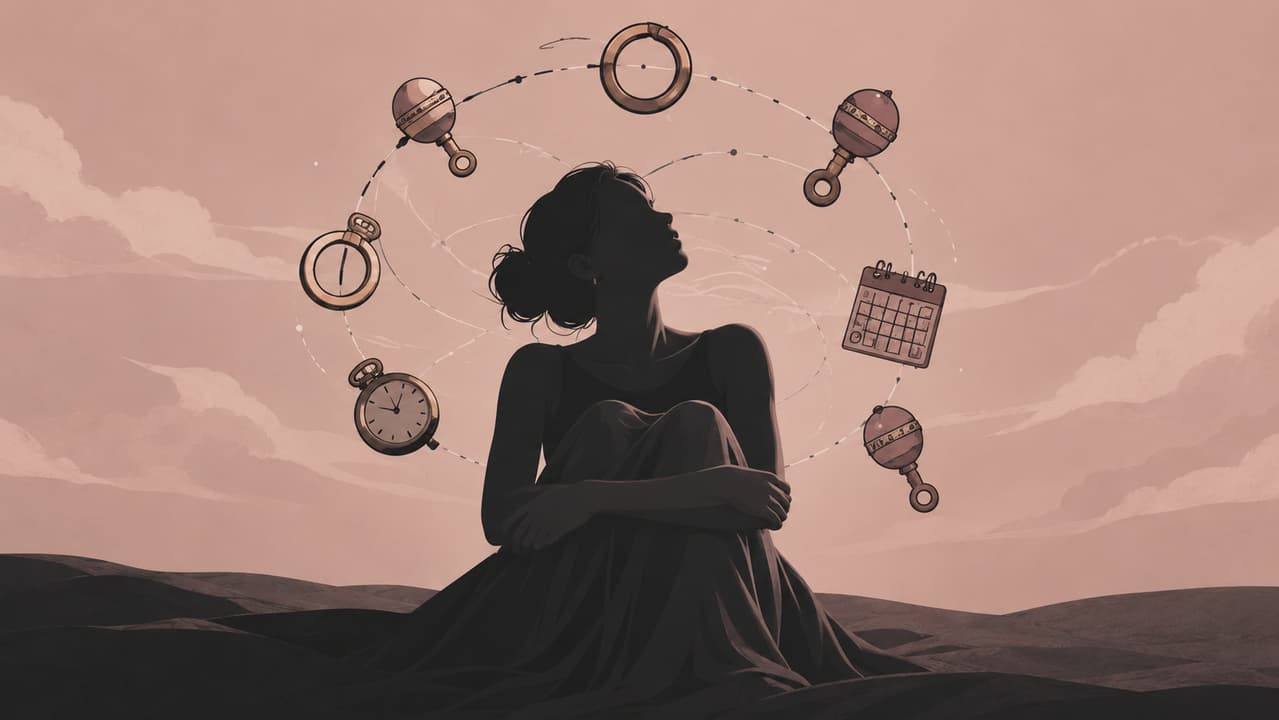
You know, if your husband is gone, your finances are gone. Therefore, you will guard your husband very, very strongly, very possessively. It’s not love, it’s dependence. In love, you often allow the other to fly free. But if you are acting as that possessive wife or girlfriend or whatever, that is also because you are dependent, and that is violence, is it not? So if you are dependent, you are the recipient of violence. Equally, you are inflicting violence. You are receiving violence and you are giving violence, and all that only because you are dependent. In dependence, love is not possible. In dependence, it would be violence and ownership masquerading as love. And that’s the story of most relationships and most households. Is that not?

So don’t expect goodies coming your way from somewhere. That’s how you saw it in the movies, right? Somebody just comes and gifts you a bungalow. That’s not going to happen. “My father loves me so much, he’s gifting me this, he’s gifting me that.” Rest assured, you will not get your share of the patriarchal property. You’ll be sent off with the dowry, and you’re so happy, “He has given me so much.” These days, you don’t even want to call it dowry. You say, “This is a gift from my father.” Yes, you have received that gift, and now you forgo your share in the father’s property. You have to be on your own. Only then love is possible.

This article has been created by volunteers of the PrashantAdvait Foundation from transcriptions of sessions by Acharya Prashant
Comments
LIVE Sessions
Experience Transformation Everyday from the Convenience of your Home
Live Bhagavad Gita Sessions with Acharya Prashant
Categories