The Evil of Caste System

Acharya Prashant

11 min
682 reads
The Evil of Caste System
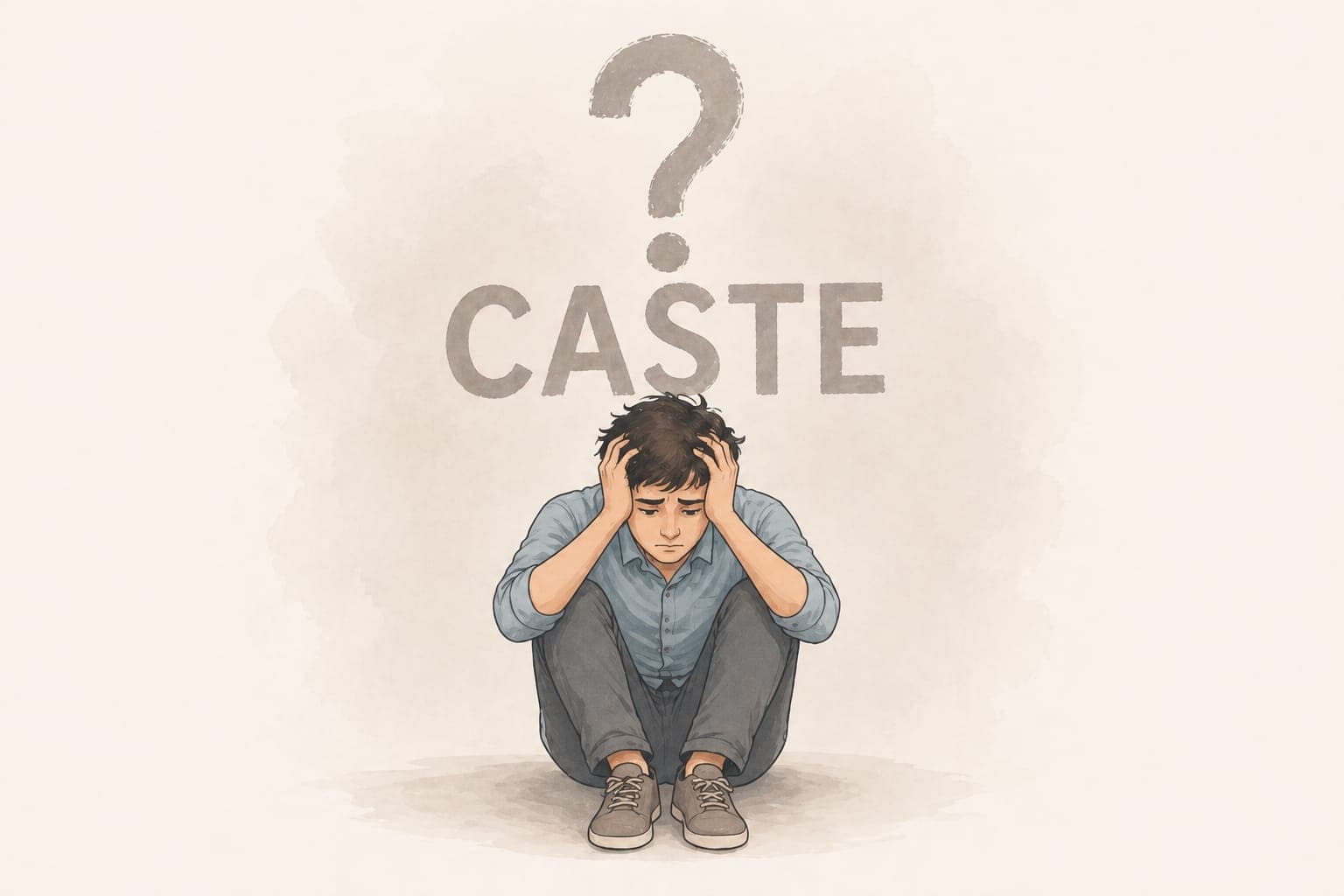
Do you still feel the need to know someone’s caste? That urge itself is the problem. Caste exists neither in the body nor in consciousness; it is a construct of the mind. Society keeps it alive because the ego thrives on division. Until you see a person simply as a person, caste will persist. The real solution lies in understanding and dropping inner ignorance. This summary is AI-generated. Please read the full article for complete understanding.

Questioner: Good evening, sir. I am Krishna, and I'm a student of town planning, and I would like to ask about casteism. So, there's an age-old debate about castes in India, where some people say that it is an embodiment of systematic exploitation, while others say it is just a division of labor that got corrupted with time. So, you have spoken previously about the true meaning of caste based upon the Upanishads. What are your views right now about the Indian caste system?

Acharya Prashant: It does not depend on what criteria you use to divide man from man, it is bogus, full stop. Even if you need to have division of labor, why does that have to be from birth? How is birth a criterion to decide who will pursue what kind of vocation? How is it guaranteed that someone born to an ironsmith would be great with metals, or that someone born to a family of priests would indeed be a wise person? So, all that is quite bogus.

It doesn't matter how you want to interpret it or justify it, just leave it to history and museums now. It's outlived its utility, if ever there was any. I really don't think there ever was any utility. It's just an expression, the caste system is just an expression of the tendency of the ego to divide, because the ego is a limited thing, and all limits mean boundaries. The ego, therefore, cannot live without boundaries. It needs to find some way, one way after the other, to divide one person from the other.
The criteria could be anything. Gender is a criterion, obviously. Money is a criterion. Economic status, color of the skin, ethnicity, race, and creed, you name it, and it becomes a dividing line. And that is also the reason, you see, you don't find this kind of casteism only in Hinduism. Most people, because they are not very acquainted with how society is working, do not know that even among Muslims there is a rigorous caste system.

So, it's there everywhere. Look at the divisions in Christianity. Obviously, there you don't have untouchability and stuff, but look at the divisions and look at the violence. Look at how that thing exists even in the streams that emerged with a view to purge Hinduism of its corruption. Think of Sikhism. Think of Buddhism. What do you think, you don't have caste distinctions there? Then you do not know how societies are operating.

So yes, obviously, no point denying that it's the most rampant in Hinduism, to the point that it, in fact, became a distinctive feature of Hinduism. Nobody wants to deny that. When I give the example of how caste operates, or how divisions operate in other religions, it's just to exemplify that the ego loves to divide, irrespective of where the egoistic mind is stationed. The mind could be stationed in Saudi Arabia, or in Europe, or in Russia, or in China, or in Sri Lanka.

It's going to divide, divide on some possible criteria. So I don't know why we still have a debate over caste, that's what is quite astounding. Caste should have been relegated to the museums and the history books by now. It should have become a non-issue.

What's interesting is who are the people who still keep it alive as an issue, and what do they want? So it's a relic, no place. You should not even know somebody's caste. That's how caste disappears. As long as you are interested in somebody's caste, "What's your caste, by the way?" If I'm interested, then I'm a casteist.

Caste goes when you do not even know the other's caste, and that's how society must be.

You meet someone, that person is standing in front of you. Assess him. The person could be good, bad, virtuous, evil, whatever. The person is right there in front of you. Why do you need to know his caste? The person is sufficient, is he not?

Questioner: Yes, sir.

Acharya Prashant: If he is sick, you want to help him, or would you ask for his caste? And if he is arrogant, you want to show him his place, you don't want to inquire into his caste. Getting it?

Questioner: Yes, sir. Yes, sir, I understand.

Acharya Prashant: Closer to your age, there is a beautiful girl, and she's beautiful and appears intelligent also, in many ways she is someone you want to approach, and you approach her, and the first thing you ask is, "What's your jaat?" How do you sound? Who are you? What kind of beastly question is this?

So it's a non-issue. It's a non-issue, and those who are still keeping this issue burning, they should be brought to justice. What's the point? Why are you still interested in raising this again and again? Why this bogey?

You will never have a complete absence of duffers, you see. Even, I suppose, after 100 years from today, you'll continue to have people who believe in things like purity of blood. They'll say, "We have this kind of blood, falana blood, and therefore we cannot marry into some other caste or something. The blood will become impure."

Covid came to teach them what blood really is; or a road accident, the best teacher. When you require immediate blood transfusion, do you inquire into the caste of the blood donor? You will die. And then you, in fact, do not, because you know in your own heart that all this is just a sham. And your son is dying, and you say, "Please, please, please get me B positive." You do not say, "I want only Brahmin or Kayastha or Rajput B positive." You don't do that. Or do you do that? No.

Then all these notions of superiority and purity of blood, they just vanish. The thing is, we all are people of mixed blood now. Think of your own lineage. Somebody in your line must have had a blood transfusion at some point in time, either your father or grandfather or somebody. So you have mixed blood. So have I. Everybody has mixed blood. So caste is gone anyway, finished.

Even if you go to the scriptures, they are very clear, very clear: "Jayate shudra," the one who takes birth is Shudra. The meaning is very clear: the body is Shudra. So there is no difference at the time of birth. Only the beast is born. And then, depending on how you navigate through life, the kind of choices you make, the status of your consciousness is determined. How can caste be something that comes by birth? No?

And you have already said that I have spoken on it. Yes, an entire Upanishad is devoted to this, the Vajrasuchika Upanishad. The student is asking the Rishi, "What is caste?" And the Rishi, in the way of the Upanishads; The Rishis were very fun-loving people, they loved to kind of toy with the disciples. They said, "Please tell me, does the body have caste? Okay? Does the blood have caste? Does the bone have caste? What has caste?"

And the disciple is intrigued. "No, no, no. All these things cannot have caste, because these are just panchabhuta. How can that have caste? This is just soil, how can soil have caste?"

"Okay, okay, fine. So does the pure Self, Atma have caste?" And this is Upanishad, This is Vedanta. Does the Atma have caste? And the disciple is again, he said, "The Atma is not even born, sir. How can it have caste? The Atma has no name, no form, no shape, no upadhi, no *upama.*How can it have caste? No attributes. How can it have a caste?"

Rishi says, "Don't you understand then? What is caste? Caste is an imagination of the mind.

Caste is neither in the body nor in the Self. It is just in the mind. It's an imagination of the mind. It's a mental construct.

It's a man-made thing, a man-made thing that I doubt ever had any utility. And even if it had some dubious utility at some point, it has long outlived its utility. Drop it. Drop it right now. Full stop."

But to drop it, you'll need to have self-knowledge. You'll need to understand why you held on to it in the first place. To drop something, you must first of all know why you were clutching at it for so long. Caste didn't come to us, we kept clutching at caste, didn't we? So why did we do that?

You have to realize. You have to go into yourself. You have to understand how the mind functions. You have to understand the ways of the ego. And then you will know how things like caste survive. The more you understand the nature of the mind, the more spontaneously stupidities like caste will drop.

And what's more, not only will you drop caste, you will drop several other stupidities as well. I'll tell you: the man who believes in caste is also the man who believes in a thousand other stupidities, because they belong to the same family.

For example, it is very difficult to be casteist and not ritualistic. The man who is casteist will most probably be ritualistic as well. So these stupidities go together. For example, it's very difficult to be casteist and not superstitious. The man who will be a casteist will also be superstitious. It's very difficult to be casteist and not violent. The casteist man will be violent as well.

So when you drop caste, you find all these other things are dropping as well. And they'll be dropped only when the center that holds them together is dropped. That center is called ignorance of the Self. When the inner ignorance is dropped, then all these stupidities, they all are together in one basket, and they go together in one basket.

Is it making sense?

Questioner: Yes, sir. Yes, sir. Understood.

Acharya Prashant: Is it because of your caste that this thing is making sense?

Questioner: No, sir.

Acharya Prashant: Did I speak to your caste?

Questioner: No, sir. It is because of my study. I'm a town planner, so sociology becomes one of the most important things to study. So this comes really...

Acharya Prashant: So when you were studying me, that is, when you were listening to my words, were you listening to my caste?

Questioner: No, sir.

Acharya Prashant: Okay, good. So that's who both of us are, consciousness, attentiveness. That's what Vedanta teaches us. Bodh is our nature. And caste, etc., the Rishis don't even bother to speak too much on them. Once in a while they speak on these things just to denounce them, repudiate them, negate them.

So don't think that caste comes from spiritual philosophy either. No. Caste is a social construct. Deep spirituality has nothing to do with caste. It does not have anything to do with even your body. You go to Vedanta you are told you're not even the body. If you're not even the body, how can you have a caste?

So that's another thing: those who are victims of caste oppression, they start hating all the scriptures. And I keep telling them, don't throw the baby out with the bathwater. Yes, I understand there are certain books that promoted the caste culture, but those books are not at all central to religion, and they are not at all to be counted as spiritual. So keep those books apart. Go to the real books. Go to the real spiritual philosophy

And that's the reason why I love Vedanta so much. Vedanta has no space for all this nonsense.

Questioner: Thank you, sir.

This article has been created by volunteers of the PrashantAdvait Foundation from transcriptions of sessions by Acharya Prashant
Comments
LIVE Sessions
Experience Transformation Everyday from the Convenience of your Home
Live Bhagavad Gita Sessions with Acharya Prashant
Categories