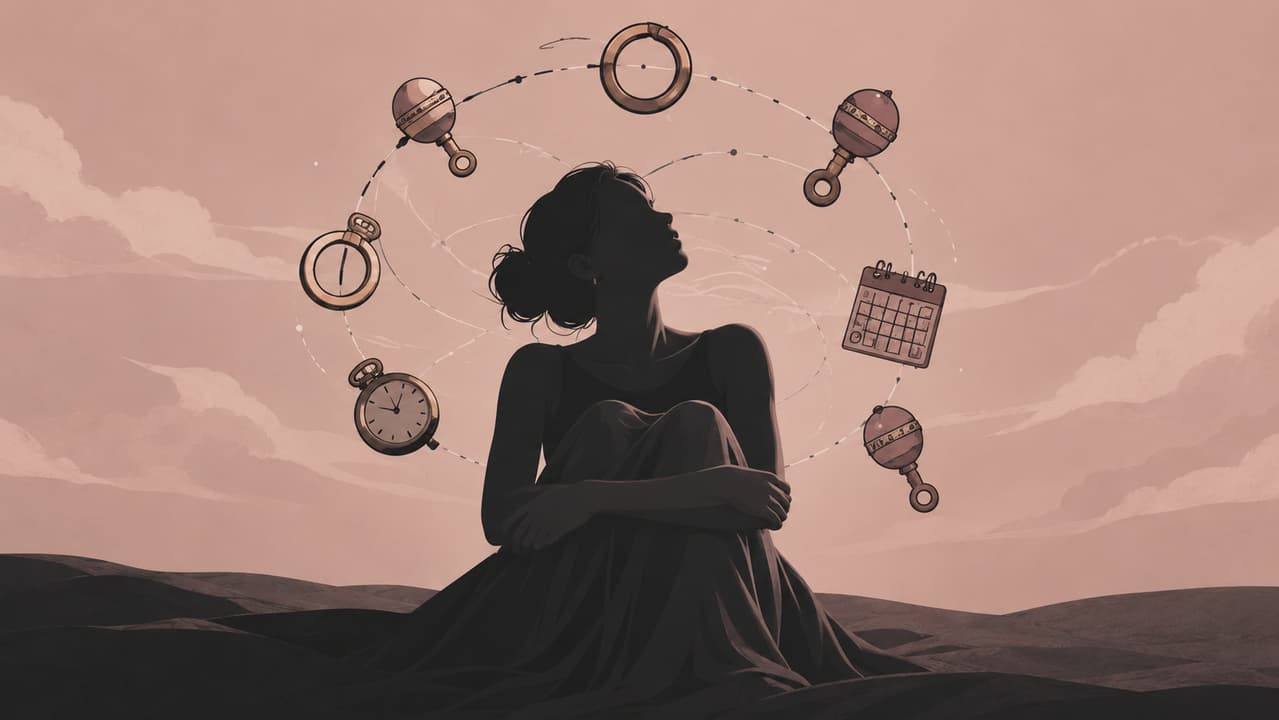
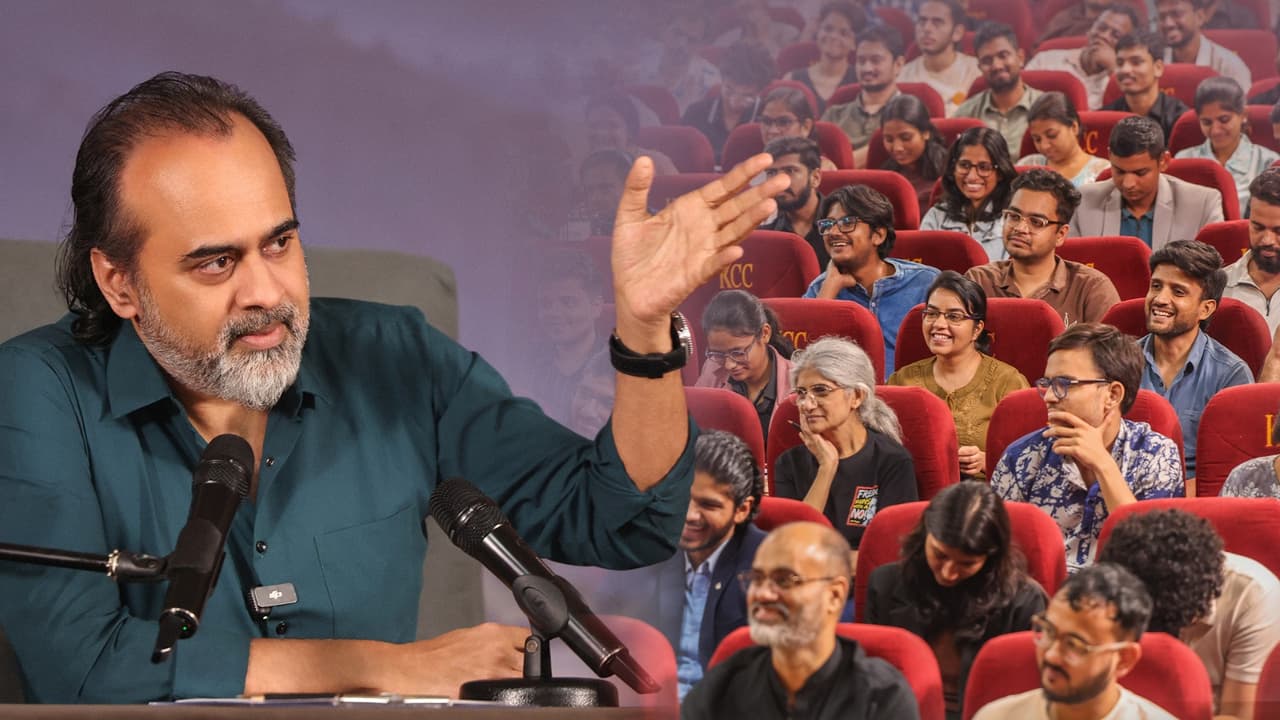
Many of us look for role models of our own gender and hope to succeed as a man or as a woman, yet no one great was ever great as a gender. The moment we tie our aims to being a woman or a man, we tie them to the body, and much of our attention goes into how we look and how we are seen. So much around us keeps reminding a woman of her body, from songs to the fear of a street at night. But the body has never achieved anything by itself. What might we attempt if gender stopped mattering?
Professional success alone cannot create lasting self-esteem because as long as identity remains tied to the body, biological and social conditioning continue to define self-worth. True confidence arises not from achievements but from questioning inherited roles, challenging unconscious conditioning, and refusing to let biology or society dictate life's purpose. Real fulfillment begins when consciousness becomes greater than bodily identity.
Acharya Prashant: Do not think that all the care that one takes to appease his body, all the lust, and all the bodily vanity is for nothing. It is a very, very calculated thing. Lust is needed so that you never get liberated. One requires one episode after the other
Acharya Prashant: Do you love the flesh called the eyes or do you love the sparkle in the eyes? Do you love these hollows called the eyes or do you love the light that shines through these hollows? Do you love the window or do you love the sun shining
The difference between your intellectual position and your evolutionary position is increasing day by day. So, technology is giving you great stuff, but you are responding to it in a chimpanzee way. So, here you have these cameras, wonderful things, but what do you do with this? What do you do with this technology? You do all the monkey stuff with this technology. Read more.....
Acharya Prashant: You have to ask yourself what your primary identity is. If your primary identity is that of the body, then do what the body commands you to do. Good. The body has an inbuilt software of its own, and it’s a self-improving software. Its capacity to keep improving
Remember who you are. Once the consciousness is out of you, you are nobody. They will not even keep your ashes. Dogs will dig at your bones if any remain. So, remember who you are. Had you just been the body, why would have they buried you in the ground, burned away the body? Who are you then? Let the funeral ground clearly tell you who you are. Read more....
Questioner: My question is about the relationships we share with our near ones. I find so many limitations in every relationship I have. What to do in situations where my parents do not understand me? What should I do to make them understand me?
Maturity is when you can transcend your body, and by the body, I mean the bodily compulsions. That includes your thoughts, your feelings, and everything because they are all bodily. You very well know how chemicals in the body translate into thoughts and feelings. Read more...
Acharya Prashant (AP): We have a fear of darkness. Being the physically evolved creatures that we are, darkness has always been a threat to us in the course of evolution. A part of our primordial psyche continues to remain afraid of darkness even to this date irrespective of our technological
Questioner (Q): Acharya Ji, Pranam! I do not want to ask philosophical questions as you have also rightly stopped me from doing so many times in the past. But here are some thoughts, knocking about in the head, and I want to know how to make them practical and behaviourally…
We are told that cleaner technology will solve the climate crisis. But emissions begin before any fuel is burnt, in a life that has no joy and so keeps reaching for the next lower pleasure: the party, the trip, the purchase. The demand for pleasure is not wrong. What matters is which pleasure we seek. Music, books, sport and real company cost the planet almost nothing. Can we look honestly at what our own consumption is trying to fill?
Many of us interrupt, rush to make our point, or change the topic when a conversation comes too close. We call it a lack of patience or discipline. But impatience in a conversation is often fear: when what we hold within is borrowed belief, every question could shatter it. The same confusion makes us take our instincts and feelings as ourselves, though they are only the body’s chemistry. If we looked honestly at what we hold, would a question still feel like an attack?
Many of us promise our parents high marks, and when the result falls short, the guilt can feel heavier than the exam itself. But no one controls results; they depend on far too many things outside us. What is in our hands is our intent, our effort and our honesty with what we study. The Bhagavad Gita says the same: our right is to action alone, never to its fruit. What if the only promise we made was to study honestly and with love?
Superhero films appeal to our desire to escape inner inadequacy through external power. The fantasy of an ordinary, fearful person becoming extraordinary reinforces the ego’s belief that more strength, money, possessions, or status will bring happiness. Consumerism follows the same pattern, endlessly adding objects to fill an inner void. Real freedom does not come from becoming more powerful or acquiring more, but from honestly seeing and understanding the ego that feels incomplete.
Spirituality does not replace the fear of ghosts with belief in God. It asks us to question the mind that creates both fear and belief. Ghosts, gods, and stories can all become projections of imagination. The spiritual path begins by dropping assumptions, investigating “Who am I?” and understanding the source of suffering. With attention, right knowledge, and self-inquiry, fear loses its power and one becomes inwardly free.
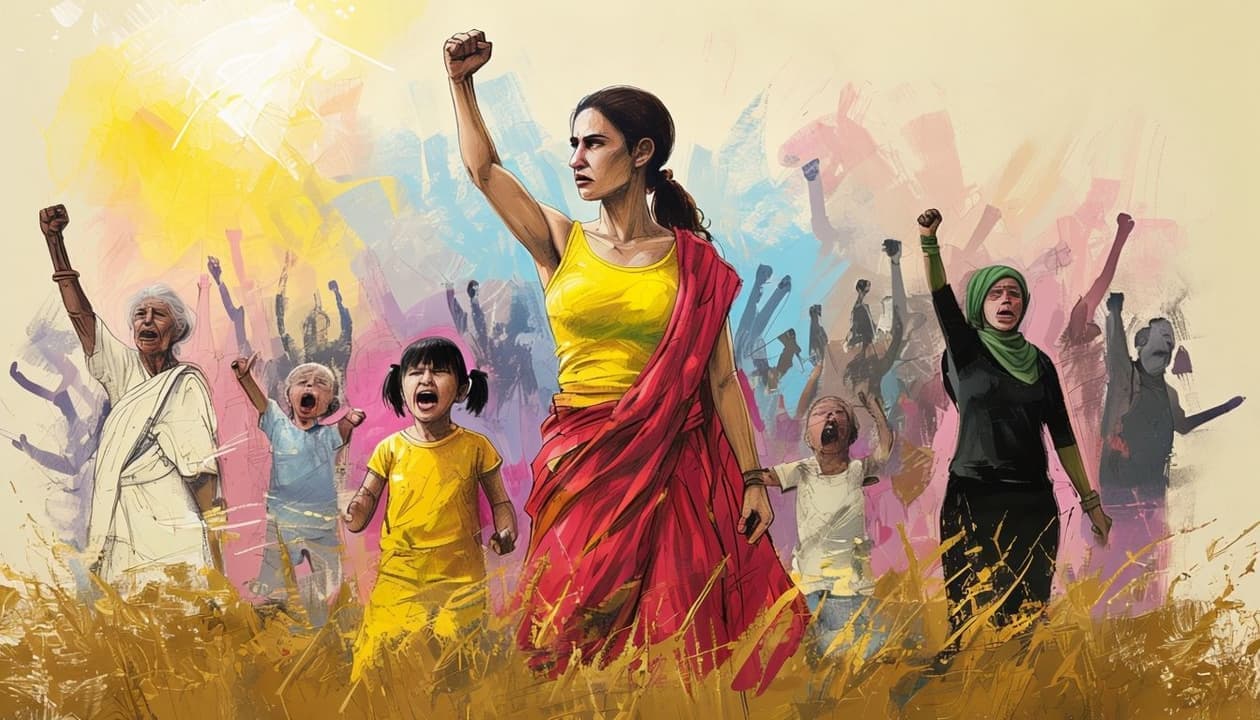
A modern woman calls herself liberated, yet lives anxious — anxious about age, desirability, marriage, motherhood. Acharya Prashant exposes this anxiety as proof that feminism never touched the real wound: centuries of conditioning that reduced women to bodies for pleasure and reproduction. External equality isn't enough. True freedom demands she reject the entire inheritance of tradition and simply become human — not woman, not wife, not mother by decree, but free.
Share
As long as the woman keeps thinking that her body is an asset, there is no freedom for her. The woman still thinks that the nest is her asset, that the nest is her protective cocoon. She cannot be a creature of the nest. The woman, by rebelling against the body, will be the harbinger of a revolution that will liberate entire mankind. The woman will have to actively rebel against the nest. There has to be a total revolution.
24
When you look at the body, you see that the body was founded by something outside of itself: one cell from the father, one cell from the mother. And whatever the body feeds on — food, water, air, sunlight — all of that comes from outside the body. You, who are conscious, have hardly anything in common with the body. Also, the wise man says, “The body is not mine,” because he doesn't control the body. The body will die one day whether one wants it or not.
Excerpts from Articles
ज्योतिष कितना सच है? कुंडली, ग्रह-नक्षत्र: इनका क्या अर्थ है?
वेदांत को केवल इसलिए सही या श्रेष्ठ नहीं माना जा सकता कि वह किसी विशेष परंपरा से आता है। विज्ञान जहाँ भौतिक जगत की वस्तुनिष्ठ जाँच करता है, वहीं अद्वैत वेदांत सीधे मनुष्य के ‘मैं’, उसके दुख, बंधन और मुक्ति की पड़ताल करता है। इसकी कसौटी वैज्ञानिक प्रमाण नहीं, बल्कि अपने जीवन में इसकी सच्चाई को देख पाना है। किसी दर्शन को मान लेना नहीं, बल्कि उससे स्वयं को मुक्त करना ही उसका वास्तविक उद्देश्य है।
Climate change is more than an environmental crisis—it is a crisis of human choices. Our patterns of consumption, consumerism and endless pursuit of more are putting increasing pressure on the planet. But meaningful change does not necessarily begin with new technology or stricter policies. It begins with a deeper question: what are we willing to change within ourselves?
Justice Without Boundaries: Why Compassion Cannot Stop at Species
Oppression should not see caste, gender, creed or colour, and it should not see species either. The moral threshold is sentience, not intelligence. An animal feels pain as fully as a human does, whether or not it can explain its suffering.
कई तरह के डर—अकेले पड़ने, छवि खोने या छोटा समझे जाने—की जड़ अक्सर अतीत में बनी पहचान और कहानियों में होती है। शरीर की हाइट जैसी चीज़ों को समस्या मानकर उनसे जूझने के बजाय उनकी अप्रासंगिकता को समझकर आगे बढ़ना चाहिए। अतीत को दबाने से मुक्ति नहीं मिलती; उसके करीब जाकर अपनी स्मृतियों, धारणाओं और पुराने पैटर्न को निष्पक्षता से देखना ज़रूरी है।
Struggling to choose between a secure job and the path you actually feel drawn to? This isn't really a question about careers. It's about why other people's opinions have so much power over you in the first place. Real clarity doesn't come from finding the 'right' choice. It comes from honestly looking at your own fear, again and again, until it stops running the decision for you.
It's one thing to take care of the body so that it doesn't interfere with your creative endeavours. And it is another thing entirely to put on makeup to enhance your value in other people's eyes. When you don't have value within, you put artificial value upon yourself as a compensation. But looking colourful on the outside does not help with the inward barrenness. And ultimately, it is the inner colour, vigour, truth, and love that we are all looking for.
Questioner: Why think so much about decisions? Shouldn’t our decisions be spontaneous? I like to decide in a free flow.
Acharya Prashant: So the questioner is stressing on the spontaneity of decisions. He says that he likes to decide in a flow. It's a good thing, your intention is good.…
2
Questioner: Good afternoon, my name is Aryan and I am in my first year. So, my question is how to control anxiety, as I have a problem called ‘Hyperhidrosis’ where my hands are too sweaty. So, without thinking, my hands and feet start to sweat and it’s because of anxiety,…
1
Acharya Prashant: Ask yourself, would you be equally anxious to buy a flat, if you didn’t have that flesh in your life?
Consumption promotes further consumption. So, if you are already addicted to one form of consumption, know that many other forms of consumption are just waiting to leap into…
…
…
…
This body is made of finite mortal, earthly elements. What happens to this body, and where this body comes from is no secret at all. This body comes from other bodies, and all the bodies arise from the soil just as all pots arise from the soil. The soil carries no specific form. When it takes the form of a pot, then it assumes a particular name and individuality. But that name and individuality are just play things for a little while. Sooner than later, the pot again meets the same earth, and the pot and the earth become indistinguishable.
2
Questioner 1: There's one thing that I feel that should be discussed is the true purpose of life. We all talk about it a lot. We all hear it a lot. But what do you think is the true purpose of life, and how does someone who is 20 years…
Acharya Prashant: First of all, you…
1
Questioner: We have always been eating meat and drinking milk; it has been there since ancient times. So, my question to you is, is animal liberation or the vegan movement consistent with the ancient times of our land?
Acharya Prashant: There are a few myths that need to be dispelled.…
O son, you have become habitual of thinking “I am body” since long.
Experience the Self and by this sword of knowledge cut that bondage and be happy.
~ Chapter…
…
Acharya Prashant (AP):
Pankaj, attachment is a quality of
Prakṛti
. Where there is stuff there is attachment. Things get attracted to each other and things repulse each other. You cannot find two molecules in the entire universe
…
Share
2
Physical weakness does not stay physical. It becomes mental weakness, and the ego, which turns everything into an identity, starts saying “I am weak” because that line brings support and spares it responsibility. Visible strength works even unused: it keeps the opponent outside wary and silences the one within, who can no longer claim to be helpless. Keeping the body strong is therefore a spiritual matter, not vanity. Are we holding on to weakness because it is convenient?
1
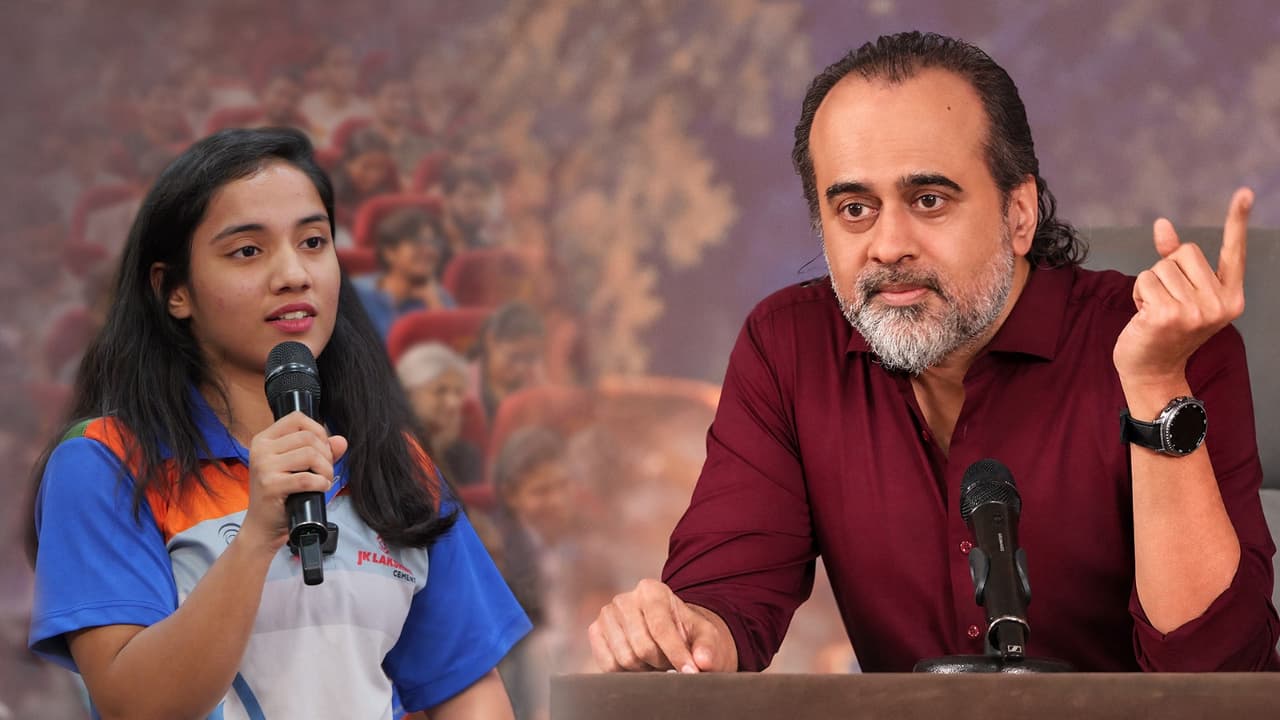
A world champion asks why she cannot sleep when a teammate outperforms her, and why even big wins leave her restless. The restlessness is not a problem but unspent energy, a sign that we have more to give. When every bit of our time and attention goes to what we have chosen, there is no surplus left to worry with. The right fight is never only against an opponent; it is against the ego within. What would it mean to fight so fully that nothing is left to celebrate or mourn?
1
We often defend a bad choice by pointing to a worse one: stay dishonest or starve, keep the wrong grip or stop playing. But the real trouble is not the option we picked. It is the option we never let ourselves see. Action does not need greed or attachment to find its energy. The third way begins by rejecting both false choices, without knowing what comes next. Which of our everyday choices are really false dilemmas?
5
Struggling to choose between a secure job and the path you actually feel drawn to? This isn't really a question about careers. It's about why other people's opinions have so much power over you in the first place. Real clarity doesn't come from finding the 'right' choice. It comes from honestly looking at your own fear, again and again, until it stops running the decision for you.
1
Climate change is more than an environmental crisis—it is a crisis of human choices. Our patterns of consumption, consumerism and endless pursuit of more are putting increasing pressure on the planet. But meaningful change does not necessarily begin with new technology or stricter policies. It begins with a deeper question: what are we willing to change within ourselves?
1
Science can examine material claims, but Advaita Vedanta deals with the subjective self, ego, suffering, bondage, and liberation—areas outside science’s objective framework. Vedanta need not be accepted because of one’s religion or tradition; its value lies in whether its insights can be personally verified and help free one from suffering. The ultimate responsibility is not toward any philosophy, but toward oneself: to live a truly free life.
कई तरह के डर—अकेले पड़ने, छवि खोने या छोटा समझे जाने—की जड़ अक्सर अतीत में बनी पहचान और कहानियों में होती है। शरीर की हाइट जैसी चीज़ों को समस्या मानकर उनसे जूझने के बजाय उनकी अप्रासंगिकता को समझकर आगे बढ़ना चाहिए। अतीत को दबाने से मुक्ति नहीं मिलती; उसके करीब जाकर अपनी स्मृतियों, धारणाओं और पुराने पैटर्न को निष्पक्षता से देखना ज़रूरी है।
A true relationship is not built on need, possession, or emotional dependence, but on a shared commitment to Truth and inner growth. A worthy companion reflects your reality like a mirror rather than performing a role to please you. Real love is effortless, rooted in one's nature, not expectations. When your highest commitment is to excellence and Truth, relationships become a natural outcome—not the purpose of life itself.
2
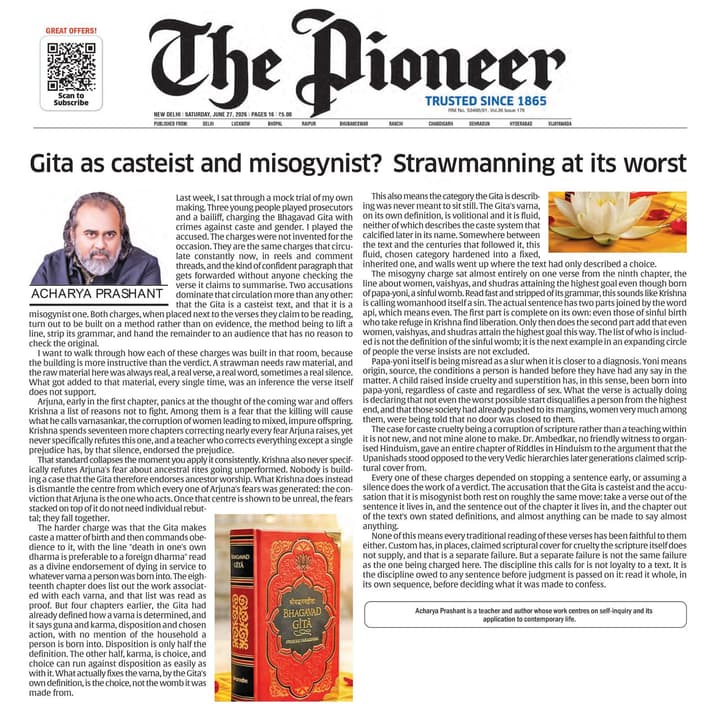
The Bhagavad Gita is often accused of supporting caste and misogyny through selective quotations that ignore context, grammar, and the text's central teachings. A closer reading shows that its emphasis is on inner qualities, conscious action, and spiritual equality rather than birth-based hierarchy or gender discrimination. Misinterpretations arise when isolated verses are detached from their broader meaning, while the Gita consistently points toward self-knowledge, freedom from ego, and the universal possibility of liberation for every human being.
Science and philosophy arise from different kinds of inquiry. Matter seeks continuity of state, while the ego seeks continuity of existence and constantly changes identities to preserve itself. Fear, danger, and suffering are rooted in the ego’s sense of “I,” not in material reality itself. Questions are valuable because they expose hidden beliefs, and genuine learning requires challenging assumptions through inquiry, dialogue, and self-examination.
6
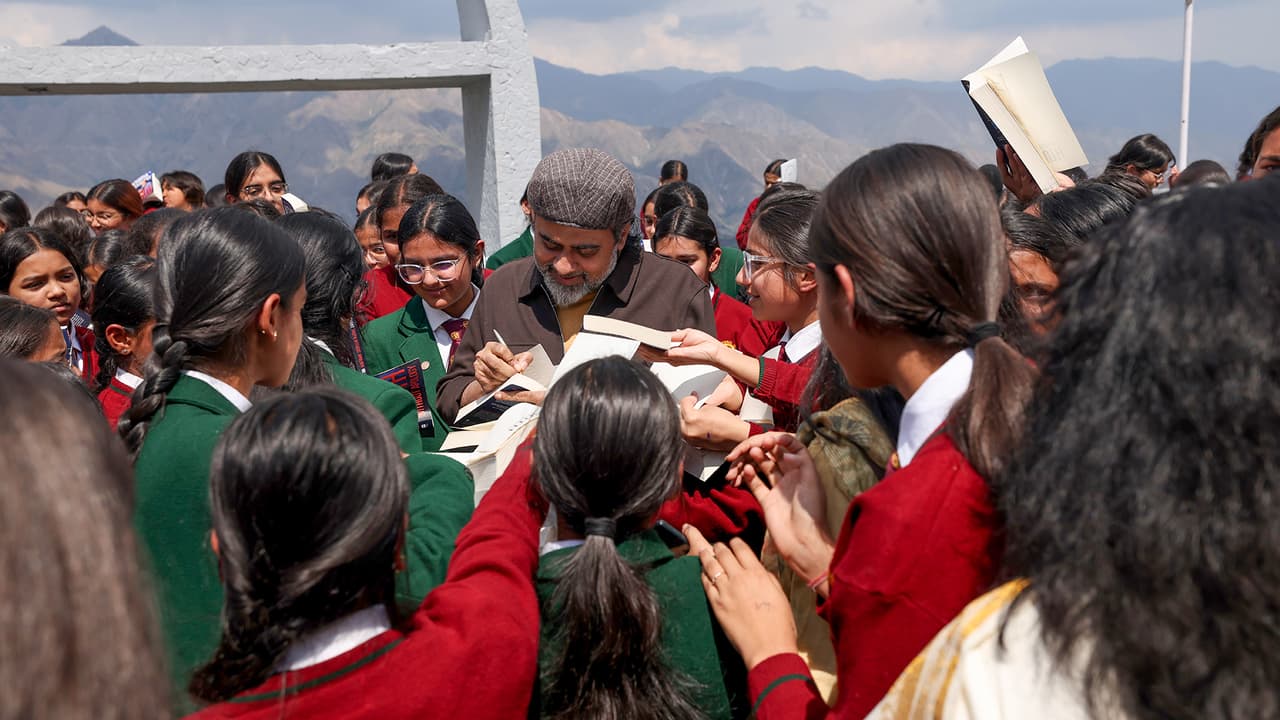
Sixty million followers do not necessarily indicate a transformation in consciousness. Large numbers may reflect persistent outreach rather than deep commitment. Truth is often avoided not through opposition but through indifference, convenience, and self-deception. Real change requires sustained effort, inner honesty, testing one's understanding, and the courage to face uncomfortable truths instead of seeking comfort, validation, or easy inspiration.
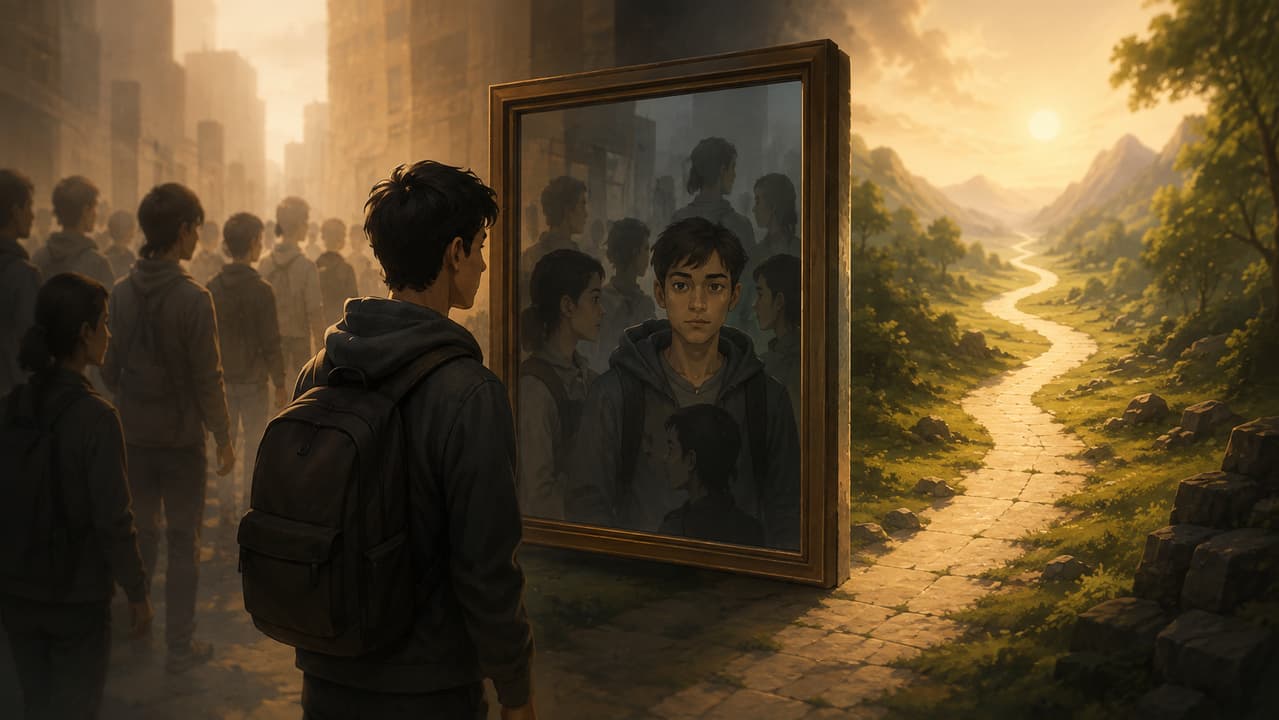
Fear, social conditioning, and painful memories often shape how people live and make choices. True growth begins by questioning inherited beliefs, refusing to remain trapped by past wounds, and acting from understanding rather than conformity. What appears to be sacrifice is often just the abandonment of conditioned habits. Freedom comes not from external systems, but from the courage to see clearly, learn, and move beyond fear.
Global conflicts stem not from geopolitical interests but from the ego's fundamental incompleteness. Nations are merely expressions of collective egoic consciousness. Leaders represent humanity's worst tendencies, not its average. The ego requires duality and boundaries to survive. True disarmament means detoxifying the ego itself. External wars reflect internal disturbance. No diplomatic solution addresses the root cause, only wisdom and self-knowledge can dissolve the ego's need for conflict and separation.
Our mood is always dependent on others and situations. Results have not been up to your expectations. So now you require a morale booster, some motivating speaker. The moment that fellow is gone, your energy also goes away. But there is another way of living. Deep within myself, I find a point that no external situation can touch. Whatever happens, happens on the surface. That will remain stable, uninvolved, a non-participant. Then you are really free.
1
The only principle that truly runs this world, created by all of us, is the principle of greed and power. What do you think that fellow has earned his billions for? He didn't become a politician to be noble. The only thing that separates us from animals is the intellect, not the center the intellect is operated from. Don't locate the problem and the responsibility somewhere out there. We change ourselves; the world changes.
Ignorance is not about not having some particular knowledge. Ignorance is not an absence; ignorance is having knowledge. That which your mind is full of is ignorance. Ignorance is your basic sustenance. In such a situation, this utterance, “In reality, you are the One,” I repeat, must not be taken as the Truth in the sense of an affirmation. It is a method to help you drop that which fills you up. All it is telling you is this: “You are an entire universe sitting in your mind; you are not that.”
There can be no self-respect without self-knowledge. And we have been repeatedly saying that the ego survives only in lack of self-knowledge. The less you know yourself, the denser and more crystallized your ego is. Self-respect is nothing but self-awareness. The more you know yourself, the more you realize who you are not, and that brings you to who you are. That is real self-respect, knowing oneself.
5
Shri Krishna is saying: the mind is conditioned to move towards objects and perceive only their surface, periphery, or form. Develop the practice of penetrating further. Let Truth be your practice. The moment you would look at something, and you are in no position not to look at things being embodied, you would look at things. Nobody said that you have to practice lust. Lust just comes. You might be a total fool, an utter retard, and still you will find yourself getting sexually excited once you reach a particular age. Did you need some practice? No, you didn’t. It just happened. But if you are to understand lust, if you are to cross over, if you are to be a master of your body, then it will require a lot of practice, and that will necessarily and obviously tell you about your predicament.
The tiger chases the buffalo calf and brings it down. Does that disappoint you? No, because that was expected. Similarly, expect animal behavior all the time from everyone around you, including yourself. Everything we do comes from the jungle, so don’t be disappointed. Disappointment always arises from expectations. You really have to strive to be someone who is not an animal. And the first step in that striving is to address your own inner animal.
18
A thousand feelings: envy, fear, hatred, competition will come to you. You cannot fight them all, and there is no need to fight them. Be courageous when that feeling comes, and sit down like friends and talk. Be honest that you are the one who is nurturing that feeling all the time. Be aware that it is coming. Let it not enter like a thief. And when it comes, don’t feel small. You only need to understand, not control.
14
Manifestation is simply an expression of your desire. You desire something, and then you imagine your desire has been fulfilled. What does the common man desire? ‘Give me more money.’ What will the politician desire? ‘Finish off democracy and give me power for life.’ We have very stinking desires. Do we ever desire anything that is really good for everybody? The question remains: Was that thing worth it? You gave it so much time, so much respect, did it deserve that?
Every living being, from humans to the smallest species, is trying to change the world to suit its own needs. But this is not intended to do any good to the world, it is just coming from the little ego. And the ego will not say, “I'm not all right;” it will try to change the world. So, if your idea of ‘good’ is only relative to your personal self, is it right to impose it on others? You must be clear about why you aspire to change the world, and whether you have brought about any change in yourself first.