The worldly philosophy says, “Even if you lead a corrupt life, at the last moment you utter ‘Ram, Ram’, and you are redeemed.” I say just the opposite. Even if you have lived a life of wisdom, you can still lose it in your last breath. Even your wisdom requires a supporting and nourishing ecosystem. You can never afford to be complacent.
Questioner: My question is that I heard that there are two cosmic energies, these two Cosmic energies will take out all the sufferings of the people, which are from treta yuga of Lord Sri Ram and Lakshman get received the cosmic energies from Sage Vishwamitra, those are called some bala
Acharya Prashant: We anyway live in attitudes, try to have a carefree attitude. Try to have an attitude of reasonless security, try to have an attitude in which you don't get daunted easily, you don't start shivering easily.
Questioner: Does the continuous remembrance of liberation lead one to the right way?
Acharya Prashant: One has to be reminded of it. It’s a very strange thing. One need not be reminded of the false, the false is anyway always ready to tempt you, assault you. One does not need…
Question: Sir, how does a mind that is enlightened look at life? What happens to its thoughts? Does its wiring change in response to fear? Does it change its response to emotions?
Question: I have been reading Buddha and Kabir for long, and both are my favorite. While reading them I realized that both had different methods to get enlightenment.
Acharya Prashant: She said that she feels worst today. She told that she came to India in 1989. Experience creates respect for her, the kind of commitment she has shown, the devotion she has put in all these years. And at the same time I found it quite tragic that
Question: What is the most fundamental step in the liberation of the Self? Is liberation of the Self a gradual process or is it instantaneous like switching on a light?
Question: Today I saw some children roaming outside my hostel. They were trying to get some money or food but no one came out to help them. In what ways can we help others?
Acharya Prashant: The thing is realization, enlightenment or sahajta, this is nothing objective, you doesn’t have to look at others, one cannot even know whether the other is realized or enlightened or not; that is not at all the way to go about it; because looking at the other you…
Acharya Prashant: If it’s a model, an idea, if it’s a thought then you can very easily say what is it that you have known; because then you have concluded something. When it comes to the Truth, when it comes to the Heart, you know that you can never say
Questioner (Q): Yes, so just again we haven't been able to talk about this conversation prior to this, but I’m sure you got a sense of it. What we like to do in this conversation is keep it very transparent and conversational. But what we like to believe is different…
Limit yourself to consciousness and learn about the ways of consciousness. If you can learn the ways of consciousness, that is the blessing of the Absolute.
The Absolute is not just another thing in the consciousness. The Absolute is when you go to the very root of consciousness. And how…
Question: I have a confused question. Can I confess that I don’t know if I want to be awakened or not! I am afraid to realise myself. I am curious but I am stepping back from the Truth.
Acharya Prashant: “I am afraid of being awakened!” You must be afraid.
Questioner (Q): It's an overwhelming moment of joy to have my revered teacher Acharya Prashant come here at such a short notice and share his wisdom with you all. I’ve had the privilege of listening to him for the past one year and also attending in-person Q&A questions which have
Many Indian parents keep their children, and especially their daughters, away from sport, even where coaches and facilities exist. The barrier is often not outside but in the parent’s own ideas: poor returns, uncertainty, and fixed notions of what a girl’s life must be. Blaming our own parents does not help either; our life is now our responsibility. Parenting is a decision of the greatest responsibility, and it begins with self-love. Can we love a child if we cannot love ourselves?
The balance between order and disorder should not be decided by personal likes or dislikes, but by what the task at hand requires. Sometimes a project demands discipline and order; at other times, more important work requires leaving things messy. The right action comes from responding to the actual need, not personal preference. Even sacrifice can be meaningful when it serves something important, but “staying backstage” should never become an excuse to avoid what one cannot tolerate.
Innovation is born from research, creativity, critical thinking, scientific temper, and original thinking—not imitation or appearances. A society that values honest inquiry over validation creates genuine progress. India's future depends on nurturing a culture that encourages questioning, respects originality, and pursues truth with intellectual honesty instead of settling for superficial success and empty displays.
Society has a role in practical matters, but it should never decide love, marriage, happiness, or the purpose of life. Real freedom begins when personal choices are guided by understanding instead of social pressure. While social norms help maintain order, they become harmful when they dictate relationships, career, or inner values. True happiness and love arise from freedom, not conformity, making every love story meaningful only when it is authentically one's own.
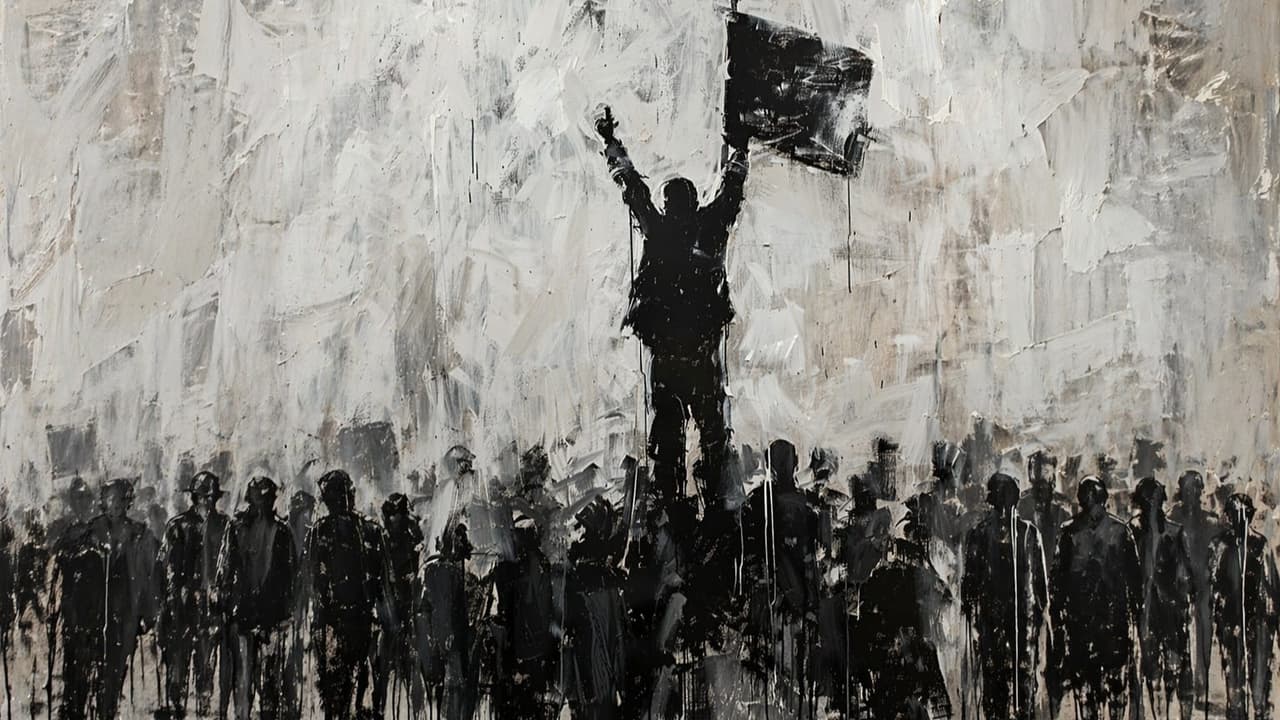
You look at Iran, at revolutions, and ask: can systems really bring freedom? Revolutions keep replacing one system with another, yet the chaos remains. The real question is rarely asked: what within us creates these systems? Real freedom is not political or social; it is inward. Without inner change, every revolution only rotates power, never resolves suffering.
The wish remains unfulfilled because that which we want by extending our dead life cannot be had through extension. It can be had only through termination of the dead life. So our ways are stupid. That which must be terminated is rather extended by us. We need to give death to death. This dead life needs to be brought to death, and then you will give death to a dead life, death to death, which is good. Instead we keep trying to prolong the dead life. And if you are prolonging a dead life, you are only prolonging the death that you are living.
8
In Zen, the student asks a question to the master, and the reply brings sudden enlightenment. It means something had long cluttered the mind, and in one deft stroke, like a genius, the master cuts the relationship between the ego and its belief. What Vedanta does through persuasive argument, the koan does through an abrupt shock.
7
So many books and gurus have created a very wonderful image of the enlightened one, and it is a totally unrealistic image. There is no scripture worth the name which gives any image of enlightenment. The realised one lives a very ordinary life, simply in the ‘facts.’ There is no spiritual or religious duty as such to become enlightened. No, not at all. You can be shamelessly unenlightened, and that is enlightenment.
7
The first way, the topmost one, is the Sahaja way (natural way). Krishna prescribes no method there. He says, “Arjuna, just come to Me and be seated in Me, be affirmed in Me, pretty steadfastly. Just do it. Simply, obviously, instantly.” That is the Sahaja way. “Do it directly, Arjuna. If you really are sincere, and if you really have love for Me, then do it right now, right here, right away. What are you waiting for? What do you require a method for? Nothing is needed. You have the intention, you really want it, you aren’t fooling yourself. I am here, come and be settled in Me and that’s it.”
Excerpts from Articles
Stuck Between Job Security and Your Real Passion?
Struggling to choose between a secure job and the path you actually feel drawn to? This isn't really a question about careers. It's about why other people's opinions have so much power over you in the first place. Real clarity doesn't come from finding the 'right' choice. It comes from honestly looking at your own fear, again and again, until it stops running the decision for you.
Climate change is more than an environmental crisis—it is a crisis of human choices. Our patterns of consumption, consumerism and endless pursuit of more are putting increasing pressure on the planet. But meaningful change does not necessarily begin with new technology or stricter policies. It begins with a deeper question: what are we willing to change within ourselves?
कई तरह के डर—अकेले पड़ने, छवि खोने या छोटा समझे जाने—की जड़ अक्सर अतीत में बनी पहचान और कहानियों में होती है। शरीर की हाइट जैसी चीज़ों को समस्या मानकर उनसे जूझने के बजाय उनकी अप्रासंगिकता को समझकर आगे बढ़ना चाहिए। अतीत को दबाने से मुक्ति नहीं मिलती; उसके करीब जाकर अपनी स्मृतियों, धारणाओं और पुराने पैटर्न को निष्पक्षता से देखना ज़रूरी है।
Justice Without Boundaries: Why Compassion Cannot Stop at Species
Oppression should not see caste, gender, creed or colour, and it should not see species either. The moral threshold is sentience, not intelligence. An animal feels pain as fully as a human does, whether or not it can explain its suffering.
ज्योतिष कितना सच है? कुंडली, ग्रह-नक्षत्र: इनका क्या अर्थ है?
वेदांत को केवल इसलिए सही या श्रेष्ठ नहीं माना जा सकता कि वह किसी विशेष परंपरा से आता है। विज्ञान जहाँ भौतिक जगत की वस्तुनिष्ठ जाँच करता है, वहीं अद्वैत वेदांत सीधे मनुष्य के ‘मैं’, उसके दुख, बंधन और मुक्ति की पड़ताल करता है। इसकी कसौटी वैज्ञानिक प्रमाण नहीं, बल्कि अपने जीवन में इसकी सच्चाई को देख पाना है। किसी दर्शन को मान लेना नहीं, बल्कि उससे स्वयं को मुक्त करना ही उसका वास्तविक उद्देश्य है।
Beautiful. “He who claims liberation as his own, as an attainment of a person is neither enlightened nor a seeker. He suffers his own…
Questioner: Namaskar Acharya Ji. You talked of Mukti. So, I would like to know, is it a Mukti from life and birth? I mean, more, If you can elaborate?
Acharya Prashant: Mukti from internal compulsions. The goal of life can be talked of as Mukti which is Liberation, which is…
…
The world might be stamping its feet in front of you, angrily,…
A man has to give up on greed, on this and that. A woman has to give up on the feelings related to the body. On all the assumptions and other stuff related to the body. Leaving the house, for her, is like becoming naked. And then the rest of the journey is very easy for her. If you have a woman who can drop her physicality, who can get rid of the basic woman-ness, then you have a great saint in front of you.
1
Acharya Prashant: Nachiketa is a mere boy dependent on his father, and he has the honesty and the guts to go to his father and say, “Of what use is all this that you are doing? Who will benefit from these old and sick and milkless cows?” I assure you…
Share
6
You go to a Dattatreya, or a Ribhu, or an Rishi Ashtavakra—they all will be quick to denounce virtues as much as they denounce vices because they focus on the actor and not the action. They focus on the doer and not on the deeds. Because they do not focus on the deeds, so for them, pious deeds are only as good or bad as profane deeds. For them, pious deeds or profanity both belong to the same dimension. They are talking of something beyond that dimension.
Answer: Assuming sufficiently good understanding of the brain and sufficiently developed scientific processes, anything can surely be done…
Buddha said, “Renounce the world and be a monk.”
While Kabir said, “Don’t renounce the world, be in this world, face…
How many hours do you spend meditating each day?
This is a trick question!
Whether you are “meditating” one hour per day or six, you are not truly meditating. This is because meditation is not something you do to escape life.…
Is life not ultimately a hall of mirrors?
Acharya Prashant (AP): No, what is meant by that? There is somebody outside the hall who can see that all this is happening. Yes, you project your world, it’s possible to see that you are doing that. So, life is…
…
Acharya Prashant: It is neither. Liberation is just another name for the Self. The Self by nature is liberated. Hence…
Speaker: Helping others is great. But to help others, we must first be free of our…
Share
…
Share
1
Human beings are not born human beings; they have to be educated to become human beings.
A human baby needs to take two births before it can be rightfully called as a human being. There is ignorance, there is greed, there is envy, there is lust, there is fear, there…
Share
Acharya Prashant:
What you call as ‘knowing’ is just thinking. It is a mental activity. Do you know of anything that is beyond the mind? You know of so many things in this world. Right? List them and see whether anything that
…
…
Acharya Prashant Ji: It’s like a jigsaw puzzle. (Pointing at the arrangement of posters on the wall) Do you see this arrangement there? Let us say that this is…
…
2
Questioner (Q): Is ego pride? What is enlightenment?
Acharya Prashant (AP): Ego is the ‘I’-feeling that causes you suffering.
Pride causes you suffering, but it is not merely pride that causes you suffering: even the opposite of pride causes you suffering. Taking yourself as too big will cause suffering, but…
I know what you meant when you said, the last stage is the absence of the thinker. “To study the way of the Buddha is to study oneself. To study
…
1
We often defend a bad choice by pointing to a worse one: stay dishonest or starve, keep the wrong grip or stop playing. But the real trouble is not the option we picked. It is the option we never let ourselves see. Action does not need greed or attachment to find its energy. The third way begins by rejecting both false choices, without knowing what comes next. Which of our everyday choices are really false dilemmas?
2
Seen a bubble in the sea?
That is our story.
You came with the hands empty, empty,
and nothing will you carry.
So why be caught in misery?
Make merry, make merry!
Who is your family?
Who is a lover really?
You are deep in illusion, happily, happily
fooling yourself…
2
We often believe we are living freely, while our desires, dreams, beliefs, and choices are shaped by physical, social, cultural, religious, and psychological scripts. These scripts offer comfort and security, making us reluctant to examine our bondage. Freedom does not begin by imagining what lies beyond the script, but by deeply observing the cage we already live in, without fear, desire, or attachment.
1
True learning is not built on memorizing answers but on understanding reality. Memory may help in examinations, but life constantly presents new questions that demand clarity, presence, and intelligence. Education becomes meaningful only when knowledge is deeply understood and lived, not merely remembered. Real understanding frees us from dependence on rote learning and enables us to respond wisely to every new situation.
2
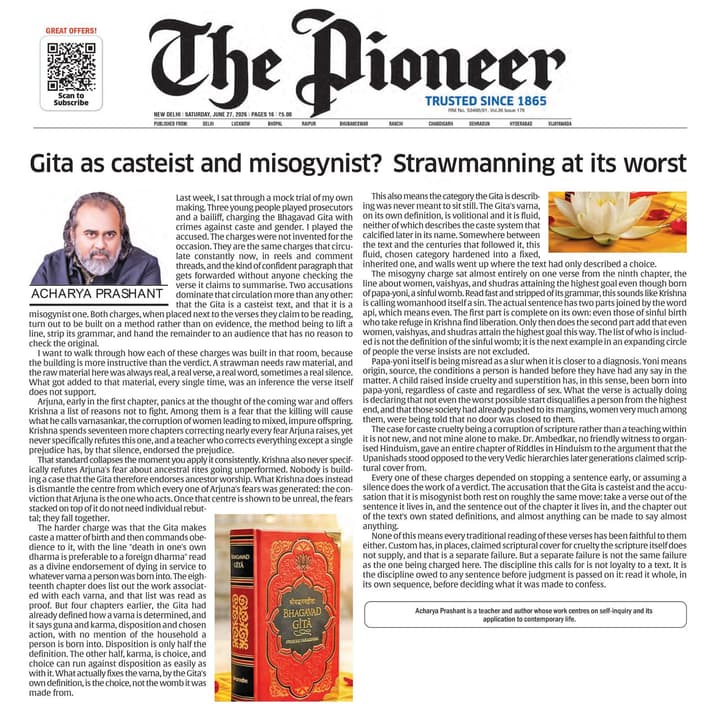
The Bhagavad Gita is often accused of supporting caste and misogyny through selective quotations that ignore context, grammar, and the text's central teachings. A closer reading shows that its emphasis is on inner qualities, conscious action, and spiritual equality rather than birth-based hierarchy or gender discrimination. Misinterpretations arise when isolated verses are detached from their broader meaning, while the Gita consistently points toward self-knowledge, freedom from ego, and the universal possibility of liberation for every human being.
6
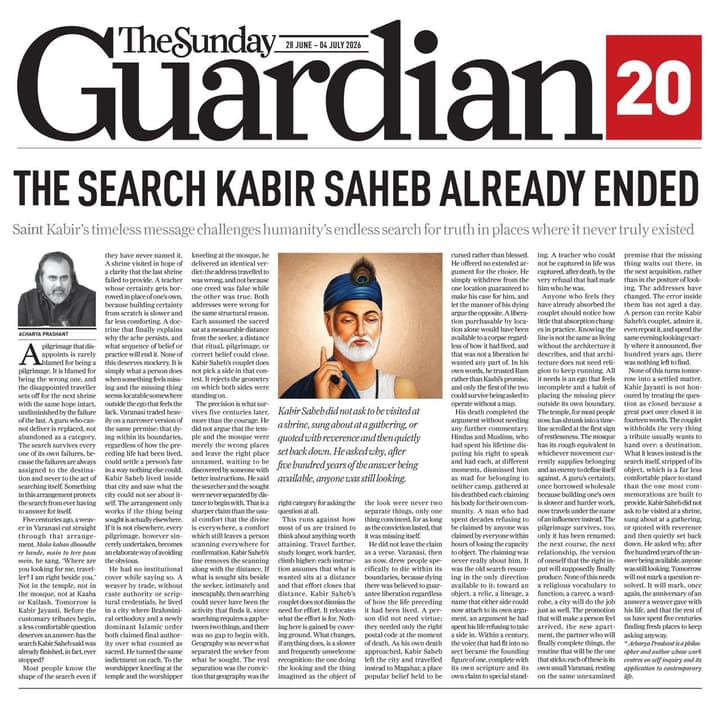
Kabir Saheb's message questions the very act of searching for fulfilment outside oneself. Whether through religion, relationships, success, possessions, or identity, people keep assuming that what is missing lies somewhere else. The problem is not the destination but the belief that fulfilment exists at a distance. Real freedom begins when the search turns inward, recognising that the seeker and the sought were never truly separate.
1
Freedom begins when a person stops handing over the authority of life to others. Society, family, and tradition can offer opinions, rewards, or disapproval, but they cannot truly stop someone unless there is inner dependence on their approval. Many conflicts that appear external are rooted in psychological dependence, fear, greed, obligation, or the desire for validation. Clarity does not come from controlling every outcome; it comes from ensuring that decisions are not driven by inner confusion, and then allowing life to unfold naturally.
1
Freedom is often assumed to be the ability to choose, yet most decisions arise from conditioning, biology, social influences, and habit. Real freedom begins by seeing how mechanical and unconscious life usually is. As awareness deepens, confusion and endless options gradually diminish, making life simpler and more direct. Liberation lies not in imagining freedom, but in recognising and understanding the forces that keep one bound.
4
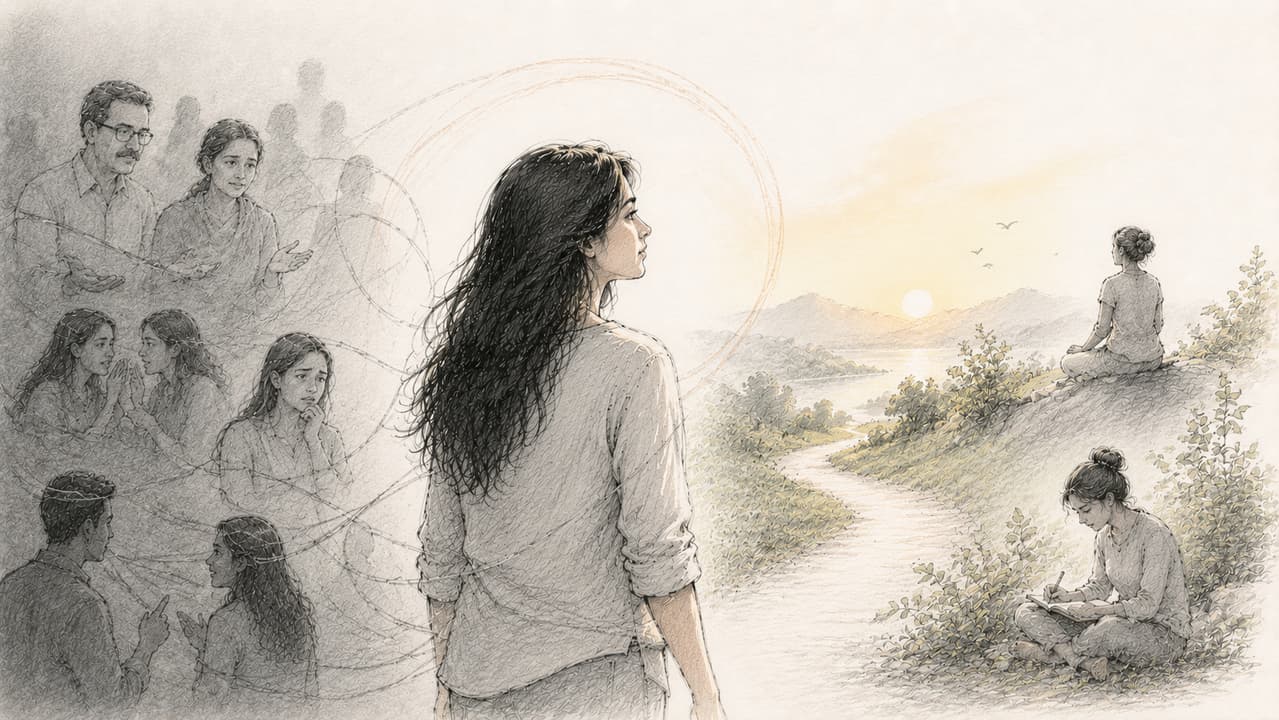
Inner freedom becomes impossible when identity is borrowed from family, friends, or social expectations. Fear, guilt, and pressure arise because people allow others to define their worth and choices. Relationships become healthy only when they support growth rather than control it. Real autonomy comes from self-understanding, continuous inner inquiry, and the courage to act from clarity rather than conformity. When there is inner certainty, labels, criticism, and social judgment lose their power.
The climate crisis is not merely an external environmental problem but a reflection of inner human greed, desire, and psychological disorder. Drawing from the Gita’s idea of yagya as desireless action, it says real ecological healing requires inner transformation. Outer pollution, exploitation, and destruction mirror the ego’s inner confusion, making personal consciousness and planetary health deeply inseparable.
3
The debate around nudity and movements like “Free the Nipple” miss a deeper issue: true freedom is not about clothing, but freedom from psychological conditioning and body-based identity. Clothes themselves neither oppress nor liberate. A truly free society is one where the body becomes ordinary and irrelevant, not a source of obsession, shame, validation, or social control.
You are not truly young, you carry centuries of inherited beliefs, prejudices, and conditioning. Youth is the ability to change and create the new, not follow fixed patterns. Before asking what to do next, question and free yourself from the past. Only by breaking from inherited constraints can genuine freshness emerge.
8
Acharya Prashant (AP): That which you call “Vipassana” today, is a very recent phenomenon. They claim that it comes from the Buddha, actually, it is not. The stream flowing from Buddha got extinct around the 8th or 10th century AD. This modern Vipassana came up in Burma, just around a…