Questioner: Acharya Ji, behaving by cultural norms, societal norms is truth or false?
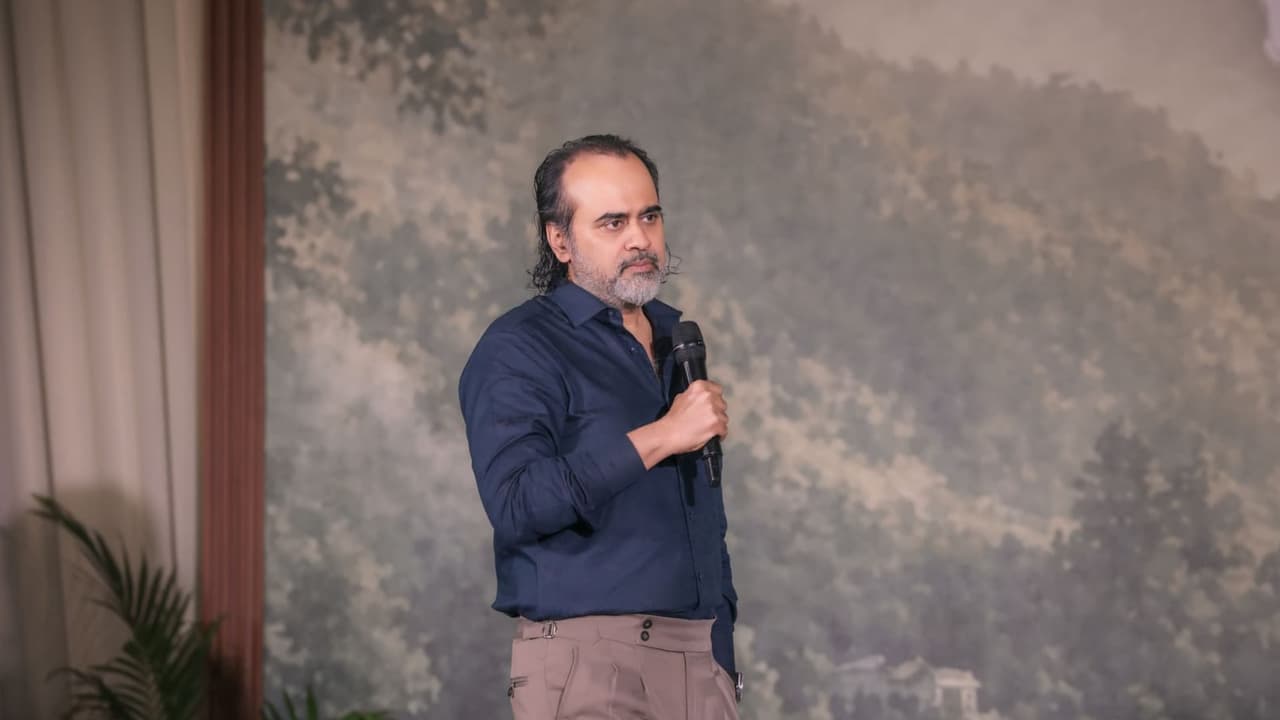
Acharya Prashant: See, things have their respective places. The question is: if you behave as well, social norms, what about you? You arranged a place for me, and I am sitting here. It is a social arrangement. But my answer to you is not social. So both have their place. Whatever is peripheral and unimportant can be left to the society, but whatever is intimate, really valuable, really important, really significant, must not be touched by the society.
This place that you are, according to me, the social place, the welcome that you gave me, is more or less a social welcome because that's what you give to every visitor. It's the norm, is it not? You didn't especially reserve it for me. It's a social thing.
But even if you don't give me this sofa, I am sure me and Dusan would comfortably sit here, as we have been sitting most of this last week. Our answers won't really change because the answers are not social. And if our responses, our relationships, start becoming social, then it's a tragedy.
What is social also has a place. That rose was quite bumpy, so I needed something to support my back. Thank you for giving me this comfortable cushion. But all it does is it supports my backside. It will not enable me to come up with what I am saying to you. Even the best of sofa sets will not produce these answers. Yet it has some value. It has some value.
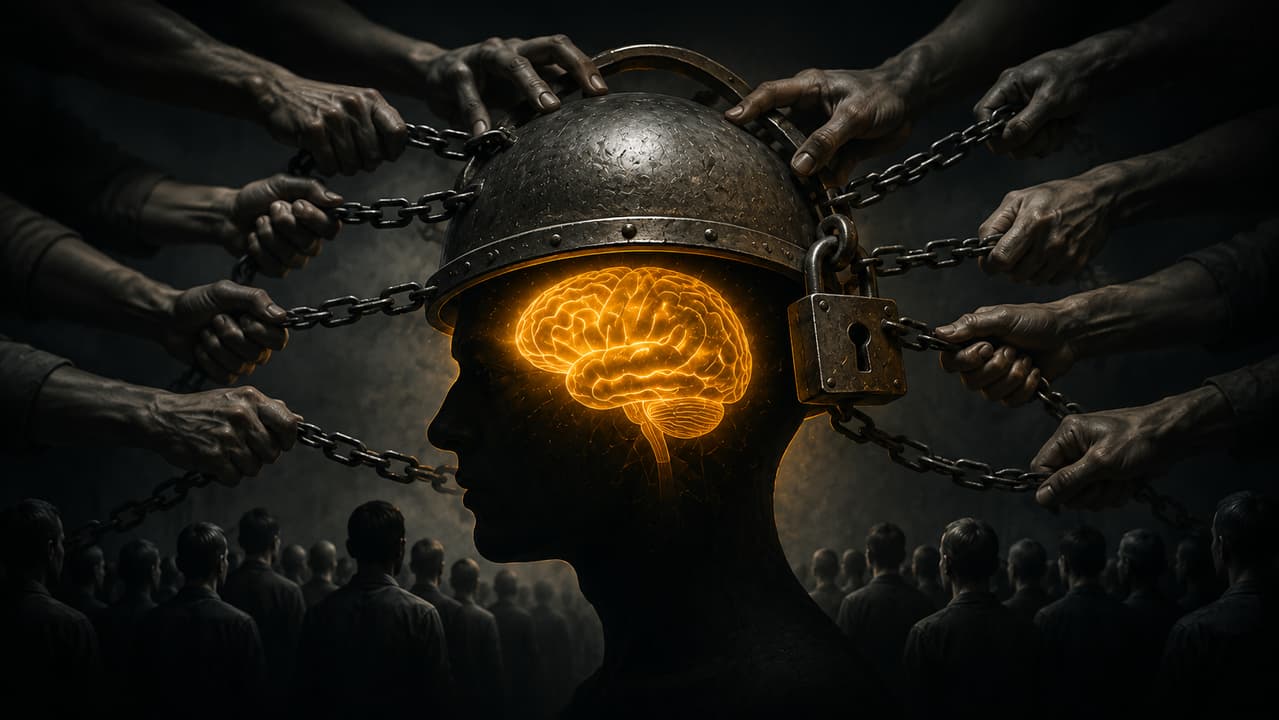
So whatever is social has some value, but let's not exaggerate it beyond its proper value. Let's not allow society to enter the very heart of our homes.
Society will dictate what is the number of the house, right? That's the social thing. They will tell you your house number is A-1151, and you can very well have that plate outside the house. But if you have a temple inside the house, and the society starts dictating which God you will worship, then the society is exceeding its limits.
If society starts dictating how you would be in your bedroom, then you have totally lost it. If society starts dictating matters of love and joy and freedom, then you do not know what it means to be a man.
But yes, society is telling you that there is a particular road, and you should walk on the right side. And when there is a traffic signal, you should stop. You should follow all these instructions of the society because these are small matters, and they make life a little convenient for everybody. So in these things, the norms set by society can be, and must be, easily respected.
You know, we make a mess of everything. We do not follow the traffic signals, but we follow the society when it tells us whom to marry. Society is telling you to follow the traffic signals that you violate. We act like rebels, but when it comes to rising in the right rebellion, then we find we do not have the courage. Then we allow society to dictate terms.
So it's a thousand people are sitting, and they are all applauding. See how great you feel. We have given society a right over your happiness. If a thousand people have been wearing something, see how tempted you feel to wear the same thing. Ten years back, very few women would have that straight fall of hair. Today everybody must. Now society is transgressing. Do not allow it to do that.
I hope that young people here are not choosing their courses and departments out of social concerns. It happens. In 2008, we had the great economic meltdown, and suddenly the IT and CS seats in colleges started going weak. 1995 to 2008, the CS seats in B.Tech. were the most in demand. You see how society is dictating what we would study.
Tomorrow, if some other field starts rising, starts rising in the sense of commercial rise, just commercial rise. You'd find that new courses are being floated in universities, and there are a lot of takers for them. MBA in retail and retail management, and five years back nobody wanted to touch them.
These things cannot be social. Society cannot dictate what you will do, have your life’s work. There you cannot allow society to interfere.
Questioner: Steve Jobs, soon, was going to die. He made a very famous convocation speech. What he said: "In life, destiny cannot be predicted. Only when you face death and you can see the dots, and you can connect the dots."
So do you think that life is predestined, or we decide what our life is going to be? Because they're both ways of looking at it.
Acharya Prashant: What is your daily experience?
Questioner: Both. Sometimes you feel it is destined. Sometimes you feel you have the right power to determine what you want.
Acharya Prashant: If you ask a question that your neighbor is prompting you, then life is predestined. If you ask a question that is arising from your understanding, then there is free will. That's it.
You have the opportunity for freedom, but you also have the freedom not to be free. And if you decide that freedom is not your cup of tea, then you have destiny. If you decide that you are not prepared to pay the price for freedom, then external circumstances will dictate the flow of your life. That is destiny.
The gender you are born in, the country you are born in, the economic strata you are born in, the times, everything external that will take control of you. That is destiny. It's in your hands. Even destiny is in your own hands. You can decide to be a slave of destiny, or you can decide that you love freedom more.
Questioner: Acharya Ji, how do we maintain the balance between freedom and social obligation?
Acharya Prashant: Freedom is far too big to be threatened or touched by social obligations. So there is no need to maintain a balance. What does one maintain a balance between, the infinite and the petty? Social obligations are petty. Freedom is sacred and infinite. There is no question of a balance.
But when something is overwhelmingly large, then it is also very sure and confident about itself. It doesn't feel insecure or threatened. So I am so sure of my freedom that if you want me to fulfill a few social obligations, I would willingly fulfill them. I would not take them as an assault on my liberty. It's not, right? My nature is freedom. Who can take it away?
So if you want me to speak in English, I'm alright. It's a social thing, right? If you want me to speak in Hindi, I'm still alright. I will not start insisting that I speak only one particular language. I often wear this. Sometimes we have western formals. Somebody says, "No, ahead of this particular place only western formals go." I have no problem. I willingly oblige.
My freedom is so large that these small things do not make a dent in it. There is no question of balance.
You know, when you have something that is beyond destruction, then you get the freedom to play with it. You do not need to protect it anymore. You can expose it, throw it away, play with it, because you are fully assured that it will not go wrong, will not go bad, it will not break.
The one who is really, really free will have no problems role-playing even as a slave because he knows very well that... but let that not become a nice excuse.