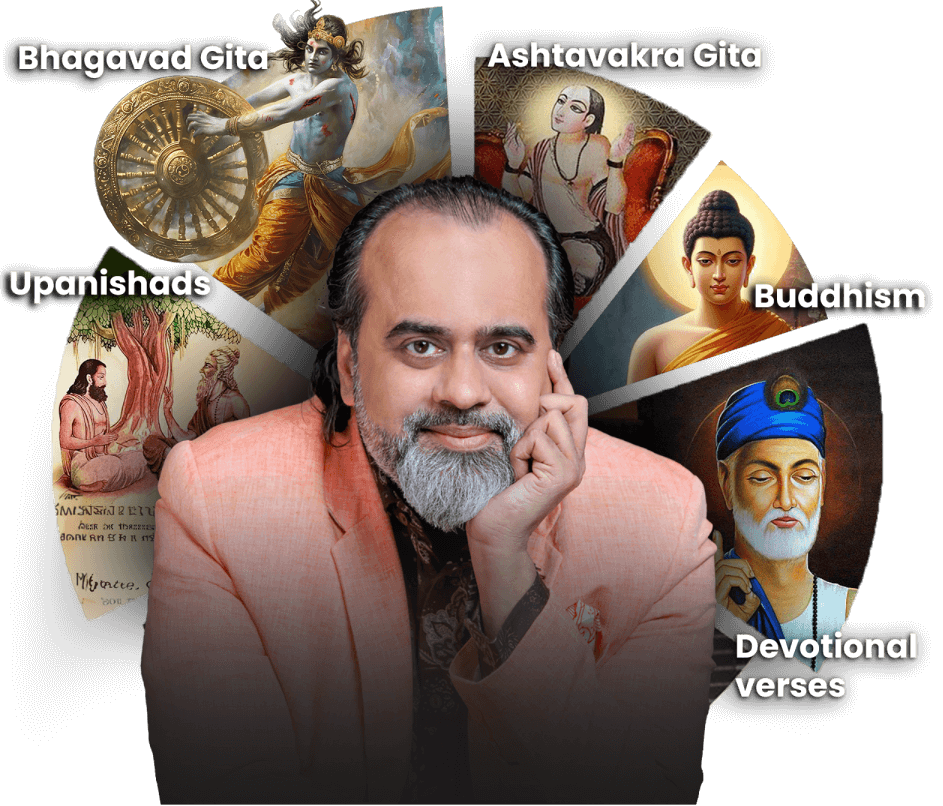
Do the utmost that you must in any situation, and you will find only the joy of right action. Tears are for those who turn away from their responsibility. If you were truly dedicating your energy rightly, how would you have any left to weep? So fight so hard that you either win or perish. If you win, the glory is yours. If you perish, at least all suffering is gone.
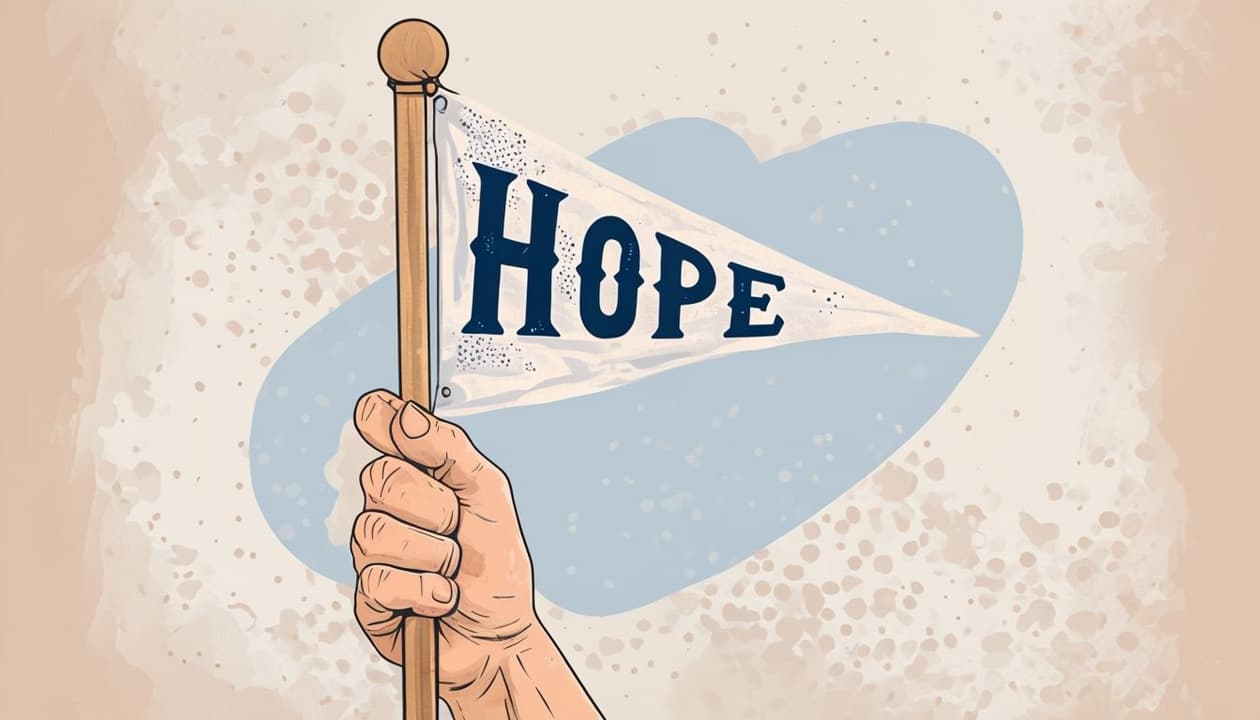
Most of the times, we are preoccupied with the first kind of hope, which says, “Get something, get something.” That kind of hope will keep me dependent and afraid. The second kind of hope which says, “I just want to get rid and discover my true nature, discover my aloneness and freedom." In this hope you say, “I am already a diamond. Just that a lot of dirt has gathered on the diamond, and I want to get rid of the dirt.
Relationships normally proceed because people need each other. “I need you and you need me. I will fulfill your desire, you will fulfill my desire. Let’s connect.” And the day someone becomes needless, useless for you, it becomes difficult and unnecessary to carry on with him or her.
You want the other person to be nice. We are such idiots. We want the other person to be nice. And if the other person is not nice, we feel there is no love. We do not understand anything. We are prepared to give up our life probably when somebody
A relationship of dependence cannot be a healthy relationship. A relationship in which the other becomes central towards your well-being is not a welcome situation.
“I am pious and I have holy intentions”—this was the first piece of fake news invented by man. All attempts, all intentions, all likes and dislikes, all decisions ultimately boil down to just the prakritik
There was a kids camp, I have freshly returned from there. I bought three or four masks, really scary masks as per my standards, and I wore those masks. I also bought a couple of rubber snakes, and I took those rubber snakes, and when the kids were sleeping, I
Wherever there is an objective, there would be fear associated with it. You hope to get something and you fear that you may not get it. So, if the boss wants to get work done, he threatens the employee. No other engine is possible; only when he is afraid will…
When you say that you go to your workplace for a purpose, is the purpose ever the work? The purpose is the salary cheque. In fact, if work could be bypassed and you could straightaway reach the salary cheque, then who would want to work? Is work the purpose really?
Questioner (Q): Sir, many times in life we go through such periods where we lose our hope, and there's absolutely no motivation and we feel very down. And no matter how much harder we try, nothing works out. So sir, how do you push yourself through these worst phases of
Do not wait for the great institutions to act. Do not wait for the right day to arrive. Do not wait for your capacities to build up. In your little capacity, in your little way, do whatever little you can.
Let’s assume for a while that your worries about the future are founded in facts. Let’s say some grand evil army is invading your little fortress and you can see them all coming with your binoculars, and you are estimating that they will reach you in another four hours. They…
Questioner (Q): How do we know what is useful for us if we are in ignorance? How we can decide if maybe that movie, which we don’t like, and we should give up because we think that will actually benefit us? So, maybe there is a point of we are
When somebody comes to you and says that he is bothered about what happened yesterday or last month or ten years back—and that somebody could be yourself—when you feel that you are bothered with what happened yesterday or ten months back or ten years back, then you should immediately know
Worrying is the other name of hope. When you think negatively about the future, you call it worry. When you think positively about the future, you call it hope. So, worrying is just as equally bad as hoping.
You have all the right to make a choice. But if you make a choice and don’t do justice to it, then that is very bad. In fact, correction of choices happens only when you have first of all fully tried out what you are doing. Unless you dedicate yourself
Questioner: An episode in my life haunts me. It’s me who keeps on revising that ugly memory when there is a similar situation? How do I prevent myself from such an emotional self harm?
Questioner: When I send Advait’s broadcasts to the world, the world sends me back some stupid videos and posters, and that irritates me a lot. Though I delete them, yet I remain disturbed. What is this disturbance?
Acharya Prashant: This disturbance is your hope that your relationships are all not
Questioning pseudo-science and superstition is the first step toward genuine freedom. Beliefs such as *Vastu, Kundli,* and *Muhurat* should not be accepted merely because they have been followed traditionally. Fear and attachment to privileges often prevent people from questioning authority. A truth-seeker must be willing to challenge age, status, and authority. Human progress has come through curiosity, inquiry, experimentation, and reason—not through blind obedience.
Desires and beliefs may keep changing, but the deeper tendency to believe, think, choose, and seek fulfilment often remains unchanged. Real transformation begins by examining this constant inner pattern rather than changing superficial preferences. Instead of seeking conclusions about greed or desire, honestly observe recurring behavior and support the truth you already recognize. Expressing that truth can dissolve false identities, relationships, and habits, creating space for genuine change.
Detachment and ambition are not opposites. Both arise from clear insight into what is truly valuable. Detachment means naturally dropping what is seen as false, futile, or harmful, while ambition means pursuing the highest and most meaningful truth with complete intensity. Spiritual surrender is continuous: as understanding deepens, false attachments are repeatedly abandoned, until renunciation becomes natural and almost choiceless.
Success and failure matter less when your work is driven by love rather than outcomes. Setbacks are opportunities to reflect, not reasons to quit, and true failure comes only when you stop trying. Regret and guilt become meaningful only if they transform you into a different person instead of becoming excuses for self-pity. Real growth begins by questioning your assumptions, facing reality honestly, and living with awareness rather than mechanical habit.
What is the relationship between quantum physics, consciousness, and the ego? This dialogue explores where scientific inquiry ends and self-enquiry begins. Through Vedanta, Acharya Prashant explains why the ego clings to its own existence, how beliefs and superstition shape our lives, and why lasting freedom lies beyond conditioned thinking.
The first kind of hope says, "I want to get something," while the second says, "I want to get rid of something." Most of us focus on the first kind, which keeps us dependent and afraid. The second kind urges us to shed everything and discover our true nature. If you must hope, hope for the second kind—hope to free yourself from societal bondage, fear, and all that’s accumulated. You are already perfect, like a diamond. What can a diamond want? What more can be added to it? Just remove the dirt. Hope to get rid of the dirt.
Acharya Prashant: What is the fact of life? How do you react to your own sweat? Have you seen how one reacts when one is sweating? The trickle can be quite unnerving. Have you seen the aggression with which one often wipes out his sweat? The aggression, the frustration, the…
Acharya Prashant: What is ‘hope’?
First of all, it is an obvious matter to see, that hope is always located in the future. And hope is always related to the expectation of – getting something, or not losing something.
So something good will happen in the future – this is…
Excerpts from Articles
कद नहीं, अपनी कहानी बदलो
कई तरह के डर—अकेले पड़ने, छवि खोने या छोटा समझे जाने—की जड़ अक्सर अतीत में बनी पहचान और कहानियों में होती है। शरीर की हाइट जैसी चीज़ों को समस्या मानकर उनसे जूझने के बजाय उनकी अप्रासंगिकता को समझकर आगे बढ़ना चाहिए। अतीत को दबाने से मुक्ति नहीं मिलती; उसके करीब जाकर अपनी स्मृतियों, धारणाओं और पुराने पैटर्न को निष्पक्षता से देखना ज़रूरी है।
Victory is not decided by the trophy you hold but by the battle you choose to fight. Real strength lies in making the right decisions, staying true to your deepest values, and refusing to be ruled by fear or circumstances. When your actions arise from clarity rather than ambition, the outcome loses its power over you. The moment you choose the right path, you have already won.
You Don't Understand the Bhagvad Gita, But You Still Claim That You Love Krishna?
The Bhagavad Gita deserves reverence not because of inherited beliefs about its author, but because of its power to dissolve falsehood and reveal Truth. Real devotion is not ritual or blind faith—it is understanding, inquiry, and living the wisdom of the Gita. Through sincere study, one discovers the true meaning of Krishna, making the Gita the most authentic path to knowing and worshipping Him.
Animal cruelty: Who deserves mercy, and who doesn’t?
Violence begins long before the knife or the slaughterhouse—it begins with the ego, the one that draws boundaries, seeks justification, and decides who deserves compassion. Laws and reforms may reduce suffering, but they cannot end violence while the ego remains intact. When the ego dissolves, exploitation ends naturally, and compassion no longer depends on regulation or moral boundaries.
Struggling to choose between a secure job and the path you actually feel drawn to? This isn't really a question about careers. It's about why other people's opinions have so much power over you in the first place. Real clarity doesn't come from finding the 'right' choice. It comes from honestly looking at your own fear, again and again, until it stops running the decision for you.
Climate change is more than an environmental crisis—it is a crisis of human choices. Our patterns of consumption, consumerism and endless pursuit of more are putting increasing pressure on the planet. But meaningful change does not necessarily begin with new technology or stricter policies. It begins with a deeper question: what are we willing to change within ourselves?
ज्योतिष कितना सच है? कुंडली, ग्रह-नक्षत्र: इनका क्या अर्थ है?
वेदांत को केवल इसलिए सही या श्रेष्ठ नहीं माना जा सकता कि वह किसी विशेष परंपरा से आता है। विज्ञान जहाँ भौतिक जगत की वस्तुनिष्ठ जाँच करता है, वहीं अद्वैत वेदांत सीधे मनुष्य के ‘मैं’, उसके दुख, बंधन और मुक्ति की पड़ताल करता है। इसकी कसौटी वैज्ञानिक प्रमाण नहीं, बल्कि अपने जीवन में इसकी सच्चाई को देख पाना है। किसी दर्शन को मान लेना नहीं, बल्कि उससे स्वयं को मुक्त करना ही उसका वास्तविक उद्देश्य है।
Speaker: Keep hoping. The other day somebody was quoting the Quran to me. There was a beautiful verse there. It said, “Go out. Look at the entire world, and…
Relationships are…
…
In fact, the other that has become central to your well-being, is he even worthy of offering you that wellness? Chances are he might himself
…
narrative—food, comfort and sex. That’s what we live for, that’s what we act for, and
…
…
Acharya Prashant (AP):
Dropping the feeling that I already know what is best for me. Would you call knowledge as knowledge, if you are not sure of it? Would you call yourself
…
Share
There was the Cricket World Cup in 2003, and the finals were played between India and Australia. I know of a man who
…
Share
…
…
How was the world spoiled in the first place? People…
Share
…
…
Especially in the modern world, unfortunately, a degree of constant anxiety has become an almost normalized state for us. A large portion of our mental health problems as a collective is very much about anxiety and fear. Burn-outs, career pressures, problems with self-esteem, fear of…
Conserve your energy. Train your thoughts. Discipline your little self. Time is…
…
Acharya Prashant: The mind is such a bottomless abyss. An abyss tired of its own bareness,…
The Teacher is the bridge – a bridge between dimensions.
One end of the bridge is this world – space and time, thoughts, emotions, appearances. The…
These are two words that you must be very careful about, ‘want’ and ‘must’, ‘I want to do this thing’ versus ‘I must do this thing’—these are dimensionally different statements. All ‘want’ is conditioned. ‘Must-ness’ is an entirely different thing.
“This must be done. And in front of this it…
…
Acharya Prashant (AP):
If you have none of these, then you do not have a future, what are you worried about? If you have
…
True God is the Truth right now in your heart. That is true godliness, true bhagavatta. The problem is that people want to avoid the real living Truth in their heart. Therefore, they come up with stories that place an imaginary God somewhere up in the skies. God is wonderful, but the stories and the imaginations about God are all very disrespectful towards God. When there is love for God, God is held very close to the chest, and that God is called Truth. That God is the very purpose of philosophy and the very origin.
Struggling to choose between a secure job and the path you actually feel drawn to? This isn't really a question about careers. It's about why other people's opinions have so much power over you in the first place. Real clarity doesn't come from finding the 'right' choice. It comes from honestly looking at your own fear, again and again, until it stops running the decision for you.
2
Modern life is increasingly driven by materialism, social validation, and the desire to impress, leaving authenticity behind. When image becomes more important than substance, relationships, education, and success turn into performances rather than expressions of truth. Real transformation begins with inward honesty—the courage to stop seeking approval, confront inner emptiness, and choose authenticity over appearances, imitation, and external validation.
2
Wrong career choices, unhealthy relationships, and endless entertainment are often symptoms of escaping oneself rather than seeking happiness. Self-deception, ego, and inner dissatisfaction drive people toward temporary relief through social media, gaming, movies, and distractions. Real transformation begins with self-inquiry, honest awareness, and the courage to face reality instead of running from it, leading to clarity, freedom, and meaningful living.
Success achieved under pressure or conditioning is not true success because the goal was never truly one's own. Before chasing any achievement, one must ask whether the desire is authentic or borrowed from society. Real change comes not from becoming stronger but from gaining clarity and honesty about oneself. Young people are already capable; what keeps them trapped is the comfort of obeying external expectations. Life is too short to spend serving invisible masters instead of pursuing what one genuinely loves and understands.
2
The Bhagavad Gita is often accused of supporting caste and misogyny through selective quotations that ignore context, grammar, and the text's central teachings. A closer reading shows that its emphasis is on inner qualities, conscious action, and spiritual equality rather than birth-based hierarchy or gender discrimination. Misinterpretations arise when isolated verses are detached from their broader meaning, while the Gita consistently points toward self-knowledge, freedom from ego, and the universal possibility of liberation for every human being.
True dedication does not feel like painful sacrifice. When a goal becomes love, unnecessary distractions quietly lose importance instead of being forcefully abandoned. Personal growth and contribution to society are not separate; meaningful work naturally benefits both oneself and others. Real freedom is not outward performance but inner clarity. Life should be measured by inner elevation, not by comparison with others’ achievements.
The climate crisis is not merely an external environmental problem but a reflection of inner human greed, desire, and psychological disorder. Drawing from the Gita’s idea of yagya as desireless action, it says real ecological healing requires inner transformation. Outer pollution, exploitation, and destruction mirror the ego’s inner confusion, making personal consciousness and planetary health deeply inseparable.
6
Many so-called spiritual practices falsely promote intoxication as a path to higher consciousness. In reality, this only deepens confusion. True spirituality is about clarity and self-understanding, not external experiences or blind belief. Neither gurus nor media can offer truth. It must be discovered within by honestly observing and rejecting inner falseness, with awareness and sincerity.
Saurabh Netravalakar, a software engineer and cricketer, discusses balancing multiple pursuits with Acharya Prashant. They explore how hidden wastage of time and energy prevents genuine progress. The conversation extends to team sports teaching ego-dissolution, broadening identity beyond self-interest, and addressing planetary crises through inner transformation. They examine how religion's core purpose—freedom from suffering—unites humanity despite different practices, and discuss practical solutions to environmental exploitation through proper pricing and intent.
Question: A gentleman was saying that a person, who is drinking or is drunk, he still has got some kind of stability on mind, and he too, can judge. That is what I felt to be perhaps wrong. A person who is drunk probably loses his judgement and whatever we…
Questioner: Acharya Ji, Pranaam! I read the six chapters from the book allotted to me yesterday. And now I don’t want to stop and there is a feeling of stillness. But when I look back to conclude what I have read, I cannot recollect much. There is a feeling that…
If you are honest, you will find that significant chunks of your time are being taken up by activities you do not even want to admit to yourself. The thing is, we ought to be objective; we ought to know where it is really going. And you might discover that nobody is actually all that short of time. Time is there; it’s just that when it is spent on activities that please us, we try to hide that time because it’s our little joyful secret.
If you do not understand spirituality, you will fail even in economics. Look at how common people live their daily lives. Do we inquire into what we are doing? We do things because others are doing the same things. Out of ignorance, you act; and out of greed, you keep acting. Economics does not address the problem of ignorance. Economics also does not address the problem of greed. It is the Upanishads and the Gita that address these problems.
Superficiality offers pleasures. Superficiality offers cheap salvation. Therefore, it is easy to be attracted to superficiality. On the other hand, true spirituality challenges you to pay a heavy price. So, you see, all this knowledge has existed since antiquity. Yet there are people who do not want to read the Gita.
All of us want a new future. But the brain cannot want anything new. How many of you would want to taste a dish like Kakatua? Forget about tasting it, you haven’t even heard the name before. So, there is a golden rule: all desire is nothing but a stale repetition of memories. Ambition is nothing but a repetition of the past. What you didn’t know in the past, you can’t want in the future. New is new only when it is totally unrelated to the past. The truly new comes as a surprise.