Time Management: The Trick and the Trap

Acharya Prashant

12 min
77 reads
Time Management: The Trick and the Trap
Time shortage is often not real but a result of misplaced priorities. Social media and trivial activities consume the limited time that could be used for reading, sports, creativity, and self-development. Time flows toward what we value most. Therefore, honestly tracking where our time goes is essential, because our time profile reveals our true priorities, mindset, personality, and the direction of our life. This summary is AI-generated. Please read the full article for complete understanding.

Questioner: Hello sir. You have always said that having a rich overall personality is very important, and therefore you lay stress on the importance of extracurricular activities in schools and colleges.

But as a student, my problem is that I don't find time for extracurricular activities, and in fact, I see that as a general problem for a lot of people on campus. We don't have enough time to engage ourselves in extracurricular activities, and therefore student participation is not that great. Students are not participating, be it in sports or in dramatics or any other forms of extracurricular activities. What I experience is that there is a huge time pressure on us, and I just don't find time for everything. So sir, please say something.

Acharya Prashant: This surprises me. I used to think that schools and colleges now are focusing much more on the extracurriculars than used to happen in my time. I'm surprised by this question. Because the funds now are bigger. The campuses have more amenities. How is it that extracurriculars are not being promoted?
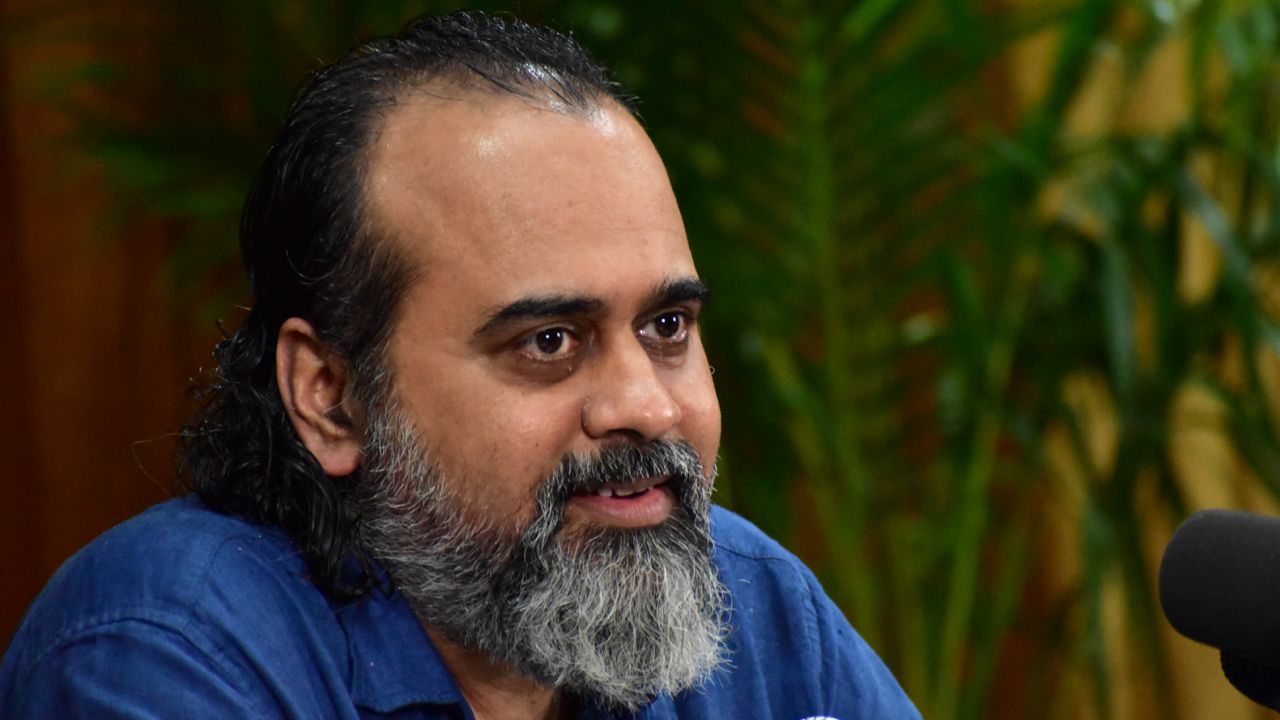
Because you see, if I look at when I was in college, the late '90s, it would have been very difficult to find a squash court outside the IT campus. One would need to travel 5, 10, 15, I don't know how much, maybe 20 km. A swimming pool. Again, not something you could very commonly find even in the capital of India. And even if they were pools, they were not necessarily accessible to students. Even if they were accessible, they were not necessarily affordable.

So things have changed. You have better libraries, more amenities, there are clubs there. There is just so much. And if you're not making use of that, I suppose that would be because of priorities that you are setting, not because of the availability of resources. The priorities then depend so much on you.

My batch strength was 350. Out of these 350, I suppose 325 would have never stepped on the tennis court even once in those four years of BTech. That's a choice that you make. The court is there. It's available. You don't want to step on the court. That's a choice that you make.

The pool is there. The swimming pool is there. 300 out of 350 students never went to the pool. The dramatics club was there. Elocution or debating, extemporary or poetry, composition, recitation, photography club, dance, music, creative writing, but most students simply didn't participate.

Now, whether you participate or not depends on your zeal towards life because obviously it takes a lot. You have your regular load of academics, and then after that you have to invest yourself in something else, be it sports or dance, dramatics or some tech hobby. It requires a more careful and disciplined organization of your time.

And if you're allowing, let's say, two or three hours of the day to be taken away by social media, right? You go to bed at 11:00 in the night and then you finally fall asleep only at 1:30 a.m. We usually don't account for that time, right? We say, I have gone to bed. The fact is you were awake. You were awake and conscious, and those two and a half hours have been deeply wasted. It's a huge waste.

And then we say we don't have time for extracurriculars. You look at the number of views and likes, etc., that a usual Instagram reel or YouTube short has. Huge millions, not small millions. Sometimes the number of likes itself is in millions. And it's the young people who are watching those things. That time obviously should have been rightfully spent in doing something better.

So if you say you have a shortage of time, is that real? You're really short of time. If you're short of time, who is watching all those reels and pushing the like button? Who's doing all that? You do that, right? Look at all the trash influencers and 50 million followers, 80 million followers. Who's following them? And following somebody has costs and repercussions, right? Could you have not better spent that time on the tennis court or the swimming pool or in the library or on the dance floor? I'm asking you. And think of the cumulative time you accord to all the wasteful portfolios.

First of all, you don't have too much time. 10 hours you spend in the necessary biological activities of the day. Sleeping, hygiene, food, at least 10 hours goes towards that, and you cannot cut down on that, right? Food you have to take, bath you have to take, sleep you have to take. Correct? So 10 hours goes towards that. In fact, more than 10 hours. Sometimes that much goes towards that.

One or two hours go towards commuting. In many cases, sometimes to the workplace, sometimes to college, all the different kinds of commutes. What are you left with? 12 hours. Of that 12 hours, you spend, let's say, 6 to 8 hours in your classroom. Is that so? And if we include the time between the classes, that often happens, right? Not all classes are just abut each other. Sometimes you'll have something from 9 to 10:00 a.m., and then the next one is at 12:00 noon.

So for 2 hours you have to simply sit in the cafeteria and while away. Does that happen? So effectively, you are left with just two hours or 3 hours for self-development, for your reading, for your internal growth, for your exploration, or for just your solitary silence when you can be, let's say a tree, and be with yourself. All that you are left with is just two or three hours.

Now, out of these two or three hours, if you devote two hours to Instagram, what are you left with? You're left with nothing. Those two or three hours was all that you had. And approximately everything from there has been just wasted or looted away. But we don't look at it like that. We say, "Oh, I gave it only 2 hours out of my 24 hours." You didn't give it 2 hours out of 24 hours. You gave it 2 hours out of the only two hours that you had. So you gave it two out of two hours. Now what are you left with?

Not only have you wasted time, you also have accumulated some filth here (mind). And then it feels as if we genuinely are victims of time pressure. It does feel. You talk to anybody and they would sincerely say, "You know, I'm short of time. I want to do a lot of good things in life, but I feel short of time."

Here is my reading list. These are the books I want to really finish off this year, 2023, and it's already March, and I have not even finished one of these, let's say, 10 books. Where's the time?

These are the places that I want to visit as a young person. I never find the time to go there. I want to hit the gym. Oh, I mean, yes, joined there and deposited the fee, and the membership was for 6 months, and all I did was 6 days, and even the membership has gone to waste. That happens, right? There is no time.

The fact is that there is time. So remember this very clearly. Time management is actually value management. If you know the value of something, you will give time to it.

If you find you're not giving time to something, that simply means that you are according a higher value to something else.

When you accord a higher value to something else, then obviously your time will flow towards that thing. Your time is where your value is. You understand the value? The importance you give to something. And it's a very definite thing. The more important you really consider something, the more time will flow towards it. Whether you plan it or not, whether you want it or not, it will just happen.

So if you're not able to give time to something, let's say to the library or to the swimming pool, that simply means that you do not consider them important. Maybe you are paying some lip service. Formally, orally, you are declaring, "Oh, I find the library very important. Oh, I wanted to learn the flute this year." That's just a superficial declaration.

Internally, you love some vulgar reel much more than the flute, and that's why you would spend time on that little video or the long video, whatever it is, I don't know, rather than the flute. Would you remember this? Time follows your values. So if you're not giving time to something, it directly means you are not giving value to that thing.

And if you are giving time to something, that means now you may keep cursing that thing. You may keep saying, "Oh, it's such a wasteful thing. I didn't want to, but somehow, accidentally, mistakenly, I ended up giving time to it. I never wanted to." You are lying. The thing is, you really do give a lot of importance to that thing, and that's the only reason why you gave so much time to it.

Your time profile is a clear representation of your mental profile, your value profile.

If you want to know who you are, that's an experiment I used to do with my students many years back. I would say, just write down where your typical day goes. Show me the time distribution, and that time distribution will tell you who you are. You are where you are spending your time. That's your identity. That's your name. That's your personality.

If you want to know who a person is, just see where he or she spends his time. If you want to know who you are, just see where you are spending your time. And that will very clearly tell you who you are beyond your words, beyond your declarations, beyond your intentions, beyond your presumptions and pretensions. That'll show you the mirror. Just see where your time goes.

Do that objectively because if you will just think, you will say, "No, no, no. I don't waste my time." Write it down. 8:30 a.m. to 10:00 a.m. This is what I really did. You'll be surprised at the kind of time that is available to you, but is wasted, frittered away. You'll be surprised. You will say, "But the productive time in the entire 24-day cycle is just 2 hours, though I feel occupied the entire day." No, feeling is such a deception. You will continue to feel busy and occupied, whereas the fact is that you have just wasted your time.

And when somebody will come to talk sense to you or to scold you a little, you will feel victimized. You will say, "All the day I've been doing constructive work. All the day I have been so busy. Look how tired I am. Even this little thumb is paining." Why is the thumb really paining? Every single muscle in the body is paining, especially this thumb, and this fellow is accusing me of wasting my time. That feeling will definitely arise.

Never live by your feelings. That's one mark of a wise human being.

He or she learns to dissociate himself or herself from the feelings. That does not mean that you have to trample or destroy your feelings. No, that simply means that you have to know the Truth of your feelings. Feelings deceive. Feelings can come from anywhere. Be objective.

Want to know yourself? Make a proper table. Make a proper table for, let's say, 10, 15 consecutive days. And then you'll be ashamed at the kind of wastage you are inflicting on yourself. You'll say, "My God, this is what I'm doing to my life. Only 2 hours of productive thing any day, and the rest of it, can't even say where that flies away. I'm just wasting it all."

Try that. Would you? Make a proper table of where your time is really going, and don't lie. Don't lie, at least not to yourself. Sometimes it's okay to lie to others, but it's never, never okay to lie to yourself.

This article has been created by volunteers of the PrashantAdvait Foundation from transcriptions of sessions by Acharya Prashant
Comments
LIVE Sessions
Experience Transformation Everyday from the Convenience of your Home
Live Bhagavad Gita Sessions with Acharya Prashant
Categories