

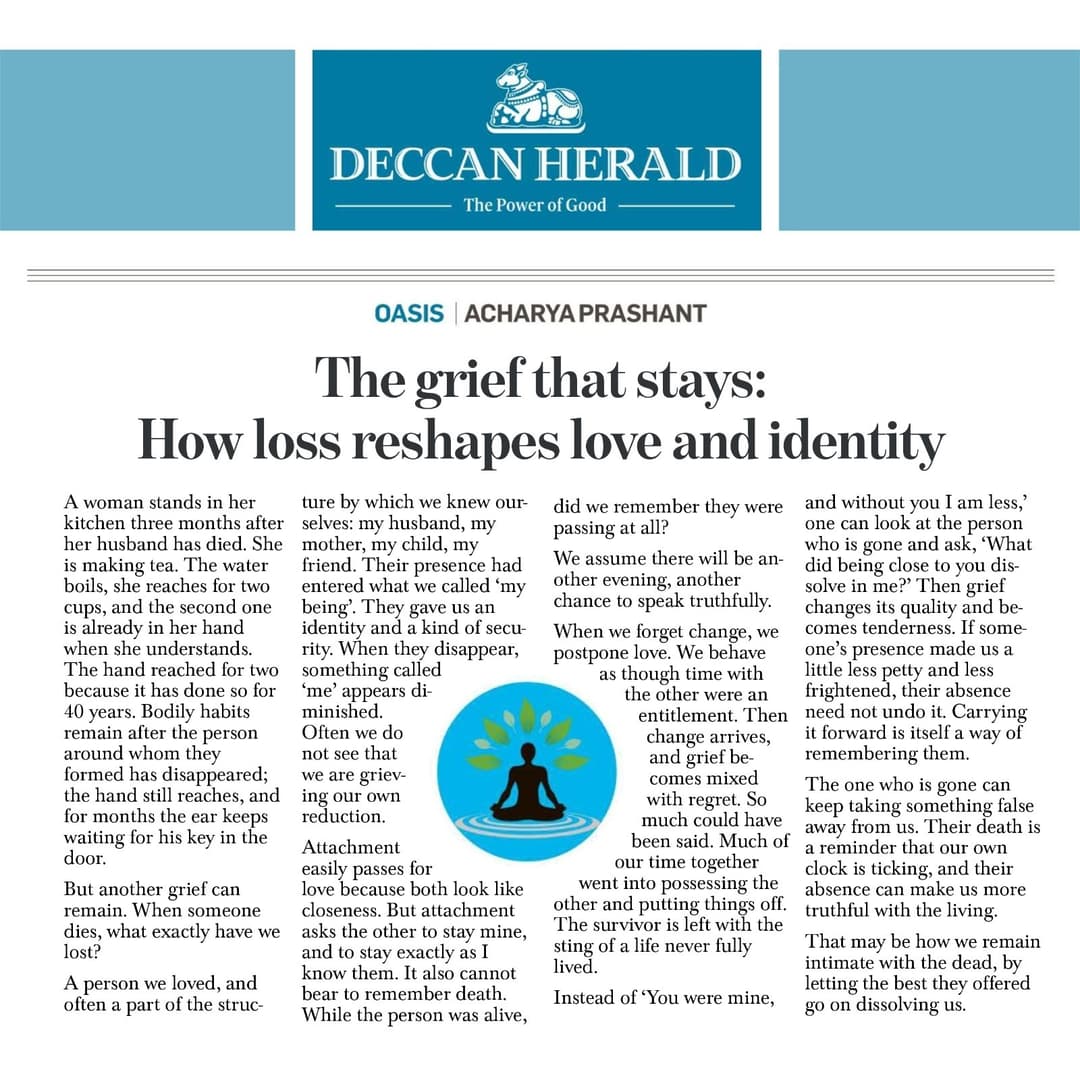
Months after a death, a hand still reaches for a second cup. But another grief can remain: the loss of the structure by which we knew ourselves, my husband, my mother, my child. Attachment passes for love because both look like closeness, yet attachment asks the other to stay mine and unchanged, and so we put off love as if time with them were owed to us. What if, instead of asking what we have lost, we asked the one who is gone what being close to them dissolved in us?
This summary is AI-generated. Please read the full article for complete understanding.
Originally published in Deccan Herald on 16 October '26
A woman stands in her kitchen three months after her husband has died. She is making tea. The water boils, she reaches for two cups, and the second one is already in her hand when she understands. The hand reached for two because it has done so for 40 years. Bodily habits remain after the person around whom they formed has disappeared; the hand still reaches, and for months the ear keeps waiting for his key in the door.
But another grief can remain. When someone dies, what exactly have we lost?
A person we loved, and often a part of the structure by which we knew ourselves: my husband, my mother, my child, my friend. Their presence had entered what we called ‘my being’. They gave us an identity and a kind of security. When they disappear, something called ‘me’ appears diminished. Often we do not see that we are grieving our own reduction.