Questioner: Pranam Acharya ji. I am a math major, and what I see in today’s society is that there has been certain advancement in technology. In the past two decades, there has been a huge difference, and behind this revolution there are intellects, intelligent people, working behind the scenes. But I see that there is a bifurcation in society. It is being divided into two parts: one where there are intellects who are making better and better technology, and another part where people are getting dumb.
There have been recent reports where the intellect of people, the IQ is declining at a great speed, and there has been a new term coined for this, named brain rot. So I want your insights upon this. Why is this bifurcation happening, and what can we do to reduce this gap?
Acharya Prashant: Like any other part of the body, the brain goes dysfunctional if not used, right? You wanted to know stuff, you had to ask, think who to ask, receive information, analyze, and conclude. A lot of that was slowly taken over by Google. But even with Google, you needed to exercise choice. There were so many results; you still needed to think for yourself to a great degree.
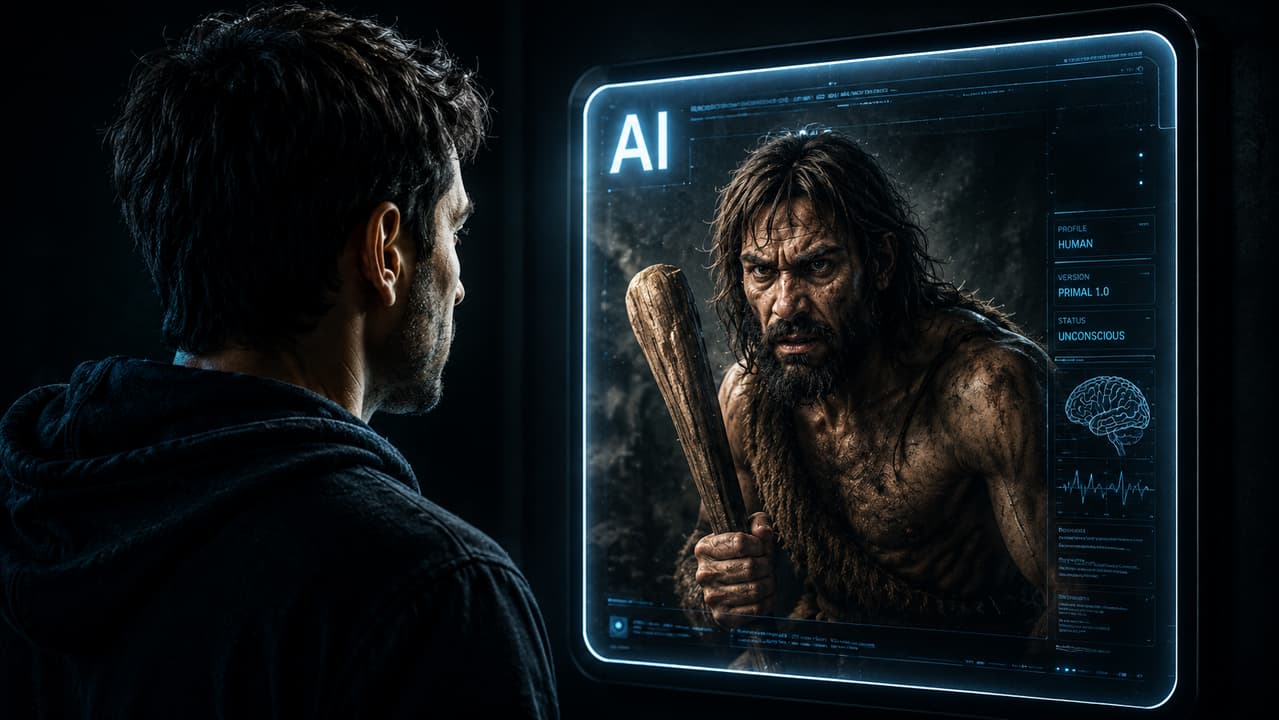
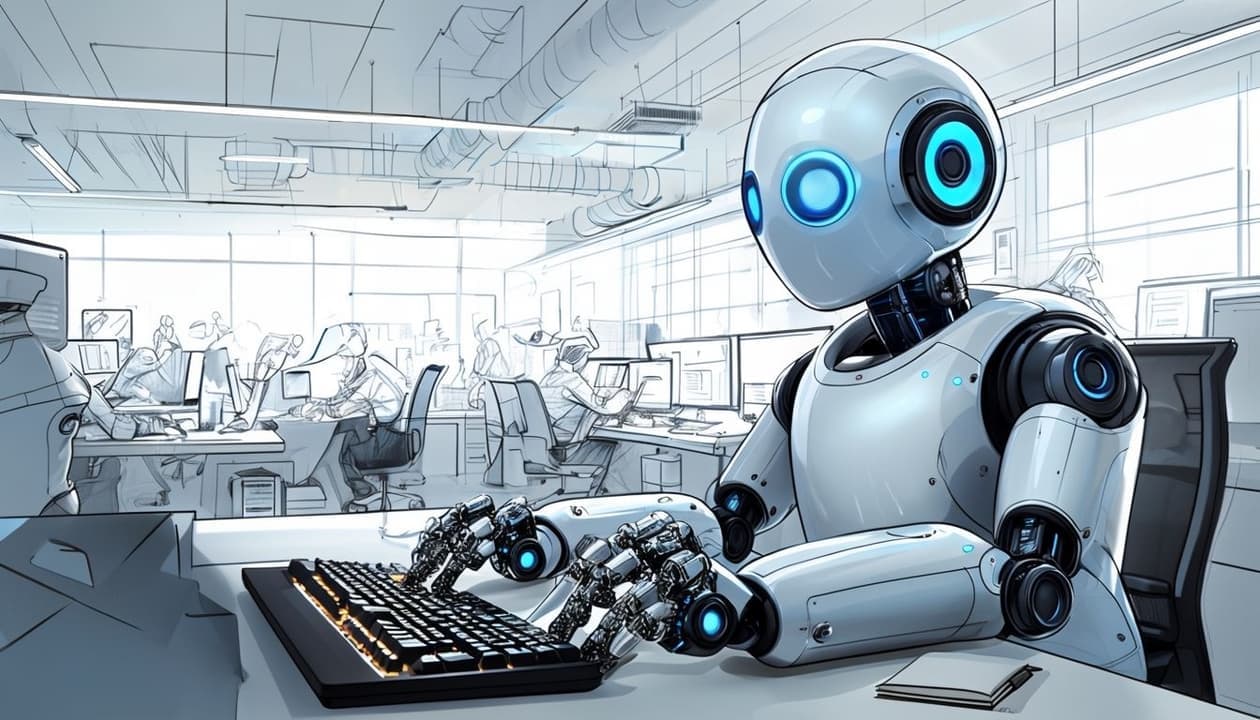
Now there is AI. Entire thinking, entire decision-making can be outsourced, right? A lot of people might be staying at a particular place for years, but leave them without Google Maps and they’ll struggle reaching even familiar places, because that faculty is no more being exercised.
So that’s what is happening. We are very conveniently leaving ourselves more and more at the mercy of technology, which will work out for us to some extent. But we have to understand that AI, for example, operates on data, and data is provided by human beings. Garbage in, garbage out.
If we are dumb, our data will reflect that dumbness, and that dumbness will then be institutionalized by AI. Or if we are biased, our data will reflect that bias, and AI will be biased without even being trained to be biased. It will just consume data that we have generated. Getting it?
So technology is a wonderful thing, but it cannot illuminate the insights of mankind. You can have great technology, but all of that will be used only to do more of what you want. It’s as simple as that. Economics, science, maths, all of that will be put to use in the service of our darkness.
Those who think of the future as something necessarily great and wonderful because human knowledge and consequent technology are expanding and improving, their hope is misplaced. In fact, more powerful technology in the hands of those who just do not know what to do with it is actually much more dangerous than not having that capable technology at all.
Don’t we want to keep guns away from kids? Do we allow kids to operate even our humble mixers and grinders in the kitchen? They’ll find a way to get hurt. Nothing can be really foolproof, because foolishness is progression and infinite, right?
What is it that is threatening our very survival today as a species? And as one member of the large community of sentient beings, among conscious species we are just one among millions, millions. How is it that suddenly we discover that not just the survival of one of them, but actually the survival of all species on the planet stands threatened?
How has that happened? We were hearing none of it even 50 years back. How is it so sudden, so abruptly upon us? A lot of the answer is about advances in technology.
We haven’t suddenly grown stupid. Yes, we might have reduced our capacity to think, know, attend, and understand. But that doesn’t mean that we have suddenly become a wicked species. More or less, we were like this always. And when I say “always,” I don’t mean millions of years. As a sentient species, we are barely 40,000, 50,000, or 80,000 years old. And that is nothing when it comes to the journey of evolution. We are still on that journey, which means we are still very animalistic. Probably it will take us another two or three million years to grow to the point where intelligence can be called wisdom.
Think of it, just around 50,000 years back, we were still learning the basics of communication. Language and thought were extremely rudimentary, and we were living off the jungle: fruits, twigs, leaves, and such things. And if we could afford it, then some small animal catch. That’s who we are. Still the jungle at heart. That’s what we carry. Fifty thousand years is nothing, right?
Compared to the entire span, the evolutionary timeline, 50,000 years is nothing. Which means we are very raw, very, very raw. And we still need something like millions of years to grow deeper in wisdom. Here I’m assuming that wisdom can be a product of evolution. And if it can’t be a product of evolution, then the situation is even more gloomy. So we are still that animal, just freshly out of the jungle. And what do we suddenly have? Fancy gadgets. And lovely missiles, shining, polished, sexy. You feel like going and kissing them. Wow, that’s the latest ICBM. You feel like showing it off.
Countries do show off their latest toys once a year or something, don’t they? All countries do that, many countries at least, like kids do. When kids get a new toy, don’t they flaunt it to the neighbor? “See, this is what I got.” So nations do that too. “See, this is my latest missile.”
That’s who we are. Call us animals, call us kids, but that’s who we are.
The only problem is, the missile is not a toy. Given who we are, the maximum we deserved was toys. But unfortunately, what we have is real destructive power. Real destructive power.
And when you have destructive power, you will destroy this and that, both. And that is evident in deforestation, in extinction of species, in the climate crisis on the external front. Right? And that is evident in the corruption of man’s inner potential when it comes to the inside.
Why aren’t we thinking as clearly? Why are IQ levels going down? Because, in a quake of evolution, we have obtained something that we really didn’t deserve to obtain. You know, we all want power, but power can be very destructive. Not just to others, self-destructive.
We want freedom, but freedom can be the worst thing you can have if you don’t deserve freedom. To our kids and pets, do we give unlimited freedom? Do we? We wait for them to ripen, or we try our best to help them mature and ripen, and that’s when we say, “Now you are internally free, so you deserve more external freedom as well.”
But look at our historical position today. The common man has more freedom today than he ever had in history. Right? Think of kings and queens and autocracies and feudalistic societies. Was there freedom, social, political freedom? Was there freedom? No.
Today we have so much freedom. Even in societies like Iran or China, where democracy is absent, people still have a degree of freedom that far surpasses the degree of freedom the citizenry had even under the most benevolent monarchs.
We know the great names from the past, right? Even those greats couldn’t give the kind of freedom to their populations that today an undemocratic place like China, or Iran, or even Russia gives.
So we have freedom. The per capita income of the world today is higher than it ever was in its history. The common man is far, far richer, in spite of income inequality. So we have far more money at our disposal, money you can spend, and that is power.
In terms of the body, we live longer today than we ever did. We know about food. We know about nutrition. We have labs. We know biochemistry. We know this body better than we ever did. And we have conquered the plagues of the past. In fact, so many of the terrible diseases that resulted in epidemics do not even exist now, at least in the developed world. You won’t find, for example, cases of polio or tetanus in the developed world. They’re gone. So is plague. Think of the Black Plague and what it did to Europe, it’s gone.
So we have health, and we have medical insurance, and we have hospitals we can rely on. And we are coming to a situation where natural death can be postponed by several decades. One twenty will start becoming the norm. So if you want to die, you’ll have to do something extraordinary, like really hiring a train or something. Getting it? That’s how empowered we are today. We live longer. We have money. We are enfranchised, we can vote.
Knowledge, we have so much knowledge. Look at the common man. The smartphone has revolutionized so much. Look at the humble auto driver, or the rickshaw puller, or somebody running a small cornerside grocery shop. They’re always busy on the mobile. A lot of that is just wastage. And yet, they are receiving information, at least if they choose to. Information is available, handy. We have all of this. So we stand at a very privileged point in our journey.
There are so many resources. Tell me what you want and you can import it. If you like vegetables from New Zealand sitting here in Hyderabad, you can have them, not just once, every day, provided you are prepared to pay. You want stuff that is not available in stores here, clothes or whatever, fancy gadgets or watches or shoes or specs, something, anything. You have global carriers; they’ll deliver it at your doorstep. See how empowered we are today.
Now my question is: what have we done to deserve this? Have we? We are like star kids. This is the biggest act of historical nepotism. We are eating out of the benevolent hands of history.
Look at the common youngster today, 10, 12, 14, 16 years old, so privileged and internally so entitled. “I must have this. I must have that.” You understand the smartphone you’re carrying in your palm is a very, very advanced computing machine. In fact, it is a computer, a computer with a powerful processor. Do you understand?
And if it were left to you, how many centuries would you take to assemble it, let alone manufacture it? But you say, “No, this one I don’t want. The latest one is in the market. I want that. I’m entitled.” You think this is how it works?
Do you understand the subtle intelligence and the sophistication of thought that goes into constructing that machine? No, we know nothing. But we have inherited all of it on a platter. Somebody else is doing it and making it available to us at a very, very affordable price. Do you see this? There’s no struggle.
Obviously, we don’t want to return to days when we had to struggle even for two quarter meals. No, we don’t want that. But that’s the nature of this organism: you take away all the struggle and it will shrivel.
So much has been provided to us. You just buy a plane ticket and you can land somewhere, Paris, Singapore, wherever you want to. Think of the distance. Please think of the distance. And then think of the capacity of these legs. If the flight is delayed by half an hour, we say; you might as well beat up the ground staff. The airlines are scared. Tell this fellow to walk straight from here till there, and this fellow can’t. But this one wants to be dot on time for a 10,000-kilometre journey. Not journey, flight.
Do we understand what it means to lift that mass of metal to 35,000 feet, at a 5,000-feet altitude? Imagine. Imagine, and there is that huge metal mass. Look at the weight. What is pulling it up? Some god in the sky? Something has gone into it. But what has gone into it is not of our own. We are just receivers, receivers. And if we just keep receiving, if we just keep receiving, something inside refuses to blossom. We remain a bonsai within. All these powers and perks and privileges we have, that were not available to our ancestors just around 100-200 years back, right? We are like 1,000 times more empowered. Are we not?
My question is: to be 1,000 times more empowered, are we actually 1,000 times better than them? And if we aren’t 1,000 times better, how do we deserve it? How do we deserve it? There has to be some proportionality. We understand historically there are skews. But this kind of skew, in fact, it is quite possible that our ancestors were more solid men and stronger women than we today are. It is quite possible.
And yet they struggled and suffered, and here we are enjoying life as if we are entitled to. Do we see this? That is what is happening. And with each passing generation, it will only get worse. We don’t have probably too many generations left now, given the climate spectre. But it’ll keep getting worse till it comes to the point of implosion. We’ll collapse from within. We are collapsing from within. With so much available on the outside and very little inside, we are using, misusing, whatever we have on the outside to destroy not just ourselves but the entire planet, the entire ecosystem.
Yes, we were always violent, but we never had the means for the kind of mass slaughter that we commit today, right? Tribes would fight among each other and beat the other up using fists and stones or maybe swords. Now how many can you kill using a mere sword? But today, first of all, you are internally darker, and instead of the sword you have an automatic machine firing several rounds per second with a range of kilometres.
Same thing about killing animals. Yes, we were always killing animals. But then, if you wanted to have a fish, you would have to go and fish. Today you have mechanised trawlers, kill indiscriminately, kill as much as you want to.
Laws have to be enacted to prevent us from killing beyond a point. Our external privilege is just too disproportionate, and our internal development hasn’t kept pace.
Internally, we are still the savage, the caveman, and externally we have: “What do you want? Yes, sir. What may I serve you?” And the external growth is visible, and the internal darkness is not. So we stand blinded by these lights. We feel if it’s so illumined on the outside, internally too there must be at least some visibility. No, there is none. In fact, external growth is a big self-deception. We feel we have so much, we must be somebody.
I mean, if I’m really a savage, many of you might be actually wondering, internally protesting: if we were really savages, how come we are here in this auditorium? Isn’t this a product of man’s civilization? And if we are sitting in this civilized place, how come you are calling us savage? That’s the danger. Looking at this, it becomes very possible, very tempting, to deceive oneself. “I must be internally also somebody. No? I must be somebody,” right?
You suddenly get money from somewhere, as is happening these days. Some random event involving just chance, and a lot of people suddenly find a windfall gain. Is that not happening? That’s happening very obviously in the North. I don’t know whether that’s happening in the South to that extent.
And when you have that much money, it becomes difficult to still remain grounded and tell yourself, “In spite of the money, I am the same old unlearned fellow.” You see, now you have money. So you’ll walk into a store, some glossy brand, and somebody will come and say, “Sir, sir, what may I serve you?” And that convinces us that we are somebody.
Earlier it was some humble dhaba, and in some sense that was less dangerous, because nobody was trying to convince you that you are somebody. But now you walk into a restaurant or a hotel or some place, and how does the receptionist greet? “Sir, I am all for you.” Not just at your service, but at your disposal. “So please tell me, what can I do to offer you pleasure?” And you feel that if the lady is actually rolling out the red carpet, you must be somebody. Now that’s a problem.
What to do with it?
Obviously, if there is this asymmetry, it has to be corrected. One way is to reduce what you have on the outside. That can be a possible option, but that should not be the preferred option. The better way is to keep pace with what you have there on the outside. Grow internally so that you deserve what you have externally. Grow internally so that you can say you deserve what you have externally. Otherwise, it is indignity. Otherwise, it is offensive. No?
For example, if you know you are not the topper of your college, or class, or stream, or university, and your name is called out, “Please come to the podium to receive the university gold medal.” Would you walk up? Would you? Why not? One is the fear of being caught. Let’s say that fear is no more there. Then you would probably still not do that, right? For the sake of your own self-respect, right? It’s an inner thing. If I don’t deserve something, I must not have it.
Now, that’s why we already have so many things. Let’s grow internally to deserve them. Otherwise, you’ll have the power to vote externally, but internally you will not know how to vote. So you will vote for the kind of people you vote for, and then get the kind of governments you do. And then you’ll wonder, “Why is the nation in such a mess?” Because you are the voter. You have been given the right to vote without being educated how to vote. So there is an asymmetry, and it’s fatal.
Am I reaching out, or has it started already?
Questioner: Hello, sir. I am Harshit, coming from Bangalore. My question is sort of a follow-up to the discussion regarding my own things. For example, I was searching the word adhyātma on Google. I got explainer videos on what adhyātma is. So I want to understand, how do I understand whether these videos, which are in the top recommendations of the search, will do me good? Or what is the founding principle, or first principles, I should go to in order to understand that process better?
Acharya Prashant: What Google is giving you is just information, and you must know this: this is what Google has told me, first page, number of results. That’s fine. That’s what Google is thinking. That’s what the algorithm is telling you. Why should that become your thought without investigation?
Yes, we accept that as a bit of information. An intelligent system called Google has thrown up these recommendations, that's fine. So I take that as information. There is an intelligent system and this is what that system is recommending. Fine, taken. But my work begins after that. Right?
You have told me something. You have told me something, and all of you are intelligent people, fine. But that does not relieve me of my work. Or does it? You have done your work. Google has done what it’s programmed to do. But are you doing what you are born to do?
Google gave you information. Now apply your consciousness on that. Somebody is telling you about the meaning of you said adhyātma. That’s fine, that’s what that person is telling. Take that. Why should we deprive ourselves of information? It’s a public good available to everybody. Take it. Take it, and then apply your own mind to it.
Where is the proof? Yes, you are saying something, and you carry a reputation of whatever kind. But here I am. I don’t stand as a box, as a basket. I stand as a sentient entity. So I’ll apply my discretion, vivek. You are saying this is adhyātma. How exactly? “Yes, I understand, sir. This is what you are offering me, but can you kindly explain?” “All right, to this extent you could explain. I’m still not satisfied.” So I’ll go to that person now. I’ll go to that one. And that doesn’t mean that the next thing I get will be totally explanatory. Ultimately, it’s about my own discretion.
And your own discretion may land you at a place nobody advises you to be. You may come to a meaning that Google may never offer you, and that’s fine. Equally, you might find that the very first search result is very useful. That too is fine. But the conclusion must be individual. You cannot outsource your consciousness to Google. You cannot outsource the very intimate work of life to an inanimate system. If thinking, understanding, knowing is to be outsourced to a machine, that is the equivalent of outsourcing even love to a machine.
“Google, can you please, please my girlfriend on my behalf?” And in some sense, Google can do a better job of it than many of us, most of us. But would you? No. Because it’s not a job. There’s something more to it already happening, nice.
“Think on my behalf, eat on my behalf, sleep on my behalf, love on my behalf, then live on my behalf.” Why do we even need to exist? Or do we? If everything is to be done by machines, why do we need to stand here?
A machine can be a better processor. But remember, even the machine has human consciousness at its base. So you have to be careful. Google didn’t write its own code, you did. So whatever we have, our excellence, our brilliance, our flaws, our prejudices, all of it goes into the code as well. Right? Remember, you are the user. Remember yourself. That’s the real adhaytma, remembering yourself.
You are the user: user, doer, actor, consumer. You are the ego. You are the ego. And the ego always has a choice. And it is by using this choice that the ego elevates itself. It is by the use of choice that the self elevates itself and that is liberation. If you don’t exercise choice, there is no elevation. And if there is no elevation, then there is no difference between man and stone. Then there is no point in living.