

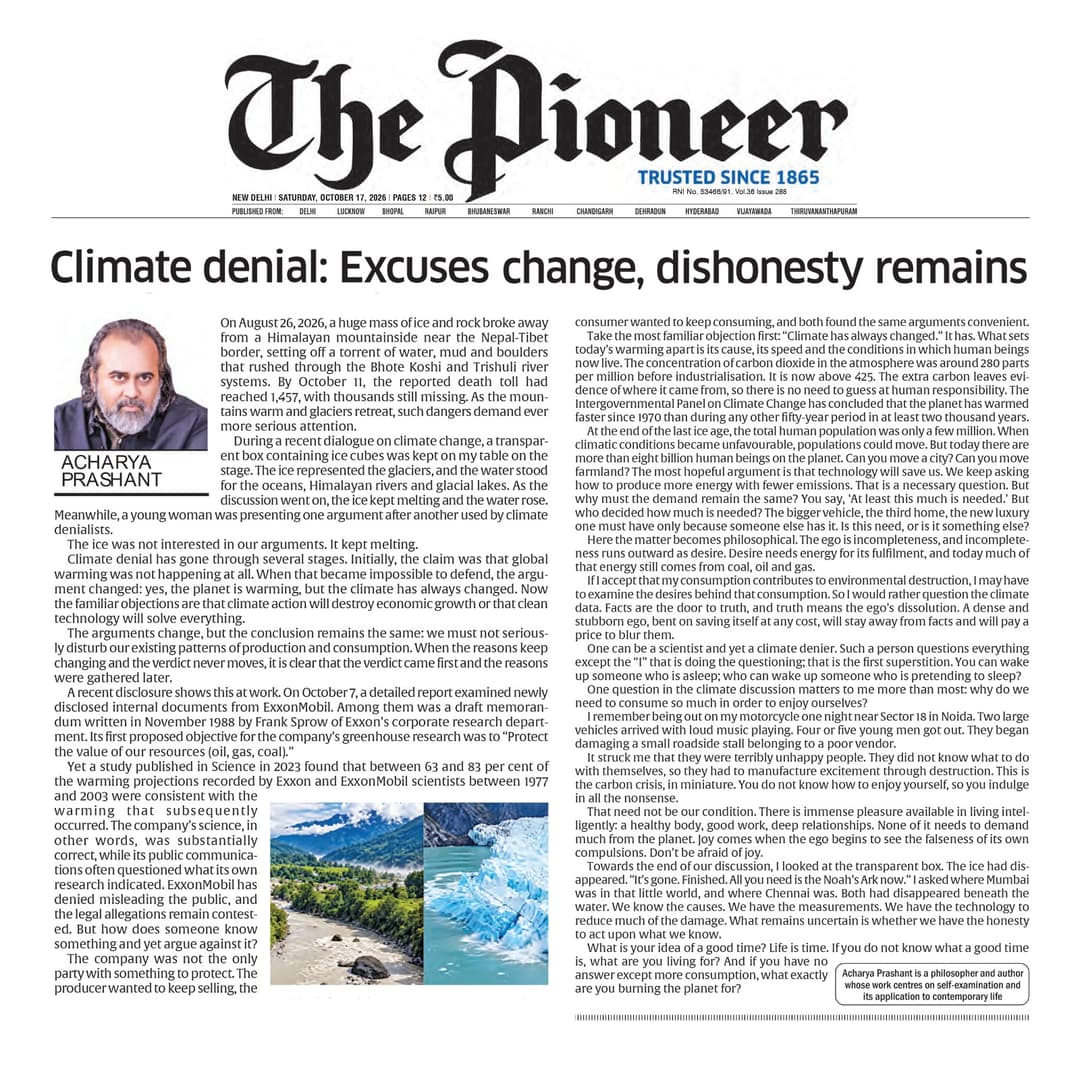
Ice keeps melting while we argue about whether the climate crisis is real. Denial survives by changing its excuses: first warming was not happening, then it was natural, then not our doing, then not serious. The conclusion never moves: our ways of producing and consuming must not be disturbed. Laws, clean energy and technology are all needed, but the deeper question is why we want so much when no object settles the dissatisfaction within. What exactly are we burning the planet for?
This summary is AI-generated. Please read the full article for complete understanding.
Originally published in The Pioneer on 17 October '26
On 26 August 2026, a huge mass of ice and rock broke away from a Himalayan mountainside near the Nepal-Tibet border. It crashed down into the valley below, setting off a torrent of water, mud and boulders that rushed through the Bhote Koshi and Trishuli river systems. Bridges disappeared, roads were destroyed, buildings were swept away, and whole settlements were devastated. By 11 October, the reported death toll had reached 1,457, with thousands still missing. People living far downstream had little time to escape.
Then, on 11 October, another disaster struck Nepal. An avalanche and a massive landslide high in the mountains of Gorkha sent debris rushing towards the Budhi Gandaki river. A temporary blockage appears to have formed, releasing a sudden flood when it gave way. Houses and bridges were swept away, five people were reported missing, and villages downstream were evacuated. Nepalese authorities issued warnings across several districts. These were not identical disasters, and scientists are still examining their precise causes. But they show how dangerous the interaction of ice, rock and water can become in the Himalayas. As the mountains warm and glaciers retreat, such dangers demand ever more serious attention, and those who live below them can least afford to remain unaware.