Memory is neutral, but the ego rarely is. It keeps selected wounds alive, building identity around past hurts while projecting hope onto an imagined future self. Both memory and hope become psychological anchors, leaving little attention for the present. Real freedom doesn’t come from forcing yourself to “let go,” because that can become another ego story. The past persists not because it is powerful, but because the ego keeps returning to it for a sense of continuity and identity.
This summary is AI-generated. Please read the full article for complete understanding.
Originally published in Deccan Herald on 31 July '26
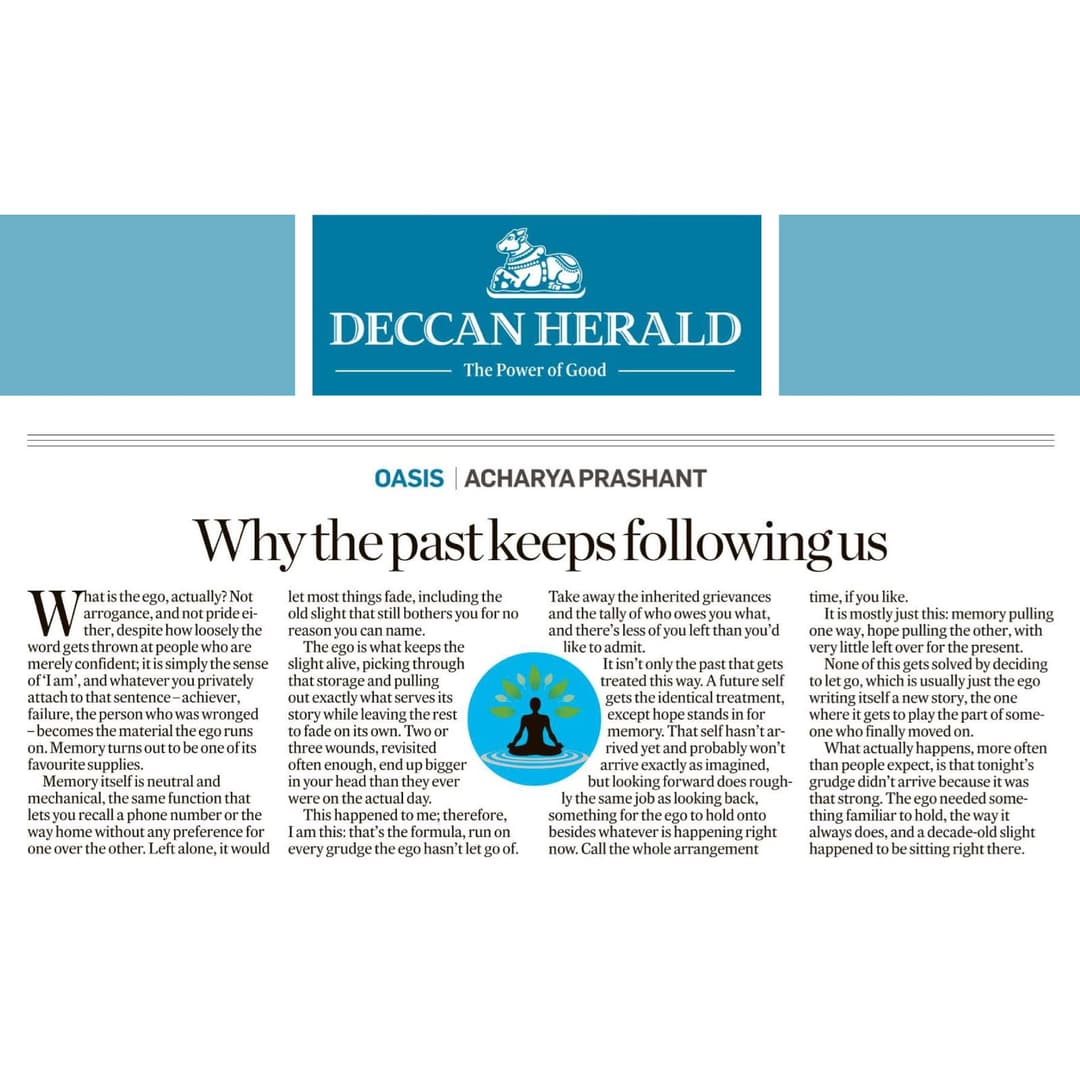
What is the ego, actually? Not arrogance, and not pride either, despite how loosely the word gets thrown at people who are merely confident; it is simply the sense of ‘I am’, and whatever you privately attach to that sentence - achiever, failure, the person who was wronged - becomes the material the ego runs on. Memory turns out to be one of its favourite supplies.
Memory itself is neutral and mechanical, the same function that lets you recall a phone number or the way home without any preference for one over the other. Left alone, it would let most things fade, including the old slight that still bothers you for no reason you can name.
The ego is what keeps the slight alive, picking through that storage and pulling out exactly what serves its story while leaving the rest to fade on its own. Two or three wounds, revisited often enough, end up bigger in your head than they ever were on the actual day.