Originally published in The Sunday Guardian on 21 jun '26
True discipline requires looking honestly at inner motivations rather than just mastering postures.
Every year, on the twenty-first of June, the world performs a familiar and well-intentioned ritual. Government buildings open their lawns, schoolchildren are lined up in identical T-shirts, news anchors find a fresh angle on flexibility, and millions of bodies across continents fold themselves into postures with names borrowed from animals and sages. International Day of Yoga has, by any measure of reach, succeeded spectacularly. What it has not done, and perhaps cannot do within the format of a single observed day, is ask the one question that yoga was originally built to ask: not how the spine should curve, but how the ego should be held to what is right.
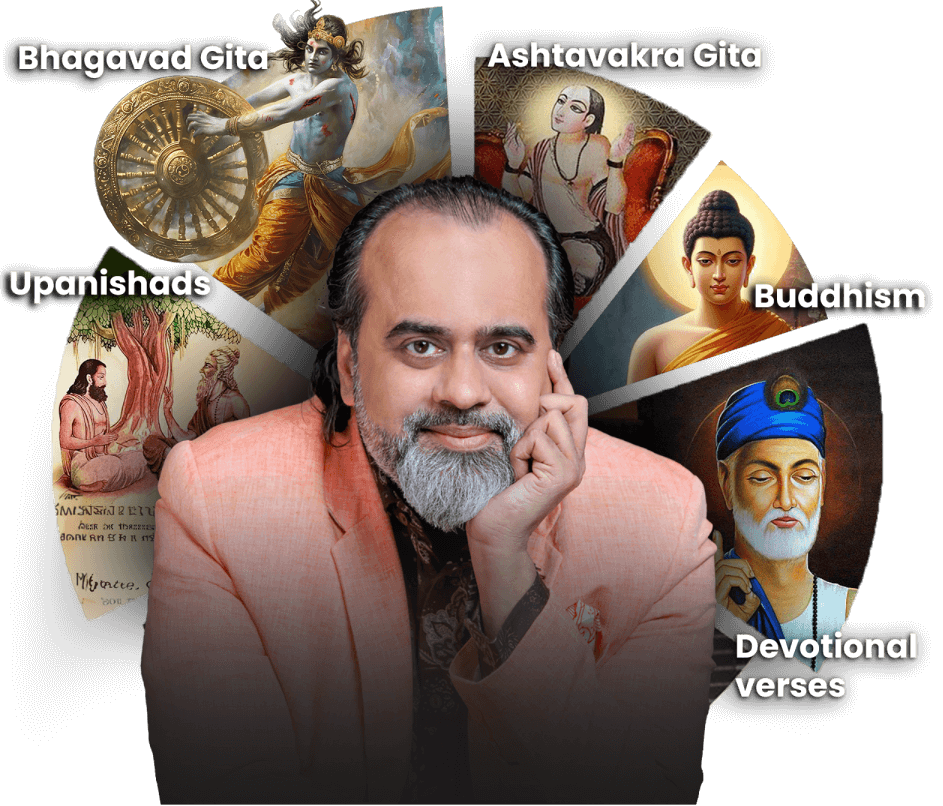
It helps to begin with the obvious, uncomfortable fact that the case for treating yoga as primarily a physical correction was always weaker than it appeared. Arjuna stood on the battlefield of Kurukshetra as one of the most physically accomplished warriors of his age, trained since childhood in archery and combat, his body in no need of correction whatsoever. Yet it was to him, not to some unfit or unwell bystander, that Krishna delivered eighteen chapters on yoga. The Gita’s own internal logic settles this before any commentary need be added. Whatever yoga is, it was never primarily about the body, and a tradition that arrives there has mistaken the address for the resident.
The ego’s preference for this mistake is not hard to see. Visible, photographable, producing measurable before-and-after results, the body asks nothing of the part of us that generates suffering. A stiff hamstring can be loosened without disturbing a single belief, ambition, or attachment. This is why the body became yoga’s adopted home. The ego, wary of any process that might actually threaten its arrangements, found in physical yoga a convenient decoy: a way to claim spiritual credit while remaining entirely undisturbed in its operations. A posture can be taught in an afternoon and demonstrated for a camera; an honest look at one’s own attachments cannot be photographed and offers no immediate transformation to display. The market, which sells whatever the ego is comfortable purchasing, has therefore sold the version of yoga that asks the least of the buyer.
The Gita itself offers a far more demanding definition, and several of its actual formulations deserve attention rather than the single line most often repeated. In the second chapter, Krishna tells Arjuna that one who acts while relinquishing attachment to success and failure, remaining equally steady in both, has attained yoga. This equanimity is not a soft, drifting calm achieved through breathing technique, nor indifference dressed up as wisdom, nor a state that can be cultivated by deciding to want it. It describes what is already true of an ego that has actually seen through its own grasping at outcomes: the grip has loosened because the seeing was honest, not because steadiness was practised into place. Krishna goes further in the same chapter, noting that action performed with such evenness of mind, free of the ego’s calculation, does not bind the one who performs it, while the same action performed for personal gain or applause leaves its residue regardless of how virtuous it appears from outside. The determining factor is never the visible deed; it is the invisible orientation behind it.
This is also where the Gita’s fourth chapter offers one of its most counterintuitive observations: that the wise see action in inaction and inaction in action. Most of what passes for activity in an ordinary life is reactive movement, propelled by anxiety, comparison, or the compulsion to be seen doing something, and such movement is inwardly a kind of paralysis, inertia wearing a disguise. By contrast, a shift that occurs quietly within, arising from clear seeing rather than from compulsion, can look like stillness from the outside while being the only real movement taking place. Yoga, on this reading, has nothing to do with how occupied a life looks; what is actually driving the occupation is the whole of the matter.
The sixth chapter pushes the inquiry further still, describing one established in yoga as a person who has set down desires and resolves, no longer pulled by sense objects or by the actions those objects provoke. This line is regularly misread as a call to suppress urges through sheer effort, an exhausting battle against one’s own senses fought daily and never won. The framework the Gita actually describes is different from suppression, which leaves the original craving fully intact and merely denied, the way a clenched fist still holds whatever it refuses to release. What the verse points toward is what an ego looks like after it has seen through the promise the senses make, the promise that satisfaction lies just past the next acquisition. The seeing is not a method that can be scheduled or repeated on demand; it happens, when it happens, as the ego’s own honest encounter with its own pattern. Where that seeing has occurred, the urge no longer needs to be fought, because nothing remains to be won from the fight. Where it has not occurred, no quantity of disciplined breathing will produce the same result.
One of the chapter’s starkest images closes this stretch of the text: a person satisfied by knowledge and inner clarity, steady, self-governed, who regards a lump of clay, a stone, and gold with the same eye. Rather than asceticism performed for an audience or a forced indifference to the world’s hierarchies of value, this describes a mind that has stopped needing the world’s approval to feel whole, and therefore no longer flinches at insult nor inflates at praise, because the centre from which it operates is no longer dependent on either. Such steadiness cannot be rehearsed into existence through a sequence of postures held for a fixed count of breaths. It is not what a technique builds. It is what is left to be seen, each time the ego is honest enough to notice what it has been chasing and why, with no guarantee that the noticing will hold tomorrow simply because it held today.
None of this makes yoga a private affair to be slotted into a morning routine and forgotten by nine o’clock. The popular language around this day often encourages exactly that framing: twenty minutes before the workday begins, and everything else proceeds unchanged. But the seeing that is meant to govern what is right cannot be a small addition to a life whose larger direction has never been questioned. If the targets that organise a person’s days, career, status, and comparison with others have been set entirely by the ego’s hunger for security and applause, then adding a session of postures to that life does not redirect the life; it merely makes the same ego-driven pursuit feel marginally more comfortable along the way. The word was meant to name what a life looks like when it has stopped organising itself around the ego’s borrowed targets, not a routine to be added on top of those targets while they remain unexamined. What has happened instead, in many lives that proudly observe this day, is that the ego has kept its self-appointed targets fully intact and simply recruited yoga as a more efficient servant of those targets. A calmer mind closes deals better. A flexible body photographs better. None of these claims is false, which is exactly what makes the arrangement so difficult to notice. The servant has been mistaken for the master, and the master, the ego’s own unexamined direction, continues choosing the destination precisely because it has dressed itself in the borrowed authority of the very word meant to question it.
There is a further complication that even a day of celebration should not paper over. Any sufficiently powerful tool can be turned to whatever purpose the one wielding it has already decided upon, and the techniques associated with yogic discipline, breath control and sustained focus among them, are no exception. History offers uncomfortable examples of such techniques being used to steady the resolve of those preparing to commit violence, the same inner steadiness recruited for an end entirely opposed to the discipline’s origin. The point is not that the techniques themselves deserve suspicion; the point is that technique without right orientation remains neutral at best, and orientation is precisely the part of yoga that a day of demonstration cannot supply on its own.
The orientation in question asks nothing exotic. It does not require renouncing the world or adopting unfamiliar rituals. It requires only the willingness to ask, repeatedly and without flinching, whether the direction one’s life has taken is one’s own considered choice or simply the path the ego found most flattering to itself. An unexamined life remains exactly that, however flexible the body serving it becomes. Discipline applied to the breath, when it powers an ego pursuing status and comparison, has simply been rented out to a purpose it was never meant to serve. The body, properly placed, is not unimportant; it is simply secondary, a vehicle kept in order because what actually matters lies elsewhere: not in any procedure that promises to hold the mind to what is right, but in the ego’s own willingness, renewed each time freshly, to look at what it is doing and why.
None of this is a reason to skip the morning’s stretching. The invitation is something else entirely: to notice, on this one day when the word receives the world’s attention, that the word once pointed somewhere the body cannot follow it alone. Who has been setting the direction of one’s days, and whether that direction has ever actually been examined, are not questions that photograph well for an occasion built on display. No flexibility score measures them. No result is ready to show others by evening. What they offer instead is slow, unglamorous, lifelong work: noticing where the mind has been running unattended, and bringing it back, gently and again. That work has no finish line, certainly none that arrives by sunset on the twenty-first of June. One honest look at a time, for as long as one stays willing to keep looking, is the whole of it.
Originally published in The Sunday Guardian on 21 jun '26