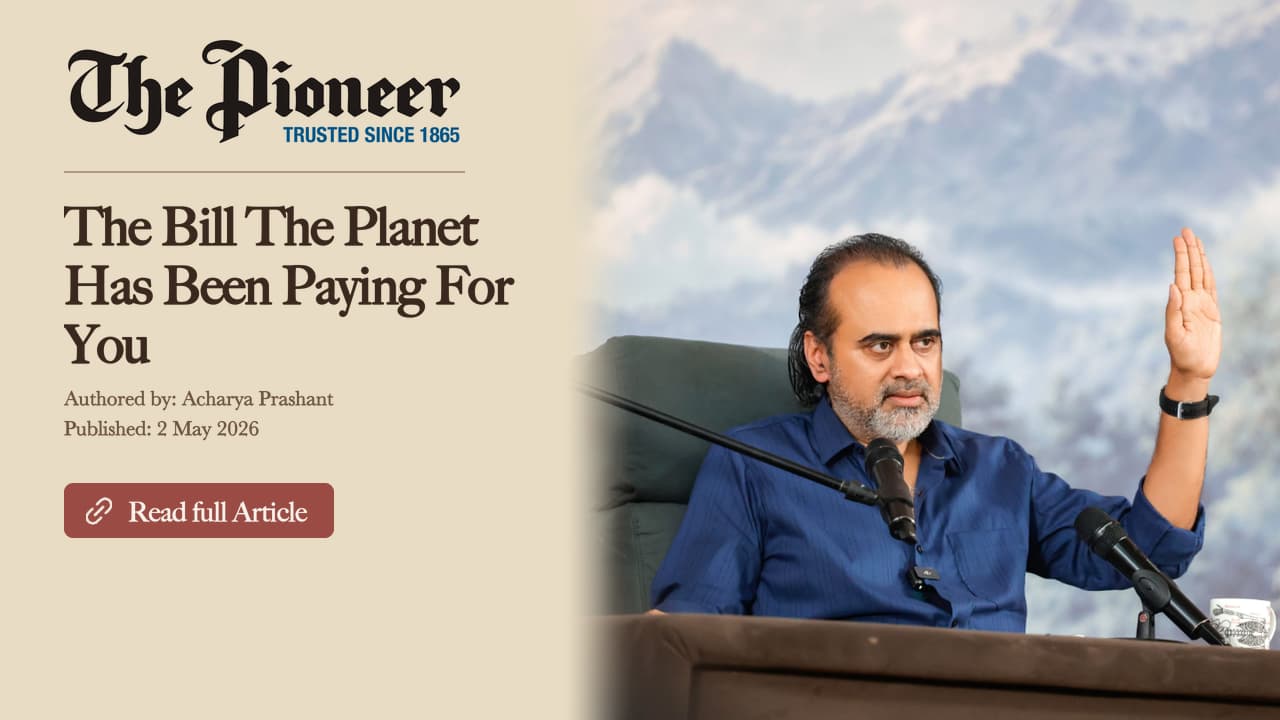
Every summer India gets hotter, but have we asked who lit the fire? Petrol, plastic, cheap convenience, endless growth, we paid the price, but never the full cost. The real bill was shifted to rivers, forests, mountains, and the children yet to inherit this world. We consumed capital and called it profit. This is not just a climate crisis, but a crisis of desire. The bill has arrived. Will we open it?
This summary is AI-generated. Please read the full article for complete understanding.
Originally published in The Pioneer on 2 may '26
Every summer, India gets hotter. We speak of the heat the way we speak of traffic: as an ambient condition, unfortunate but accepted, something to be endured rather than examined. What we have not seriously asked is where the heat is coming from, and whether the answer implicates us more directly than we are willing to admit.
This April, nearly every city on the list of the worlds hundred hottest was Indian. Varanasi is burning at forty-four degrees. Prayagraj, which we call a seat of the divine, is a furnace. We call these cities Dev Bhoomi, sacred ground. What we do not ask is what it means that the sacred ground is on fire, and who precisely lit the match.
The standard account of why the planet is heating runs through science, and the science is correct as far as it goes. That account is accurate. It is also, by itself, almost entirely useless, because it tells us what is happening without telling us why the human species keeps doing it when the consequences are this legible. What produced the atmosphere's problem is older and less visible: a consistent human refusal to count the full cost of wanting things.