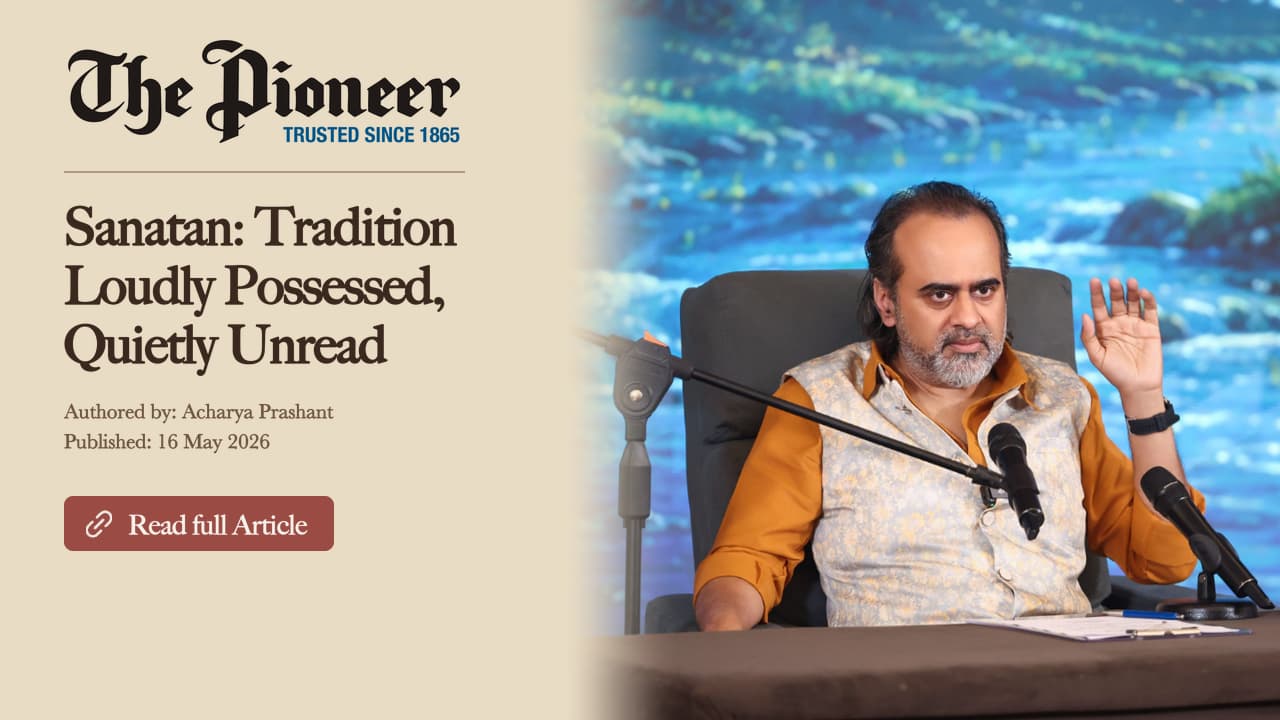
What if the loudest debates around Sanatan are happening between people who have never truly examined what they are defending or attacking? The article argues that the conflict is rarely about the philosophical core of Sanatan Dharma and more about labels, identities, and inherited assumptions. A tradition built on inquiry is often reduced to slogans, while its deepest questions remain quietly unread.
This summary is AI-generated. Please read the full article for complete understanding.
Originally published in The Pioneer on 16 may '26
The word "Sanatan" means eternal. It is now among the most fiercely contested words in Indian public life, invoked often to denounce, defend or mobilise with an urgency that might suggest the arguers have some acquaintance with the tradition the word names. The urgency disguises a near-universal absence of that acquaintance. This is the characteristic condition of a tradition that has survived for several millennia: its label is loudly possessed while its philosophical core is quietly unread.
A label offers identity without the cost of inquiry; the tradition's core offers inquiry without the comfort of a pre-settled identity. These are incompatible offers, and the parties who fight most loudly over the label are, on both sides of every recurring controversy, determined to take the first and avoid the second.
When Udayanidhi Stalin declared in 2023 that Sanatan Dharma was like dengue, malaria, and the coronavirus, that it could not merely be opposed but had to be eradicated, and then renewed the substance of those remarks more recently, the response played out with perfect predictability. Defenders massed on one flank, critics on the other, and the noise between them was considerable. What the noise did not contain was any careful examination of the thing being argued about.