

Marxism is not wrong for seeking justice. It is incomplete in believing justice can come without awakening. When awakening does come, whether in a Kolkata adda, a Dakshineshwar temple, a Russian factory, a Wall Street floor, or a village panchayat, one sees that every great outer revolution begins when one has the courage to challenge one’s inner structures.
This summary is AI-generated. Please read the full article for complete understanding.
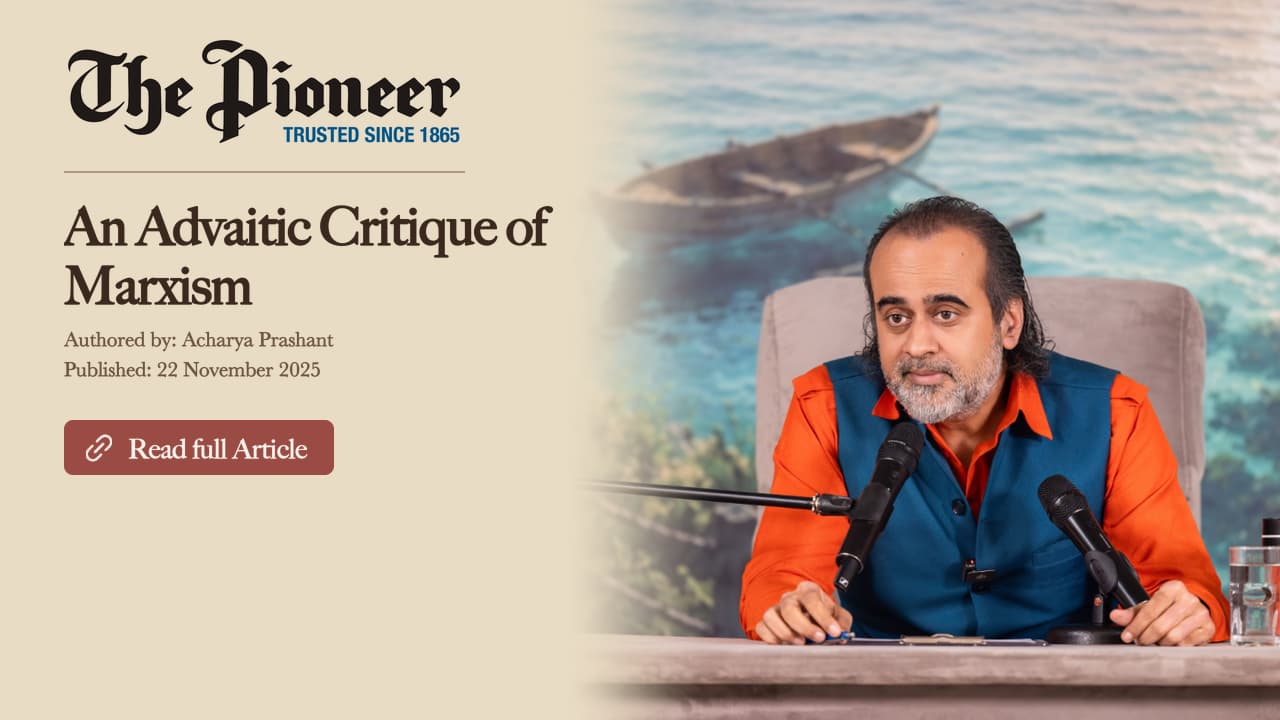
Originally published in The Pioneer on 22 nov '25.
I return from an intense, heart-warming tour of Kolkata, a city I have long admired and whose warmth embraced me again. This is the reflection I offer.
I spent a fortnight walking its lanes, speaking in its historic halls, signing books in its beloved bookstores, sitting under the trees of Rabindra Sarobar, discussing Tagore and Camus with morning walkers at Central Park as if they were old acquaintances, and listening to adda that still carries the old fire. Kolkata is alive with literature, music, argument, and a rare human gentleness. One also notices the quiet scars that history leaves behind. Some of those scars still whisper of a long ideological season that ended in 2011, whose fragrance, and at times its constraints, lingers in the air.
Bengal’s middle class continues to lean towards Government-linked occupations, a legacy that permeates every discussion about security and service. The energetic private-sector youth, so visible in cities shaped by enterprise, are relatively fewer here, one outcome of decades of aspiration shaped by an ideology that distrusted competition and risk. One cannot miss the sight of abandoned factories and hand-pulled rickshaws.