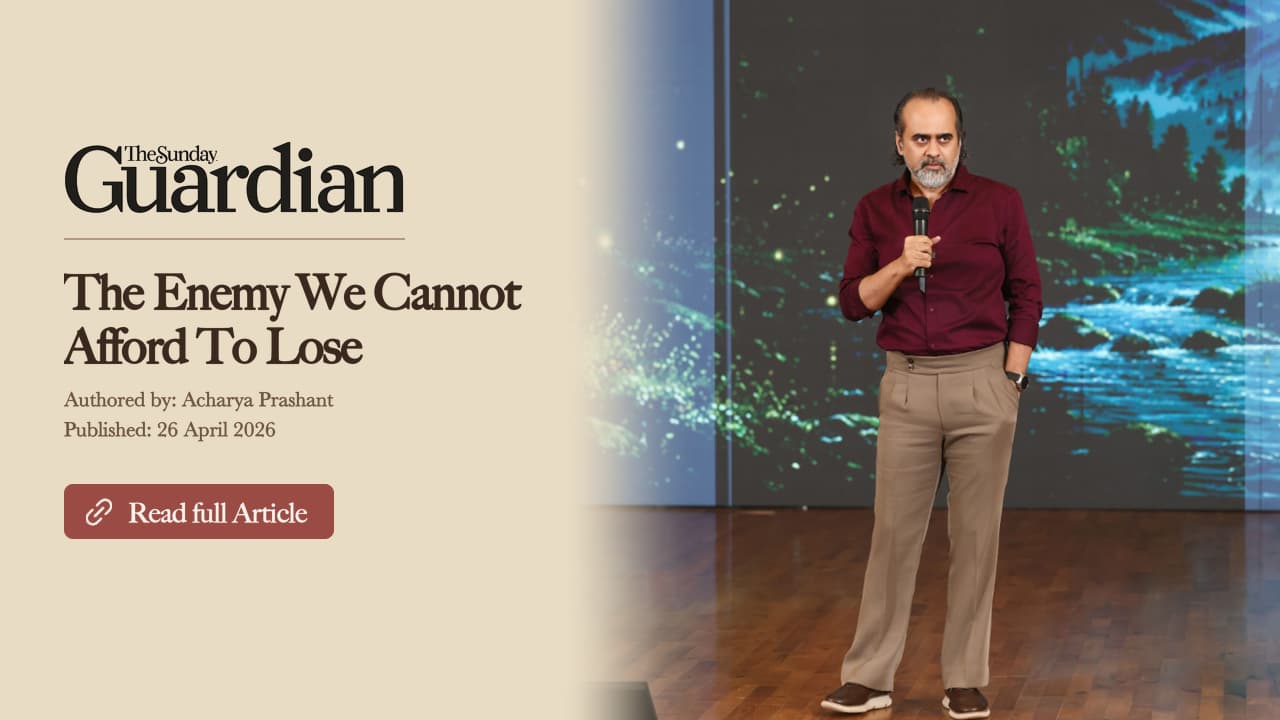
Why ceasefires often spark grief, resentment, and identity crises instead of collective relief. The end of violence should feel like relief. Yet ceasefires often produce grief, anger, even resentment. Why? Because the enemy does more than threaten us, it gives identity, unity, and the promise of vindication. When conflict stops, many feel robbed of something unfinished. The real loss is not war itself, but the dependence on an enemy to know who we are.
This summary is AI-generated. Please read the full article for complete understanding.
Originally published in The Sunday Guardian on 26 apr '26
The end of violence ought to be the simplest good news in the world. That it so rarely functions as such, that its announcement so often produces not relief but a complicated grief, a sense of something unfinished, a resentment that travels across political lines and ideological commitments alike, is a phenomenon worth pausing over before it is explained away as the noise of extremists or the hot blood of partisans. Something about the structure of collective life makes enemies necessary. Understanding what that something is requires looking not at the conflict but at the one watching it.
When the ceasefire between the United States and Iran was announced on the eighth of April, the relief was not universal. On the Iranian side, hardliners paraded ballistic missiles through Tehran’s streets in a show of defiance, their message directed not outward at the enemy but inward at their own government for agreeing to stop. From the Iranian opposition came grief and a sense of abandonment: a feeling that a historical moment of possible change had been surrendered, that the regime would now survive what might have ended it. Two politically irreconcilable camps, united in their resentment of the pause. The pattern is not new.