The devastating flood in Nepal was not merely a natural disaster but a warning about the climate crisis. A glacier collapse triggered the flood, while rising temperatures, melting ice, thawing permafrost, and reckless development have made such disasters increasingly likely. The deeper cause lies in humanity’s endless consumption and desire. Real environmental action therefore requires not only technology and policy, but self-knowledge and a fundamental reconsideration of how we live.
This summary is AI-generated. Please read the full article for complete understanding.
Originally published in The Pioneer on 29 August '26
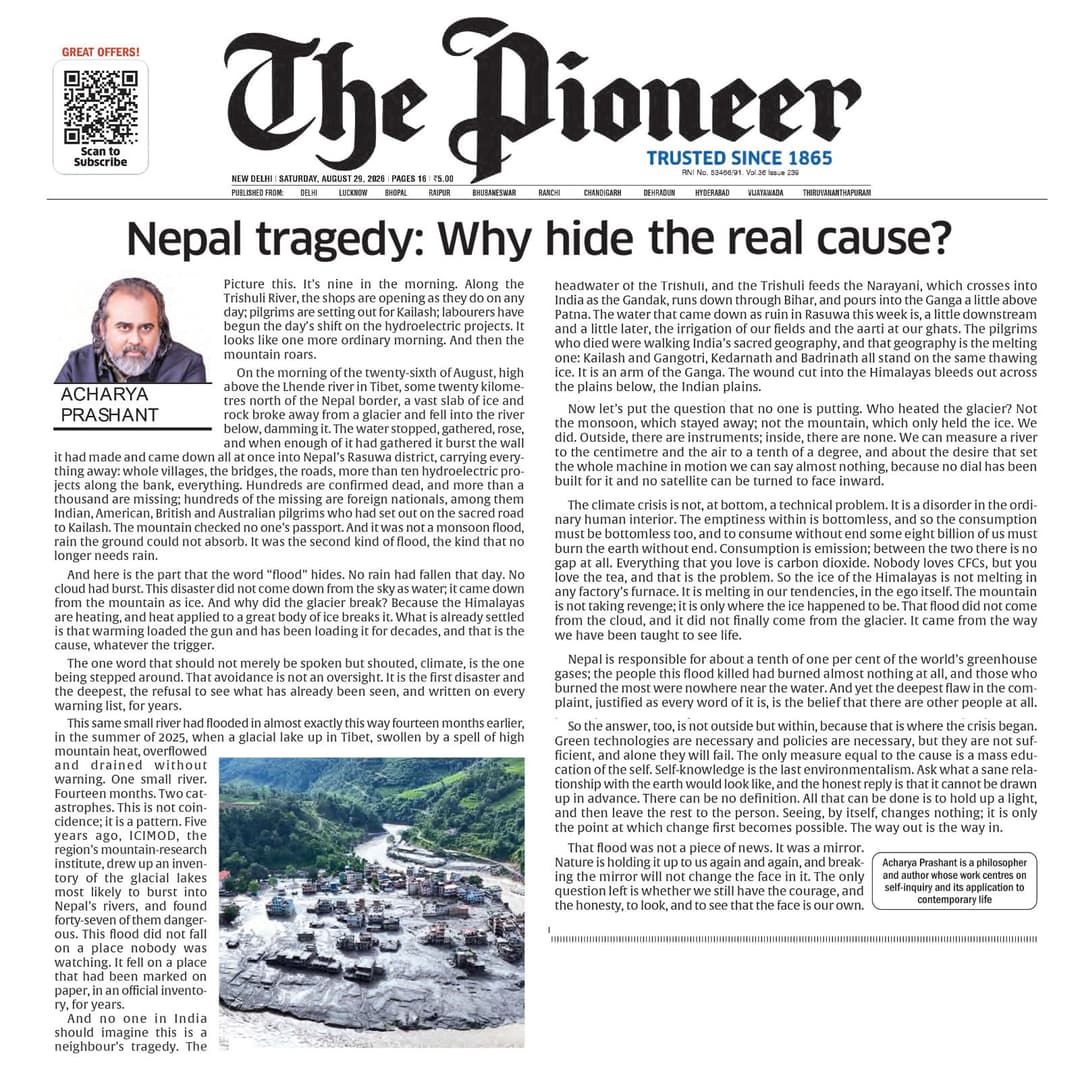
Picture this. It's nine in the morning. Along the Trishuli river, the shops are opening as they do on any day; pilgrims are setting out for Kailash; labourers have begun the day's shift on the hydroelectric projects strung along the water. Take one of them. A pilgrim of sixty, say, from a town in the plains, who finished the circuit of Kailash the day before and is being driven down towards the border this morning with the photographs still on his phone, feeling, as anyone would, that he has done something with his life. He is on the road at nine. It looks like one more ordinary morning. And then the mountain roars.
On the morning of the twenty-sixth of August, high above the Lhende river in Tibet, some twenty kilometres north of the Nepal border, a vast slab of ice and rock broke away from a glacier and fell into the river below, damming it. The water stopped, gathered, rose, and when enough of it had gathered it burst the wall it had made and came down all at once into Nepal's Rasuwa district, carrying everything away: whole villages, the bridges, the roads, more than ten hydroelectric projects along the bank. Everything. The counting is still going on. Hundreds are confirmed dead, the count still rising, and more than a thousand are missing, their chances of being found alive thinning with every hour that passes; hundreds of the missing are foreign nationals, among them Indian, American, British and Australian pilgrims who had set out on the sacred road to Kailash. The mountain checked no one's passport. Our pilgrim is on the list of the missing. That the toll ran so high is not the flood's doing alone; it is also a measure of how much has been built in the water's path, the settlements and dams and border posts crowded onto the banks of rivers that were long known to do exactly this. And it was not a monsoon flood, rain the ground could not absorb. It was the second kind of flood, the kind that no longer needs rain, and the kind that hardly any forecast will see coming.