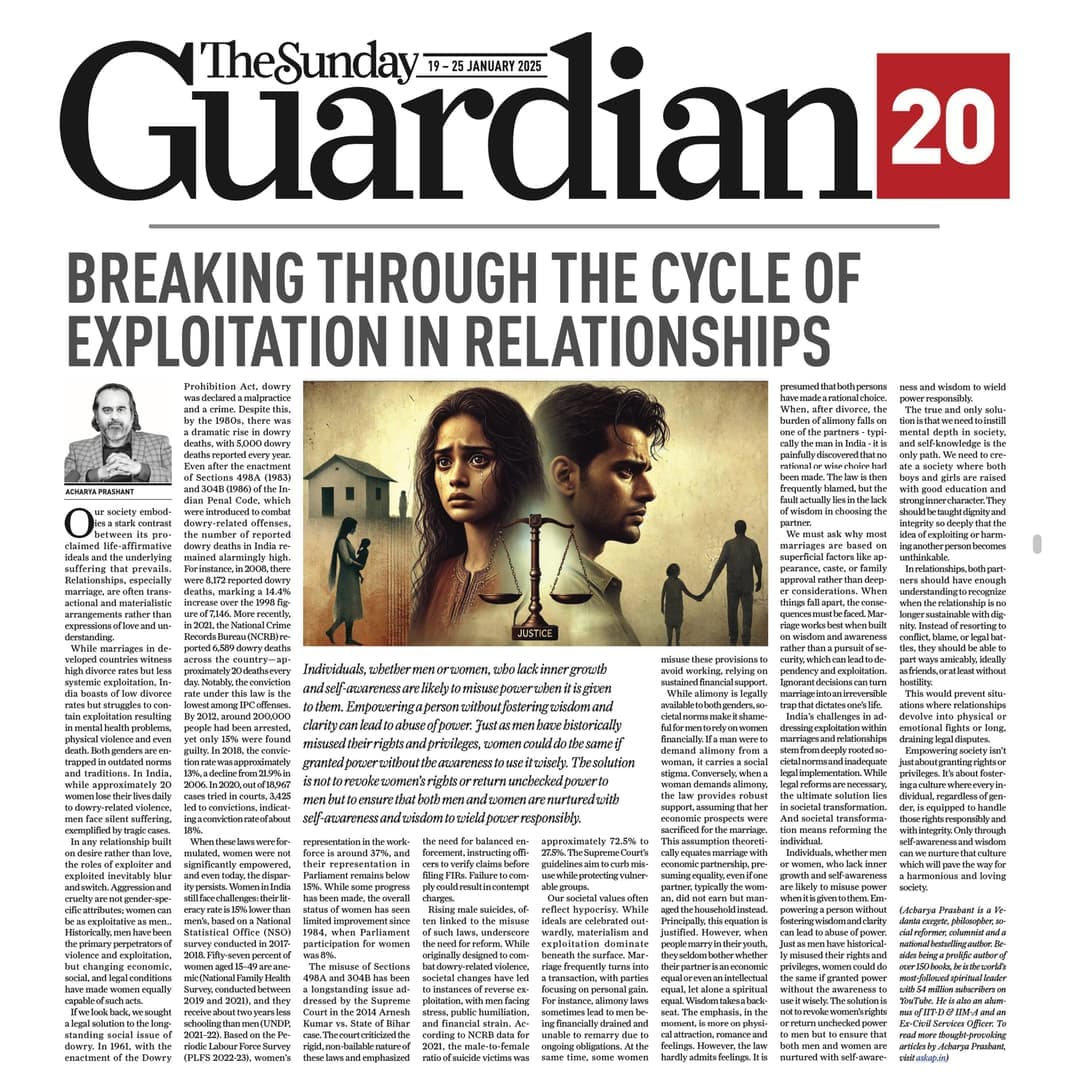
We must ask why most marriages are based on superficial factors like appearance, caste, or family approval rather than deeper considerations. When marriage is based on a pursuit of security rather than wisdom and awareness, it can lead to dependency and exploitation. While legal reforms are necessary, the ultimate solution lies in societal transformation. And societal transformation means reforming the individual to have mental depth — self-knowledge is the only path.
This summary is AI-generated. Please read the full article for complete understanding.
Originally published in the The Sunday Guardian on 15 jan '25.
Our society embodies a stark contrast between its proclaimed life-affirmative ideals and the underlying suffering that prevails. Relationships, especially marriage, are often transactional and materialistic arrangements rather than expressions of love and understanding.
While marriages in developed countries witness high divorce rates but less systemic exploitation, India boasts of low divorce rates but struggles to contain exploitation resulting in mental health problems, physical violence and even death. Both genders are entrapped in outdated norms and traditions. In India, while approximately 20 women lose their lives daily to dowry-related violence, men face silent suffering, exemplified by tragic cases.
In any relationship built on desire rather than love, the roles of exploiter and exploited inevitably blur and switch. Aggression and cruelty are not gender-specific attributes; women can be as exploitative as men. Historically, men have been the primary perpetrators of violence and exploitation, but changing economic, social, and legal conditions have made women equally capable of such acts.