The future will not remember how many millimetres of rain fell; it will remember the choices we made when the warnings were clear. Did we rush to rebuild on the same shaky ground, or did we stop long enough to take a different path, the right path?
This summary is AI-generated. Please read the full article for complete understanding.
Originally published in NDTV on 8 oct '25.
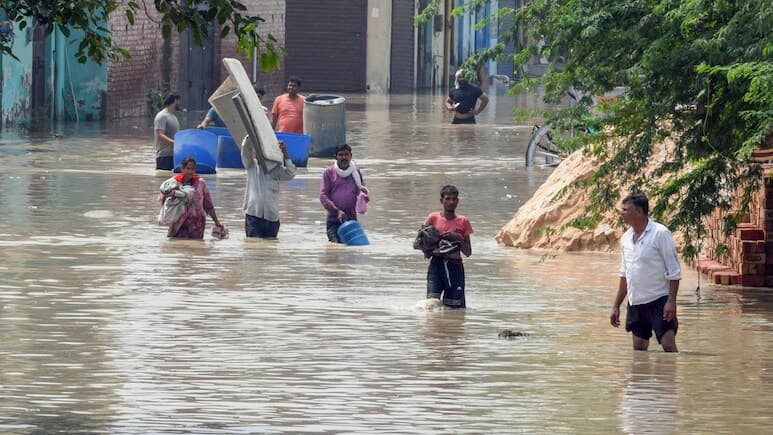
In North India, the monsoon hasn't just rained: it has washed away lives, livelihoods, and the illusion that nature alone bears the blame. Across the region, at least 700 people have lost their lives, and hundreds of thousands have been displaced by relentless flooding and landslides in the Himalayas, Punjab, and Delhi. In Punjab alone, over 50 deaths have been reported, more than 3 lakh people impacted, and 1,400-plus villages submerged, with more than 2.5 lakh acres of farmland inundated
In Punjab's agricultural heartland, this is being called the worst flood in nearly four decades. The Yamuna in Delhi breached dangerous levels, forcing the evacuation of around 10,000 residents. Meanwhile, in Uttarakhand, a cloudburst-triggered flash flood in Dharali claimed at least six lives, with more than 50 missing and dozens of houses and hotels destroyed. In Kishtwar, Jammu & Kashmir, a flash flood struck after a cloudburst, leaving 67 dead, 300 injured, and roughly 200 missing.
These are not isolated tragedies-they are part of a clear pattern: the monsoon has become a chronic crisis born more from human excess than from clouds alone. To understand why destruction on this scale keeps repeating, we must look beyond rainfall charts and into how we have reshaped the land itself.