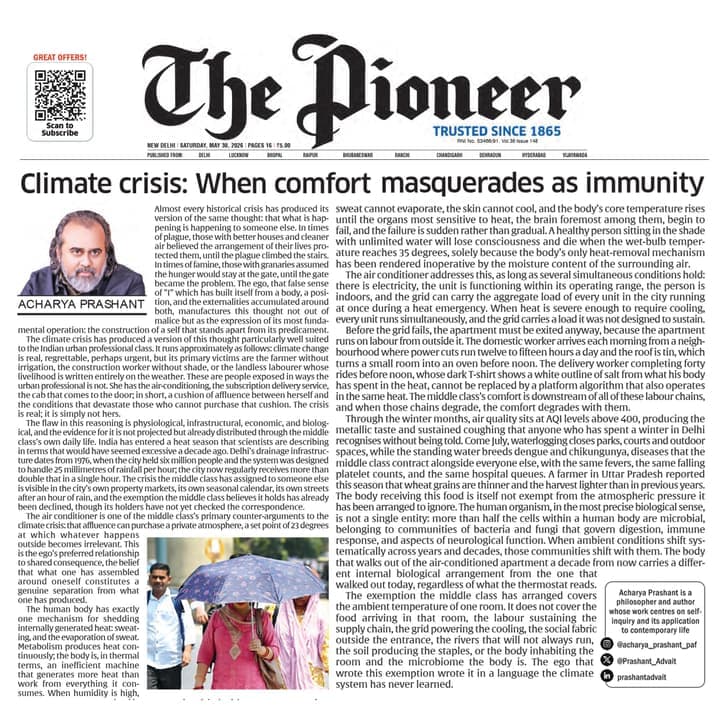
Climate change is often treated as a problem that affects others, while comfort and wealth seem to offer protection. Yet rising heat, floods, failing infrastructure, food insecurity, disrupted labor systems, and ecological decline are already affecting everyday life. Air conditioners, gated communities, and economic privilege cannot shield people from collapsing natural systems. The crisis is shared, and no individual or class can remain truly insulated from its consequences.
This summary is AI-generated. Please read the full article for complete understanding.
Originally published in The Pioneer on 30 may '26
Almost every historical crisis has produced its version of the same thought: that what is happening is happening to someone else. In times of plague, those with better houses and cleaner air believed the arrangement of their lives protected them, until the plague climbed the stairs.
In times of famine, those with granaries assumed the hunger would stay at the gate, until the gate became the problem. The ego, that false sense of "I" which has built itself from a body, a position, and the externalities accumulated around both, manufactures this thought not out of malice but as the expression of its most fundamental operation: the construction of a self that stands apart from its predicament.
It is the construction of an ego that stands apart from its predicament: I am not this; this is happening over there, among people differently situated, who lack the resources I have assembled between myself and the event.