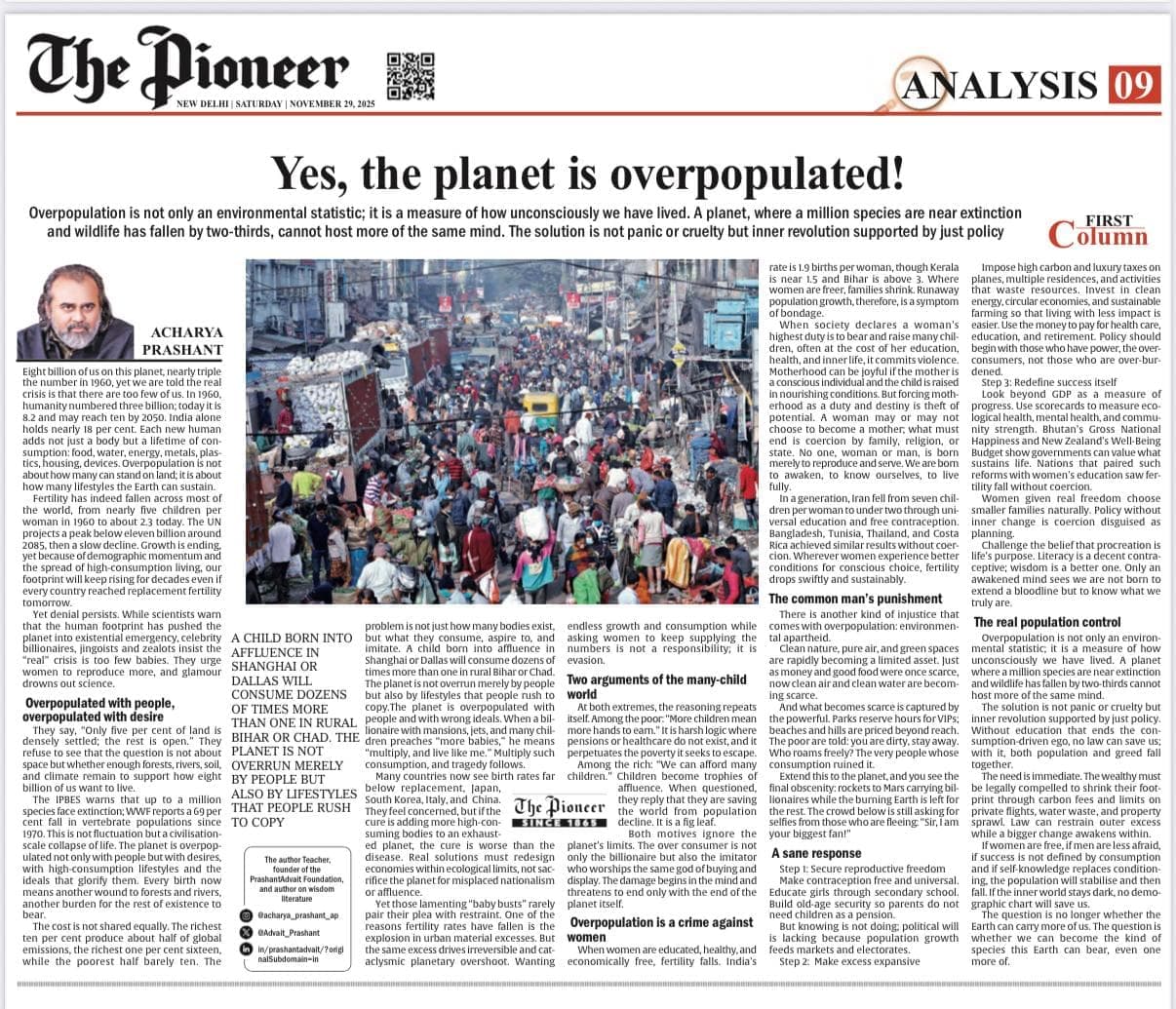
Yes, the planet is overpopulated, but not merely with human bodies. It is overpopulated with high‑consumption lifestyles and with the ideals that glorify them. The way we are living, every additional human birth often means one more wound to the forests, the rivers, the climate, and the other species that must make space for us. When one more human is added in this prevailing culture of ignorant consumption, the rest of existence has one more burden to carry.
This summary is AI-generated. Please read the full article for complete understanding.
Originally published in The Pioneer on 29 nov '25.
Eight billion of us on this planet, nearly triple the number in 1960, yet we are told the real crisis is that there aren’t enough of us. In 1960, there were about 3 billion human beings on Earth. Today, there are around 8.2 billion, and projections suggest we may touch 10 billion by 2050. India alone now holds nearly 18 per cent of the world’s population. When a human being is added to the planet, it is not merely another body that occupies a few square feet. What is added is a lifetime of consumption: food, water, energy, metals, plastics, transport, housing, and electronic devices. Overpopulation is not about how many people can stand on a piece of land. It is about how many lifestyles the Earth can afford to support.
Yes, fertility rates have already crashed across most of the world, from nearly 5 children per woman in 1960 to about 2.3 today. The United Nations’ medium projection expects the global population to peak below 11 billion around 2085 and then slowly decline. Explosive growth is ending. Yet because of demographic momentum and the rapid spread of high consumption lifestyles, especially in Asia, humanity’s total ecological footprint is still rising and will continue to do so for decades, even if every country dropped to replacement fertility tomorrow.