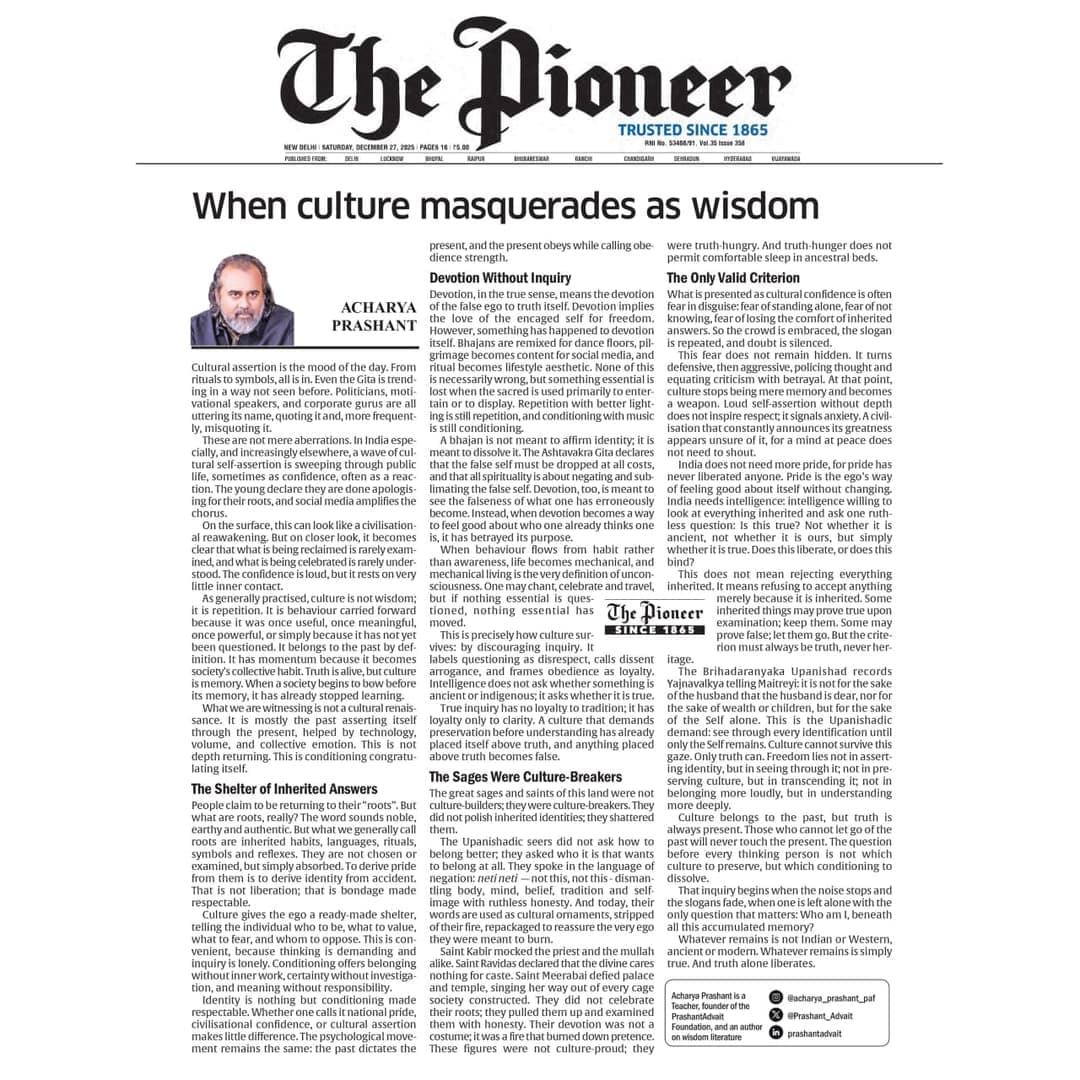
As generally practised, culture is not wisdom; it is repetition. It is behaviour carried forward because it was once useful, once meaningful, once powerful, or simply because it has not yet been questioned. It belongs to the past by definition. It has momentum because it becomes society’s collective habit.
This summary is AI-generated. Please read the full article for complete understanding.
Originally published in The Pioneer on 27 dec '25
Cultural assertion is the mood of the day. From rituals to symbols, all is in. Even the Gita is trending in a way not seen before. Politicians, motivational speakers, and corporate gurus are all uttering its name, quoting it, and more frequently, misquoting it. A tech entrepreneur quotes the Gita in interviews but has never sat with its uncomfortable demands. A university student declares on social media that she is “reclaiming her roots,” though she cannot name a single Upanishad. A family performs elaborate rituals passed down for generations, yet no one in the room can explain what the verses actually mean. A young professional wears religious symbols as fashion, posting aesthetic shots with captions about “ancient wisdom” he has never read.
These are not isolated cases. In India especially, and increasingly elsewhere as well, a wave of cultural self-assertion is sweeping through public life, sometimes as confidence, often as a reaction. “Heritage” is being reclaimed, traditions revived, ancient symbols worn with new pride. The young declare they are done apologising for their roots. Social media amplifies the chorus. What was once taken for granted, and sometimes even shyly hidden, is now displayed with confidence.