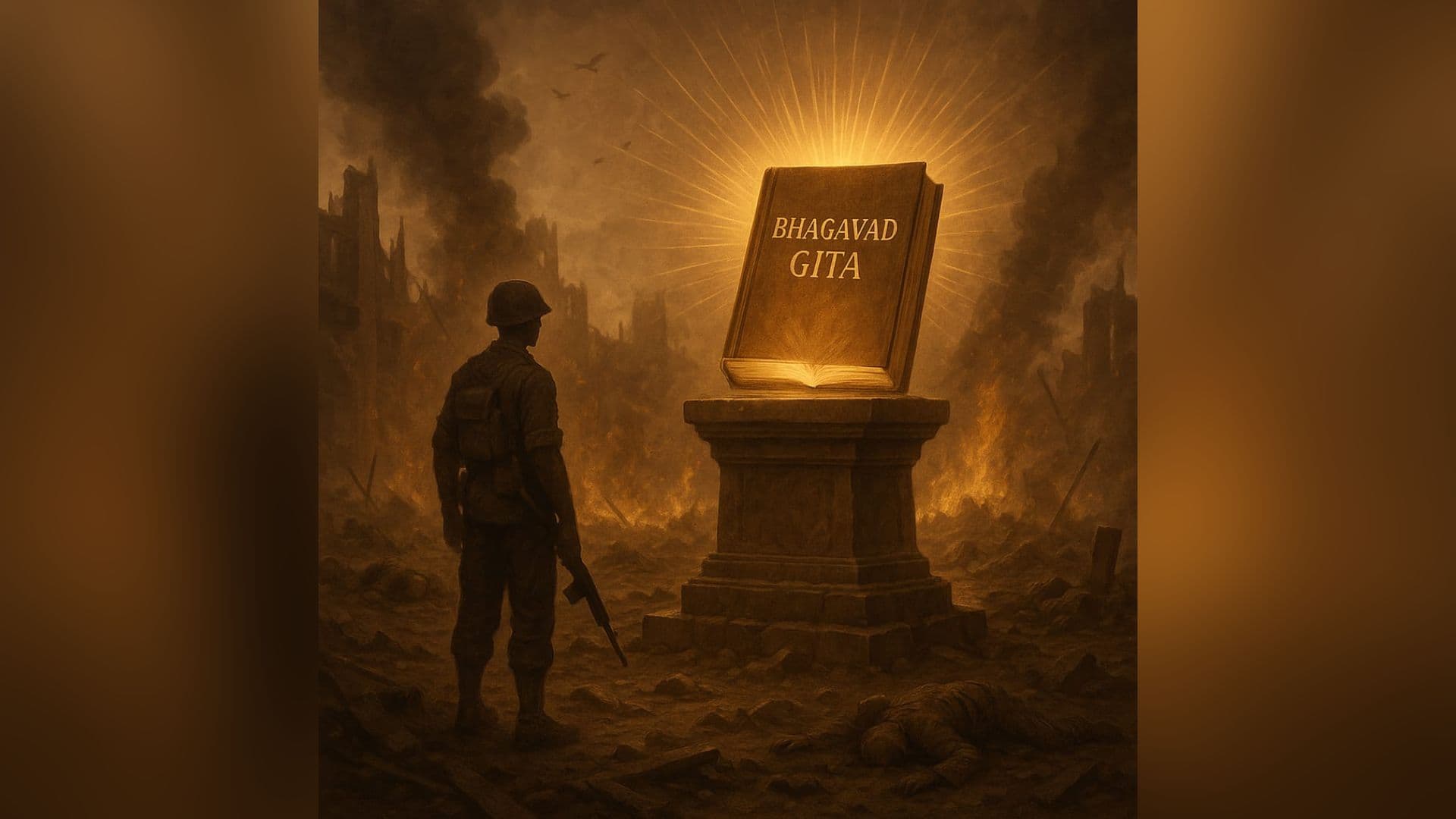
The Bhagavad Gita tells us how to respond when challenged with wars. Arjun was not merely instructed by Shri Krishna to fight, but to fight with clarity — free from fear or resentment. The Gita’s core teaching is: the right action must be based in wisdom — to understand the situation with clarity, rather than respond impulsively.
This summary is AI-generated. Please read the full article for complete understanding.
Originally published in the The Sunday Guardian on 4 may '25.
In a tragic event at Pahalgam, more than twenty innocent tourists were brutally murdered in a terror attack. Reports state that the terrorists specifically chose their victims along religious lines before killing them. This was not an act of random violence; it was a calculated attempt to destroy communities, spread fear, destabilize the region, divide people, and weaken the local economy.
This is no moment to let oneself be overwhelmed by mindless fury or reactive anger, as that is exactly what the forces operating behind such conduct desire. At such a moment, when sorrow and bewilderment grip the mind, what we need is firmness and fearlessness born of wisdom.
Why is the Gita relevant in such moments?
Terrorism is not just a confrontation with violence; it is a confrontation with a breakdown of understanding, leaving us bewildered, enraged, and afraid. The Bhagavad Gita, too, starts at the same place – the battlefield of Kurukshetra where base emotions rule, and clear action is obfuscated by feeling. Terrorists seek not just to take lives, but to unsettle us from inside.