Many cultures quietly accept shows of faith without genuine inner change. Mainstream religion, or lokdharma, often reinforces this pattern by offering social approval in place of critical thinking and introspection. It is unfortunately operating like a marketplace, where people seek emotional or material fulfillment, treating dharma as something to consume or perform rather than a path to transform. The Gita dismantles this model entirely, challenging the foundation of desire-driven faith and replacing it with radical self-inquiry.
This summary is AI-generated. Please read the full article for complete understanding.
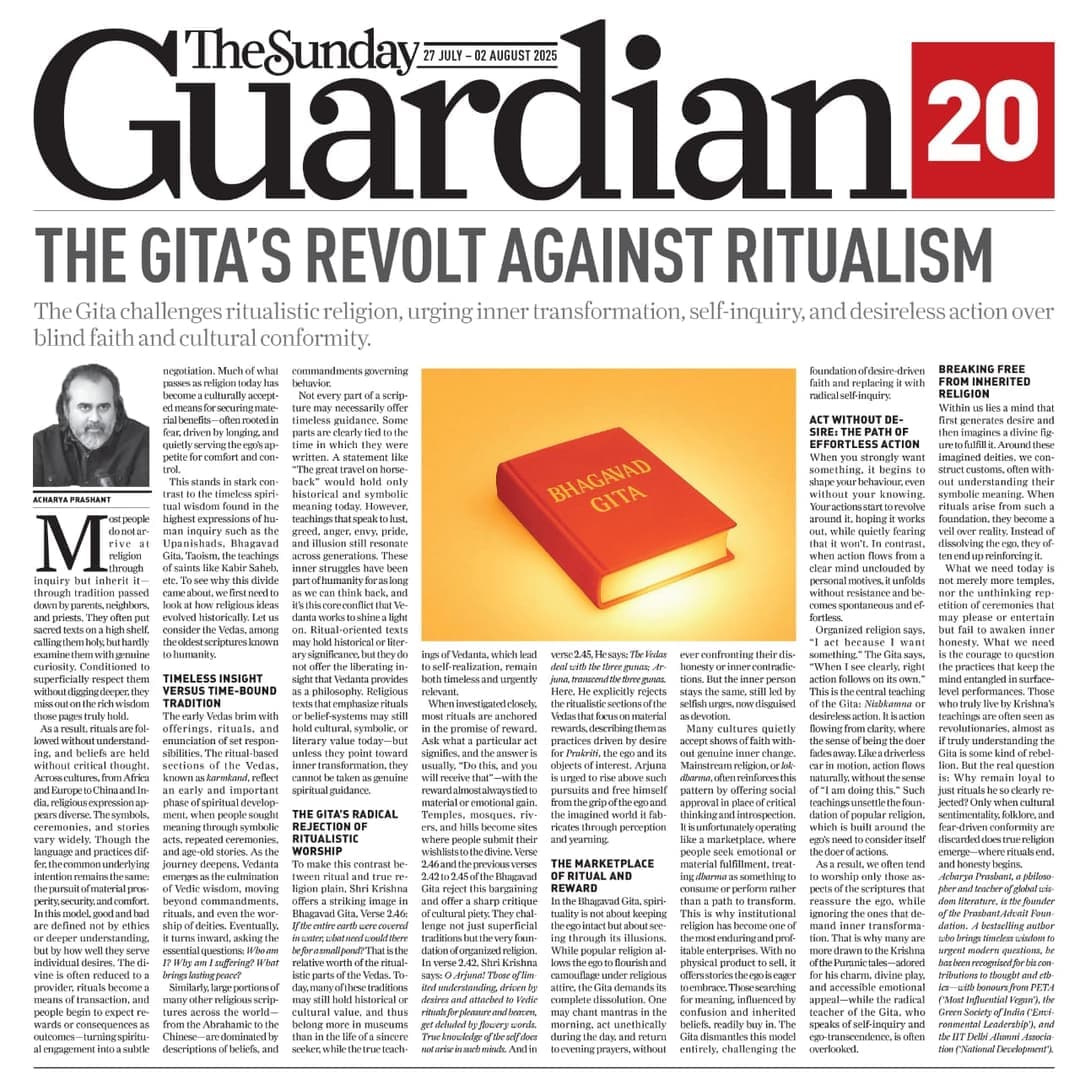
Originally published in The Sunday Guardian on 27 jul '25.
Most people do not arrive at religion through inquiry but inherit it— through tradition passed down by parents, neighbors, and priests. They often put sacred texts on a high shelf, calling them holy, but hardly examine them with genuine curiosity. Conditioned to superficially respect them without digging deeper, they miss out on the rich wisdom those pages truly hold. As a result, rituals are followed without understanding, and beliefs are held without critical thought. Across cultures, from Africa and Europe to China and India, religious expression appears diverse.
The symbols, ceremonies, and stories vary widely. Though the language and practices differ, the common underlying intention remains the same: the pursuit of material prosperity, security, and comfort. In this model, good and bad are defined not by ethics or deeper understanding, but by how well they serve individual desires. The divine is often reduced to a provider, rituals become a means of transaction, and people begin to expect rewards or consequences as outcomes—turning spiritual engagement into a subtle negotiation.