We all know those moments: lost in music, in work, in a game, and for a while the self is gone. Then it comes back, often hungrier. In this London dialogue on non-duality, we ask what such teachings can offer someone in grief, why non-duality is simply honesty, and how immersion thins the self while intoxication fattens it. The objects keep changing from marks to money, but does the one chasing them ever change?
This summary is AI-generated. Please read the full article for complete understanding.
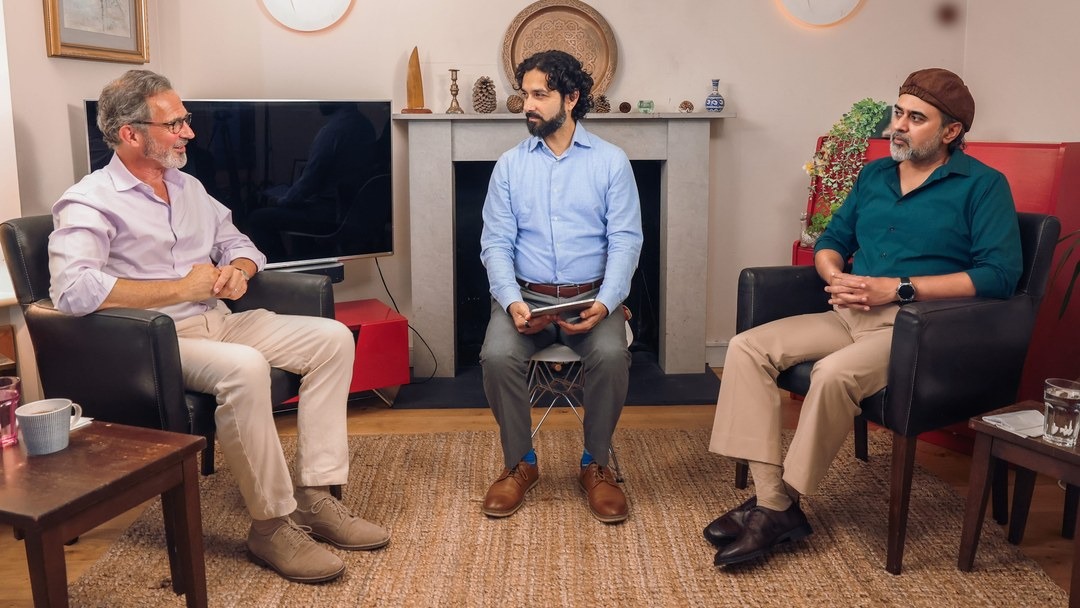
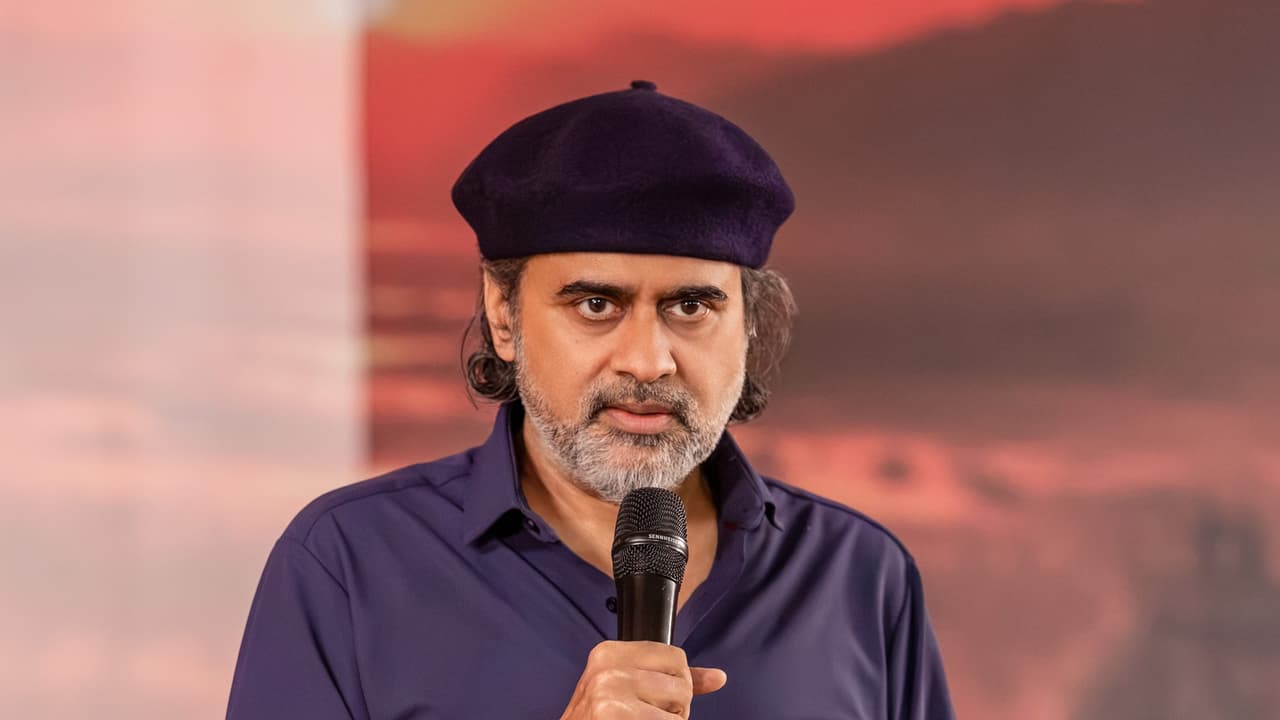
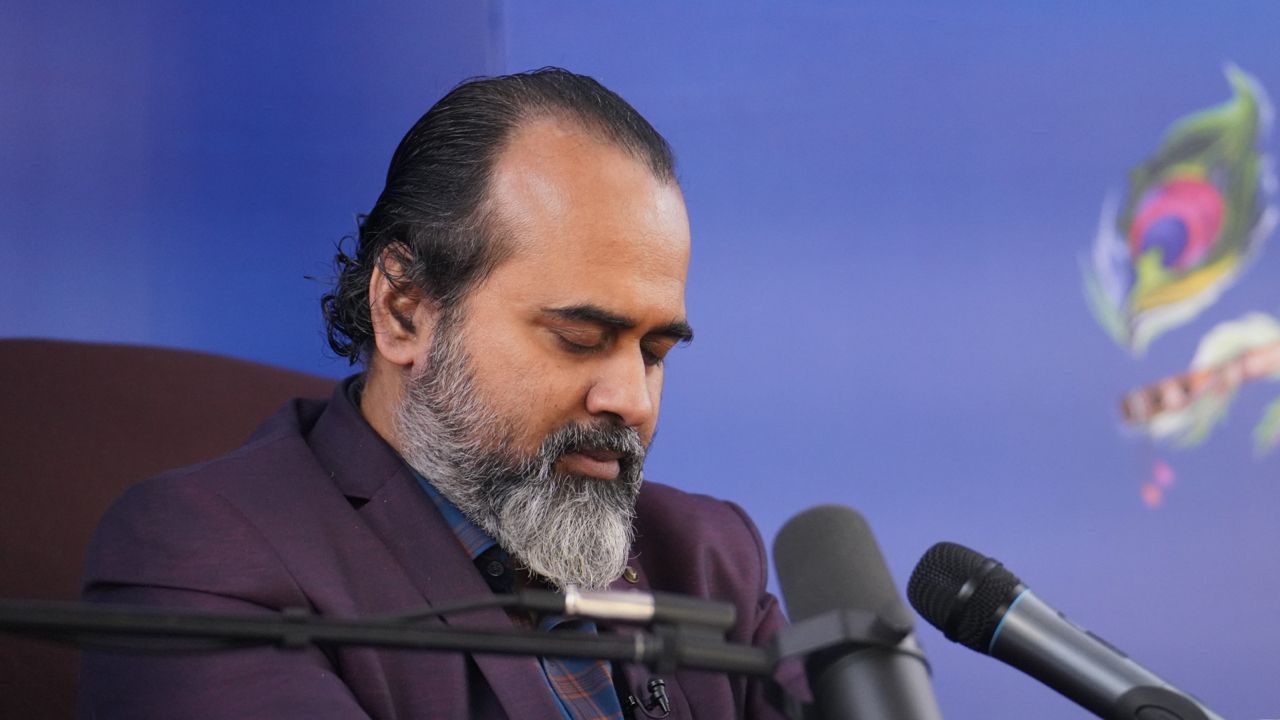
[From a conversation in London in 2026 between Acharya Prashant and Rupert Spira, a teacher of non-duality, where the host asked how non-duality helps a person in grief, and whether the moments when we lose ourselves in something are the way out.]
Questioner: So it sounds like I have to do this myself. I think we have time for one last question. So let’s say there’s someone in front of you who’s in pain and suffering and grief. I guess, how does non-dual philosophy help that person? Would you ... How does, how does that help that person get out of his or her grief, his or her petty life, small life, all the desires that you mentioned?
Rupert Spira: Similar, similar question to, that you asked before. There’s no ... There’s, there’s non-dual, what you call non-dual philosophy is not a body of teaching. It’s not like being a history professor where you have a a body of knowledge that you assemble before the term begins, and then you disseminate it throughout the term in small ... It’s just not like that. In a way, there’s no non-dual philosophy. A so-called teacher comes to a ... Unlike a history professor, I have nothing against history professors.
Questioner: No, no.
Rupert Spira: They’re doing their job. But a history professor comes to a lecture full of knowledge to disseminate to the class. A so-called non-dual teacher comes to a meeting, a retreat empty, with no knowledge, with nothing to give, with nothing ... Just, they just come open, empty, aware. And they respond from that place in all sorts of different ways. If some, one person is, comes suffering, I might get up and give them a hug. Another person, I might suggest exploring into the nature of your being. Another person, I might suggest devoting yourself to God, if that’s the language in which they ask the ... It depends. It ... The non-dual teaching doesn’t come from a, from the past, from a body of knowledge. It comes out of a living understanding that is, that is present, and is temporarily formulated in response to a question.
And then when the, when the question and the question and the formulation have hopefully met and dissolved, then the formulation should be abandoned. It ... You don’t retain the formulation as a body. You just let it go. It vanishes, and you remain open and empty for the next question, if there’s a question. And if there’s no question, there’s no teaching. There’s no...
Questioner: No question.
Acharya Prashant: Beautifully put. No question, no teaching. No questioner, no teaching.
Rupert Spira: No, even more, no questioner. N...
Acharya Prashant: No questioner, no teaching.
Rupert Spira: No question. No, no question, no ... Yeah.
Acharya Prashant: No questioner, no teaching.
Questioner: No questioner, no teaching. That seems like a great place to end.
Acharya Prashant: Do you remember that one from Zen? No moon, no lake. No moon, no lake. Out. Everything out. See, what is non-duality about? It’s simply about seeing that the ego always operates in a dualistic paradigm, right? And that’s the, that’s the home of the sufferer. I’m the sufferer. This accumulation of objects materially and mentally, right? This is my home, and it is in this home that I’m suffering. What else is the mind? An inventory, a storehouse of the favorite objects of the ego, right? Not that the mind cannot operate without the ego, not that you cannot have an ego-less mind or an, or a, or a mind with a very thinned down ego. It is possible.
But in general because the ego ego sabotages everything and the body is the first colony of the ego. So the mind is reduced to being just a storehouse. That’s all that the ego has. That is duality. You, your mind, and in that mind, which is your house, you sit sulking, sobbing, suffering. That’s, that’s why you are suffering So non-duality is about exposing duality. Non-duality is about seeing that the dualistic paradigm would always result in suffering. So it’s very nicely said that non-duality in itself can hardly be called even a philosophy because all philosophies are to somebody. If non-duality is a philosophy, then non-duality is to the ego, and then non-duality is not non-duality at all. Non-duality becomes duality.
Therefore, non-duality cannot be a philosophy. All philosophies have certain qualifiers, right? You specify the epistemology, and then there has to be a certain metaphysics, then a soteriology. So those things, yes. Yes, if you, if you read Advait, these things you will get. But essentially, non-duality is not a philosophy.
Non-duality is simply honesty.
Look at this dualistic model that you take as the truth. Test it. When you test it is not that the world falls. The ego falls. The observer of the world falls. The ego falls. It is not about disappearance of the world. A lot of people think Acharya Shankara said Jagat Mithya, so maybe the world is is false. A lot of people think maybe Maya is outside of yourself. No, the ego is Maya. The Jagat is Mithya because it is your Jagat. Just as, you know, if you are silent, then y- then it is a problem. If you speak, then it is a problem.
Similarly, as long as it is your world, there is a problem. As long it is the world, there is no problem. But moving from your world to the world is a long distance to cover, and it’s a lifelong journey that never gets completed. Still, you must continue to walk, right? So that’s what non-duality tells you. It tells you are the only reason why you suffer, and it then, in that sense, makes you responsible. That you cannot blame anybody else, that you cannot claim to be the victim, that you cannot say, “Oh, he caused me harm, and she caused me grief, and because I was born in such class, in such country, in such an age, that’s why I’m in this situation.” External situations are Prakritic. They can be defined by external events. They are defined by external events always.
But internally, the sufferer sits. The leg doesn’t suffer. The nose doesn’t suffer. Who is it within that suffers? Who is it within that suffers? And that one, that one has to look at itself with some love, with some honesty, and drop. And with the sufferer gone, suffering cannot remain. That is the non-dual perspective. It simply looks at ego. Non-duality without dissolution of the ego means nothing at all. Non-duality simply says these are the two ends, and they are dualistic, so they support each other. With one end dropped, the other end cannot remain. That’s it, simple. You, if you, if you have something personal, a last closing question or something, I can still take it. We have five or 10 minutes maybe if if that agrees.
But it has to be something beyond this.
Questioner: Sure.
Acharya Prashant: I do agree. It’s best when it is, you know, coming from lives.
Questioner: Mm-hmm. So I guess the suffering or the thoughts, it sounds like that keeps, will keep coming. But there are some times when I’m engrossed in something and they came... And they seem to kind of disappear. So is that the continuous process that keeps going, that length of time just keeps expanding, expanding, expanding?
Acharya Prashant: You can, you can fall into a coma and you’ll not experience suffering, but that is not liberation. Hmm. Look at Om. A-U-Ma. Jagrati, Swapna, Sushupti, Turiya. Sushupti is not liberation. Or is it? But Sushupti maps into the Anandmayakosha. Still, Sushupti is not liberation, otherwise Turiya is not needed. If Sushupti is liberation, why is Turiya needed?
Questioner: If I may, what is Susup- Sushupti again?
Acharya Prashant: Sushupti is deep sleep.
Questioner: Deep sleep.
Acharya Prashant: Deep sleep. Dreamless sleep. Very deep sleep. And you don’t suffer. You’re talking of that interim in which the ego doesn’t suffer because you’re immersed in something. So you can be immersed in deep sleep and you won’t suffer, but that is not liberation. You can, you can, you can drown yourself in alcohol or some, something psychedelic, and again, you won’t suffer for a while. But that is not liberation. Or you can give yourself the coveted object of your choice. You know, you were, you were aiming for something since very long, and you get it. And for a while you feel, “Oh, this is sheer bliss. This is just joy. I have, I have transcended into something.” It won’t last.
See, ego lapsing into an unconscious state and not suffering for a while is not liberation. There is a difference between, between immersion and intoxication. These two terms have to be seen separately. Immersion is the ego disappearing in its own debris. Immersion is like the ego melting and the shape getting lost in the molten stuff that remains. Though nothing remains really, but just to explain. So that is immersion. The ego subsuming itself in truth, the ego sublimating, the ego dissolving, that is immersion. Intoxication is something else altogether. So you can intoxicate yourself, and the modern world is full of intoxicants, entertainment, money, power, prestige, travel, adventure, sex. You can have what you want. Shopping, endless shopping, you can do all that. These are intoxicants, and even when you are intoxicated, you feel a certain, mm, a certain happiness, and this cult of happiness is what is destroying the planet.
You can, you can, you can shop from morning till evening and you will feel a certain happiness, and that is just consumerism and that’s climate change, the climate catastrophe, right? But the ego feels happy for a while. This for a whileness is a great, great trouble, right? You have to, you have to ask yourself, am I immersed or am I intoxicated?
Immersion is a thinning down of the self. Intoxication is the self gaining a beer belly.
Yeah. Fattening of the self. So these two have to be seen very differently, and that requires honesty. We already know. We don’t acknowledge.
Questioner: And so let’s say I do something and I know that it intoxicates. How does the acknowledgement of that prevent it from happening again?
Acharya Prashant: He’s saying, “I know it’s not good for me.”
Questioner: That’s...
Acharya Prashant: I know. He’s an intellectual. He’s very well-read and carries big degrees Ivy League institutions, and it’s ... I know it’s coming from his life.
Rupert Spira: Just, just notice that what you want in life is not temporary peace and happiness. You want lasting peace and happiness. You ... Nobody wants happiness for five minutes. Everyone wants peace and happiness all the time. And just notice that when you’re intoxicated with whatever your substance of the ... You do ... The acquisition of the object or the substance does briefly put an end to the seeking mind, and you do briefly taste your true nature of happiness, but very, very brief because you haven’t uprooted the source of your seeking. You’ve just temporarily put an end to it by acquiring an object. So the, what you refer to as the ego, the suffering self remains, and then it r- in spite of the fact that you’ve achieved, you’ve, you’ve fulfilled your desire, but it comes back again, and then you start seeking again. You want ...
And you need a little bit more of the substance next time. So you just notice that anyone who’s, who’s intelligent just notices after, you know ... You get drunk what? Two, three, four, five, six, seven times, and then you realize, “This doesn’t make me happy. Why would I go on doing it?” I mean, how many times do we have to seek fulfillment in an object or a substance or an activity and, or a relationship or a teaching or a teacher only to have it failed before we get the message, fulfillment doesn’t live there. It cannot be provided by the object, the substance by a teacher or by a teaching, by anything.
So sooner or later you have to see the whole investment of your fulfillment in the, in the content of your experience, however noble and refined that co- ... Even if it was the best teacher in the world or the best teaching in the world, they cannot provide for you what you truly want. So that’s a great moment when you recognize that, when you realize that nothing objective can give me what I deeply long for in life. That’s the most valuable recognition because then you open this door to this new possibility of seeking in yourself for the source of the peace for which you long. Don’t be like the prodigal son that spends his whole life, and he has to go to the end of the possibilities of what is on offer in the world. Just how many failed relationships, how many drunken episode? Just one or two is enough.
You know, by the time you’ve got to your age you should have experienced enough to know that a relationship, a, an object, a substance ... I don’t mean you shouldn’t have relationships or seek ob- ... But not for the purpose of finding fulfillment. Your desire should come from fulfillment, not go towards fulfillment. So you’ve had enough experience to know that you’ll never find a, the peace for which you long in the world, however noble the object, the teacher. You’re ... And that’s a great moment to come to because that opens you to this new possibility. It’s this turning around. It’s symbolized in the story, this turning around and this investigation. The ego, the investigation that the ego makes into itself, and if the ego really explores itself deeply, it discovers ultimately there is no ego.
But you can’t make that claim before you’ve made the e- ... You have to make the exploration to discover that the ego that you premi- previously thought you were is not really there.
Acharya Prashant: Ideally, that should suffice. But I’ll put it in your MBA lingo. Law of diminishing returns So one drink, one relationship Now, come on, you know that the other one didn’t give you as much, right? I’m thirsty. The first glass, huh, gives me an experience that the second one won’t. And then if I take f- taken five more, that would actually give me a negative experience, negative fulfillment. So you already know that. The problem with that would be if I take water after water, then your MBA education will allow you to summon the law of diminishing marginal utility. You will do that. In life, the problem is this tumbler is pink, the next one is blue.
And there are infinite shades, hues, and colors. So the ego consoles itself by saying that the next object is going to be different. Economics is for the innocent. There the law of diminishing returns applies with respect to the same object. The same object. In life, objects don’t come wearing same colors, same names, and same forms, and same bodies. So you tell yourself, “Okay this one failed,” right? “That one would succeed.” Right? Reena failed, Julie would succeed. And then, and there is no end to all that because it’s an infinite universe, and there are 850 crore of us, and there’s so many objects. This is industrial production. You can always have something new coming up.
So you have to look at yourself. These are different, yes, but you are the same. You are still the one who was running behind marks age 15. Hmm? The same fellow who was, who was saying, “Okay, what will happen to my board exams, my class 10th exams?” Was also the ones very worried about his grades, his CGPA at Kellogg’s. Then he was also worried about the dashboard, the numbers at his workplace as an investment banker, right? So you are the same.
The objects have been changing. The ego’s fundamental tendency has remained the same.
And when you see that, then that moment arrives when you say, “Oh, all this is never going to succeed.”
But then you need to have an infinite sequence of those moments, because that moment can come today, and can be forgotten tomorrow. The ego will bounce back. So you need to realize that for yourself again and again, over and over. It has to be a daily thing. It has to be a thing of daily honesty. It is not like your MBA degree, which you have once earned and would remain with you forever. This is a thing of constant remembrance. It’s like love. You don’t just love once and drop it, right? Love is a stream. Love is a continuity.
Questioner: Do you remember the negative experience you had every day?
Acharya Prashant: You remember who you are. You look at yourself and you find yourself, you know, doing all those kinds of nonsensical things you have always been, been doing, and then you smile at yourself, and that smile is the sword. You’re slayed.
Questioner: How could I have been that stupid? This took a little unusual twist. There was a twist in the plot, but thank you, Rupert. Thank you, Acharya Ji.
Acharya Prashant: Thank you. Thank you.