Go to a wedding in a small Indian town, and you’ll often hear the generator before you hear the band. Somewhere behind the tent, near the cooks, an old diesel set chugs away all night so that the lights never dip and the music never stops.
This summary is AI-generated. Please read the full article for complete understanding.
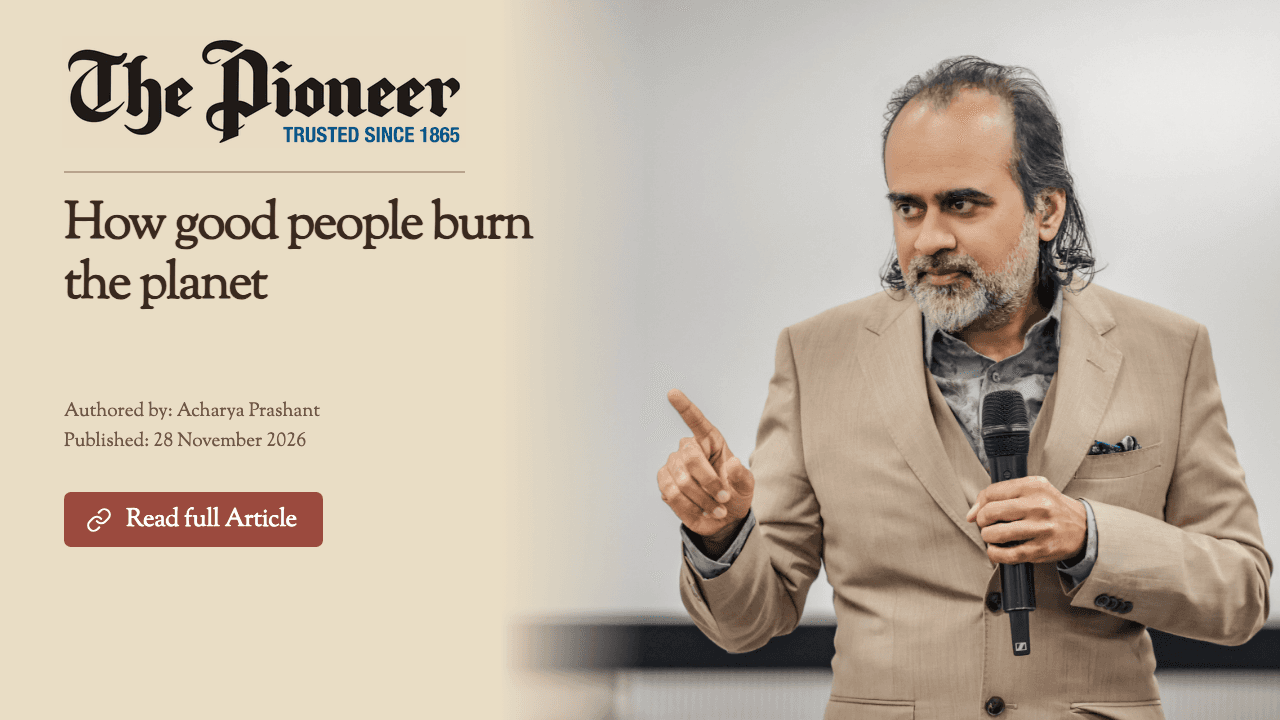
Originally published in The Pioneer on 28 November '26
Go to a wedding in a small Indian town, and you’ll often hear the generator before you hear the band. Somewhere behind the tent, near the cooks, an old diesel set chugs away all night so that the lights never dip and the music never stops. Power cuts are common in such places, and the father of the bride is not going to let one spoil his daughter’s evening.
Is he a villain? No. Ask him and he’ll tell you he’s only doing his duty as a father. The smoke drifts over the neighbouring roofs, where old people and small children are trying to sleep. What he burns for his family, another family has to breathe. But how does that matter to him? Inside the gate, light. Outside the gate, the world, and that is not his department. We are nice, but very selectively nice, and that is another name for violence.
Nearly two hundred countries had assembled at Antalya in Turkey for the UN climate summit, COP31. On November 22, after two extra days of negotiations, they went home without an overarching political agreement. About 130 countries had wanted the agreement to speak of moving away from fossil fuels. The final draft didn’t even mention coal, oil or gas, the very things principally responsible for global warming.
But it did find room to promote carbon capture. Saudi Arabia, backed by other oil-producing countries, had led the resistance. Ireland’s climate minister, speaking for the European Union, said the conference had been “hijacked by some oil states.” So now we have a villain, and a villain is very convenient. When something goes wrong, we want to blame one moment, one place, one culprit. Why? So that the entire process leading up to that moment remains untouched and unexamined.
If countries could come together to save the ozone layer, why can’t they come together now? In 1987, the world signed the Montreal Protocol, which every country has since ratified. Nearly 99 per cent of ozone-depleting substances have been phased out, and the ozone layer is healing. Ozone depletion was one bad leaf on the tree.
You could change the product and leave the man who used the product almost as he was. The climate crisis lies at the root of the tree. And which tree am I talking of? Man and his desires. To solve the ozone problem, you didn’t have to ask a young man why a two-wheeler was no longer enough and a four-wheeler had become proof that he had arrived. You didn’t have to ask a family why the honeymoon must be in Switzerland.
And what did Antalya’s last draft have kind words for? Carbon capture. Very well, capture the carbon wherever you can. But the moment you hear that some machine will take care of the carbon, you feel a little more comfortable releasing it. We want to keep the fuel and remove the warming. And isn’t that what the ego is always asking for? Leave me intact, but remove my miseries.
In London in May, a man in the audience told me that the real abusers of the climate were not sitting in that hall. They were the rich and powerful. I said, where does the money in their bank accounts come from? They sell products and services, and you are the consumer.
They have to produce the consumer. They have to produce somebody who feels incomplete without what they sell. A satisfied customer, remember, is no longer a customer. India imports close to nine-tenths of the crude oil it consumes, and Saudi Arabia has long been among its principal suppliers. The rupees you spend at the petrol pump contribute to the economic power that the oil producers exercise at conferences like Antalya.
India is right to insist that those who used up most of the world’s carbon budget must carry most of the burden and honour their financial commitments. Riyadh wants to protect its revenues, Brussels its industries, Beijing its factories, Washington its drilling.
And each Government can say with complete sincerity that it is only looking after its own people. Now seat nearly two hundred such decencies at one table. What do you get? Antalya. The problem is that we are people of divided decency, and divided decency can be worse than indecency.
See who is doing all the worrying. Who worries about his house, his family, his neighbourhood, and now the planet? The ego. And who is burning the planet? That same ego. The worrying entity and the damaging entity are one. He worries about the climate report, and he books the flight. The fellow who has created the problem has been sent to negotiate with himself.
Can we first stop doing some of the things that have brought us here? I’m not dissuading you from developing better batteries, solar panels or public transport. But if the fellow using them remains the same, how much will better technology achieve? You have got a more efficient car. Very good. Will you now drive it twice as much?
Does that mean nobody may consume anything? No. The organism is free to consume. The ego is not. A poor family that requires electricity for a fan and clean fuel for its stove is answering a genuine requirement of the body. Surely we must make those available. But what about the fellow who wants a third car, a bigger flat and a foreign holiday every six months? The body eats and is done.
The ego eats and is never done, because the ego is not eating food. It is eating a picture of itself. Nobody is asking you to be virtuous or magnanimous, or to develop some great love for the fish in the Amazon. Honesty is asked of you, not virtue. You say you care for a few people. Fine.
See what your care is doing. If what I call my love for these few can survive only through violence towards everybody outside my circle, what kind of love is it, even for these few? Look at the generator at the wedding. Look at the car bought to impress. Look at the flight to Switzerland. Which of them are you ready to give up?
Originally published in The Pioneer on 28 November '26