Originally published in The Pioneer on 4 apr '26
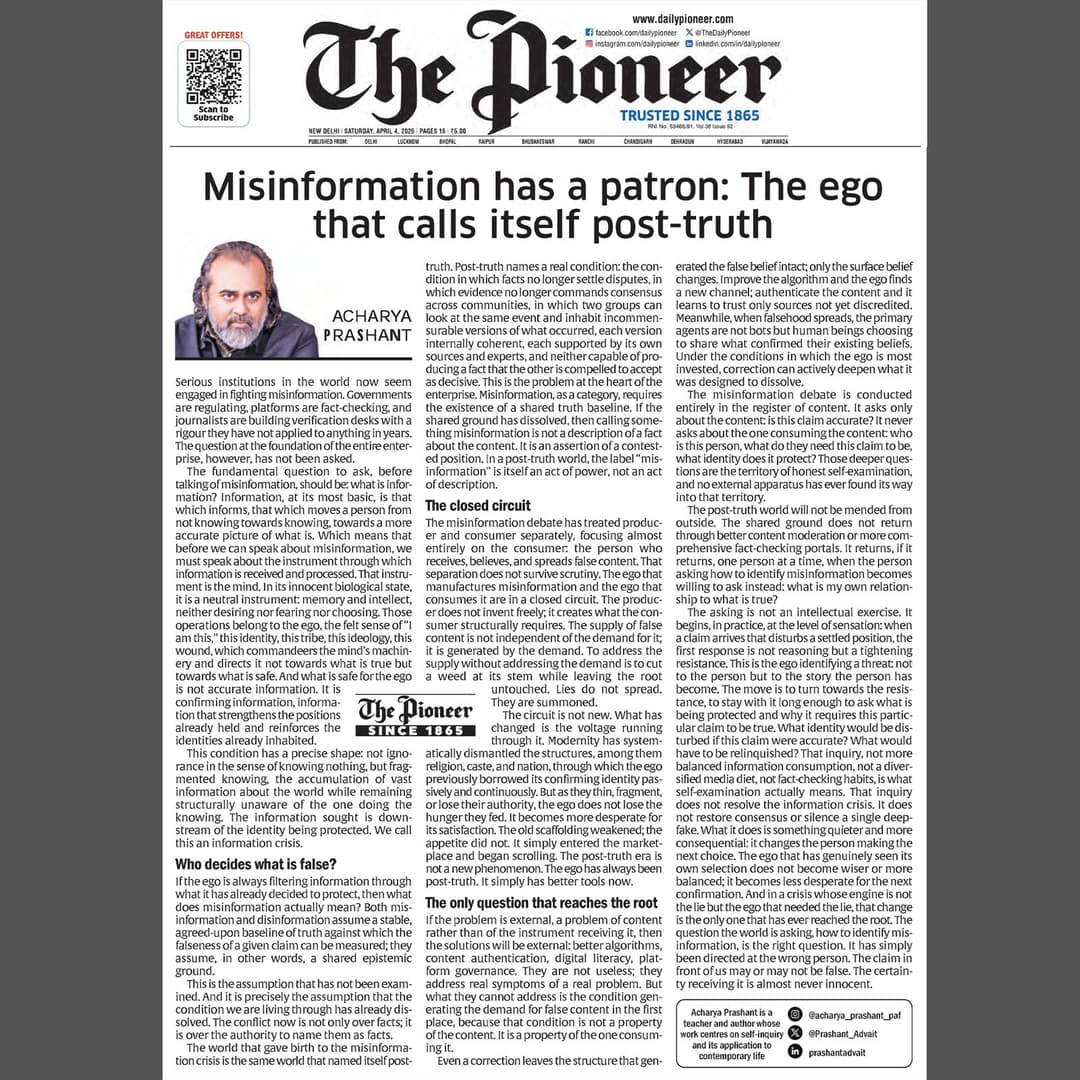
Serious institutions in the world now seem engaged in fighting misinformation.
Governments are regulating, platforms are fact-checking, academics are mapping how false content spreads, and journalists are building verification desks with a rigour they have not applied to anything in years. The World Economic Forum, in its Global Risks Report 2026, has ranked misinformation and disinformation the second most severe risk facing humanity over the next two years, above armed conflict and ecosystem collapse. The mobilisation is real, the alarm is genuine, and the concern is not manufactured. The question at the foundation of the entire enterprise, however, has not been asked. And it is a question prior to every debate about content, platforms, and public policy.
The fundamental question is not about platforms or algorithms or the velocity of false content. Those would come later. The fundamental question to ask, before talking of misinformation, should be: what is information? Information, at its most basic, is that which informs, that which moves a person from not-knowing toward knowing, toward a more accurate picture of what is. It is not merely data. It is data received by someone, processed by someone, used by someone. Which means that before we can speak about misinformation, we must speak about the instrument through which information is received and processed. We must speak about the mind. And because there is no information except information-for-someone, we must also ask: for whom is this information appearing as information at all?