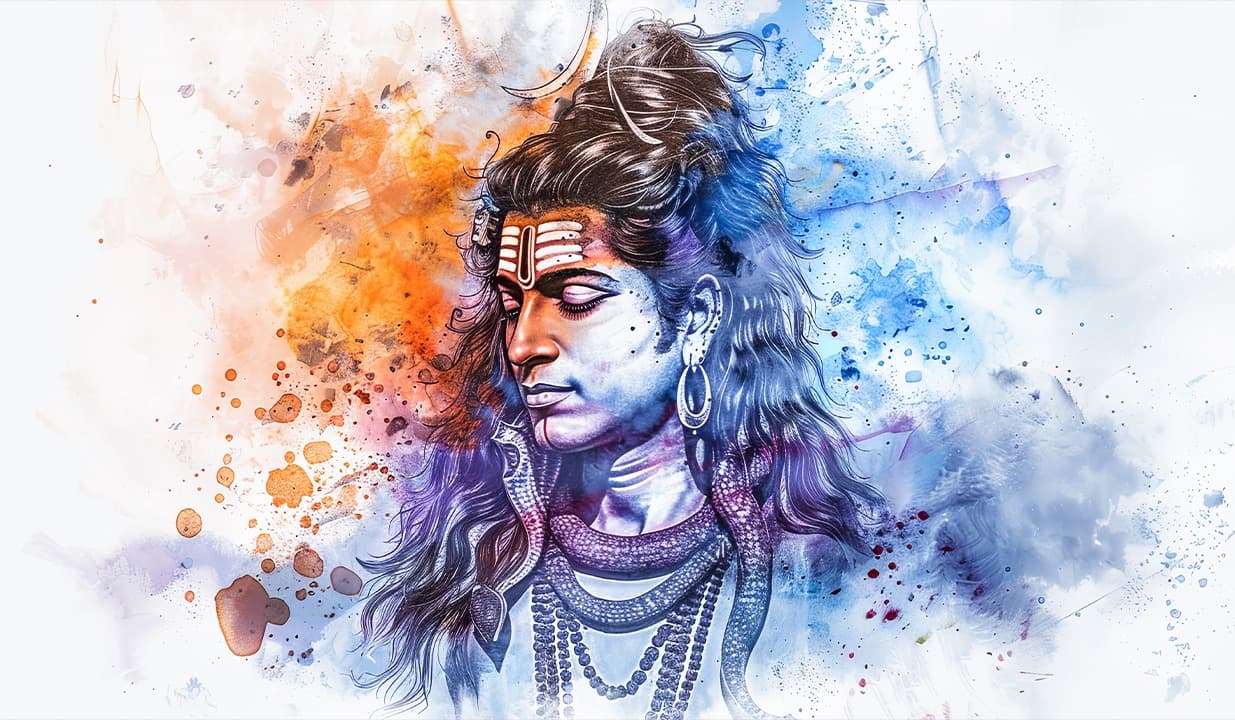
Shiv is unthinkable—beyond words, thought, and representation. He cannot be captured in pictures or idols. Yet, for most people, imagining truth without form feels impossible. This is where Shankar arrives. Shankar is the highest point a man’s imagination can reach. The maximum flight of the mind is Shankar, and Shiv is the disappearance of the mind into the sky.
This summary is AI-generated. Please read the full article for complete understanding.
In the public mind, Shiv and Shankar are one and the same: Shiv-Shankar, Bholenath, Kailashpati: hundreds of names. All names are beautiful. But if we understand the meaning of these names by going into the depths of Spirituality, their beauty increases further.
Shiv means the soul, the pure Truth. You say ‘Shivoham’, just as the Upanishads say, ‘Aham Brahmasmi’, or ‘Poornoham’. You would not ordinarily say ‘Shankroham’.
When the Supreme Truth is known as nirgun – nitya – nirakaar – nirvishesh (virtueless – timeless – formless –non-subjective), it is addressed by the name ‘Shiv’. Shiv can, infact, have no form, no body, no abode, no gender, no family, and no virtue. This is because all the causes of human suffering are contained in this material, visible, virtuous world.
All that comes under the purview of the senses, becomes the content of the mind, and keeps the person in confusion. It is essential that the Ultimate Truth be seen as free of form, color and shape.