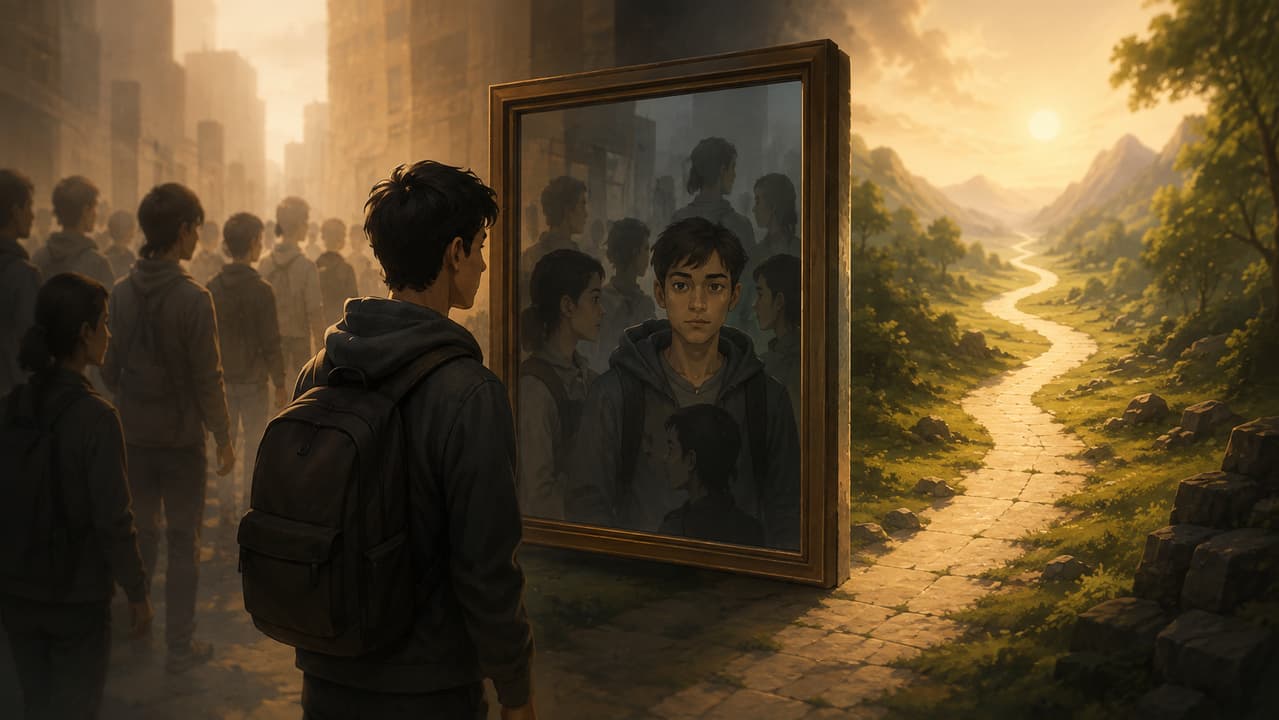
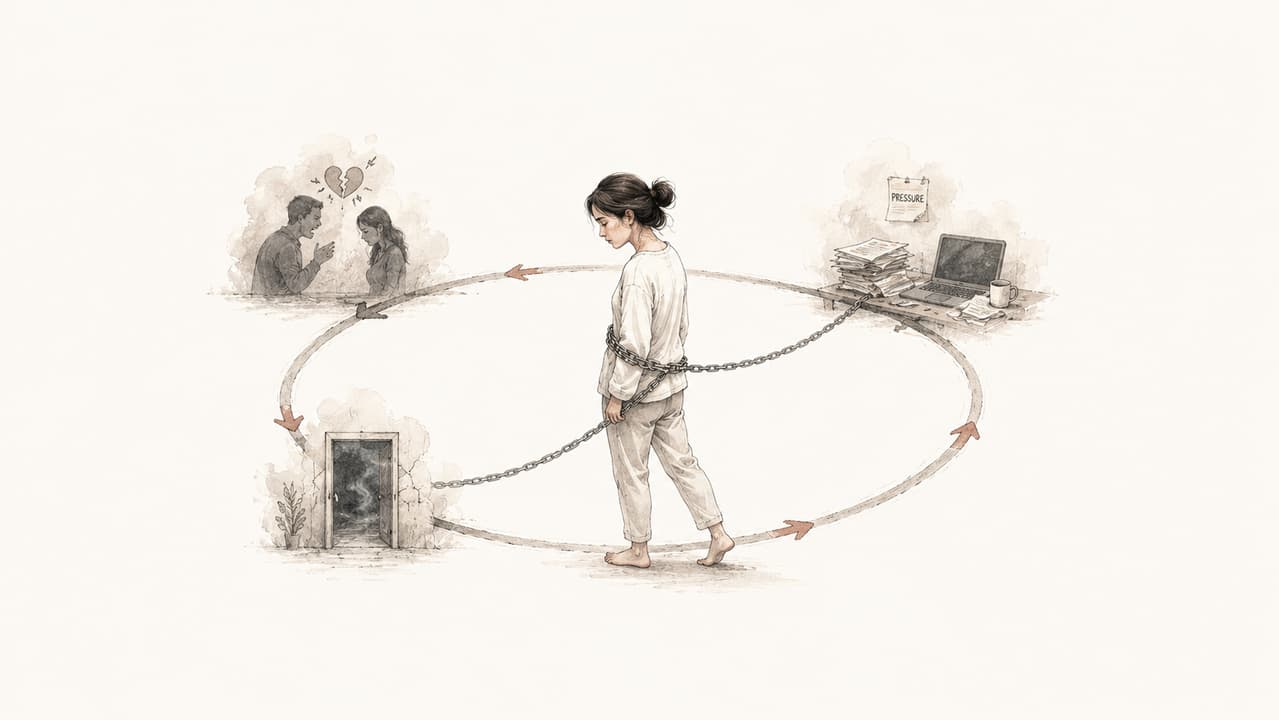
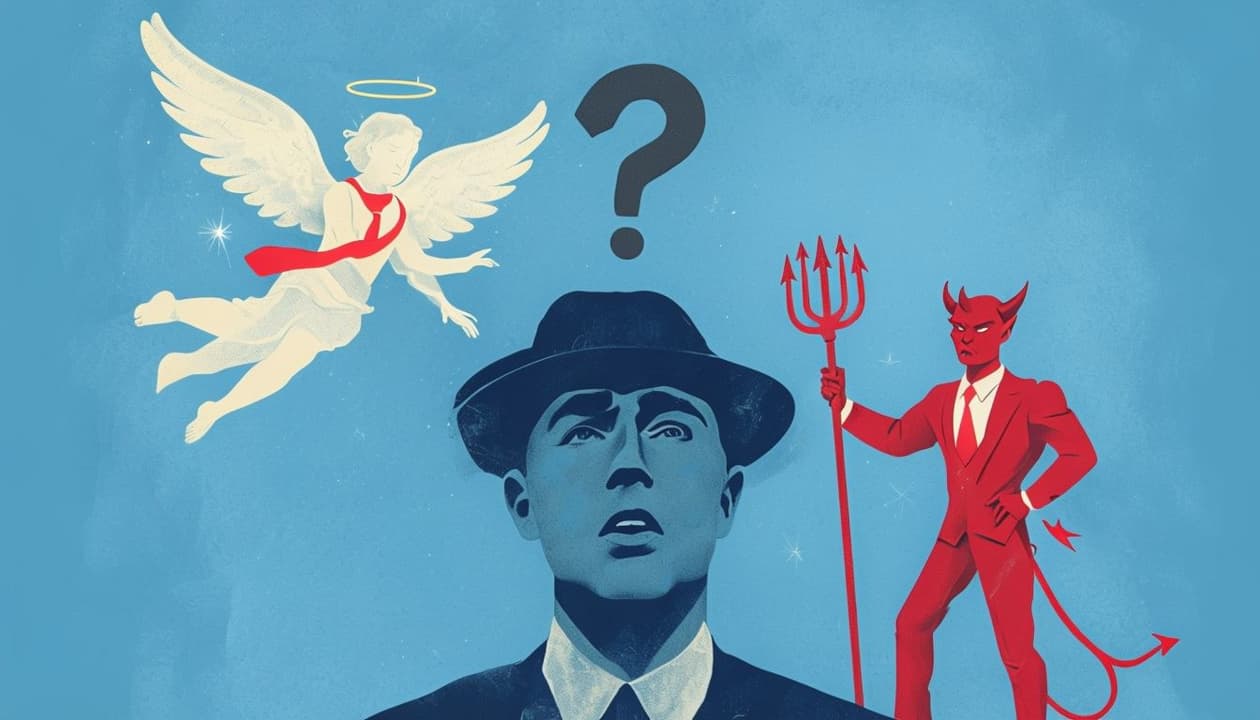
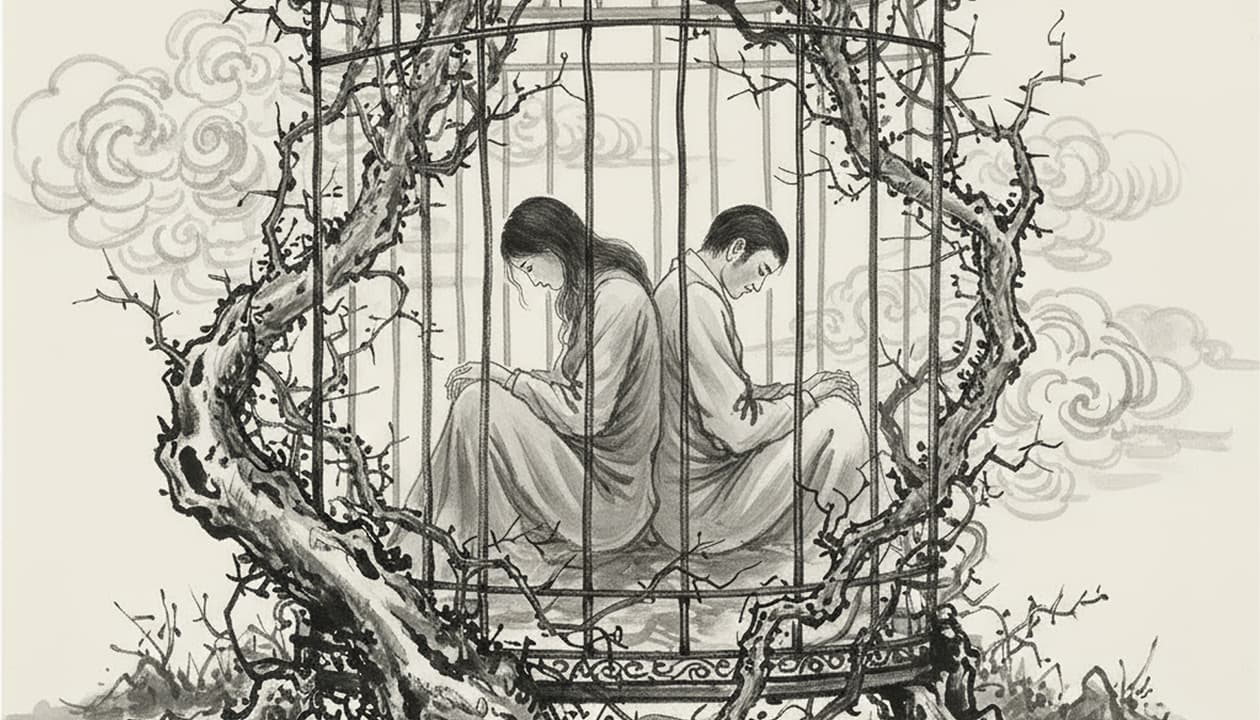
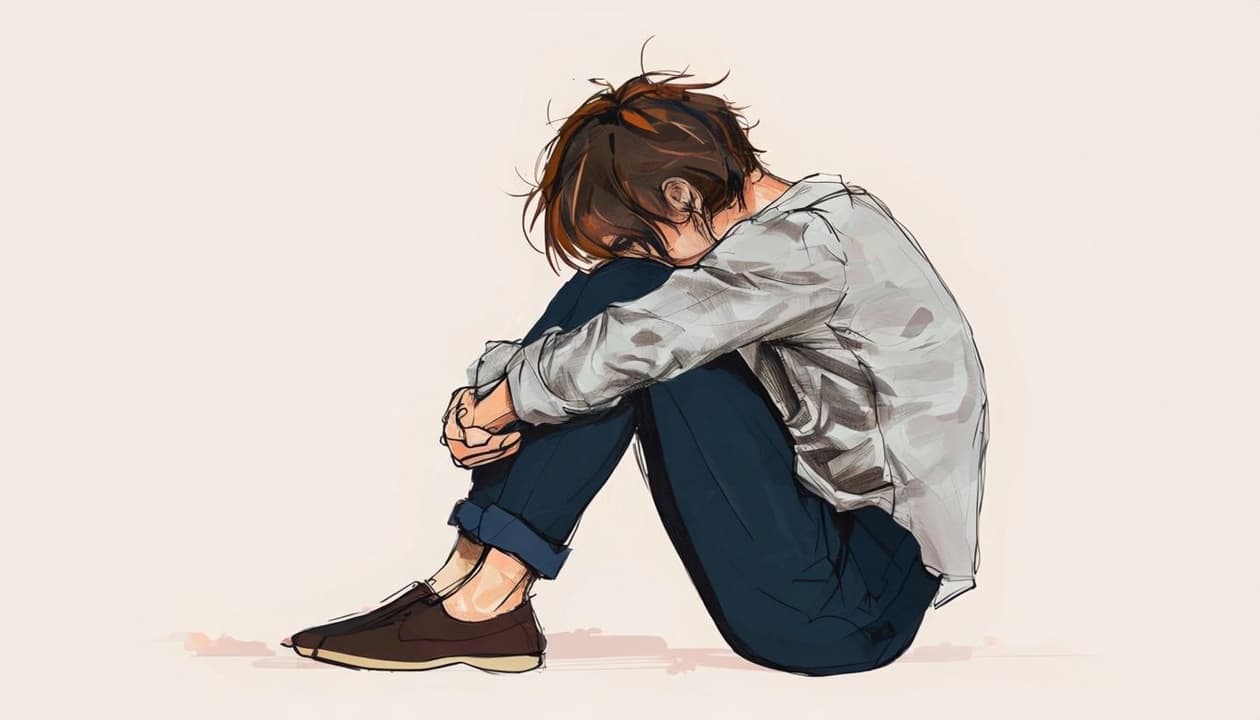
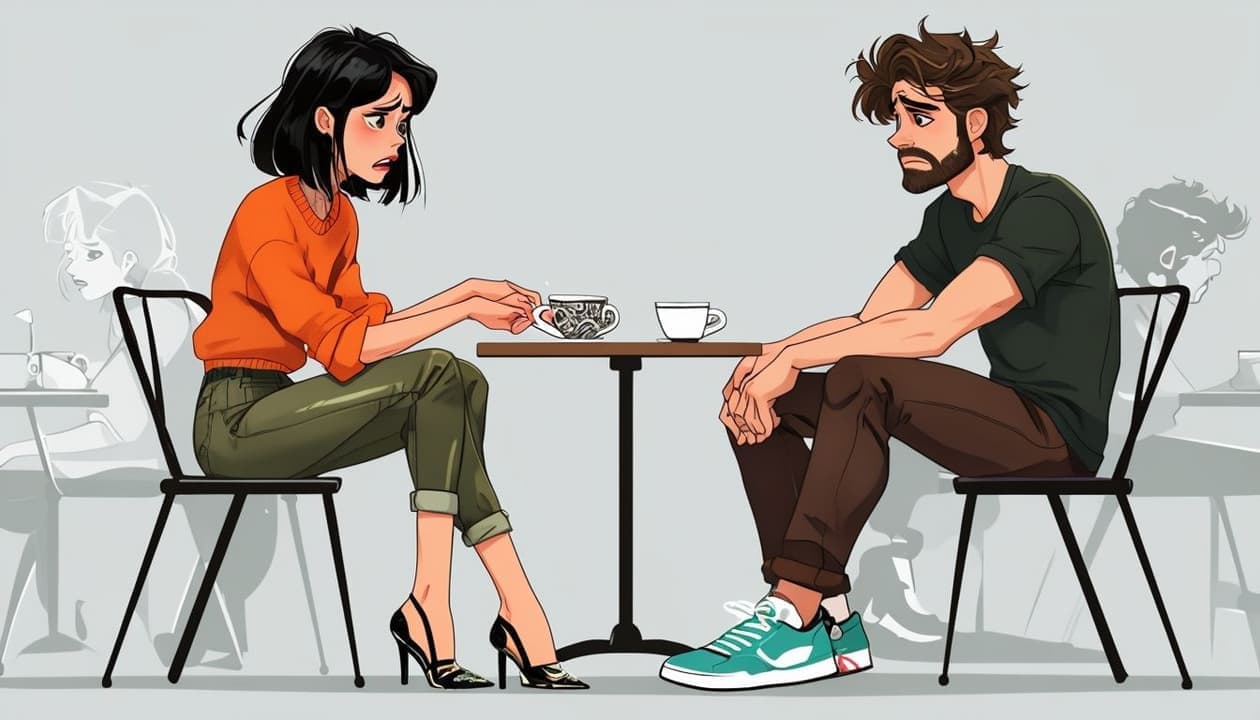
We often defend a bad choice by pointing to a worse one: stay dishonest or starve, keep the wrong grip or stop playing. But the real trouble is not the option we picked. It is the option we never let ourselves see. Action does not need greed or attachment to find its energy. The third way begins by rejecting both false choices, without knowing what comes next. Which of our everyday choices are really false dilemmas?
Sisyphus pushes a rock up a hill forever, knowing it will always roll back down. A regular workman does the same thing inside a job: he keeps pushing too, except he hopes it will eventually pay off, a promotion, a house, a better life. This hope is often just a comfortable lie. Sisyphus, who expects nothing and still keeps going, is actually more honest than we are. The real question is not whether the effort is worth it, but whether we can stop lying to ourselves about it.
Spirituality does not replace the fear of ghosts with belief in God. It asks us to question the mind that creates both fear and belief. Ghosts, gods, and stories can all become projections of imagination. The spiritual path begins by dropping assumptions, investigating “Who am I?” and understanding the source of suffering. With attention, right knowledge, and self-inquiry, fear loses its power and one becomes inwardly free.
Joy is not something that you can think of as something wonderful. You cannot go somewhere and say that, looking at a mountain, I experienced joy. Joy is something which is always there, obfuscated; hence, it is the absence of obfuscation. A complete absence of all rubbish is joy, and that rubbish includes both pleasure and pain.
You were one person when, let’s say, the relationship started, and now you are another person, and this change must reflect in the nature of the relationship. You cannot say, “Because I used to behave in this way with this person five years back, I’ll continue to hold the same practice, the same mood, the same ritual, the same identity, the same mask,” even after you have graduated to being somebody else. There’s no need to do that. If you have evolved, improved, let that show in the relationship.
A suicide is a sad event because it prevents us from realizing our possibility and potential — there was an opportunity to live, learn, grow, realize, and be liberated, but it was wasted. But how many of us actually manage to realize our potential even if we live to 80 years? Hardly anybody. For our species, the extent of aliveness is proportional to the freedom and height of our consciousness. So ask yourself honestly: How close am I to the best I could have been?
Relationships are everywhere – with partners, family, friends, and even ourselves. As long as we're alive, we're constantly relating to someone or something. You have a choice: continue struggling with the same relationship patterns, or gain real understanding through Acharya Prashant’s Books on Relationships that reveal the deeper truths about love and human connection.
A surgeon’s table is never a beautiful sight to look at. Poets will find nothing there. There are scissors and instruments, and iron and blood and flesh cut apart. There is no happiness there. There is nothing pleasant there. Seekers of pleasantness will be disappointed looking at a surgeon’s table. But that table saves lives.
Search
A modern woman calls herself liberated, yet lives anxious — anxious about age, desirability, marriage, motherhood. Acharya Prashant exposes this anxiety as proof that feminism never touched the real wound: centuries of conditioning that reduced women to bodies for pleasure and reproduction. External equality isn't enough. True freedom demands she reject the entire inheritance of tradition and simply become human — not woman, not wife, not mother by decree, but free.
Struggling to choose between a secure job and the path you actually feel drawn to? This isn't really a question about careers. It's about why other people's opinions have so much power over you in the first place. Real clarity doesn't come from finding the 'right' choice. It comes from honestly looking at your own fear, again and again, until it stops running the decision for you.
5
Feeling lonely on campus after being disappointed by friends? Acharya Prashant explains why loneliness should not push you into accepting the wrong company or remaining attached to relationships that pull you away from what is right. One person’s wrongdoing does not justify condemning everyone, nor does friendship mean supporting a friend in what is wrong.
Learn why the right company is the company that helps you move toward truth rather than merely giving you temporary relief from loneliness.
Excerpts from Articles
You Don't Understand the Bhagvad Gita, But You Still Claim That You Love Krishna?
The Bhagavad Gita deserves reverence not because of inherited beliefs about its author, but because of its power to dissolve falsehood and reveal Truth. Real devotion is not ritual or blind faith—it is understanding, inquiry, and living the wisdom of the Gita. Through sincere study, one discovers the true meaning of Krishna, making the Gita the most authentic path to knowing and worshipping Him.
Struggling to choose between a secure job and the path you actually feel drawn to? This isn't really a question about careers. It's about why other people's opinions have so much power over you in the first place. Real clarity doesn't come from finding the 'right' choice. It comes from honestly looking at your own fear, again and again, until it stops running the decision for you.
कई तरह के डर—अकेले पड़ने, छवि खोने या छोटा समझे जाने—की जड़ अक्सर अतीत में बनी पहचान और कहानियों में होती है। शरीर की हाइट जैसी चीज़ों को समस्या मानकर उनसे जूझने के बजाय उनकी अप्रासंगिकता को समझकर आगे बढ़ना चाहिए। अतीत को दबाने से मुक्ति नहीं मिलती; उसके करीब जाकर अपनी स्मृतियों, धारणाओं और पुराने पैटर्न को निष्पक्षता से देखना ज़रूरी है।
Climate change is more than an environmental crisis—it is a crisis of human choices. Our patterns of consumption, consumerism and endless pursuit of more are putting increasing pressure on the planet. But meaningful change does not necessarily begin with new technology or stricter policies. It begins with a deeper question: what are we willing to change within ourselves?
Justice Without Boundaries: Why Compassion Cannot Stop at Species
Oppression should not see caste, gender, creed or colour, and it should not see species either. The moral threshold is sentience, not intelligence. An animal feels pain as fully as a human does, whether or not it can explain its suffering.
ज्योतिष कितना सच है? कुंडली, ग्रह-नक्षत्र: इनका क्या अर्थ है?
वेदांत को केवल इसलिए सही या श्रेष्ठ नहीं माना जा सकता कि वह किसी विशेष परंपरा से आता है। विज्ञान जहाँ भौतिक जगत की वस्तुनिष्ठ जाँच करता है, वहीं अद्वैत वेदांत सीधे मनुष्य के ‘मैं’, उसके दुख, बंधन और मुक्ति की पड़ताल करता है। इसकी कसौटी वैज्ञानिक प्रमाण नहीं, बल्कि अपने जीवन में इसकी सच्चाई को देख पाना है। किसी दर्शन को मान लेना नहीं, बल्कि उससे स्वयं को मुक्त करना ही उसका वास्तविक उद्देश्य है।
Animal cruelty: Who deserves mercy, and who doesn’t?
Violence begins long before the knife or the slaughterhouse—it begins with the ego, the one that draws boundaries, seeks justification, and decides who deserves compassion. Laws and reforms may reduce suffering, but they cannot end violence while the ego remains intact. When the ego dissolves, exploitation ends naturally, and compassion no longer depends on regulation or moral boundaries.
Reaction is an instinctive, unconscious response rooted in ancient survival mechanisms, while response arises from consciousness and understanding. Our biological instincts evolved for survival, but modern life demands that we move beyond them. Emotional reactivity makes us predictable and controllable, allowing others to manipulate our emotional triggers. True freedom lies in pausing before reacting, examining emotions, thinking deeply, and responding consciously rather than living as slaves to instinct.
कई तरह के डर—अकेले पड़ने, छवि खोने या छोटा समझे जाने—की जड़ अक्सर अतीत में बनी पहचान और कहानियों में होती है। शरीर की हाइट जैसी चीज़ों को समस्या मानकर उनसे जूझने के बजाय उनकी अप्रासंगिकता को समझकर आगे बढ़ना चाहिए। अतीत को दबाने से मुक्ति नहीं मिलती; उसके करीब जाकर अपनी स्मृतियों, धारणाओं और पुराने पैटर्न को निष्पक्षता से देखना ज़रूरी है।
A true relationship is not built on need, possession, or emotional dependence, but on a shared commitment to Truth and inner growth. A worthy companion reflects your reality like a mirror rather than performing a role to please you. Real love is effortless, rooted in one's nature, not expectations. When your highest commitment is to excellence and Truth, relationships become a natural outcome—not the purpose of life itself.
4
Modern culture often celebrates rebellion, travel, and endless experiences as symbols of freedom and happiness, but they can become just another form of conformity. Genuine personal development begins with mindfulness and creating the right mind space to understand oneself. Without inner clarity, changing places, trends, or identities only repeats old patterns. True freedom comes from self-understanding, not from chasing new experiences or fashionable rebellion.
5
Bullying hurts deeply only when it is allowed to define one's inner identity. External abuse may wound the body, but lasting psychological wounds require inner participation. While OCD, anxiety, depression, schizophrenia, and other mental health conditions deserve proper treatment through psychiatry, lasting freedom demands self-knowledge.
6
Sixty million followers do not necessarily indicate a transformation in consciousness. Large numbers may reflect persistent outreach rather than deep commitment. Truth is often avoided not through opposition but through indifference, convenience, and self-deception. Real change requires sustained effort, inner honesty, testing one's understanding, and the courage to face uncomfortable truths instead of seeking comfort, validation, or easy inspiration.
Fear, social conditioning, and painful memories often shape how people live and make choices. True growth begins by questioning inherited beliefs, refusing to remain trapped by past wounds, and acting from understanding rather than conformity. What appears to be sacrifice is often just the abandonment of conditioned habits. Freedom comes not from external systems, but from the courage to see clearly, learn, and move beyond fear.
Is loneliness really the absence of people, or the crowd of images and ideas inside us telling us that we “need someone” to feel complete? Two incomplete people cannot create wholeness together. Relationships are beautiful, but only when they do not become substitutes for inner completeness. Relate to the world, connect deeply, but never use another person to fill your inner hollowness.
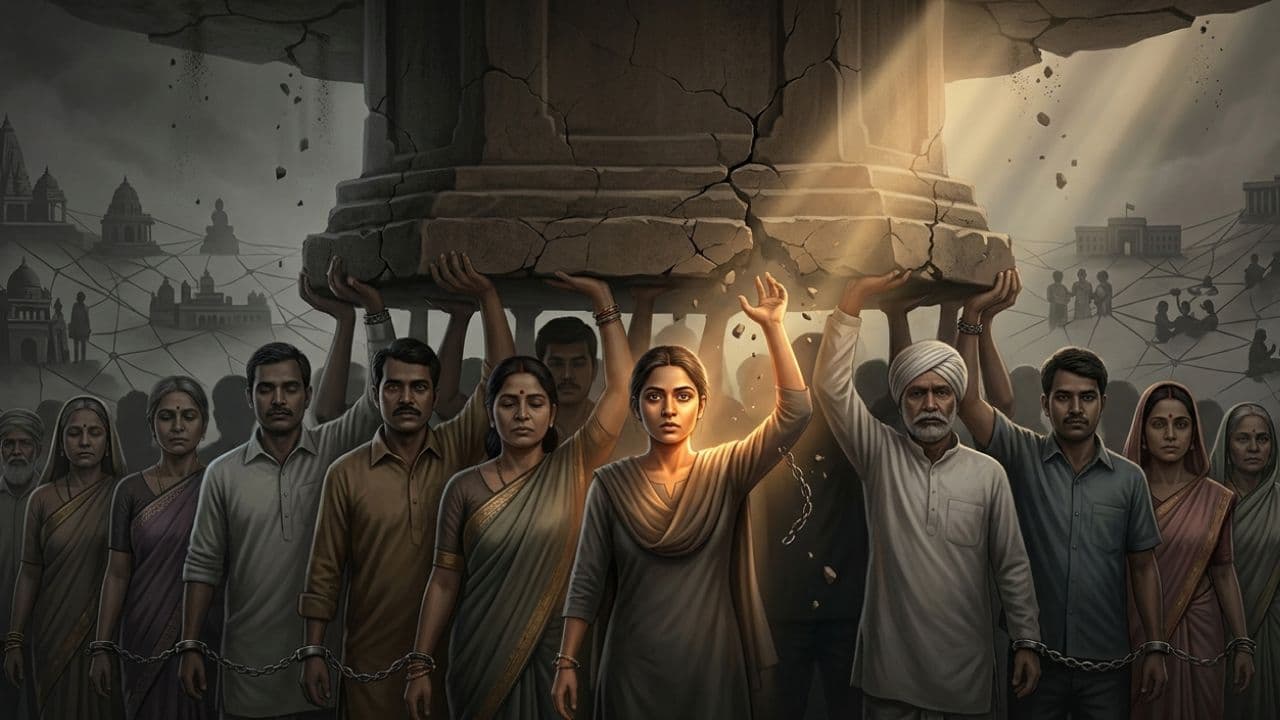
If most people are oppressed, why do unjust systems still survive? Because the oppressed themselves unknowingly support them through inner ignorance. No structure can sustain without the participation of those it exploits. Real change cannot begin outside; it must begin within. When individuals see clearly and refuse to remain complicit, the system collapses. Blaming the system is easy, but transformation demands responsibility for one’s own life.
Overthinking trivial matters stems from inner emptiness. Fill your life with something genuinely important, a worthy cause, a meaningful pursuit. When you're truly immersed in what matters, random anxieties lose power. Develop strong inner immunity through purpose, not by fighting thoughts. Like Bhagat Singh, marry yourself to something noble. Immersion in the essential is the best meditation and antidote to mental suffering. Without importance, life becomes scattered doing nothing in particular.
What do you call as ‘bipolar disorder’? Is this disorder fundamentally not present in everybody? Mind lives in dualities; that is what you call as the ‘poles’. Sitting on one pole you feel attracted to the other. There is always a need to change and become something else. Won’t it be great to firstly understand the mind itself–its urges, its actions? There has to be determination to go into the route of the swings, desires and urges, to be free and well. And it is quite possible that the right medication need not be a pill.
If you do not understand spirituality, you will fail even in economics. Look at how common people live their daily lives. Do we inquire into what we are doing? We do things because others are doing the same things. Out of ignorance, you act; and out of greed, you keep acting. Economics does not address the problem of ignorance. Economics also does not address the problem of greed. It is the Upanishads and the Gita that address these problems.
When you don’t want to do something, you feel lazy. All your wants emanate from your conditioning. Have a sharp look at what you call your ‘wants’. Our ‘wants’ are just an expression of how we have been programmed; they are not our ‘wants’ at all. Wanting and realizing are very, very different dimensions. Act on the basis of your intelligence, on the basis of your realization. Laziness is just a symptom of the effects of conditioning.
All happiness that your mind feels is directly proportional to how unhappy you are. So, if you want to be really happy, become totally unhappy. This is called the law of duality. The deeper your pain, the more relieved you will be. That is the nature of the mind. When you are moving towards happiness, actually the journey towards unhappiness has begun.
Let’s separate two things clearly. One, physical harm. If you are in a jungle, you must know how to protect yourself from the beasts, right? That’s a matter of basic intelligence and rationality. Two, feeling inferior, that does involve your consent. Nobody can make you feel inferior if you are not participating in that phenomenon. Somebody abuses you, slaps you, insults you; that is something he can do. But feeling inferior, that is something you do to yourself.
You have to get into your own life, thoughts, feelings, actions, decisions, and see what holds you back. And freedom from what holds you back is the most important. That is what is most important. And then you can accept whatever price you have to pay for that most important thing. So it all starts from you. what is really important is a subjective thing. It depends on you. Nobody else can tell it.
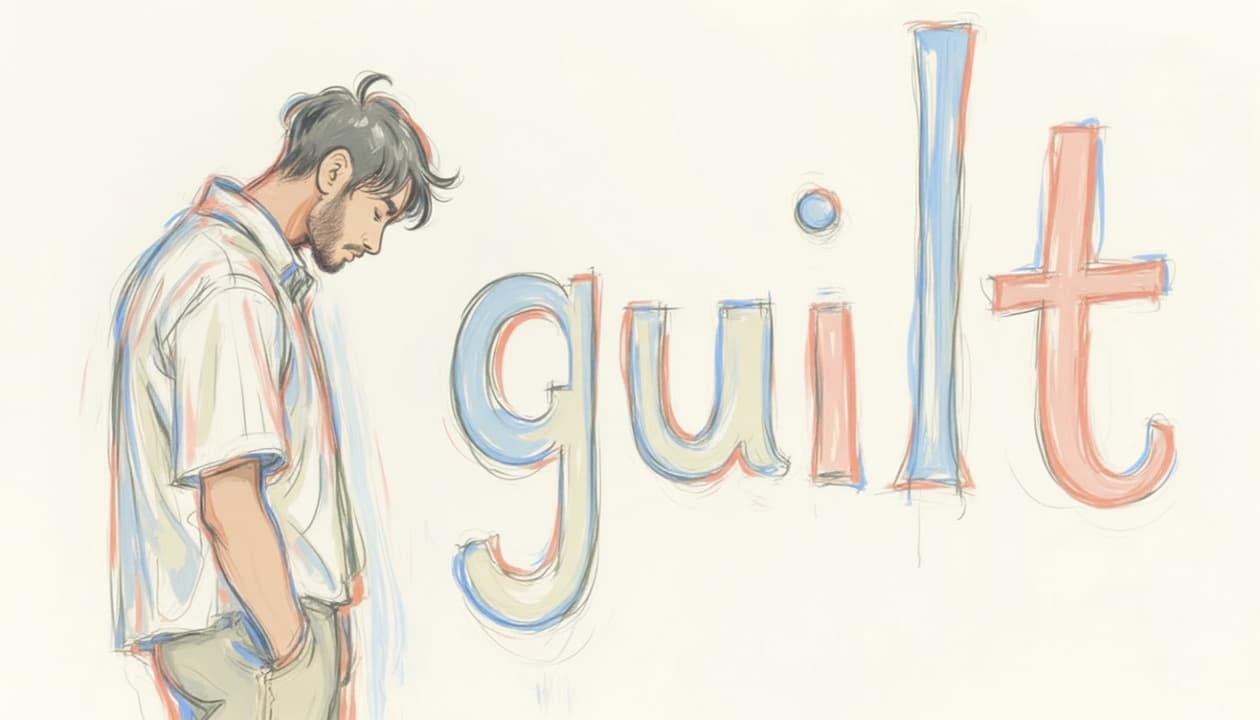
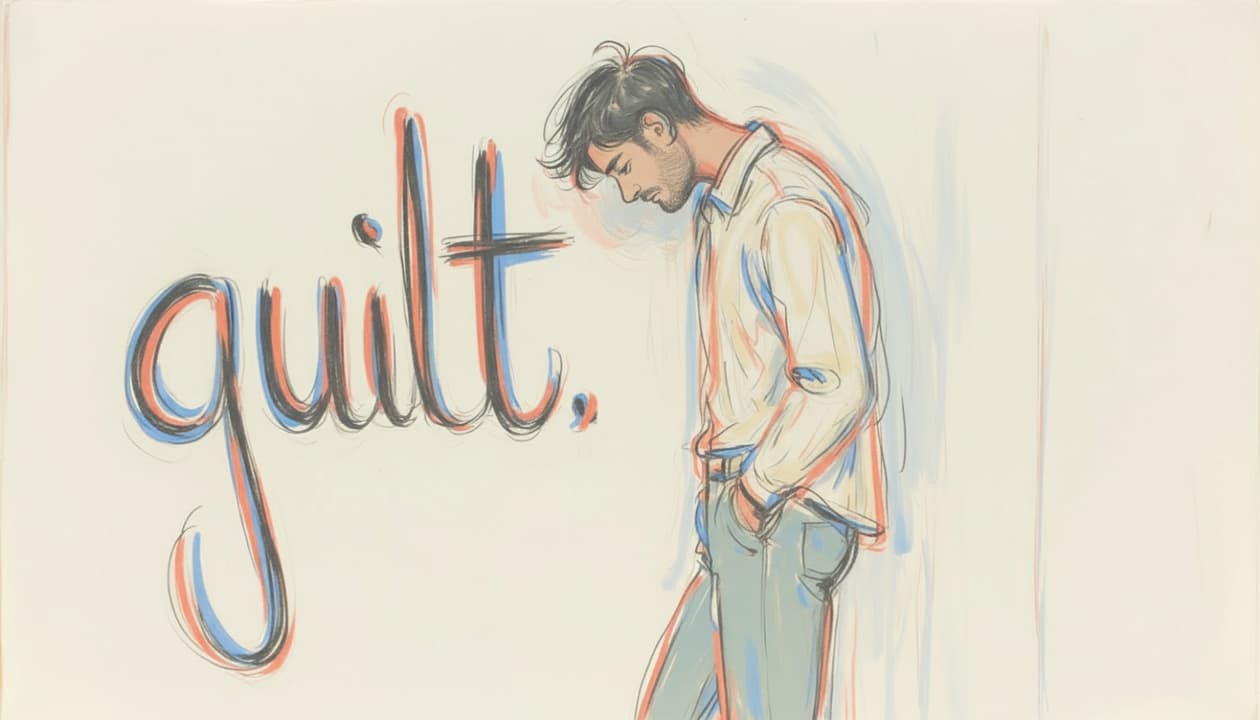
Guilt says, “I am better than how and what I did.” Right? There need not be any imagination in this. Far better than guilt is the realization of one’s actual state. And once you realize where your choices and decisions have brought you, there is a certain sublimation. That honest realization does not shout too loudly, but it has great power. For that power to arise, you first have to acknowledge where you really are.
I am being told to work hard, but not for myself. I am being told to slog for something I don’t really care for. This is the situation of each one of us: no purpose and high pressure. The very system is designed to rob you of having any innate, heartfelt purpose of your own. Pressure alone is not the problem. The very nature of a great purpose is that it brings pressure, but such pressure now is life-saving, even life-giving, because you love what you want to achieve.
We keep carrying the unexamined burden of the past all our life. That’s a great problem that we have. If you want to carry something from the past, if you want to remain related to it even today, then you have to ask: how does it benefit you? Because it’s an expensive decision to make. The purpose of life is to unburden yourself. Relate to something or somebody in a way that will help you clear away a lot of useless relationships.
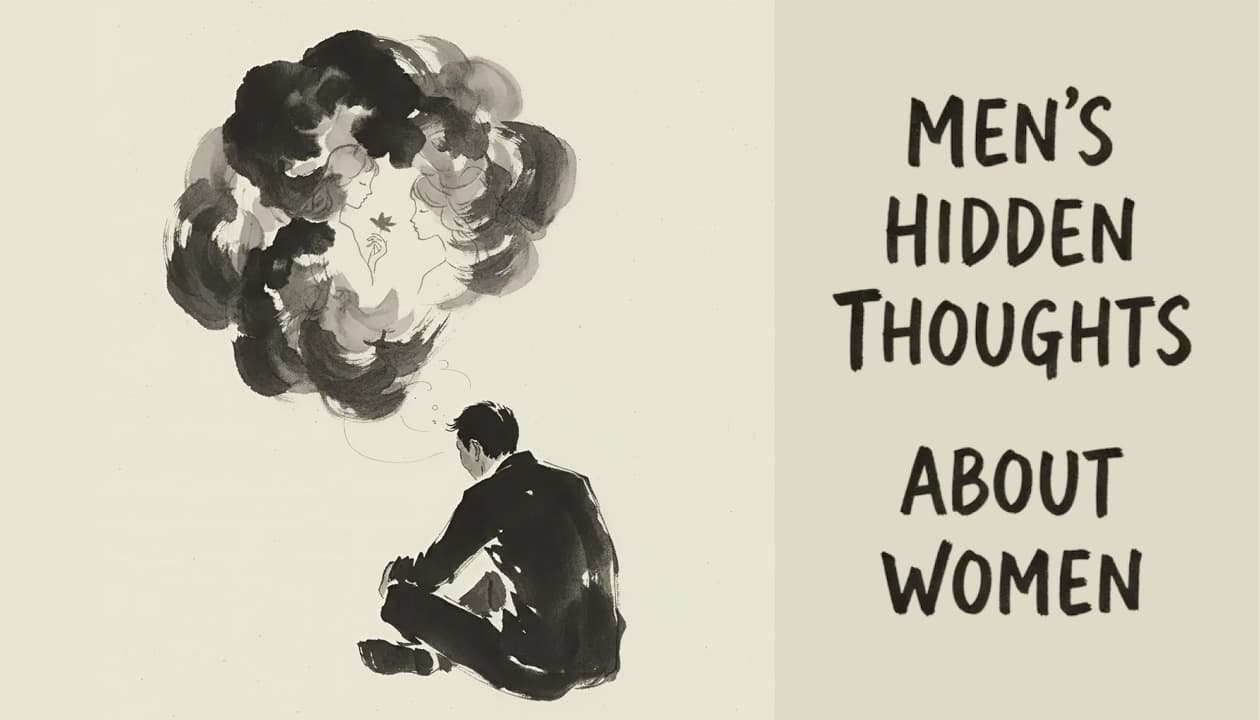
Women, the way they are brought up in our country, anyway do not have much to lose. If I do not have much in life, and then there arrives a person who is attractive, earns well, is strong, then why, as a woman, will I not go for him? Your body is impelling you to take a particular decision, and you don't even know that it's coming from the body. The only solution is understanding, real, deep, honest observation of life. And this you could also call spirituality.
The tiger chases the buffalo calf and brings it down. Does that disappoint you? No, because that was expected. Similarly, expect animal behavior all the time from everyone around you, including yourself. Everything we do comes from the jungle, so don’t be disappointed. Disappointment always arises from expectations. You really have to strive to be someone who is not an animal. And the first step in that striving is to address your own inner animal.
A thousand feelings: envy, fear, hatred, competition will come to you. You cannot fight them all, and there is no need to fight them. Be courageous when that feeling comes, and sit down like friends and talk. Be honest that you are the one who is nurturing that feeling all the time. Be aware that it is coming. Let it not enter like a thief. And when it comes, don’t feel small. You only need to understand, not control.
Manifestation is simply an expression of your desire. You desire something, and then you imagine your desire has been fulfilled. What does the common man desire? ‘Give me more money.’ What will the politician desire? ‘Finish off democracy and give me power for life.’ We have very stinking desires. Do we ever desire anything that is really good for everybody? The question remains: Was that thing worth it? You gave it so much time, so much respect, did it deserve that?
"As long as you are giving me pleasure and satisfying my needs, there will be peace. The day you stop, there will be war.” This is the usual social contract in which we exchange pleasures and dependencies. This is why there is a lot of violence. But there can be another way of relating to the other, where you are existentially complete within. There can now be beautiful, loving, compassionate relationships because you are not looking to be a parasite or a commander.
The other must exist in your life, and vice versa, only for the sake of internal elevation, to make you into a better person. Don't you see the impact the other one is having on your life? Seeing is the key. What does seeing mean? Seeing implies understanding. See and ask yourself: What is the impact upon me? And if you see that, you'll just push it aside. It will be spontaneous. You won't even require to think, because now you have seen.
As a doctor, can we limit our responsibility to the one particular body or to the set of few bodies that come to us for treatment? Or is the patient actually a representative of an entire society, an entire ecosystem? Can I really be a good doctor of the lungs, if I support a society that pollutes the environment in the name of development? So, if I'm a doctor, then health is my responsibility in the holistic sense, not just one patient.
The money you pay for something must be commensurate with its practical utility, but how do you know something is worth its price? For example, does jewellery really have any utility that you pay so much for just a piece of metal? The average Indian household spends much more on the girl’s dowry than on her education. And poor farmers in India are often pushed to suicide because they spend a lot on weddings and funerals by borrowing at exorbitant rates. This is what happens when you are not deeply spiritual: you can be easily conditioned to earn from the wrong source and spend at the wrong place.
2
It’s not going to be right when the patient starts playing the doctor. We need to grow up; and having a kid, in that sense, is an opportunity. You want to be of some use to the kid, then grow up with the kid.
The fellow is the worst kind of human being possible. But you will not accuse him of disloyalty, infidelity, or cheating, because he still reserved his body for you. This simply tells that the relationship is founded on the body. The woman has been trained to consider herself the body, and so has the man. Why don't we broaden our definition of loyalty? Please ask, “You couldn’t be loyal to any kind of virtue. How will you ever be loyal to me?”
It is one kind of misfortune to not have money at all. The next kind of misfortune is to have a lot of money rotting in your bank account. Why must it be there in your bank account? You are so impoverished, you couldn't find a right place where you can spend your money. Money is meant to be spent. Spend it at the right places. Go enroll in a hobby class. Get a tennis coach. All that is expensive. Spend your money. If you won't, then you will end up just buying whatever your friends buy.
We are limited beings and limitation means boundaries. Any successful marriage will have boundaries. Spend quality time with each other and then leave each other free, both physically and psychologically. Get rid of the romantic notion that the two of us have now dissolved into each other and therefore there are no boundaries. Good fences make good neighbors. You must know where to stop. You must know that.
It's probably a blessing when we commit blunders that can no longer be hidden or justified because only then are we forced to admit to ourselves that we are operating from the wrong centre. When this happens and our act of ignorance harms a loved one, we cannot undo it, but there is something within us that can be undone — that's the opportunity. When guilt is real and complete, it shows you the completeness of your unconsciousness and becomes an agent of change. When it is superficial, it becomes an agent of defence.
It is not really happiness that is to be found through self-knowledge. In fact, self-knowledge often is a danger to happiness. Self-knowledge dissolves both happiness and sadness, and you are left with nothing but a naked and silent joy. If you can see yourself clearly, without motivation, then the seeing itself is great fun.
The hurt that you have received is a result of your own lack of understanding about the nature of life. This is an opportunity to understand life. It is an opportunity to not let the previous mistakes be repeated.
I'm not asking you to be a loner or an avoider of human company. It's just that things must be given their due place — and their due place depends on their quality. If you do not have good quality people around you, there are many other better options. Why not spend your evenings learning to swim or sing? And there could be so many other things. I mean, you would know better.
Just because we don't hear gunshots doesn't mean that things are peaceful between partners or between parents and kids — especially daughters. Not at all. There are clear boundaries and those boundaries have been mined. As long as you remain within the boundaries, you will entertain the illusion that you are free and loved. Try to step out, and you'll be blown to pieces. So, the violence was always cooking but you didn't see it because you were blinded by your emotions, need for security, and conditioning.
How will anybody know you really well? So even if others validate what you are saying or doing, does that hold any value? The only person who can know me well is 'me'. If I have to ask somebody, I'll ask myself. But that would require you to be impartial — "Nirmam", that’s the word from the Gita. That will require a certain detachment from oneself — a love for Truth rather than for personal weaknesses. Your first relationship is with your own inner Truth. And it's the most powerful source of validation.
Truth is the first thing. If you don't have love for the first thing, how can you have love for all the others you are related to? You don't need to ask — are you in love? Do you love me? All these are needless questions. The only question to be asked is: do you love the Truth? If the person loves the Truth, everything is fine.
The parts of the Upanishads that do not deal with self-enquiry can be taken as outdated. They do not want to address things that change with time. Mankind today is more prosperous than it has ever been in its history — but internally, are you not still afraid? Are you still not greedy? That’s the problem of the self that the scriptures seek to address. The Upanishads are dealing with a very peculiar problem that time alone cannot address — and that is the problem of fundamental human suffering.