We are gentle with the people who matter to us, and quite different with those who have nothing to offer. A friend can be generous, peaceful and tender, and still sit down to a meal that began in a factory farm. Is that a blind spot, or one restless wish to gain, showing kindness here and hardness there? Nobody is bad in their own eyes, and even our giving may come from the same place. Who is it in us that is being good?
Questioner: Hello Sir, Good Evening. As we are seeing unexpected heat in the early 2023, like it’s just February, March, and it’s already this hot. Also, the scientists expect that this year would be the hottest year in the last century. And the world population is also increasing rapidly. So,
We have to realize that the root of all these external problems is man's mind. So, first of all, we have to get rid of the notion that by having the right kind of legislation, or structures, or systems, or international treaties or agreements, or social processes, we can just sail out of these troubled waters. Read more....

India's emissions are actually rising fast. In 2023, we released three billion tons of carbon dioxide, making us the third largest emitter in the world. And yet, look at our vulnerability. Heat waves last year hit twenty-three states. Floods now displace tens of millions every year. Agriculture, on which more than half of India still survives, is at the mercy of the climate. I ask you, is this a victory or rather a warning?
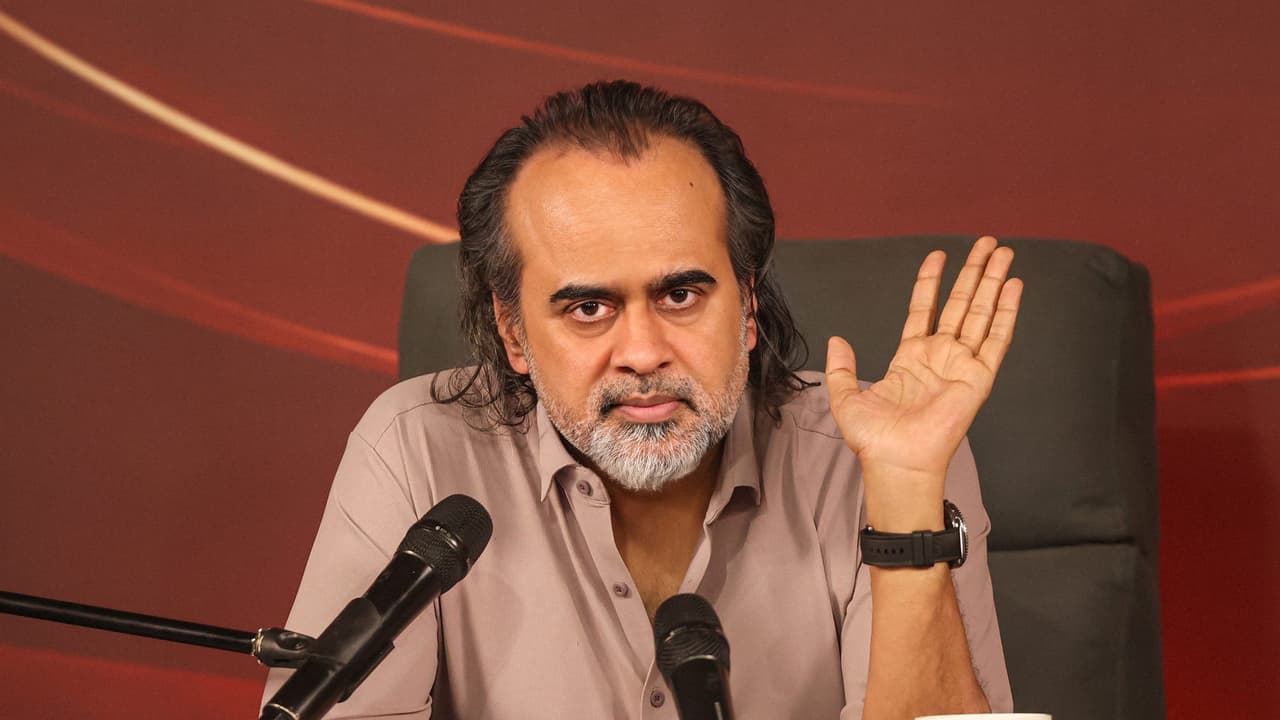

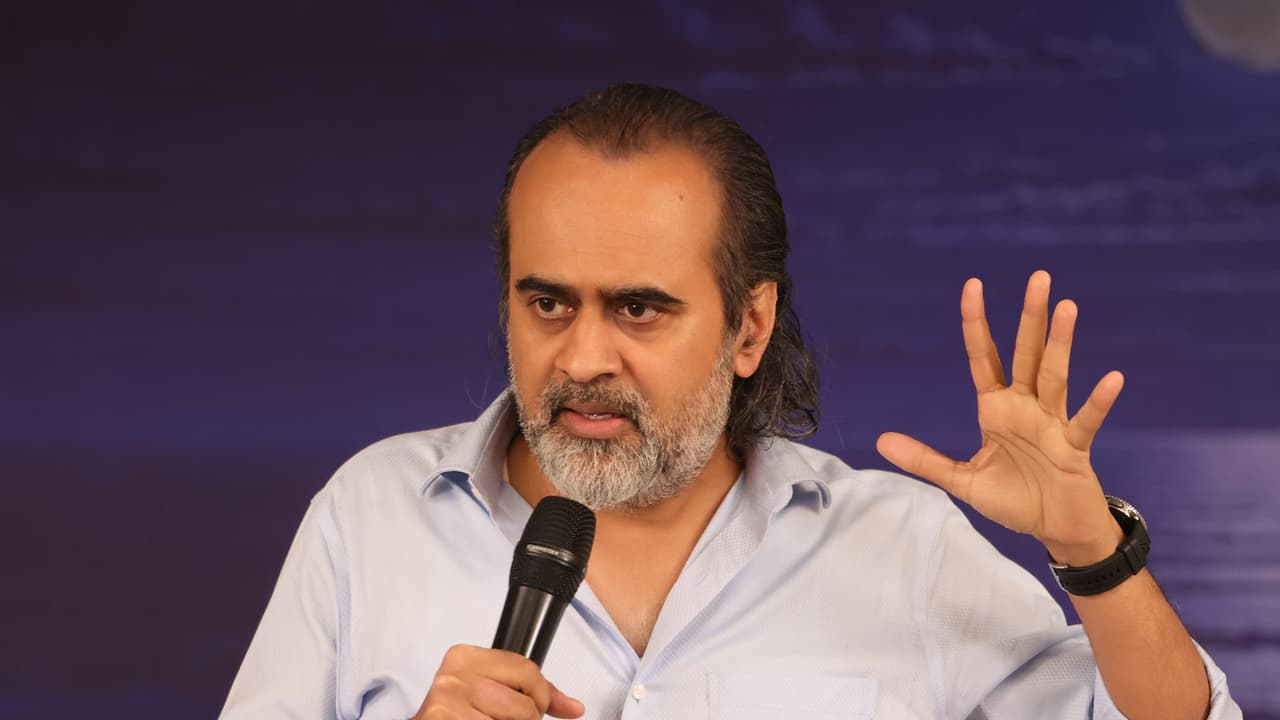
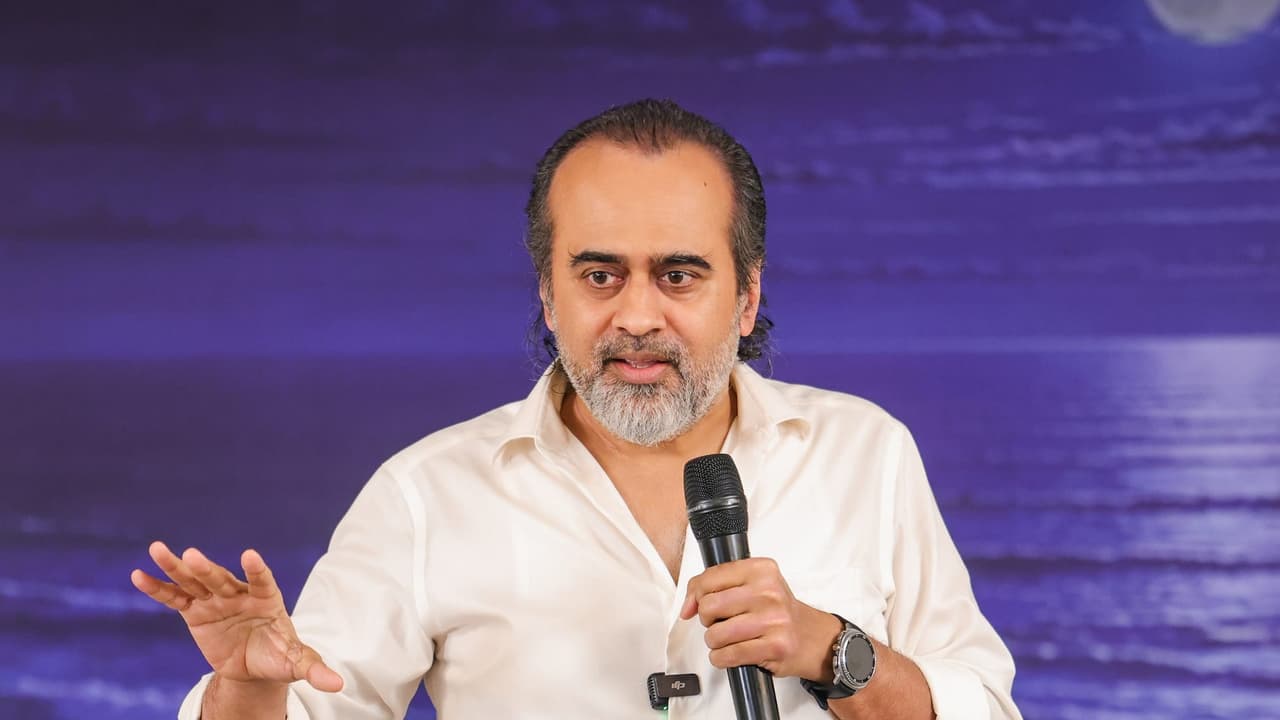
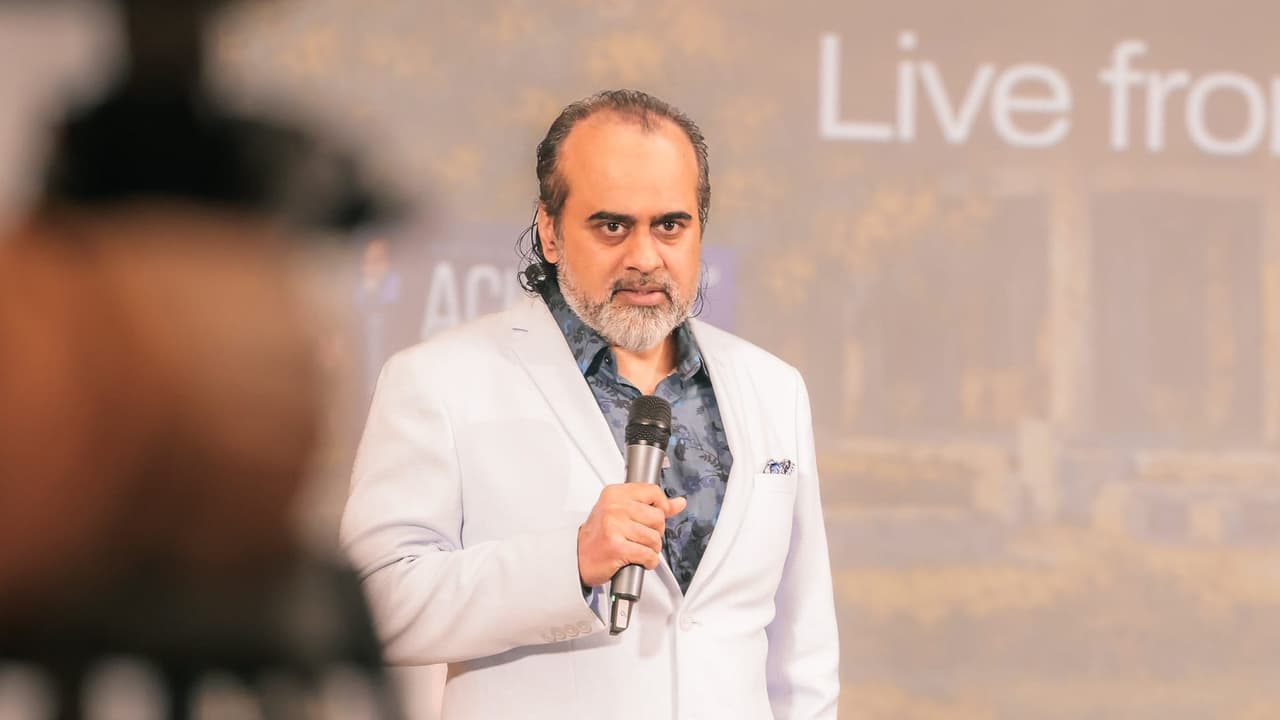
“The will to live.” “The will to just continue.” That, he said, is the basic human existential tendency. I’m asking, “Don’t animals have that tendency?” At the root of all consciousness; is the will to survive and continue. We don’t want to die; the animals, too, don’t want to die, right? We feel pain, we suffer; so do animals. The reasons might be very different. Often the reasons are, in fact, not too different. Separate a human mother from her baby and you see the suffering. It’s very apparent. Separate a cow from her calf, and the suffering is much the same. Read more...
A meat eater must not be able to hold a place of pride in popular culture. You need to have celebrities coming out and endorsing veganism, at least vegetarianism. You need to show the good guy in popular media, in the movies, as a vegan guy. It is very important.
Climate change and global warming cannot be addressed honestly while the world's largest source of hidden carbon emissions—military activity—remains largely excluded from climate accountability. Wars, military expansion, and consumerism arise from the same psychological drive for domination and endless consumption. Unless the Paris Agreement includes military emissions and humanity addresses the inner causes of conflict, every effort to combat climate change will remain incomplete.

CO2 in the air has gone from 280 to about 440 parts per million in just 150 years, a change that once took thousands of years. Yet we keep hearing that the climate has always changed. It has, but never this fast, never because of us, and never with 850 crore people living by the coasts and on the plains. The facts are a search away, so ignorance is no longer the reason. What is it within us that keeps denying the obvious?


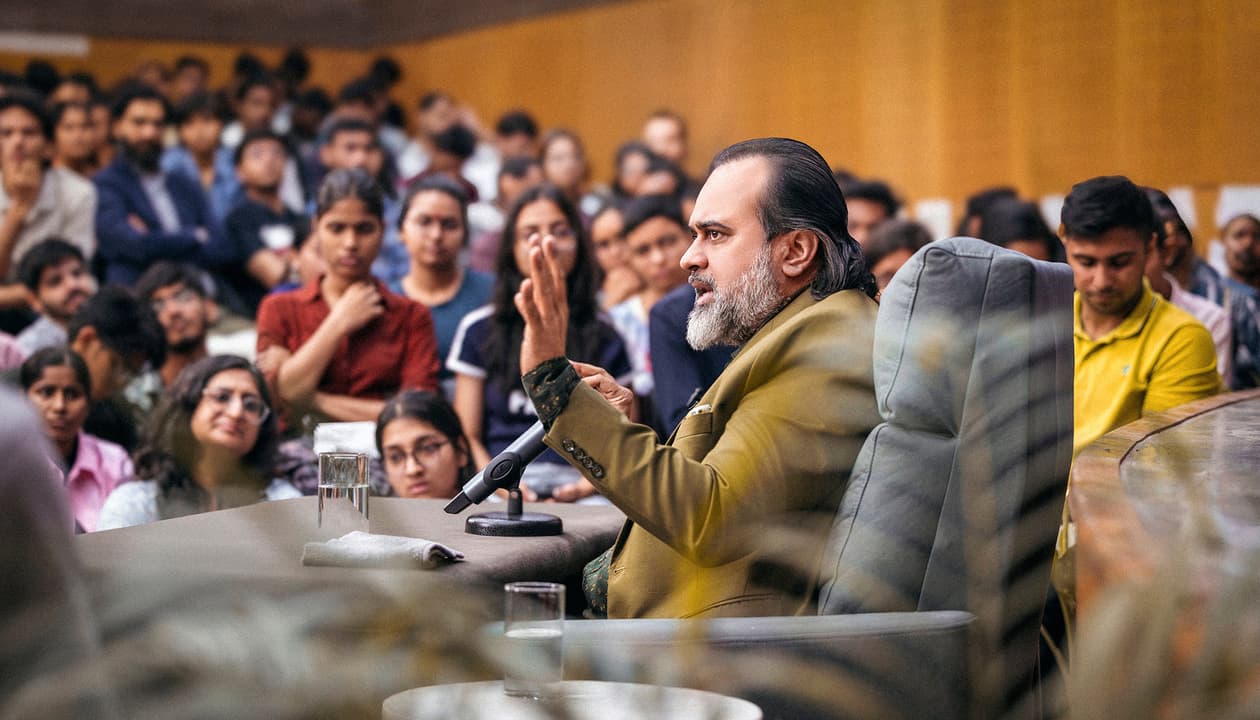
It is only the rich and the ultra rich that are really responsible for the bulk of the carbon emissions. Also the emissions that are being contributed by the common man, they are being encouraged and motivated by the rich. You see, the rich are rich because they sell products to the common middle class. They are rich because they are getting money from you and me as consumers and customers. And how are we turned into customers? By diluting and corrupting our basic philosophy of life. We are told unless you consume your life is not rich.
The climate crisis is itself a product of internal human ignorance. It comes, we say, from emissions. But why do emissions happen in the first place? Because we burn something. 75% of emissions are coming from our energy needs. But why do you need energy in the first place? Because you want to use energy to pursue your desires. But are your desires worth it in the first place? How do you determine the worthiness of your desires? Are your desires really fulfilling you? So for the sake of these worthless desires, you are destroying the planet. That’s what the climate crisis is.

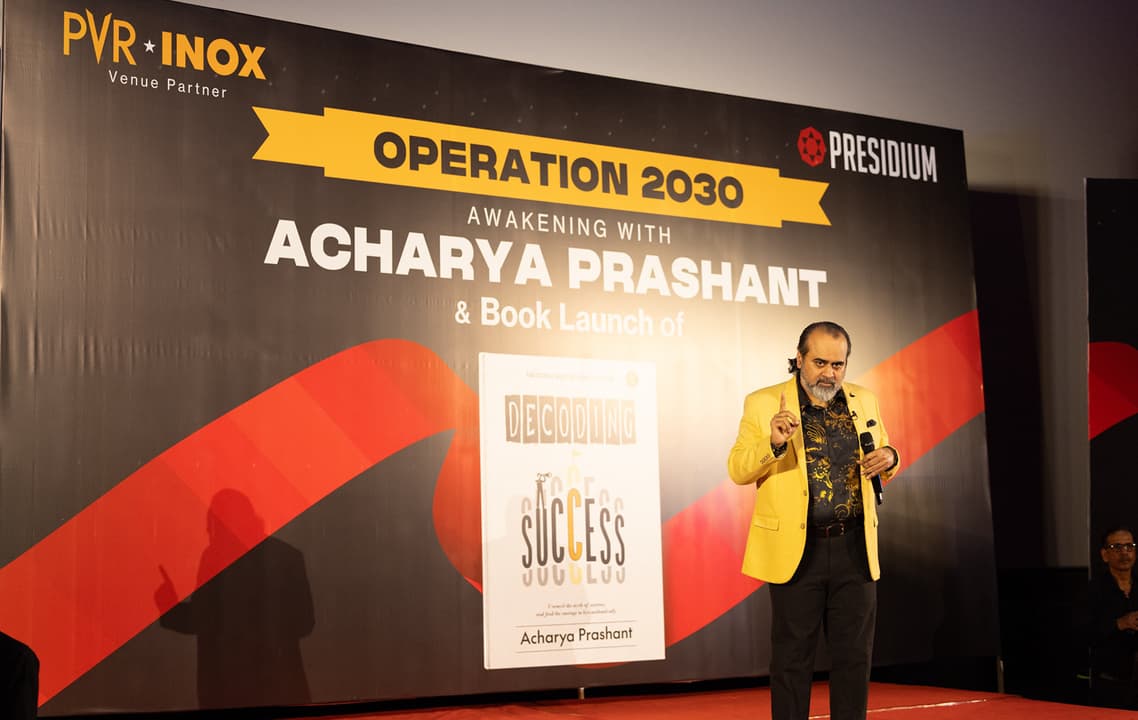
On the evening of November 15, just hours before a scheduled Gita session, a message arrived from Gauri Maulekhi, a prominent animal rights activist. She requested Acharya Prashant to join her in Patna the following morning to meet the Chief Secretary of Bihar and address the press about the Gadhimai festival in Nepal. This was no ordinary request. It was a plea to save thousands of animals and to raise a voice against a centuries-old practice of cruelty disguised as tradition.
From 1945 to today, consumption drives war beneath peace globally. We have continued to be exactly the same as we were on the day of Hiroshima and Nagasaki. That war happened because the various powers wanted to consume. Have we changed internally? If not, how can there be peace? The problem is not in the structures of thought or governance. The problem is within.
क्लाइमेट चेंज, न्यूक्लियर डिज़ास्टर — ये सब ख़तरे इंसान के लिए हैं, पर अपनी फ़िक्र हम नहीं करते क्योंकि उसके लिए सबसे पहले स्वीकार करना पड़ेगा कि हमारे ऊपर ख़तरा है, और हमें ठीक होने की ज़रूरत है
Climate denial is less about ignorance and more about refusing to face uncomfortable truths. Environmental destruction reflects narrow self-interest, collective confusion, and a failure to see the connection between inner values and outer consequences. The greatest burden falls on the poor, future generations, and other species. Lasting solutions require a change in human consciousness, not merely technological or political fixes.
How much has the UN really succeeded when it comes to climate change? Because it's a question of consumption at its core, it cannot be addressed without talking of the consumer — who he really is. Vedanta asks a very fundamental question: For whom? Consumption is for the sake of the one you call as ‘I’. Has consumption really benefited the ‘I’? Will one ever ask what ‘I’ am really hungry for? The moment one does that, life choices will change. In fact, what the United Nations is asking for can be achieved only through the Vedantic route.
The United States has contributed approximately 25% of cumulative global greenhouse gas emissions since 1850, despite comprising only about 4% of the world's population. This exemplifies climate injustice, where wealthier nations emit the majority of carbon emissions, while poorer countries endure the most severe impacts.
Americans constitute only 4% of the global population but are responsible for 25% of the excess CO₂ in the atmosphere. As a result, a huge humanitarian disaster is unfolding, with the Indian subcontinent being the worst sufferer. However, the ego does not consider anyone or anything more significant than its own petty interests. We find this myopic and self-centered behavior in every household; it's just that this is being played out on a much grander scale.
The population will have to be educated in a spiritual way so that we realize that procreation is not the purpose of life, especially not in a woman's life. If the woman is liberated, the population cannot explode. If the population explodes, that's a clear indication of women's misery. Knowledge, consciousness, and realization are much higher joys than the smiling face of your baby.
Clean energy is now cheaper than coal, and there is no direct link between carbon emission and GDP growth. Yet we keep hearing that a growing country must burn more. We also hear that extra CO2 feeds the plants, while the warming it brings is already shrinking our wheat, maize and rice. These arguments are so weak that even those who make them know it. So why do we keep believing them, and what are we really protecting?
Oil companies’ own scientists predicted the warming in the 1970s. Carbon isotopes now prove the extra CO2 is ours. And still, in the country that has emitted the most, many call climate change unreal. This is not a gap in knowledge. Denial is a defence: every doubt we keep alive gives us a safe place to hide, because accepting the carbon means accepting that our own desire is heating the planet. What are we protecting when we refuse to know?
Climate change is more than an environmental crisis—it is a crisis of human choices. Our patterns of consumption, consumerism and endless pursuit of more are putting increasing pressure on the planet. But meaningful change does not necessarily begin with new technology or stricter policies. It begins with a deeper question: what are we willing to change within ourselves?
Mass extinction is accelerating due to human-driven climate change, resource consumption, and destruction of other species. The deeper problem is a worldview that equates happiness and development with endless consumption. Science itself is not the problem; without inner clarity, its immense power becomes destructive. Advaita points to a different relationship with the world, where it is not an object of exploitation but a means to deepen self-understanding and inner development.
We are looking at a scenario where nations have the population of India and the per capita consumption of the U.S. Multiply these two, and what do you get? Utter tragedy. Unless there is this basic recognition, which you can call a spiritual awakening, that the good life doesn’t consist of conspicuous consumption, we are hurtling towards a great disaster. It is already upon us.
Ours is a democratic system. You are the government. If you want to accelerate climate devastation, it will be accelerated. Who can stop it? A leader is just a poor person, typically an old man. How will he resist the combined might of the electorate? All real change can happen only at the level of the individual. Once it happens there, it takes no time for governments to toe the line.
Climate change is assaulting us right within our homes. It is just that right now, the most underprivileged are bearing the brunt and the luckier ones are able to afford negligence. Not that they don't know the facts, but they are able to afford to neglect them for now. And what to do when one knows the facts, yet wants to deny them? The science of climate change is so easy. The problem, therefore, is not education but honesty. Your education system is not teaching honesty — it is only teaching external things, nothing internal.
If the current trends of fishing continue, we’ll have virtually empty oceans, no aquatic life, and then we all will disappear too. The oceans are the way they are because you are the way you are. If fish are disappearing from the oceans, they are landing in our homes. And if you want to bring a change in the condition of the oceans, you will have to bring a change in your own condition.
Today, if you see AQI levels beyond tolerance, glaciers melting and the coral reefs being destroyed, the reason is very simple. We do not know what is the right relationship to have with the world around us. So, all we do is consumption and destruction. There can be therefore no scientific and technological solution to this problem. The solution is self awareness.
I am hungry, I am dissatisfied, I want to consume. And I do not know what it is that would appease me, make me happy, quench my thirst, so I will try out everything. If you have this big a hole in your heart, what else will you do? You will use the entire universe to plug this hole. That is what man has been doing. He wants to eat up everything. The very basis of climate change is the constitution of man himself. Man cannot help climate change; man is climate change.
Oppression should not see caste, gender, creed or colour, and it should not see species either. The moral threshold is sentience, not intelligence. An animal feels pain as fully as a human does, whether or not it can explain its suffering.
The climate crisis is not merely an external environmental problem but a reflection of inner human greed, desire, and psychological disorder. Drawing from the Gita’s idea of yagya as desireless action, it says real ecological healing requires inner transformation. Outer pollution, exploitation, and destruction mirror the ego’s inner confusion, making personal consciousness and planetary health deeply inseparable.
If you think you can do it at the policy level, that sounds very tempting but means nothing, because you are trying to defy the very law of existence. You are saying the minister will do it. Why will the minister do it? The ones in power have the least interest in any climate action because they are the ones with the minimum stakes there. You'll have to awaken the individual so that the one in power listens to you. Awaken the individuals. What else? There is no option.
Don't be surprised by individual instances of wildfires—these are going to become daily occurrences because they are a result of mankind's flawed life philosophy. So, the solution to climate change cannot come through new technologies, nor by signing some agreements. It can only come by inculcating wisdom in human beings, as without the right philosophy of life, we will keep exploiting the planet.
Our species has increased its population and consumed so much that it has destroyed everything. Humans will be the first and only species to wipe themselves out completely. Nothing is surviving on this Earth except us. Now we need new ways of living. We can't live in the old ways. Old desires won't work now. The doer has to be changed, and that's why we need the Gita—not to reach heaven, but to save Earth.
Climate change is not merely a problem — everything is going to change, and the planet will become uninhabitable not only for us humans but for all species. Mass extinction is what we are staring at — a catastrophe worse than the ‘Third World War.’ But we do not discuss this because it challenges our basic philosophy of life that says, "More is better." The climate crisis is a product of a wrong way of living. Therefore, taking Vedanta to every household is striking at the very roots of the climate crisis.
We are told that cleaner technology will solve the climate crisis. But emissions begin before any fuel is burnt, in a life that has no joy and so keeps reaching for the next lower pleasure: the party, the trip, the purchase. The demand for pleasure is not wrong. What matters is which pleasure we seek. Music, books, sport and real company cost the planet almost nothing. Can we look honestly at what our own consumption is trying to fill?
Rakshabandhan is not merely a festival celebrating the protection of a sister by her brother. Its deeper meaning is about recognizing vulnerability and taking responsibility for what needs protection. Today, that responsibility must extend to the environment—rivers, mountains, trees, oceans, wildlife, and the planet itself. True religion lies in self-knowledge, compassion, and understanding that greater power brings greater responsibility.
The climate crisis is not caused by nature but by human beings, their growing population and relentless consumption. The desire for greater comfort, wealth and consumption defines success, while increasing families multiply this impact. Green technology alone cannot offset such massive growth in consumption. Climate change also triggers feedback loops that worsen warming. Unless happiness is separated from endless consumption and unchecked desires, the planet will continue moving toward mass extinction.
Climate change is not merely an external crisis of emissions, technology, or policy. The deeper problem lies in the unchecked ego that seeks to fill inner emptiness through endless consumption. This psychological demand drives extraction, production, and environmental destruction while failing to resolve the underlying sense of incompleteness. Meaningful climate action therefore requires more than green technology and policy; it requires education that turns inward and examines the self.
Humanity continues to increase emissions despite clear warnings about climate catastrophe. The crisis is not merely technological or political but rooted in endless human consumption and the belief that happiness comes from material accumulation. Development and basic needs are not the problem; blind pursuit of growth is. Lasting solutions require a deeper understanding of human desire, because environmental destruction begins in the mind before it appears in the atmosphere.
All consumption comes from this ecosystem, this planet and in the lust of our blind consumption, we destroy life for everybody. As technology progresses, you will probably be able to consume more with impunity.There is a consumption that is needed for basic physical sustenance and comfort,then there is consumption that happens for entirely different psychological reasons. It is the second type of consumption that I am always worried about.
Why the question of sustainability is relevant only to our species, out of the billions of species on this planet? Because we have a hollow inside us, and that hollow demands to be filled. So we want more and more manufactured products, more meat, more luxury, more money. And the sad part is, none of that really succeeds in fulfilling you. But you still want to consume endlessly. And that endless consumption, arising from a spiritual point, is what the sustainability crisis is today.
‘I’m not feeling well.’ Your feelings are carbon. No other species is responsible for the climate disaster. We are. Why? Because only the human being has a hollow in her heart. Climate change is the unfulfilled, dark interiors of this species, Homo sapiens. We are destroyers because we are unhappy and loveless within. There can be no scientific, no economic, no political, no technological solution to the climate disaster. Not at all. Because this is purely a spiritual crisis.
Let the Earth be destroyed. We have to save humanity. Wow! The human body is 70% water, and the Earth’s surface is also 70% water. Can’t you see that we are the Earth itself? Going to another planet means thinking of collective suicide. Just remember one thing: we don’t live on this planet, we are this planet. Either two of us live together or we go down together, because we are not two at all. We are one.
Climate carbon dioxide is not a problem of technology. It is a problem of civilization. It is a spiritual problem.
Stray dogs need garbage, and with waste reducing, their populations in urban areas are bound to decline. Not just humans, even dogs suffer — crushed by vehicles, beaten up, falling ill, etc. They can either be integrated into our homes with care and responsibility or face extinction from our streets. It is heartwarming to see humans supporting one species, but why doesn’t our heart bleed for the crowds of animals we are slaughtering every day, making many of them extinct forever? Climate change is the biggest threat and is responsible for the maximum misery to animals.
Climate is an entire industry, which receives hundreds of billions of dollars in funding for tech-based crisis solutions. And technological or scientific or policy measures are just eyewash. On the other pole, a lot of money is flowing towards climate denialism. We do not have enough time to wait for everyone to see on their own that we are on the edge of the final calamity. What you need now is not persuasiveness, but power. The Gita is a message to fight. It’s a war call.
If you have not looked inside yourself and you keep conquering stuff outside, you find all those conquests hollow, and you are still hungry for more. And this hunger is what is devastating the planet.
When you look into the eyes of an animal, and if you are really awake, you will only see your own deep innocence, which might be hidden from you. It is impossible to see anything or anybody else when you really look. That thing that you look at, and that which looks back at you is most prominently visible in the eyes. Look at the animal, pause and meditate for a while — and then go ahead and slaughter it, if you can. You’ll only be slaughtering yourself.