Public Session · London
Public Session·4 June 2026
“Learn and Live”: A Public Session on the Bhagavad Gita
Built around a single verse of the seventh chapter, opening outward into the fundamental questions of how a life is to be lived.
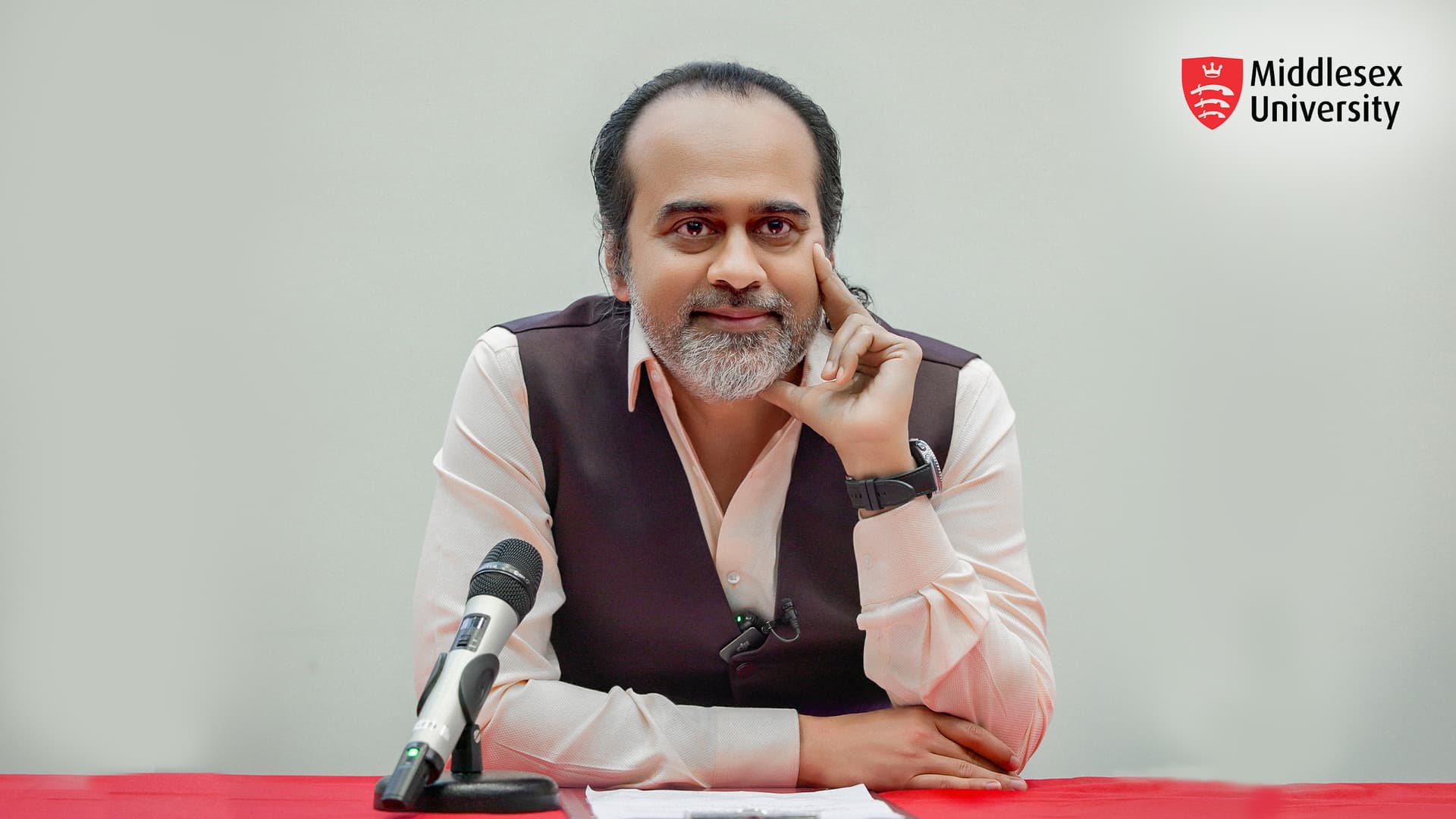
Acharya Prashant delivered his second public session in London on 4 June, drawing participants from several countries in person and more than one lakh viewers online. He built the session around a single verse, the fourteenth of the seventh chapter of the Bhagavad Gita, and opened it outward into the fundamental questions of how a life is to be lived.
The reading he offered ran against the familiar one. The Gita, Acharya Prashant said, is not a text that hands the individual a set of duties to discharge; it is a text meant to free the individual from every form of bondage, duty included. Explaining the mechanics of the ego, he observed that the moment the knower is itself known, its grip begins to loosen of its own accord, and right action then arises without being forced. Love, he added, is not possible without understanding, since what passes for love in the absence of clarity is usually attachment. Inviting the audience to hold both love and self-knowledge together, he offered a phrase that anchored the evening, “Learn and Live.”
Turning to the meaning of Krishnatva, Acharya Prashant described it not as a personality or an ideal to imitate but as a direction, the very movement in which the ego dissolves.
The session belongs to a broader effort to carry the philosophy of Vedanta to audiences well beyond its traditional setting. Acharya Prashant opened the tour at the University of Cambridge, and has since held his first London public session on 31 May, addressed the UK India Youth Leadership Conclave 2026 on 1 June, and recorded a podcast conversation with Poorva Joshipura of PETA International on 3 June.
View full media coverage →
For media enquiries: Dr. Anupam Chatterjee · [email protected] · +91 93165 46673