Modern Women, Ancient Conditioning

Acharya Prashant

14 min
314 reads
Modern Women, Ancient Conditioning
Todays educated and financially independent woman says, “I am free,” yet still feels deeply confined within. Why? Because external freedom alone does not dissolve inner conditioning. The old idea of “womanness” still sits at the center of identity. Real liberation begins when one stops seeing oneself merely as a gendered body and starts living as human consciousness first. This summary is AI-generated. Please read the full article for complete understanding.

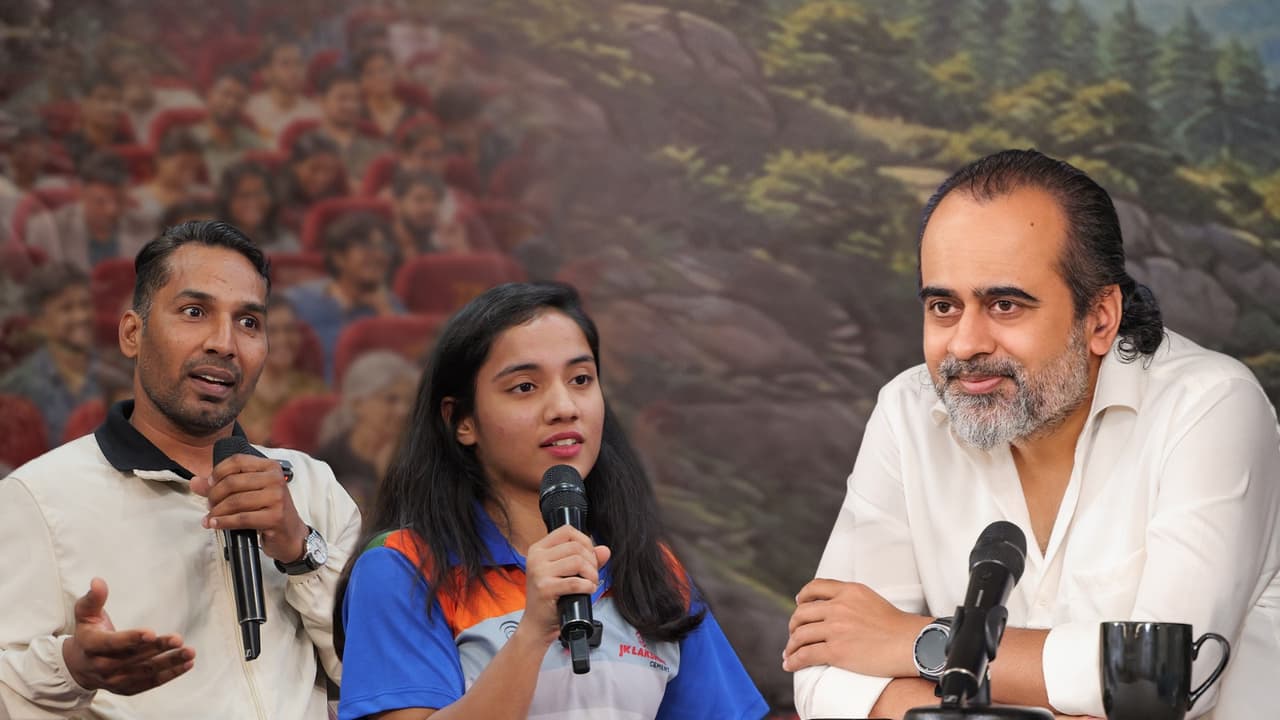
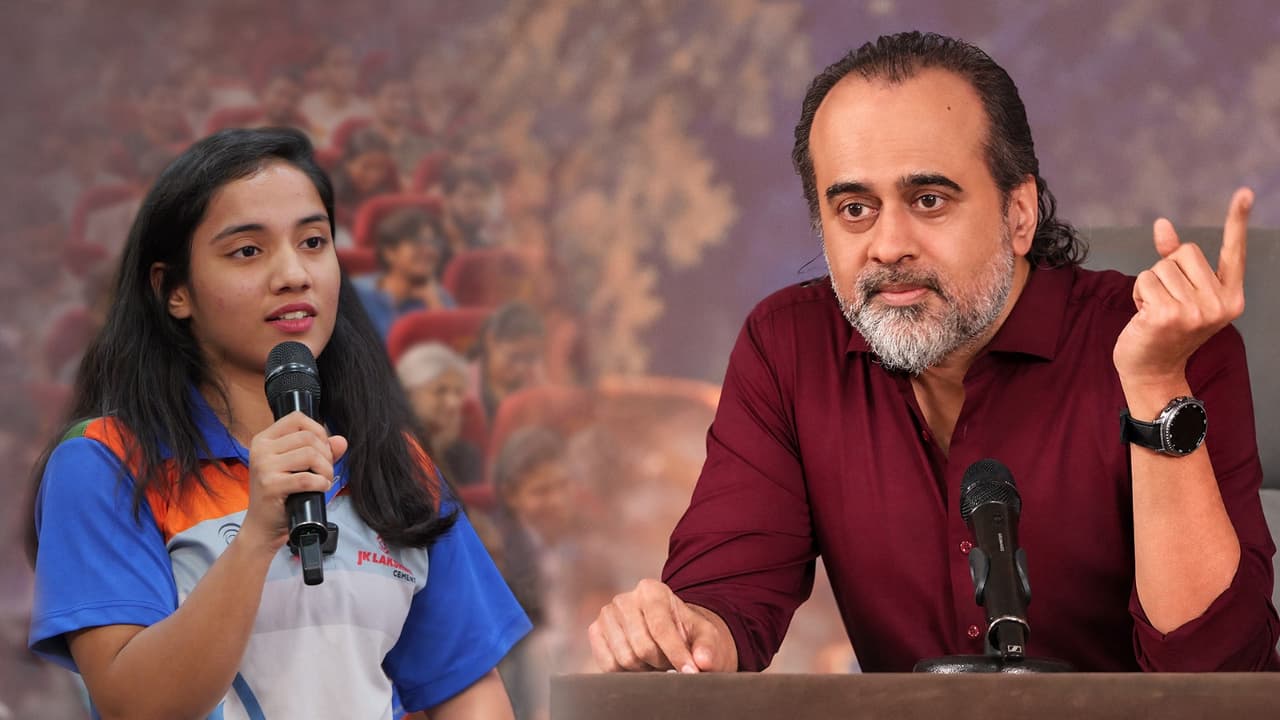
Questioner: Hello sir, myself Vaishnavi, an undergraduate cyber security student. Even though we live in globalized and modernized areas, there are even girl child or women, the freedom they are willing to or they want to, they don’t get it. So my question for you is: what is real freedom? How can one experience it in real life or in daily life?

Acharya Prashant: Beta, let me take you to a context. If it is coming from a student of a very modern discipline at a top global institution like IIT Bombay, freedom in your context cannot be something that others can give you. You already have it. The question is not how much freedom are others willing to give me. The question, rather, is why am I willing to trade away my freedom for petty things?

You have freedom already. Are you not free? You are, you are, and most modern women are. Yes, in India we still have crores of women who are practically very confined, very much in bondage. But the issue of freedom or deprivation is not only something that comes from women who are uneducated and confined to their households. It also comes from very well-educated and high-earning women in metro cities. They also say, “But society does not give us freedom.”
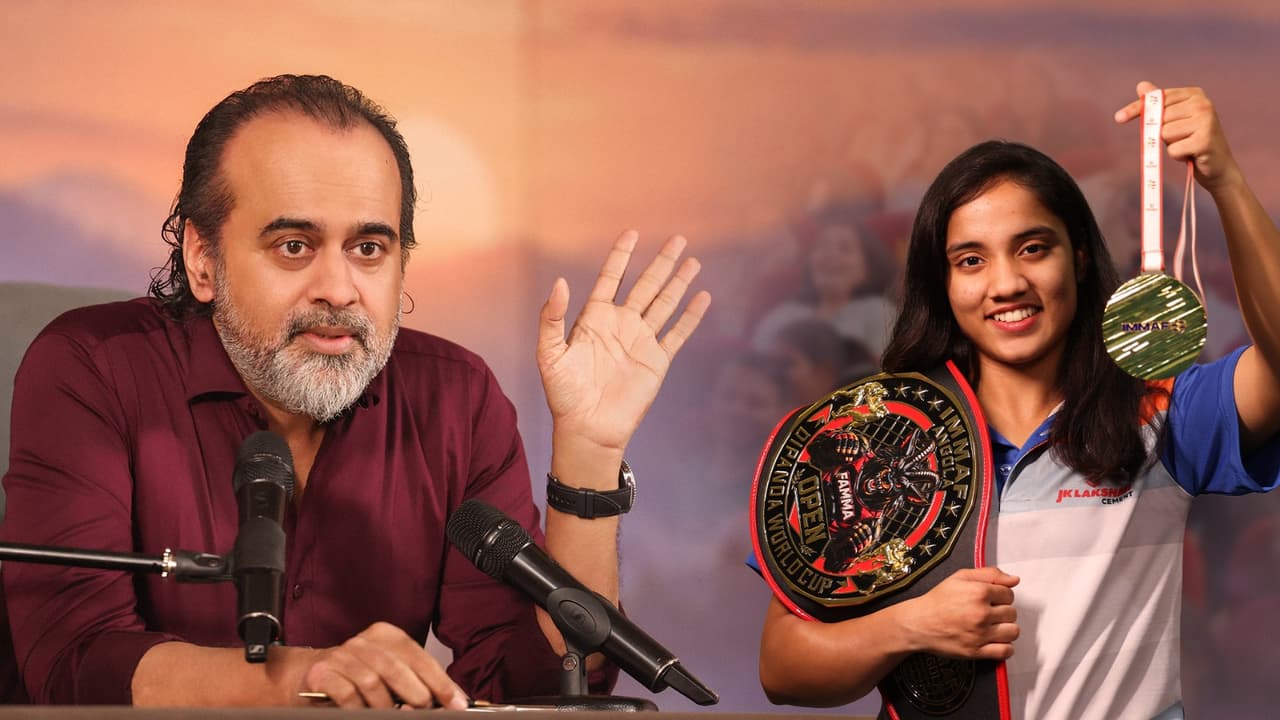
All that life could give you has already been given a lot, a lot. You are living in a country that has a gem of a Constitution. You have constitutional provisions, you have legal protections, you now have laws also of all kinds. In fact, a lot of men complain that the laws have begun to be a little too skewed towards women.

Now you are educated, and when you will earn, you will find yourself immediately belonging to the top 1 percentile of India’s population by income. And then it becomes quite a strange thing when the lady says, “But I’m still not free.” How are you still not free?

Now, freedom does not have to do with society. Now, freedom has a lot more to do with the person’s own conditioning. Now what is needed is inner freedom from the concept of gender itself. Let me elaborate.

So, I am a well-educated woman. Complete it for me. I am a high-earning woman. Say that to the mic. I am a well-educated…

Questioner: Woman.

Acharya Prashant: I am a high-earning…

Questioner: Woman.

Acharya Prashant: I am a knowledgeable…

Questioner: Woman.

Acharya Prashant: I am an empowered…

Questioner: Woman.

Acharya Prashant: But I am still a…

Questioner: Woman.

Acharya Prashant: That’s the bondage. And from this, nobody can give you freedom. Nobody. What you now need beyond gender equality is gender irrelevance. You need to stop looking at yourself as a woman because, as the lovely French existentialist Simone de Beauvoir said, “The girl is born and the woman is made” not born, not born. “The girl is born, but the woman is made.”

So if you’re still a woman, you are still something made by society. That’s the bondage. That’s the bondage.

So I am enlightened, I am empowered, enlightened in the Western sense, not in the Indian sense. I know everything, right? I fly frequently. I take overseas vacations. I subscribe to top-notch academic and research journals. I’m very much Westernized in my outlook. All these things are there, but I am still a woman.

And the concept of womanness, mind you, has not progressed as much as the idea of equality. The idea of equality today stands very well evolved. Most societies, at least most democratic and liberal societies, will not tolerate inequality between men and women, and that’s wonderful. But the idea of womanness still continues to be somewhat primitive.

For example, if I am a woman, and woman means having the body of a female, right? Primarily, and then many other things from there. But the first thing is having the body of a female. So if I’m a woman, having a partner is more important for me than it is for a male to have a partner. That still goes without saying, even among modern women, even among the elite, that happens.

And now, the one exerting the pressure is not outside of you, but inside of you. The very concept of womanness, the very concept of woman, even if we are constitutionally, legally and economically empowered, yet we are carrying within ourselves, as women, a lot of things that are coming from the medieval ages.

So I might be very well educated. I might belong, in academic terms, to the top 0.1% of the world’s population. But many things, many beliefs that I carry are still much the same as those carried by my grandmother.

Are you getting this?

For example, I must become a mother. Motherhood is very important. Now, another problem that you face is when it comes to giving freedom to women, which is a beautiful and noble idea in itself, that often becomes, practically, the freedom to remain indoctrinated and conditioned as they were 100 years back.

And this is a very amusing, very curious kind of freedom, where you are saying the woman is free to remain in bondage. And so you find a lot of so-called liberated women now coming up and saying, “But if I am free, am I not free not to earn? Freedom involves the right to stay at home and make babies.”

I understand that too can be freedom. But, lady, when you declare this, are you coming from a point of freedom, or are you coming from your grandmother who still sits inside you? Are you still free of your grandmother?

Now, that’s the freedom we need today. Otherwise, in the name of freedom, we will continue to carry our medieval selves or very, very age-old beliefs. Do we understand this?

Don’t take it personally, but please, please tell me, not as women just as human beings, as persons, the way we dress up, the way we carry our bodies, the way we keep our hair, the way we apply cosmetics, is that really coming from an empowered consciousness, or is that coming from the traditional model of the attractive woman?

And if the woman is indeed trying to be attractive, I’m assuming that if she is indeed trying to be attractive, attractive towards whom? There was a time once when she needed to be attractive for financial reasons, nothing else, for the reasons of her physical security. If she is attractive, then she would be taken over, patronized, accepted by a powerful male, and that would grant her financial access and all kinds of securities. But now she does not need the man anymore in that way, does she? But she is still carrying the old beliefs, the old habits, the old personality.

This is the freedom that the empowered woman today needs, freedom from womanness itself.

She needs to look at herself not as a female body, but as human consciousness. That’s the freedom that is needed.

I am in the body of a woman, that’s fine. The body is that of a woman, and one has no say over that. One is born a male, one is born a female, and that’s all right. That’s what prakriti does, 50/50. That’s fine.

The body is that of a woman, but I’m not identified with my body. Who am I? I am the human consciousness itself, out to attain its utmost potential, not here to fulfill the same traditional roles by the back door.

Otherwise, what is happening is the modern woman is doubly caught. In the daytime, she is the empowered and liberated one, doing all kinds of things in the office, competing in her career, achieving much as a professional, that’s what she’s doing in the daytime. And then she returns, and at 7 p.m. she becomes much of the same householder that her mother or grandmother were. Now she is bearing these two roles, and she’s caught and stuck, and she’s collapsing under the double burden.

The old has to go to make way for the new. Not only do you have to drop the old kinds of limits, you must also remember that the identity of the woman itself is the greatest limit. You can drop external limits and barriers and bondages, and that’s great, that must happen. The external equality that we talk of, that must be achieved and that has been to a great extent, already achieved, especially for educated women in metros like you.

But when it comes to inner freedom, that’s still a far cry. We are still a long distance away. Psychologically, we are still far behind. We are still living in the 18th century or something.

Do you get this?

A large number of ladies, you must search for the latest surveys, but the one I looked at, that’s a decade old, a large number of ladies from IITs and IIMs here in India, ten years after passing out, when they were surveyed, interviewed, they were no more in any profession. And the compelling force was not external. There was no external compulsion. It was an impulsion. The bondage was internal, within.

That’s the freedom that we need today, gender irrelevance. Yes, this body is there. I do not care much for the gender aspect of it. I am a human being who is incidentally a woman.

Being a woman is not the center of my being; it is the periphery. At the center of my being lies not my body, but my consciousness, consciousness. And the moment you relegate the body to its right place, you find there is internal liberation.

Now, things like fulfilling the old physical roles or catering to the old physical instincts, they would no more be labeled as freedom, right? Otherwise, understand a crucial difference.

If I do not know who I am within, and I feel a strong biological urge to reproduce, let’s say I feel a strong biological urge to reproduce and it’s a scientific thing that urge is a little higher in females than in males; that’s what mother nature has ensured for the sake of biological continuation.

So if I experience, as a woman, an urge to reproduce, and if freedom means doing what you want, then it will become a part of your freedom to give up on your job, on your higher aspirations, and get pregnant. Am I right? And that will be touted as liberty.

Now the woman is empowered. Now the woman is free to choose. So she decided to follow her maternal instincts. This is when you are keeping your body at the center of your freedom. You are saying, “Whatever the body will say, I will follow, and that I will call my freedom.”

Whereas what I’m suggesting is a bit different. The body might be saying something, but am I obliged to follow the body? Am I? That’s freedom, freedom from womanness itself. The body is saying this, the body is saying that, I will be the discrete judge. My consciousness will decide whether to follow the inner woman or to just shut her up. That’s the freedom that we now need.

Anything on this?

Questioner: Sir, actually, I have one more question on whatever you said just right now. I don’t want to contradict any of your points, as I accept them all. But as you said, a woman should always listen to her inner voice, that is, the consciousness.

So, for example, a woman has to do a job, she’s from IIT and IIM and besides that, she also has one more responsibility, that is towards her children and also her husband.

Acharya Prashant: No, no, you are jumping the gun. You are assuming that, first of all, she must have a husband, and the nature of the relationship is that they must have kids. You are just assuming too many things. You are taking your beliefs as an inviolable truth. No belief is inviolable.

You see, this is the gender stereotype that he is carrying. He’s saying, even if the woman is working, there would be a husband, that big baby to take care of, and even if she’s working, there would be two, three other little babies to take care of. Now, this is what you have to liberate yourself of, because this voice is sitting not next to you but inside you, and that’s what you have to expunge, tear it away. Did you get this?

You looked at the assumption. If she’s a girl, obviously she’ll have a husband. What else will she do? If she’s born with a womb, obviously she’ll have kids. What else can she do? That’s what you have to be cautious of. You need to catch up. The women are far ahead of you.

Questioner: I understood that I have to liberate myself from the grandmother sitting in my head, from that old conditioning. But then you are emphasizing on this concept that I should not call myself a woman. I mean, what is the problem in calling myself a woman? Even when I get liberated from that grandmother, that old conditioning in my head, then also I have a consciousness and I have a woman’s body. So, at that time also…

Acharya Prashant: You have a woman’s body.

Questioner: Yes.

Acharya Prashant: You are not a woman’s body, that’s what you need to understand. Also, if the grandmother is out, remember that the grandmother gave you the body. So the body too is out with the grandmother.

What else are you getting from the grandmother?

The body.

If the grandmother is out, the woman too is out, because it is the body of the woman that came from the grandmother.

And it’s all right to have the body of a woman, but it is not all right to say that I am a woman before I am a conscious person. It’s a matter of hierarchy. It’s not an either-or thing; it’s a hierarchy.

This article has been created by volunteers of the PrashantAdvait Foundation from transcriptions of sessions by Acharya Prashant
Comments
LIVE Sessions
Experience Transformation Everyday from the Convenience of your Home
Live Bhagavad Gita Sessions with Acharya Prashant
Categories