Living in Security And Freedom

Acharya Prashant

26 min
393 reads
Living in Security And Freedom
At the level of the body, this world will have an influence on you, and there is no need to even contest that. Let it happen, because it is going to happen anyway. But inwardly, let there be a place so sacred that nobody is allowed to enter — not even you. And when that is there, you can freely participate in the world because you'll no longer be afraid. You'll say, “Come what may, I'm secure within.” Then you will live in deep security, and we all know how pleasing security is. This summary has been created by volunteers of the PrashantAdvait Foundation

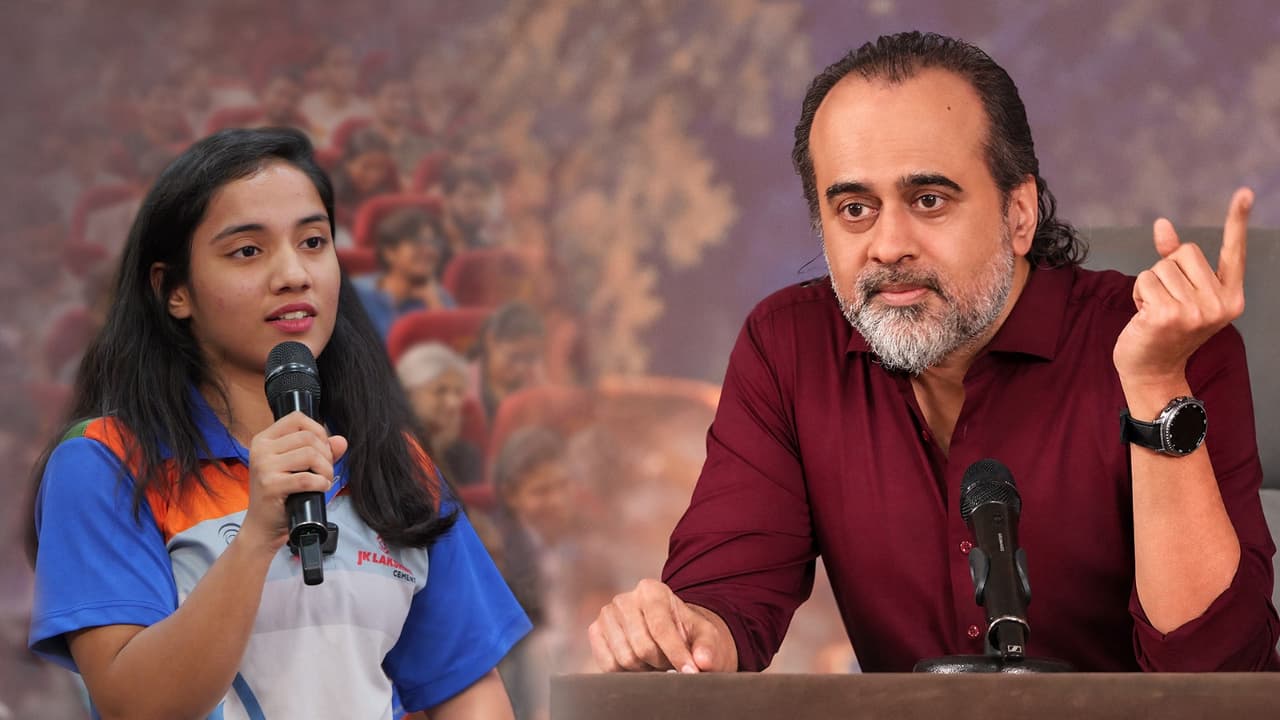
NDTV Interviewer: Hello everyone and welcome once again to this special feature on NDTV. My name is Preeti Dahiya, and once again I have the pleasure of having with me Acharya Prashant Ji, who of course is a renowned philosopher, teacher of global wisdom literature, and a best-selling author. As always, pleasure to have you with us Acharya Ji.

Acharya Prashant: Glad to be here.

NDTV Interviewer: And today we have a very special project in hand. This is a book by Acharya Prashant, Truth without Apology: For Those Tired of Sweet Lies. I am very intrigued with this book. This is newly released and, like I said, he's a best-selling author with more than 160 titles already to your name. I want to know about this particular book and how the journey started for this, especially the title Truth without Apology. What is in it?

Acharya Prashant: First of all, of all the books that I have authored, this is the one book I have given maximum time and effort to. In fact, I just relieved myself from all my regular administrative work and escaped to Goa for more than two months just to polish the book to an extent that satisfies me. It has been written keeping the reader in mind. Each chapter is just one or two pages and probably everything that relates to normal human life has been addressed. There are 180 odd chapters, and it was a challenge to compress what I want to say in a chapter spanning just one page or two pages.

NDTV Interviewer: That's very unlike your previous writings.

Acharya Prashant: That's very unlike me. That's not who I am. I love to explore things very freely without any constraint of words, of time, or of any kind of limits. So I love to go here and there and explore the entire landscape, and then discover a butterfly. Like a child that enters deliberately clueless into a garden, and would explore every tree possible and the fruits and the leaves, and then would ultimately come to a butterfly. But I suppose my readers do not have that much time. So I had to come straight to the butterfly without compromising on the beauty of the process or the butterfly.

NDTV Interviewer: No, but that's unfair. You know, you have the readers across generations and there are those of us who like to read your explanations, deep dive with you, and understand the topic. But I do have a feeling that the way this book is written, and the concise nature of the chapters. Was there a thought in your mind that perhaps this would be more handy to the current Gen Z situation that we have at hand?

Acharya Prashant: Yes. Yes. See, almost everybody is Gen Z.

NDTV Interviewer: Now. Yeah.

Acharya Prashant: So even those in 40s and 50s, their attention spans have also reduced, and when it comes to serious philosophy, our appetite is actually quite limited.

But that kind of defeats, at least challenges, the whole point of wisdom literature because it must reach the masses. If it's confined to the elite, then we are not addressing mankind in general. Then we are not addressing the human condition and human problems in general.

So I had to write it in a way that appeals to everybody, even to non-readers, Gen Z included, those with very little philosophical bent of mind included, those who are interested only in fiction included, those who are interested only in Instagram.

NDTV Interviewer: Scrolling.

Acharya Prashant: Scrolling included, without excluding those who lean towards serious philosophy and want to go deep into the essence, the truth of things.

So as I said, it was challenging to take both these together, to not compromise on the philosophical integrity, and yet make it not just palatable but delectable for the common reader. And the feedback that I have so far received, including from you, is that probably I have not done a very bad job.

NDTV Interviewer: No, you've done a brilliant job. You know, I’ll add one more synonym. It's very accessible. You can read it while you are traveling in the metro. You can read it if you have time at home between meals, or at the time of your tea or coffee break, or whatever. And I love the fact that it's breezy. I was very easily going through one page or the other. And it was very easy on the eye, on the mind, and at the same time, imbibing what you are trying to send to your reader.

Now I want to come to the introduction of the book, and the intrigue in the book starts with the introduction. “Truth without Apology is not a gentle invitation but a direct encounter.” Can you please tell us more about this direct encounter for those who are wanting to go into this book? What is this encounter going to be about?

Acharya Prashant: It's the way the mirror encounters you. It's not that I'm going to bring something outside of you or otherworldly to you. I'm not going to bring a distant truth to you. This book just holds a mirror. That's all. And that's what usually one is supposed to be apologetic for. And hence the title Truth without Apology. It's not a far away truth. It's your truth. It's my truth.

NDTV Interviewer: It's everyday truth.

Acharya Prashant: It's everyday truth and everybody's truth. This is about our lives. I'm not dealing with big names here. I'm not dealing with classical philosophies here, Western or Indian. I'm not even naming any of them. I'm talking of the way you sip your tea. I'm talking of the way I deal with my colleagues, you deal with your work, somebody deals with her kids. That's what I'm talking about. I'm talking about the usual fears that we have. I'm talking about what happens to us when we are window shopping or scrolling. I'm talking about those things that are the everyday experiences of the common man. That's you and me. So even if there is philosophy, I've tried to hide it.

NDTV Interviewer: Yeah, it's polished in your words. I won't say it's hidden because I think that's the nature of our author here. You can't stay away from that. But having said that, it's a great initiative that the chapters are very concise. The philosophy is very easy to handle. But there are certain points which, when the reader gets into, they would want more to talk about with the author.

So I think through this episode, we have the opportunity to dive a little deeper into some of the chapters that I have managed to read. And of course, I'll be reading the entire book, and maybe the feedback from the viewer is also invited. If you want to expand further on any point, please do write to us.

So, you know, I have marked a few points from the book here. There is a very nice chapter on the exhibitionist mindset. Now, again, we were talking about an age, a generation which has that mindset. Why do people show off?

“The exhibitionist mind seeks validation through others’ approval.” Do you connect it with the craze for social media? The validation that, you know, everyone is seeking on social media: how many likes, how many views, how many comments? Is it connected to that?

Acharya Prashant: Social media didn't start it. Social media took the shape it has because we are the way we are.

NDTV Interviewer: We already had it.

Acharya Prashant: We already had it. Social media is at best a demonstration, a manifestation. It is not the cause. It didn't start it.

You see, when I do not want to look at myself, or I have lost the ability to look at myself, or I have been indoctrinated that it's very important to keep your eyes closed, then I have no option but to look at myself through somebody else's eyes.

And it is our nature to be great, to be unlimited, to be beautiful. That's your inner nature. Beautiful, not in the superficial way. Really beautiful, fearless. That's ours.

So we want to hear that about us from others. You see, it's a secondhand way of approaching life. I cannot look directly at myself, so I’ll come to you, almost begging, seeking validation. Can you please validate, verify, certify, attest that I'm good? Can you please do that?

And if you do that, you will demand reciprocity. You will say yes, I scratch your back and you…

NDTV Interviewer: Pay back the compliment.

Acharya Prashant: Right. The problem is, if I allow you to dictate who I am, and I feel gloated that you have paid me a compliment, I do not realize I have rendered myself a slave to you. In the morning, you will tell me, you look wonderful and I'm wonderful. In the evening, you come and tell me, "Oh, you look dirty, you are a filthy fellow," and I'll have to accept that as well.

And the trouble with that is not that I'm not filthy. The trouble with that is not that I'm actually beautiful. The trouble with that is I might neither be filthy nor beautiful. I am somebody else and I have just no knowledge of that. And that takes away the most valuable thing from life: freedom.

NDTV Interviewer: Just tell me one thing. I just want to clarify one point here. The need to seek validation and the need to be seen, you see me, you know, as an individual, are too different, aren’t they? Like a lot of women complain about the fact that no one sees what I do. For one day, if I disappear, everyone will value what I'm doing, but otherwise they take me for granted. So, are these two very different needs?

Acharya Prashant: Not fundamentally different. Please understand.

NDTV Interviewer: They're interconnected?

Acharya Prashant: They are interconnected at the root, please see. If I really love my work, why will I want others to see what I'm doing?

NDTV Interviewer: To appreciate it.

Acharya Prashant: Why will I seek appreciation? The work is its own reward. I don't need any other appreciation.

The fact is, if you talk of most women, unfortunately due to miscellaneous reasons, mostly traditional, they are confined to doing things that they don't really love doing. Give her absolute freedom and she won't be doing the things that she normally does in her household, the usual chores, the daily routine. Why will she ever opt for that? She's doing that to fulfill an obligation. She's doing that to conform to a role, to a character. And none of that would really please her heart. It cannot. You are just doing something because your role demands it. That cannot be internally fulfilling because it is not internally fulfilling.

So she will demand appreciation from others. She will say, "Let there be some compensation." You see that, the appreciation that you are demanding is actually compensation for a loveless life, for a loveless job. You're doing something that you don't really want to do. You are doing something that you don't even understand. Somebody asks you, "But why do you keep doing this the entire day?"

You won't really have an answer, and that leaves a void within. How to fill that void? One of the ways, useless ways actually. One of the useless ways is gaining some appreciation from others. Somebody coming and paying a compliment. Somebody coming and saying, "You are the perfect householder, the perfect wife, or the mother, or the queen of the domestic kingdom," or something.

NDTV Interviewer: Home minister.

Acharya Prashant: Home minister. So, that kind of a thing, and you feel that there has been well, but you see, the word compensation is in itself a bit dirty, is it not? It implies you have been harmed. You have been harmed and now you are being paid for being harmed. So the compliment you have been paid is actually compensation for having been harmed. So should I then ask for the compliment or avoid the harm altogether? Should I keep myself subjected to the harm and then as something to just atone for what the others have done to me?

I say, you know, you come and this much you have to pay me, whether verbally or financially or emotionally. No, not done. So the motive is coming from my clarity, not from my expectation. I'm not doing it because I expect I'll get something from the other in return. Yes, if the other applauds me, appreciates me, that's wonderful, that's a bonus, but I'm not targeting that. It is equally likely that the other doesn't understand what I'm doing for him or her, misinterprets it, or ignores it, and I'll be okay with that.

If this center, attitude, if I may say, is not there, then one is subjecting herself to constant randomness, because you'll do something, and from your own side, you might have done something wonderful, and it might go unnoticed, unspoken of, unheard, and you'll feel bad.

NDTV Interviewer: It'll be painful.

Acharya Prashant: It will be painful. And sometimes, when you find that you have just received a bounty in spite of having done nothing, you'll grow superstitious.

You'll say, "So my welfare or my happiness is not dependent on my clarity or my effort." It is dependent on random chance. So how do I please the lords that control these random occurrences? And you'll go superstitious.

So it's best just to do it from your right center and leave it at that.

And I know humanly we all want returns, but let's limit that desire. And that desire can be limited only when you say, "I'm doing it really not for you but for myself."

NDTV Interviewer: In a place of love.

Acharya Prashant: "I'm doing it from a place of love, and I'm doing it because I love, because I am the loving one." So in that sense, even if it is for you, it is actually for me. I couldn't have not done it. So I'm doing it because it was an imperative for me, an inner imperative. And now I have done it, and I'm done with it. What you do with what I have done for you is your business now.

NDTV Interviewer: You know, what you're saying is exactly how a mother-child relationship works. We do everything for our child, but we don't seek their appreciation because we are doing it in a place of love. But we seek validation and appreciation from neighbors, relatives and spouses.

Acharya Prashant: Ideally, what you are saying in a mother-son relationship, ideally that is valid. But if you look at it practically, that doesn't happen because I'm the same person.

Be it with my son or my boss or my customer or my relative or my gods, anybody, I'm the same person. If I am someone who operates from a place of desire and expectations, it is subtle desire and expectations that I will inevitably carry even with my kids. I cannot avoid that. So it is not that in one relationship you can become an altogether different person compared to what you usually are. Right? So

If you want to be good to your kids, you'll have to be good as a person altogether.

Because we want to believe in the fragmented self. We want to believe that we can be one person at work, one person in the temple, one person in front of the mother-in-law, one person in front of somebody I hate.

NDTV Interviewer: Compartmentalize our life.

Acharya Prashant: Yes, we believe that this kind of division or fragmentation is possible. And then we believe I can be a very great person in front of my son or daughter. Unfortunately, that is not really possible. A violent one will remain violent there as well. And if one is really loving towards his or her kids, one will find that love radiating in other directions also.

NDTV Interviewer: Well, you know, like I said, it's very nice to read this like a mirror. Somebody is showing a mirror to you, but it will perhaps take a lot of time and a lot of self-control to practice it on a daily basis and become a different being from what you are.

So let's move forward to another chapter, and again, it's like we've been mentioning throughout, very well connected to what we witness around us almost on a daily basis. Sleepwalking through life. “Man lives like a machine, programmed, predictable, and unconscious.” We have a schedule, we follow it, we follow it to the tee, we expect certain results because we are following it to the tee. And that's how our life is, at least till the age of 60 when we retire. Then also we have a plan: so much in insurance, so much in the bank account, this is how we'll retire. This is our home. Everything is programmed.

Are we all sleepwalking through life? Is that what you're trying to say?

Acharya Prashant: You want to hear it from me?

NDTV Interviewer: And is it completely wrong? Something that we are sort of losing our time with without even understanding it.

Acharya Prashant: Isn't it great to understand? Please tell. Isn't it great?

NDTV Interviewer: It's great, but it's scary.

Acharya Prashant: It's scary because you realize there is so much more that was available but is being lost out on. Otherwise, understanding is joy itself. No, is it not?

NDTV Interviewer: It is. But when you understand, it opens a Pandora's box.

Acharya Prashant: Yes. It demands further understanding in that sense, right? And that demands giving up on certain beliefs, comforts, conveniences.

NDTV Interviewer: Schedules.

Acharya Prashant: Schedules, and things that are nicely settled now, you'll have to unsettle them. And that requires energy and devotion and therefore it appears scary. Otherwise, understanding is joy. Serious joy. The only joy possible.

Imagine a situation. We are here, and if we do not know anything about anything here, let's say I'm speaking a language you don't understand, you're speaking a language I don't understand, I don't know what this mug is all about, I don't know why this object has this particular shape, and what is the fluid it contains. I know nothing. I do not know whether this thing is animate or inanimate. I don't know why that soil has a particular texture. I know nothing. I don't know of these gadgets here. I don't know which species this is. How would it be? Is that not scary?

NDTV Interviewer: Yeah.

Acharya Prashant: Whereas, when you can read that book, when you can actually connect to it, that is joy. That is understanding. So understanding is joy. And yes, you'll have it from me. Yes, most of us, most of the time, are sleepwalking through life.

NDTV Interviewer: How to break that cycle of convenience? Not everyone can afford to break that cycle.

Acharya Prashant: That's not true. In fact, I wonder, how can we afford to continuously sleepwalk? That's the bigger question.

NDTV Interviewer: Because it's convenient, and we have been taught a certain pattern.

Acharya Prashant: We are just habituated, just that's all, nothing else. Why can't our love be bigger than our habits? Why can't joy be bigger than habit?

And it's not as if we are actually sleepwalking. The sleepwalker has zero idea that he or she is sleepwalking. We know we are sleepwalking. Right? We have bought into the notion that sleepwalking is all right, because this is something that everybody practices, the crowd and the past. I have been doing it since long, and all of them are doing this, my past and the crowd. So time and society, they get together and we sell ourselves off. We say it's safer, it's more secure to participate in this.

NDTV Interviewer: It's more predictable.

Acharya Prashant: More predictable, yes. The mirage of security. You know, if I do this, then the returns are assured or predictable. Well, that does not really happen. Even though we want it to be that way, it doesn't happen.

Nobody knows the future, but we just lose out almost willingly on the present for the sake of an unpredictable future. And that's no fun.

NDTV Interviewer: Is that where you bring in this next chapter, which is wonderfully written, and it's just like, almost one paragraph only, “Stealing from your own pocket?” Basically, you are denying yourself a true chance to become who you can become.

Acharya Prashant: No, no. Not become. You are stealing from yourself the opportunity to be who you really are. Now, becoming is something that you have already done, and a lot of it you have already done. I have become a man. I have become a scholar. I have become a father. I have become a professional. I have become a religious zealot. I have become an intellectual. I have become opinionated. I've become wealthy. All these things I have already become. But in this becoming, do I remember who I really am? I have become a friend to somebody. I have become a foe to somebody. In this becoming, do I remember who I really am?

And all this took place over a period of time. didn't it? You are not always a friend, a foe, a father, a mother, or something, something, or opinionated. You are not always this. So becoming is the imprint of time, right? With the passage of time and the influence of society, you became somebody. But is that who you really are? So we aren't that. And,

Daily we keep foregoing our potential. That's what I'm calling “Stealing from your own pocket.” And it's possible to be who you really are. That's not a mere slogan. It's a real possibility.

And I have tried to kind of inspire through this book.

NDTV Interviewer: And listen to the punch line. I think everyone must read this book because it has many such punchlines. “Stealing from yourself is punished by life itself.” Life will be your biggest teacher if you are not doing justice to your own self. I think that is a great punch line.

So the book is divided into several bigger titles like “The Lie Called You,” is what I'm quoting from. There will be subsequent discussions on other such bigger topics. Again, here, “The Lie Called You.” There is a chapter in which you are talking about “The Most Dangerous Wound is Self-Inflicted,” and it is followed by Playing the Victim Card, which is a very common thing that we see. You know, in current times, we love to play the victim. This is not done to me. This is not fair to me. Somebody has played their game on me, and I'm in a mess because of someone else.

But you do see such cunning people around you. It's also a fact. Can you ignore that and say, "No, I am to be blamed and single-handedly responsible for everything that happens to me?’

Acharya Prashant: Not at the level of the happening, but at the level of becoming. At the level of happening, things are all random. Not just in a few cases, but in all cases we do not know what can happen to this body the next moment. Right?

So there is no way I am responsible for the happening. The tea might be cold, an insect might just start flying around. We do not know. It's a happening, and I can't hold myself accountable for that. There might be an earthquake the next minute. Right?

You're driving and some mad truck man comes and bangs into you, and you are not responsible. Obviously, what I'm talking about here is the inner impact you allow the happening to have. Can it touch you from the inside? If you do not allow it, obviously anybody can come and touch your body. It's possible. If not a human being, then the rains. You're walking, and it starts raining, and you find yourself drenched, and you can't say that you are responsible for being in that bad condition. That's all right.

But can't there be a point within us that remains inaccessible to random happenings, untouched, pure, pristine, may I say sacred? Is it not possible? And if we have that, then we are truly alive. Otherwise, we are just slaves to circumstances, aren't we? There is sun, and we are sweating. There is rain, and we are drenched. Somebody comes and utters a few sweet words, and we are happy. Somebody comes and utters some gibberish, and we are annoyed. Somebody comes and manages to please us because our ways are well known. Right?

We know in advance, if I make such profit in that particular deal, I'll be happy. Our relatives know well in advance, if such food is served to that person, that would please him. Isn't that all slavery in the sense that you are predictable and therefore vulnerable to being controlled by others?

So at the level of the body, obviously, you rose from the soil, and one day you'll go back to the soil. Therefore, there is no way elements of the soil, this world, cannot have an influence on you.

NDTV Interviewer: They will have.

Acharya Prashant: They will have, and there is no need to even contest that. Let that happen. Subject yourself to the world because that is anyway going to happen.

But inwardly, let there be a little fiefdom inside, a little territory totally of your own. A territory nobody is allowed to enter. Not even you can enter that place. That place is so sacred.

And when that is there, then you can freely participate in the world and its experiences. Why? Because you'll no longer be afraid. You'll say, "Come what may, I'm secure within. I'm pure within. So I can participate. I'm not afraid, and I'm not ambitious either." Because just as the world cannot take away anything from that point, similarly the world cannot add anything to that thing within.

NDTV Interviewer: Absolutely.

Acharya Prashant: It is complete in itself. It is of another dimension. It is not accessible. It is not corruptible. It is not expandable either. So you live then in deep security, and we all know how pleasing security is.

NDTV Interviewer: That sense of security.

Acharya Prashant: That sense of security. Come what may, I'm not going to be harmed, and come what may, I'm not going to be greedy or ambitious. Yes, you are giving me wonderful things, right? But I already have something of immense value within me. So what you're giving me is welcome, but not that I am salivating for it.

NDTV Interviewer: Well, that's wonderful. There's plenty more to discuss in this book, which we will do in subsequent episodes. For this one, Acharya Ji, thank you once again.

Acharya Prashant: Most welcome.

This article has been created by volunteers of the PrashantAdvait Foundation from transcriptions of sessions by Acharya Prashant
Comments
LIVE Sessions
Experience Transformation Everyday from the Convenience of your Home
Live Bhagavad Gita Sessions with Acharya Prashant
Categories