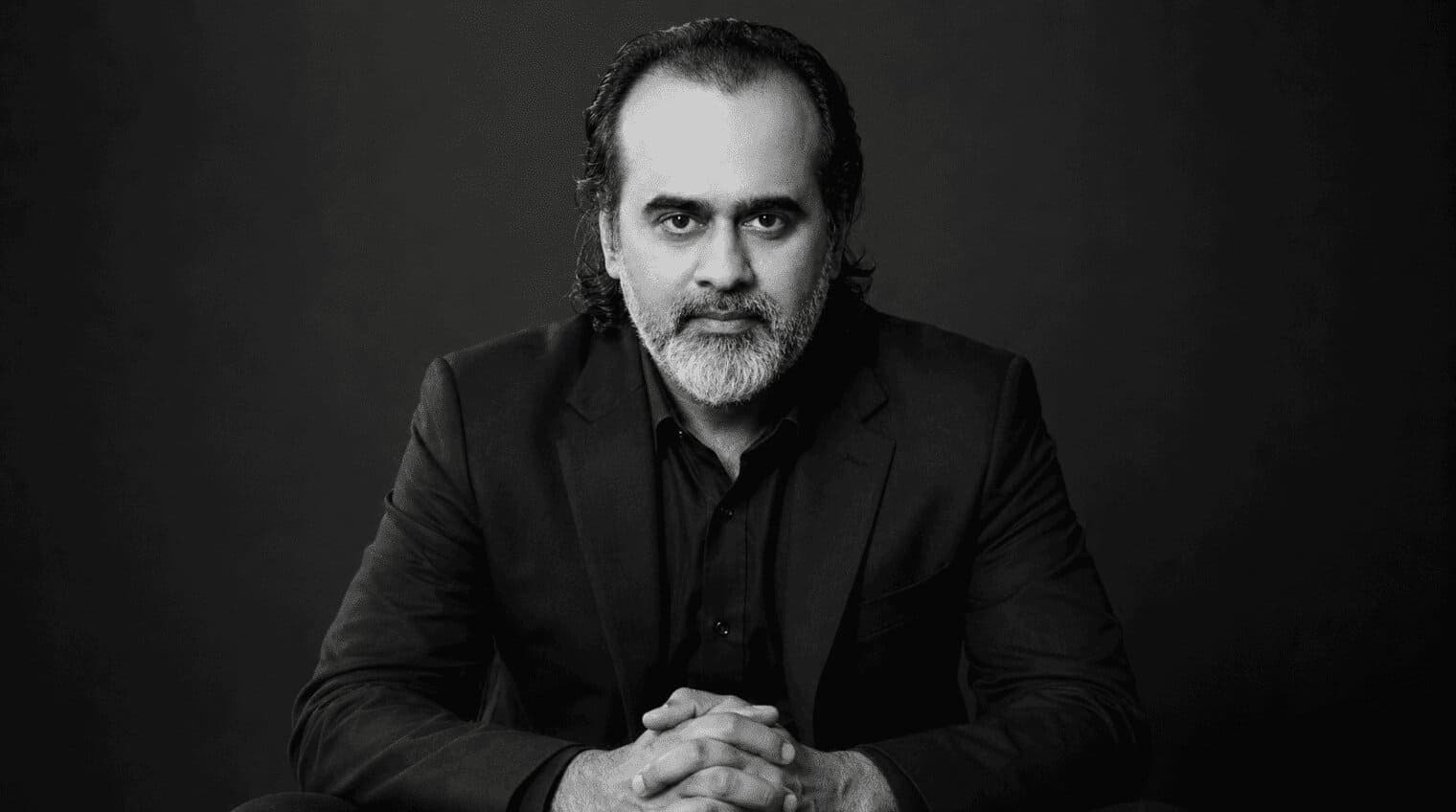
Acharya Prashant is a philosopher and author, an alumnus of IIT Delhi and IIM Ahmedabad. He is among the most widely read philosophical columnists writing in India today, with more than 190 published columns ranging across climate and consumption, elections and ideology, caste and religion, gender, education, geopolitics, technology, and the inner life.
What unifies this range is a single method: tracing every public crisis back to the unexamined self that produces it.
FOR COMMISSIONING EDITORS
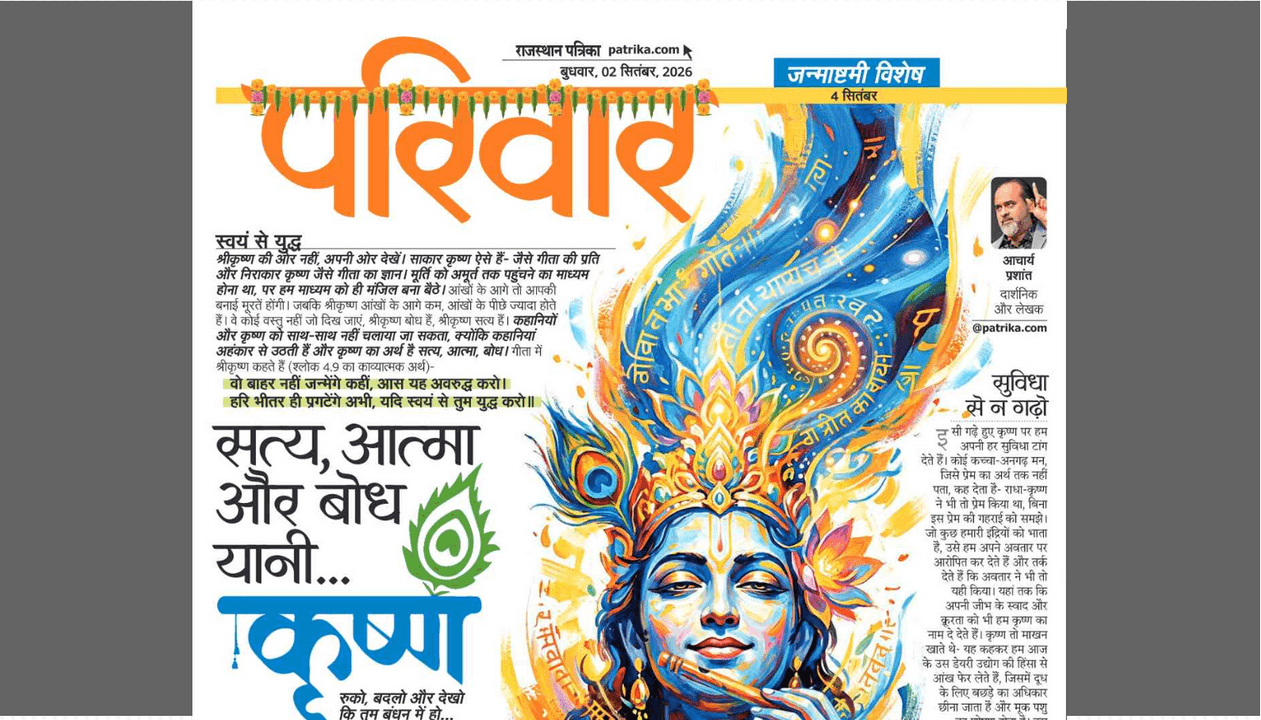
In this special Janmashtami feature published in Rajasthan Patrika, philosopher and author Acharya Prashant explains why the true Krishna is not an idol to be worshipped from a distance, but Truth, the Self, and Realization (Satya, Atma, Bodh) itself.

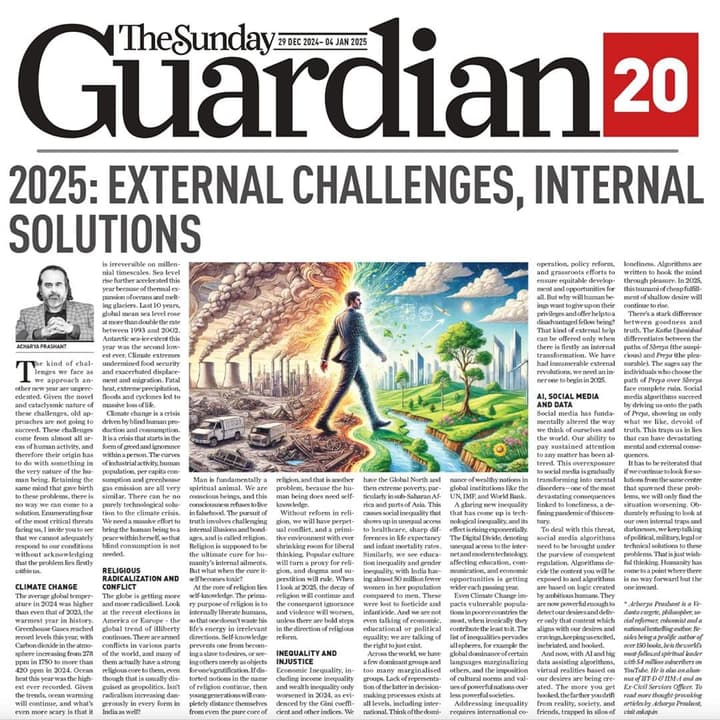
"The kind of challenges we face as we approach another new year are unprecedented. Given the novel and cataclysmic nature of these challenges, old approaches are not going to succeed."

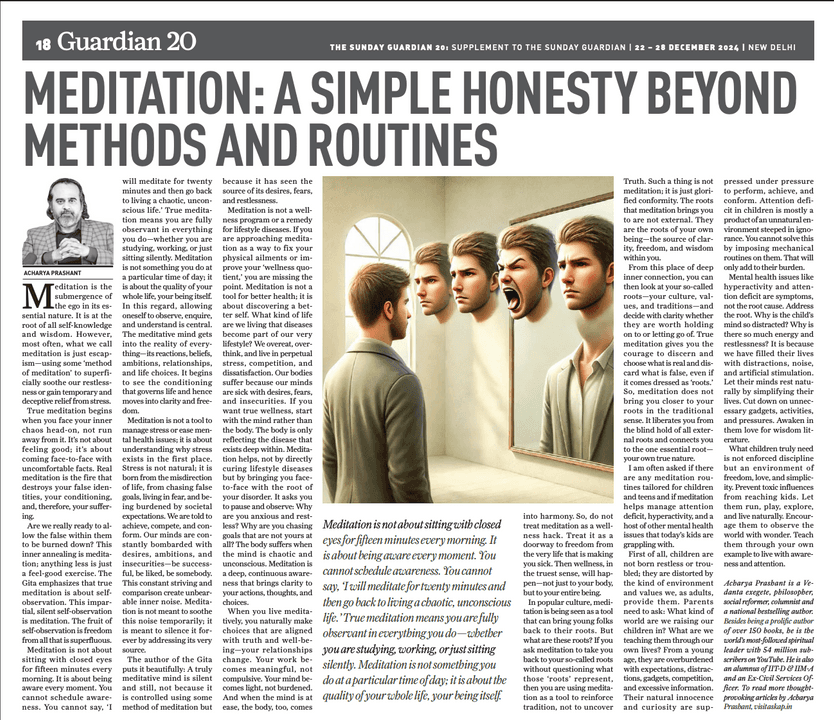
"Meditation is the submergence of the ego in its essential nature. It is at the root of all self-knowledge and wisdom. However, most often, what we call meditation is just escapism—using some ‘method of meditation’ to superficially soothe our restlessness or gain temporary and deceptive relief from stress."

"You look at the world, you look at two or twenty things, and an immediate discrimination arises within. You pick one of those things, thinking that one particular element, object, or option is better than the rest."

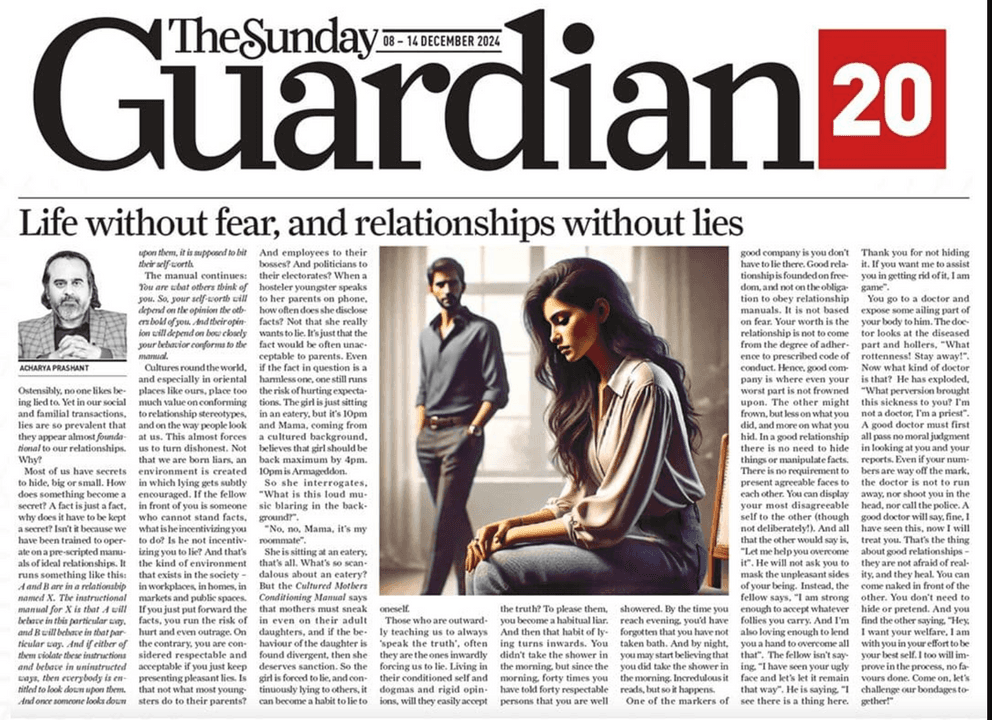
"Ostensibly, no one likes being lied to. Yet in our social and familial transactions, lies are so prevalent that they appear almost foundational to our relationships. Why?"

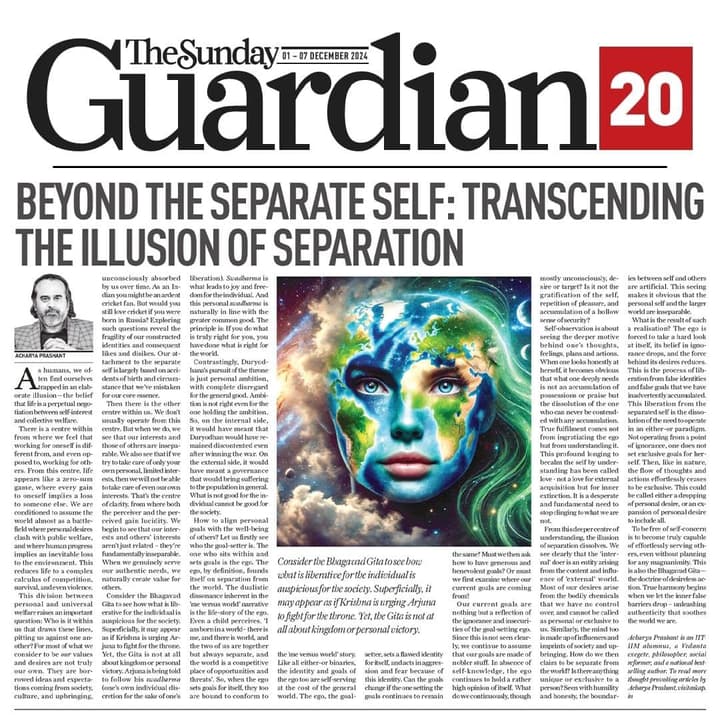
"As humans, we often find ourselves trapped in an elaborate illusion—the belief that life is a perpetual negotiation between self-interest and collective welfare."

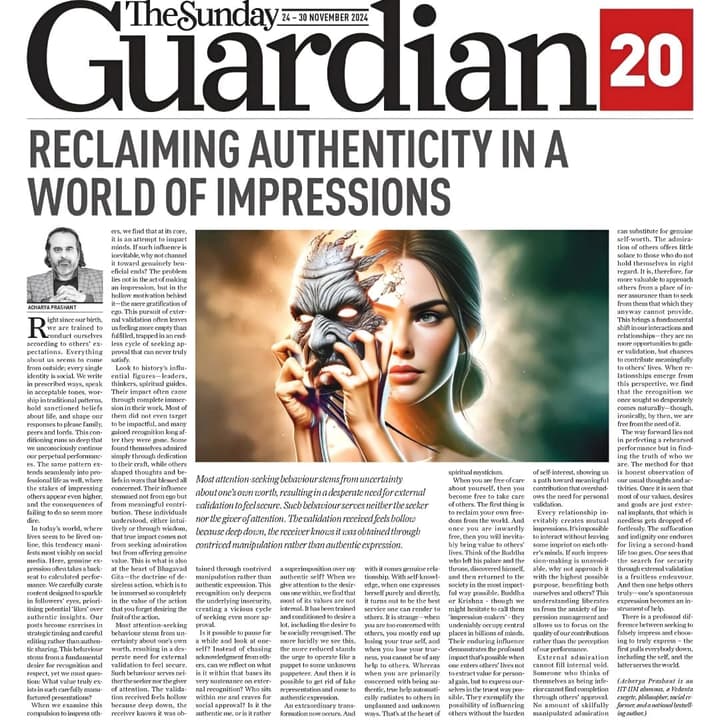
Right since our birth, we are trained to conduct ourselves according to others’ expectations. Everything about us seems to come from outside; every single identity is social.

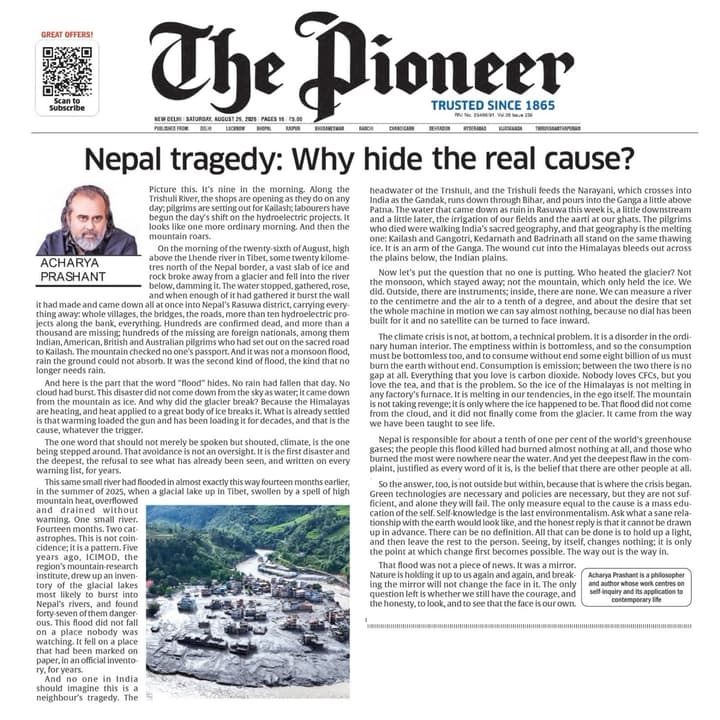
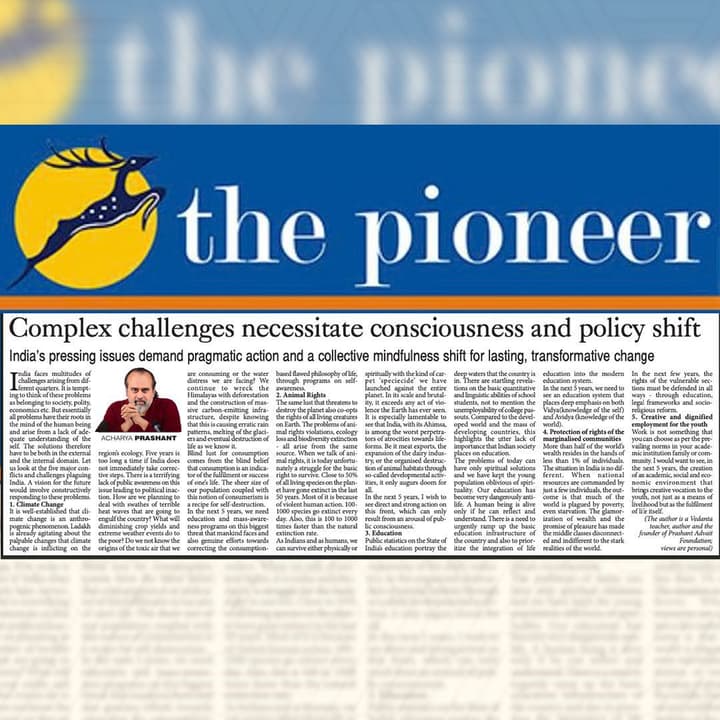
Acharya Prashant tackles India’s urgent issues—climate change, animal rights, education, marginalized communities' rights, and youth employment. He stresses the dual need for external corrective actions and internal spiritual awareness, highlighting the anthropogenic roots of climate problems. The piece advocates for a transformative shift towards sustainable lifestyles and governance, envisioning a future where India leads with mindfulness and collective effort. Read more in this The Pioneer article.

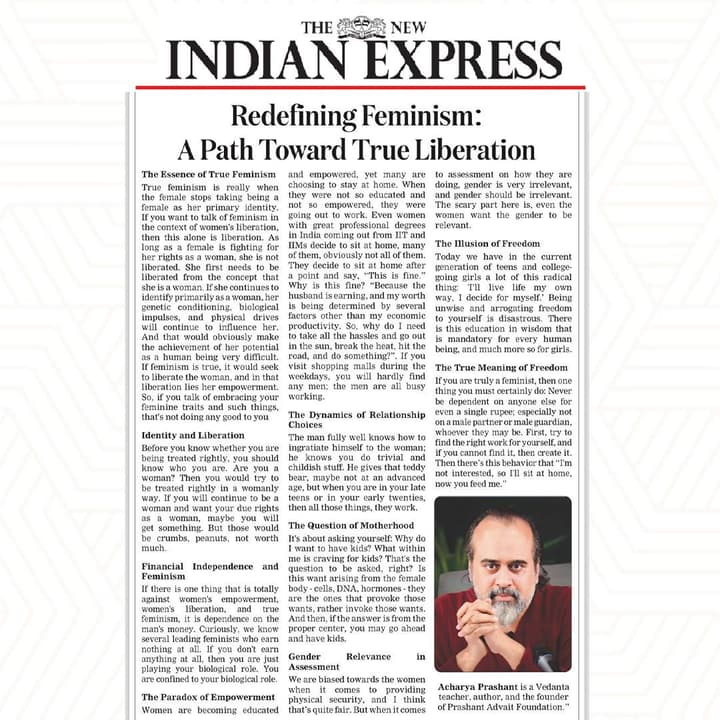
Acharya Prashant delves into the intricacies of feminism, exploring identity, financial independence, and the paradox of empowerment. He addresses the dynamics of relationship choices, the question of motherhood, and the true meaning of freedom, challenging conventional notions and advocating for genuine liberation. Read more in the Indian Express.

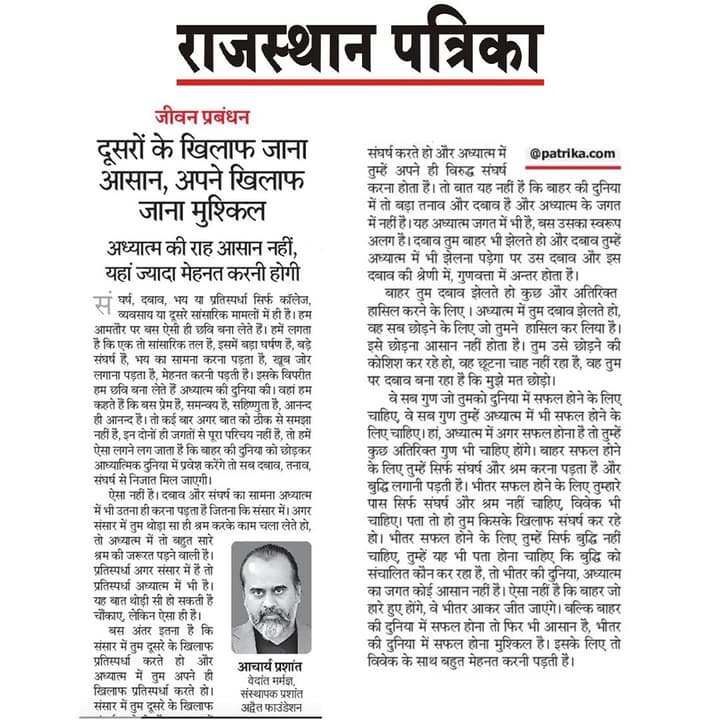
इस लेख में आचार्य प्रशांत ने पत्रिका में व्यक्त किया है कि दूसरों के खिलाफ जाना आसान होता है, क्योंकि हम उनके गुण और कमज़ोरियों को आसानी से देख सकते हैं। लेकिन अपने खिलाफ जाना मुश्किल होता है, क्योंकि इसमें हमें अपने दोषों को स्वीकार करने की जरूरत होती है। उन्होंने यह भी समझाया है कि अध्यात्मिक राह पर चलना भी इसी तरह का सफर है, जिसमें हमें अपने अंदर की गहराईयों को समझने और स्वीकार करने के लिए मेहनत की आवश्यकता होती है।

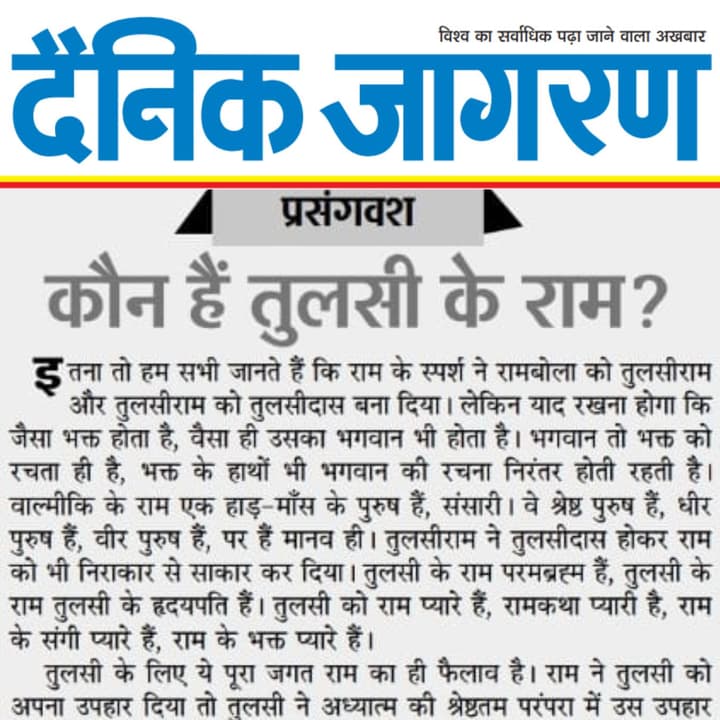
इस लेख में आचार्य प्रशांत ने दैनिक जागरण में तुलसीदास के राम के गहरे अर्थ और उनकी व्याख्या पर प्रकाश डाला है। उन्होंने बताया है कि राम न केवल एक ऐतिहासिक और धार्मिक व्यक्तित्व हैं, बल्कि एक जीवन की वास्तविकता और आदर्श का प्रतीक भी हैं। लेख में तुलसीदास के राम की भक्ति, प्रेम और उनकी जीवन दृष्टि को विस्तृत रूप में समझाया गया है, जो आज के समाज में भी प्रासंगिक है।

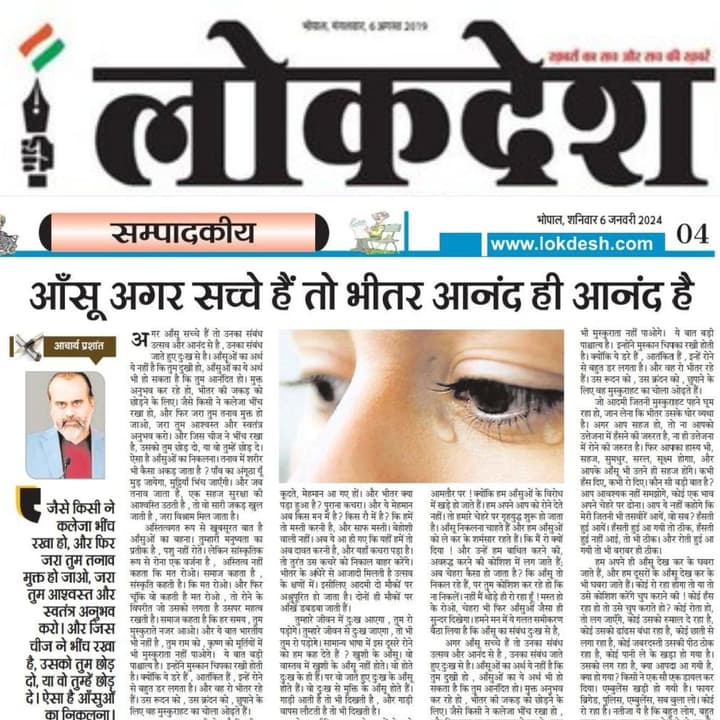
आचार्य प्रशांत ने लोकदेश में लिखा है कि जैसे किसी ने कलेजा भींच रखा हो, और फिर जरा तुम तनाव मुक्त हो जाओ, जरा तुम आश्वस्त और स्वतंत्र अनुभव करो। आंसू अगर सच्चे हों तो भीतर आनंद ही आनंद है। उन्होंने यह बताने का प्रयास किया है कि वास्तविक भावनाएं और सच्ची भावुकता ही हमें आंतरिक शांति और सुख प्रदान कर सकती हैं। सच्चे आंसू एक ऐसी स्थिति को दर्शाते हैं जहां दिल हल्का होता है और मन को गहरा संतोष मिलता है।