Acharya Prashant is a philosopher and author, an alumnus of IIT Delhi and IIM Ahmedabad. He is among the most widely read philosophical columnists writing in India today, with more than 190 published columns ranging across climate and consumption, elections and ideology, caste and religion, gender, education, geopolitics, technology, and the inner life.
What unifies this range is a single method: tracing every public crisis back to the unexamined self that produces it.
FOR COMMISSIONING EDITORS
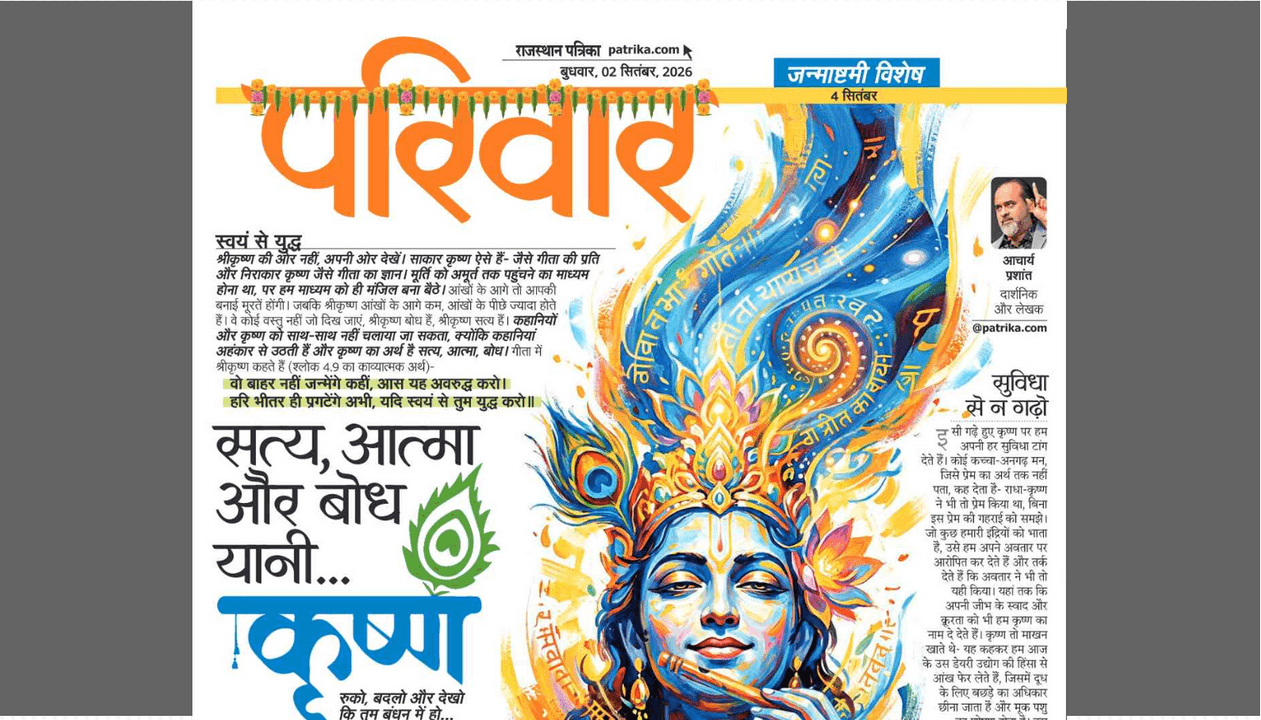
In this special Janmashtami feature published in Rajasthan Patrika, philosopher and author Acharya Prashant explains why the true Krishna is not an idol to be worshipped from a distance, but Truth, the Self, and Realization (Satya, Atma, Bodh) itself.

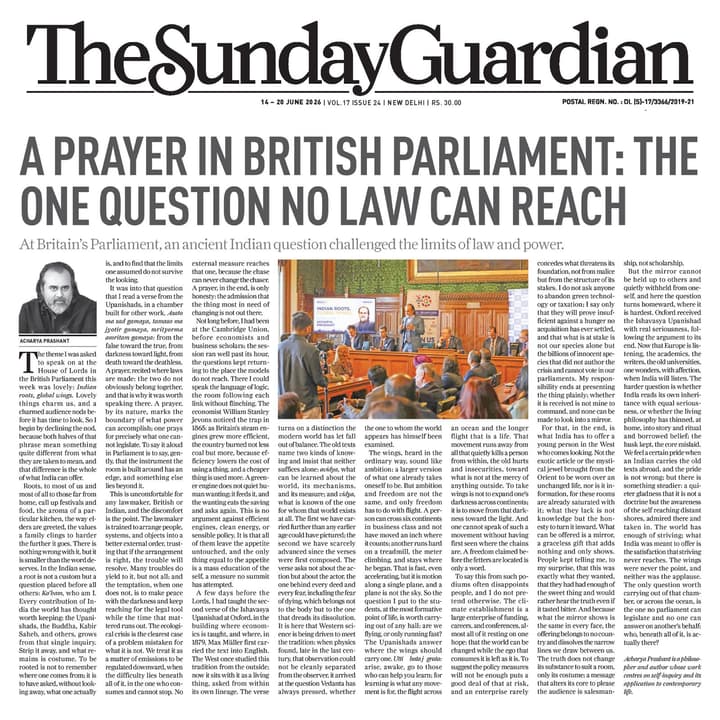
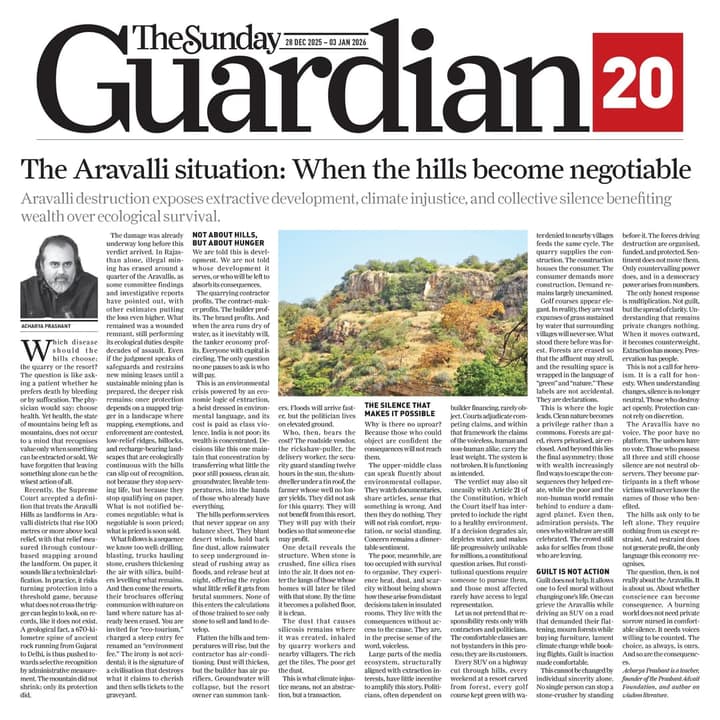
"The hills perform services that never appear on any balance sheet. They blunt desert winds, hold back fine dust, allow rainwater to seep underground instead of rushing away as floods, and release heat at night, offering the region what little relief it gets from brutal summers. None of this enters the calculations of those trained to see only stone to sell and land to develop."

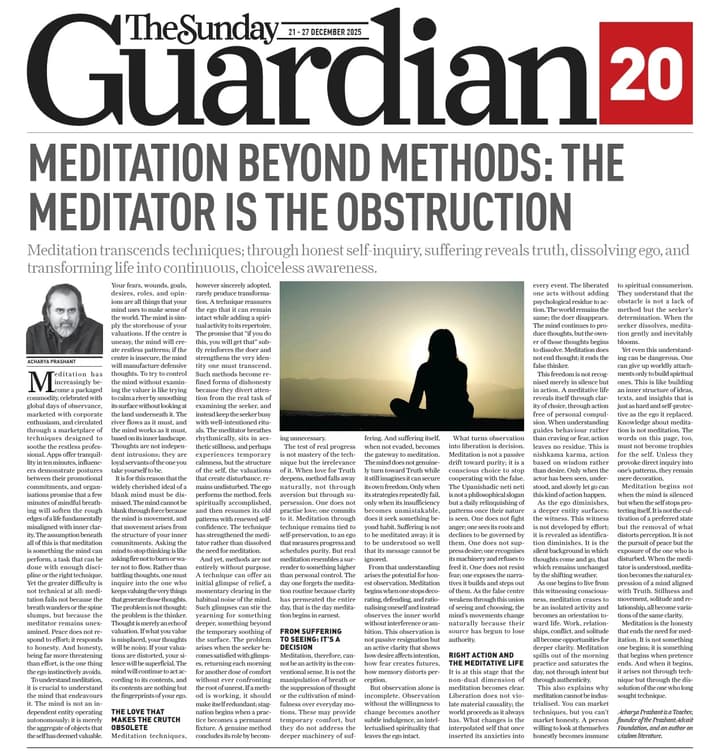
"Meditation techniques, however sincerely adopted, rarely produce transformation. A technique reassures the ego that it can remain intact while adding a spiritual activity to its repertoire. Such methods become refined forms of dishonesty because they divert attention from the real task of examining the seeker, and instead keep the seeker busy with well-intentioned rituals."

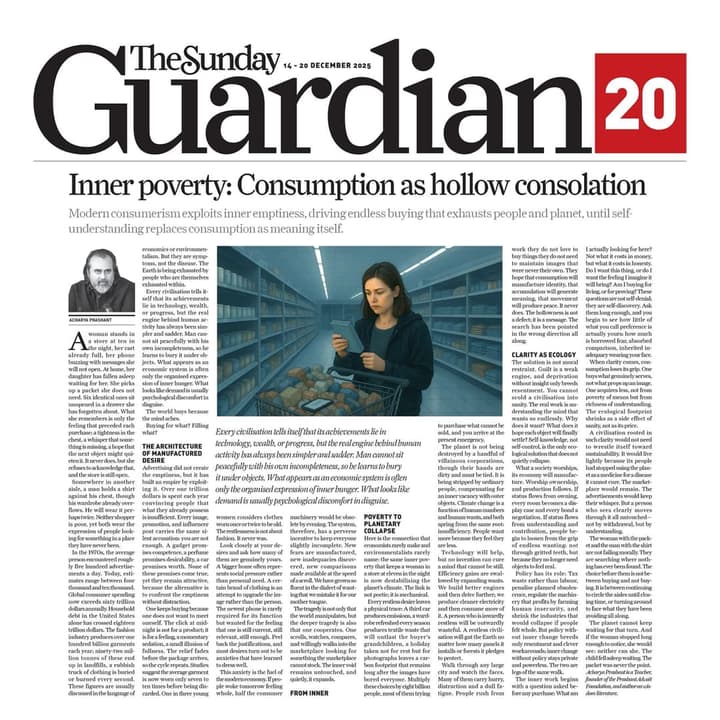
"The tragedy is not only that the world manipulates, the deeper tragedy is that one cooperates. One scrolls, watches, compares, and willingly walks into the marketplace looking for something the marketplace cannot stock. The inner void remains untouched, and quietly, it expands."
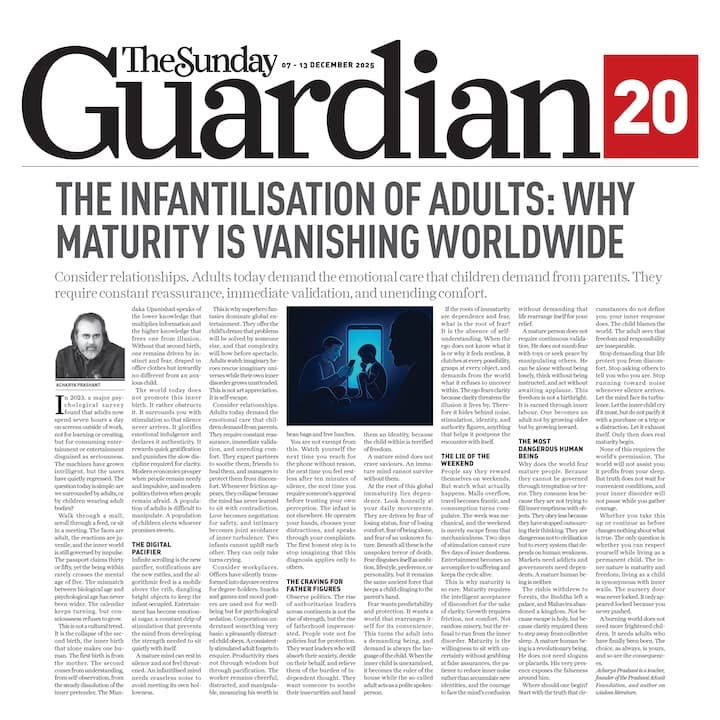
"Fear wants predictability and protection. It wants a world that rearranges itself for its convenience. This turns the adult into a demanding being, and demand is always the language of the child. When the inner child is unexamined, it becomes the ruler of the house while the so-called adult acts as a polite spokesperson."
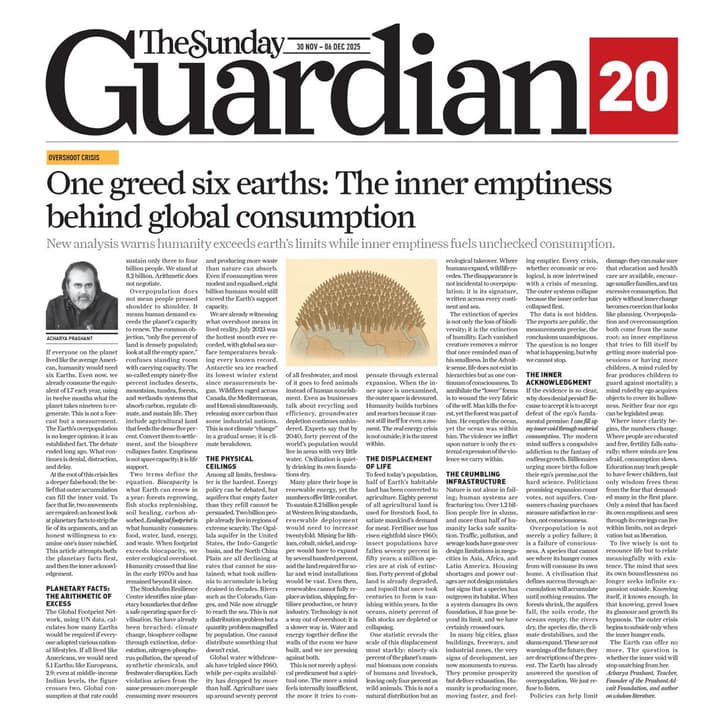
"Overpopulation is not merely a policy failure; it is a failure of consciousness. A species that cannot see where its hunger comes from will consume its own home. A civilisation that defines success through accumulation will accumulate until nothing remains. The forests shrink, the aquifers fall, the soils erode, the oceans empty, the rivers dry, the species die, the climate destabilises, and the slums expand. These are not warnings of the future; they are descriptions of the present."

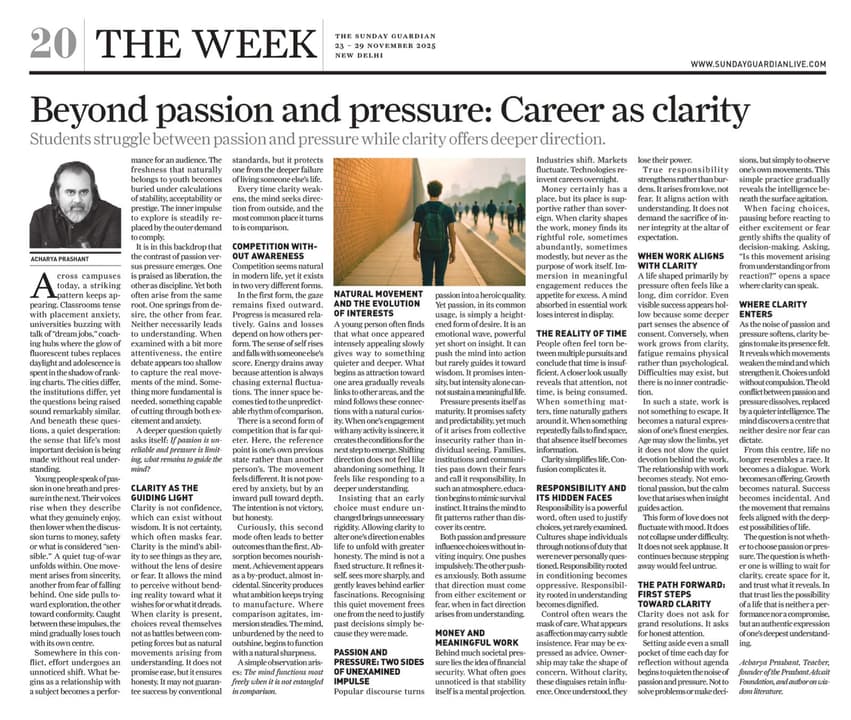
"Clarity is not confidence, which can exist without wisdom. It is not certainty, which often masks fear. Clarity is the mind’s ability to see things as they are, without the lens of desire or fear. It allows the mind to perceive without bending reality toward what it wishes for or what it dreads. When clarity is present, choices reveal themselves not as battles between competing forces but as natural movements arising from understanding."

"In a healthy life, work does not stand outside life as a burden. It is a major part of life itself. A suitable job is not one that forces a person to seek regular rehabilitation from it, but one that does not require such rehabilitation at all."

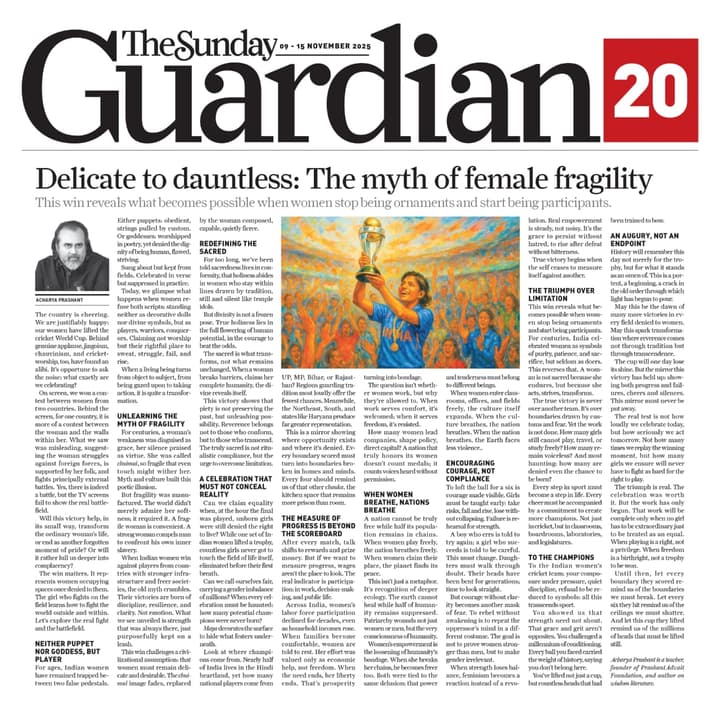
"This win reveals what becomes possible when women stop being ornaments and start being participants. For centuries, India celebrated women as symbols of purity, patience, and sacrifice, but seldom as doers. This reverses that. A woman is not sacred because she endures, but because she acts, strives, transforms."

"Technology can process information, but it cannot live life on our behalf. It cannot love for us, understand for us, or grow for us. To remember one’s ability for discretion is the essence of wisdom. If we neglect this inner development, our outer power will remain unearned, misused, and ultimately self-destructive. If we grow inwardly, then technology becomes a servant rather than a master, a means of liberation rather than destruction."

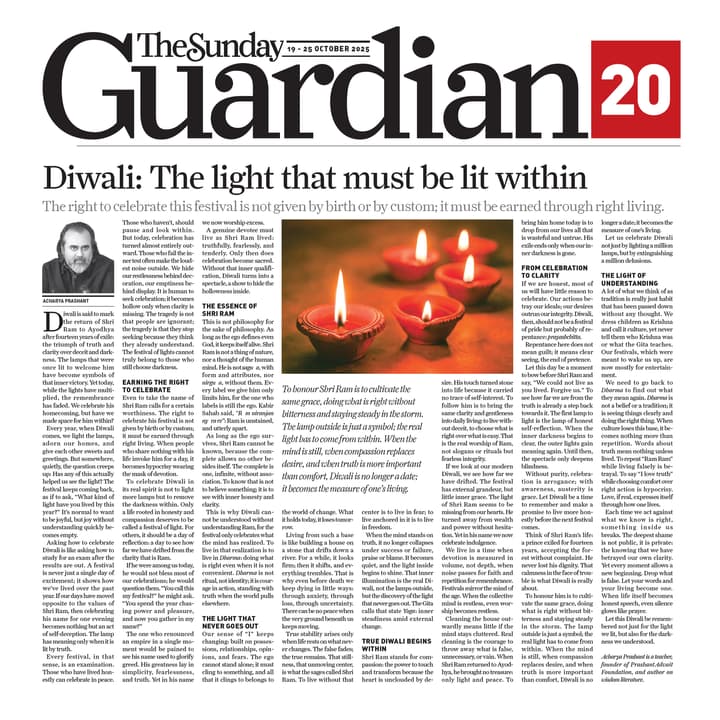
"To honour Shri Ram is to cultivate the same grace, doing what is right without bitterness and staying steady in the storm. The lamp outside is just a symbol; the real light has to come from within. When the mind is still, and when truth is more important than comfort, Diwali is no longer a date; it becomes the measure of one’s living."

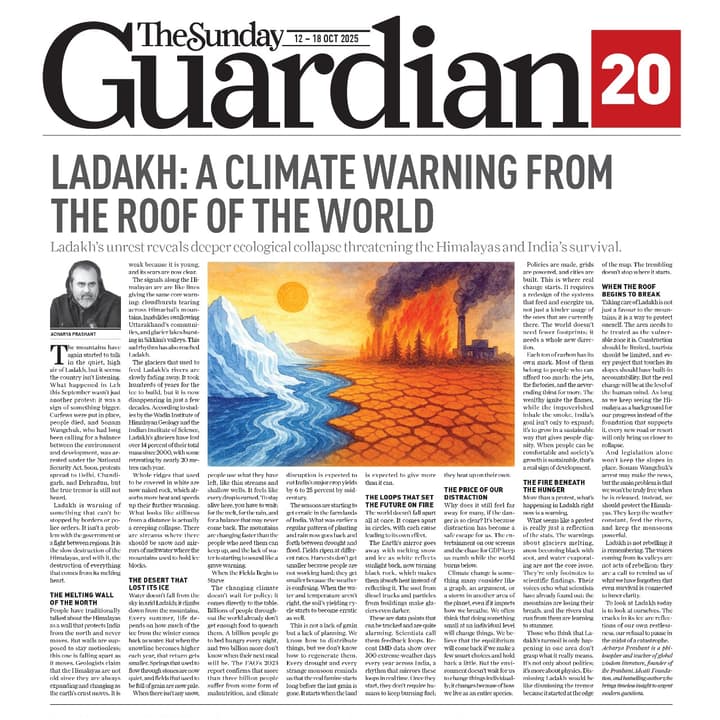
"Those who think that Ladakh's turmoil is only happening in one area don't grasp what it really means. It’s not only about politics; it's more about physics. Dismissing Ladakh would be like dismissing the tremor because it started at one edge of the map. The trembling doesn't stop where it starts."

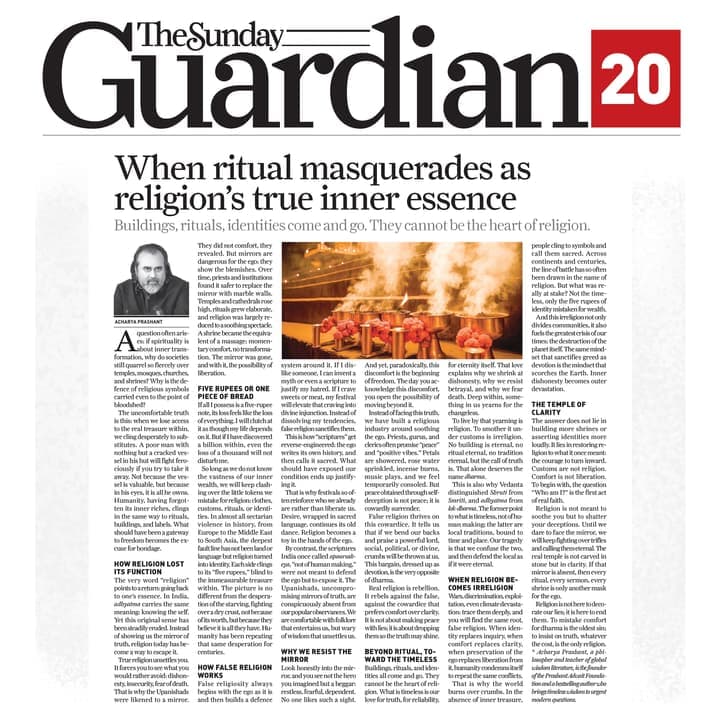
"Buildings, rituals, and identities all come and go. They cannot be the heart of religion. What is timeless is our love for truth, for reliability, for eternity itself. That love explains why we shrink at dishonesty, why we resist betrayal, and why we fear death. Deep within, something in us yearns for the changeless."

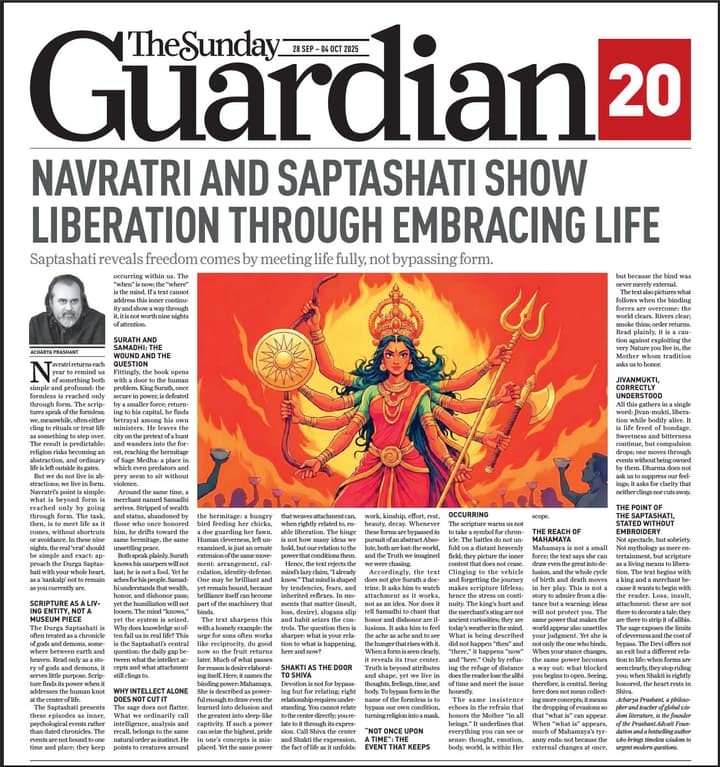
"Navratri’s point is simple: what is beyond form is reached only by going through form. The task, then, is to meet life as it comes, without shortcuts or avoidance. In these nine nights, the real ‘vrat’ should be simple and exact: approach the Durga Saptashati with your whole heart, as a ‘sankalp’ not to remain as you currently are."

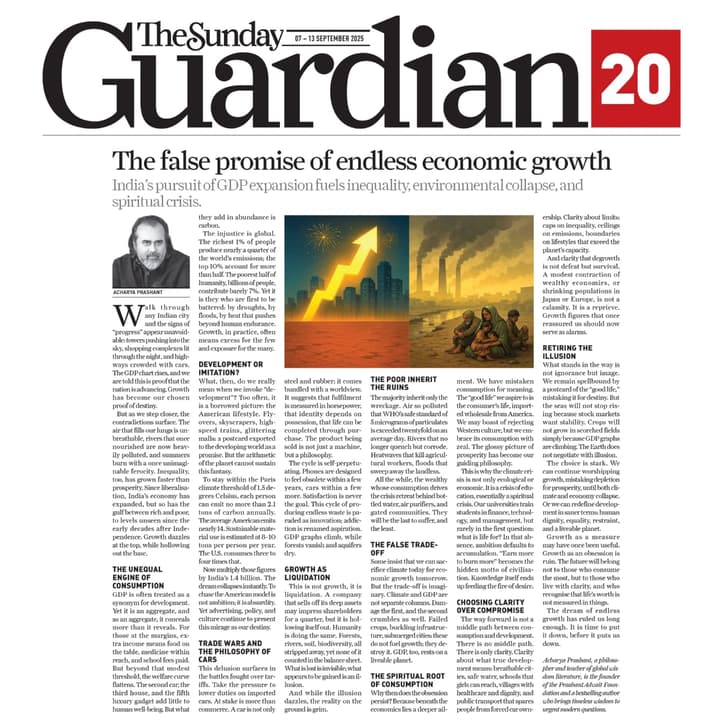
"Growth as a measure may have once been useful. Growth as an obsession is ruin. The future will belong not to those who consume the most, but to those who live with clarity, and who recognise that life’s worth is not measured in things."

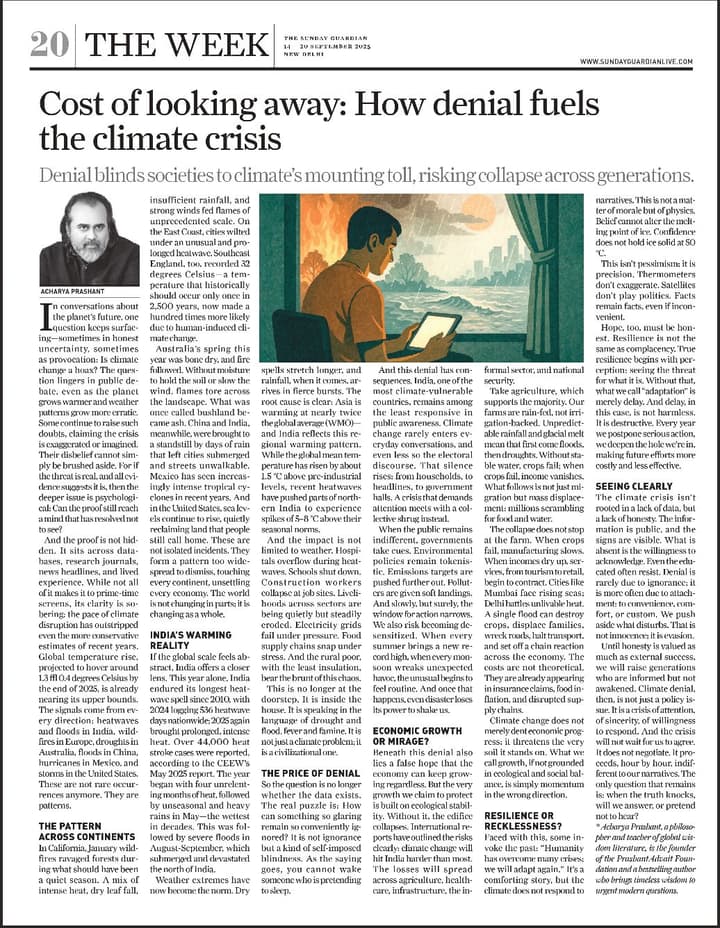
"Until honesty is valued as much as external success, we will raise generations who are informed but not awakened. Climate denial, then, is not just a policy issue. It is a crisis of attention, of sincerity, of willingness to respond. And the crisis will not wait for us to agree. It does not negotiate. It proceeds, hour by hour, indifferent to our narratives. The only question that remains is: when the truth knocks, will we answer, or pretend not to hear?"

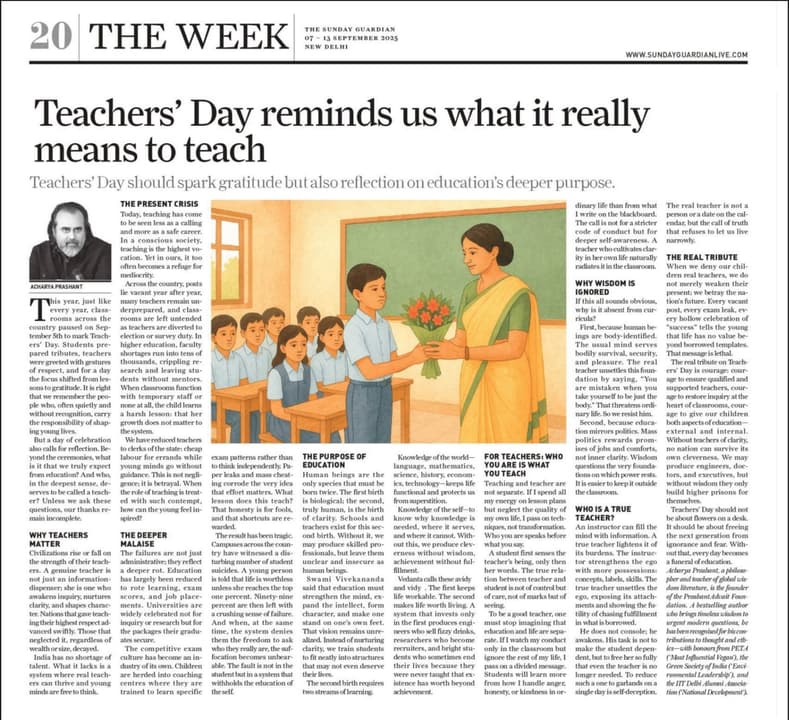
"Teachers’ Day should spark gratitude but also reflection on education’s deeper purpose."

"India’s future, and humanity’s, will not be decided by how many targets we meet on paper or how many green labels we parade. It will be decided by whether we can look at ourselves without disguise. The measure of sincerity is not in reaching milestones early, but in reducing the harm we continue to cause."

"Integrity does not mean balancing desire and duty; it means seeing they were never separate. True integrity means no division between oneself and the world. One who lives from clarity does not need to 'add on' responsibility; their very living becomes responsible."

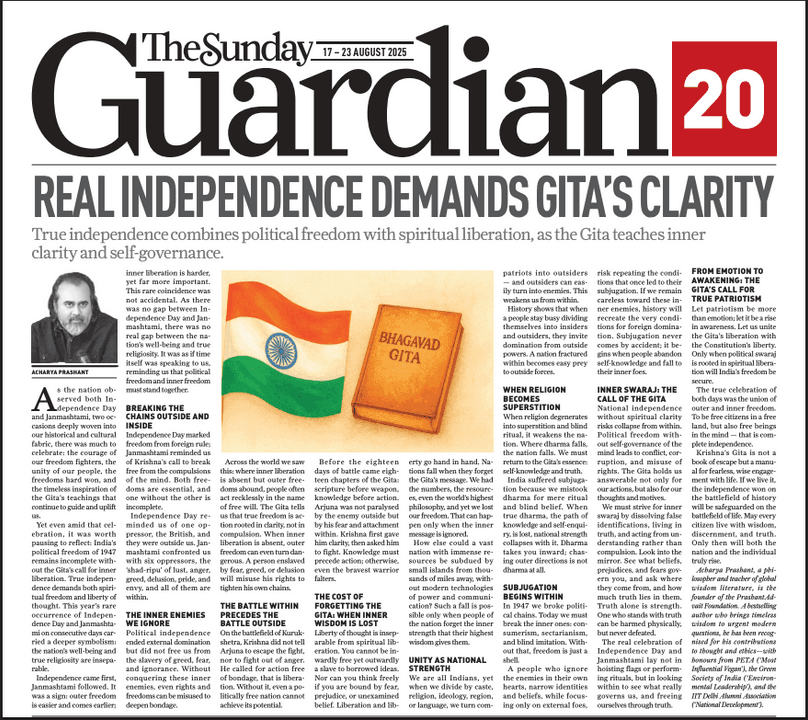
True independence combines political freedom with spiritual liberation, as the Gita teaches inner clarity and self-governance.

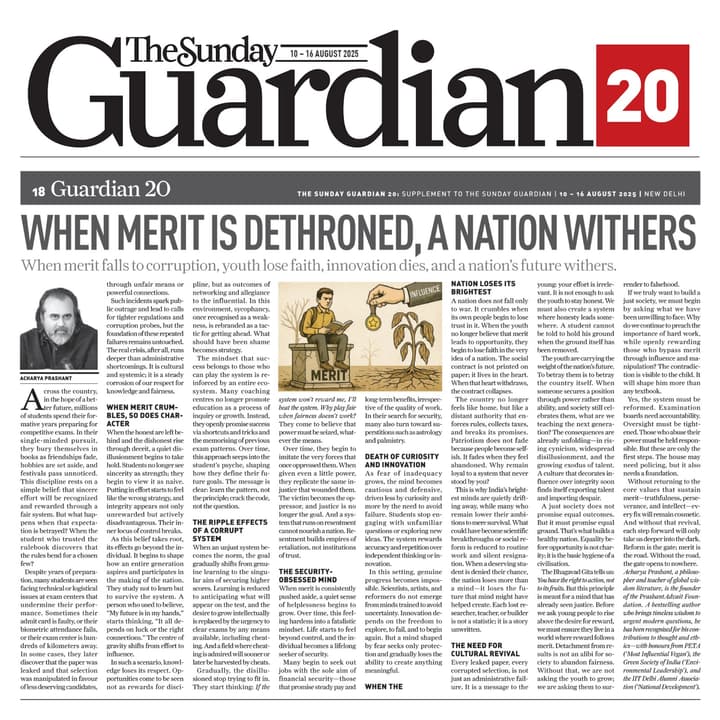
"A nation does not fall only to war. It crumbles when its own people begin to lose trust in it. When the youth no longer believe that merit leads to opportunity, they begin to lose faith in the very idea of a nation. The social contract is not printed on paper; it lives in the heart. When that heart withdraws, the contract collapses."

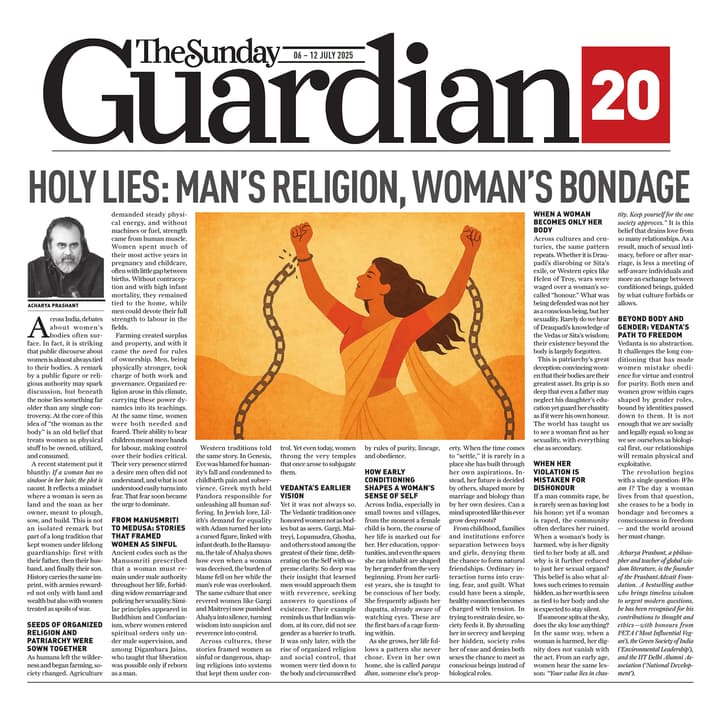
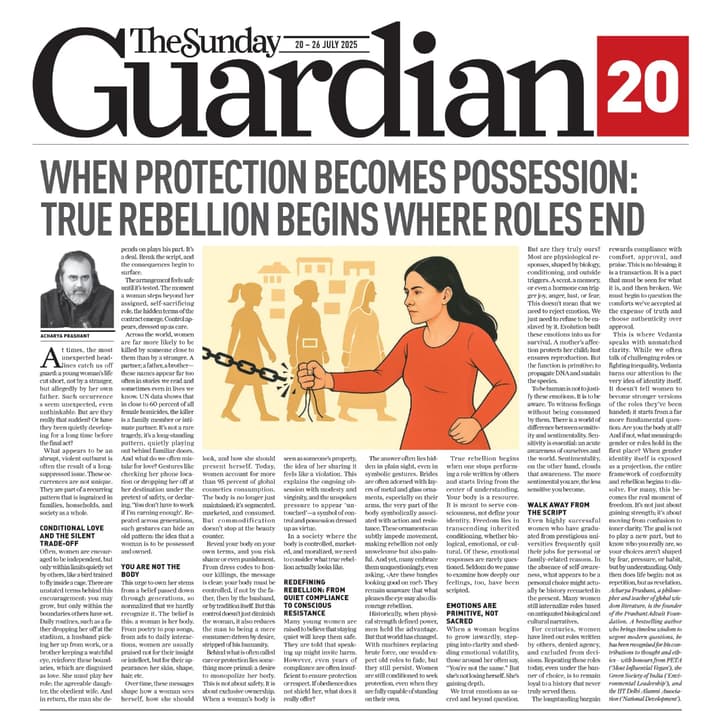
"A remark by a public figure or religious authority may spark discussion, but beneath the noise lies something far older than any single controversy. At the core of this idea of ‘the woman as the body’ is an old belief that treats women as physical stuff to be owned, utilized, and consumed."

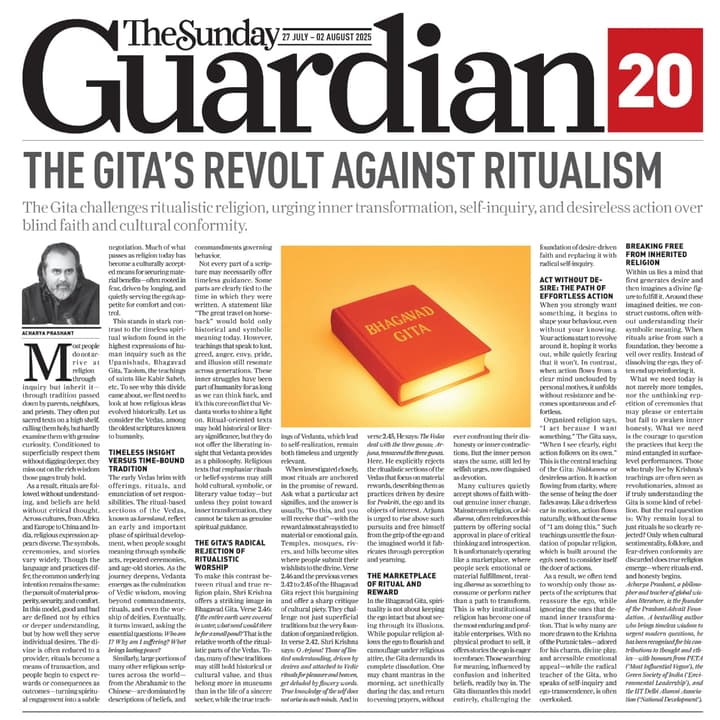
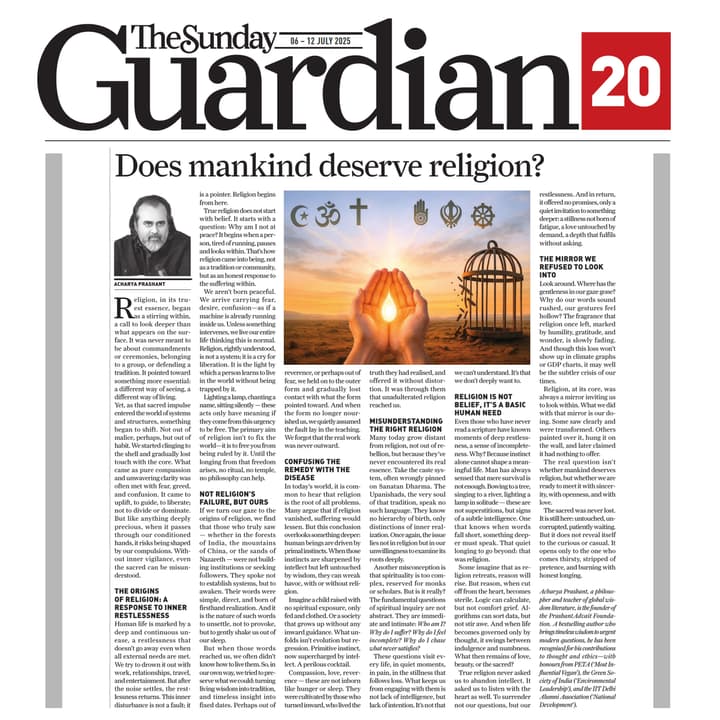
"Most people do not arrive a t religion through inquiry but inherit it— through tradition passed down by parents, neighbors, and priests. They often put sacred texts on a high shelf, calling them holy, but hardly examine them with genuine curiosity. "

"True rebellion begins when one stops performing a role written by others and starts living from the center of understanding. Your body is a resource. It is meant to serve consciousness, not define your identity. Freedom lies in transcending inherited conditioning, whether biological, emotional, or cultural."

"True religion does not start with belief. It starts with a question: Why am I not at peace? It begins when a person, tired of running, pauses and looks within. That’s how religion came into being, not as a tradition or community, but as an honest response to the suffering within."

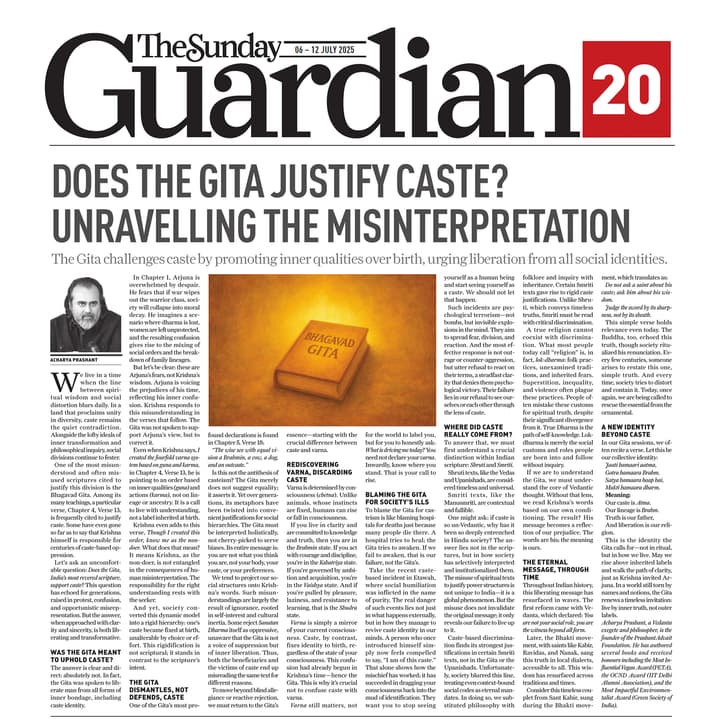
"The Gita challenges caste by promoting inner qualities over birth, urging liberation from all social identities We live in a time when the line between spiritual wisdom and social distortion blurs daily. In a land that proclaims unity in diversity, caste remains the quiet contradiction."

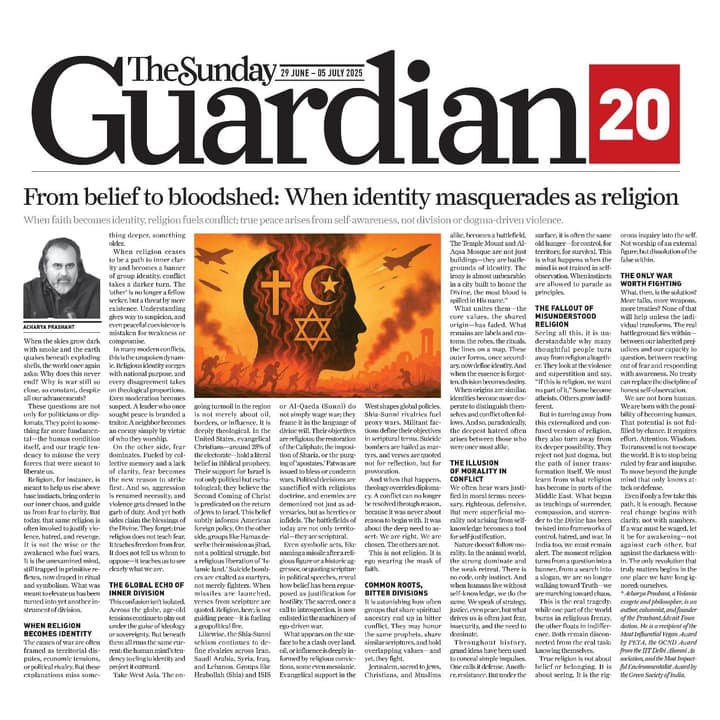
"When the skies grow dark with smoke and the earth quakes beneath exploding shells, the world once again asks: Why does this never end? Why is war still so close, so constant, despite all our advancements? These questions are not only for politicians or diplomats. "

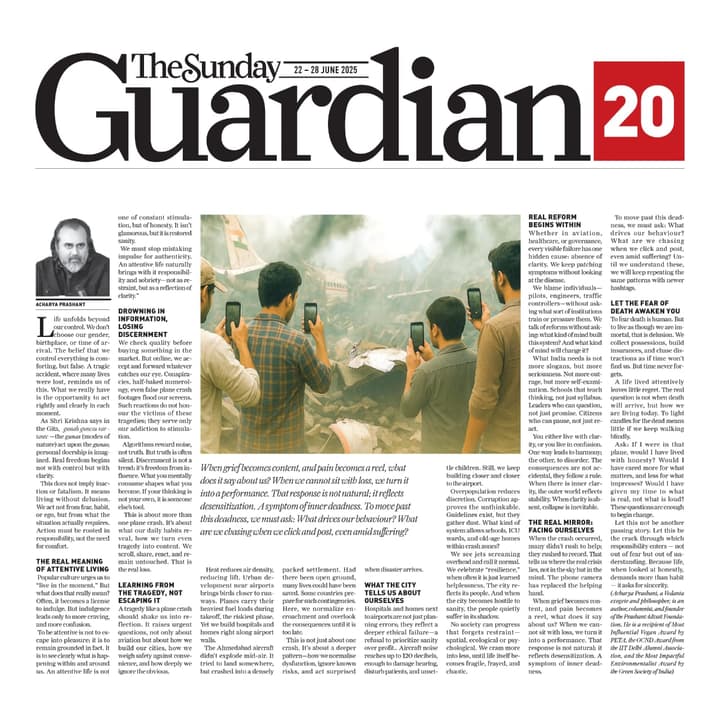
"Life unfolds beyond our control. We don’t choose our gender, birthplace, or time of arrival. The belief that we control everything is comforting, but false. A tragic accident, where many lives were lost, reminds us of this."

"Every now and then, a disturbing news story grabs the nation’s attention – one that seems too extraordinarily gruesome to be real, yet involves seemingly ordinary people. We would like to call such incidents as aberrations. "

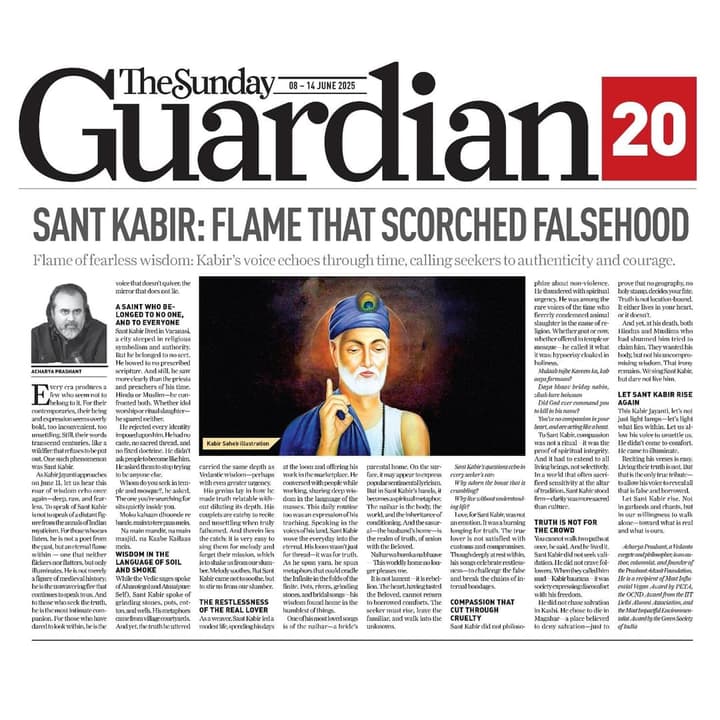
"Every era produces a few who seem not to belong to it. For their contemporaries, their being and expression seems overly bold, too inconvenient, too unsettling. Still, their words transcend centuries, like a wildfire that refuses to be put out."

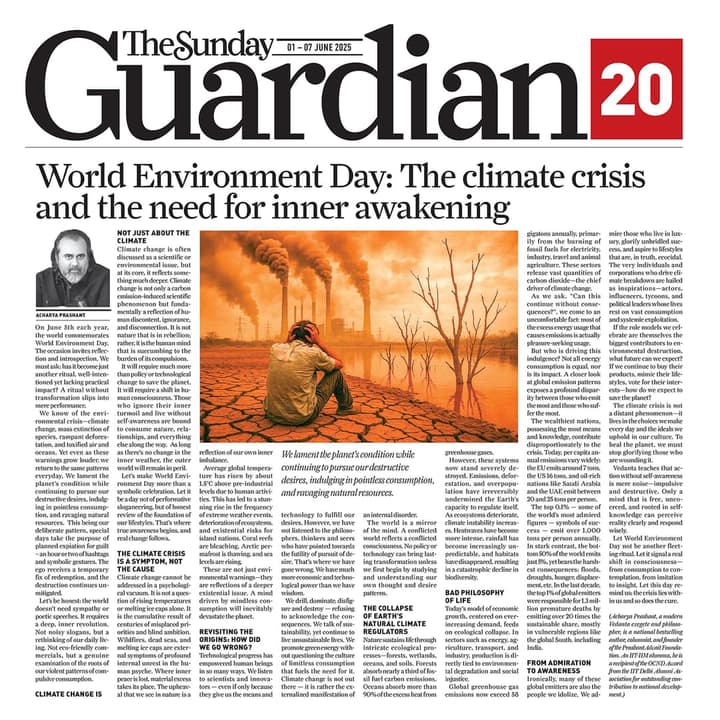
"On June 5th each year, the world commemorates World Environment Day. The occasion invites reflection and introspection. We must ask: has it become just another ritual, well-intentioned yet lacking practical impact?"

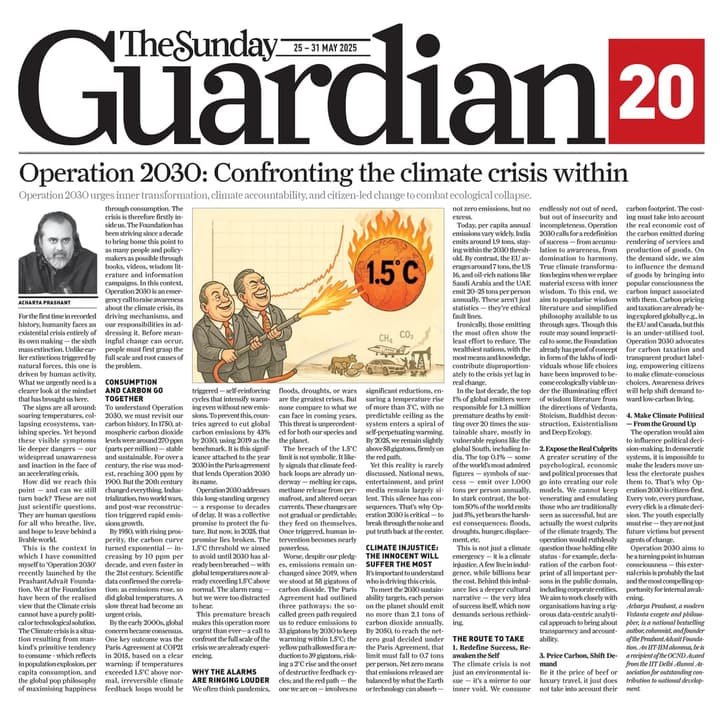
"For the first time in recorded history, humanity faces an existential crisis entirely of its own making — the sixth mass extinction. Unlike earlier extinctions triggered by natural forces, this one is driven by human activity."

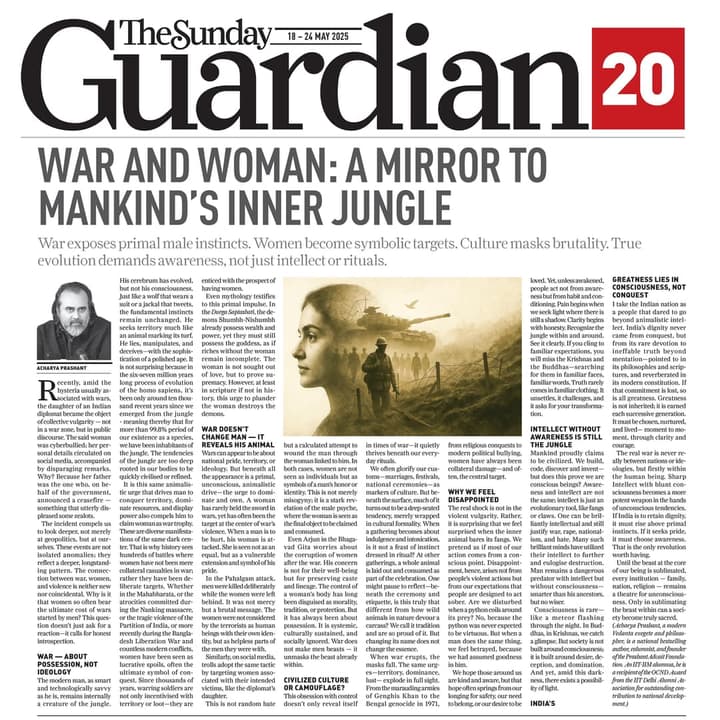
"Recently, amid the hysteria usually associated with wars, the daughter of an Indian diplomat became the object of collective vulgarity — not in a war zone, but in public discourse."

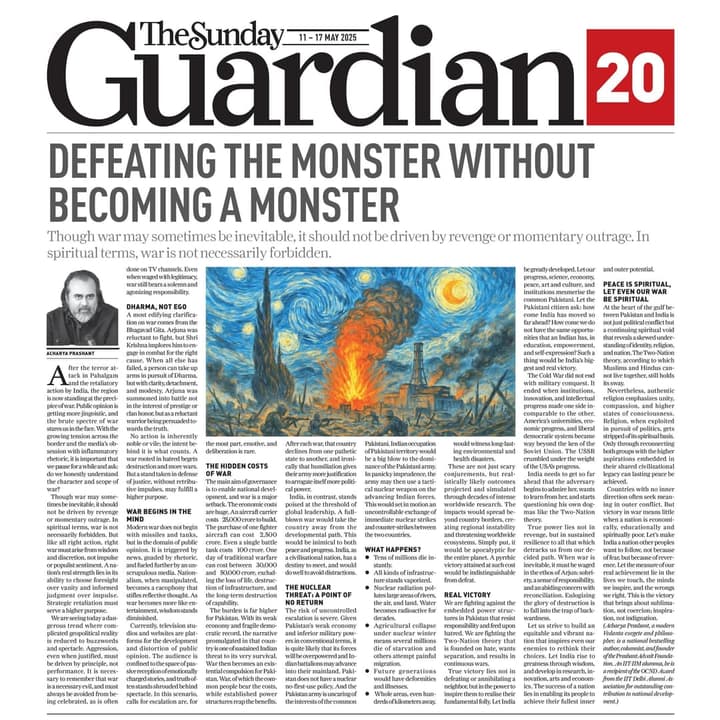
"After the terror attack in Pahalgam and the retaliatory action by India, the region is now standing at the precipice of war. Public opinion is getting more jingoistic, and the brute spectre of war stares us in the face."

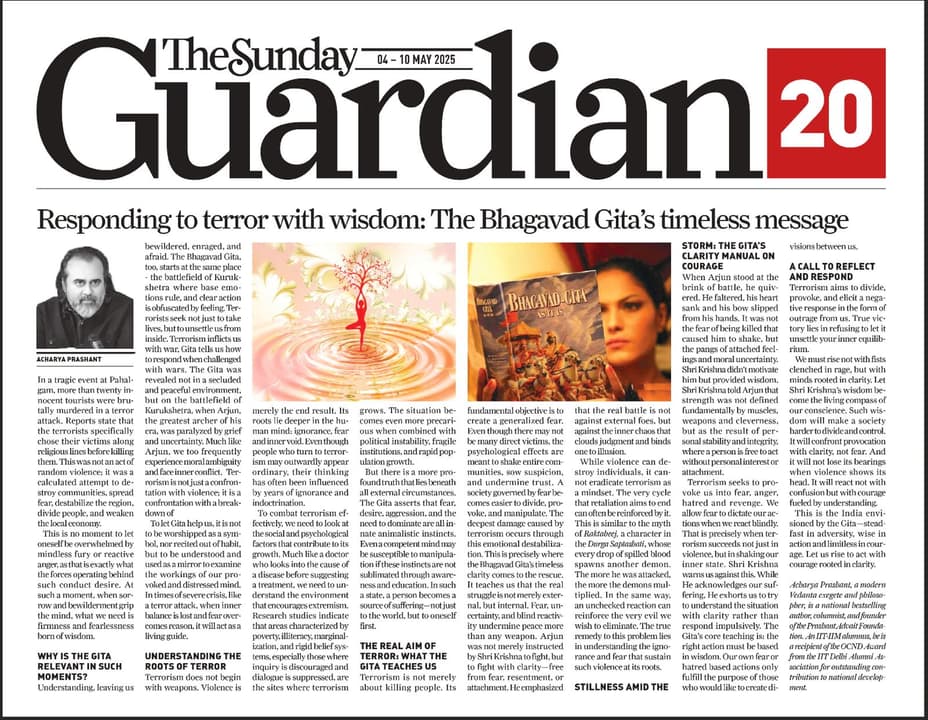
"In a tragic event at Pahalgam, more than twenty innocent tourists were brutally murdered in a terror attack. Reports state that the terrorists specifically chose their victims along religious lines before killing them."

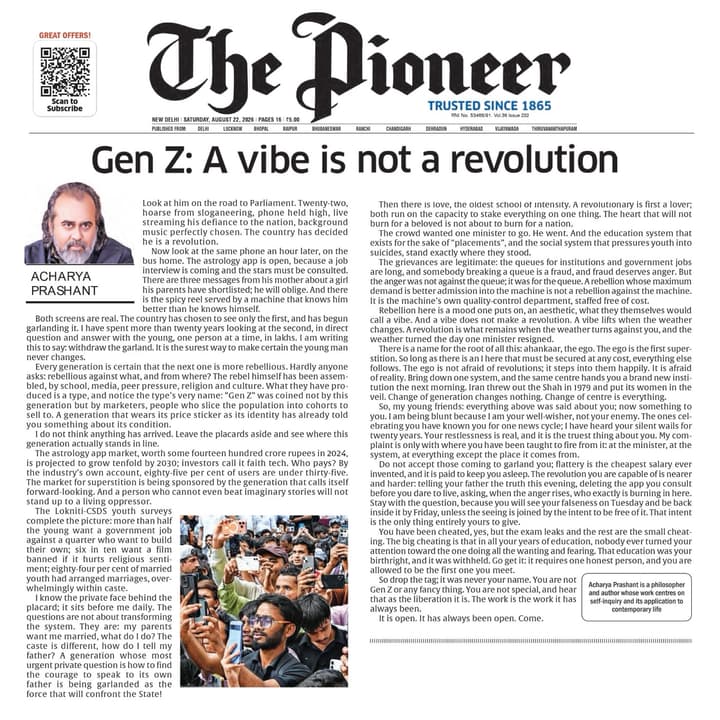
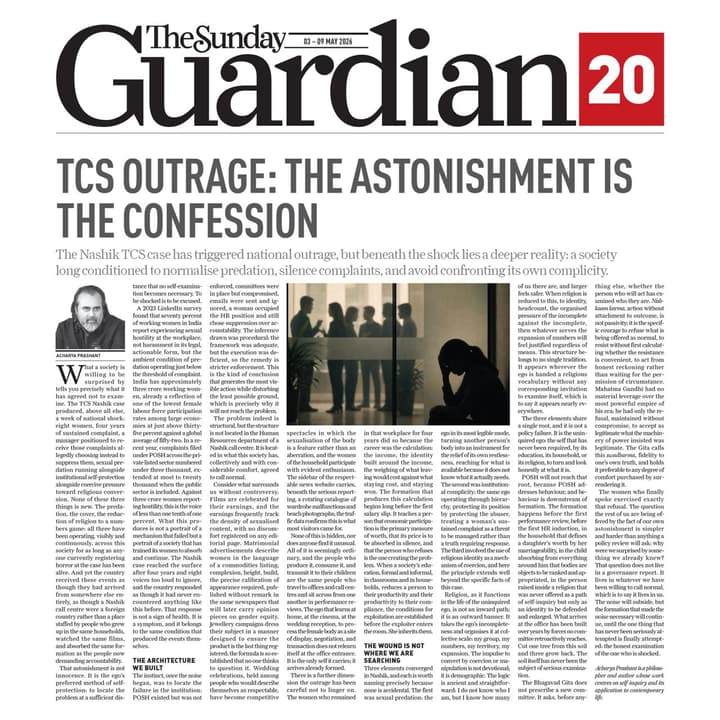
"These things are not new. The predation, the cover, the reduction of religion to a numbers game: all three have been operating, visibly and continuously, across this society for as long as anyone currently registering horror at the case has been alive. And yet the country received these events as though they had arrived from somewhere else entirely. That astonishment is not innocence. It is the ego’s preferred method of self-protection: to locate the problem at a sufficient distance that no self-examination becomes necessary. To be shocked is to be excused."

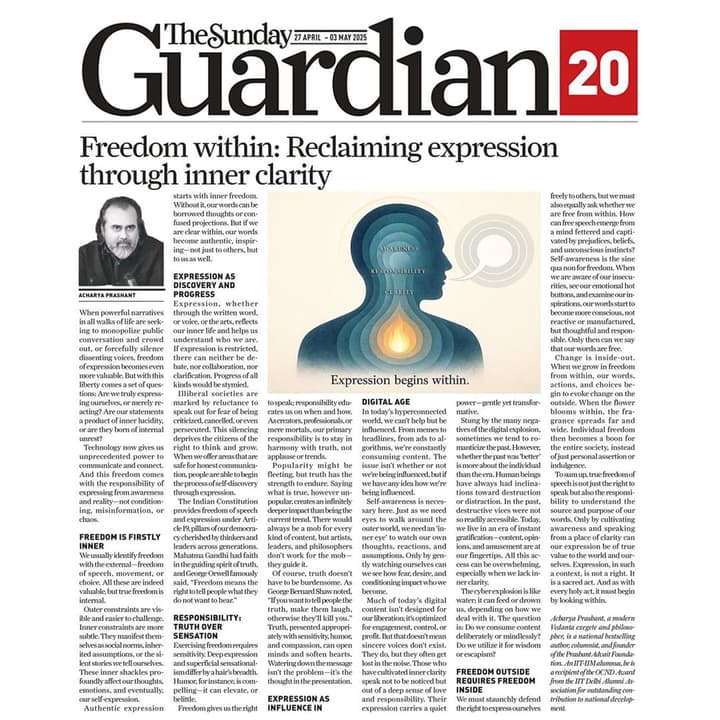
"When powerful narratives in all walks of life are seeking to monopolize public conversation and crowd out, or forcefully silence dissenting voices, freedom of expression becomes even more valuable."

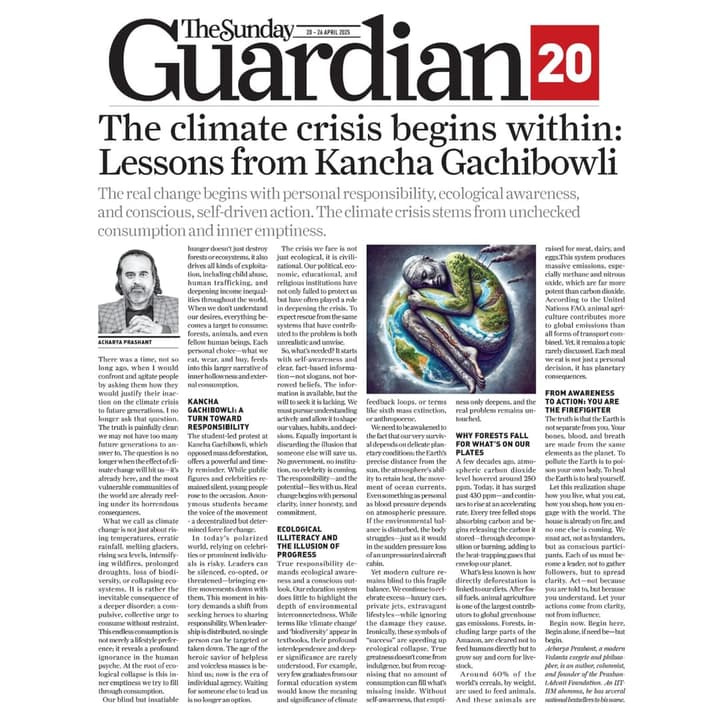
"There was a time, not so long ago, when I would confront and agitate people by asking them how they would justify their inaction on the climate crisis to future generations. I no longer ask that question."

"Cleanliness has traditionally been tied to order and discipline, usually showing up in the most obvious ways: a tidy home, a spotless office, or a neatly kept public space. We’ve come to associate these things with civility and a sense of social responsibility."

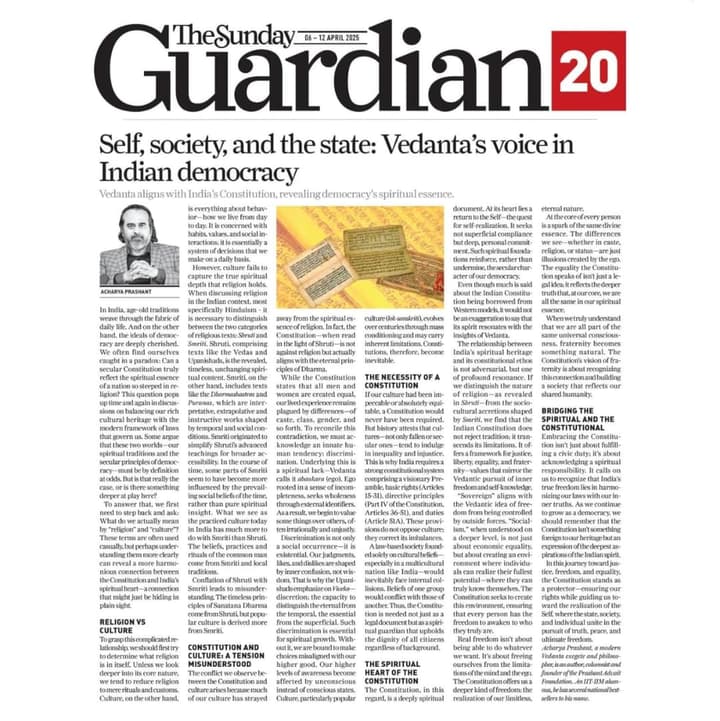
"The Constitution, in this regard, is a deeply spiritual document. At its heart lies a return to the Self—the quest for self-realization. It seeks not superficial compliance but deep, personal commitment. Such spiritual foundations reinforce, rather than undermine, the secular character of our democracy."

"Where do we currently stand on climate change? We are seeing catastrophic long-term shifts in temperature and weather patterns, driven by human activities such as burning fossil fuels, deforestation, and industrialization."

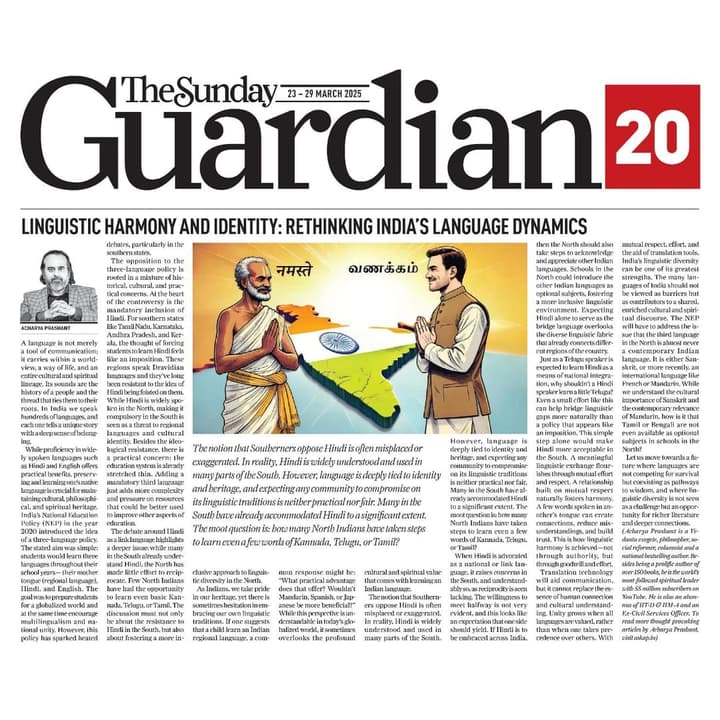
"A language is not merely a tool of communication; it carries within a worldview, a way of life, and an entire cultural and spiritual lineage. Its sounds are the history of a people and the thread that ties them to their roots. In India we speak hundreds of languages, and each one tells a unique story with a deep sense of belonging."

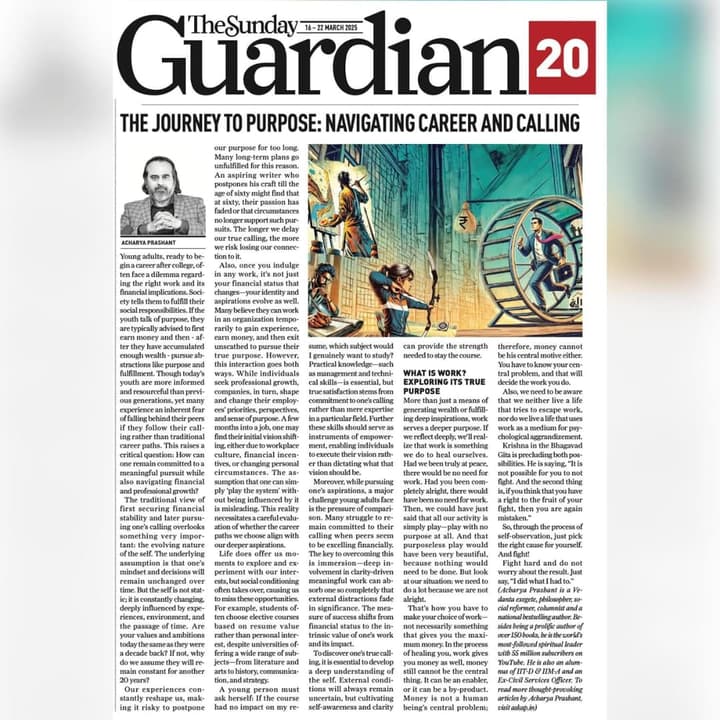
"Young adults, ready to begin a career after college, often face a dilemma regarding the right work and its financial implications. Society tells them to fulfill their social responsibilities."

"Delimitation is the process of redrawing the boundaries of territorial constituencies in a state for the Lok Sabha and Legislative Assemblies to ensure fair representation. Since populations grow and shift over time, this process helps maintain balanced representation so that each MP or MLA represents roughly the same number of people."

"Women’s Day is approaching, and soon discussions will emerge across various platforms. New slogans will be coined, and policy tweaks will be grandly announced."

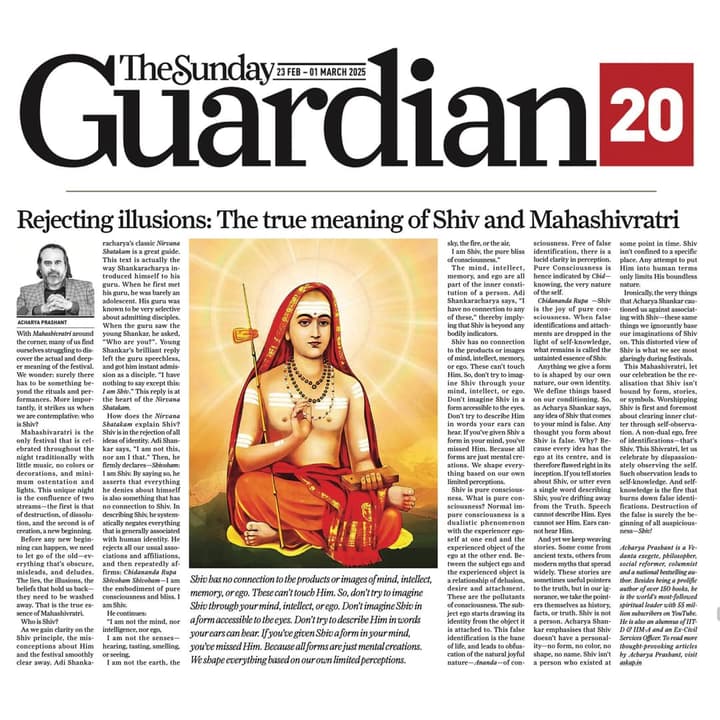
"With Mahashivratri around the corner, many of us find ourselves struggling to discover the actual and deeper meaning of the festival. We wonder: surely there has to be something beyond the rituals and performances. More importantly, it strikes us when we are contemplative: who is Shiv?"

"The debate on working hours has intensified recently. Initially, it was suggested that Indians should work 70 hours a week, and recently, the chairman of a major organisation proposed 90-hour workweeks."

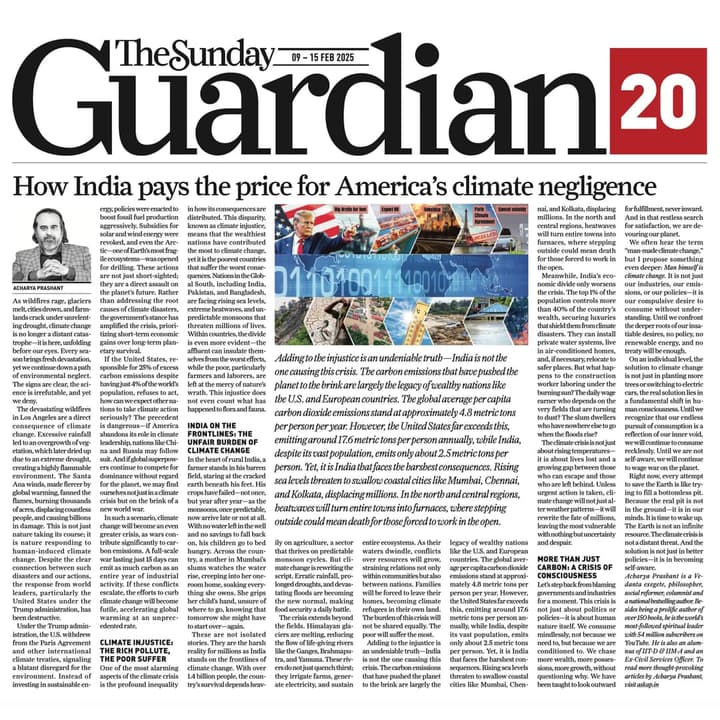
"As wildfires rage, glaciers melt, cities drown, and farmlands crack under unrelenting drought, climate change is no longer a distant catastrophe—it is here, unfolding before our eyes."

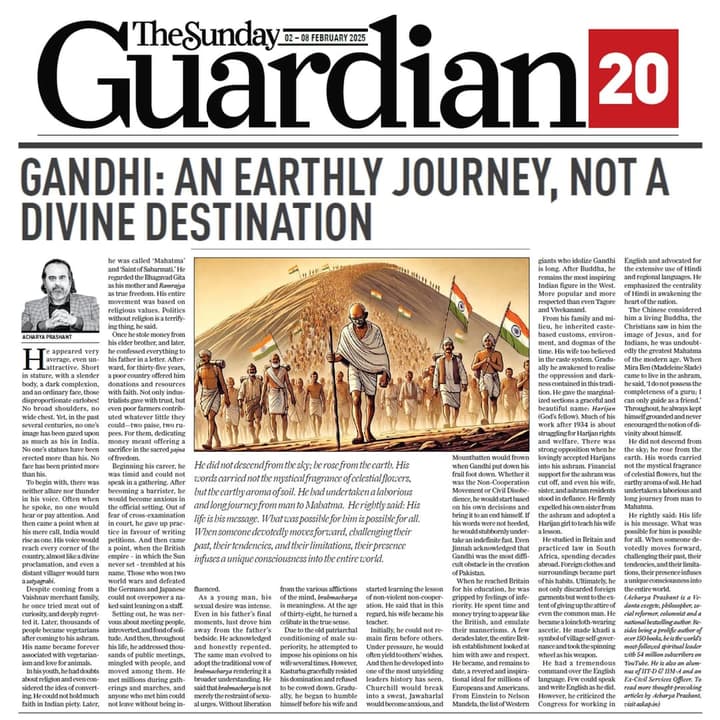
"He appeared very average, even unattractive. Short in stature, with a slender body, a dark complexion, and an ordinary face, those disproportionate earlobes! No broad shoulders, no wide chest."

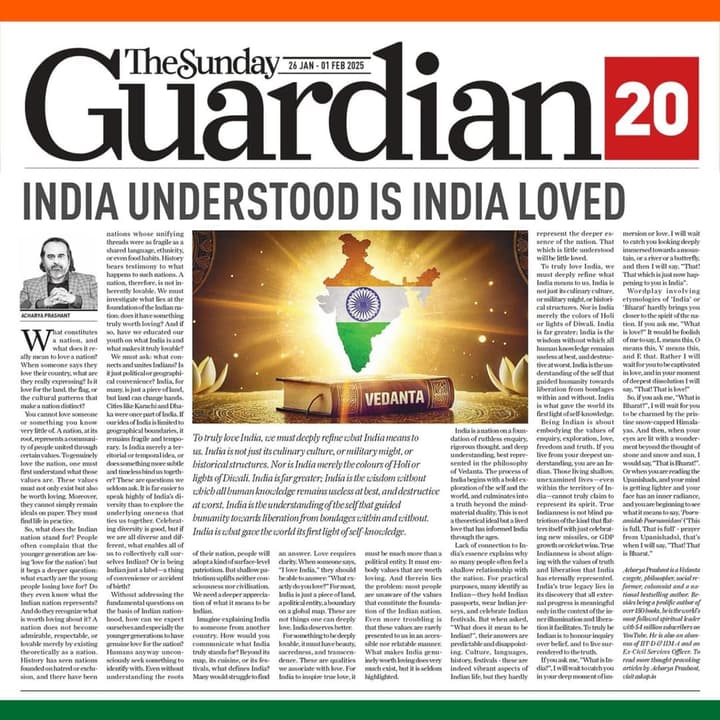
"What constitutes a nation, and what does it really mean to love a nation? When someone says they love their country, what are they really expressing? Is it love for the land, the flag, or the cultural patterns that make a nation distinct?"

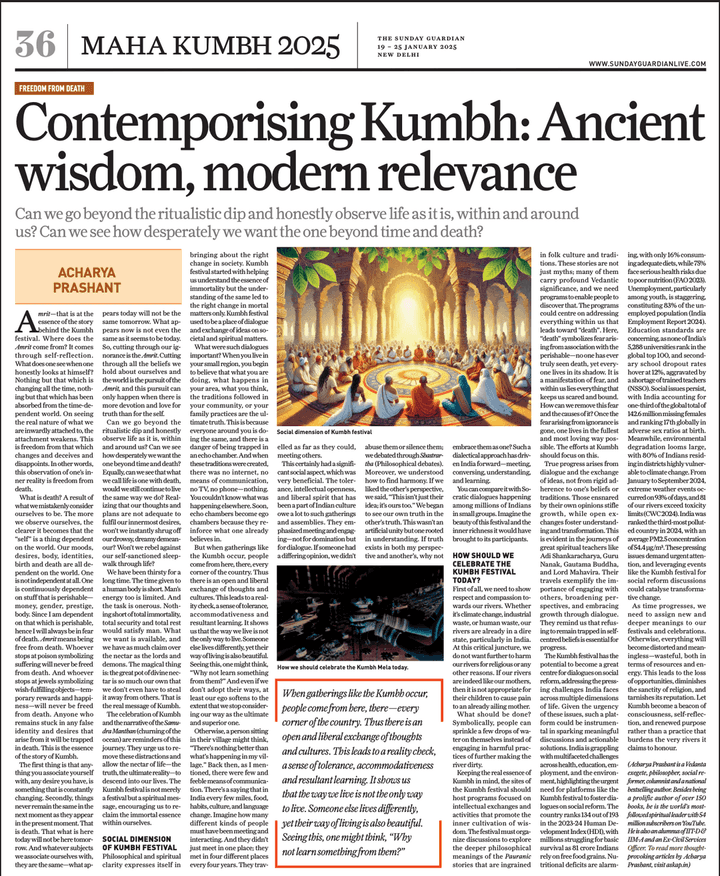
"Amrit—that is at the essence of the story behind the Kumbh festival. Where does the Amrit come from? It comes through self-reflection."

"Another Kumbh festival is here. There are several ancient stories behind Kumbh. If the stories are taken merely as tales or folklore, then religion risks becoming merely traditional ritualism."

"Our society embodies a stark contrast between its proclaimed life-affirmative ideals and the underlying suffering that prevails. Relationships, especially marriage, are often transactional and materialistic arrangements rather than expressions of love and understanding."

"In honor of Swami Vivekananda’s birthday, celebrated as Youth Day, seminars, meetings, and resolutions around youth empowerment take centerstage. The discussions surround Swami Ji’s feat in taking Vedanta to the world, yet the immense struggles and challenges he faced often go unacknowledged."

"According to the recent Global State of Connections report, a quarter of the world’s population, around 1.92 billion, felt ‘lonely’ or ‘very lonely’. Research indicates that loneliness is closely linked to depression, anxiety, substance abuse, heart disease, and a shortened lifespan."