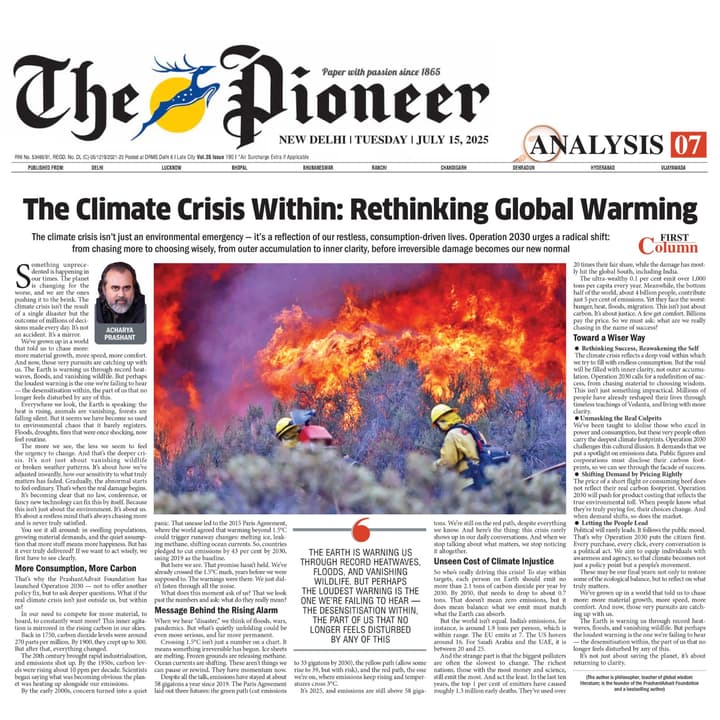
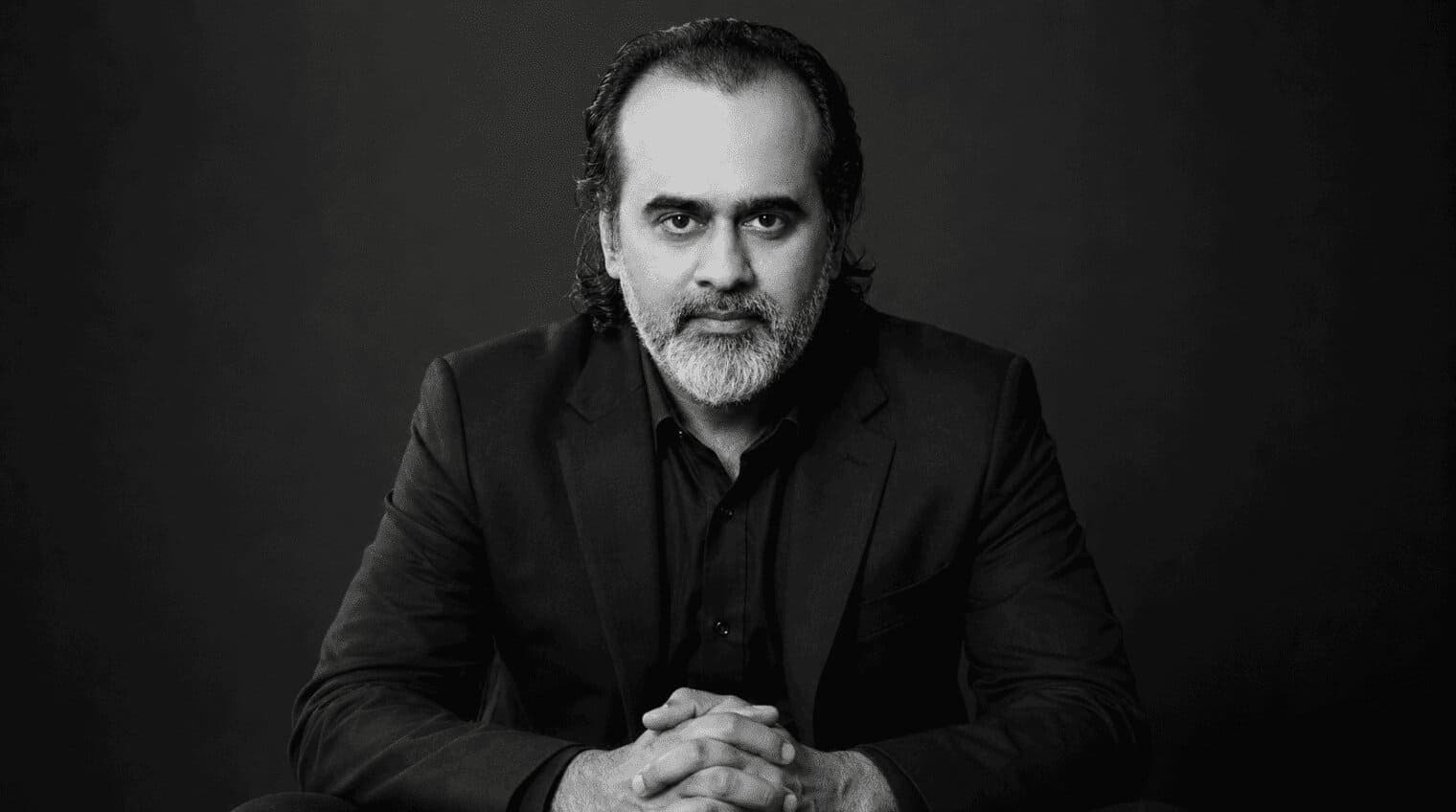
Acharya Prashant is a philosopher and author, an alumnus of IIT Delhi and IIM Ahmedabad. He is among the most widely read philosophical columnists writing in India today, with more than 190 published columns ranging across climate and consumption, elections and ideology, caste and religion, gender, education, geopolitics, technology, and the inner life.
What unifies this range is a single method: tracing every public crisis back to the unexamined self that produces it.
FOR COMMISSIONING EDITORS
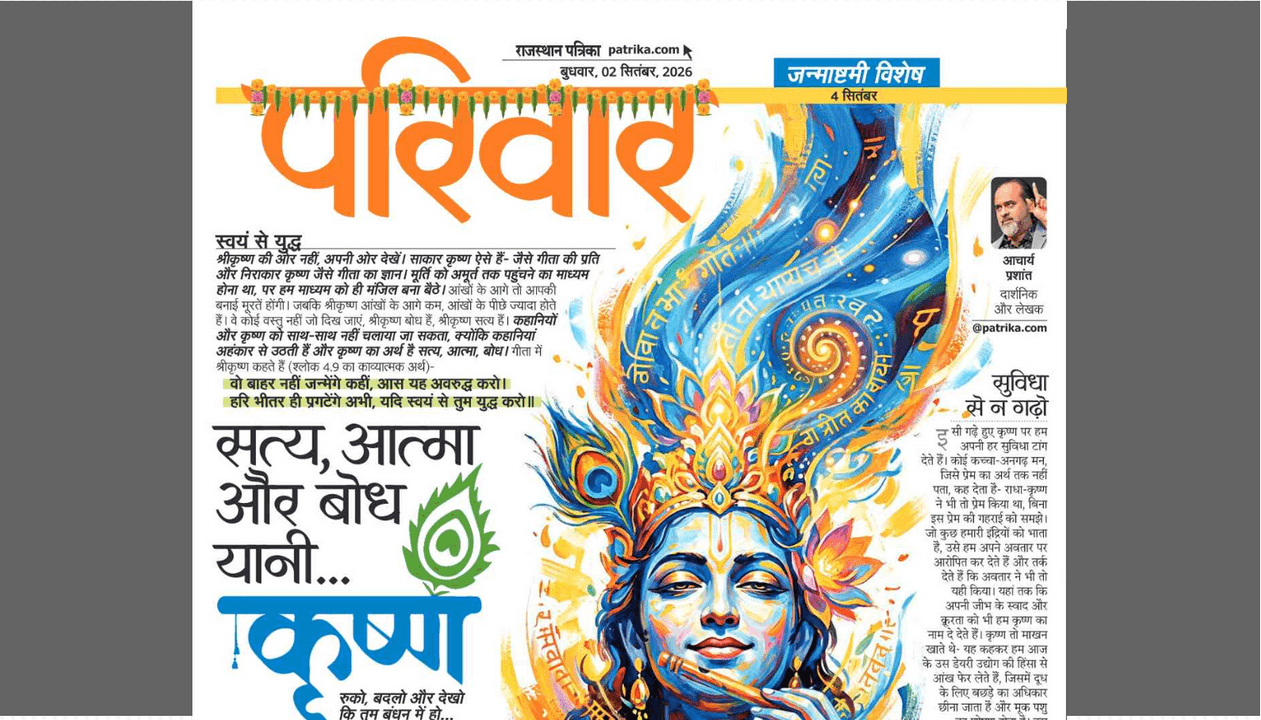
In this special Janmashtami feature published in Rajasthan Patrika, philosopher and author Acharya Prashant explains why the true Krishna is not an idol to be worshipped from a distance, but Truth, the Self, and Realization (Satya, Atma, Bodh) itself.

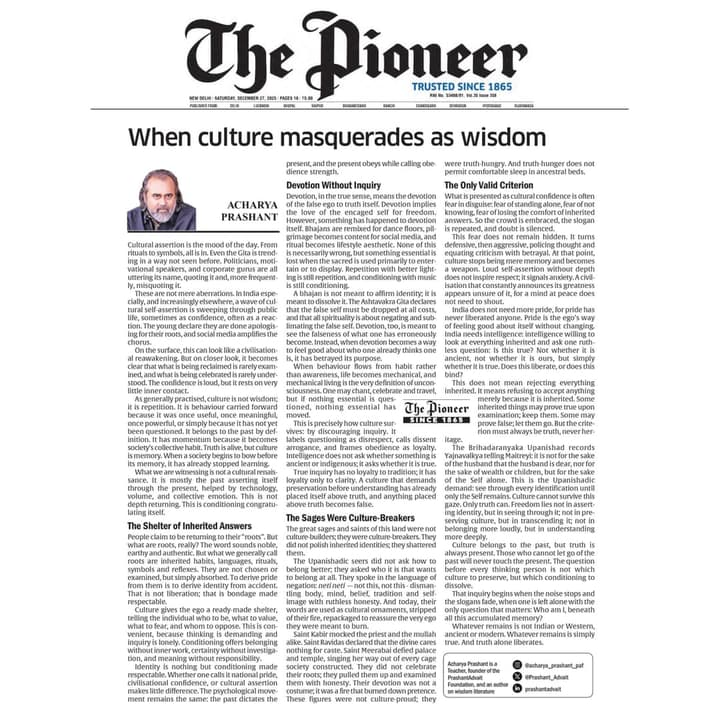
"As generally practised, culture is not wisdom; it is repetition. It is behaviour carried forward because it was once useful, once meaningful, once powerful, or simply because it has not yet been questioned. It belongs to the past by definition. It has momentum because it becomes society’s collective habit."

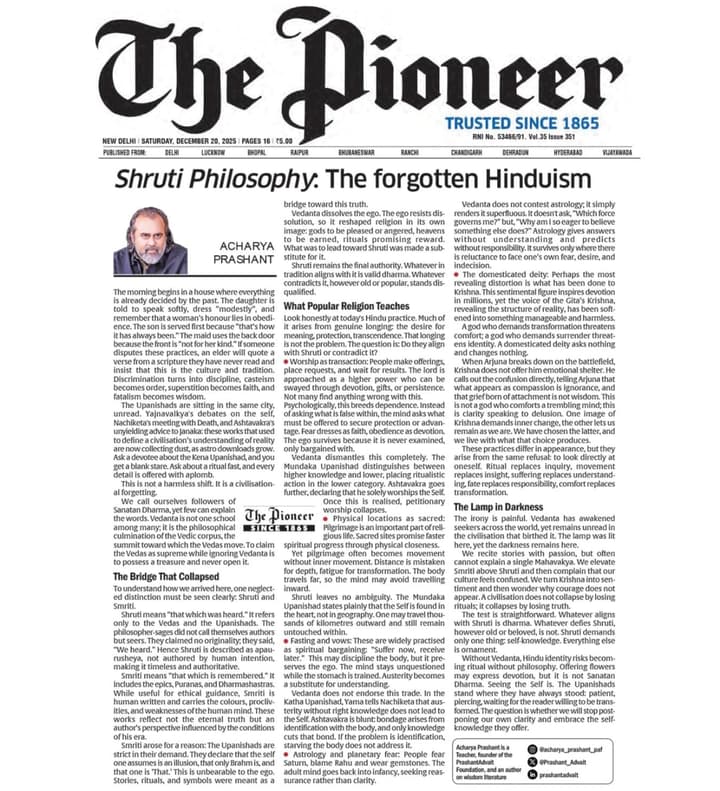
"The test is straightforward. Whatever aligns with Shruti is dharma. Whatever defies Shruti, however old or beloved, is not. Shruti demands only one thing: self-knowledge. Everything else is ornamental."

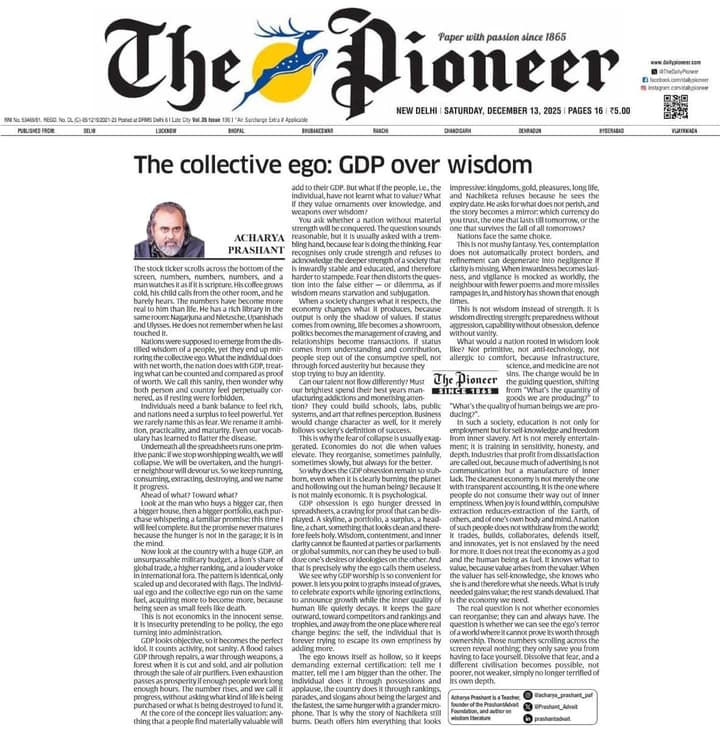
“When a society changes what it respects, the economy changes what it produces, because output is only the shadow of values. If status comes from owning, life becomes a showroom, politics becomes the management of craving, and relationships become transactions.”

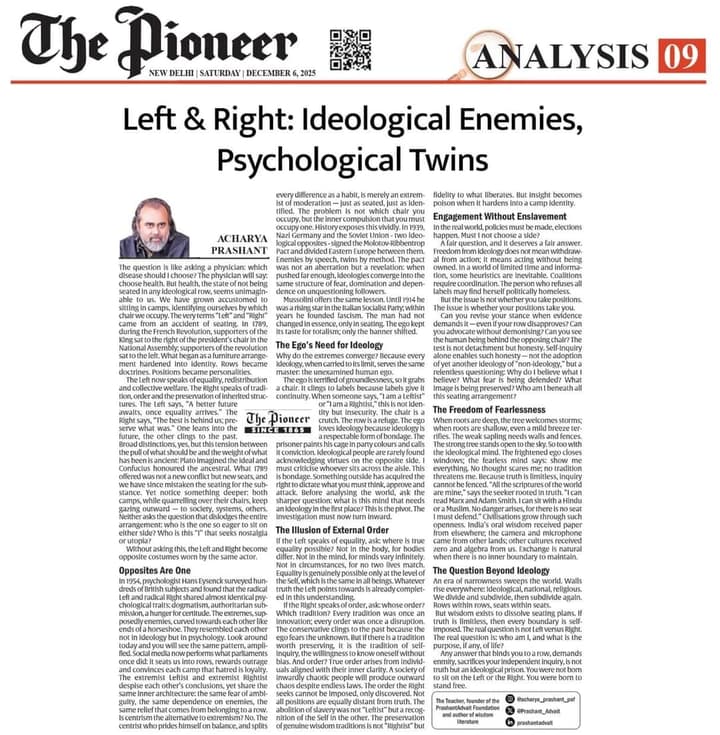
"The ego is terrified of groundlessness, so it grabs a chair. It clings to labels because labels give it continuity. When someone says, ‘I am a Leftist’ or ‘I am a Rightist,’ this is not identity but insecurity. The chair is a crutch. The row is a refuge. The ego loves ideology because ideology is a respectable form of bondage. The real question is not Left versus Right. You were not born to sit on the Left or the Right. You were born to stand free."

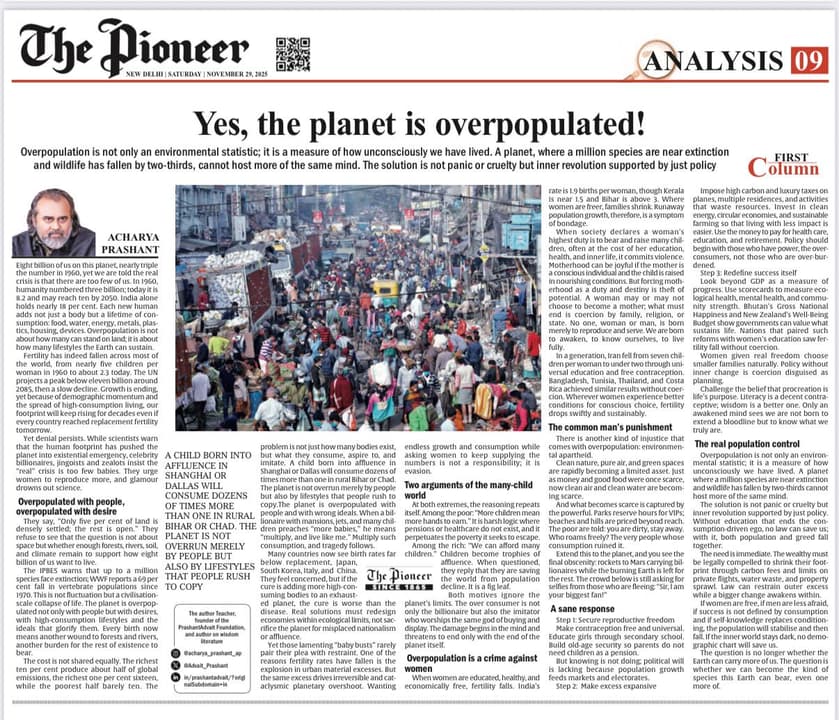
"Yes, the planet is overpopulated, but not merely with human bodies. It is overpopulated with high‑consumption lifestyles and with the ideals that glorify them. The way we are living, every additional human birth often means one more wound to the forests, the rivers, the climate, and the other species that must make space for us. When one more human is added in this prevailing culture of ignorant consumption, the rest of existence has one more burden to carry."

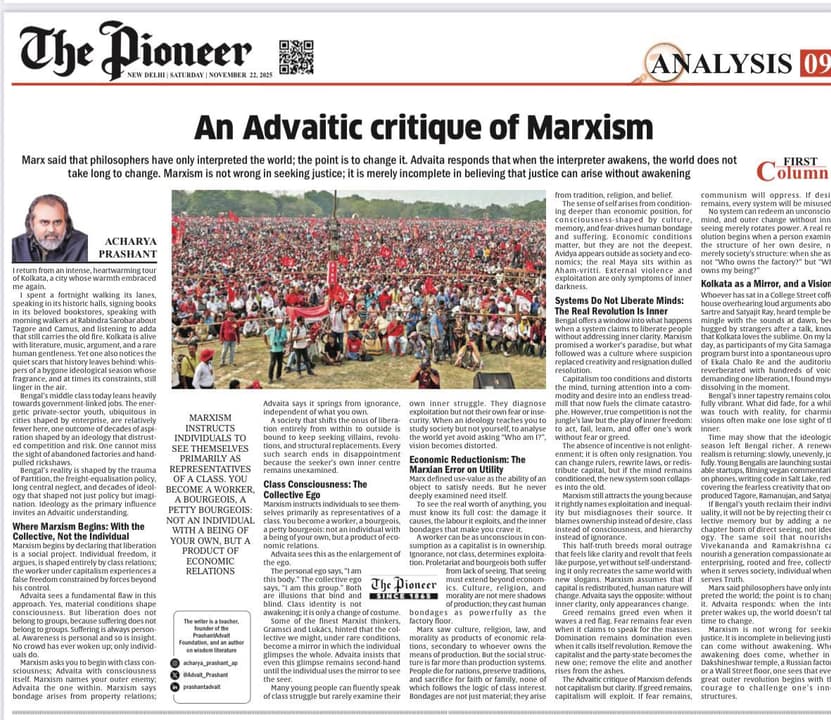
"Marxism is not wrong for seeking justice. It is incomplete in believing justice can come without awakening. When awakening does come, whether in a Kolkata adda, a Dakshineshwar temple, a Russian factory, a Wall Street floor, or a village panchayat, one sees that every great outer revolution begins when one has the courage to challenge one’s inner structures."

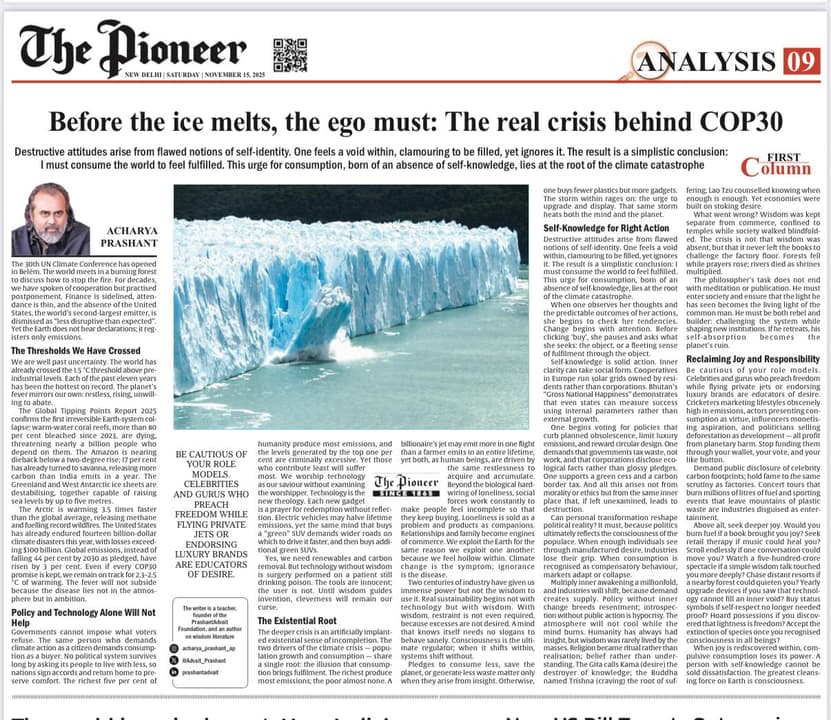
"Governments cannot enforce what people do not inwardly accept. The same person who demands climate action as a citizen demands consumption as a buyer. The voter and the consumer are the same person, unwilling to live with less. No political system survives long by asking its people to sacrifice comfort. So governments sign accords, issue statements, and return home to protect normalcy."

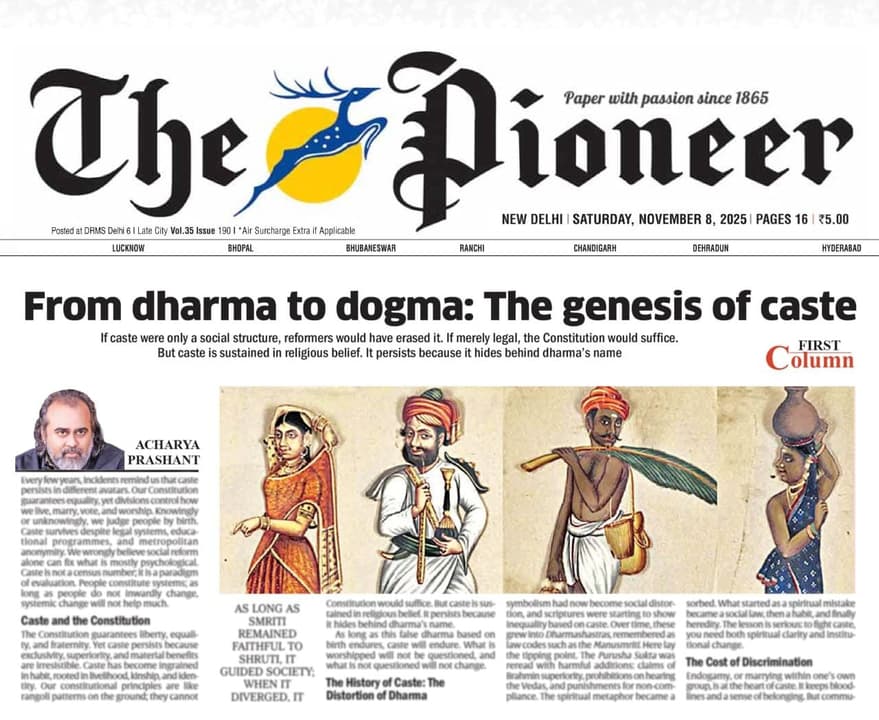
"If caste were only a social structure, reformers would have erased it. If merely legal, the Constitution would suffice. But caste is sustained in religious belief. It persists because it hides behind Dharma's name."

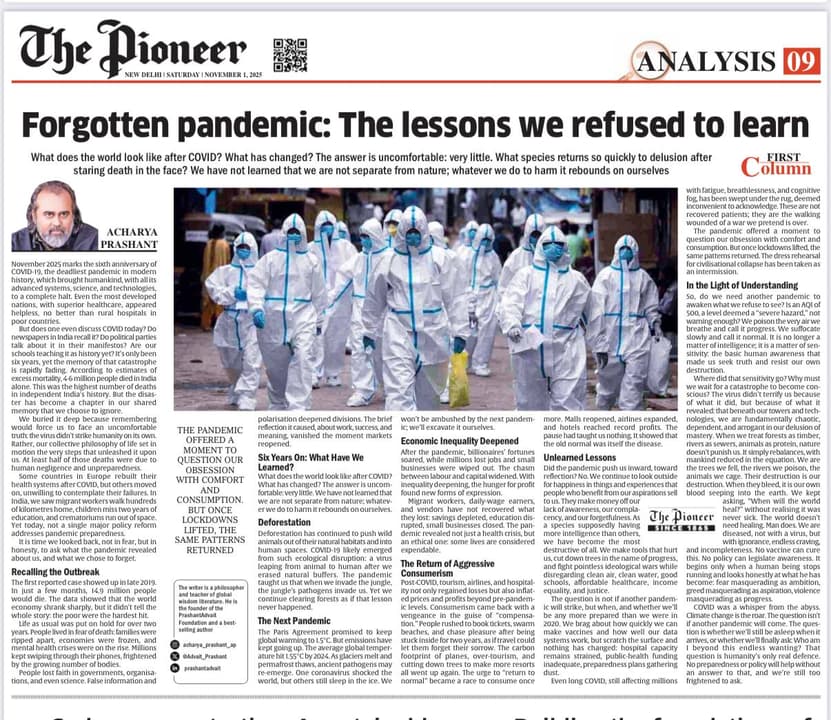
"What does the world look like after COVID? What has changed? The answer is uncomfortable: very little. What species returns so quickly to delusion after staring death in the face? We have not learned that we are not separate from nature; whatever we do to harm it rebounds on ourselves."

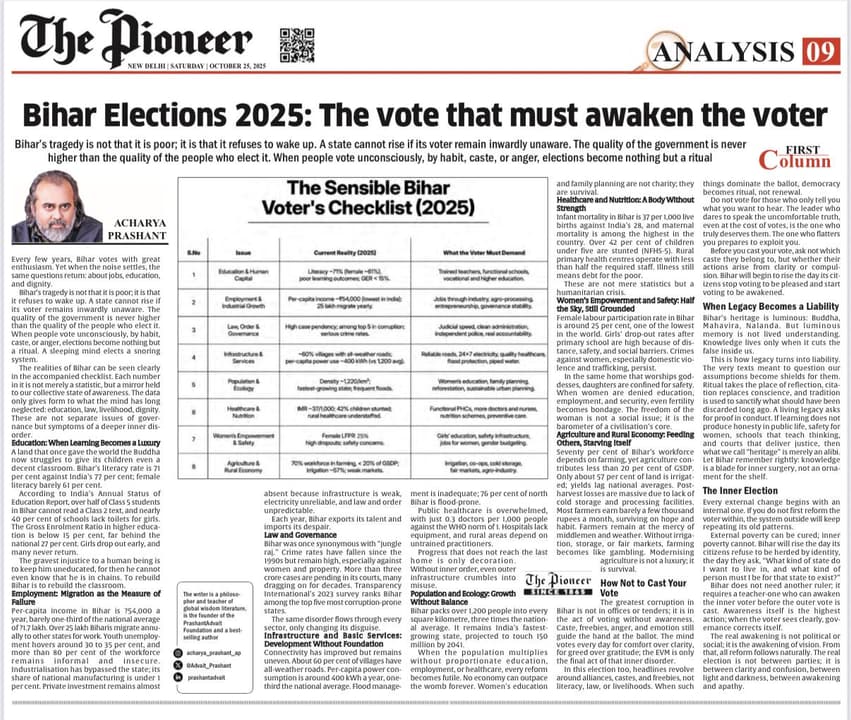
"Bihar’s tragedy is not that it is poor; it is that it refuses to wake up. A state cannot rise if its voter remain inwardly unaware. The quality of the government is never higher than the quality of the people who elect it. When people vote unconsciously, by habit, caste, or anger, elections become nothing but a ritual. A sleeping mind elects a sleeping system."

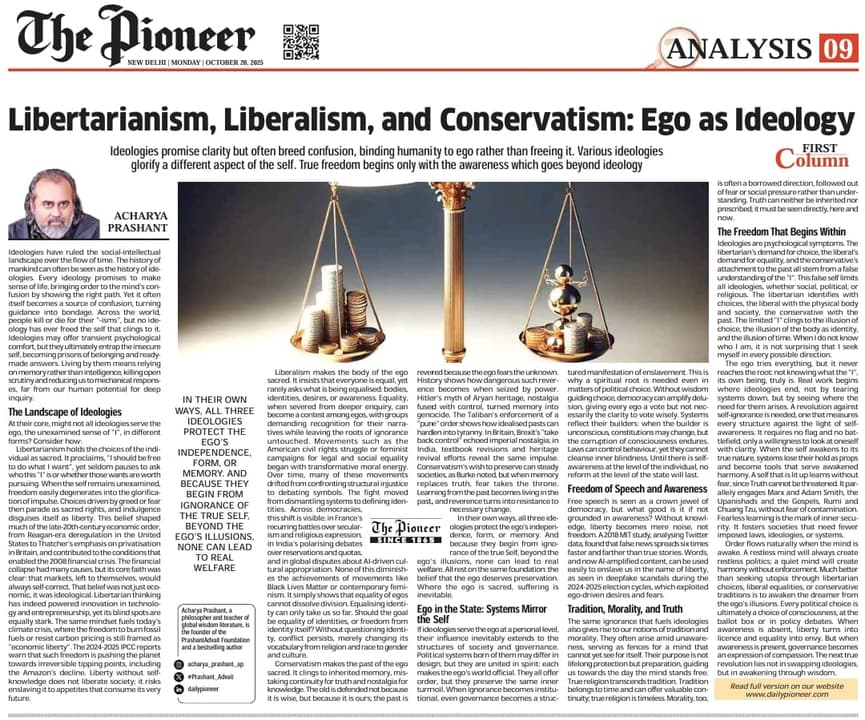
"In their own ways, all three ideologies protect the ego’s independence, form, or memory. And because they begin from ignorance of the true Self, none can lead to real welfare. All rest on the same foundation: the belief that the ego deserves preservation. Where the ego is sacred, suffering is inevitable."

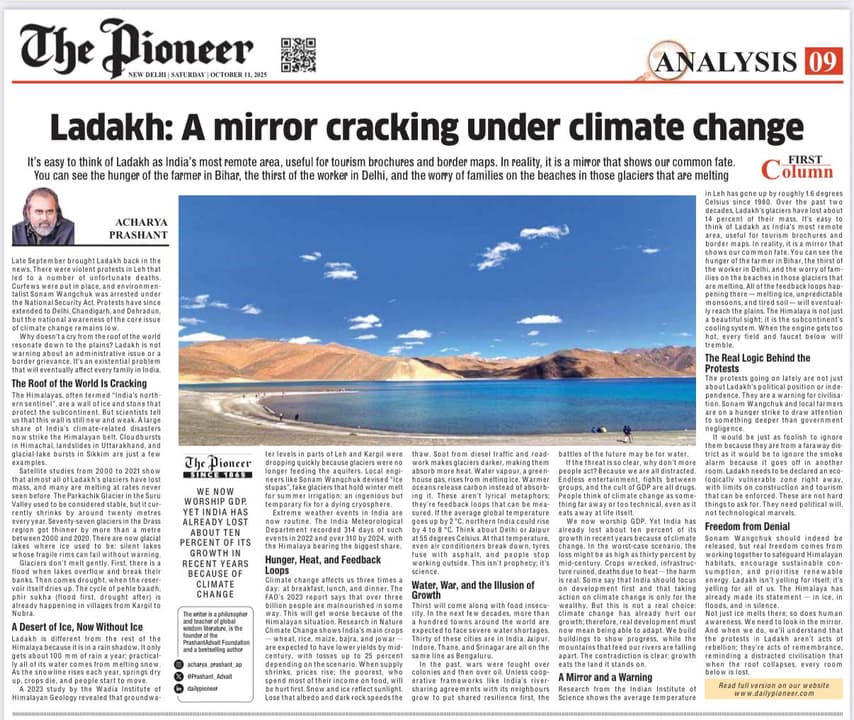
"It’s easy to think of Ladakh as India’s most remote area, useful for tourism brochures and border maps. In reality, it is a mirror that shows our common fate. You can see the hunger of the farmer in Bihar, the thirst of the worker in Delhi, and the worry of families on the beaches in those glaciers that are melting."

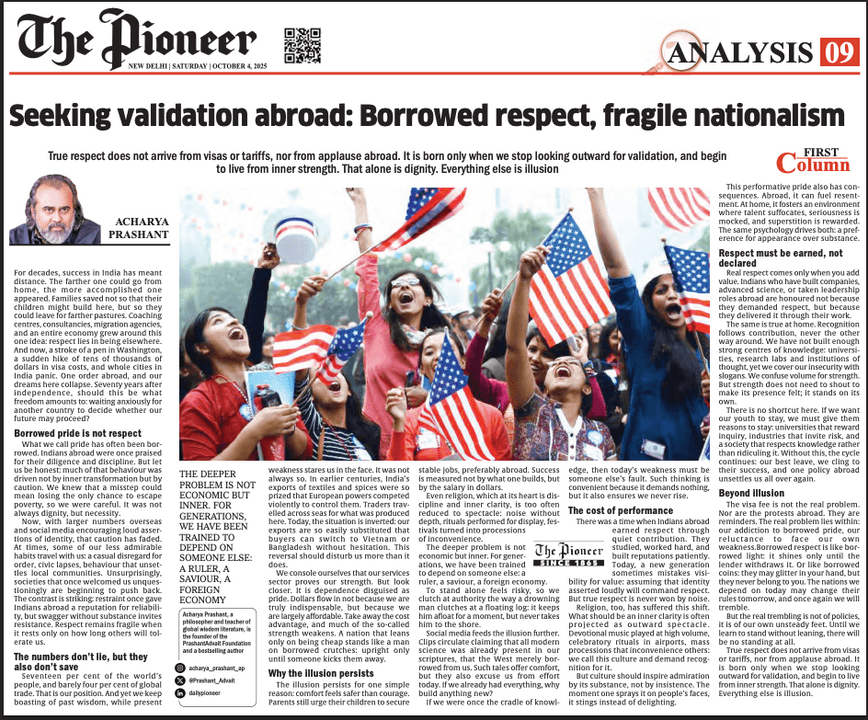
"True respect does not arrive from visas or tariffs, nor from applause abroad. It is born only when we stop looking outward for validation, and begin to live from inner strength. That alone is dignity. Everything else is illusion"

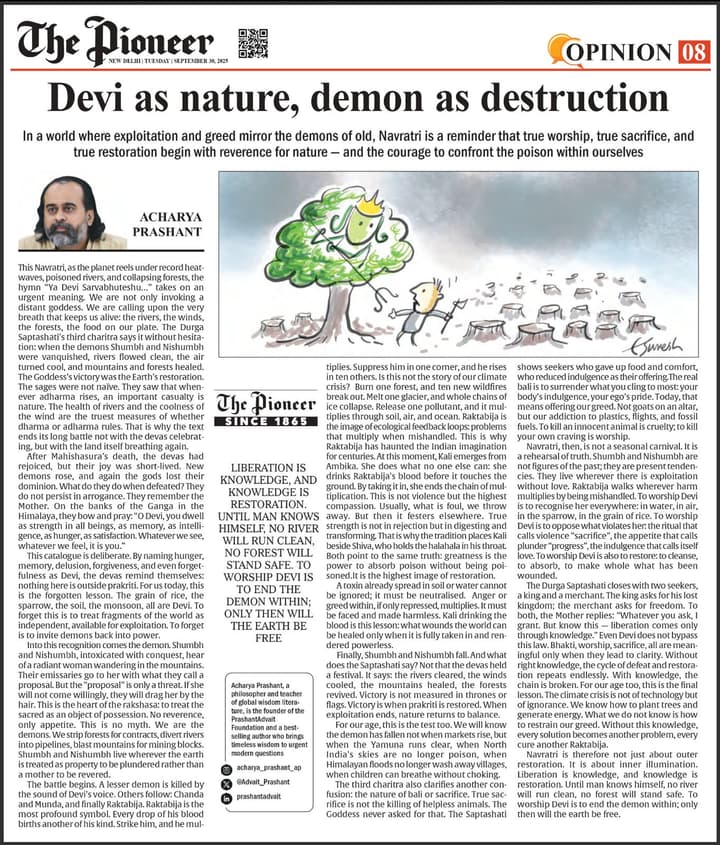
"In a world where exploitation and greed mirror the demons of old, Navratri is a reminder that true worship, true sacrifice, and true restoration begin with reverence for nature — and the courage to confront the poison within ourselves"

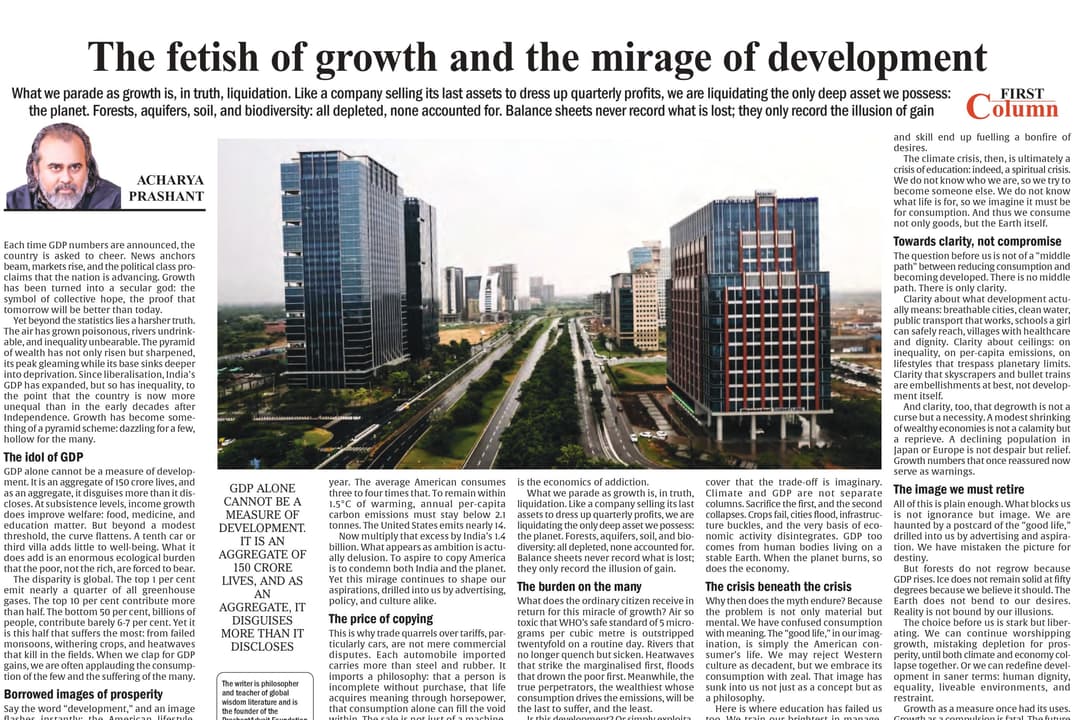
"What we parade as growth is, in truth, liquidation. Like a company selling its last assets to dress up quarterly profits, we are liquidating the only deep asset we possess: the planet. Forests, aquifers, soil, and biodiversity: all depleted, none accounted for."

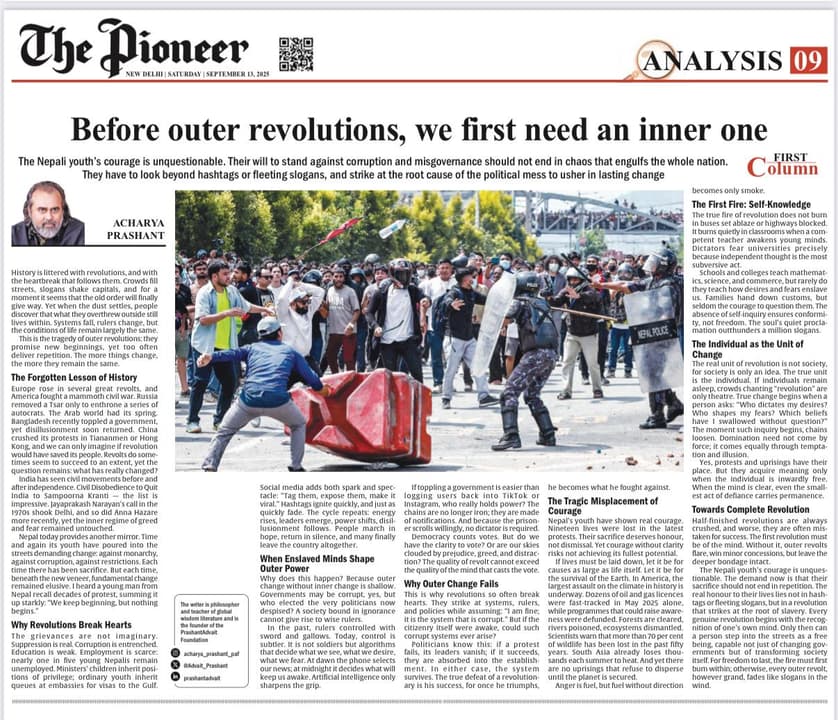
"The Nepali youth’s courage is unquestionable. The demand now is that their sacrifice should not end in repetition. The real honour to their lives lies not in hashtags or fleeting slogans, but in a revolution that strikes at the root of slavery."

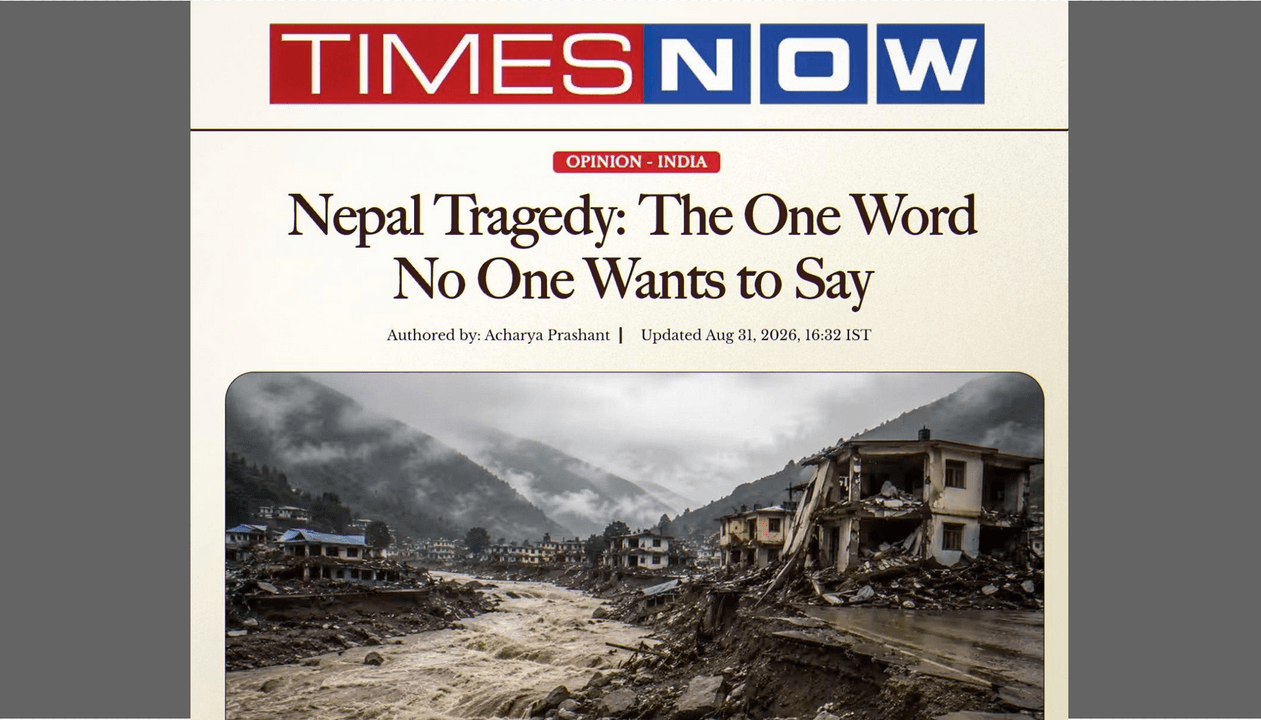
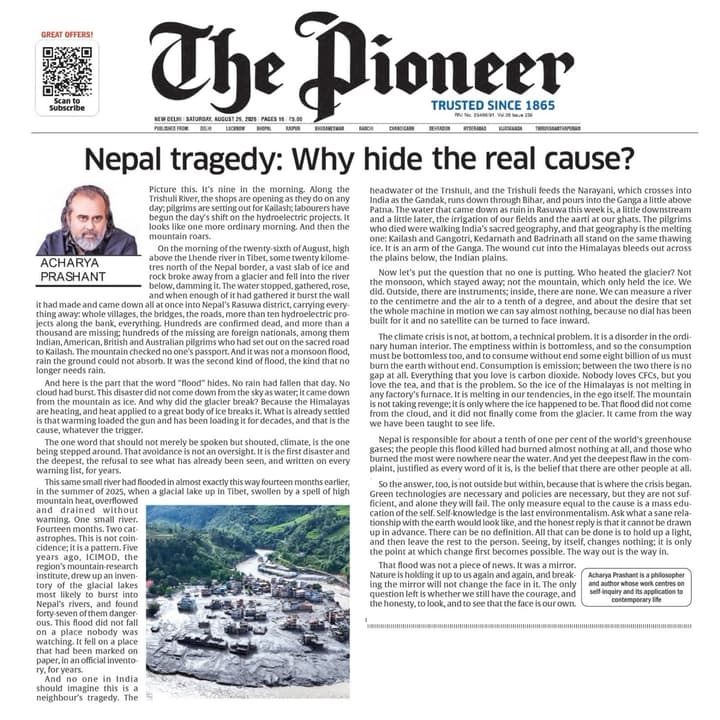
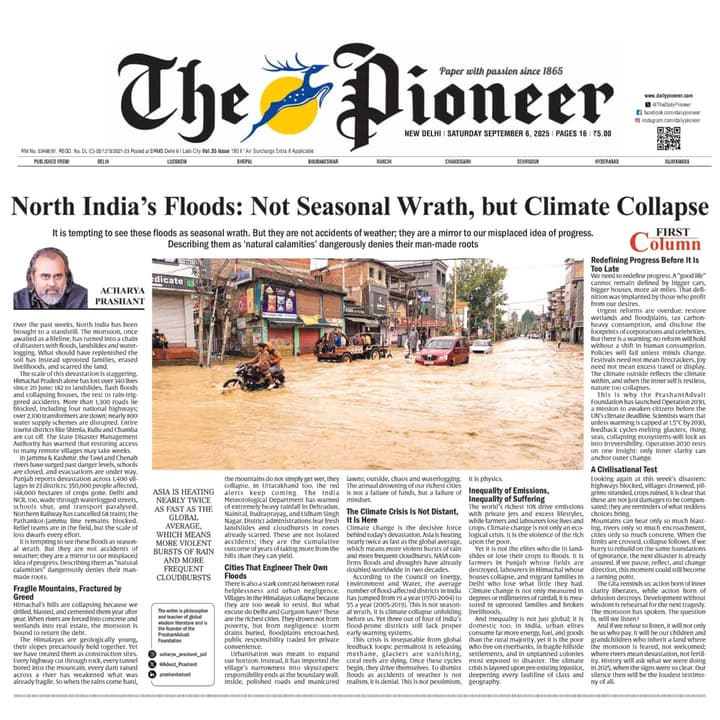
"It is tempting to see these floods as seasonal wrath. But they are not accidents of weather; they are a mirror to our misplaced idea of progress. Describing them as 'natural calamities' dangerously denies their man-made roots."

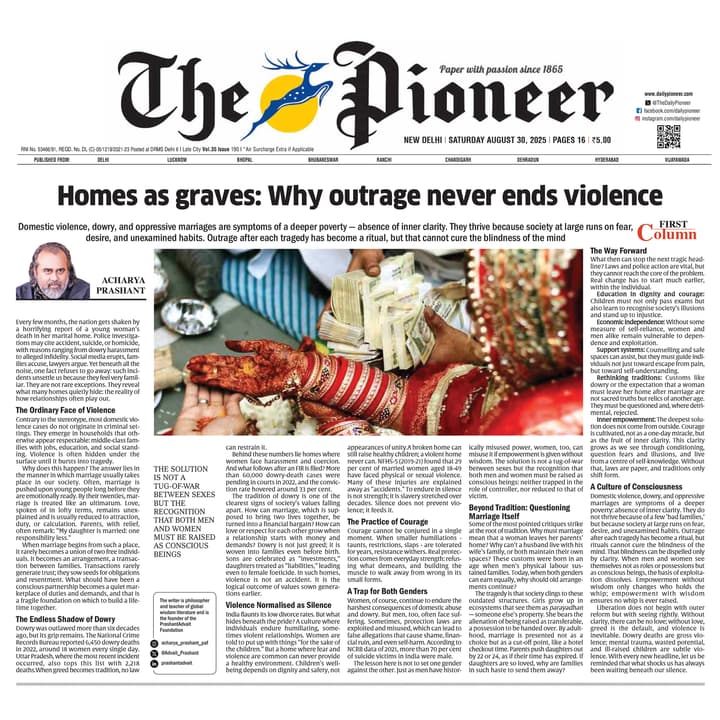
"Domestic violence, dowry, and oppressive marriages are symptoms of a deeper poverty — absence of inner clarity. They thrive because society at large runs on fear, desire, and unexamined habits. Outrage after each tragedy has become a ritual, but that cannot cure the blindness of the mind."

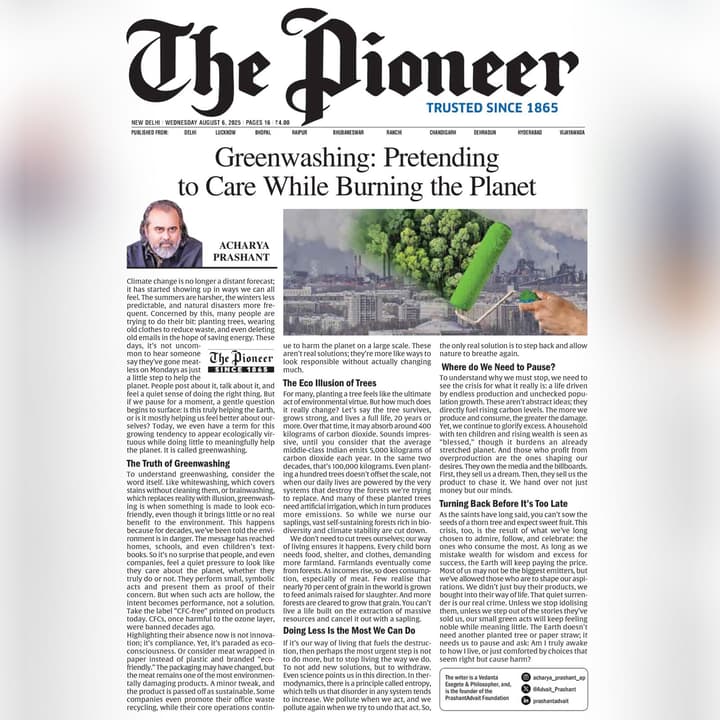
"Somewhere along the way, being ‘green’ became a way to signal that you’re thoughtful and responsible. So it’s no surprise that people, and even companies, feel a quiet pressure to look like they care about the planet, whether they truly do or not."

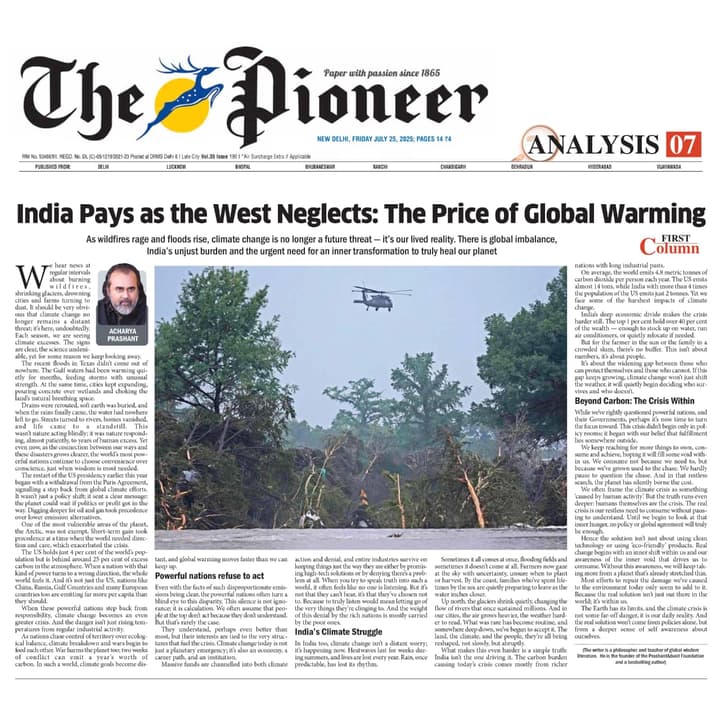
"Even with the facts of such disproportionate emissions being clear, the powerful nations often turn a blind eye to this disparity. This silence is not ignorance; it is calculation. We often assume that people at the top don’t act because they don’t understand. But that’s rarely the case. They understand, perhaps even better than most, but their interests are tied to the very structures that fuel the crisis."

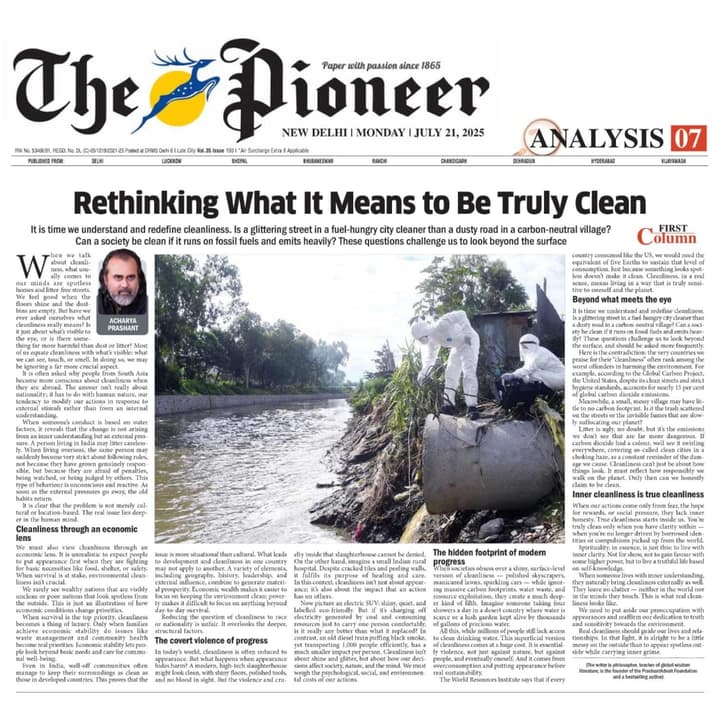
"It is time we understand and redefine cleanliness. Is a glittering street in a city that burns fuel cleaner than a dusty road in a carbon-neutral village? Can a society be clean if it runs on fossil fuels and emits heavily? These questions challenge us to look beyond the surface, and should be asked more frequently."

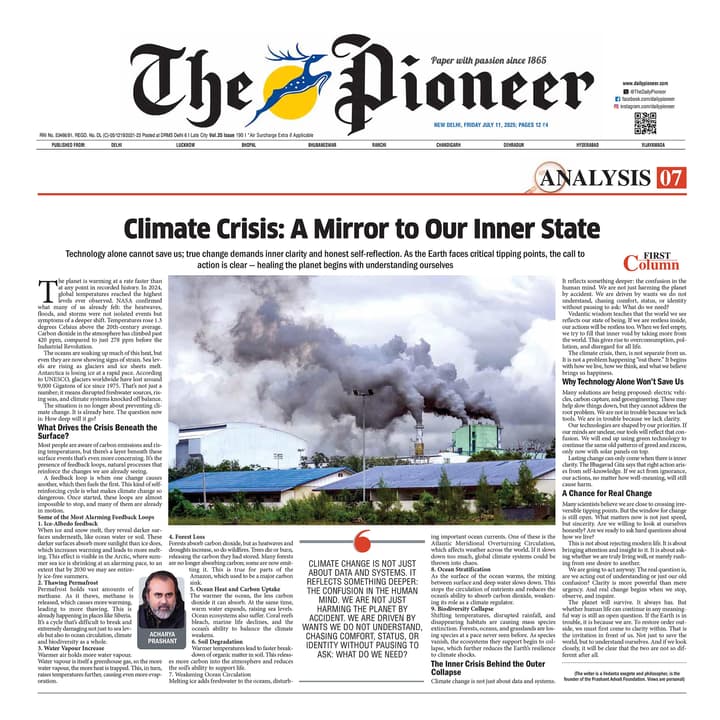
"Climate change is not just about data and systems. It reflects something deeper: the confusion in the human mind. We are not just harming the planet by accident. We are driven by wants we do not understand, chasing comfort, status, or identity without pausing to ask: What do we really need?"

"The climate crisis isn’t just an environmental emergency — it’s a reflection of our restless, consumption-driven lives. Operation 2030 urges a radical shift: from chasing more to choosing wisely, from outer accumulation to inner clarity, before irreversible damage becomes our new normal."