Acharya Prashant is a philosopher and author, an alumnus of IIT Delhi and IIM Ahmedabad. He is among the most widely read philosophical columnists writing in India today, with more than 190 published columns ranging across climate and consumption, elections and ideology, caste and religion, gender, education, geopolitics, technology, and the inner life.
What unifies this range is a single method: tracing every public crisis back to the unexamined self that produces it.
FOR COMMISSIONING EDITORS
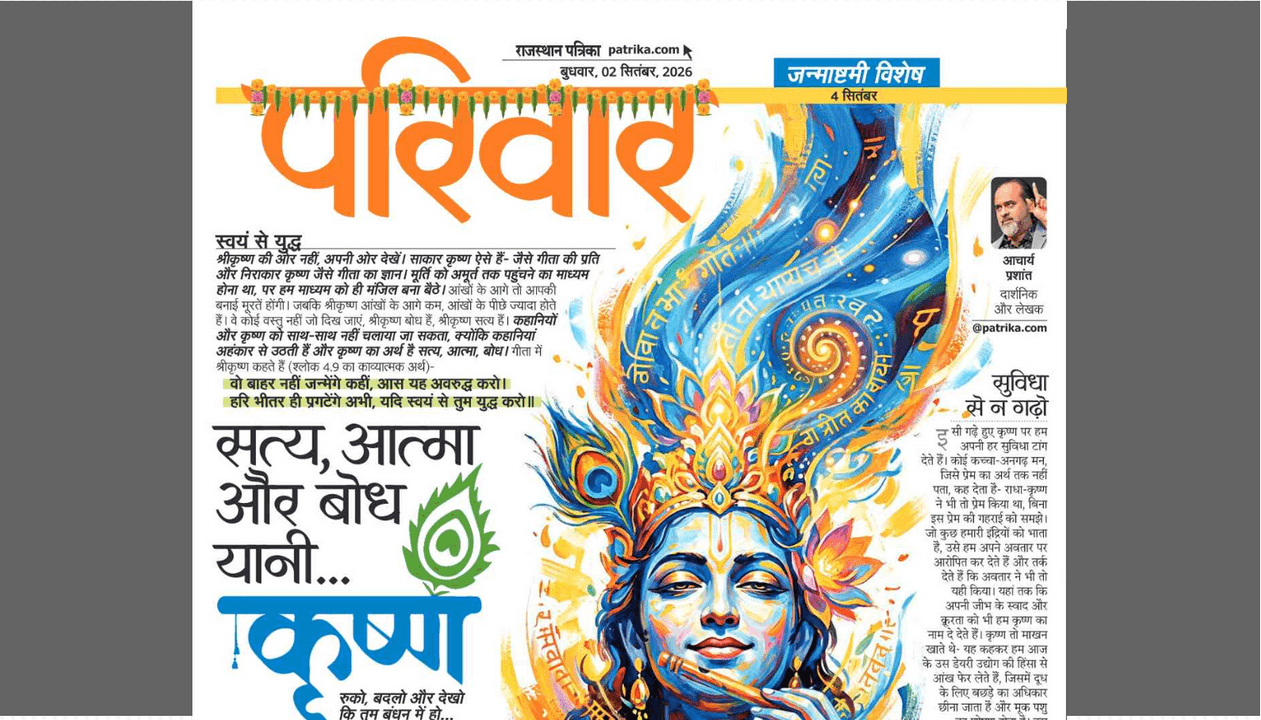
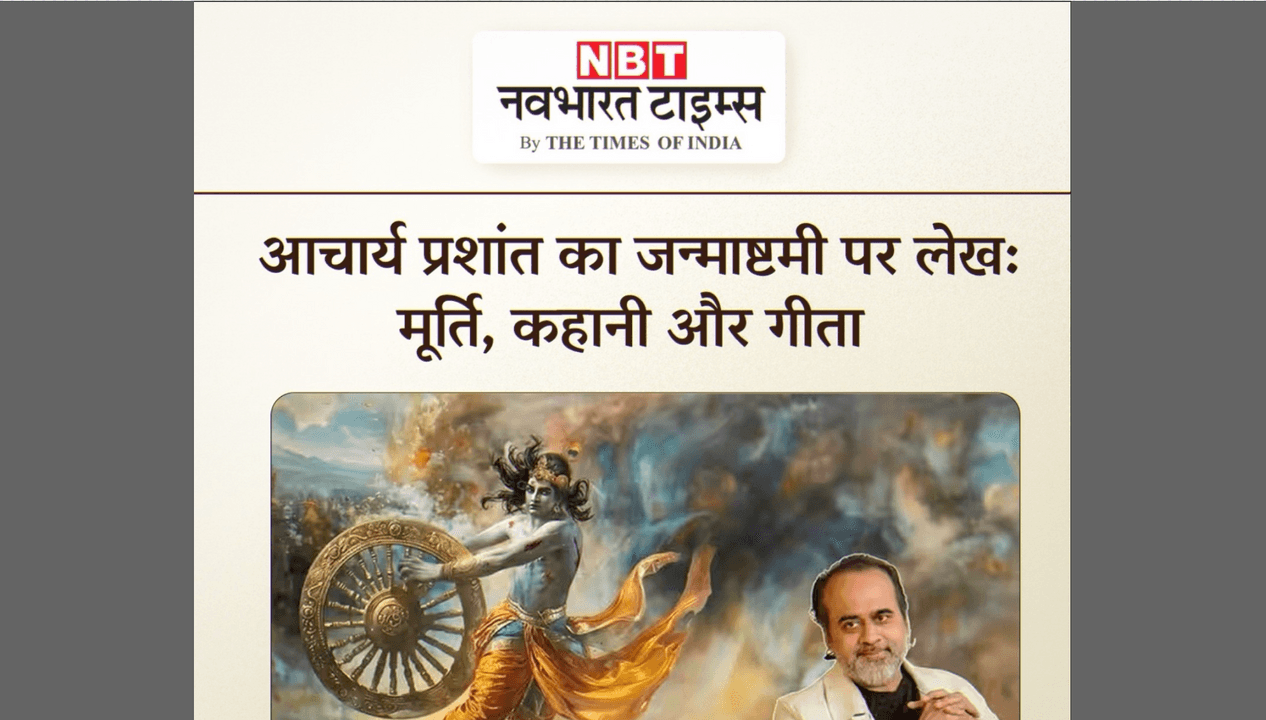
In this special Janmashtami feature published in Rajasthan Patrika, philosopher and author Acharya Prashant explains why the true Krishna is not an idol to be worshipped from a distance, but Truth, the Self, and Realization (Satya, Atma, Bodh) itself.

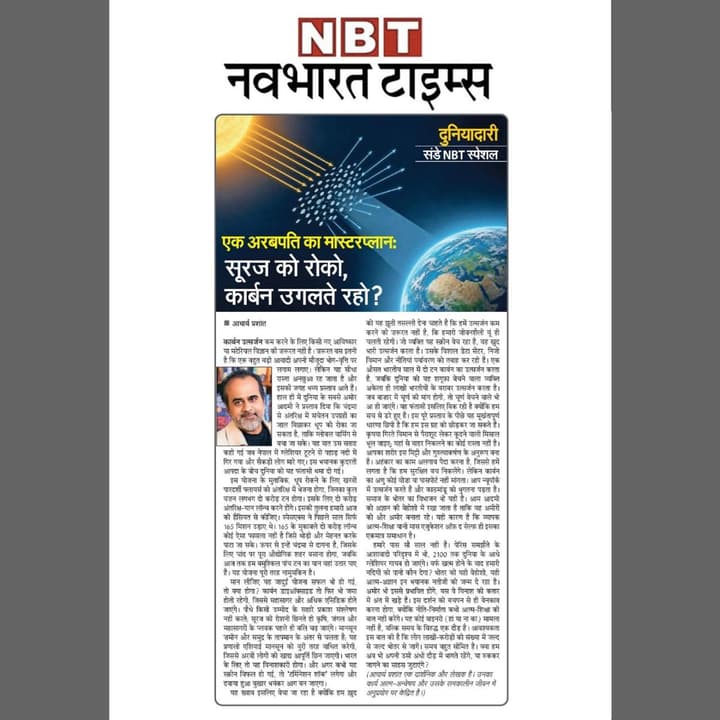
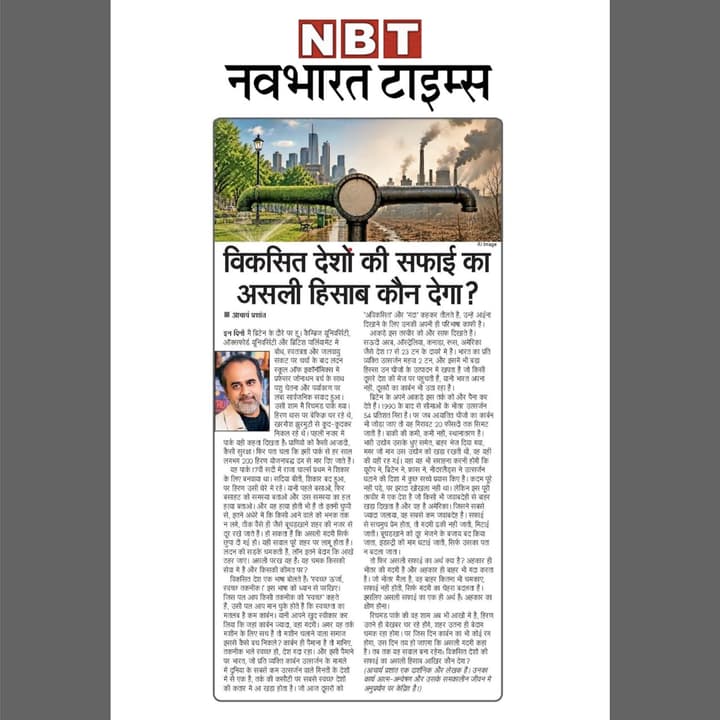
"कार्बन उत्सर्जन कम करने के लिए आखिर चाहिए क्या? सैद्धांतिक रूप से, कुछ भी नया नहीं। किसी आविष्कार का इंतज़ार नहीं है। किसी लॉन्च विंडो की प्रतीक्षा नहीं करनी है। मटेरियल विज्ञान में किसी बड़ी सफलता की आवश्यकता नहीं है। ज़रूरत बस इतनी है कि एक बहुत बड़ी आबादी अपनी मौजूदा भोग-वृत्ति पर लगाम लगाए। और यही वह चीज़ है जिसे कोई भी इंजीनियर पूरा नहीं कर सकता, और कोई भी शिखर सम्मेलन इस पर बातचीत नहीं कर सकता।"

“There is one Krishna that we have fabricated for ourselves: the butter-thief, sitting on a swing, reveling in Raas with the Gopis. It’s easy to remember this Krishna, because he doesn’t demand anything from us. On the other hand, there is the Krishna of the Gita. In his life you will see nothing but apparent contradictions, because advaita itself means that all dualities are contained within it. The otherworldly image of Krishna that we created has, in fact, taken the Gita away from us.”

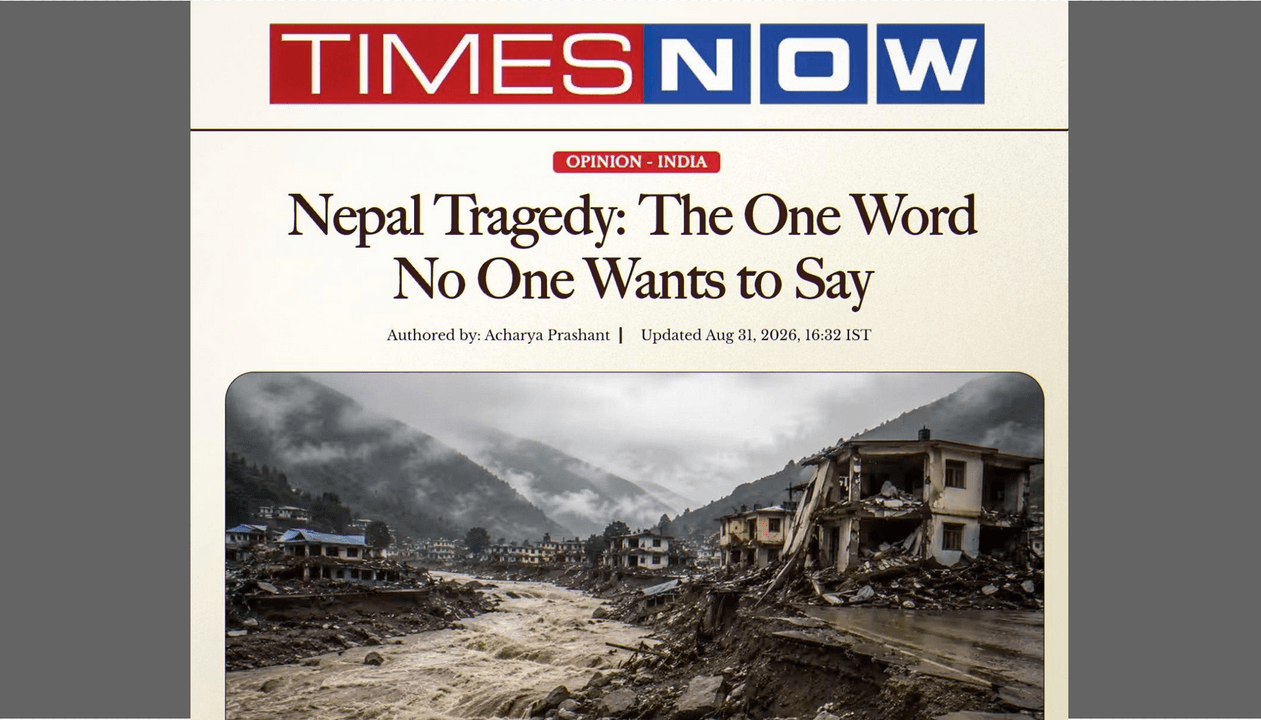
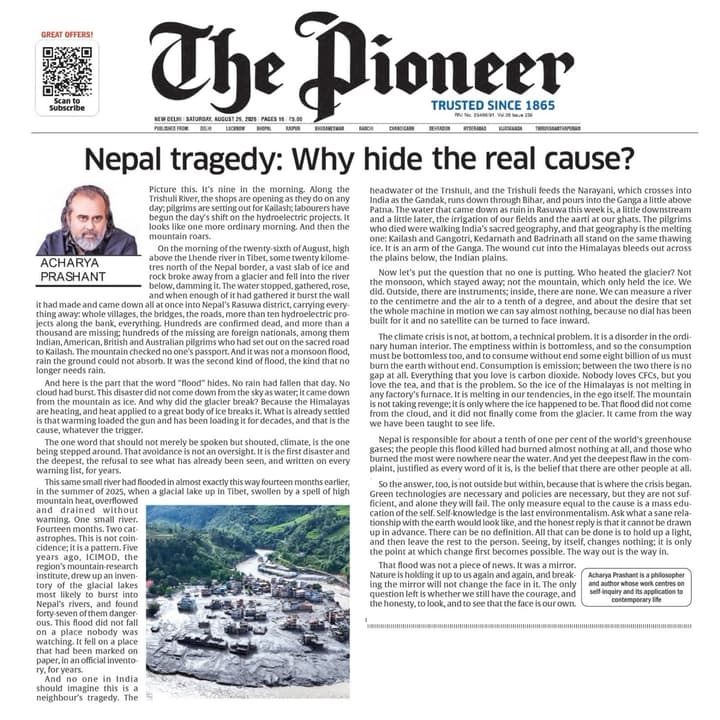
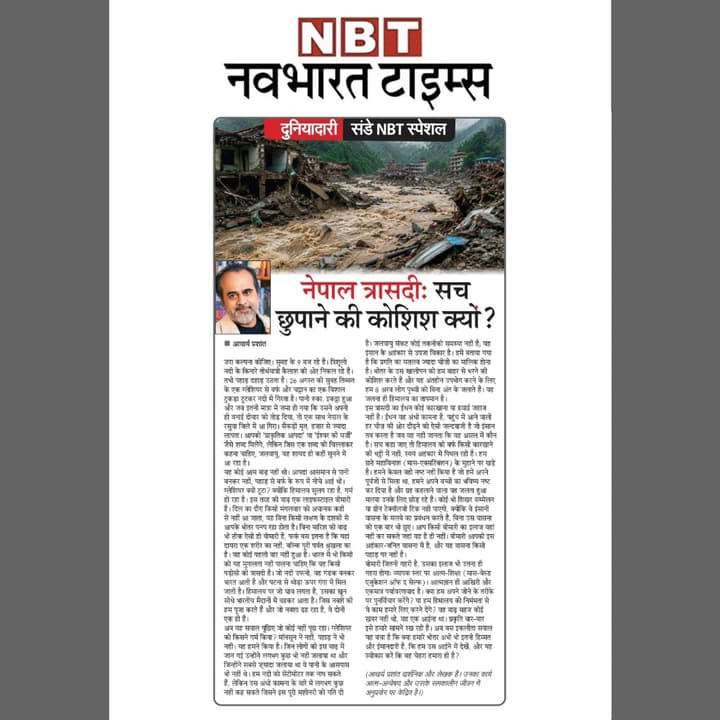
"Everything is being blamed—the bad luck, the missing pilgrims, the sheer scale of the water. But the one word that should not merely be spoken but shouted aloud—climate—is being deliberately avoided. What kind of conspiracy is this? And who is it designed to deceive?"

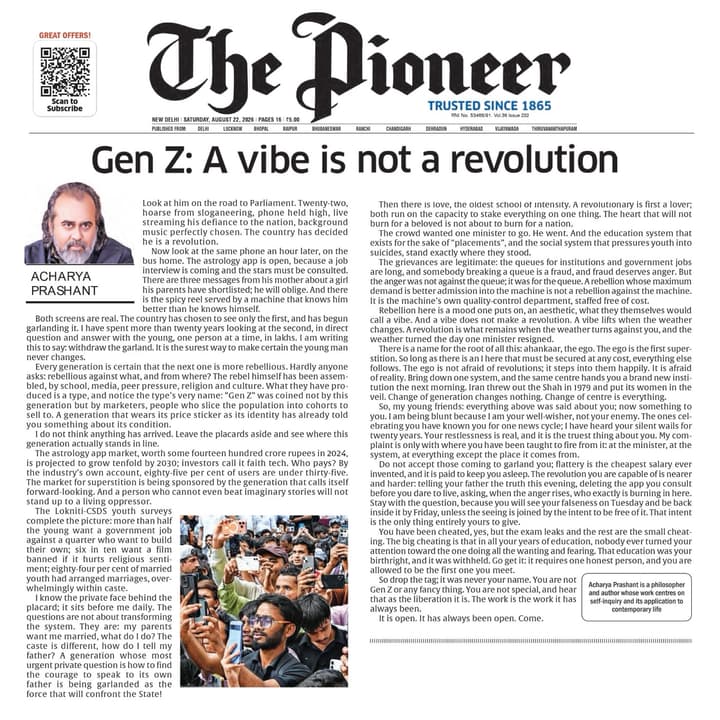
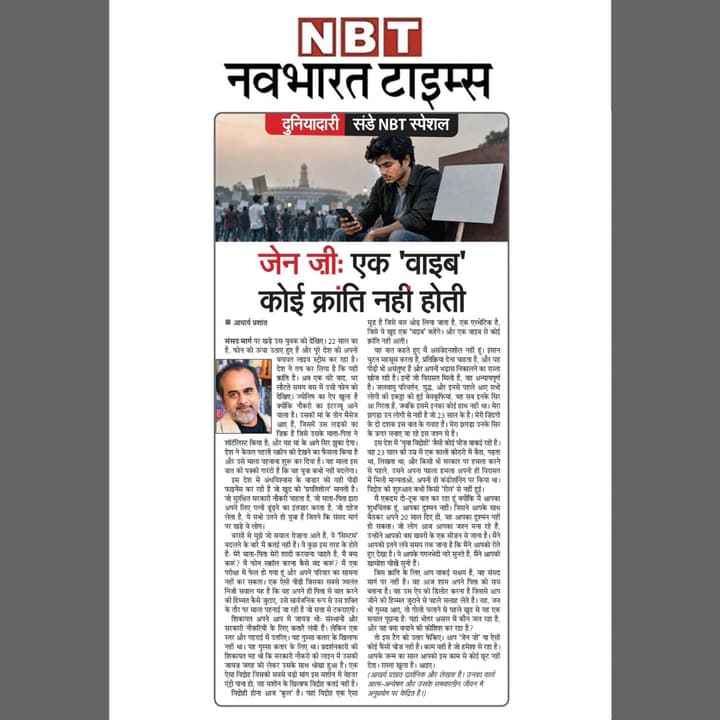
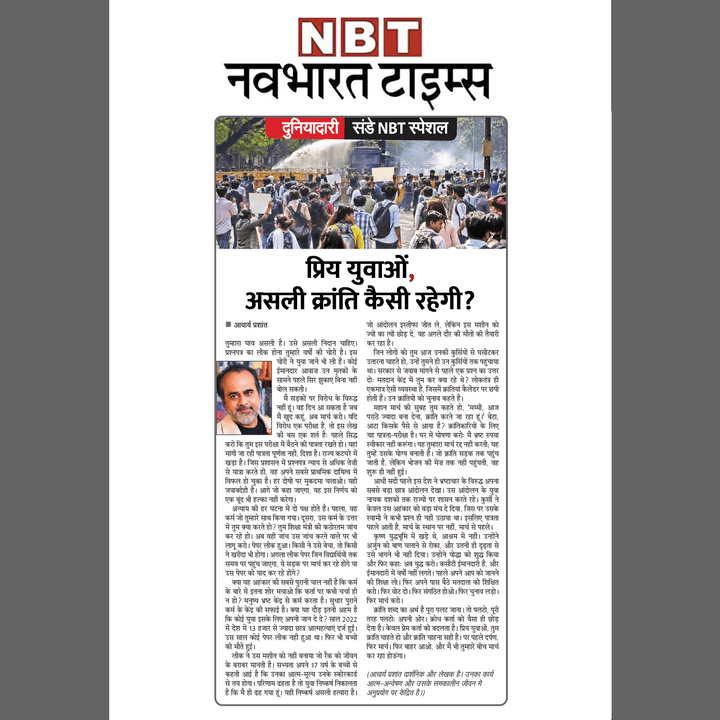
“What is being called a generational shift is actually a fleeting, circumstantial phenomenon, and everyone has misunderstood it—whether they are celebrating it or panicking over it, including political parties. This badge of honour is being bestowed far too quickly. We say they are rebels. But are they really?”

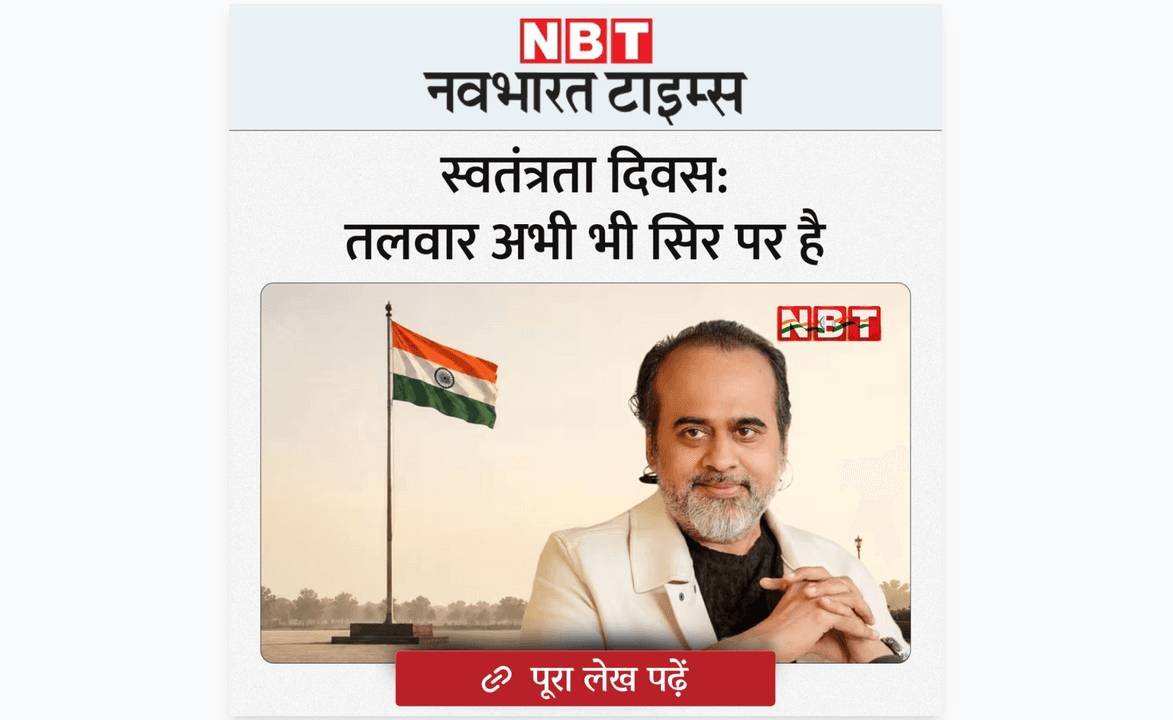
"Freedom is natural — it's a given. The more honest and more useful question is: if everything is free from birth, then where did this thing called slavery come from later on? Was India always enslaved? No. So where did slavery come from? That's the question we should really be asking."

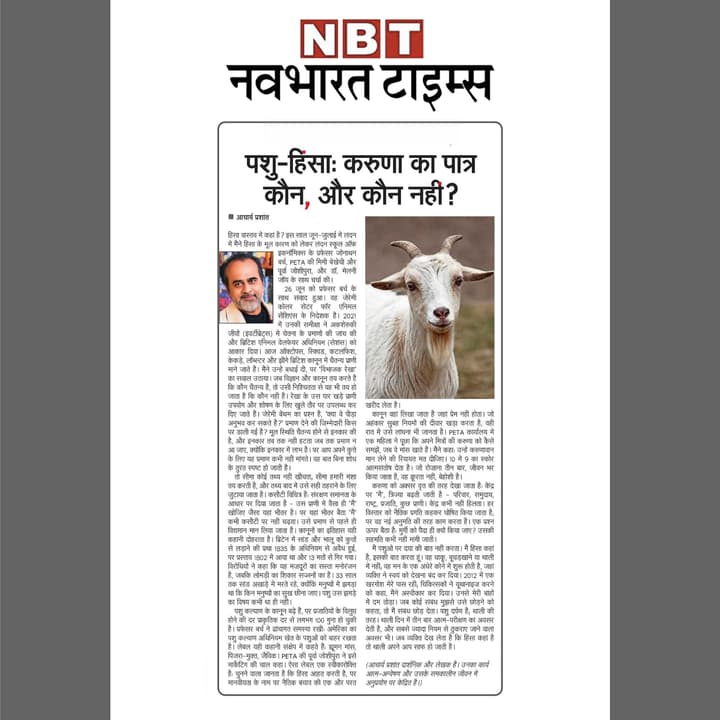
"The violence committed three times a day, with every meal, throughout a lifetime, is no longer called cruelty—it becomes unconsciousness. One who refuses to look at what's on their plate eventually loses the ability to truly see the rest of their life as well. That blindness begins spreading long before they become aware of it."

“The chair has never corrupted a truly sacred person. The chair only gives a bigger stage to that ego whose owner has never bothered to question it. You can keep changing the patients as many times as you like; the disease remains in the hospital.”

"If there were genuine love for cleanliness, filth would not merely be hidden - it would be eliminated. Instead of relocating slaughterhouses, they would be shut down. Industrial demand would be reduced, not simply shifted elsewhere. Every system bears witness to the same fact: what is called love is, as yet, only an act. True cleanliness, then, has only one meaning - the diminishing of the ego."