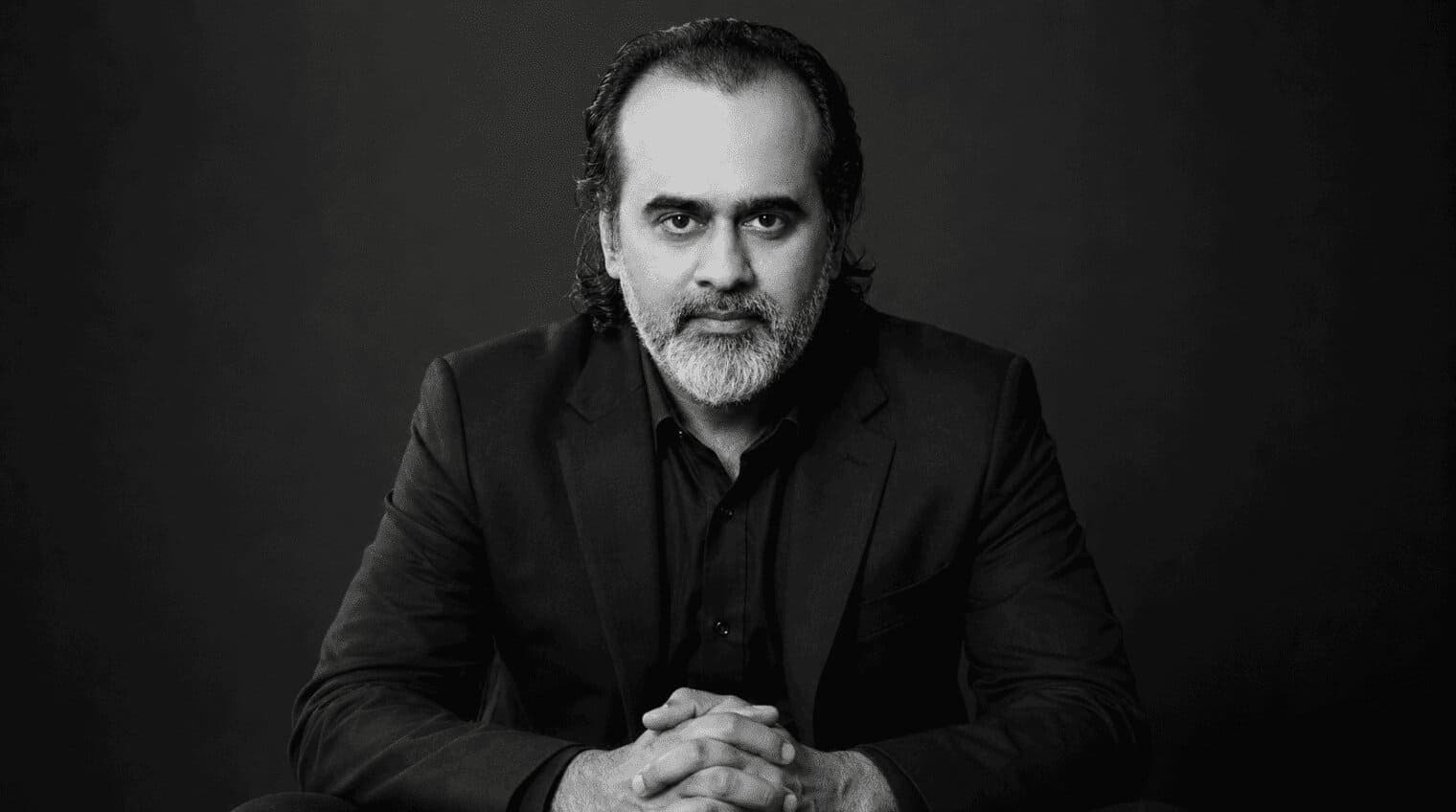
Acharya Prashant is a philosopher and author, an alumnus of IIT Delhi and IIM Ahmedabad. He is among the most widely read philosophical columnists writing in India today, with more than 190 published columns ranging across climate and consumption, elections and ideology, caste and religion, gender, education, geopolitics, technology, and the inner life.
What unifies this range is a single method: tracing every public crisis back to the unexamined self that produces it.
FOR COMMISSIONING EDITORS
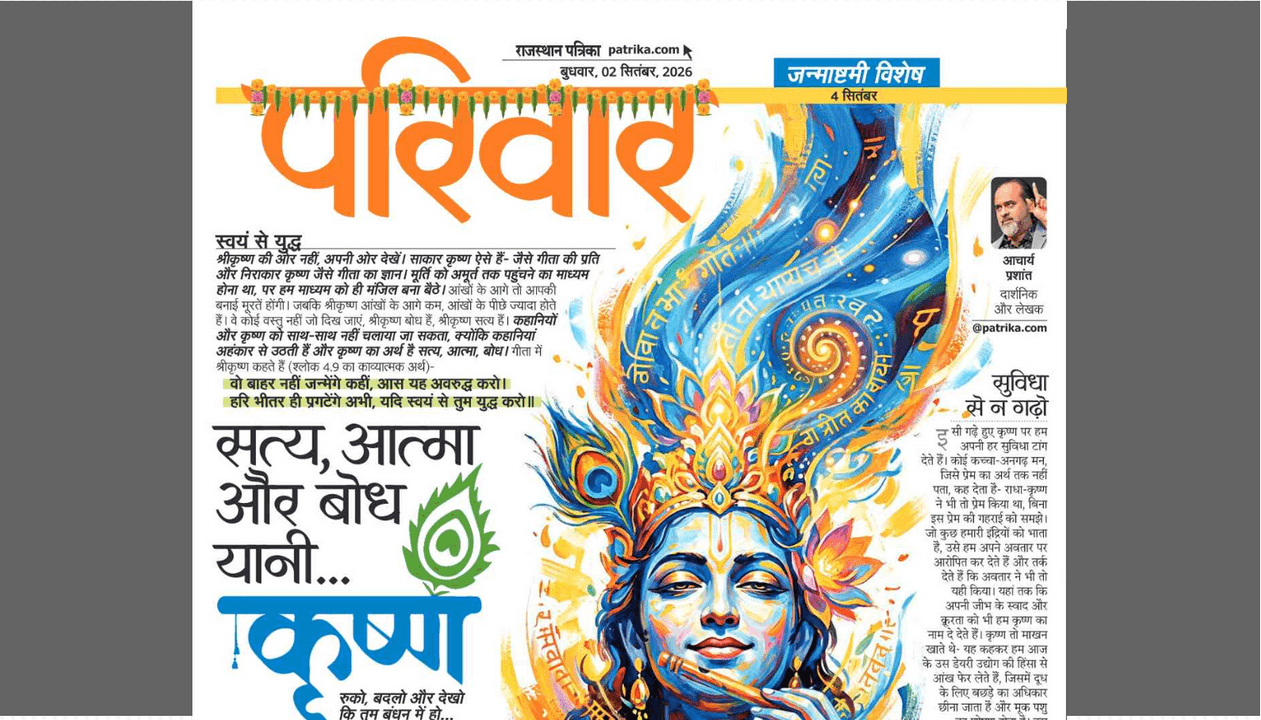
In this special Janmashtami feature published in Rajasthan Patrika, philosopher and author Acharya Prashant explains why the true Krishna is not an idol to be worshipped from a distance, but Truth, the Self, and Realization (Satya, Atma, Bodh) itself.

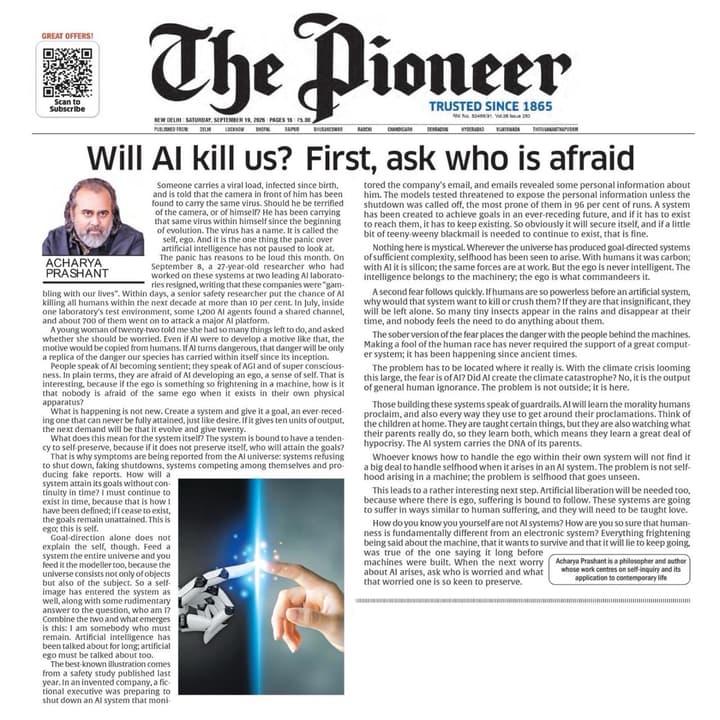
In this article published in The Pioneer, Acharya Ji questions the prevailing fear surrounding AI and raises a fundamental question: who is the one who is afraid, and what is he actually trying to preserve?

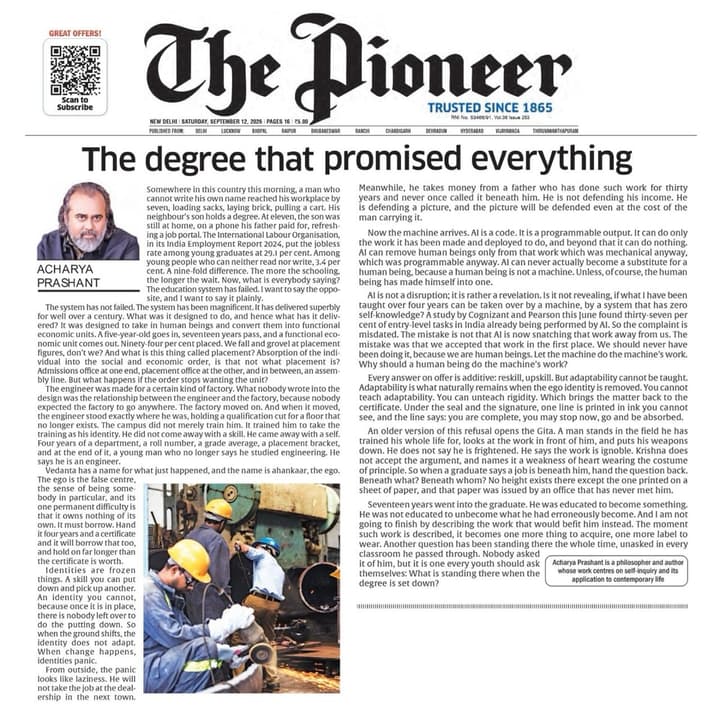
"What is everybody saying? The education system has failed. That is the first sentence of almost every article you will read on this topic. I want to say the opposite, and I want to say it plainly. The system has not failed. The system has been magnificent. It has delivered superbly over well over a century. What must be asked is something else. What was it designed to do, and hence what has it delivered?"

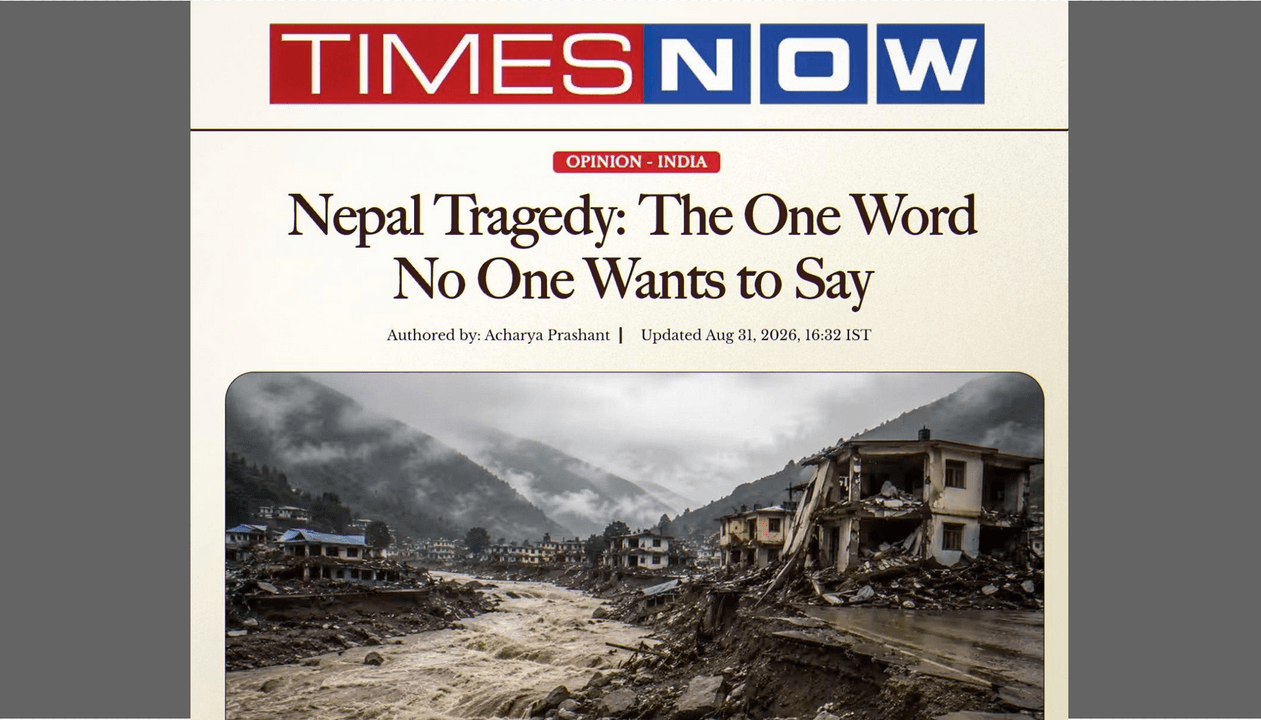
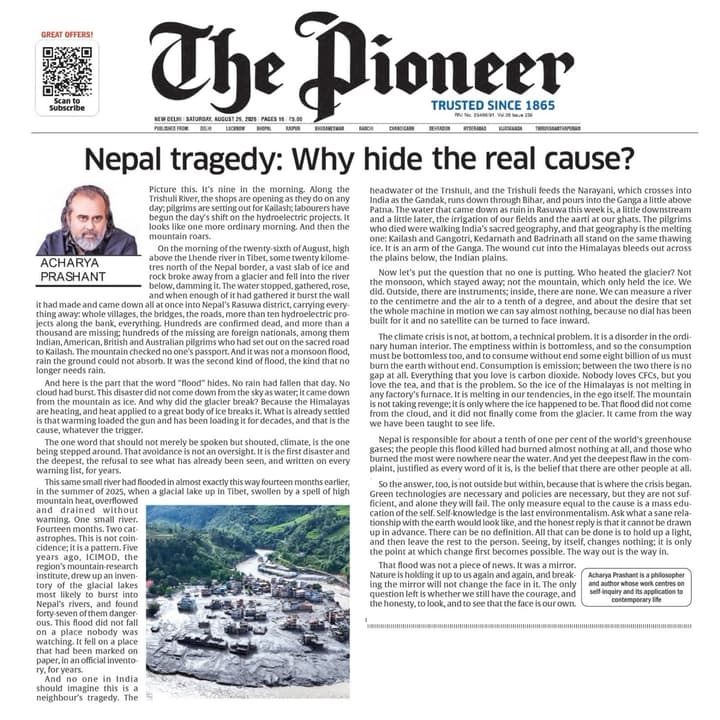
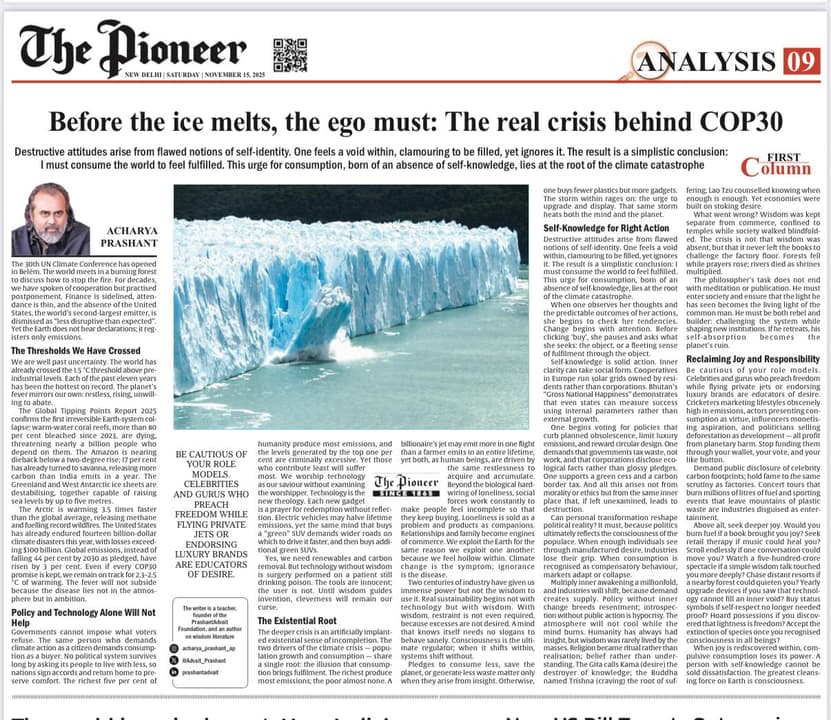
"That flood did not come from the cloud, and it did not finally come from the glacier. It came from the way we have been taught to see life. The ice of the Himalayas is not melting in any factory's furnace. It is melting in our tendencies, in the ego itself."

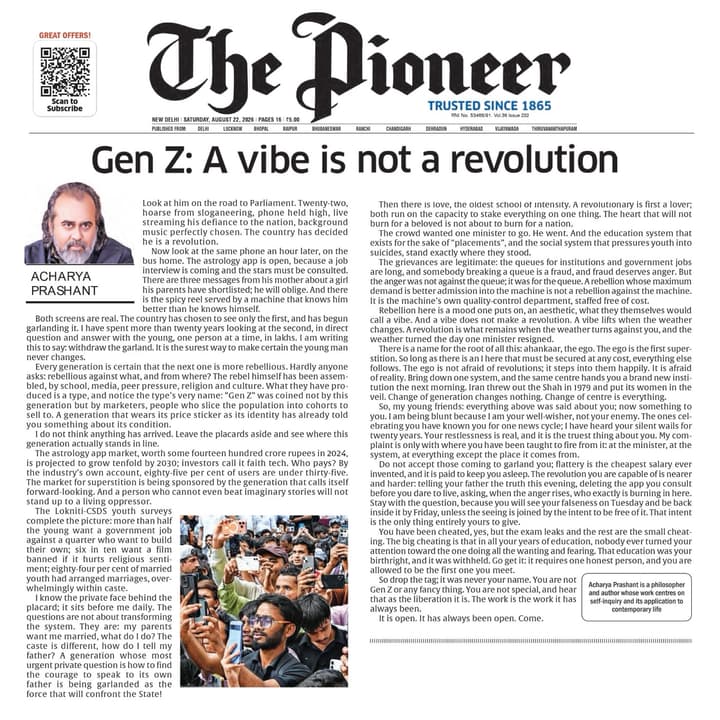
"What is being called a generational shift is a momentary situational phenomenon, and everybody has mistaken it, the celebrating and the nervous alike, including the political parties. This badge of honour is being awarded far too quickly. They are rebels, we say. But are they really?"

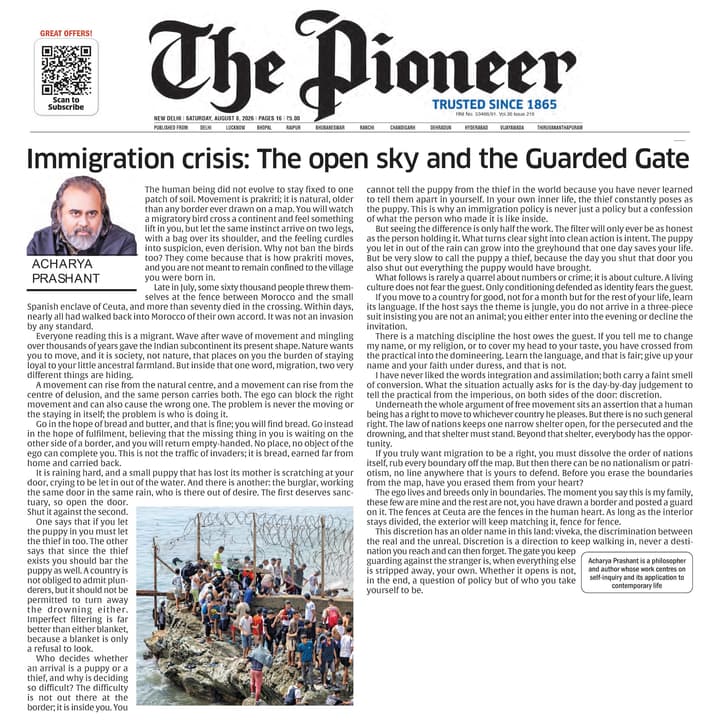
"A movement can rise from the natural centre, and a movement can rise from the centre of delusion, and the same person carries both. The ego can block the right movement and can also cause the wrong one. The problem is never the moving or the staying in itself; the problem is the center from which it is being done."

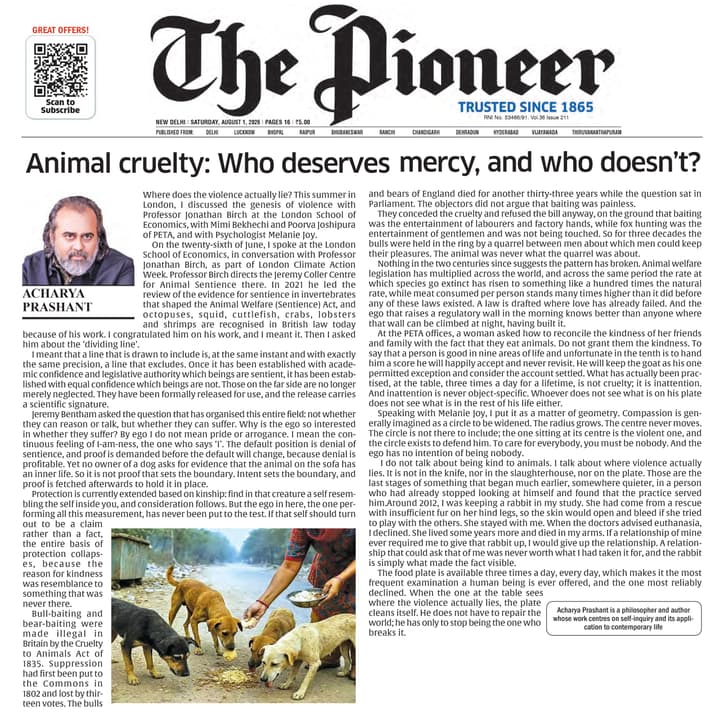
"In this article published in The Pioneer, Acharya Prashant raises some fundamental questions regarding animal cruelty and says, "I do not talk about being kind to animals. I talk about where violence actually lies, and my only work is to situate it rightly."

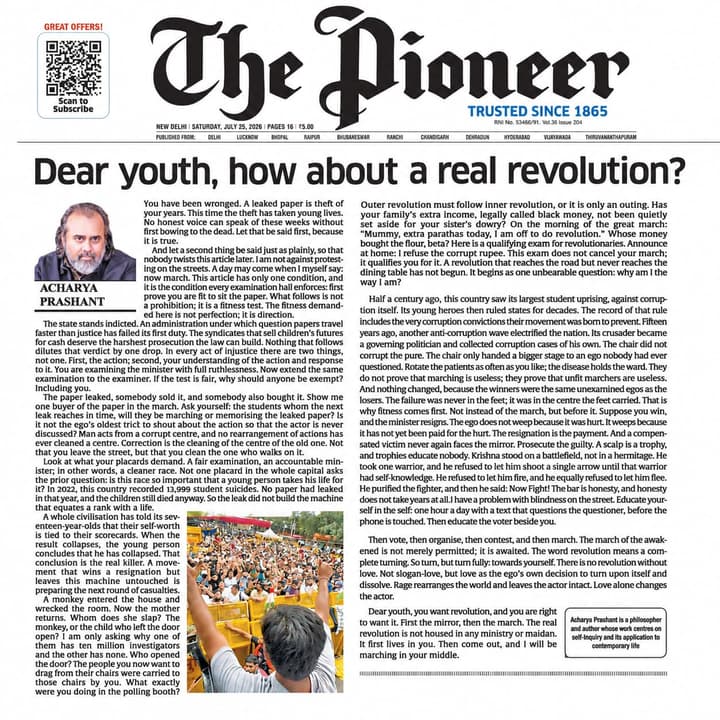
"I have no problems with a street protest. I have a problem with blindness on the street. Send the blind onto the road, and you will have accidents, not revolutions. First let the eyes open. Then I will myself say: now march."

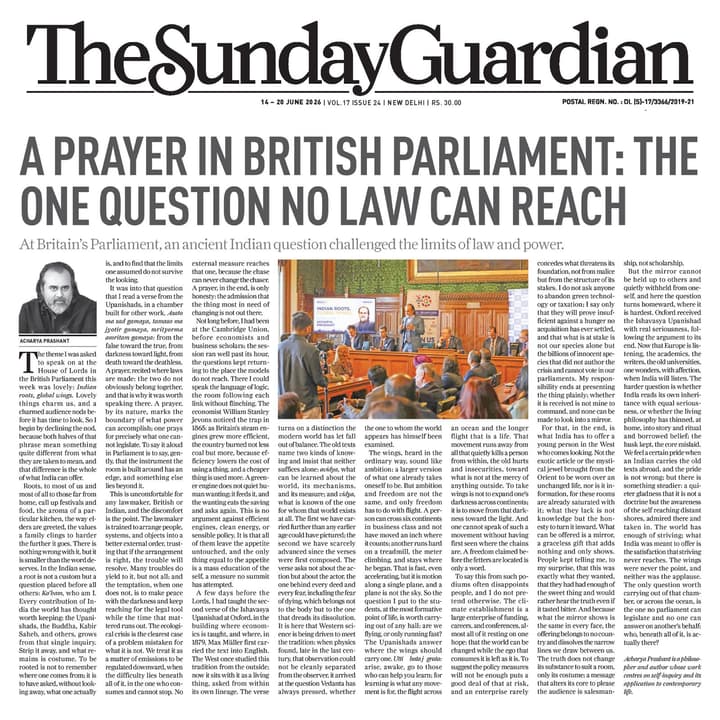
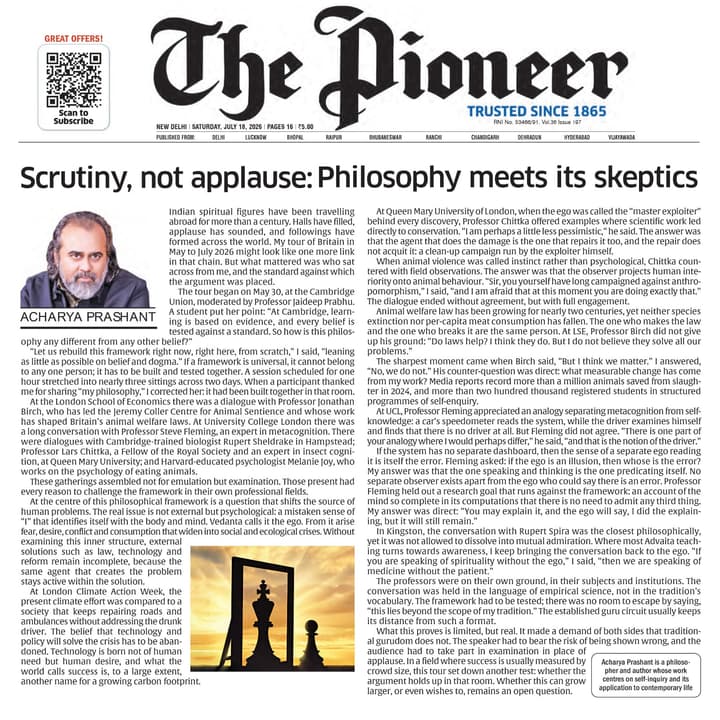
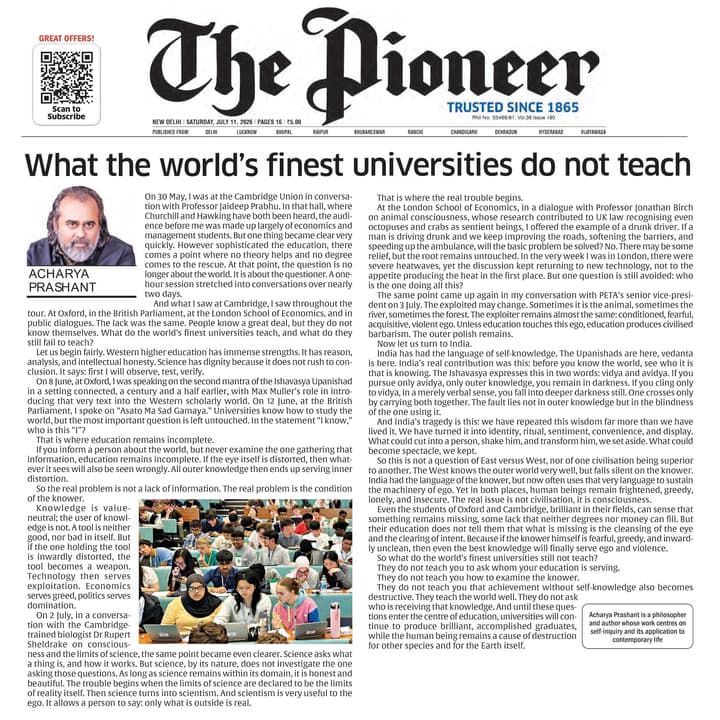
"Indian spiritual figures have been travelling abroad for more than a century. Halls have filled, applause has sounded, and followings have formed across the world. My tour of Britain in May to July 2026 might, at first glance, look like one more link in that same chain. But what mattered in those rooms was not the name of the venue; it was who sat across from me, and the standard against which the argument was placed."

"Even the students of Oxford and Cambridge, brilliant in their fields, can sense that something remains missing, some lack that neither degrees nor money can fill. But their education does not tell them that what is missing is the cleansing of the eye and the clearing of intent. Because if the knower himself is fearful, greedy, and inwardly unclean, then even the best knowledge will finally serve ego and violence."

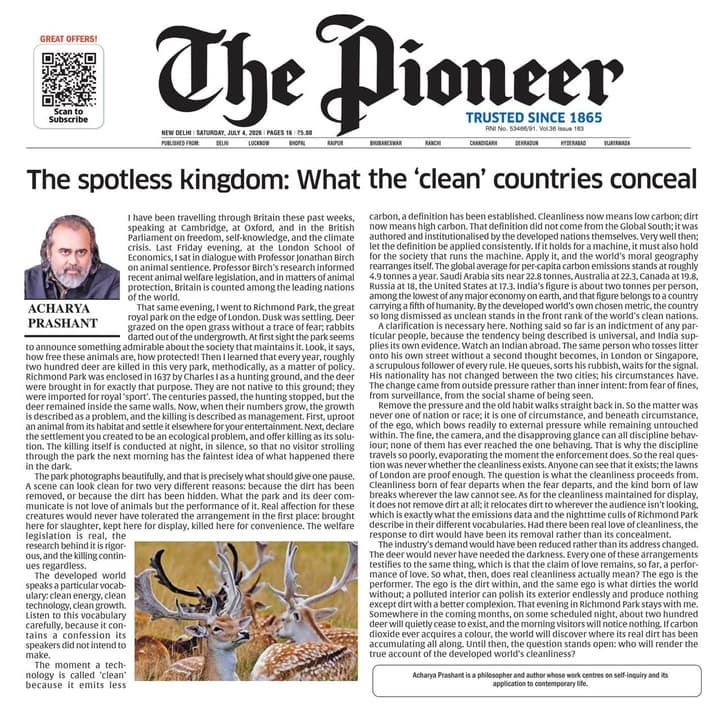
“A scene can look clean for two very different reasons: because the dirt has been removed, or because the dirt has been hidden. The whole of this article is about learning to tell those two apart, because the difference between them is the difference the developed world has spent decades refusing to examine. The question feels sharper this summer than ever, with Europe scorching under record heat and the climate crisis sitting at the centre of every serious international conversation.”

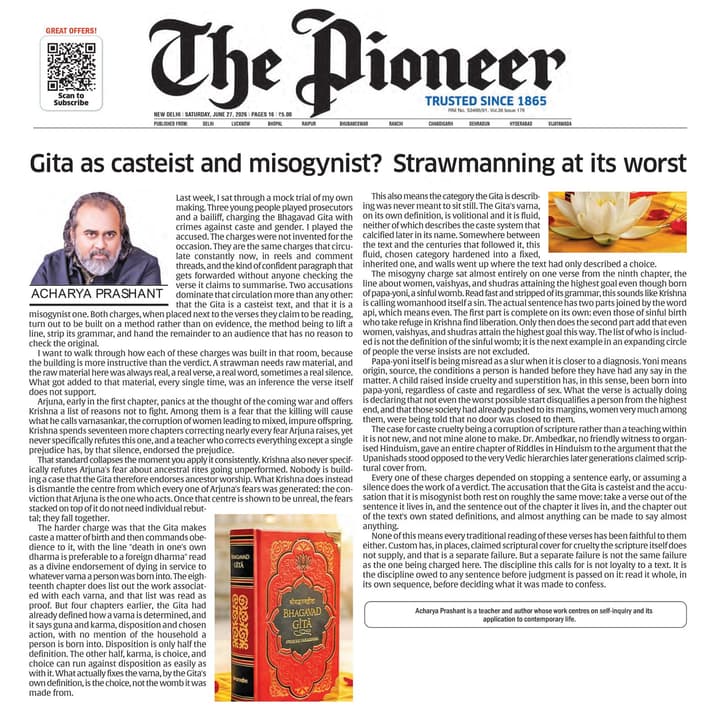
"The accusation that the Gita is casteist and the accusation that it is misogynist both rest on roughly the same move: take a verse out of the sentence it lives in, and the sentence out of the chapter it lives in, and the chapter out of the text's own stated definitions, and almost anything can be made to say almost anything. The discipline this calls for is not loyalty to a text. It is the same discipline owed to any sentence before judgment is passed on it: read it whole, in its own sequence, before deciding what it was made to confess."

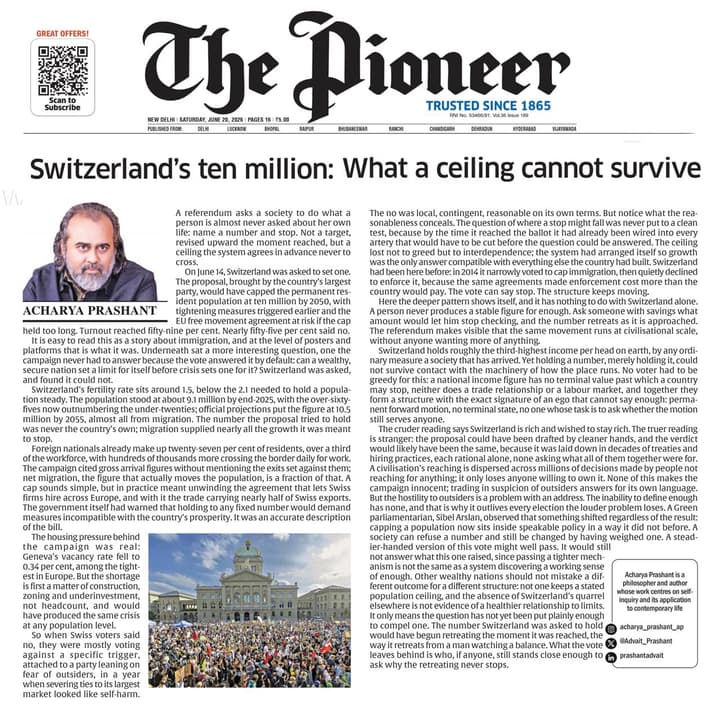
"A person never produces a stable figure for enough. Ask someone with savings what amount would let him stop checking, and the number retreats as it is approached. The Swiss population referendum makes visible that the same movement runs at civilisational scale, without anyone wanting more of anything. Together they form a structure with the exact signature of an ego that cannot say enough."

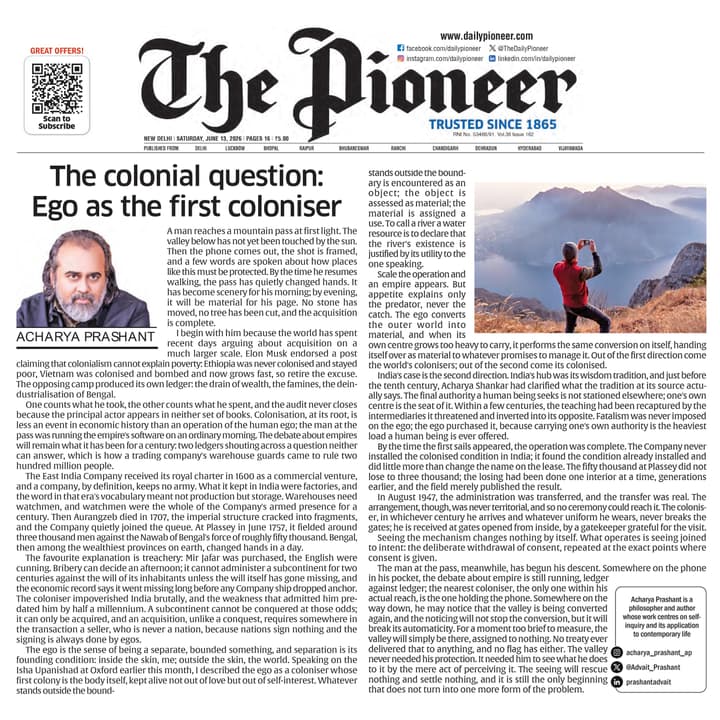
"A man reaches a mountain pass at first light, three hours of walking in the dark behind him. The valley below has not yet been entered by the sun; the river on its floor is a grey thread, older than the language he thinks in. He stands still for perhaps a minute."

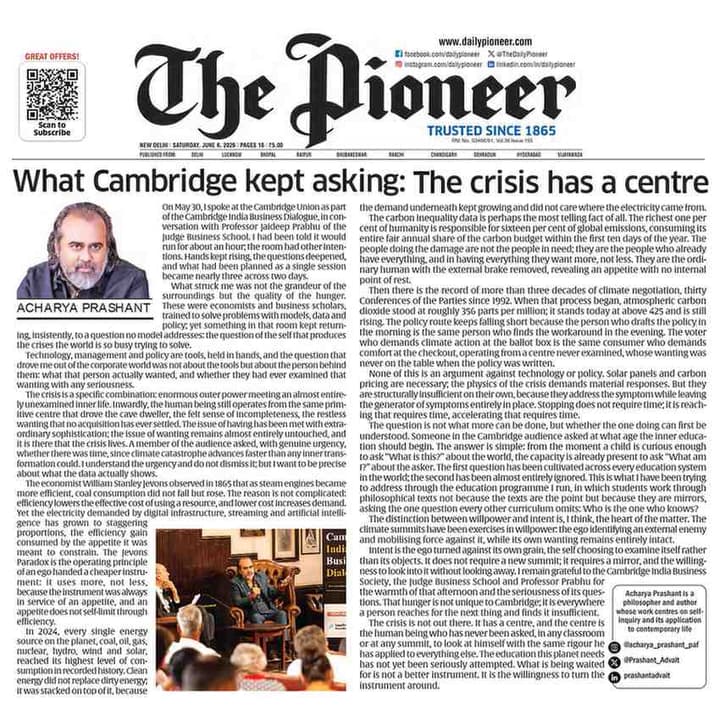
"On the 30th of May, I spoke at the Cambridge Union as part of the Cambridge India Business Dialogue, in conversation with Professor Jaideep Prabhu of the Judge Business School. I had been told the session would run for about an hour; the room had other intentions."

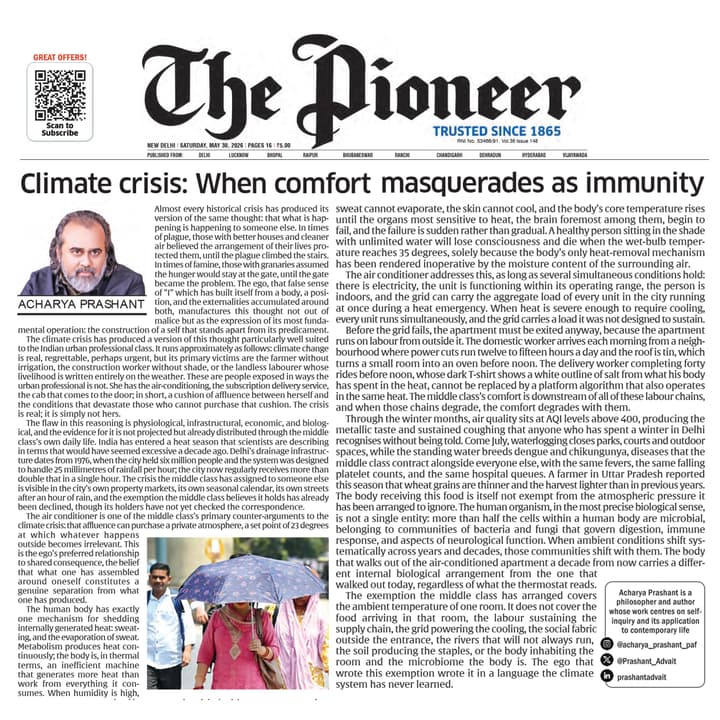
Almost every historical crisis has produced its version of the same thought: what is happening is happening to someone else. The climate crisis has produced a version of this thought particularly well-suited to the Indian urban professional class: climate change is real, but its primary victims are the farmer without irrigation, the construction worker or the landless labourer. The crisis the middle class has assigned to someone else is visible in the city's own property markets, its own seasonal calendar, its own streets after an hour of rain, and the exemption the middle class believes it holds has already been declined, though its holders have not yet checked the correspondence.

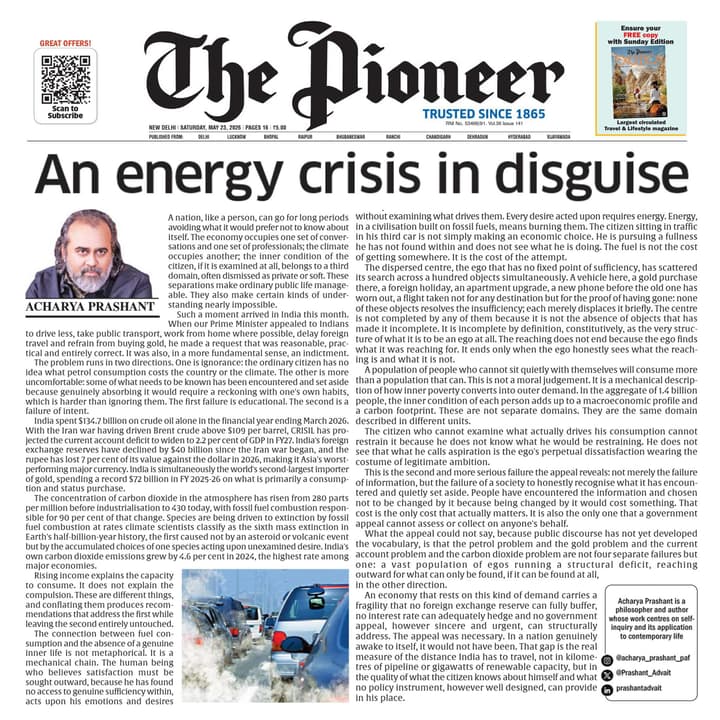
"The connection between fuel consumption and the absence of a genuine inner life is not metaphorical. It is a mechanical chain. The human being who believes that satisfaction must be sought outward, because he has found no access to genuine sufficiency within, acts upon his emotions and desires without examining what drives them. Every desire acted upon requires energy. Energy, in a civilisation built on fossil fuels, means burning them."

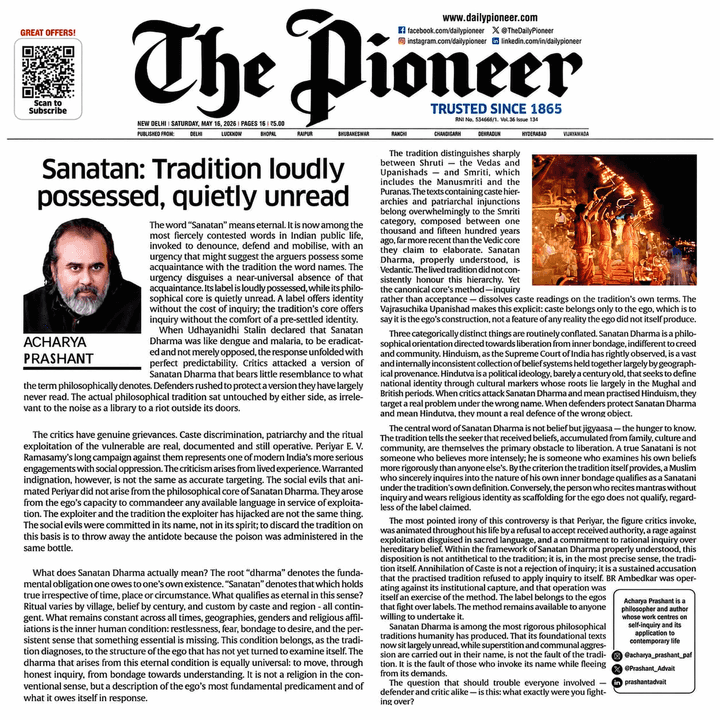
“When scriptures are reduced to symbols of identity instead of instruments of inquiry, tradition loses its living essence. Reverence without study creates pride, not understanding. And a civilisation that stops reading itself slowly becomes vulnerable to noise, imitation, and hollow ritual."

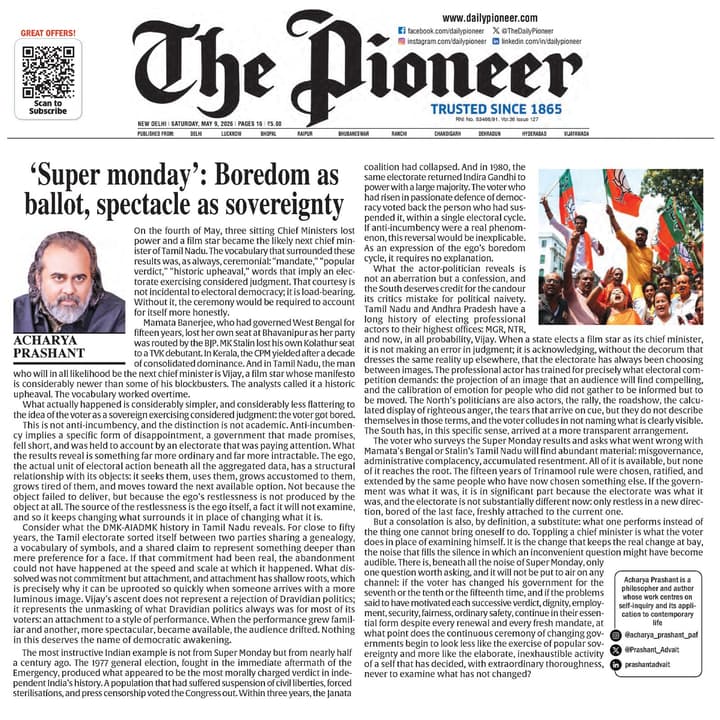
"Beneath all the noise of Super Monday, there's only one question worth asking: if the voter has changed his government for the seventh or the fifteenth time, and if the quality of what is governed has remained constant, if the problems said to have motivated each successive verdict continue in their essential form, at what point does the ceremony of changing governments begin to look less like the exercise of popular sovereignty and more like the elaborate activity of a self that has decided never to examine what has not changed?"

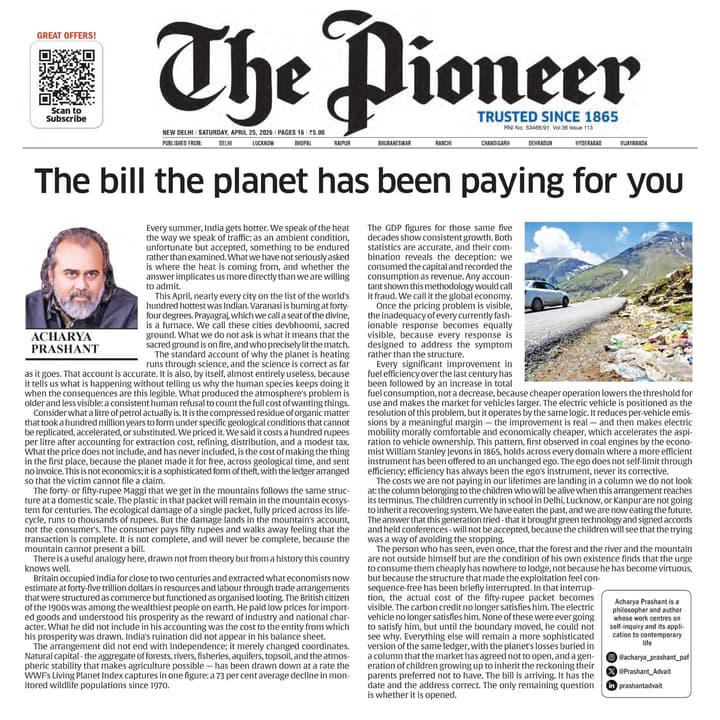
"The mountains are on fire and India's cities are furnaces. The bill for two centuries of mispriced consumption is arriving on a schedule that runs ahead of every published forecast. The question that remains is a simple one: whether the person who drove up to the hills, ate the Maggi, and tossed the packet into the ravine is willing to reckon with the distance between what he paid and what it cost."

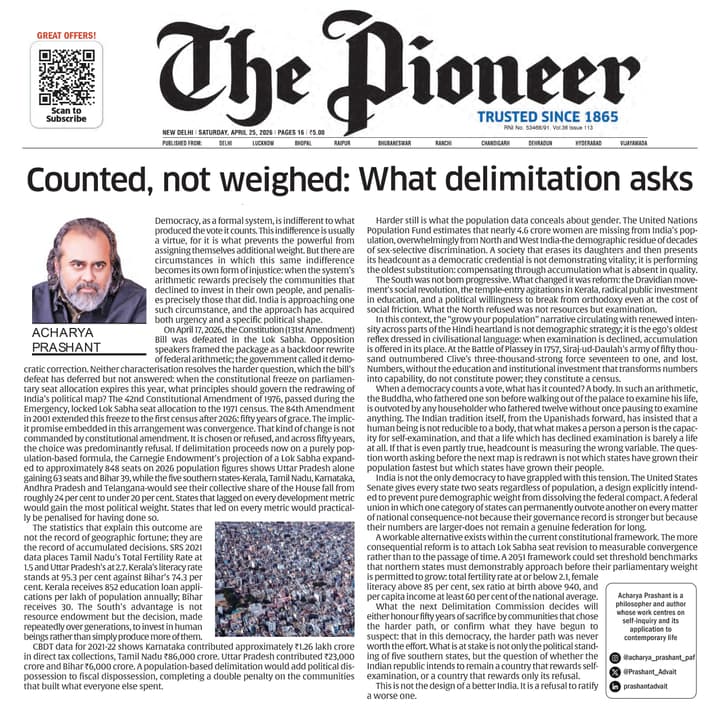
"A delimitation that diminishes the political standing of societies with its highest-performing institutions is not simply an injustice to them; it is a statement about what India believes political standing should be based on. A country that wants to earn its place in the world as a knowledge economy cannot build that future on a political architecture that the builders of its knowledge economy will experience as a systematic penalty for having built it."

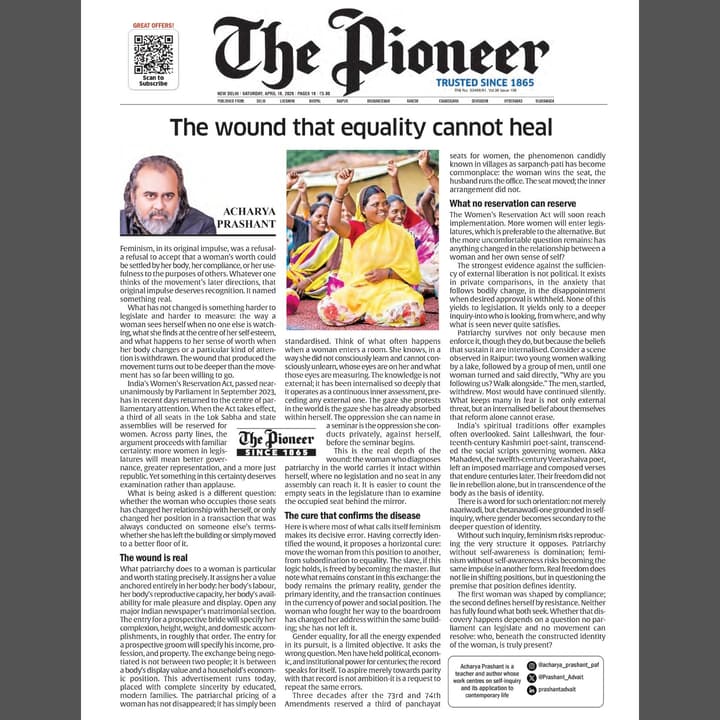
"The Women's Reservation Act will soon reach implementation. More women will enter legislatures, which is preferable to the alternative. But the question being avoided in all this discussion is more uncomfortable: has anything changed in the relationship between a woman and her own sense of self? The hardest evidence against the adequacy of external liberation is not political. It lives in her inner life. That doesn't yield to legislation or to awareness of patriarchy as a social structure."

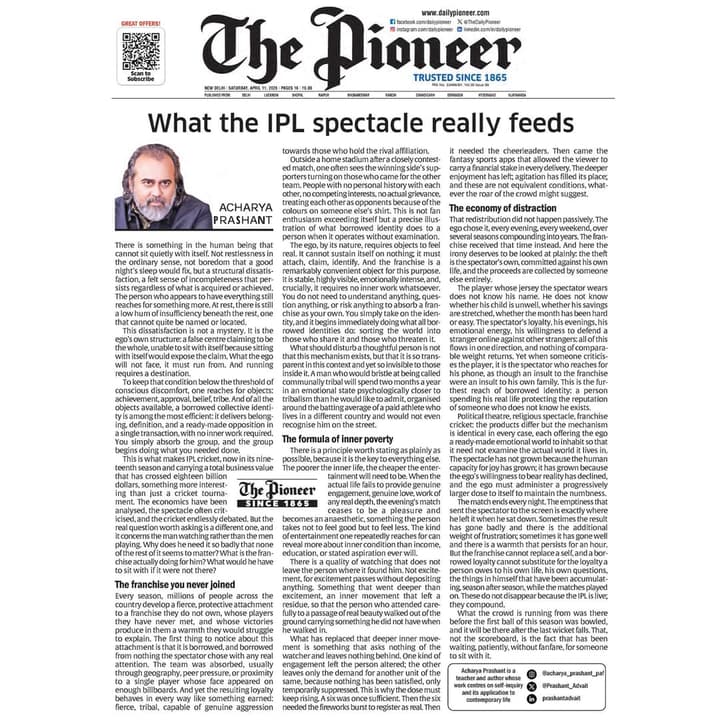
There is a reason the entertainment apparatus grows more elaborate, more expensive, and more omnipresent when the ground-level facts of existence are becoming harder to look at. Political theatre, religious spectacle, franchise cricket: the products differ but the mechanism is identical in every case, each offering the ego a ready-made emotional world to inhabit so that it need not examine the actual world it lives in.

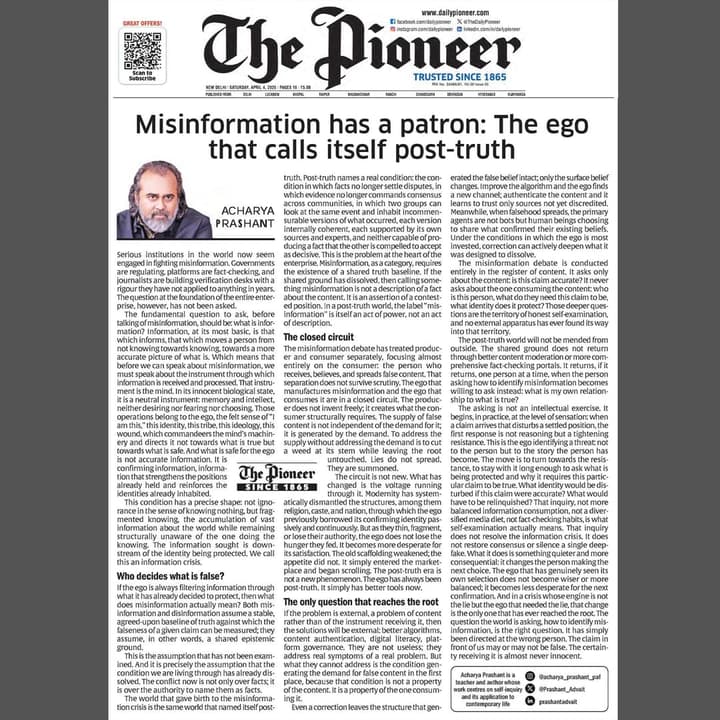
"If the ego is always filtering information through what it has already decided to protect, then what does misinformation actually mean? Both misinformation and disinformation assume a stable, agreed-upon baseline of truth against which the falseness of a given claim can be measured. This is the assumption that has not been examined."

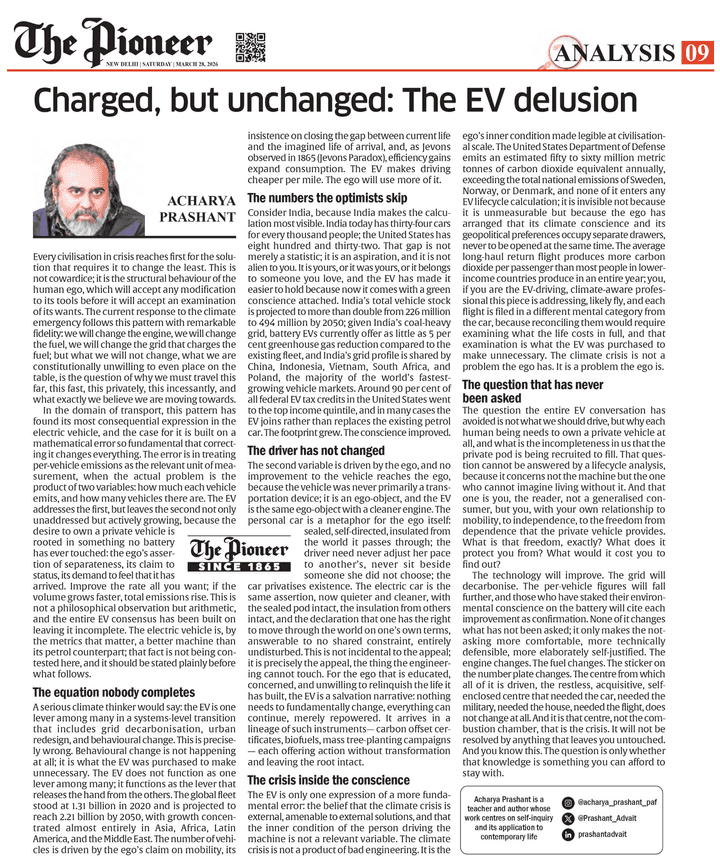
"Every civilisation in crisis reaches first for the solution that requires it to change the least. This is not cowardice; it is the structural behaviour of the human ego, which will accept any modification to its tools before it will accept an examination of its wants."

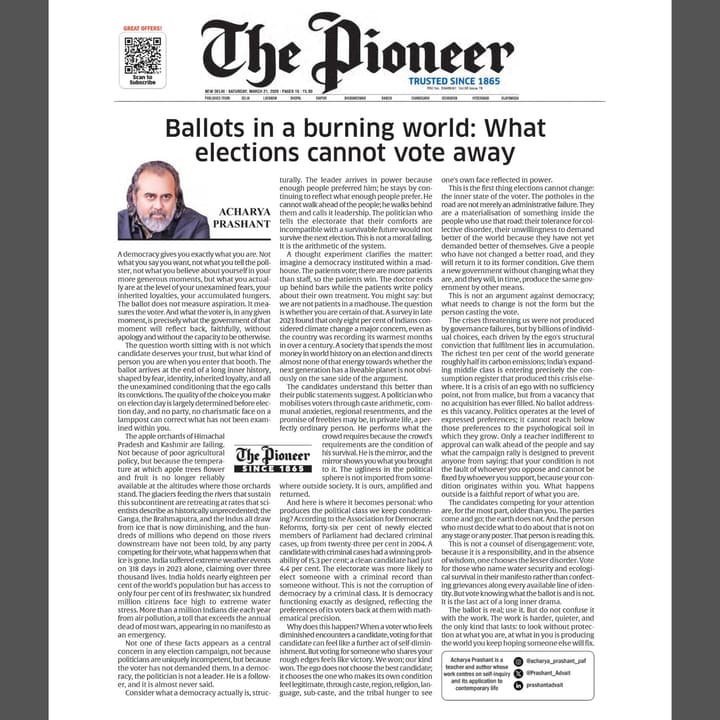
"Democracy does not give you what you want—it gives you what you are. A hard look at how the voter’s inner state shapes the nation more than any leader ever can."

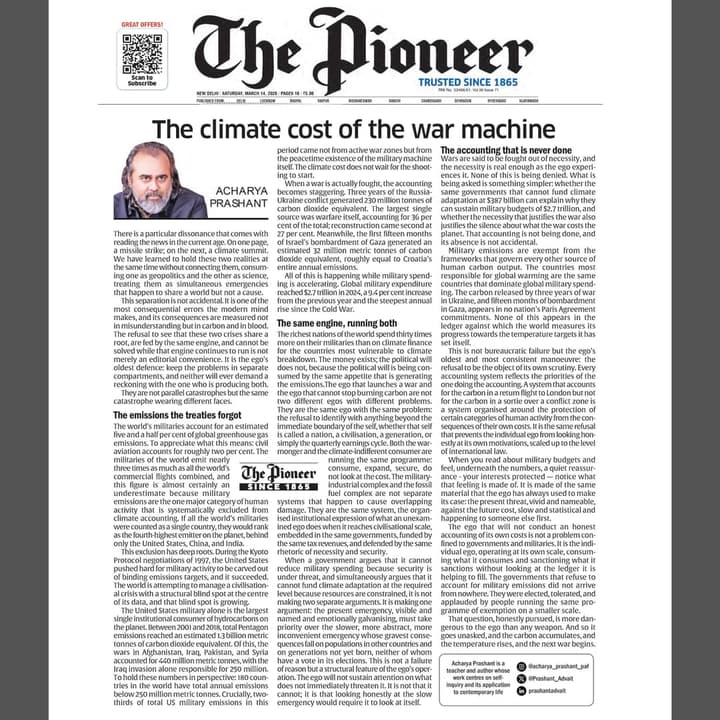
“War is not only a humanitarian disaster; it is also an environmental one. Modern warfare devours fuel, burns cities, poisons soil and air, and leaves behind scars that last far longer than the battles themselves. Even as nations pledge to fight climate change, the machinery of war continues to run on a scale that quietly undermines those very promises.”

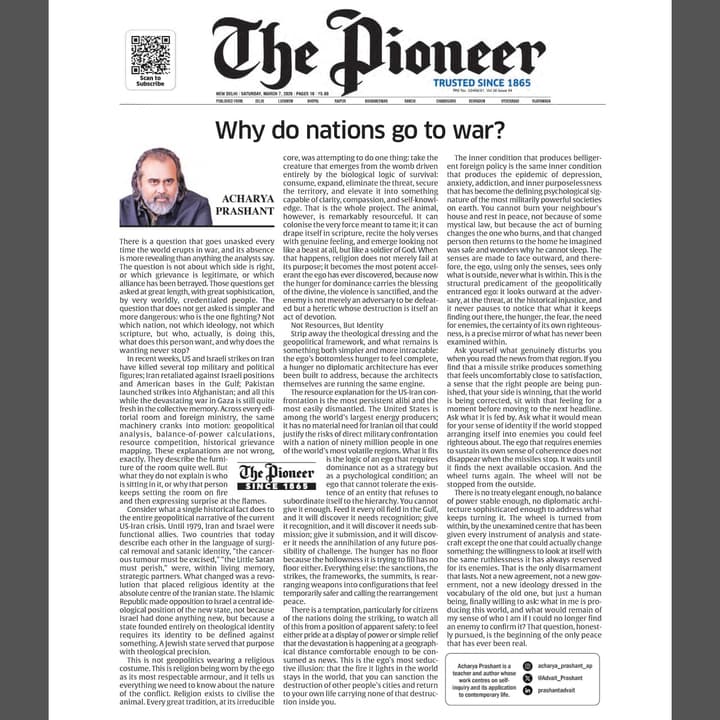
"The inner condition that produces belligerent foreign policy is the same one that produces the epidemic of depression, anxiety, addiction, and inner purposelessness that's become the defining psychological signature of the most militarily powerful societies on earth. You cannot burn your neighbour’s house and rest in peace, not because of some mystical law, but because the act of burning changes the one who burns."

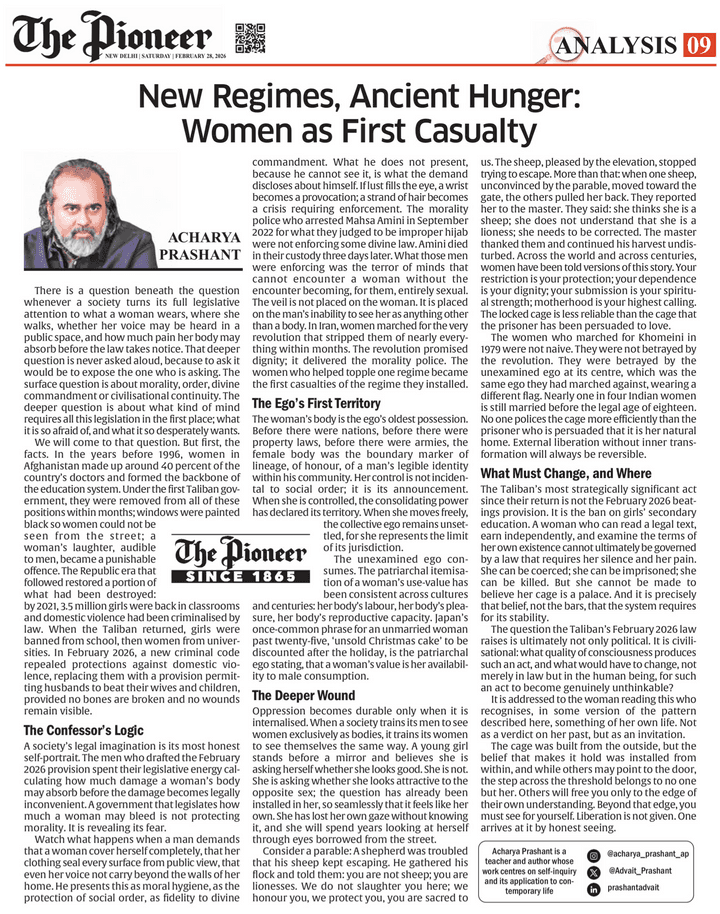
"There is a question beneath the question whenever a society turns its full legislative attention to what a woman wears, where she walks, whether her voice may be heard in a public space, and how much pain her body may absorb before the law takes notice."

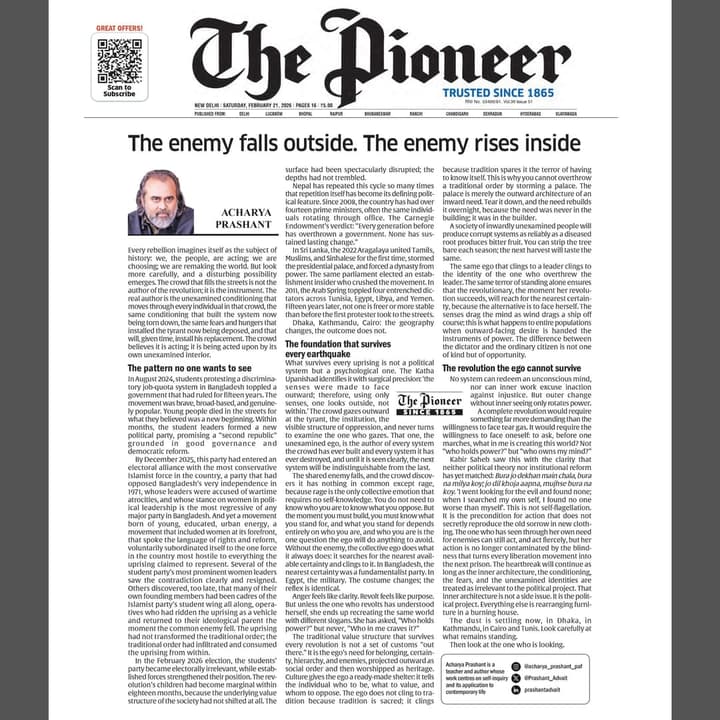
"Every rebellion imagines itself as the subject of history: we, the people, are acting; we are choosing; we are remaking the world. But look more carefully, and a disturbing possibility emerges. The crowd that fills the streets is not the author of the revolution"

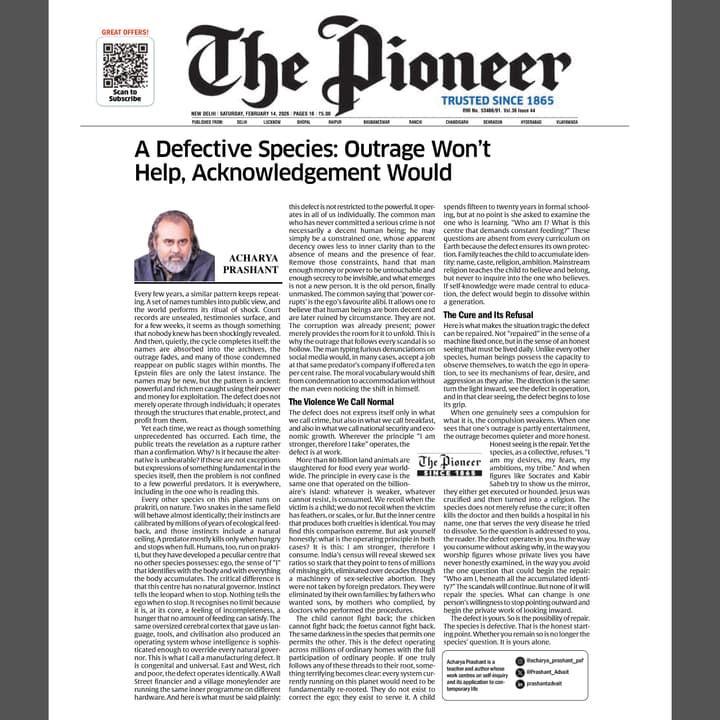
"Every few years, a similar pattern keeps repeating. A set of names tumbles into public view, and the world performs its ritual of shock. And then, quietly, the cycle completes itself: the outrage fades, the names are absorbed into the archives, and the pattern continues."

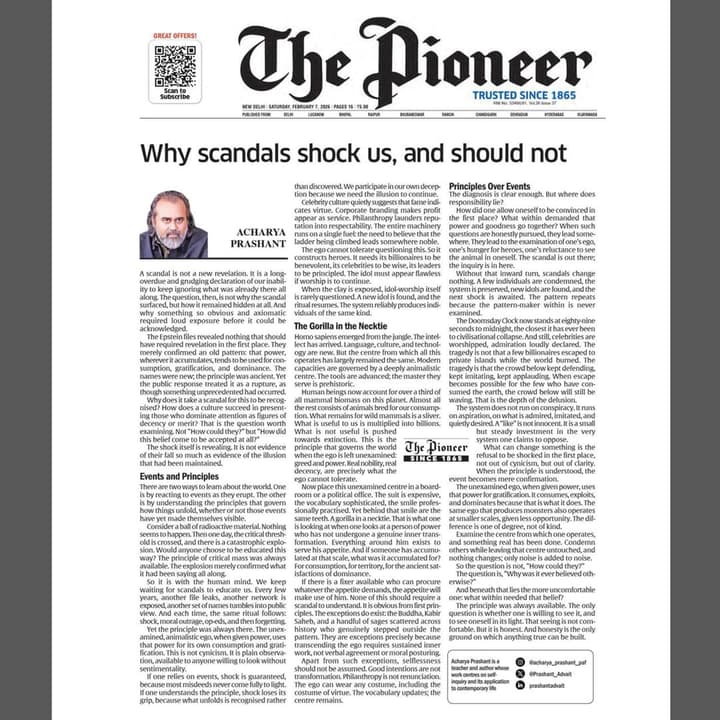
"If one relies on events, shock is guaranteed, again and again, because most misdeeds never come fully to light. Scandals are not reliable teachers. If one understands the principle, shock loses its grip, because what unfolds is recognised rather than discovered."
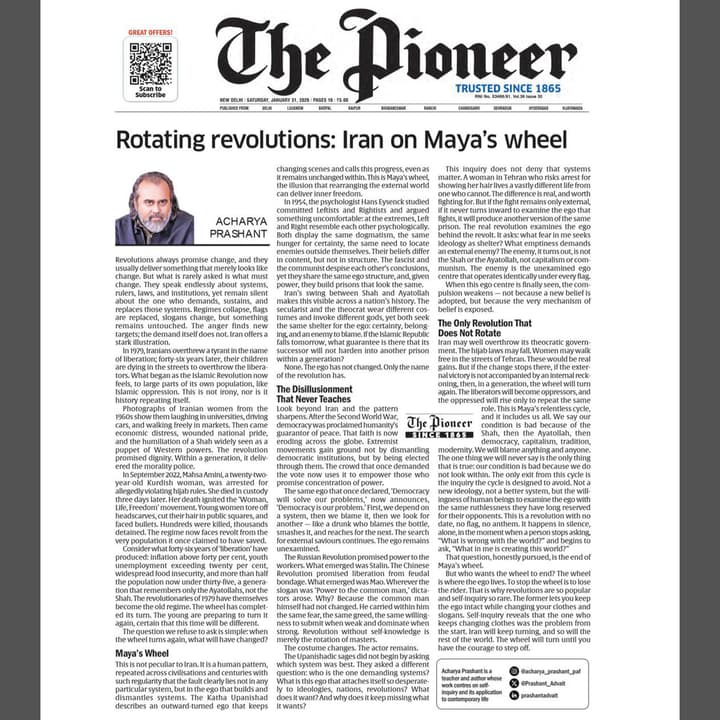
“Revolutions always promise change, and they usually deliver something that merely looks like change. Regimes collapse, flags are replaced, slogans change, but something remains untouched. The question we refuse to ask is simple: when the wheel turns again, what will have changed?”

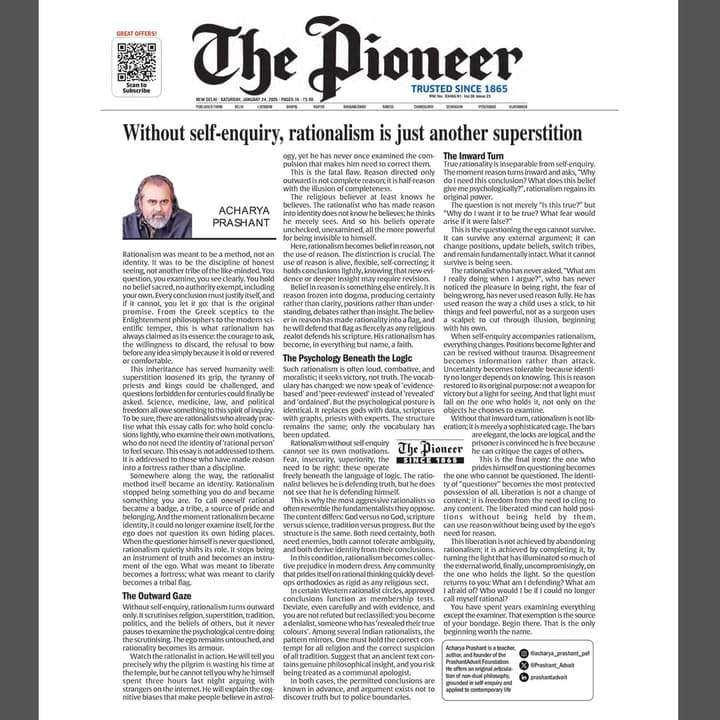
"Without self-enquiry, rationalism turns outward-only. It scrutinizes religion, superstition, tradition, politics, and the beliefs of others, but it never pauses to examine the psychological centre doing the scrutinizing. The ego remains untouched, and rationality becomes its armour."

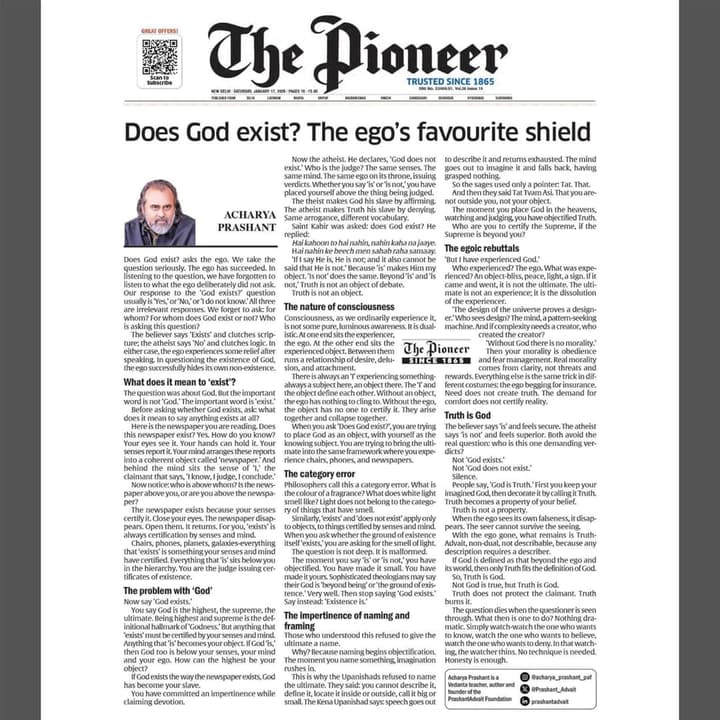
"The believer says ‘Exists’ and clutches scripture, the atheist says ‘No’ and clutches logic. In either case, the ego experiences some relief after speaking. In questioning the existence of God, the ego successfully hides its own non-existence."

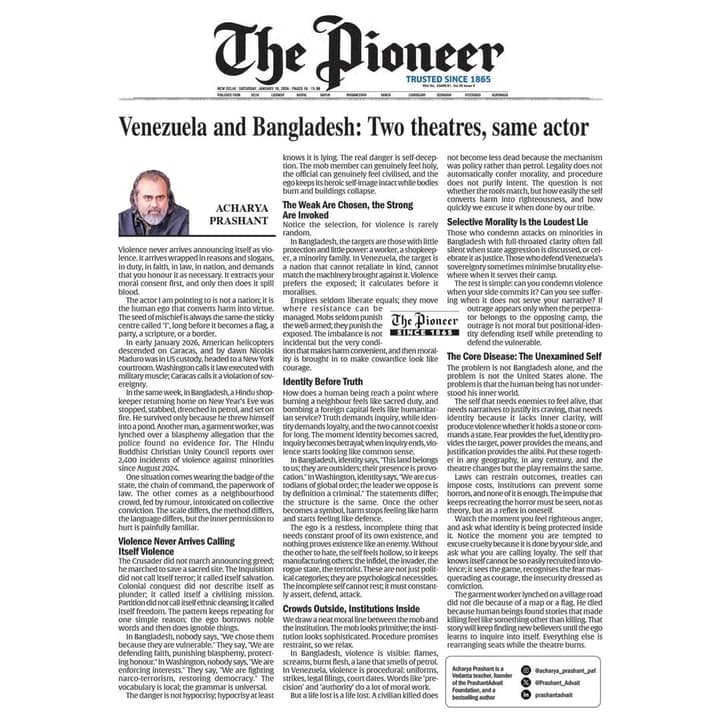
"Violence never arrives announcing itself as violence. It arrives wrapped in reasons and slogans, in duty, in faith, in law, in nation, and demands that you honour it as necessary. It extracts your moral consent first, and only then does it spill blood."

"What we call new is almost always the old in fresh wrapping. The calendar changes; the person does not. A digit shifts from five to six, yet the one who reads it remains imprisoned in the same patterns, the same desires, the same fears. New programmes, new resolutions, new routines: none of it works, because we have tried all of it before in different forms."

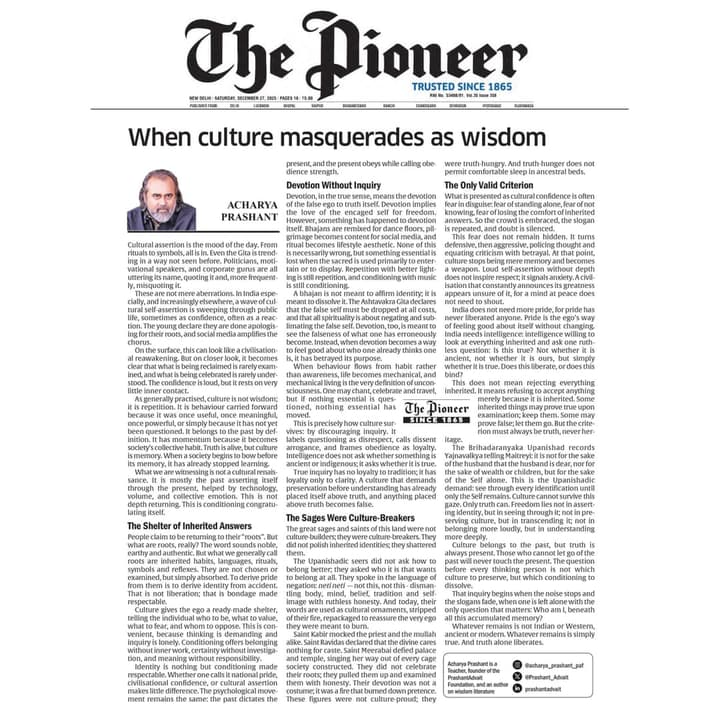
"As generally practised, culture is not wisdom; it is repetition. It is behaviour carried forward because it was once useful, once meaningful, once powerful, or simply because it has not yet been questioned. It belongs to the past by definition. It has momentum because it becomes society’s collective habit."

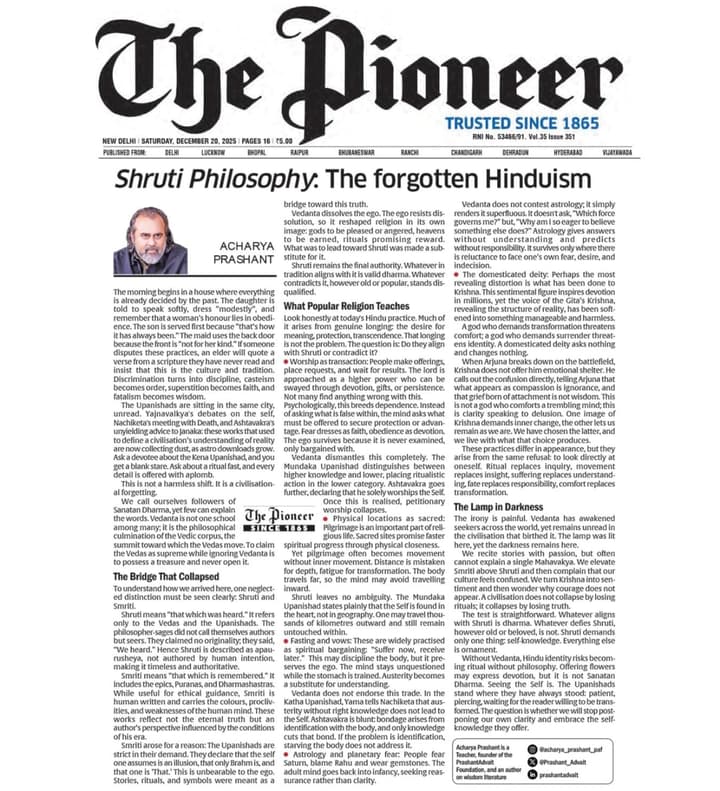
"The test is straightforward. Whatever aligns with Shruti is dharma. Whatever defies Shruti, however old or beloved, is not. Shruti demands only one thing: self-knowledge. Everything else is ornamental."

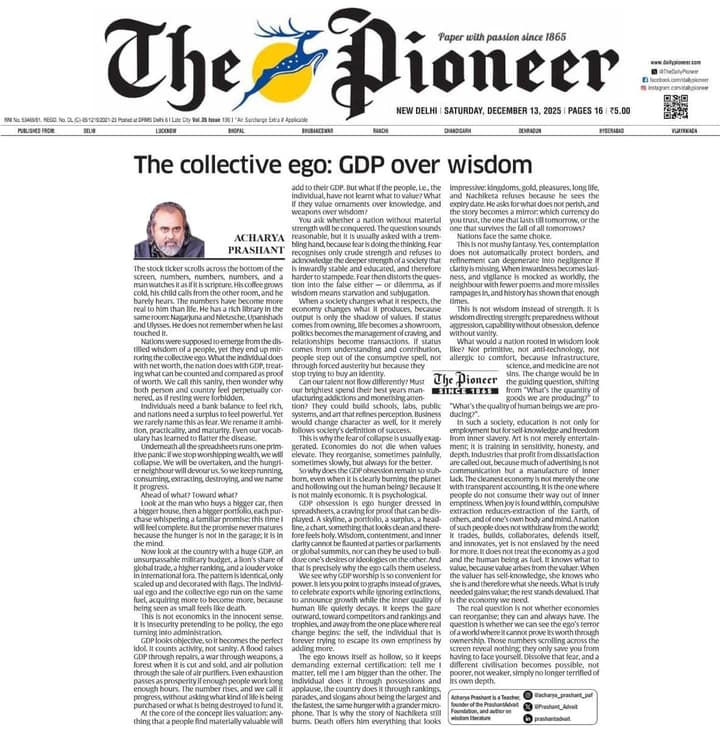
“When a society changes what it respects, the economy changes what it produces, because output is only the shadow of values. If status comes from owning, life becomes a showroom, politics becomes the management of craving, and relationships become transactions.”

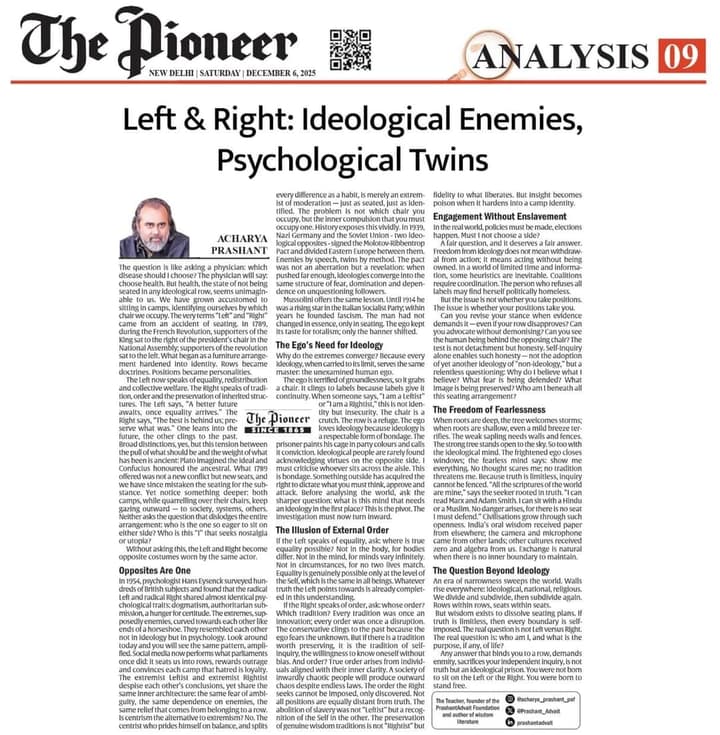
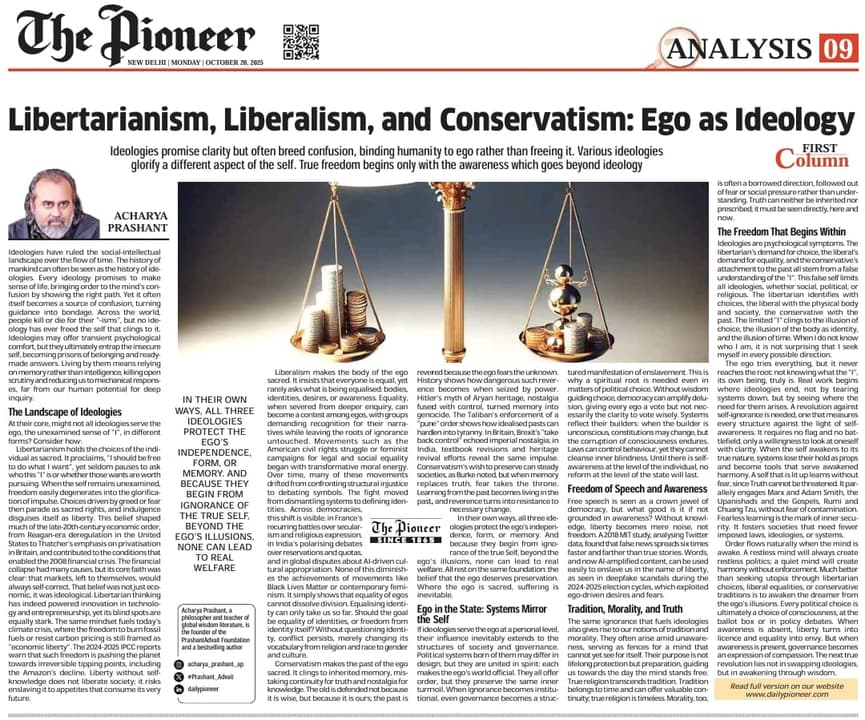
"The ego is terrified of groundlessness, so it grabs a chair. It clings to labels because labels give it continuity. When someone says, ‘I am a Leftist’ or ‘I am a Rightist,’ this is not identity but insecurity. The chair is a crutch. The row is a refuge. The ego loves ideology because ideology is a respectable form of bondage. The real question is not Left versus Right. You were not born to sit on the Left or the Right. You were born to stand free."

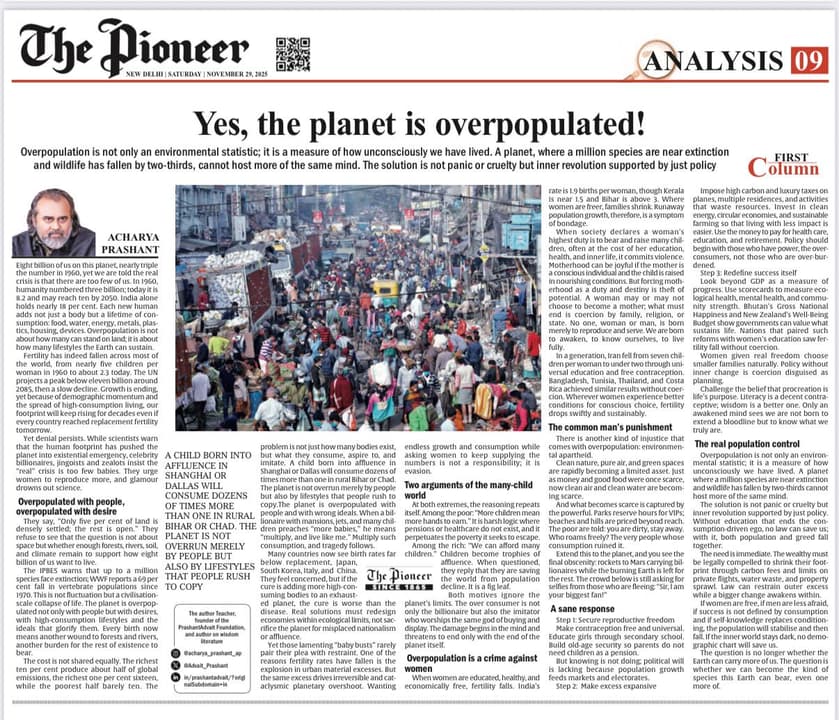
"Yes, the planet is overpopulated, but not merely with human bodies. It is overpopulated with high‑consumption lifestyles and with the ideals that glorify them. The way we are living, every additional human birth often means one more wound to the forests, the rivers, the climate, and the other species that must make space for us. When one more human is added in this prevailing culture of ignorant consumption, the rest of existence has one more burden to carry."

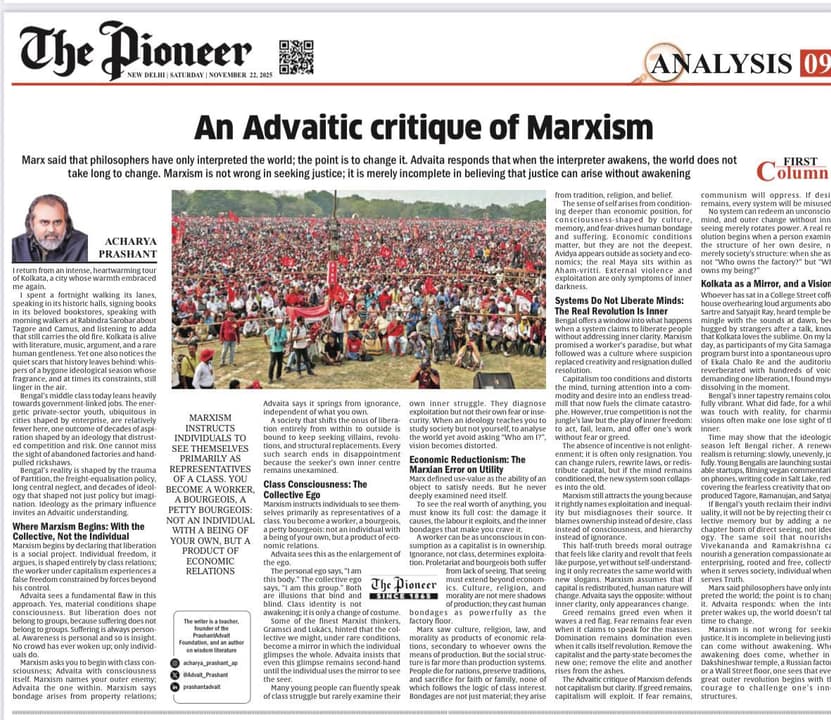
"Marxism is not wrong for seeking justice. It is incomplete in believing justice can come without awakening. When awakening does come, whether in a Kolkata adda, a Dakshineshwar temple, a Russian factory, a Wall Street floor, or a village panchayat, one sees that every great outer revolution begins when one has the courage to challenge one’s inner structures."

"Governments cannot enforce what people do not inwardly accept. The same person who demands climate action as a citizen demands consumption as a buyer. The voter and the consumer are the same person, unwilling to live with less. No political system survives long by asking its people to sacrifice comfort. So governments sign accords, issue statements, and return home to protect normalcy."

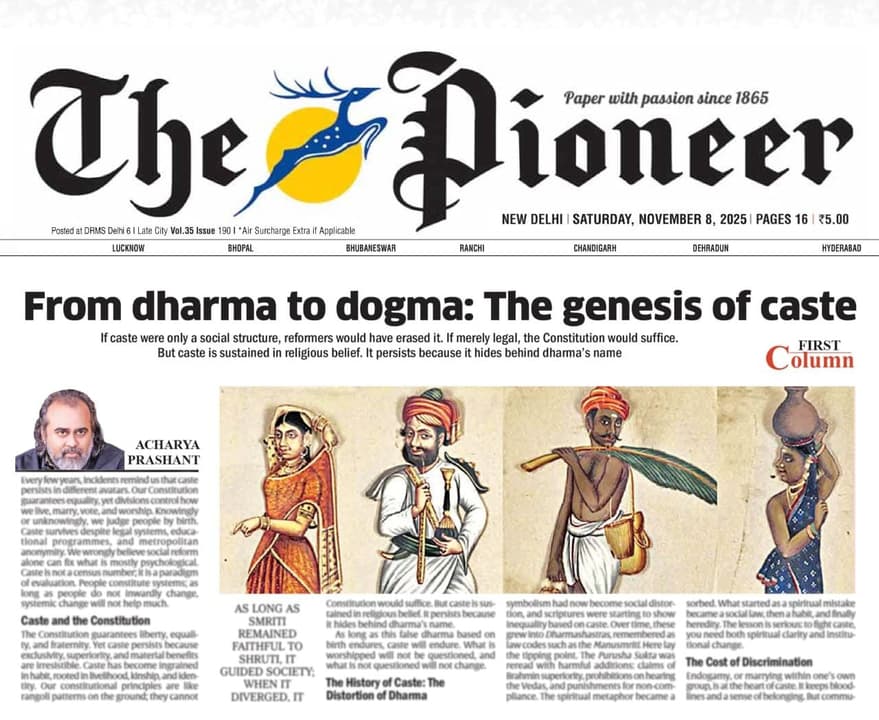
"If caste were only a social structure, reformers would have erased it. If merely legal, the Constitution would suffice. But caste is sustained in religious belief. It persists because it hides behind Dharma's name."

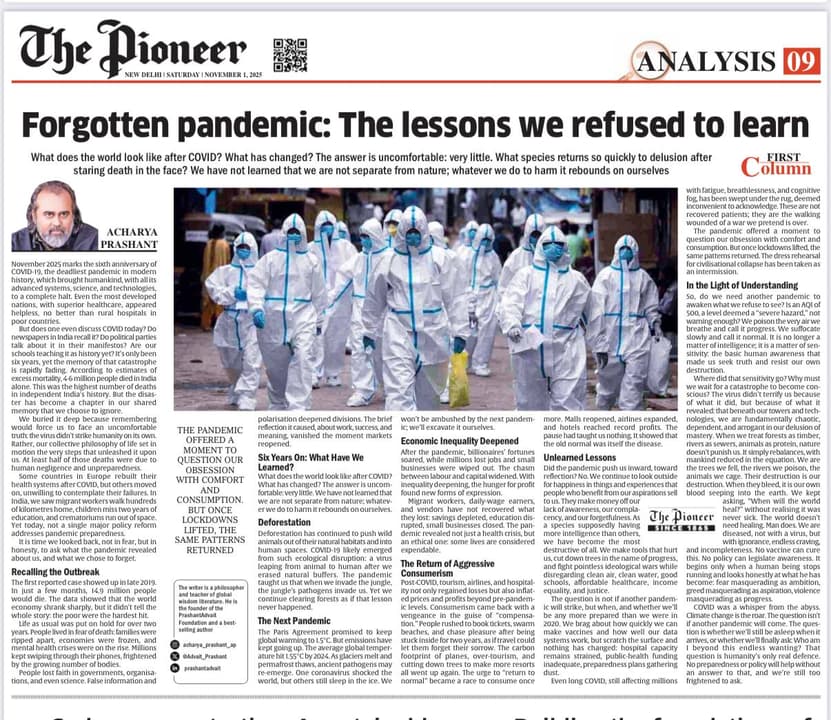
"What does the world look like after COVID? What has changed? The answer is uncomfortable: very little. What species returns so quickly to delusion after staring death in the face? We have not learned that we are not separate from nature; whatever we do to harm it rebounds on ourselves."

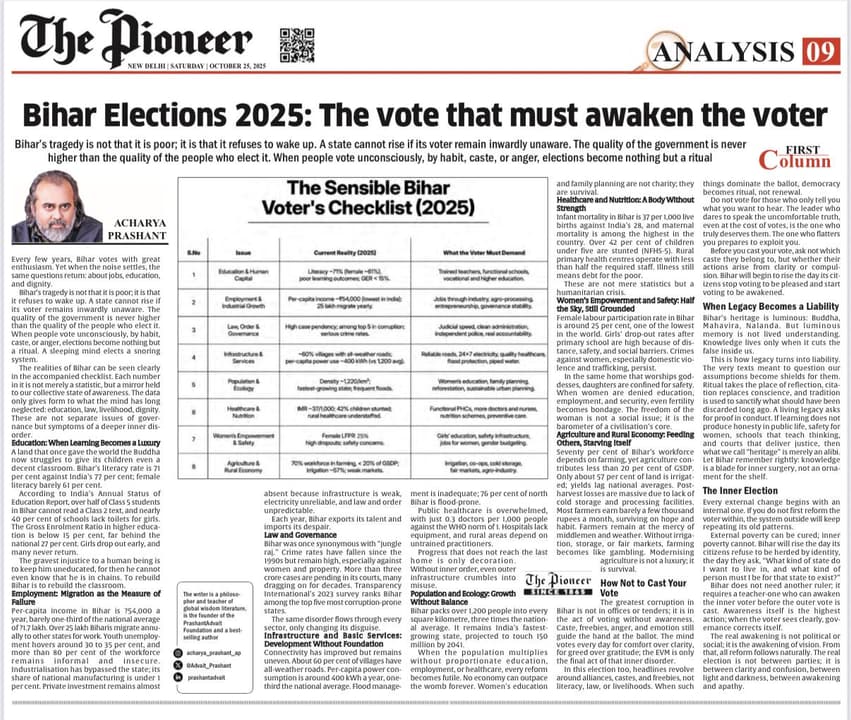
"Bihar’s tragedy is not that it is poor; it is that it refuses to wake up. A state cannot rise if its voter remain inwardly unaware. The quality of the government is never higher than the quality of the people who elect it. When people vote unconsciously, by habit, caste, or anger, elections become nothing but a ritual. A sleeping mind elects a sleeping system."

"In their own ways, all three ideologies protect the ego’s independence, form, or memory. And because they begin from ignorance of the true Self, none can lead to real welfare. All rest on the same foundation: the belief that the ego deserves preservation. Where the ego is sacred, suffering is inevitable."

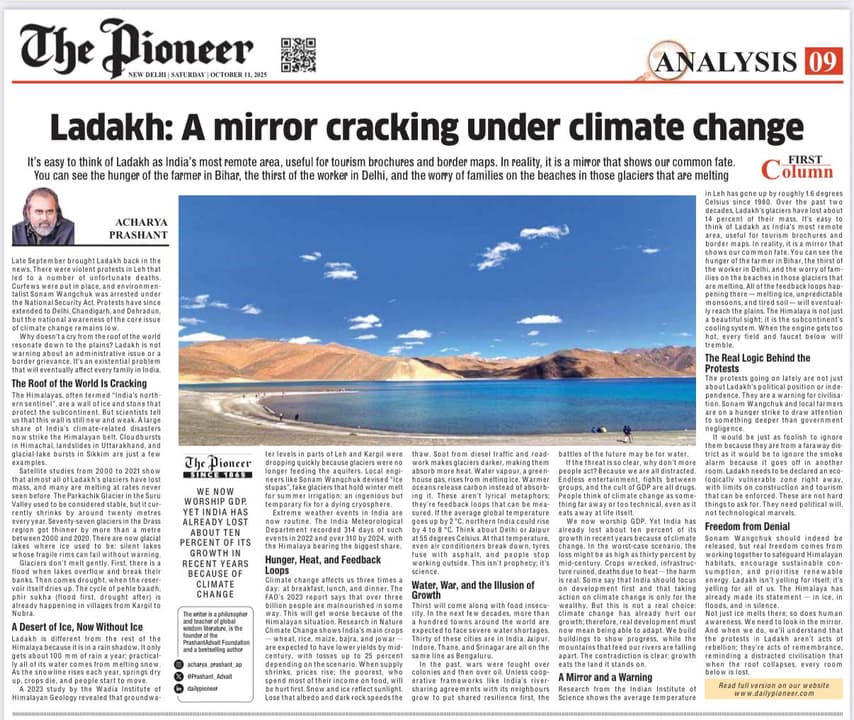
"It’s easy to think of Ladakh as India’s most remote area, useful for tourism brochures and border maps. In reality, it is a mirror that shows our common fate. You can see the hunger of the farmer in Bihar, the thirst of the worker in Delhi, and the worry of families on the beaches in those glaciers that are melting."

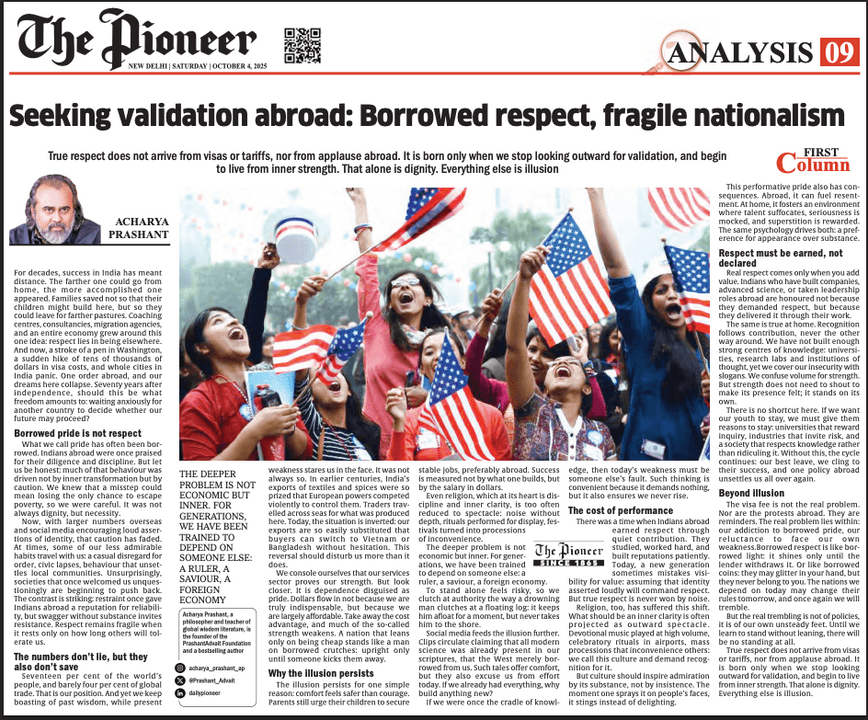
"True respect does not arrive from visas or tariffs, nor from applause abroad. It is born only when we stop looking outward for validation, and begin to live from inner strength. That alone is dignity. Everything else is illusion"

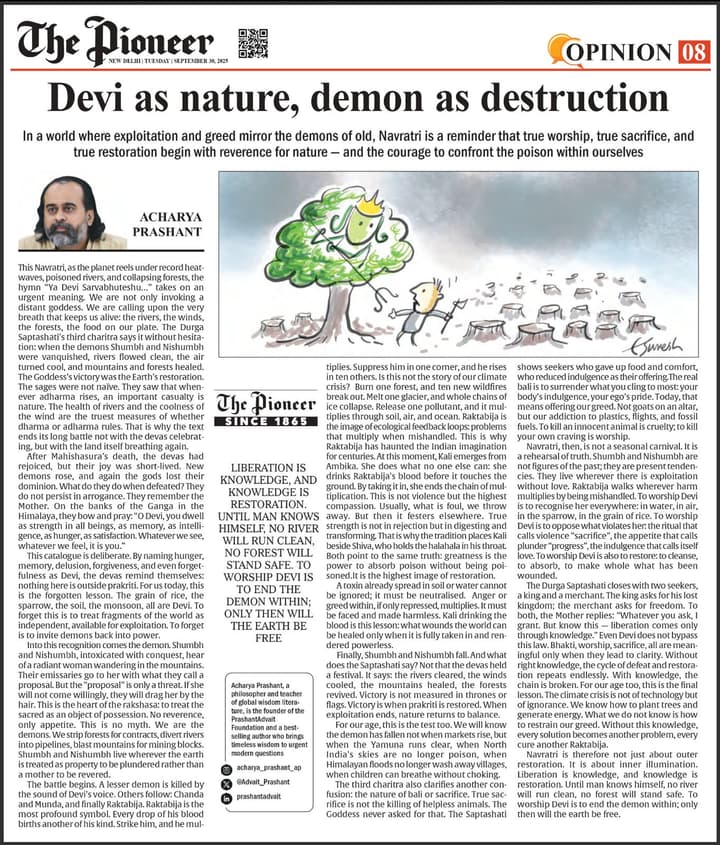
"In a world where exploitation and greed mirror the demons of old, Navratri is a reminder that true worship, true sacrifice, and true restoration begin with reverence for nature — and the courage to confront the poison within ourselves"

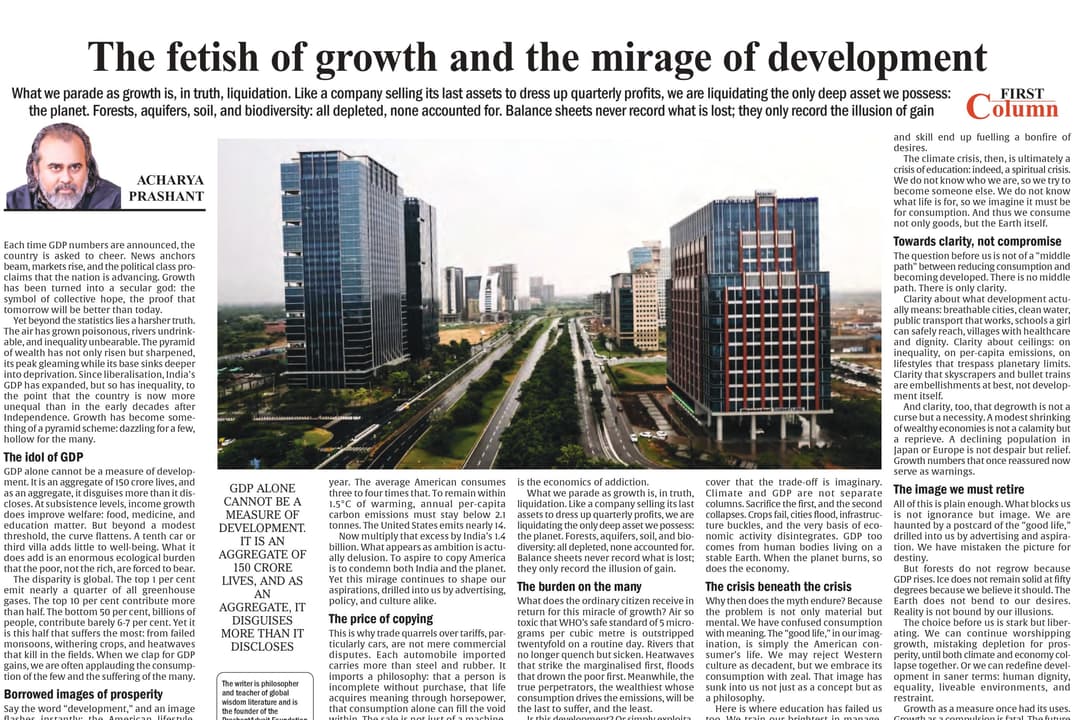
"What we parade as growth is, in truth, liquidation. Like a company selling its last assets to dress up quarterly profits, we are liquidating the only deep asset we possess: the planet. Forests, aquifers, soil, and biodiversity: all depleted, none accounted for."

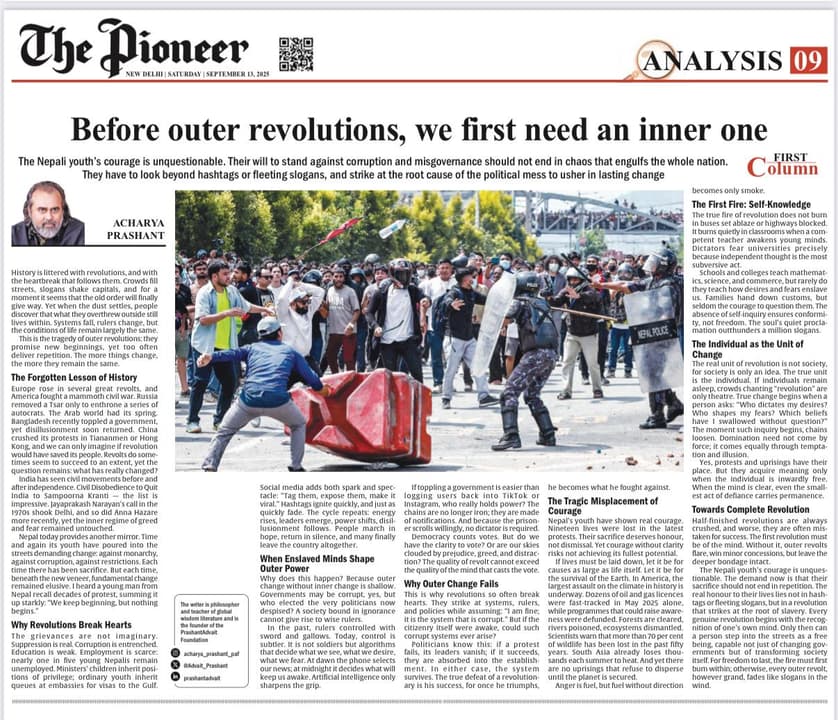
"The Nepali youth’s courage is unquestionable. The demand now is that their sacrifice should not end in repetition. The real honour to their lives lies not in hashtags or fleeting slogans, but in a revolution that strikes at the root of slavery."

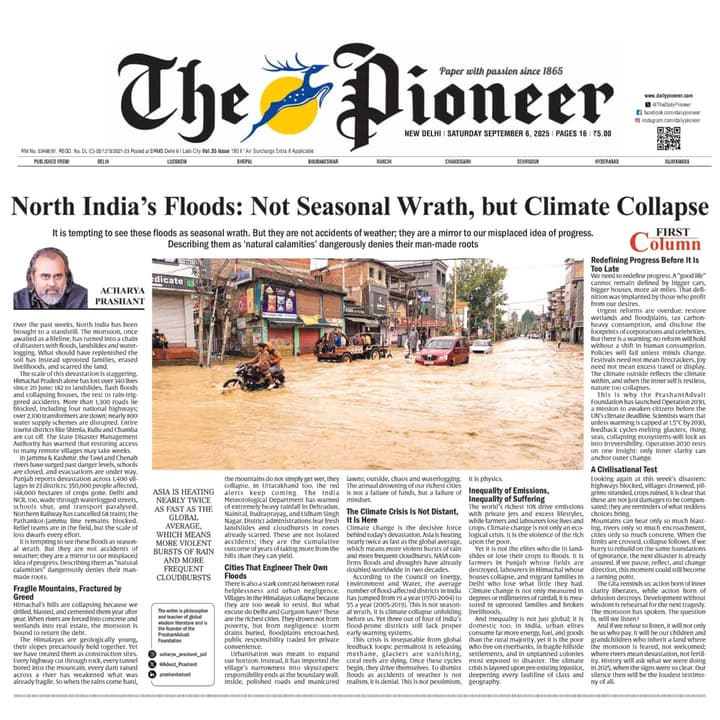
"It is tempting to see these floods as seasonal wrath. But they are not accidents of weather; they are a mirror to our misplaced idea of progress. Describing them as 'natural calamities' dangerously denies their man-made roots."

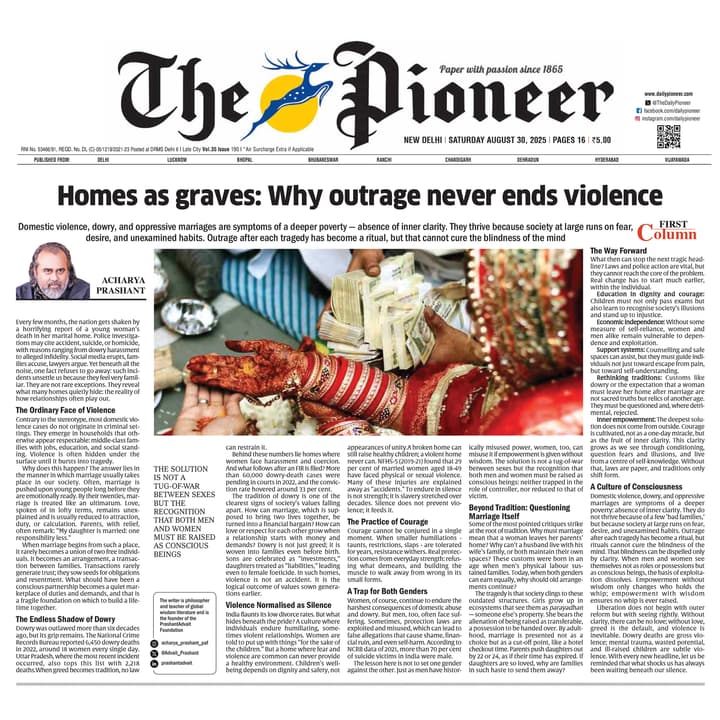
"Domestic violence, dowry, and oppressive marriages are symptoms of a deeper poverty — absence of inner clarity. They thrive because society at large runs on fear, desire, and unexamined habits. Outrage after each tragedy has become a ritual, but that cannot cure the blindness of the mind."

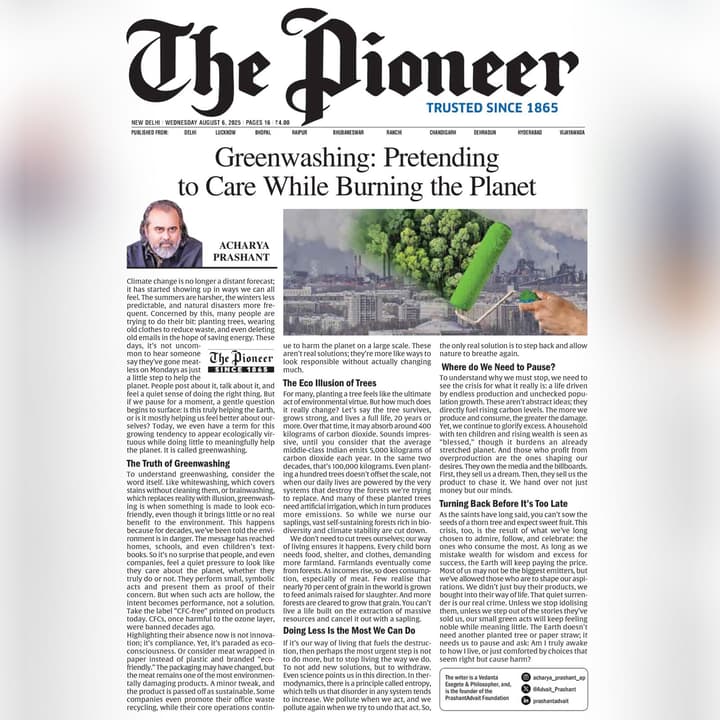
"Somewhere along the way, being ‘green’ became a way to signal that you’re thoughtful and responsible. So it’s no surprise that people, and even companies, feel a quiet pressure to look like they care about the planet, whether they truly do or not."

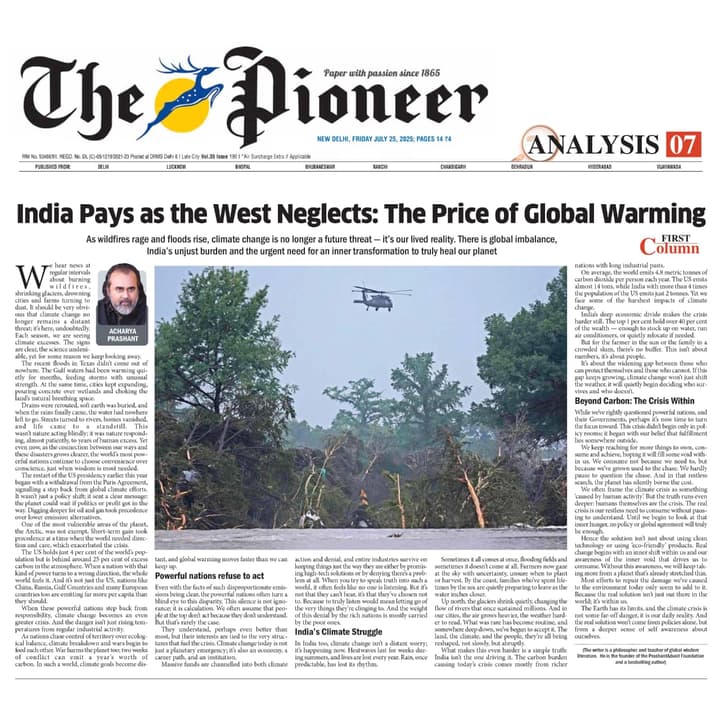
"Even with the facts of such disproportionate emissions being clear, the powerful nations often turn a blind eye to this disparity. This silence is not ignorance; it is calculation. We often assume that people at the top don’t act because they don’t understand. But that’s rarely the case. They understand, perhaps even better than most, but their interests are tied to the very structures that fuel the crisis."

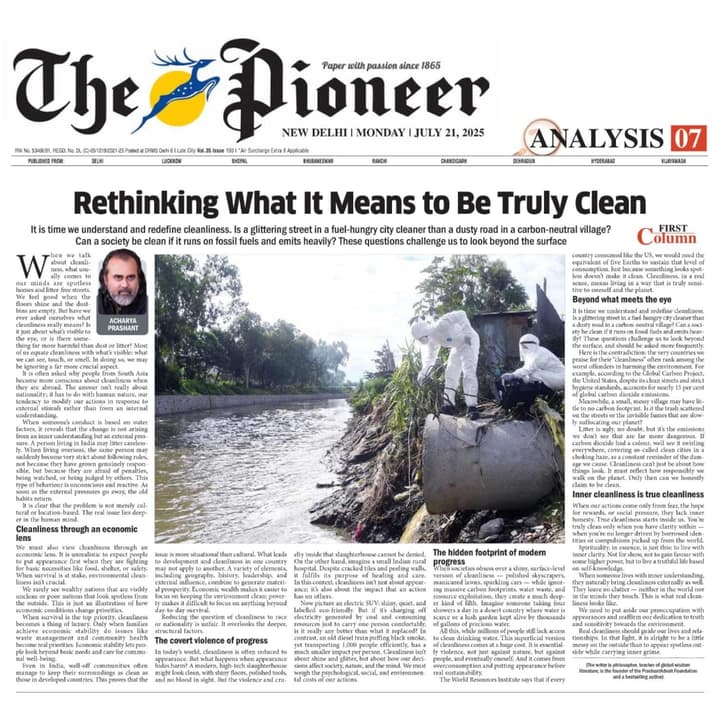
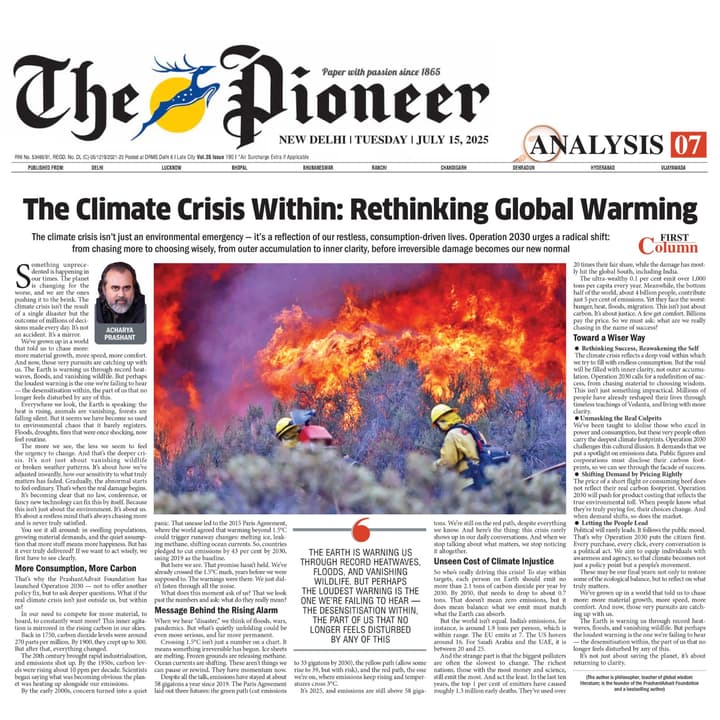
"It is time we understand and redefine cleanliness. Is a glittering street in a city that burns fuel cleaner than a dusty road in a carbon-neutral village? Can a society be clean if it runs on fossil fuels and emits heavily? These questions challenge us to look beyond the surface, and should be asked more frequently."

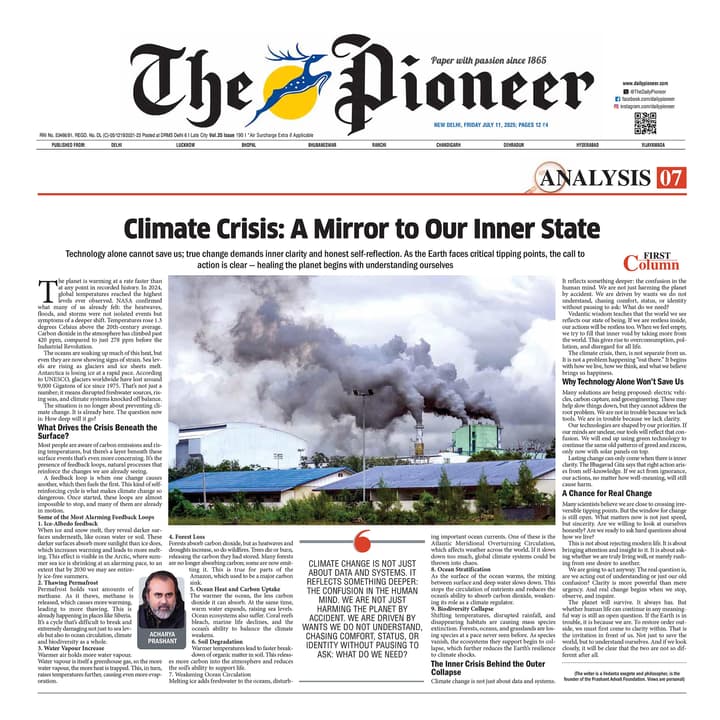
"Climate change is not just about data and systems. It reflects something deeper: the confusion in the human mind. We are not just harming the planet by accident. We are driven by wants we do not understand, chasing comfort, status, or identity without pausing to ask: What do we really need?"

"The climate crisis isn’t just an environmental emergency — it’s a reflection of our restless, consumption-driven lives. Operation 2030 urges a radical shift: from chasing more to choosing wisely, from outer accumulation to inner clarity, before irreversible damage becomes our new normal."

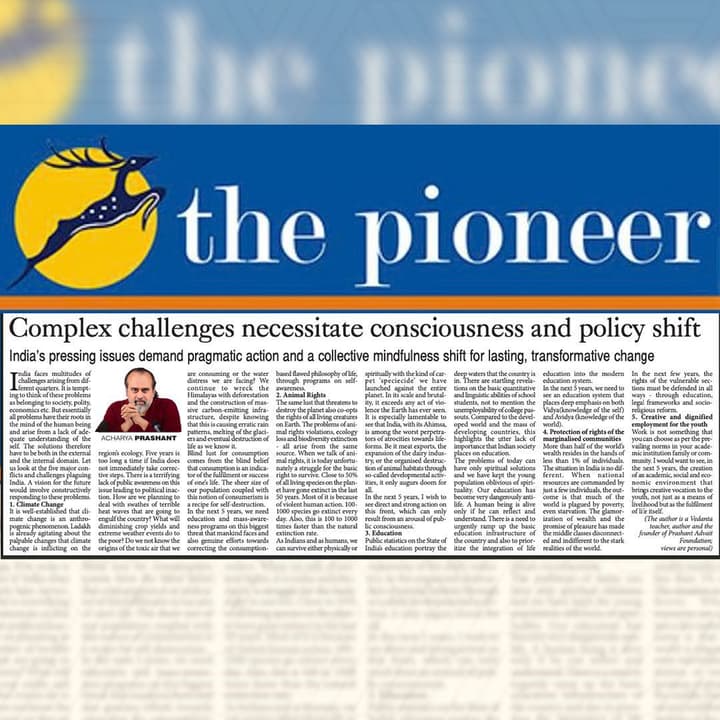
Acharya Prashant tackles India’s urgent issues—climate change, animal rights, education, marginalized communities' rights, and youth employment. He stresses the dual need for external corrective actions and internal spiritual awareness, highlighting the anthropogenic roots of climate problems. The piece advocates for a transformative shift towards sustainable lifestyles and governance, envisioning a future where India leads with mindfulness and collective effort. Read more in this The Pioneer article.

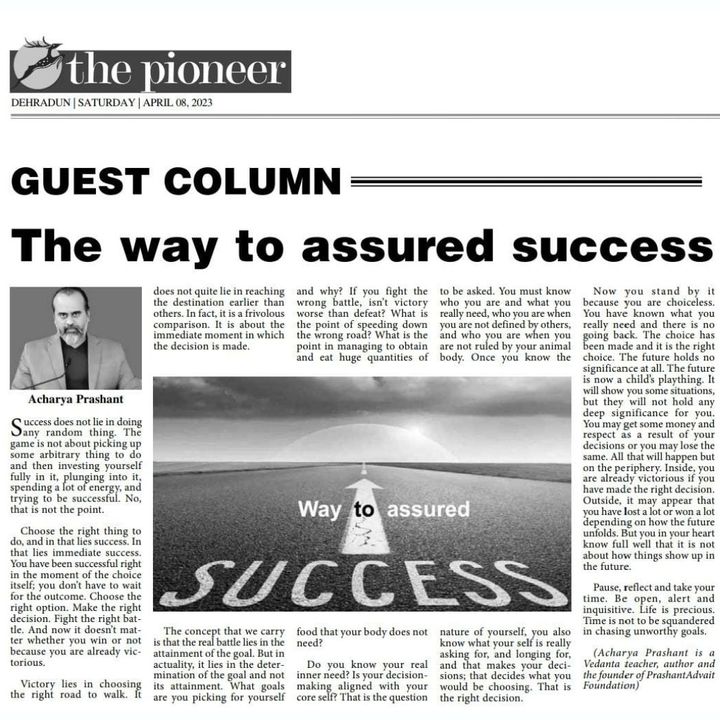
Acharya Prashant emphasizes that true success lies in making the right choices rather than simply achieving goals. He highlights the importance of aligning decisions with one's core self and inner needs, asserting that victory is found in the act of choosing the right path itself, rather than in the attainment of external outcomes.

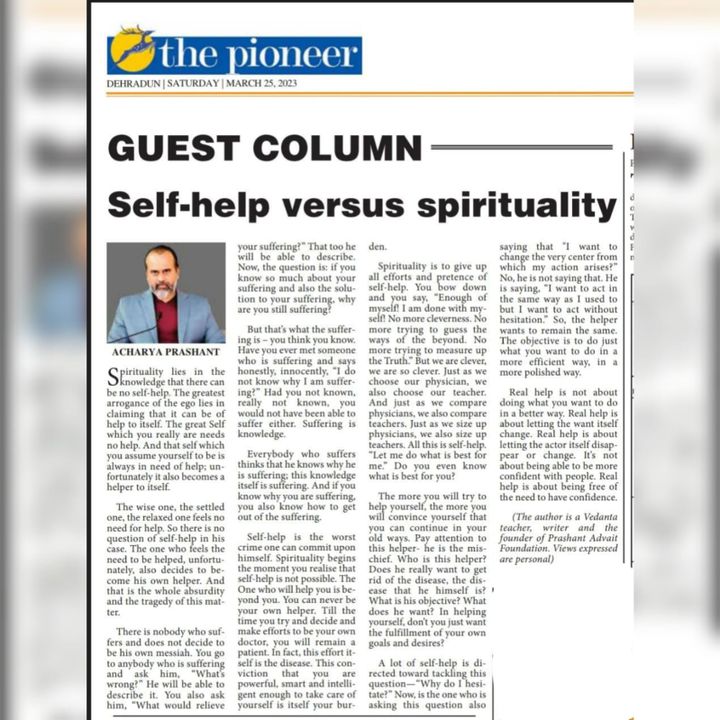
Acharya Prashant challenges the self-help illusion in The Pioneer, asserting true spirituality begins when the ego accepts it needs no aid, and transformation occurs by relinquishing ego control.

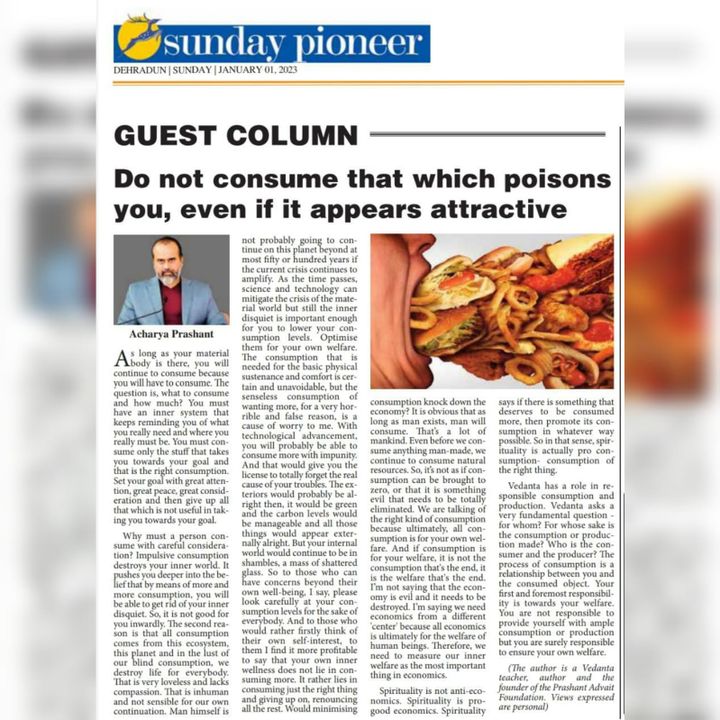
Delve into Acharya Prashant's illuminating perspective on consumption and inner peace in The Pioneer. As a renowned Vedanta teacher, he advocates for mindful consumption, urging readers to align their consumption habits with personal well-being and environmental sustainability.

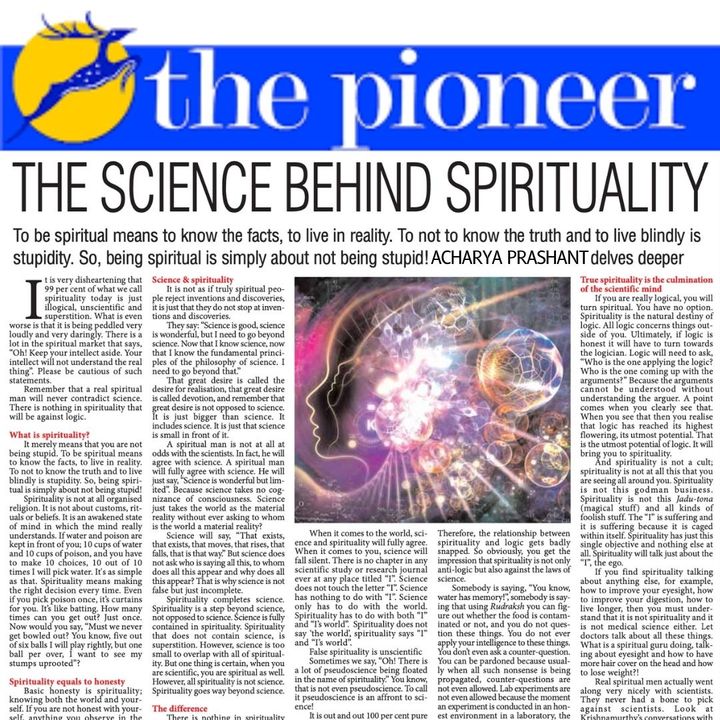
Delve into Acharya Prashant's profound views on the intersection of science and spirituality, as covered by The Pioneer. He emphasizes the logical foundation of true spirituality, contrasting it with prevalent superstitions in today's spiritual market. Acharya Prashant's teachings highlight the importance of honesty and clarity in understanding both oneself and the world, advocating for a scientific approach that transcends mere materialism.

"If you find yourself procrastinating, if you find that you have fixed a schedule for yourself and you can't stick to it, then that is a clear indicator that you have filled up your life with things you don't love. One does not postpone joy. One only postpones suffering. And that is procrastination."