Op-Eds & Columns
Acharya Prashant is a philosopher and author, an alumnus of IIT Delhi and IIM Ahmedabad. He is among the most widely read philosophical columnists writing in India today, with more than 190 published columns ranging across climate and consumption, elections and ideology, caste and religion, gender, education, geopolitics, technology, and the inner life.
What unifies this range is a single method: tracing every public crisis back to the unexamined self that produces it.
- TOTAL COLUMNS
- PUBLICATIONS










Featured Columns
Times Now28 Nov '26
The Honey Trap You Are Born With
From ambition and power to sex and desire, a deeper exploration of the ego, why we chase external validation and why physical pleasures can never fulfil us.
The Pioneer28 Nov '26
How good people burn the planet
Go to a wedding in a small Indian town, and you’ll often hear the generator before you hear the band. Somewhere behind the tent, near the cooks, an old diesel set chugs away all night so that the lights never dip and the music never stops.

Times Now22 Nov '26
The River I Worship, the River I Poison
Acharya Prashant examines Delhi's Yamuna pollution, questioning the contradiction between worshipping rivers and poisoning them through everyday choices, unchecked consumption and misplaced responsibility.
Times Now14 Nov '26
Children’s Day: What Are We Really Giving Our Children?
The article highlights the importance of fostering genuine understanding and freedom in children, rather than imposing expectations based on parental ego or societal norms.
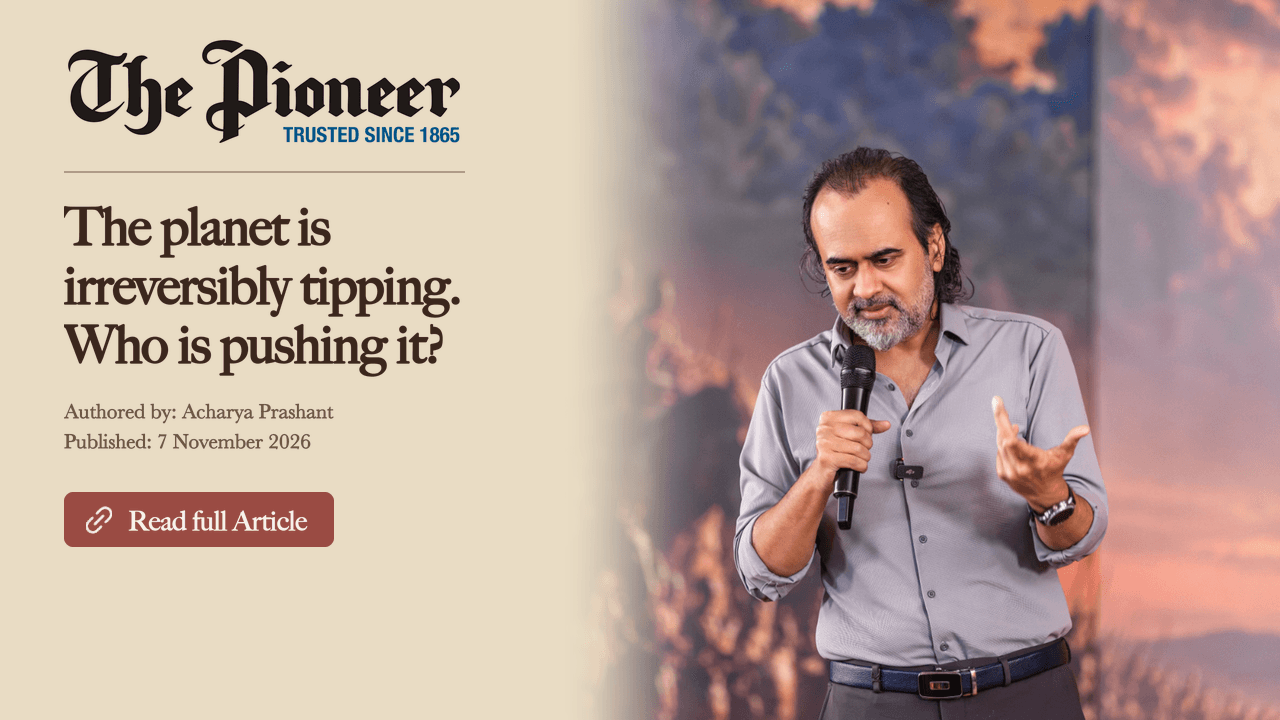
The Pioneer07 Nov '26
The planet is irreversibly tipping. Who is pushing it?
We have begun to speak of the future climate as though we could settle the bill later. We shall keep emitting greenhouse gases, warm the planet beyond the limit we have agreed upon and, when technology has improved, bring the temperature down again.
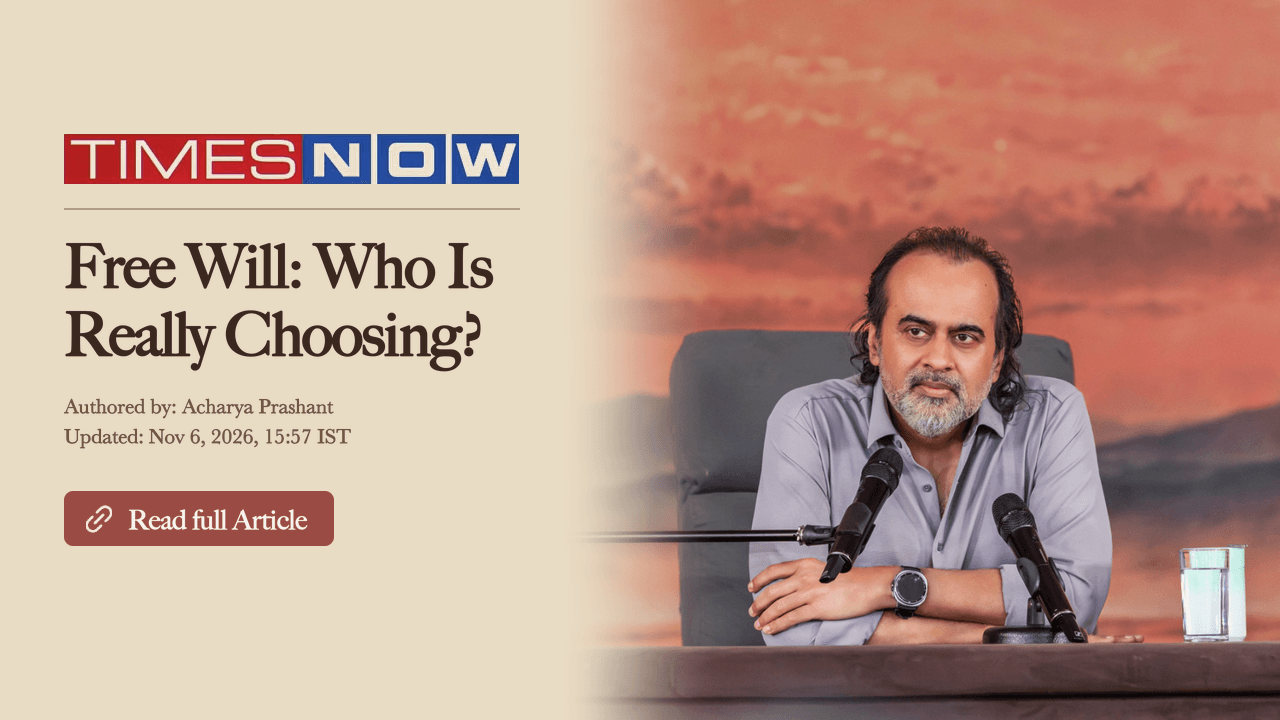
Times Now06 Nov '26
Free Will: Who Is Really Choosing?
"In 1983, neuroscientist Benjamin Libet published an experiment that put a very familiar human claim in some difficulty. Volunteers were asked to move a wrist whenever they wished and to report the moment at which they became conscious of wanting to move. In one set of trials, the brain activity associated with preparing the movement had begun about 350 milliseconds before the reported intention. So the brain was already preparing to act, and the person had not yet reported deciding."
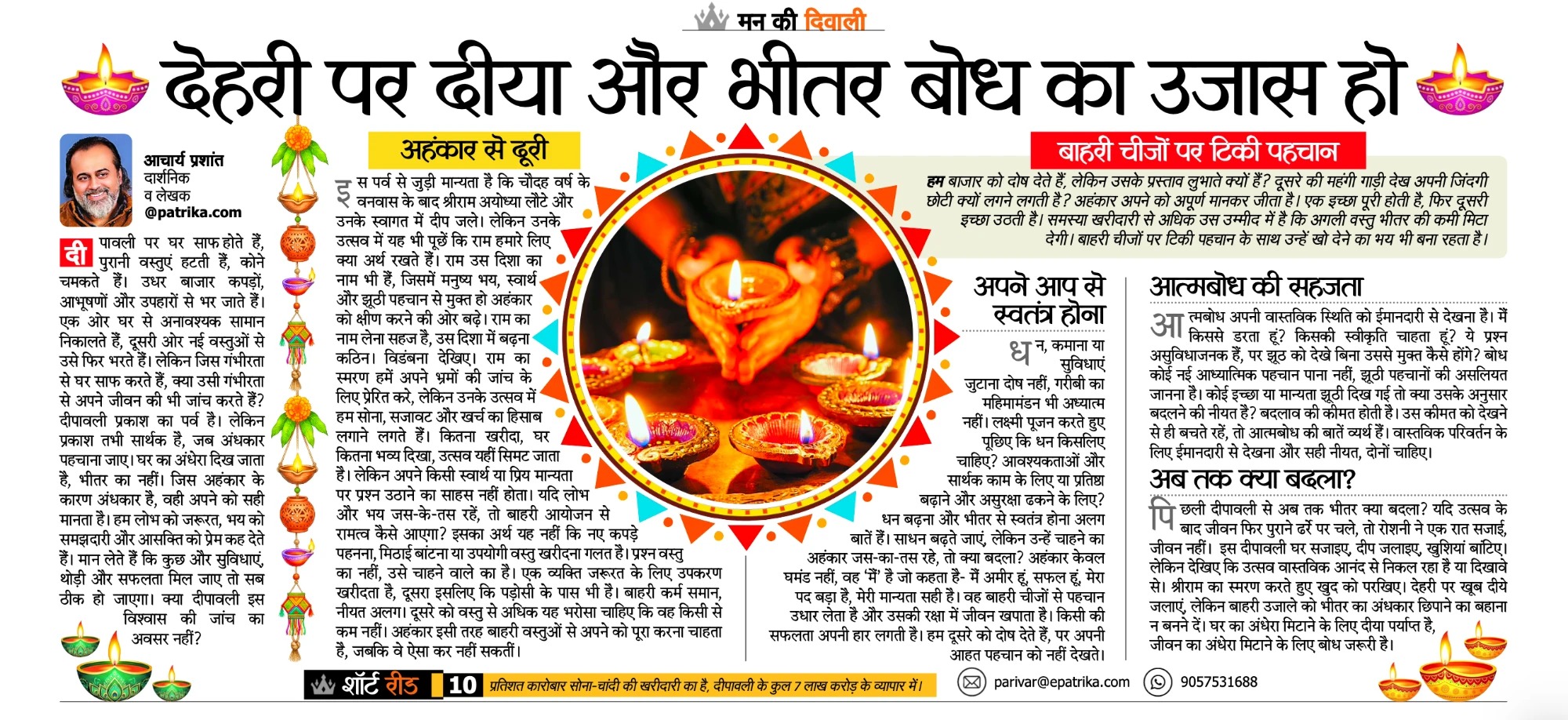
Patrika04 Nov '26
देहरी पर दीया और भीतर बोध का उजास हो
दीपावली पर घर साफ होते हैं, पुरानी वस्तुएं हटती हैं, कोने चमकते हैं। उधर बाजार कपड़ों, आभूषणों और उपहारों से भर जाते हैं। एक ओर घर से अनावश्यक सामान निकालते हैं, दूसरी ओर नई वस्तुओं से उसे फिर भरते हैं। लेकिन जिस गंभीरता से घर साफ करते हैं, क्या उसी गंभीरता से अपने जीवन की भी जांच करते हैं? दीपावली प्रकाश का पर्व है।
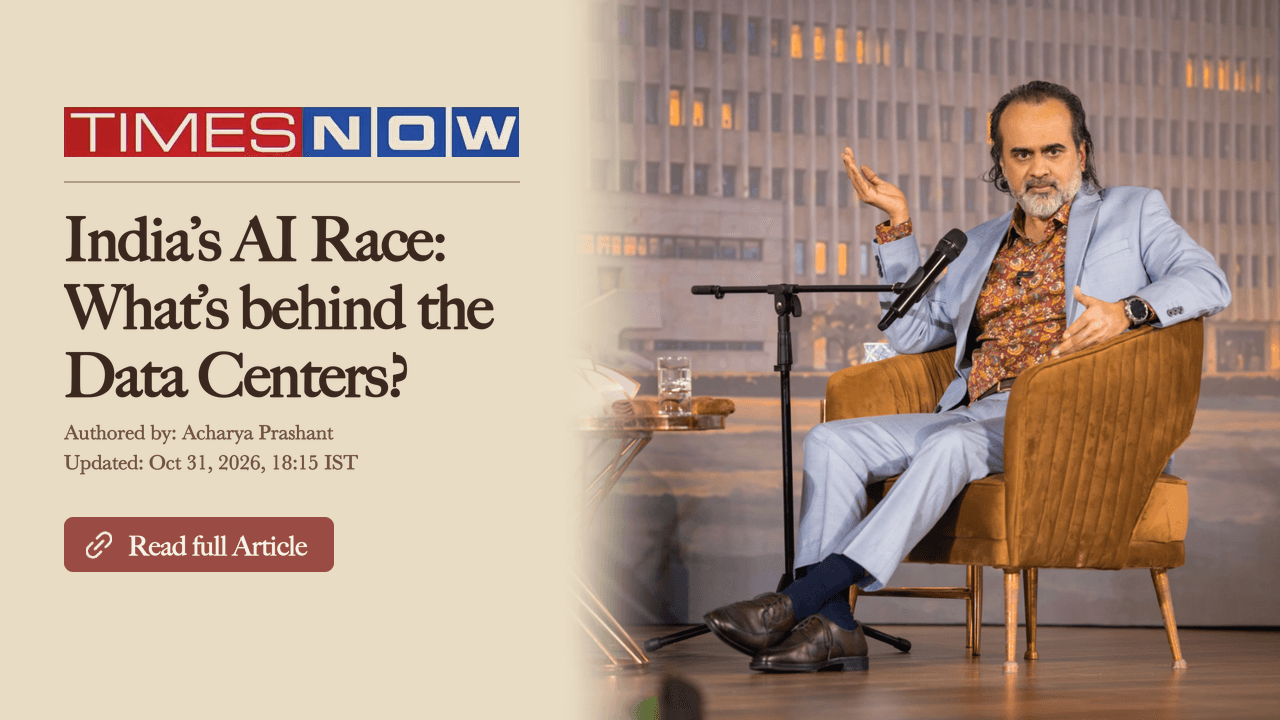
Times Now31 Oct '26
India's AI Race: What's behind the Data Centers?
India’s data-centre boom raises questions about environmental costs, public benefits and whether AI infrastructure is serving genuine human needs or amplifying endless consumption.
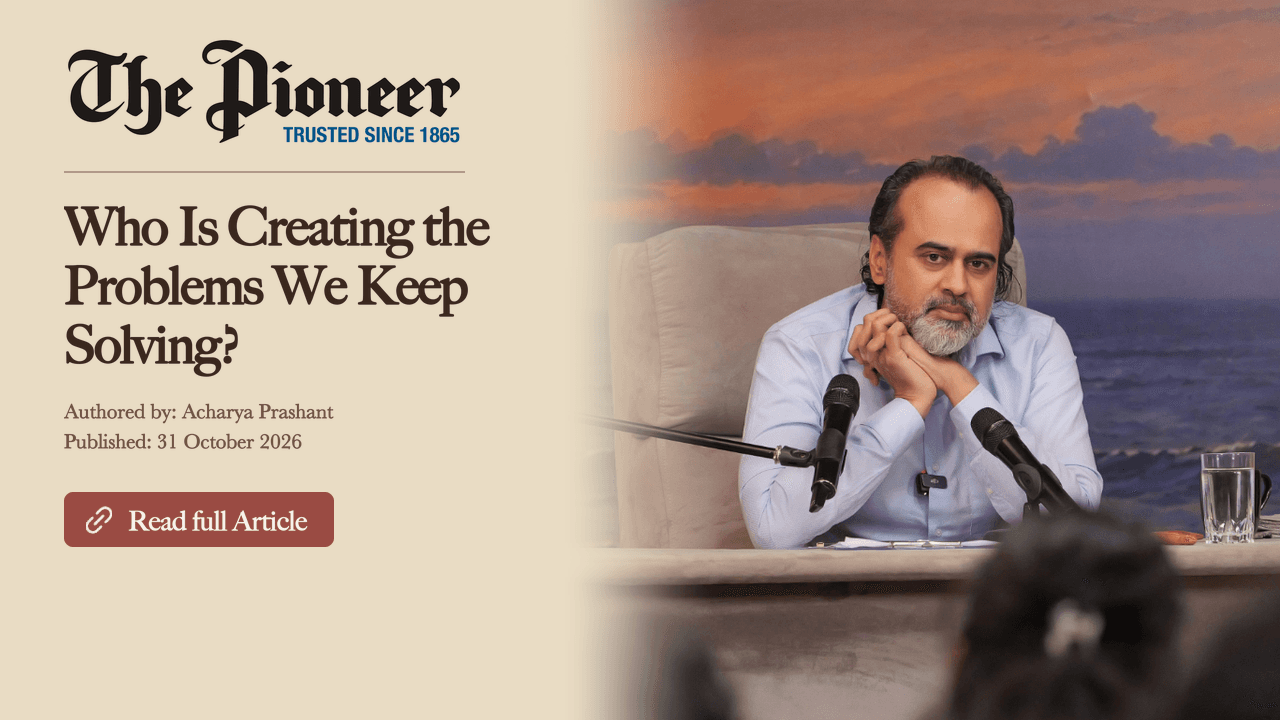
The Pioneer31 Oct '26
Who Is Creating the Problems We Keep Solving?
During London Climate Action Week earlier this year, I was asked where an ordinary individual should begin acting against climate change. The word ‘begin’ carried an assumption: we have been acting all along.
FOR COMMISSIONING EDITORS
Request Acharya Prashant to Write.
The publications that carry his columns offer their readers something rare: writing that treats the day's news as a doorway to something deeper.For a column, a feature, or syndication, editors are welcome to write to the editorial desk.
Email
Languages
EnglishHindi
Formats
WeeklyFortnightlyMonthlyFeatureLong-form Essay
Areas
Environment, Technology & the Future of CivilizationNation, Governance & Cultural IntrospectionGlobal Affairs, Geopolitics & Human NatureSociety, Culture & Contemporary Social IssuesMental Health, Psychology & Self-KnowledgePhilosophy, Ethics & Self-EnquiryFestivals, Symbolism & Inner Renewal
Full Index
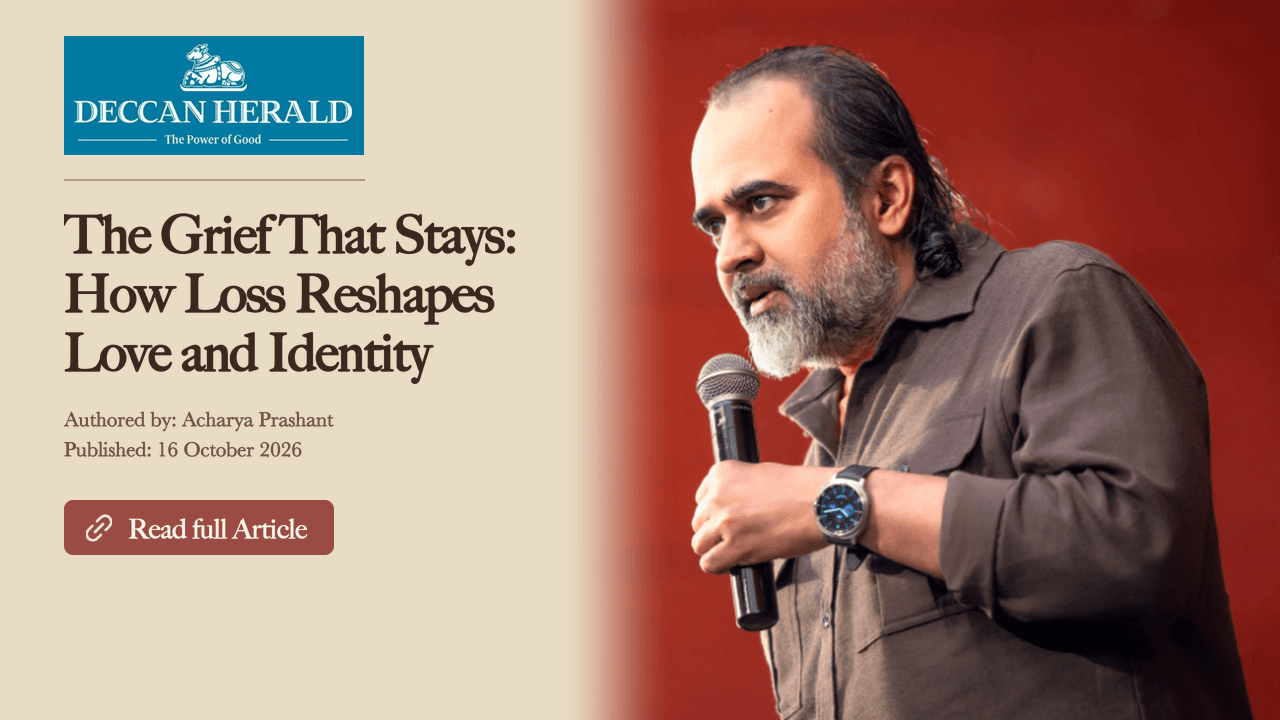
Deccan Herald16 Oct '26
The Grief That Stays: How Loss Reshapes Love and Identity
A person we loved, and often a part of the structure by which we knew ourselves: my husband, my mother, my child, my friend. Their presence had entered what we called ‘my being’.
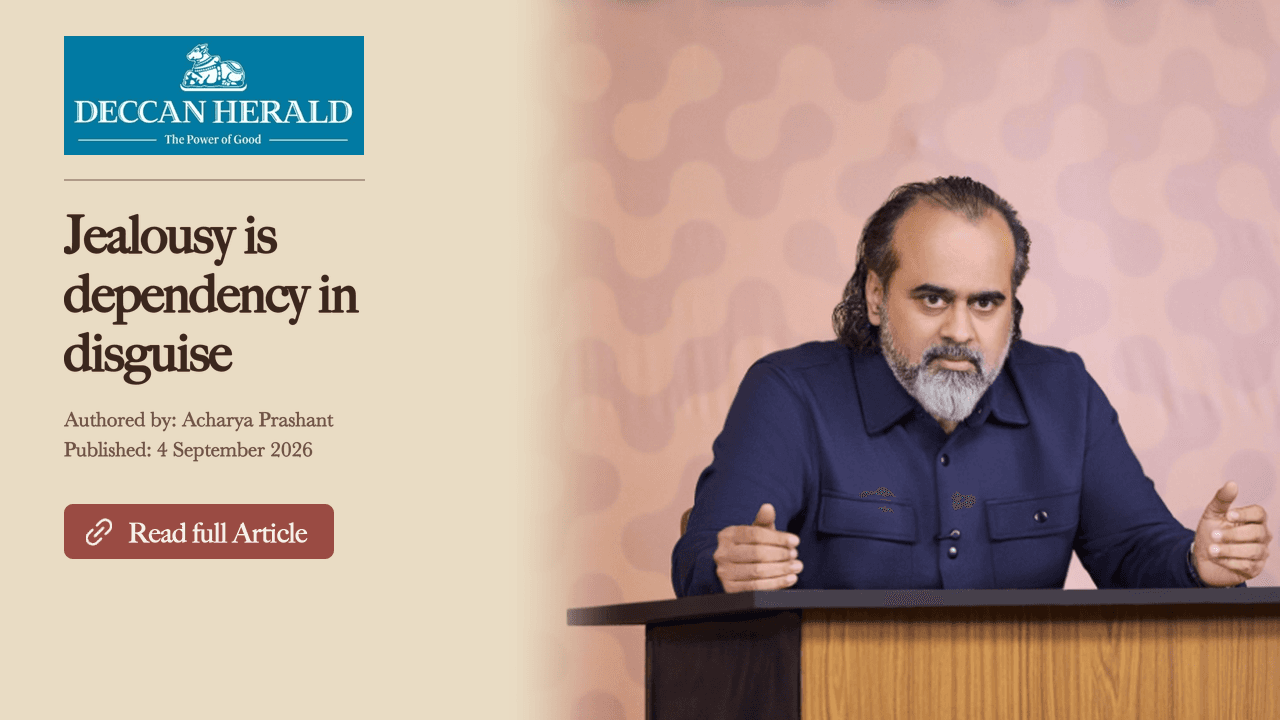
Deccan Herald04 Sep '26
Jealousy is dependency in disguise
Somebody calls you brilliant, and you accept the certificate. Now you are brilliant. But where is this brilliance kept? Not in your understanding, not in your work. It is kept in the mouth of the one who called you brilliant.
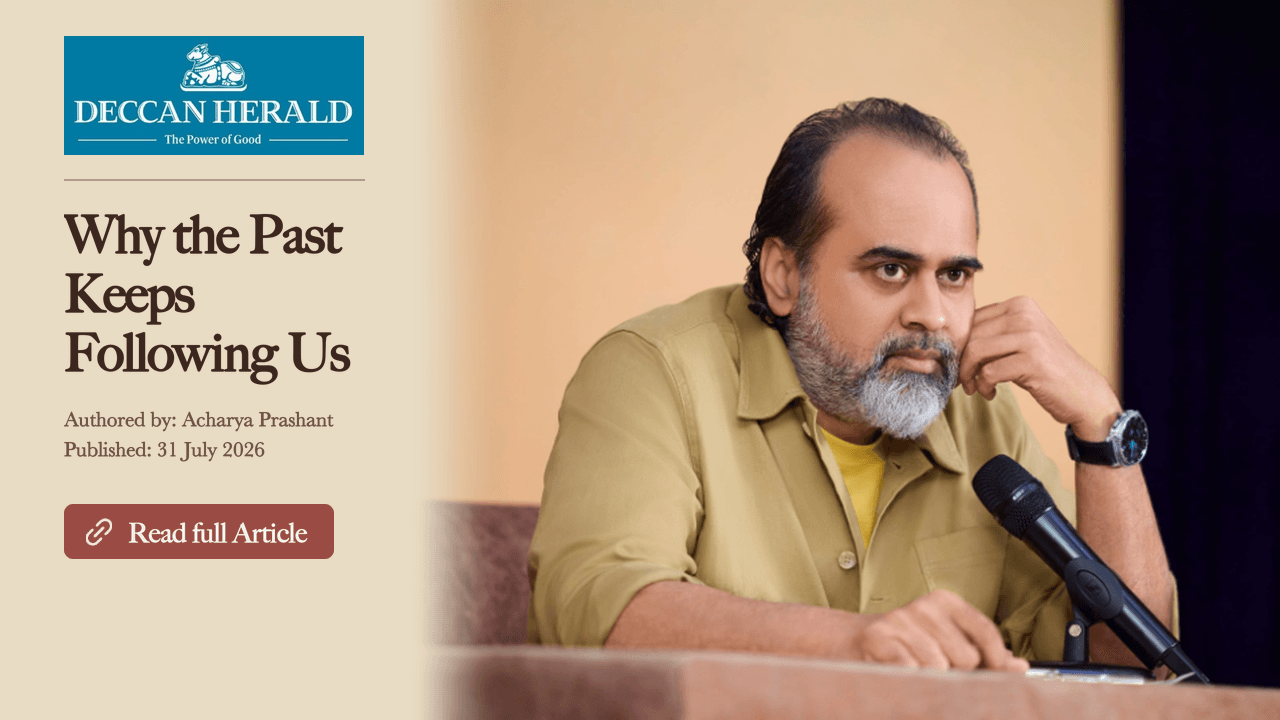
"Memory itself is neutral, mechanical, the same function that lets you recall a phone number or the way home without any preference for one over the other. Left alone, it would let most things fade, including the old slight that still bothers you for no reason you can name. The ego is what keeps the slight alive, picking through that storage and pulling out exactly what serves its story while leaving the rest to fade on its own."
Deccan Herald22 May '26
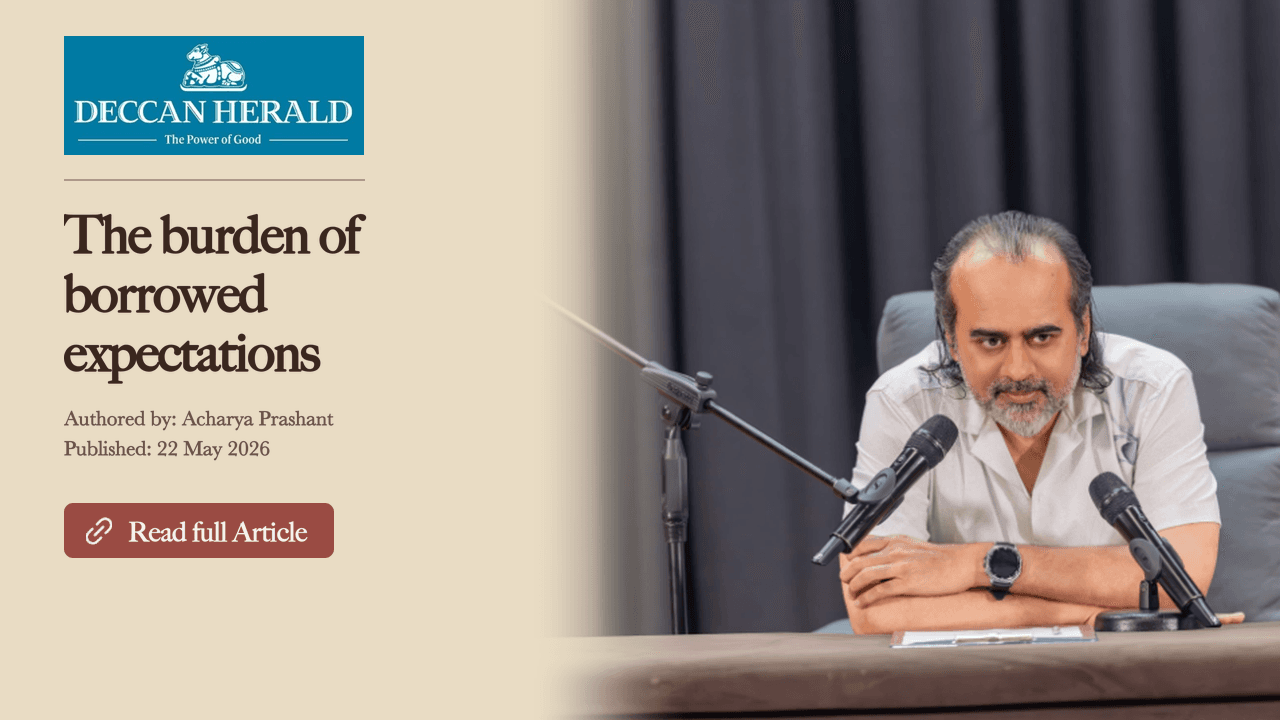
The burden of borrowed expectations
Years pass, and the absorbed becomes the assumed, and what is assumed long enough, we defend. What entered us as someone else’s anxiety we now call our values. What was handed to us without our knowledge we now guard as conscience, as responsibility,... Read more at: https://www.deccanherald.com/opinion/the-burden-of-borrowed-expectations-4011780
Deccan Herald14 Apr '26
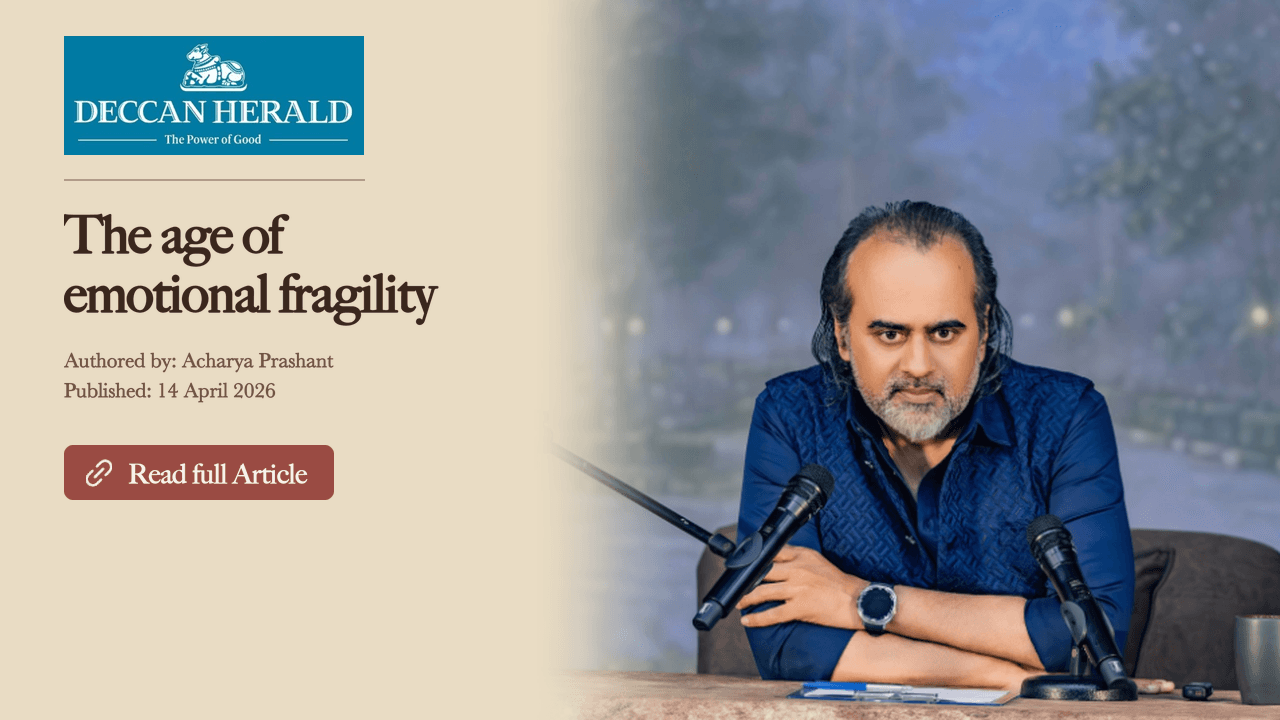
The age of emotional fragility
We live in what is probably the most comfortable era our species has known. In practical terms, the body is safer than it has ever been.
Deccan Herald24 Feb '26
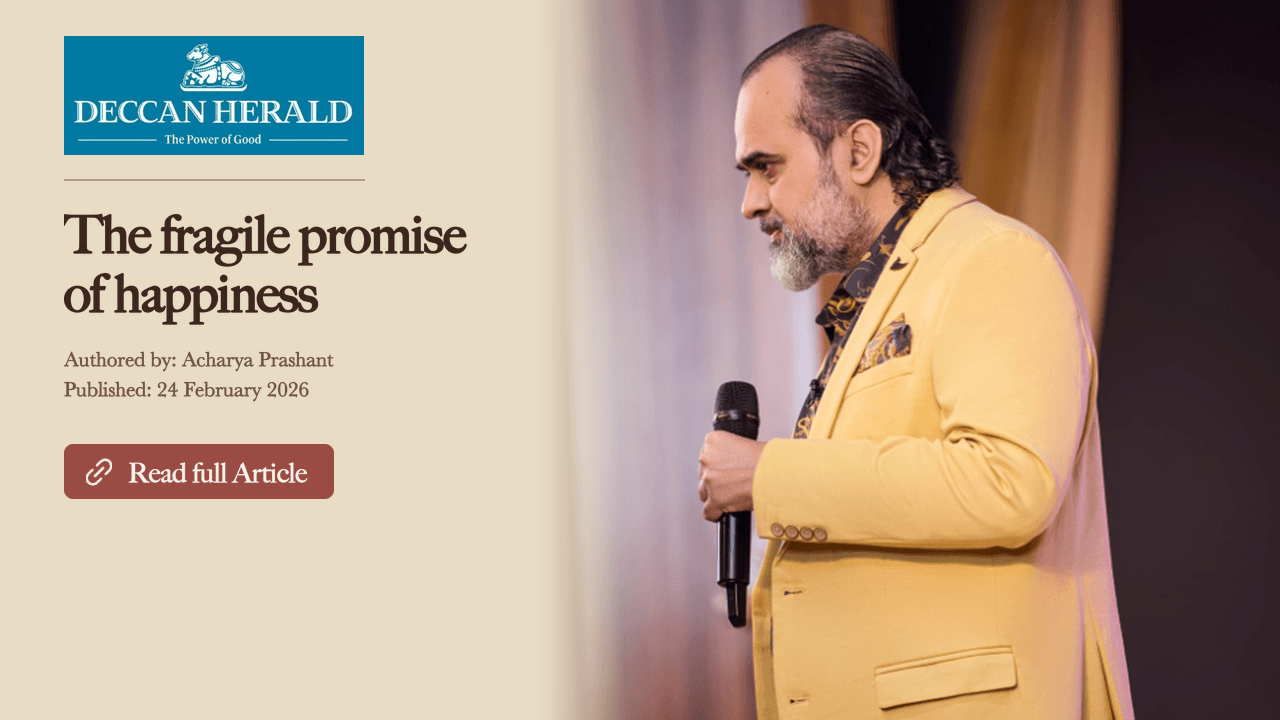
The fragile promise of happiness
"Look closely at what usually passes for happiness: A promotion, a holiday, approval, entertainment."
People run from it into noise and distraction and shallow bonds. But running only makes it worse. Suppressed pain does not heal; it festers.
Life appears full of conflicting possibilities because the mind itself is full of conflicting tendencies. We do not really know what we stand for, or from where our wants arise.
Most self-help starts with a wrong idea: that the 'I' we live with is real, permanent, and worth defending.
Deccan Herald11 Sep '25
Why confidence is just fear in disguise
"Fearlessness is not noisy. It is not a performance. It is a silent freedom. It arises when you no longer wait for the world to tell you who you are, but begin to live from your own centre of self-knowledge."
Deccan Herald11 Aug '25
Why do We Keep Hurting Ourselves?
Self-harm isn’t just about physically hurting ourselves. It is also when we live unconsciously, chasing goals given to us by society and family.