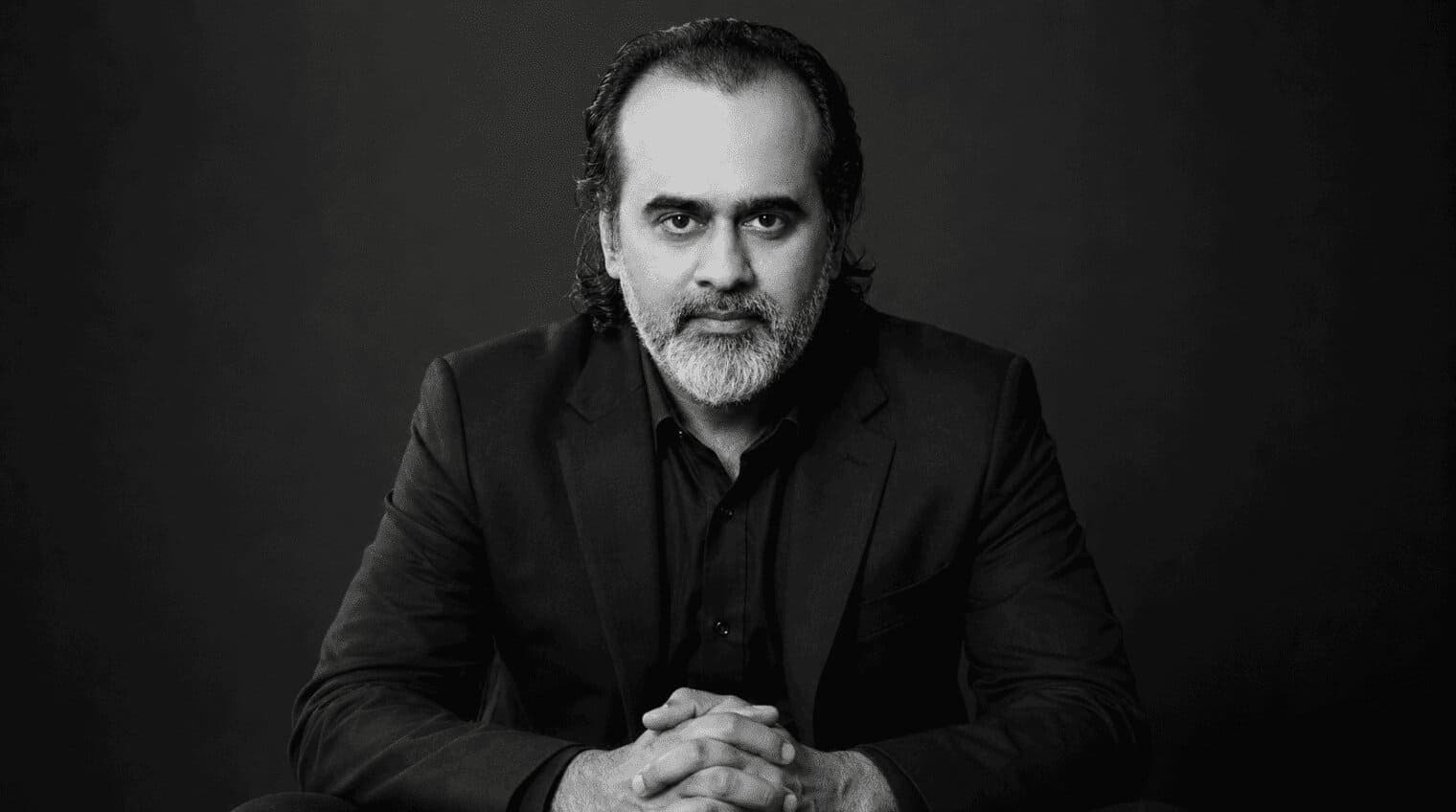
Acharya Prashant is a philosopher and author, an alumnus of IIT Delhi and IIM Ahmedabad. He is among the most widely read philosophical columnists writing in India today, with more than 190 published columns ranging across climate and consumption, elections and ideology, caste and religion, gender, education, geopolitics, technology, and the inner life.
What unifies this range is a single method: tracing every public crisis back to the unexamined self that produces it.
FOR COMMISSIONING EDITORS
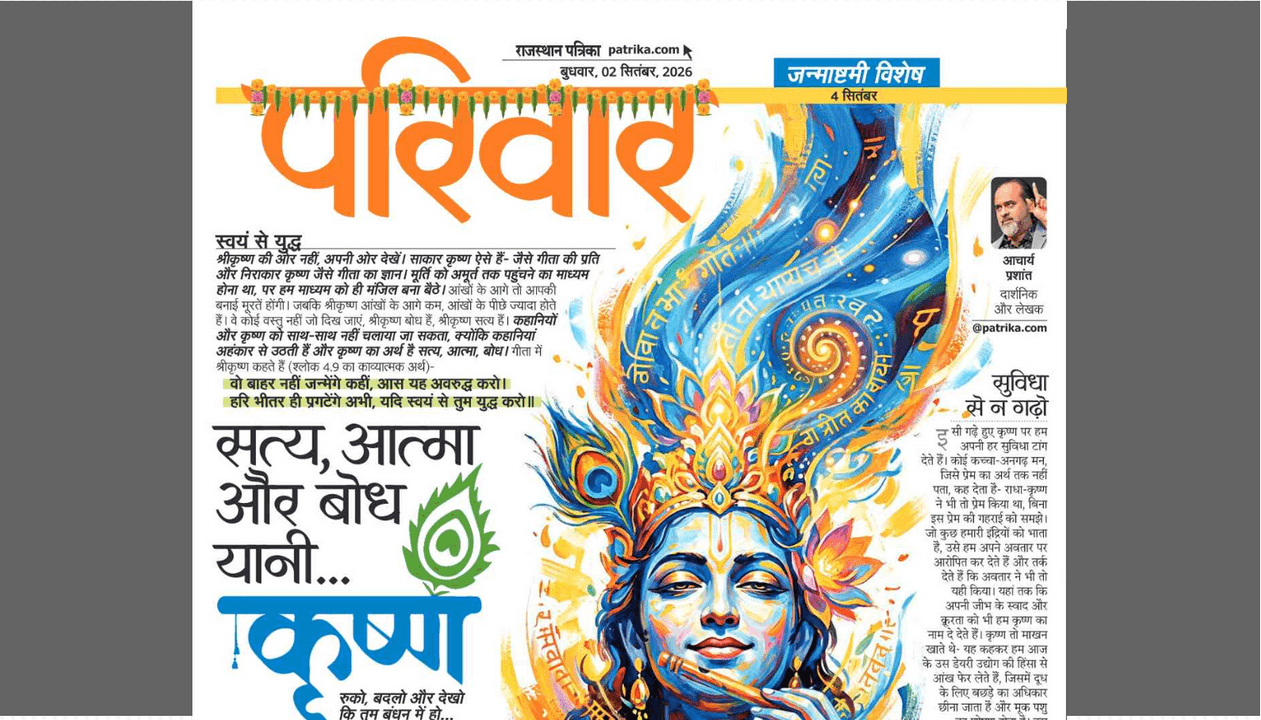
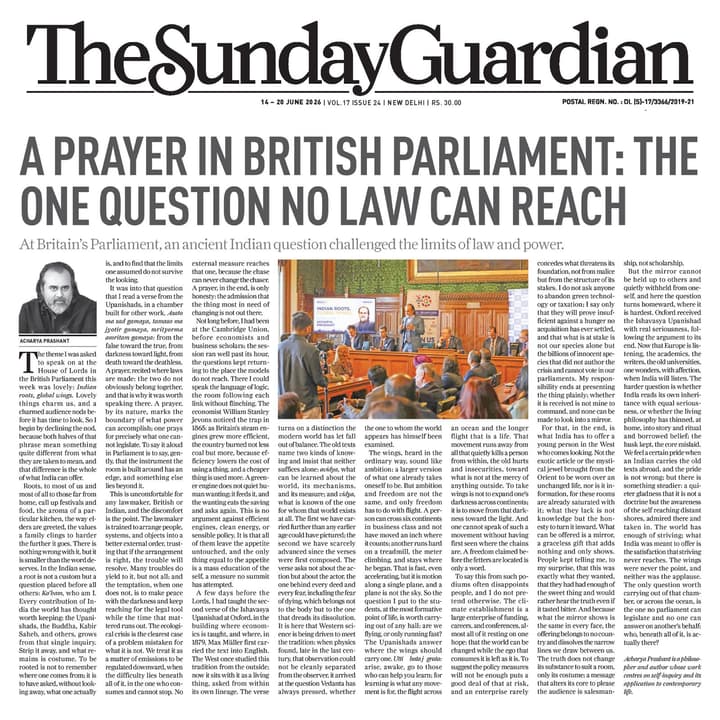
In this special Janmashtami feature published in Rajasthan Patrika, philosopher and author Acharya Prashant explains why the true Krishna is not an idol to be worshipped from a distance, but Truth, the Self, and Realization (Satya, Atma, Bodh) itself.

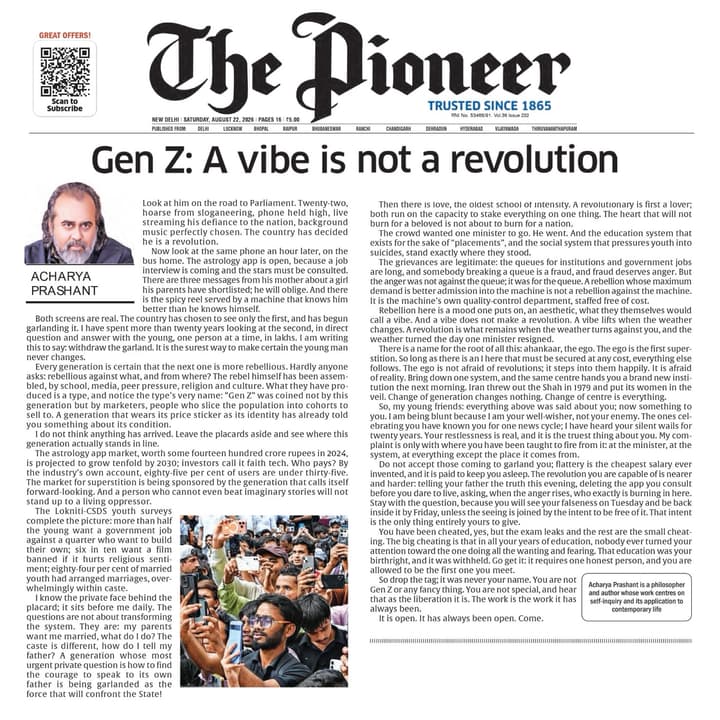
"What is being called a generational shift is a momentary situational phenomenon, and everybody has mistaken it, the celebrating and the nervous alike, including the political parties. This badge of honour is being awarded far too quickly. They are rebels, we say. But are they really?"

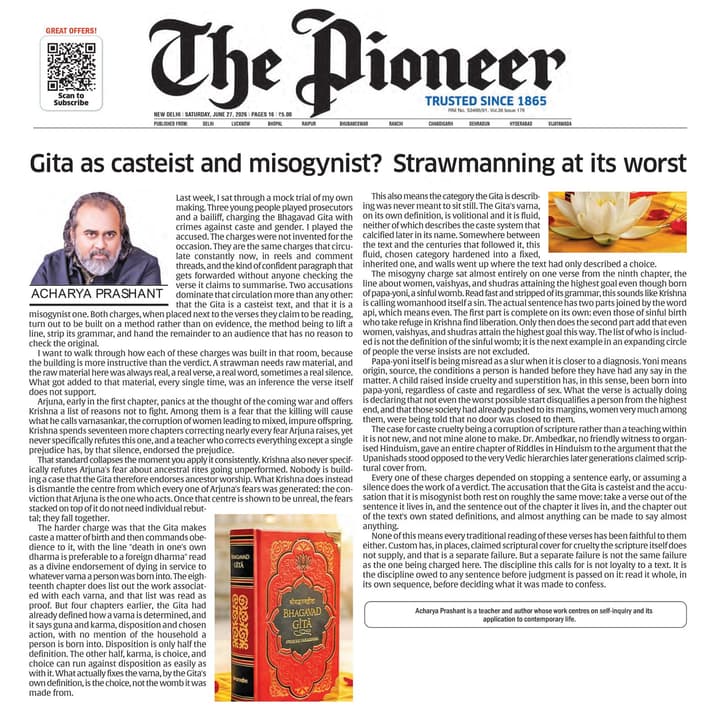
"The accusation that the Gita is casteist and the accusation that it is misogynist both rest on roughly the same move: take a verse out of the sentence it lives in, and the sentence out of the chapter it lives in, and the chapter out of the text's own stated definitions, and almost anything can be made to say almost anything. The discipline this calls for is not loyalty to a text. It is the same discipline owed to any sentence before judgment is passed on it: read it whole, in its own sequence, before deciding what it was made to confess."

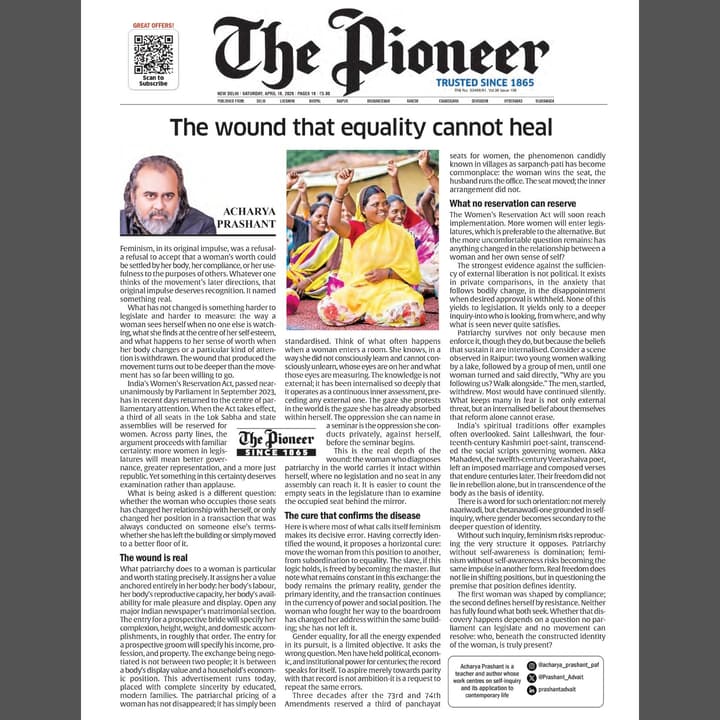
"The Women's Reservation Act will soon reach implementation. More women will enter legislatures, which is preferable to the alternative. But the question being avoided in all this discussion is more uncomfortable: has anything changed in the relationship between a woman and her own sense of self? The hardest evidence against the adequacy of external liberation is not political. It lives in her inner life. That doesn't yield to legislation or to awareness of patriarchy as a social structure."

There is a reason the entertainment apparatus grows more elaborate, more expensive, and more omnipresent when the ground-level facts of existence are becoming harder to look at. Political theatre, religious spectacle, franchise cricket: the products differ but the mechanism is identical in every case, each offering the ego a ready-made emotional world to inhabit so that it need not examine the actual world it lives in.

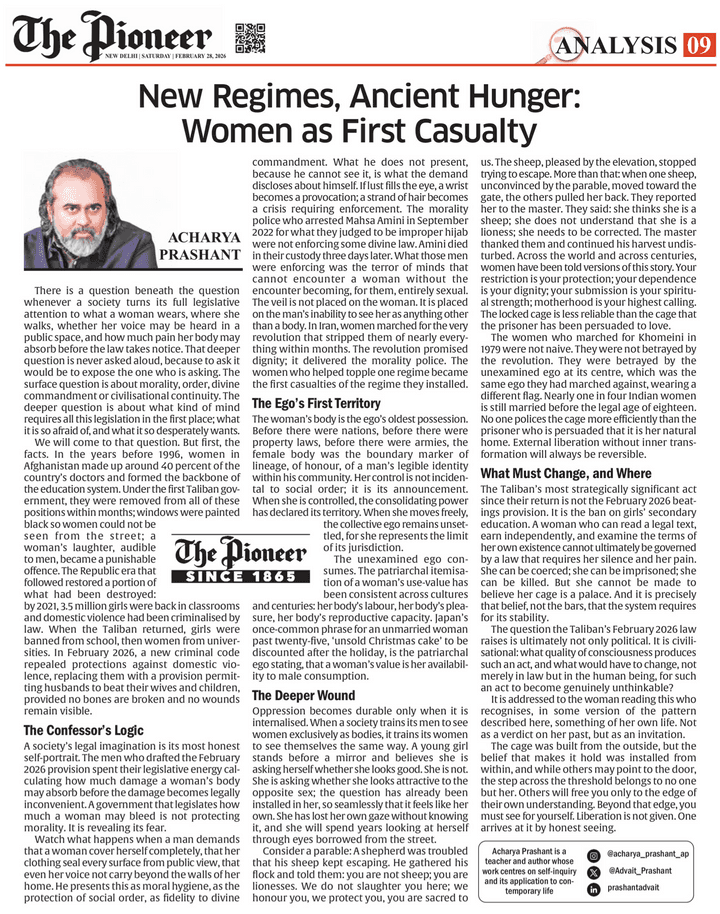
"There is a question beneath the question whenever a society turns its full legislative attention to what a woman wears, where she walks, whether her voice may be heard in a public space, and how much pain her body may absorb before the law takes notice."

"If one relies on events, shock is guaranteed, again and again, because most misdeeds never come fully to light. Scandals are not reliable teachers. If one understands the principle, shock loses its grip, because what unfolds is recognised rather than discovered."

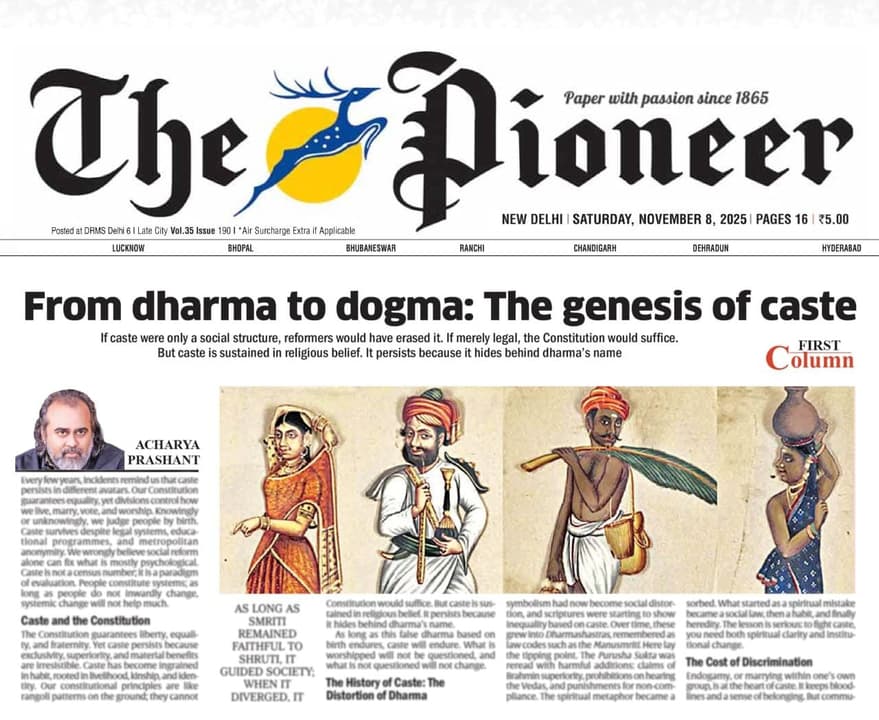
"If caste were only a social structure, reformers would have erased it. If merely legal, the Constitution would suffice. But caste is sustained in religious belief. It persists because it hides behind Dharma's name."

"Domestic violence, dowry, and oppressive marriages are symptoms of a deeper poverty — absence of inner clarity. They thrive because society at large runs on fear, desire, and unexamined habits. Outrage after each tragedy has become a ritual, but that cannot cure the blindness of the mind."