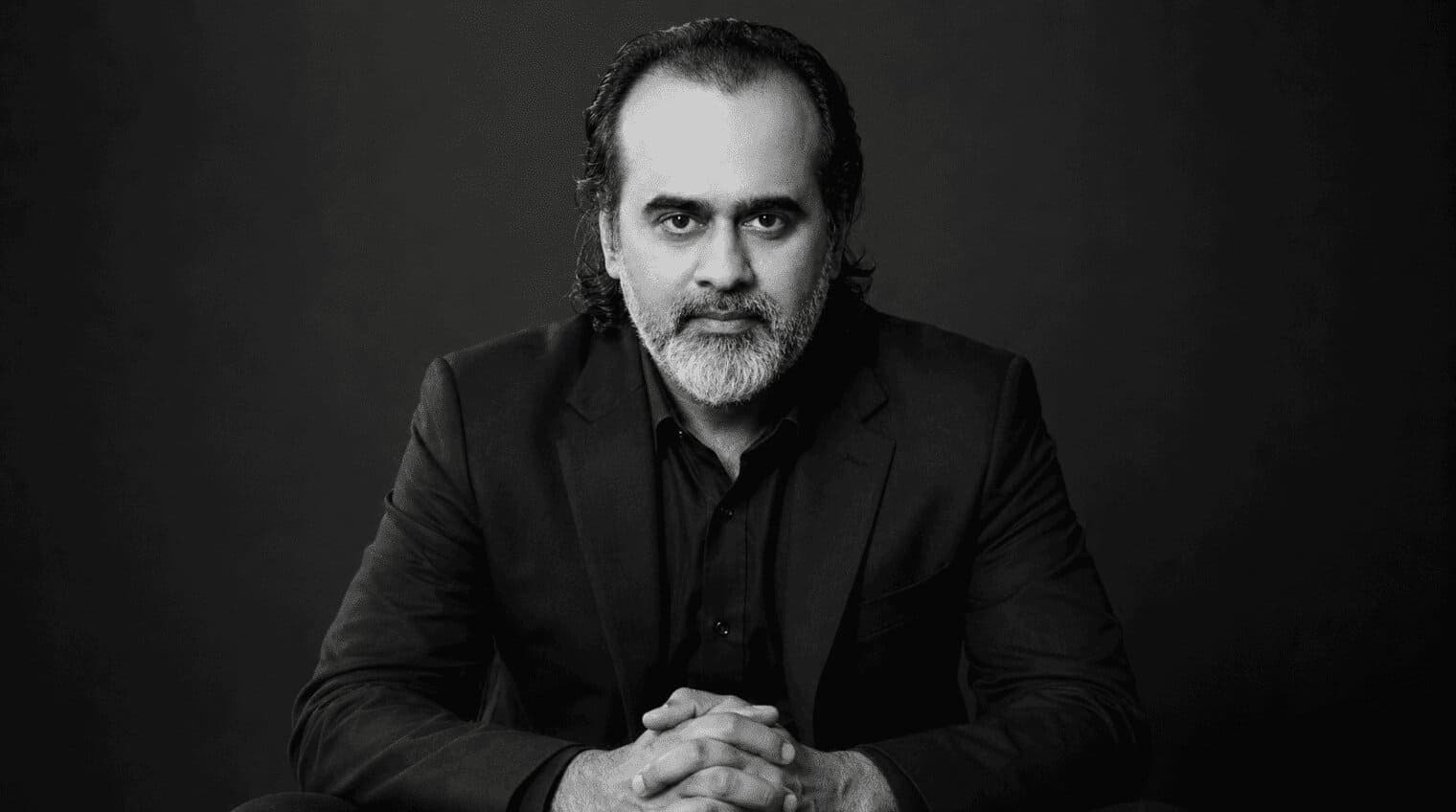
Acharya Prashant is a philosopher and author, an alumnus of IIT Delhi and IIM Ahmedabad. He is among the most widely read philosophical columnists writing in India today, with more than 190 published columns ranging across climate and consumption, elections and ideology, caste and religion, gender, education, geopolitics, technology, and the inner life.
What unifies this range is a single method: tracing every public crisis back to the unexamined self that produces it.
FOR COMMISSIONING EDITORS
In this special Janmashtami feature published in Rajasthan Patrika, philosopher and author Acharya Prashant explains why the true Krishna is not an idol to be worshipped from a distance, but Truth, the Self, and Realization (Satya, Atma, Bodh) itself.

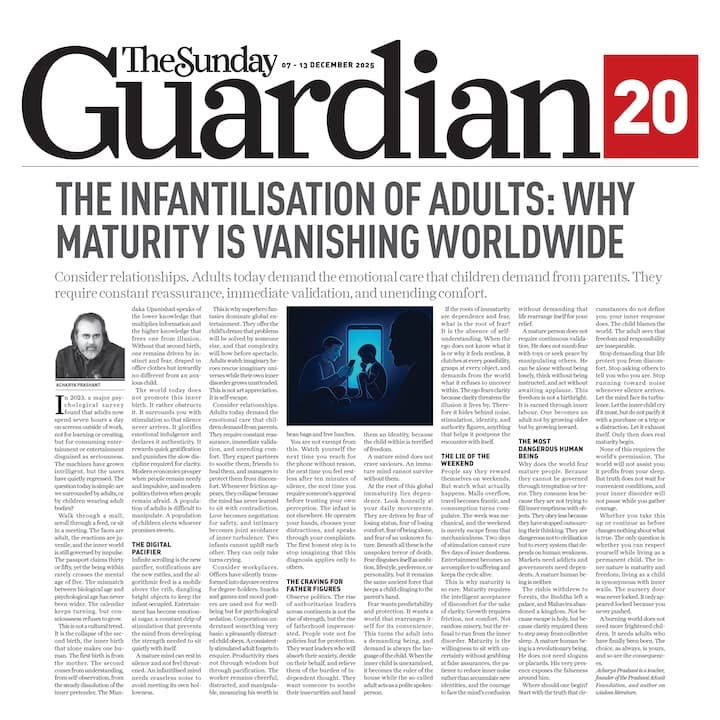
"Fear wants predictability and protection. It wants a world that rearranges itself for its convenience. This turns the adult into a demanding being, and demand is always the language of the child. When the inner child is unexamined, it becomes the ruler of the house while the so-called adult acts as a polite spokesperson."

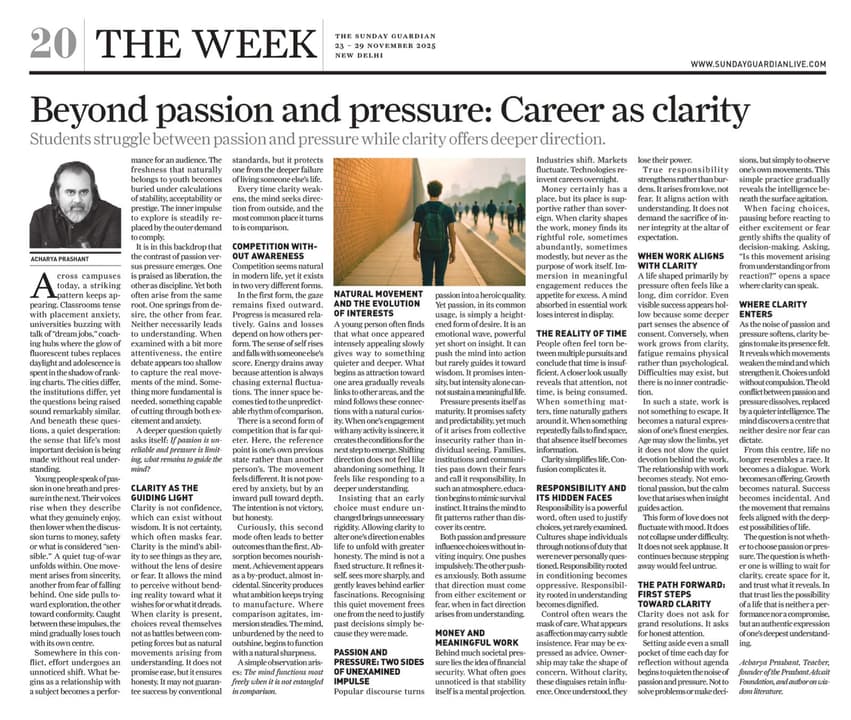
"Clarity is not confidence, which can exist without wisdom. It is not certainty, which often masks fear. Clarity is the mind’s ability to see things as they are, without the lens of desire or fear. It allows the mind to perceive without bending reality toward what it wishes for or what it dreads. When clarity is present, choices reveal themselves not as battles between competing forces but as natural movements arising from understanding."

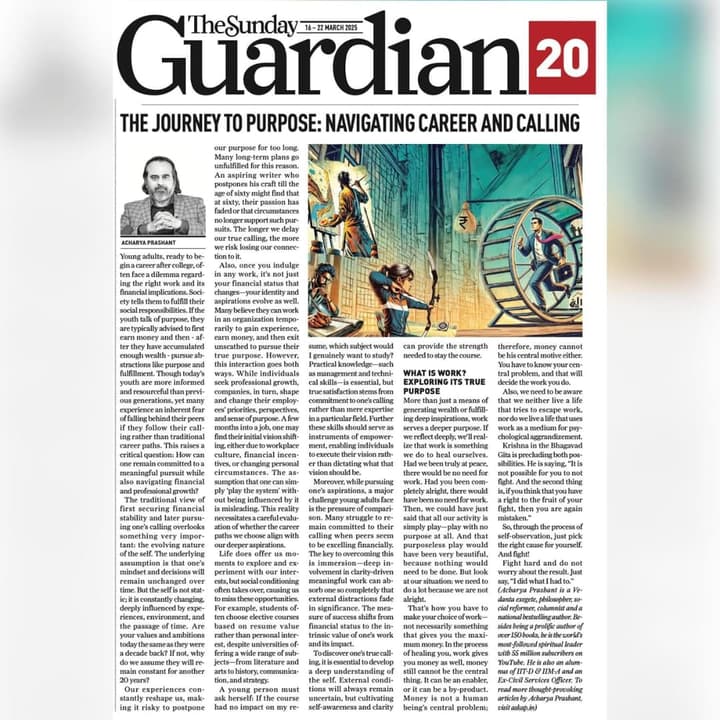
"Young adults, ready to begin a career after college, often face a dilemma regarding the right work and its financial implications. Society tells them to fulfill their social responsibilities."

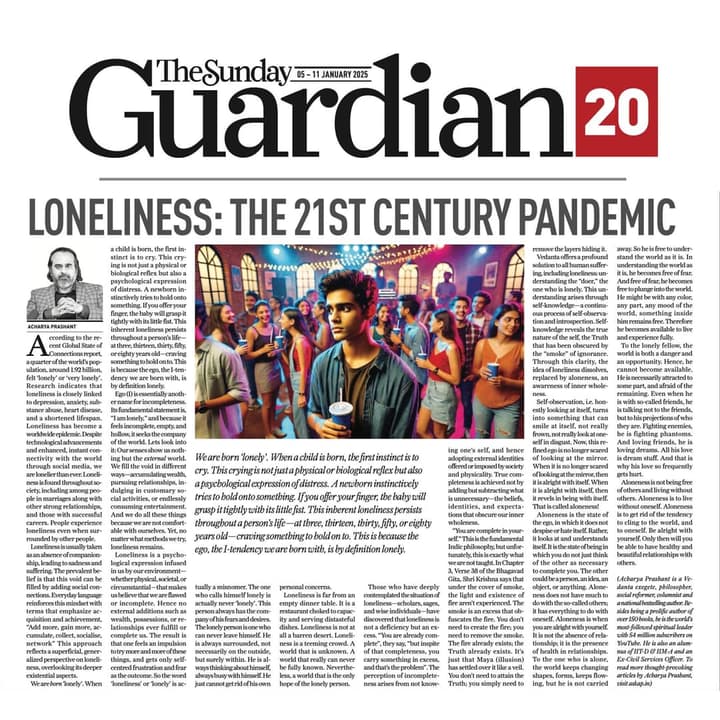
"According to the recent Global State of Connections report, a quarter of the world’s population, around 1.92 billion, felt ‘lonely’ or ‘very lonely’. Research indicates that loneliness is closely linked to depression, anxiety, substance abuse, heart disease, and a shortened lifespan."

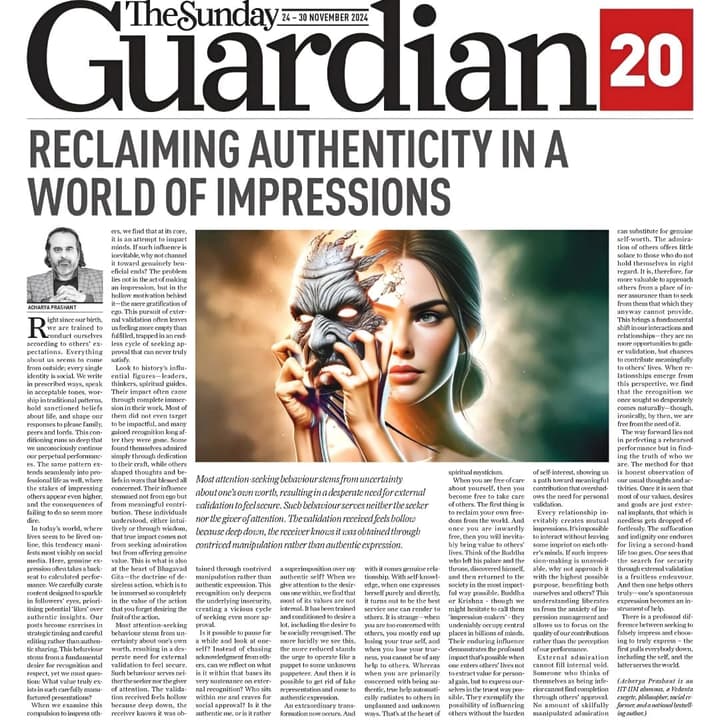
Right since our birth, we are trained to conduct ourselves according to others’ expectations. Everything about us seems to come from outside; every single identity is social.