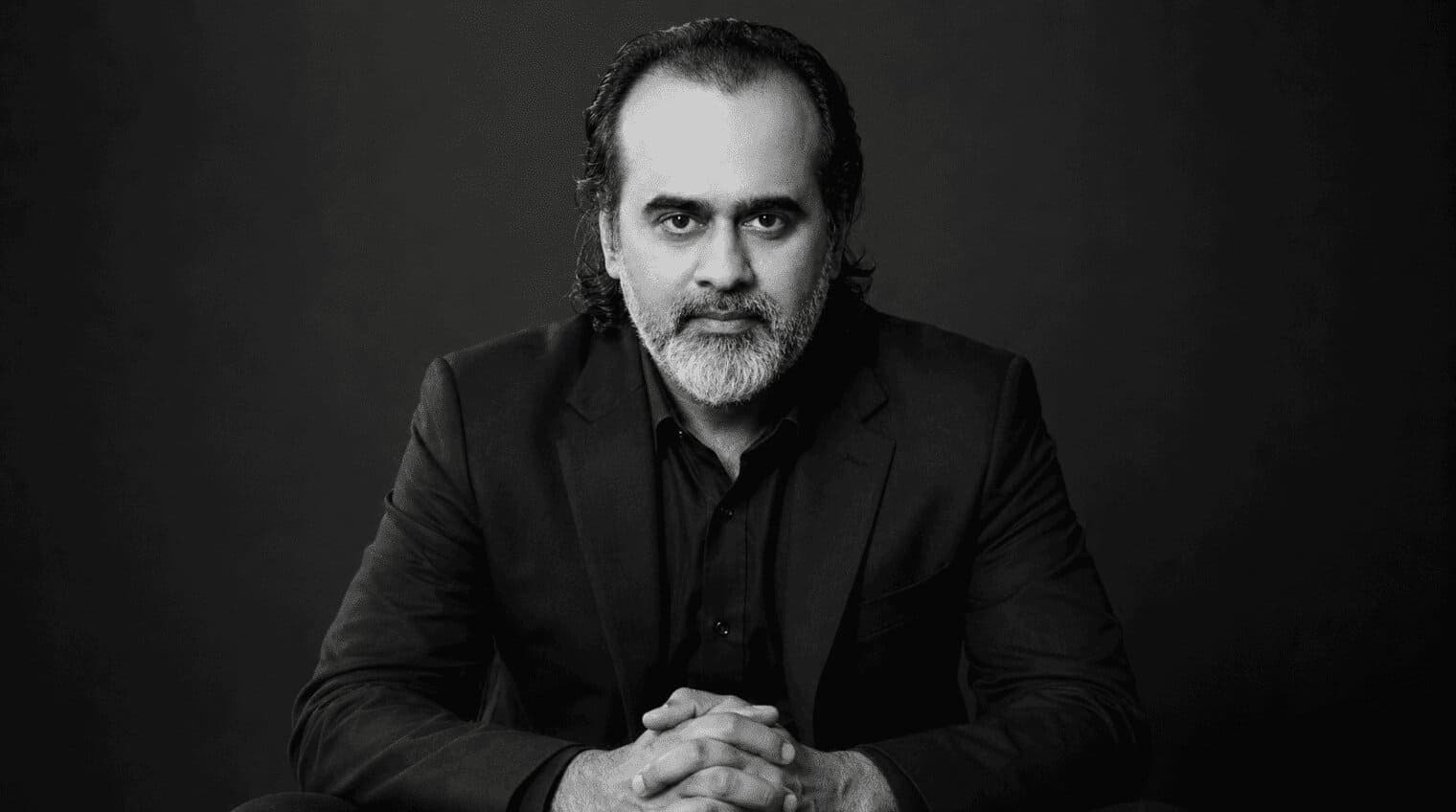
Acharya Prashant is a philosopher and author, an alumnus of IIT Delhi and IIM Ahmedabad. He is among the most widely read philosophical columnists writing in India today, with more than 190 published columns ranging across climate and consumption, elections and ideology, caste and religion, gender, education, geopolitics, technology, and the inner life.
What unifies this range is a single method: tracing every public crisis back to the unexamined self that produces it.
FOR COMMISSIONING EDITORS
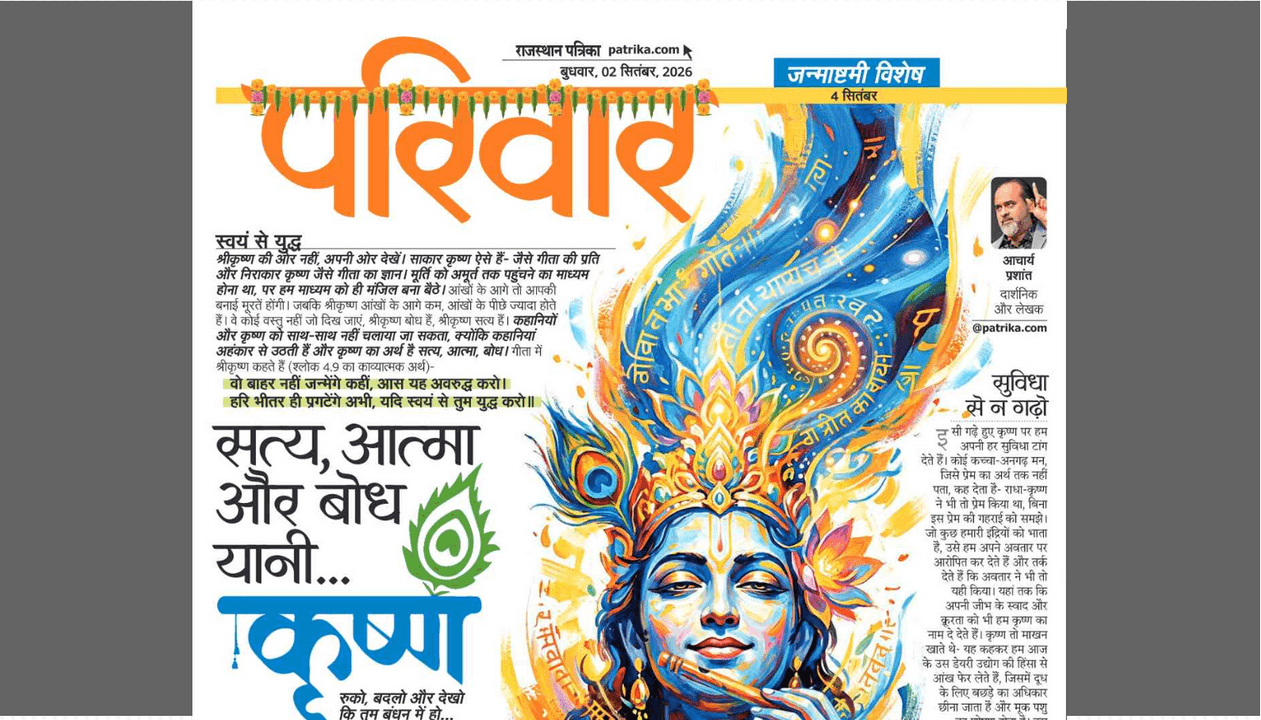
In this special Janmashtami feature published in Rajasthan Patrika, philosopher and author Acharya Prashant explains why the true Krishna is not an idol to be worshipped from a distance, but Truth, the Self, and Realization (Satya, Atma, Bodh) itself.

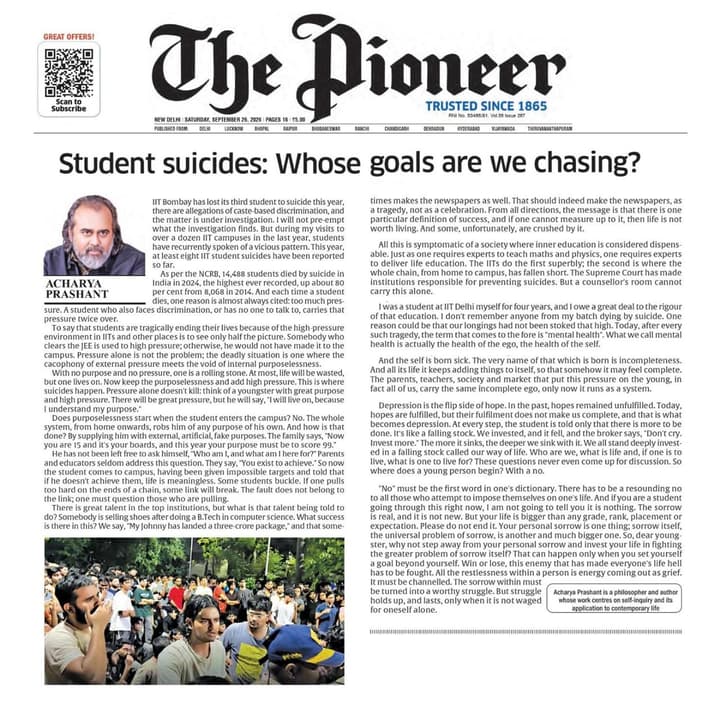
“A kid is a very dependent being, and so the kid is easily exploited. We tell the kid, "Your life is worthless if you do not attain such-and-such goals." And then we keep the goals so unrealistic and make the competition so severe, by telling the same thing to every kid, that practically only 1 per cent can attain them. What will happen to the remaining 99 per cent?”

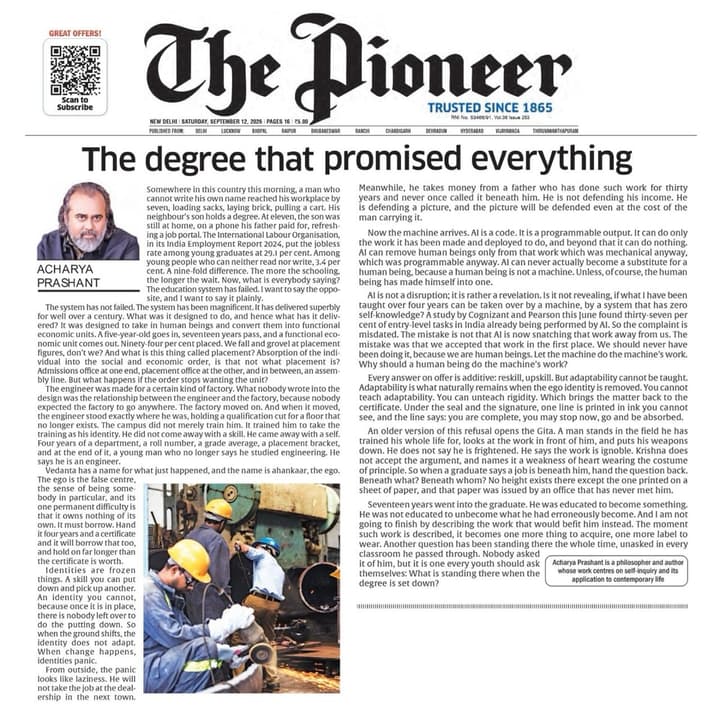
"What is everybody saying? The education system has failed. That is the first sentence of almost every article you will read on this topic. I want to say the opposite, and I want to say it plainly. The system has not failed. The system has been magnificent. It has delivered superbly over well over a century. What must be asked is something else. What was it designed to do, and hence what has it delivered?"

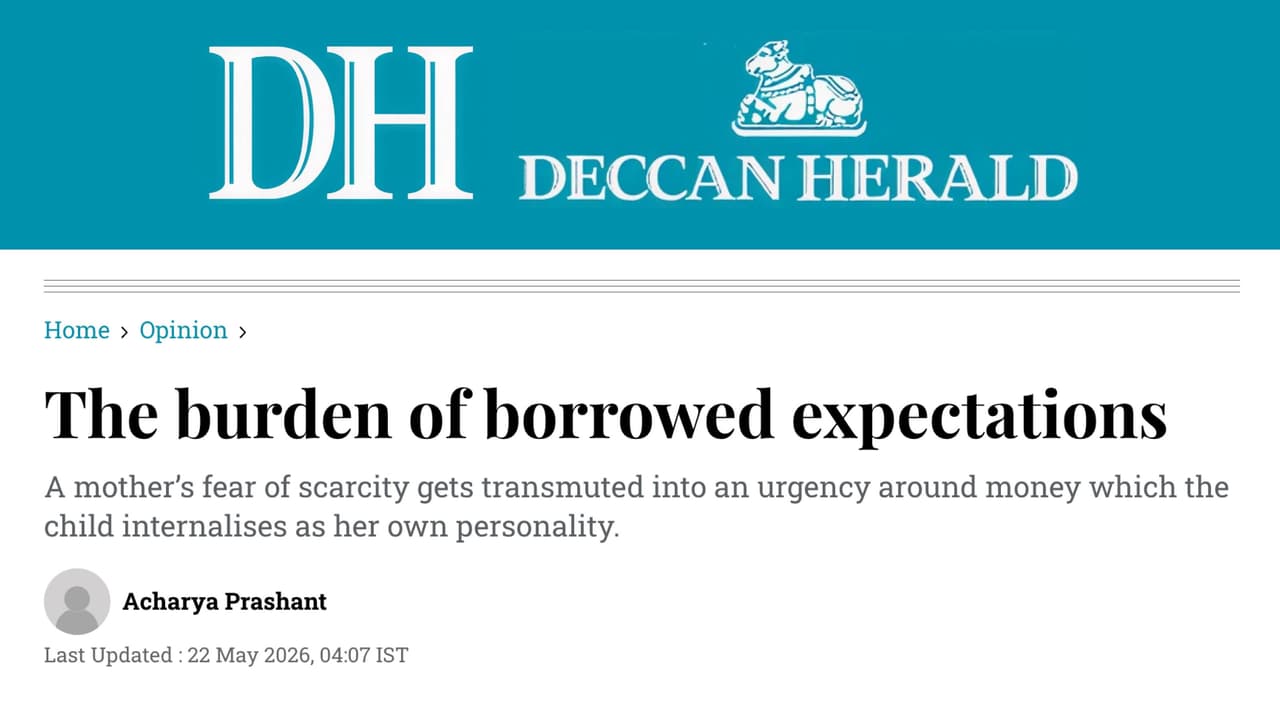
Years pass, and the absorbed becomes the assumed, and what is assumed long enough, we defend. What entered us as someone else’s anxiety we now call our values. What was handed to us without our knowledge we now guard as conscience, as responsibility,... Read more at: https://www.deccanherald.com/opinion/the-burden-of-borrowed-expectations-4011780

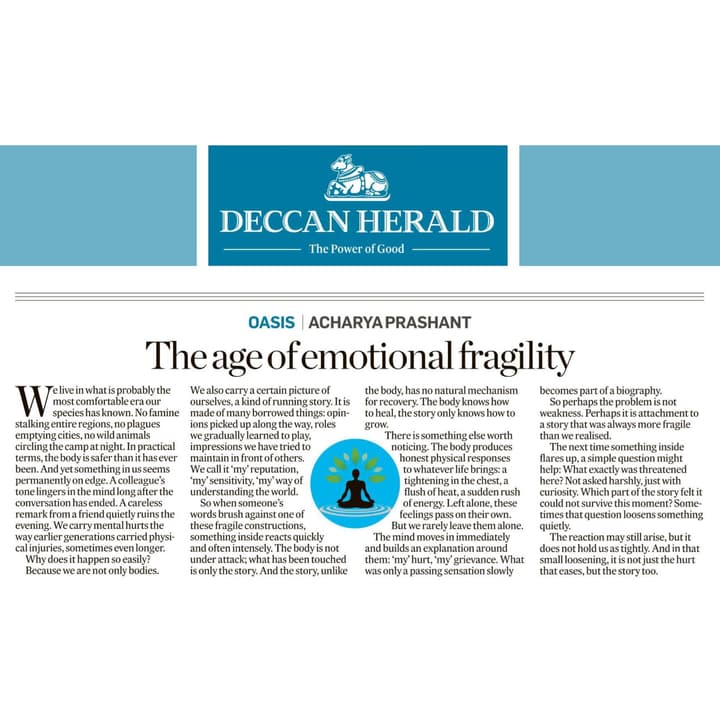
We live in what is probably the most comfortable era our species has known. In practical terms, the body is safer than it has ever been.

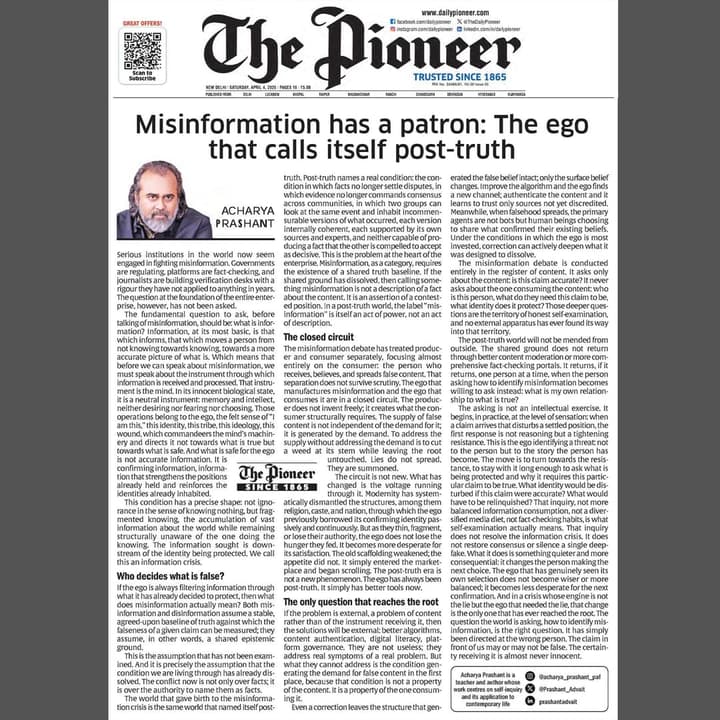
"If the ego is always filtering information through what it has already decided to protect, then what does misinformation actually mean? Both misinformation and disinformation assume a stable, agreed-upon baseline of truth against which the falseness of a given claim can be measured. This is the assumption that has not been examined."

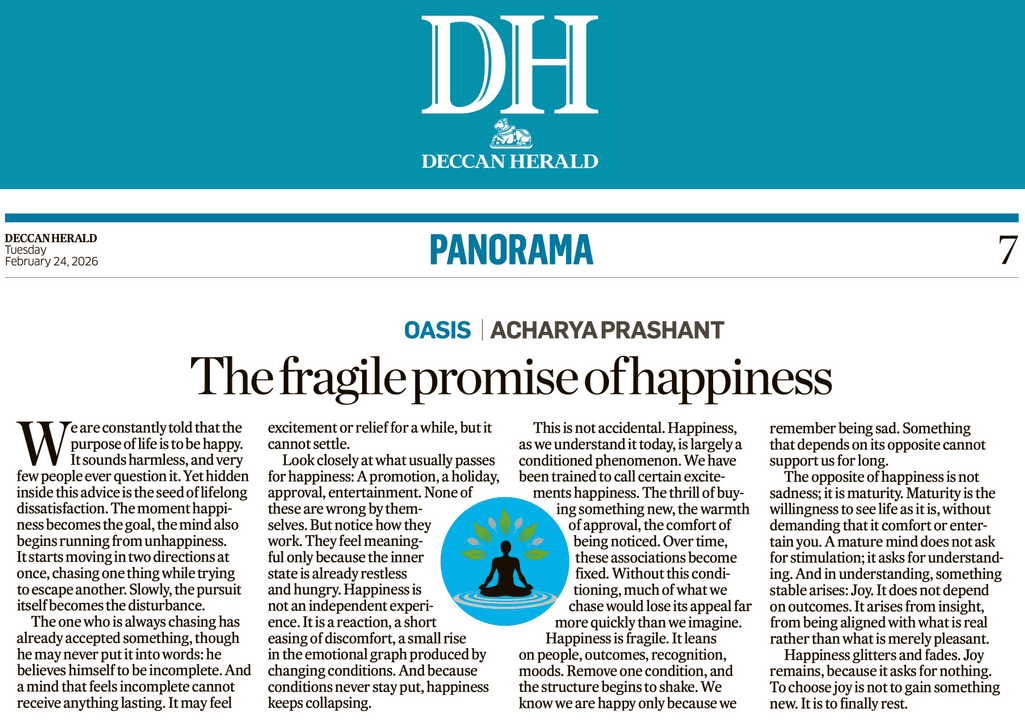
"Look closely at what usually passes for happiness: A promotion, a holiday, approval, entertainment."

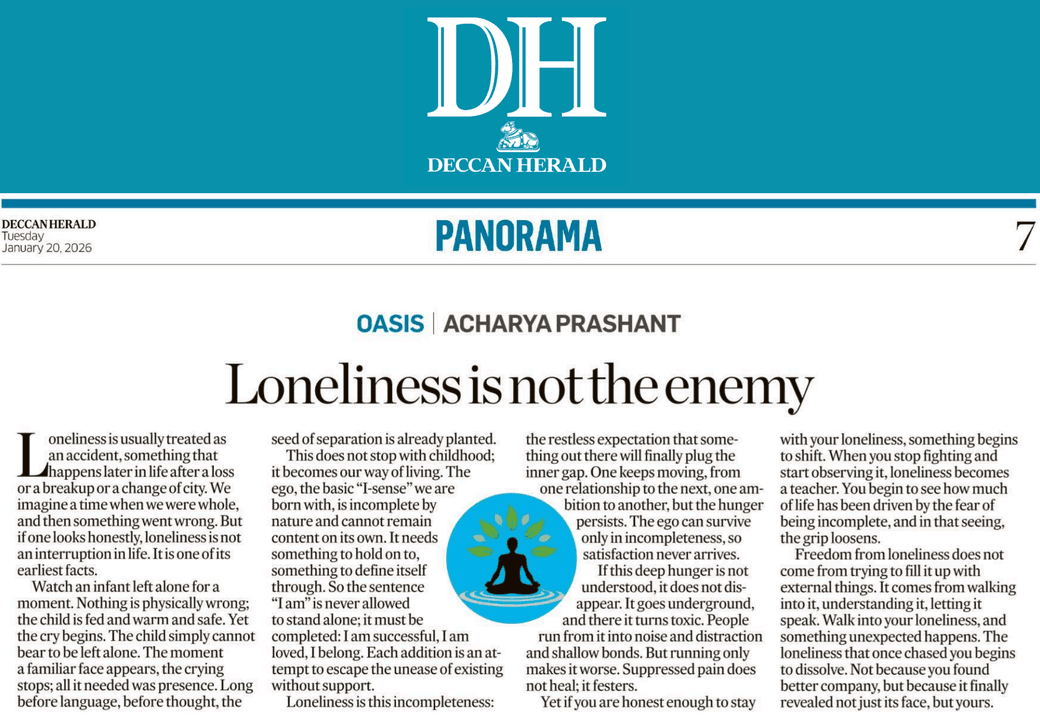
People run from it into noise and distraction and shallow bonds. But running only makes it worse. Suppressed pain does not heal; it festers.

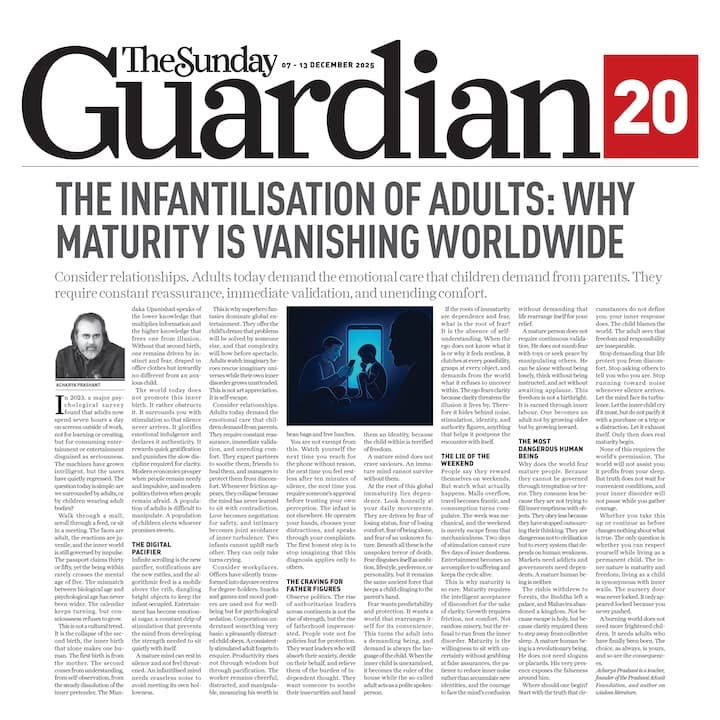
"Fear wants predictability and protection. It wants a world that rearranges itself for its convenience. This turns the adult into a demanding being, and demand is always the language of the child. When the inner child is unexamined, it becomes the ruler of the house while the so-called adult acts as a polite spokesperson."

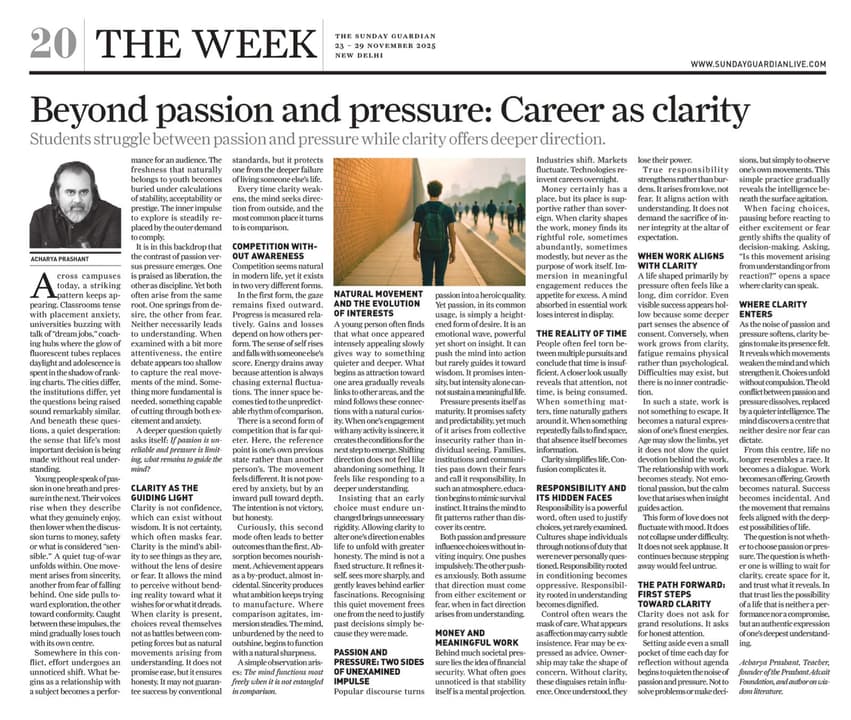
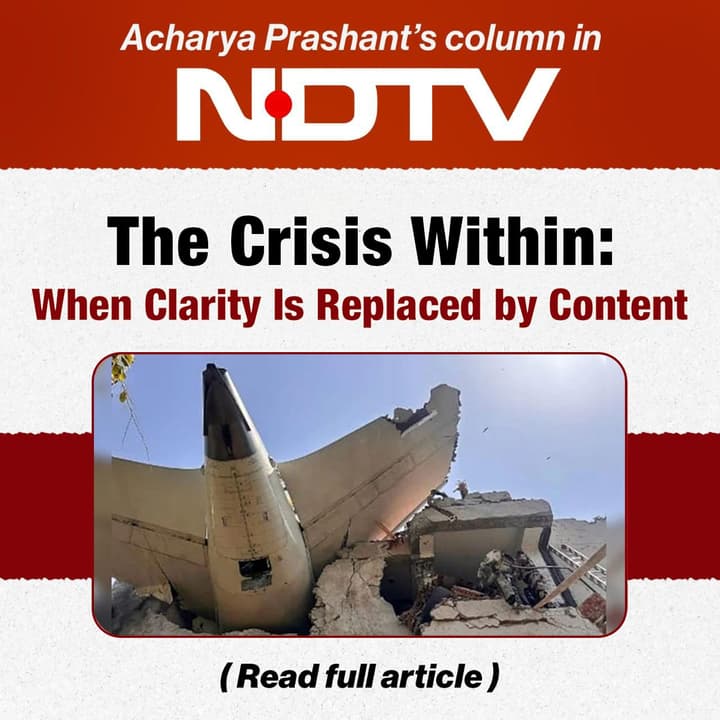
"Clarity is not confidence, which can exist without wisdom. It is not certainty, which often masks fear. Clarity is the mind’s ability to see things as they are, without the lens of desire or fear. It allows the mind to perceive without bending reality toward what it wishes for or what it dreads. When clarity is present, choices reveal themselves not as battles between competing forces but as natural movements arising from understanding."

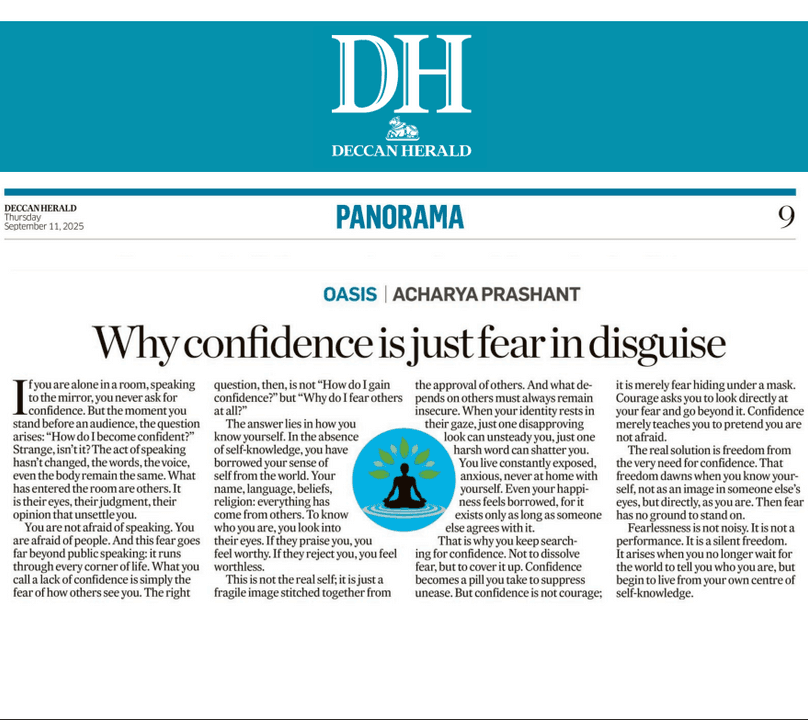
"Fearlessness is not noisy. It is not a performance. It is a silent freedom. It arises when you no longer wait for the world to tell you who you are, but begin to live from your own centre of self-knowledge."

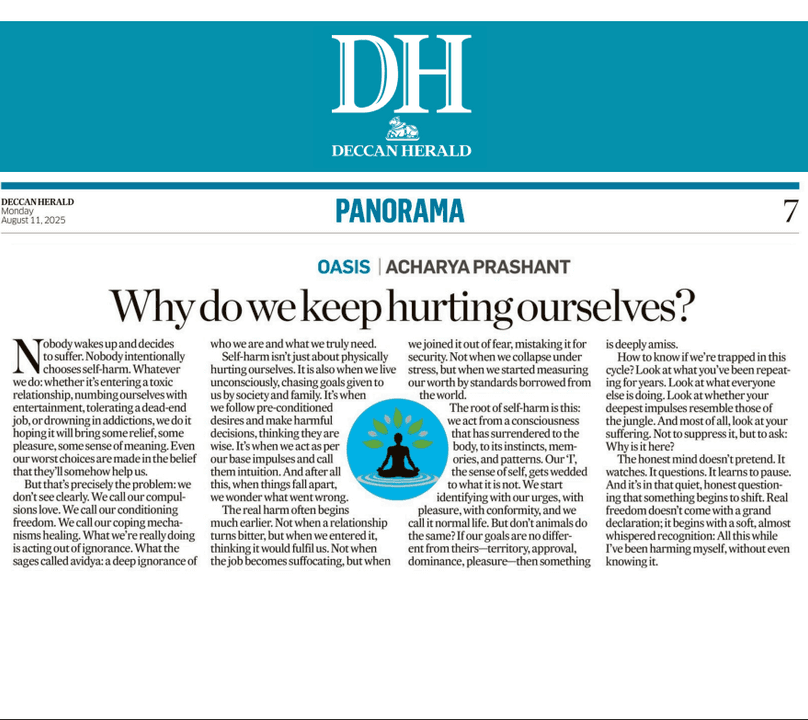
Self-harm isn’t just about physically hurting ourselves. It is also when we live unconsciously, chasing goals given to us by society and family.

"There is always something breaking—some headline, some outrage, some meme. Most of us have become accustomed to reacting more than reflecting. Even when we believe we're acting out of concern, we often find ourselves swept up in the rhythm of the moment."

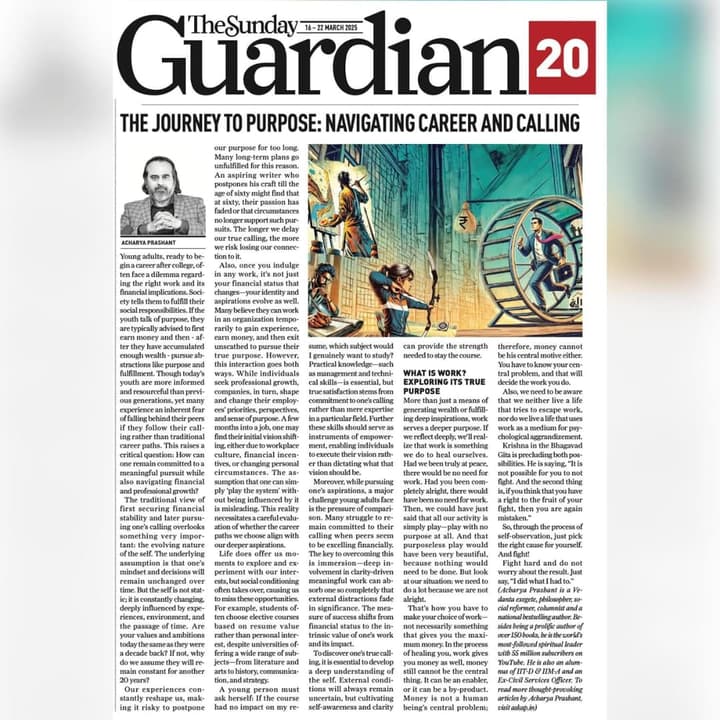
"Young adults, ready to begin a career after college, often face a dilemma regarding the right work and its financial implications. Society tells them to fulfill their social responsibilities."

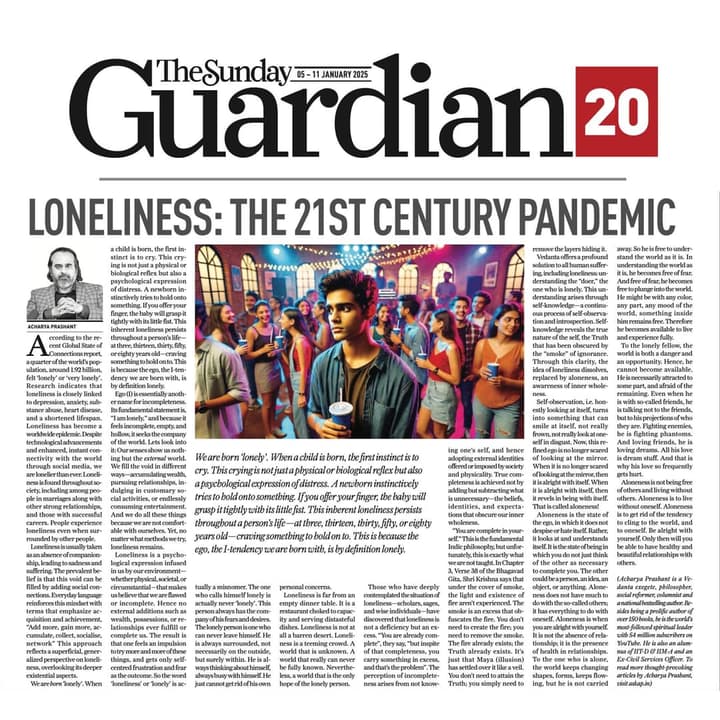
"According to the recent Global State of Connections report, a quarter of the world’s population, around 1.92 billion, felt ‘lonely’ or ‘very lonely’. Research indicates that loneliness is closely linked to depression, anxiety, substance abuse, heart disease, and a shortened lifespan."

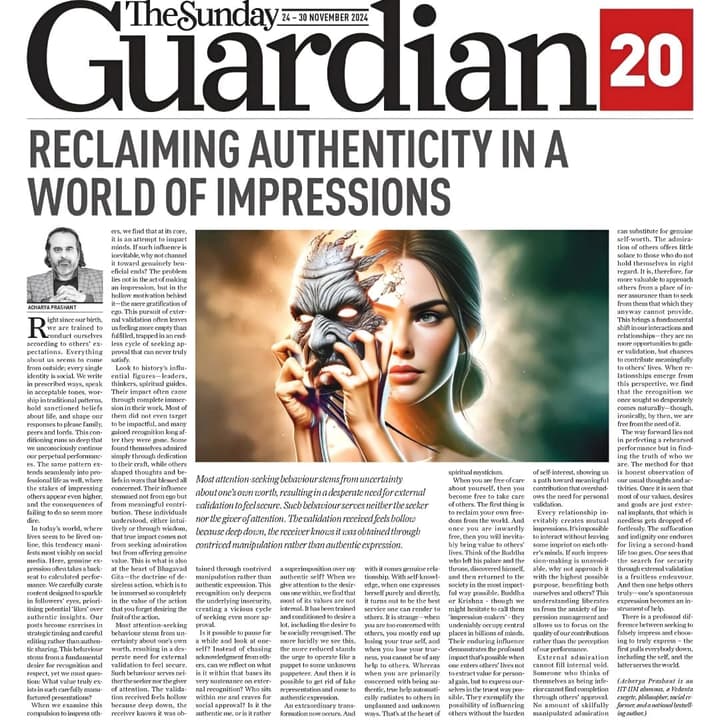
Right since our birth, we are trained to conduct ourselves according to others’ expectations. Everything about us seems to come from outside; every single identity is social.

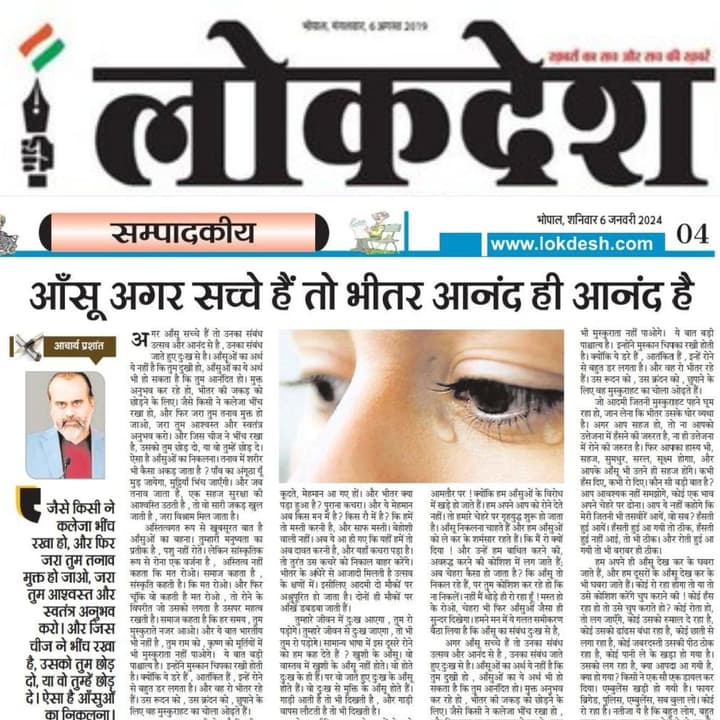
आचार्य प्रशांत ने लोकदेश में लिखा है कि जैसे किसी ने कलेजा भींच रखा हो, और फिर जरा तुम तनाव मुक्त हो जाओ, जरा तुम आश्वस्त और स्वतंत्र अनुभव करो। आंसू अगर सच्चे हों तो भीतर आनंद ही आनंद है। उन्होंने यह बताने का प्रयास किया है कि वास्तविक भावनाएं और सच्ची भावुकता ही हमें आंतरिक शांति और सुख प्रदान कर सकती हैं। सच्चे आंसू एक ऐसी स्थिति को दर्शाते हैं जहां दिल हल्का होता है और मन को गहरा संतोष मिलता है।

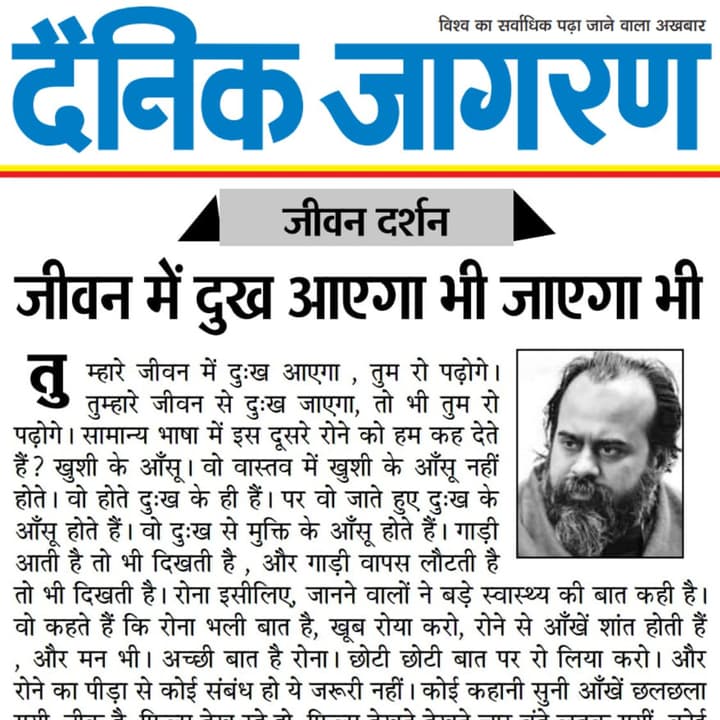
आचार्य प्रशांत ने दैनिक जागरण में लिखा है कि जीवन में दुःख आएगा, और यह भी सत्य है कि दुःख चला जाएगा। वे कहते हैं कि जब तुम्हारे जीवन में दुःख आएगा, तो तुम्हारा रोना स्वाभाविक होगा, लेकिन जब दुःख चला जाएगा, तब भी तुम रो सकते हो। इसका मतलब यह है कि पहले आँसू दुःख के होते हैं और दूसरे आँसू दुःख से मुक्ति के होते हैं।

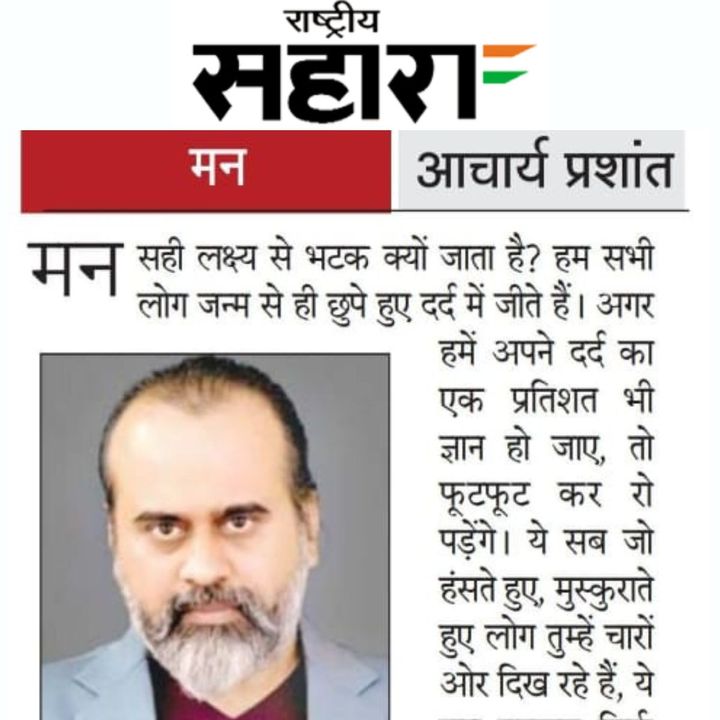
आचार्य प्रशांत बताते हैं कि हम जन्म से ही दुख में जीते हैं और इसका सही ज्ञान नहीं होता। वे कहते हैं कि अपने दर्द को समझना ही सही मार्ग दिखा सकता है। इस लेख में आत्मज्ञान, संवेदनशीलता, और मन की स्थिरता पर जोर दिया गया है। राष्ट्रीय सहारा के इस लेख में, यह बताया गया है कि अगर हम अपनी स्थिति का सटीक संज्ञान लें तो हमारी भटकन समाप्त हो सकती है।

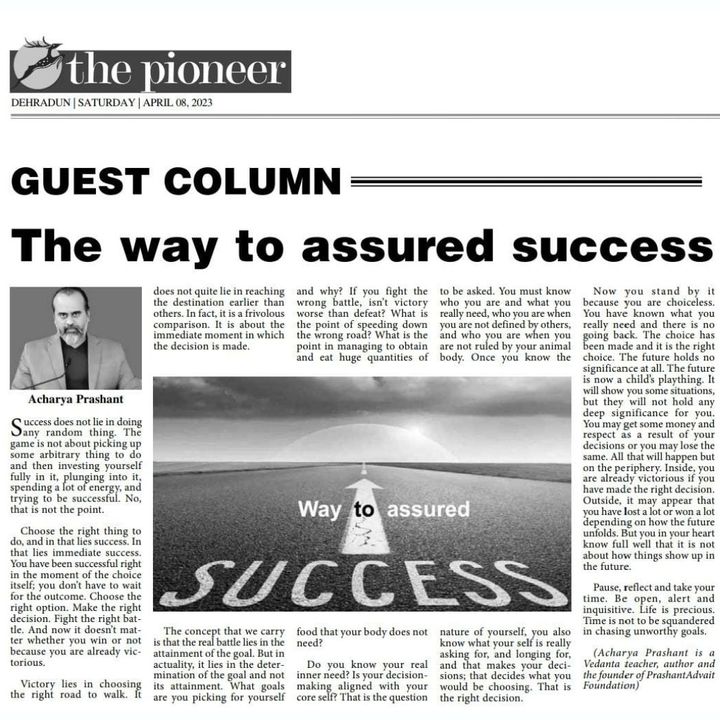
Acharya Prashant emphasizes that true success lies in making the right choices rather than simply achieving goals. He highlights the importance of aligning decisions with one's core self and inner needs, asserting that victory is found in the act of choosing the right path itself, rather than in the attainment of external outcomes.

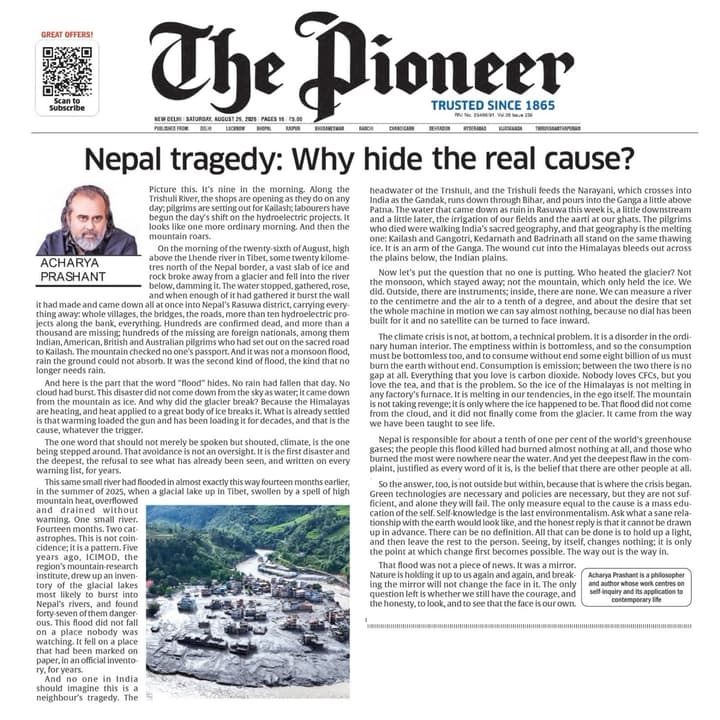
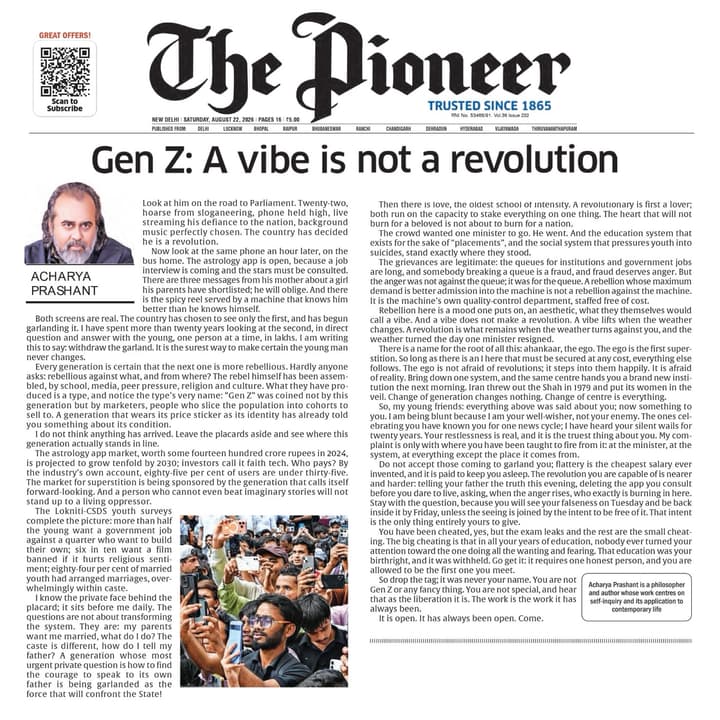
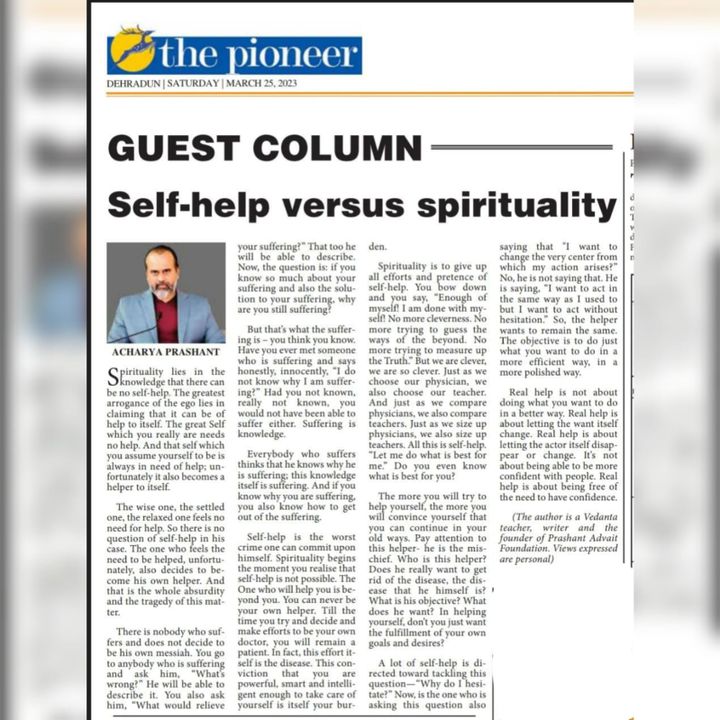
Acharya Prashant challenges the self-help illusion in The Pioneer, asserting true spirituality begins when the ego accepts it needs no aid, and transformation occurs by relinquishing ego control.

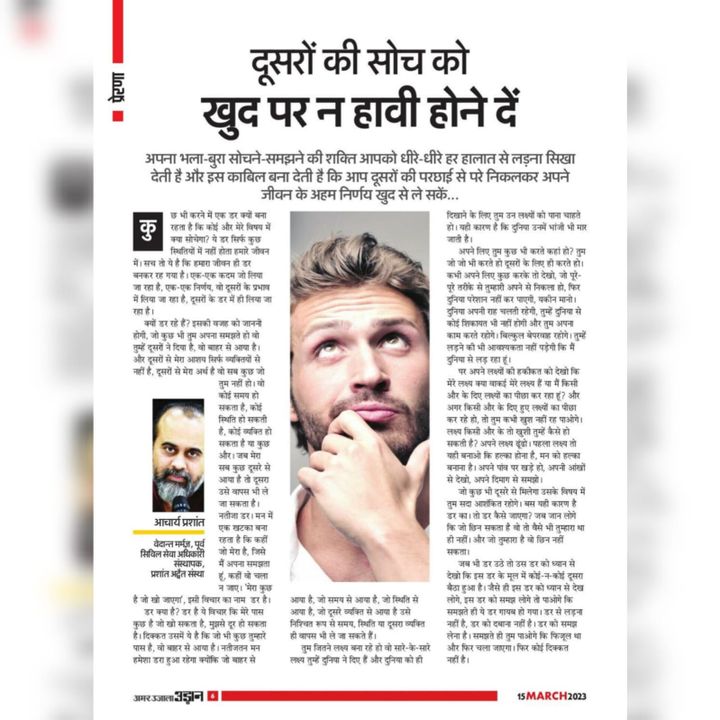
अमर उजाला में प्रकाशित इस लेख में आचार्य प्रशांत लिखते हैं अपना भला-बुरा सोचने-समझने की शक्ति आपको धीरे-धीरे हर हालात से लड़ना सिखा देती है और इस काबिल बना देती है कि आप दूसरों की परछाई से निकलकर अपने जीवन के अहम निर्णय खुद ले सकें। खुद पर दूसरों की सोच हावी नहीं होने दें और अपनी विचारधारा को स्पष्ट रखें। आलोचनाओं से प्रभावित हुए बिना अपने उद्देश्य की ओर आगे बढ़ें। अपनी ताकत और कमजोरियों को पहचानकर जीवन में आत्मनिर्भर बनें। आत्मनिर्भरता ही आपकी सच्ची शक्ति है।

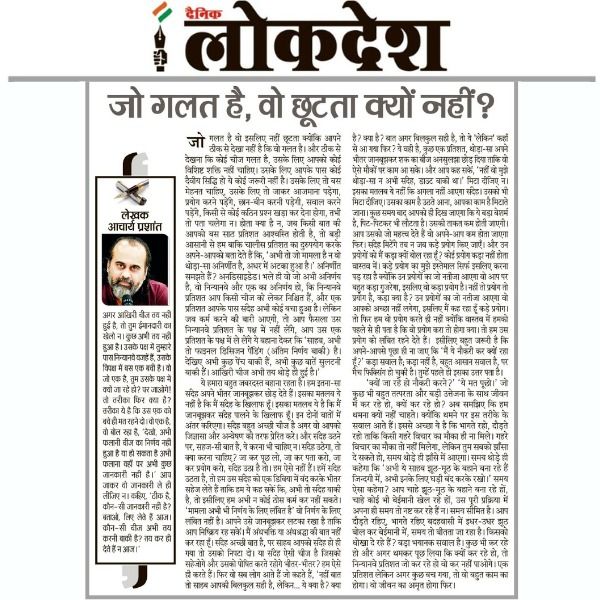
इस लेख में आचार्य प्रशांत ने गहराई से विश्लेषण किया है कि क्यों गलत आदतें और विचारधाराएं हमारे जीवन से हटने का नाम नहीं लेतीं। उन्होंने बताया कि गलतियों को पकड़कर रखने का कारण हमारा मनोवैज्ञानिक और आध्यात्मिक जकड़न है। लेख में आचार्य प्रशांत ने आत्मनिरीक्षण और आत्मज्ञान के माध्यम से इन गलतियों से मुक्ति पाने के उपाय सुझाए हैं। - Loledg

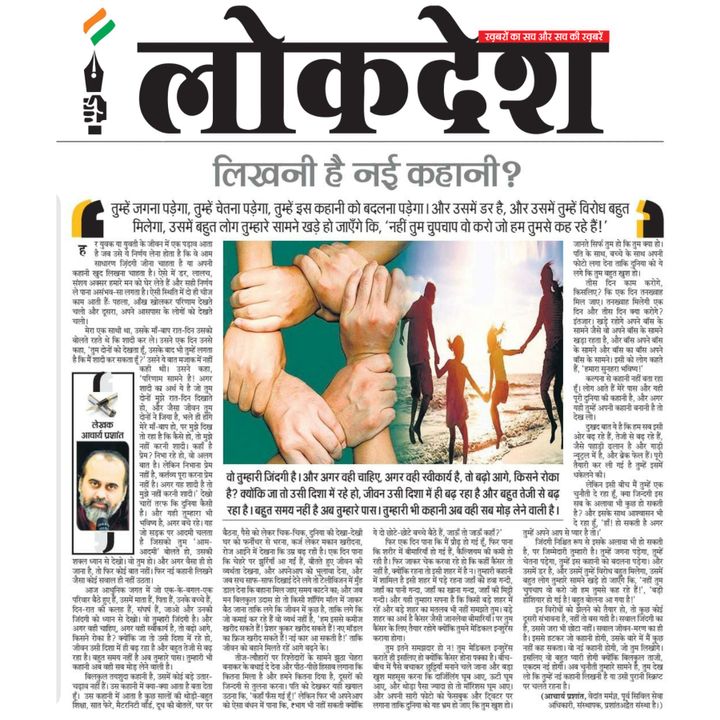
"दैनिक लोकदेश" में प्रकाशित इस लेख में आचार्य प्रशांत ने नई कहानी लिखने की प्रेरणा दी है। उन्होंने कहा कि बदलाव लाने के लिए जागरूक होना जरूरी है और हमें अपने पुराने विचारों और प्रथाओं को बदलने की हिम्मत करनी चाहिए। आचार्य प्रशांत ने बताया कि अगर हम बड़े बदलाव की चाह रखते हैं, तो हमें खुद को और समाज को बदलने के लिए आगे आना होगा और नए दृष्टिकोण अपनाने होंगे।