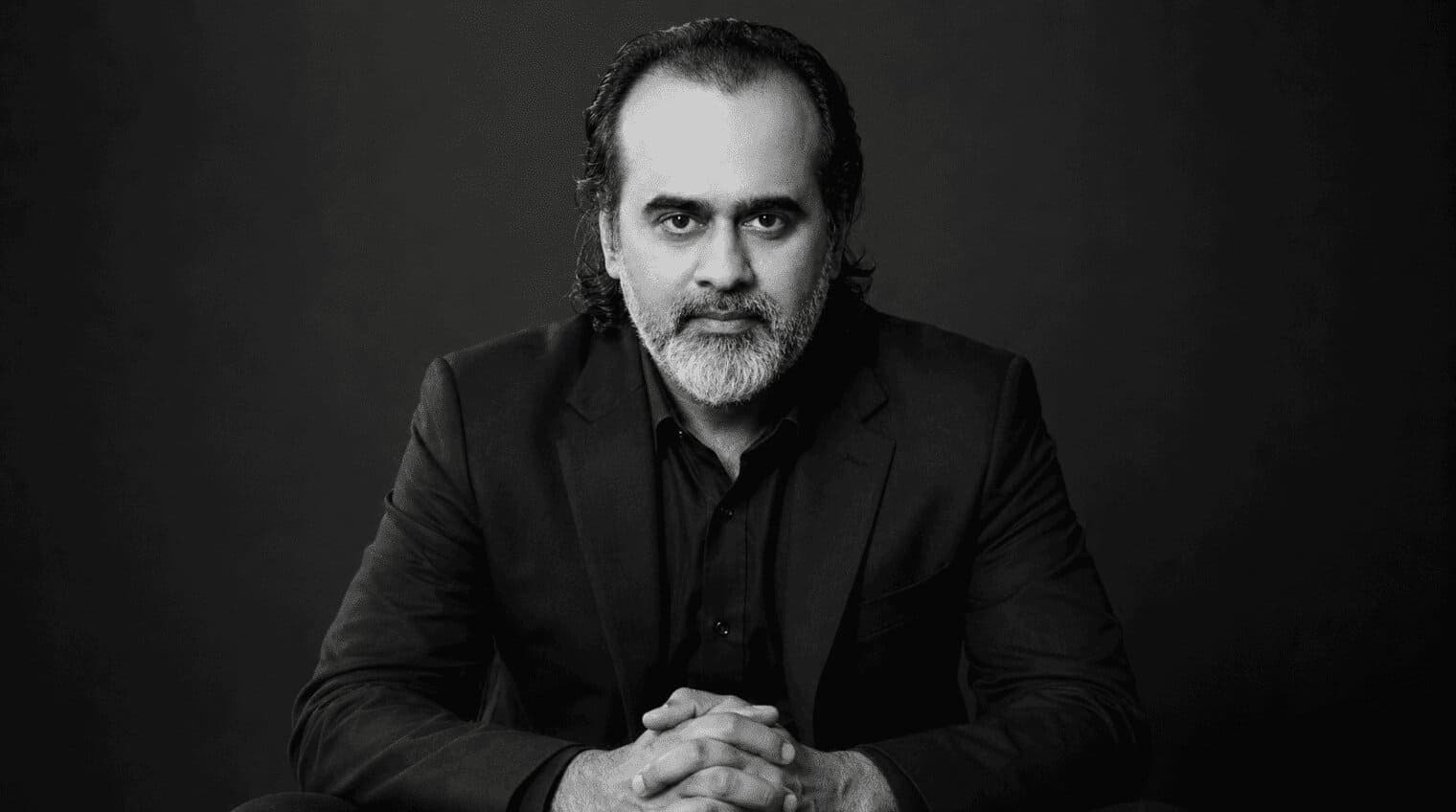
Acharya Prashant is a philosopher and author, an alumnus of IIT Delhi and IIM Ahmedabad. He is among the most widely read philosophical columnists writing in India today, with more than 190 published columns ranging across climate and consumption, elections and ideology, caste and religion, gender, education, geopolitics, technology, and the inner life.
What unifies this range is a single method: tracing every public crisis back to the unexamined self that produces it.
FOR COMMISSIONING EDITORS
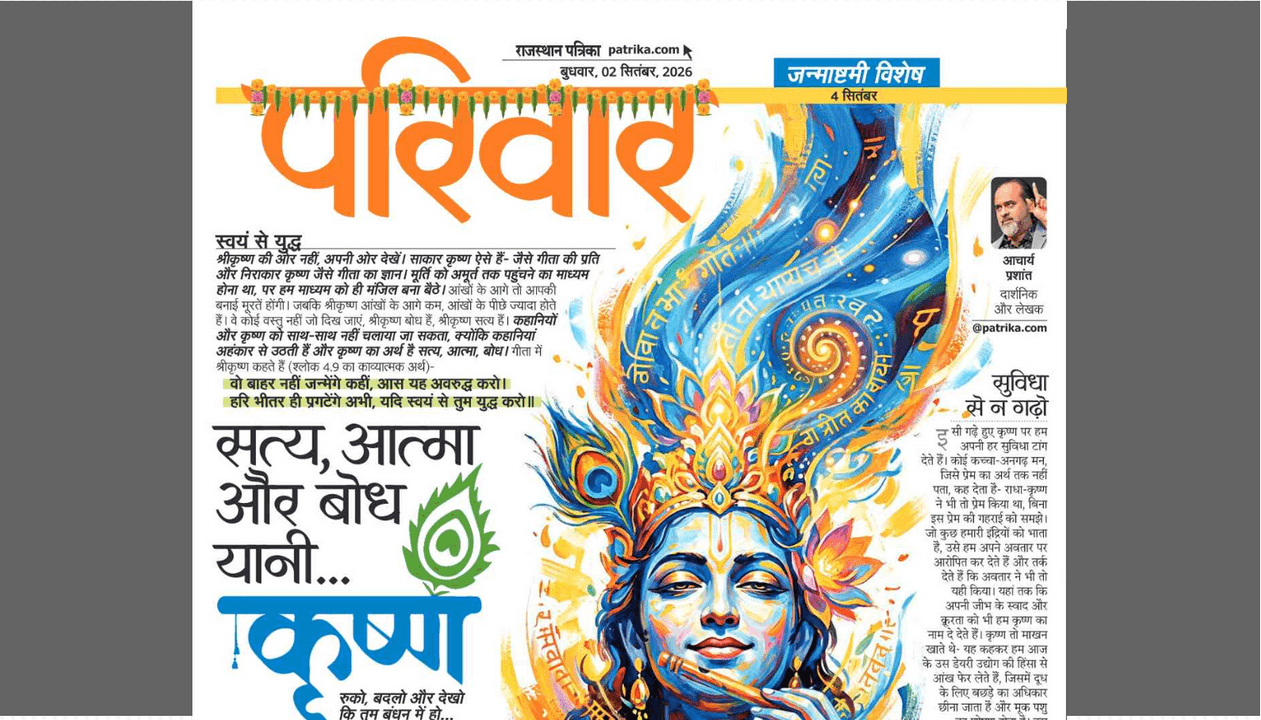
In this special Janmashtami feature published in Rajasthan Patrika, philosopher and author Acharya Prashant explains why the true Krishna is not an idol to be worshipped from a distance, but Truth, the Self, and Realization (Satya, Atma, Bodh) itself.

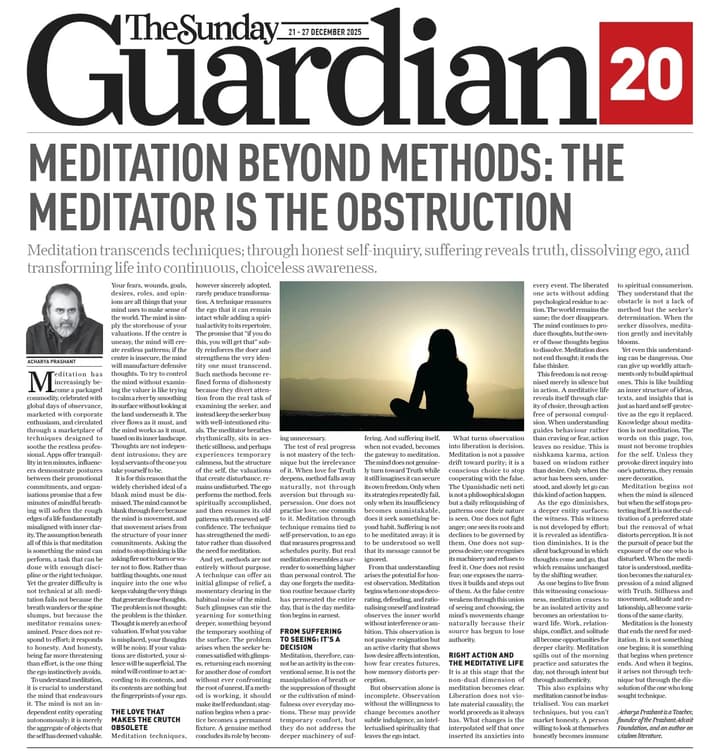
"Meditation techniques, however sincerely adopted, rarely produce transformation. A technique reassures the ego that it can remain intact while adding a spiritual activity to its repertoire. Such methods become refined forms of dishonesty because they divert attention from the real task of examining the seeker, and instead keep the seeker busy with well-intentioned rituals."

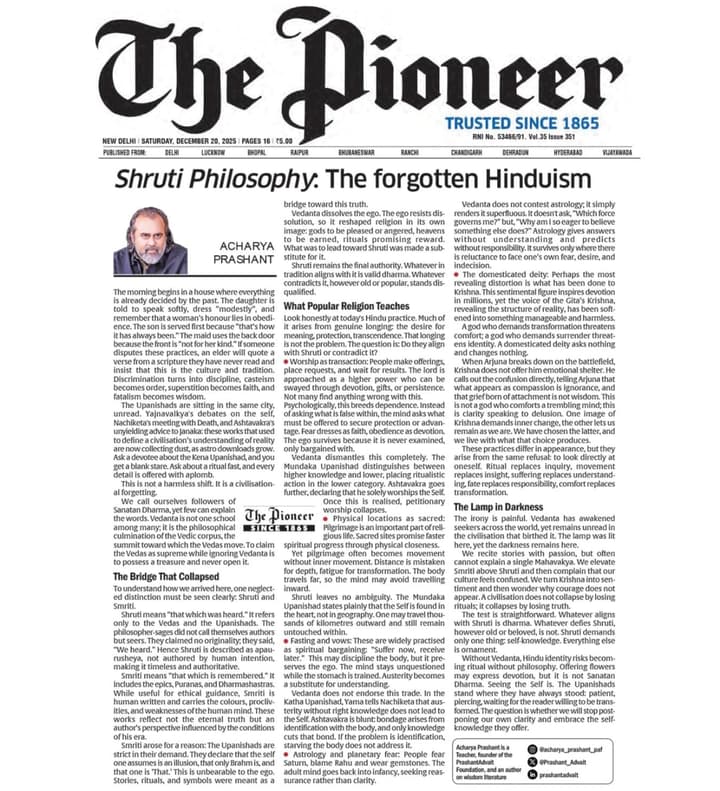
"The test is straightforward. Whatever aligns with Shruti is dharma. Whatever defies Shruti, however old or beloved, is not. Shruti demands only one thing: self-knowledge. Everything else is ornamental."

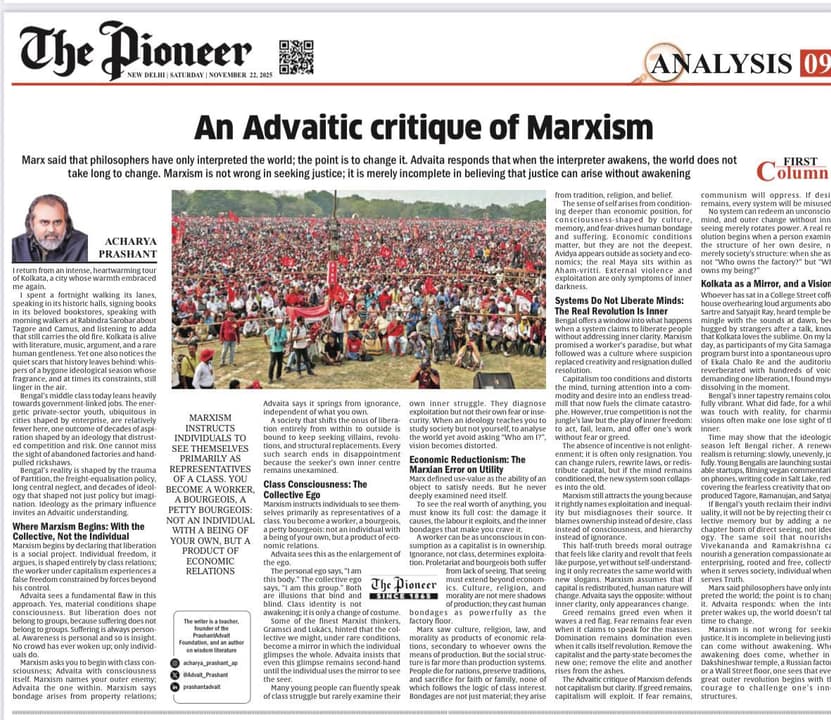
"Marxism is not wrong for seeking justice. It is incomplete in believing justice can come without awakening. When awakening does come, whether in a Kolkata adda, a Dakshineshwar temple, a Russian factory, a Wall Street floor, or a village panchayat, one sees that every great outer revolution begins when one has the courage to challenge one’s inner structures."

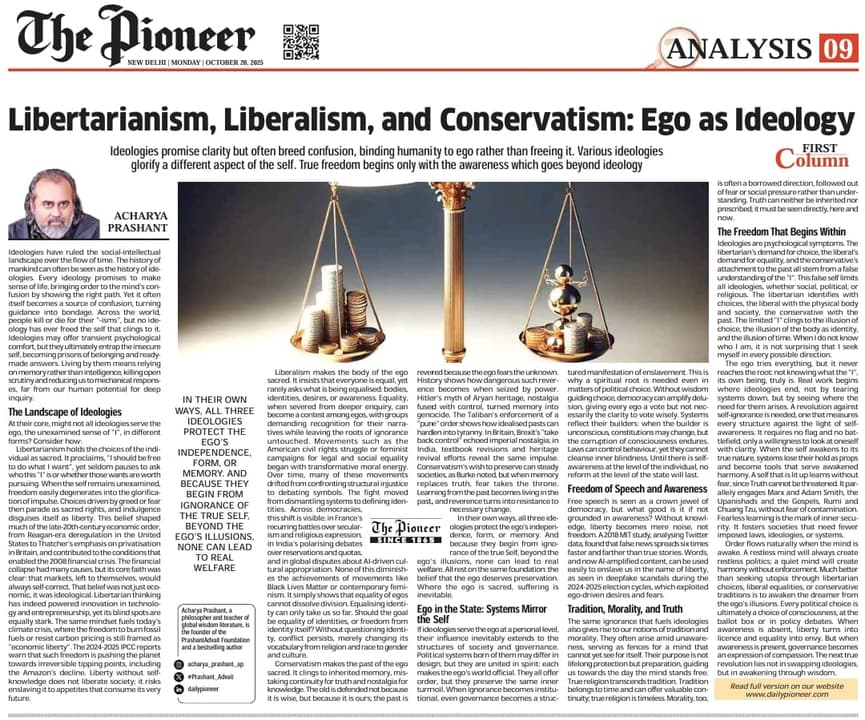
"In their own ways, all three ideologies protect the ego’s independence, form, or memory. And because they begin from ignorance of the true Self, none can lead to real welfare. All rest on the same foundation: the belief that the ego deserves preservation. Where the ego is sacred, suffering is inevitable."

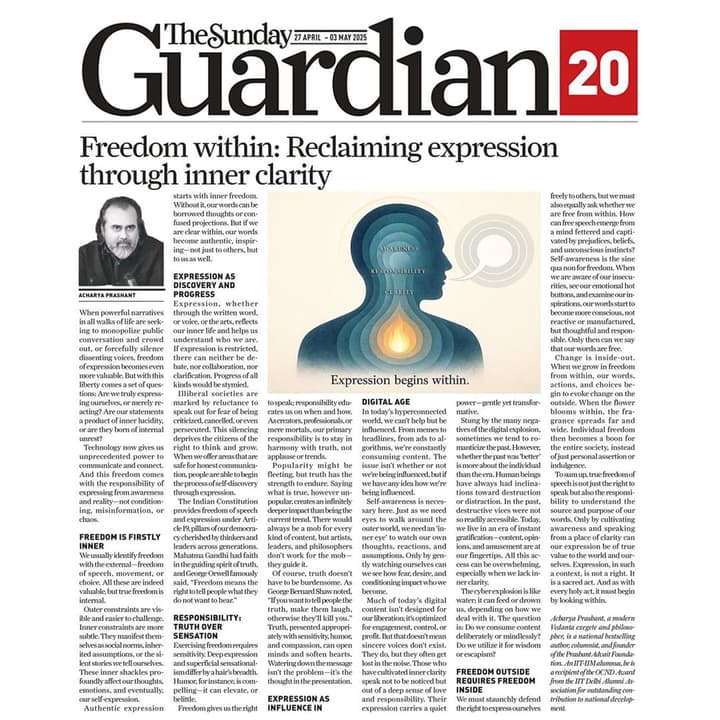
"We mistake freedom for something the world grants us: the right to speak, move, or choose. But whatever the world gives, it can also take away. This is why the scriptures speak of an inner freedom: the one that's untouched by time, politics, or power. It doesn't ask for permission and is independent of praise or censorship, admiration or indifference."

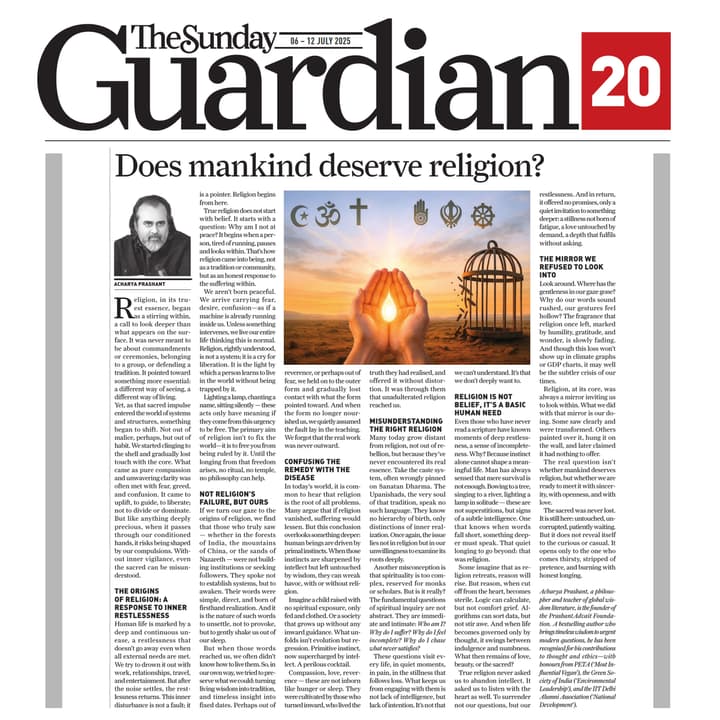
"Buildings, rituals, and identities all come and go. They cannot be the heart of religion. What is timeless is our love for truth, for reliability, for eternity itself. That love explains why we shrink at dishonesty, why we resist betrayal, and why we fear death. Deep within, something in us yearns for the changeless."

"Navratri’s point is simple: what is beyond form is reached only by going through form. The task, then, is to meet life as it comes, without shortcuts or avoidance. In these nine nights, the real ‘vrat’ should be simple and exact: approach the Durga Saptashati with your whole heart, as a ‘sankalp’ not to remain as you currently are."

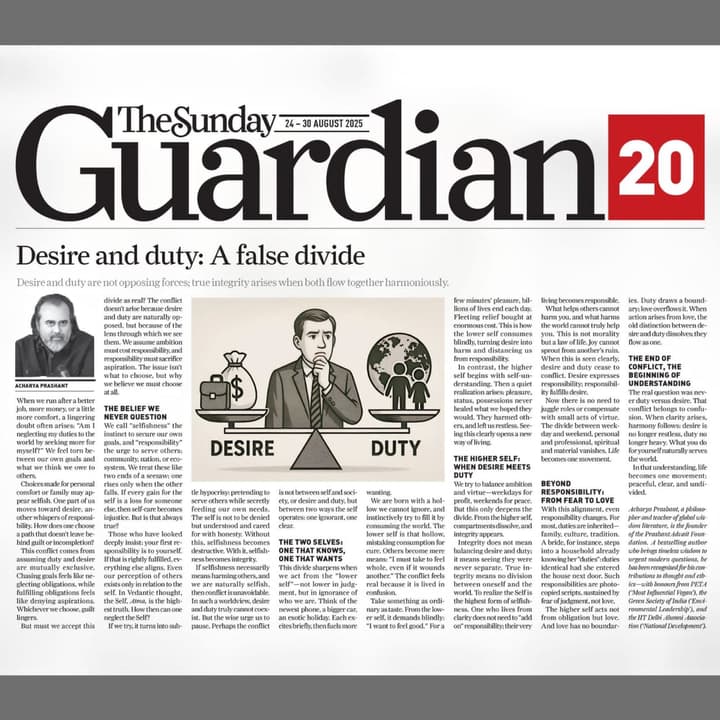
"Integrity does not mean balancing desire and duty; it means seeing they were never separate. True integrity means no division between oneself and the world. One who lives from clarity does not need to 'add on' responsibility; their very living becomes responsible."

"Most people do not arrive a t religion through inquiry but inherit it— through tradition passed down by parents, neighbors, and priests. They often put sacred texts on a high shelf, calling them holy, but hardly examine them with genuine curiosity. "

"True religion does not start with belief. It starts with a question: Why am I not at peace? It begins when a person, tired of running, pauses and looks within. That’s how religion came into being, not as a tradition or community, but as an honest response to the suffering within."

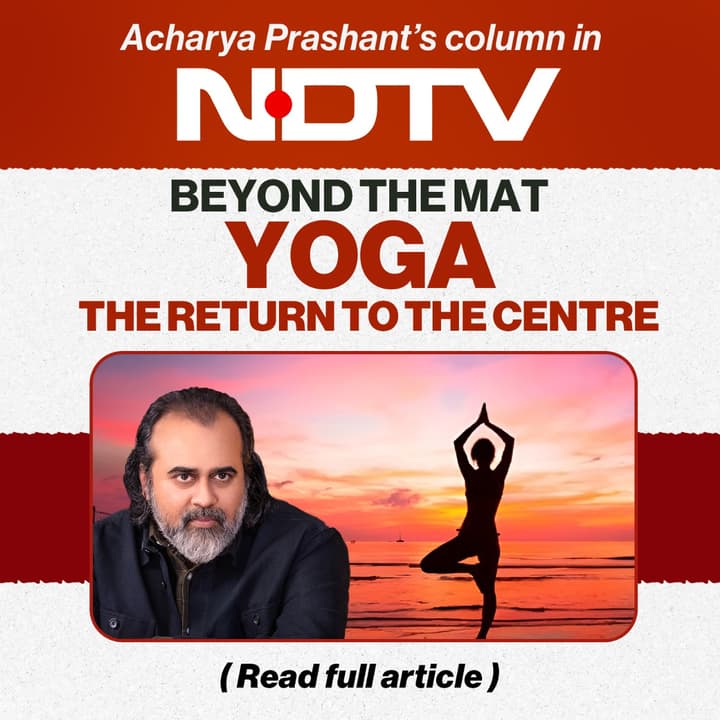
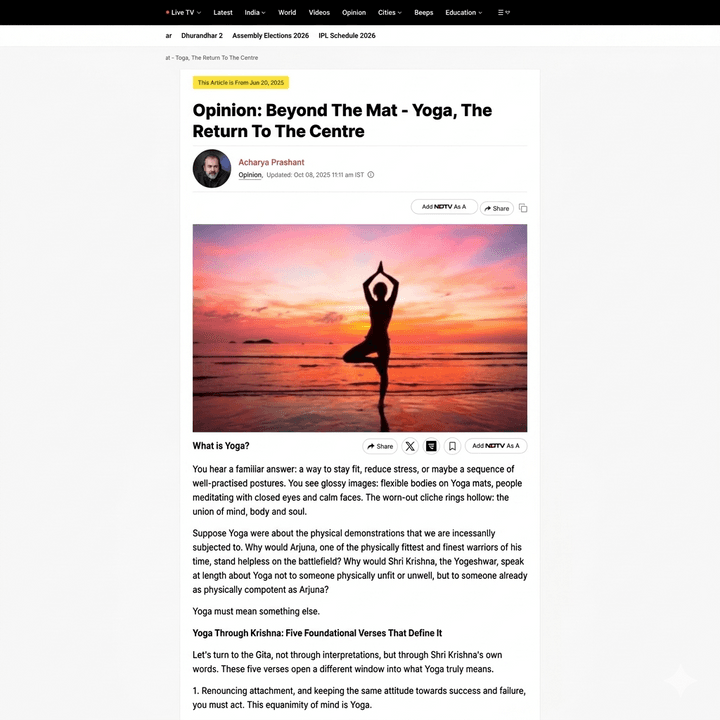
"Yoga is not something you do - it's what remains when falsehood falls away. It is the union, through conscious acsendence, of your current (ordinary and lowly) state with your highest possibility. You can hold a pose, repeat a chant, or study scripture. But if your actions are still driven by fear, comparison, or insecurity, it's not Yoga - it's ego in disguise."

"You hear a familiar answer: a way to stay fit, reduce stress, or maybe a sequence of well-practised postures. You see glossy images: flexible bodies on Yoga mats, people meditating with closed eyes and calm faces. The worn-out cliche rings hollow: the union of mind, body and soul."

"When powerful narratives in all walks of life are seeking to monopolize public conversation and crowd out, or forcefully silence dissenting voices, freedom of expression becomes even more valuable."