Acharya Prashant is a philosopher and author, an alumnus of IIT Delhi and IIM Ahmedabad. He is among the most widely read philosophical columnists writing in India today, with more than 190 published columns ranging across climate and consumption, elections and ideology, caste and religion, gender, education, geopolitics, technology, and the inner life.
What unifies this range is a single method: tracing every public crisis back to the unexamined self that produces it.
FOR COMMISSIONING EDITORS
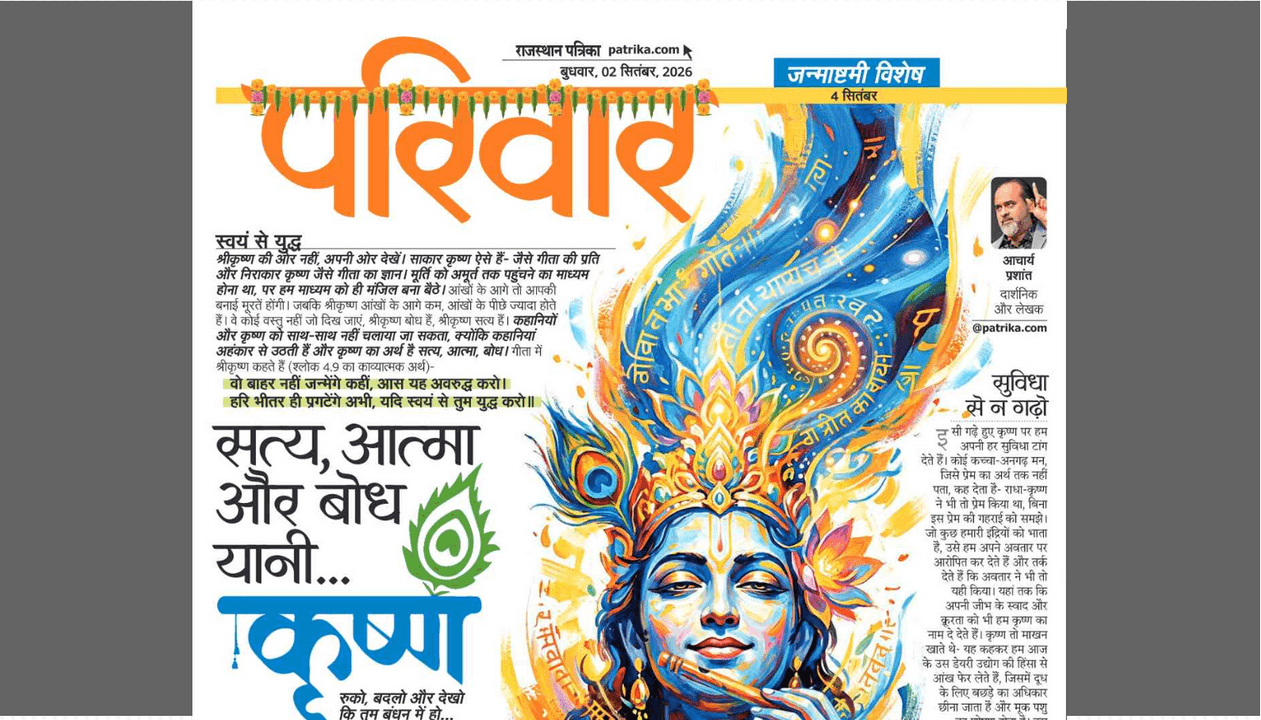
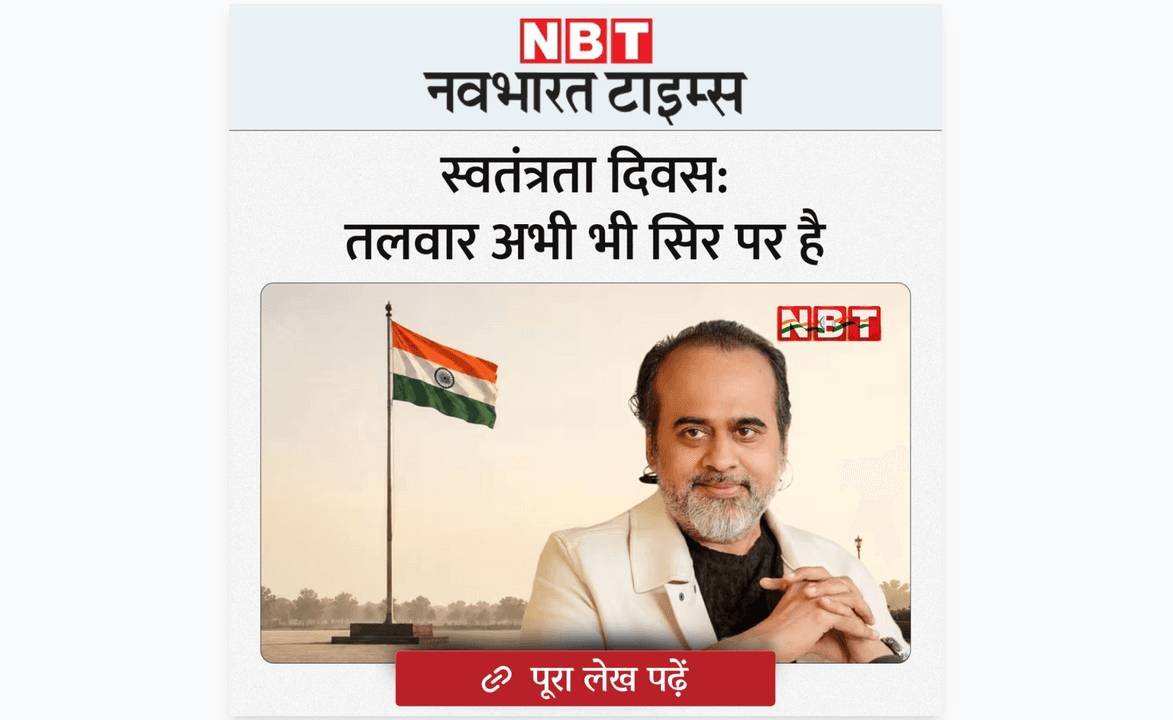
In this special Janmashtami feature published in Rajasthan Patrika, philosopher and author Acharya Prashant explains why the true Krishna is not an idol to be worshipped from a distance, but Truth, the Self, and Realization (Satya, Atma, Bodh) itself.

"Freedom is natural — it's a given. The more honest and more useful question is: if everything is free from birth, then where did this thing called slavery come from later on? Was India always enslaved? No. So where did slavery come from? That's the question we should really be asking."

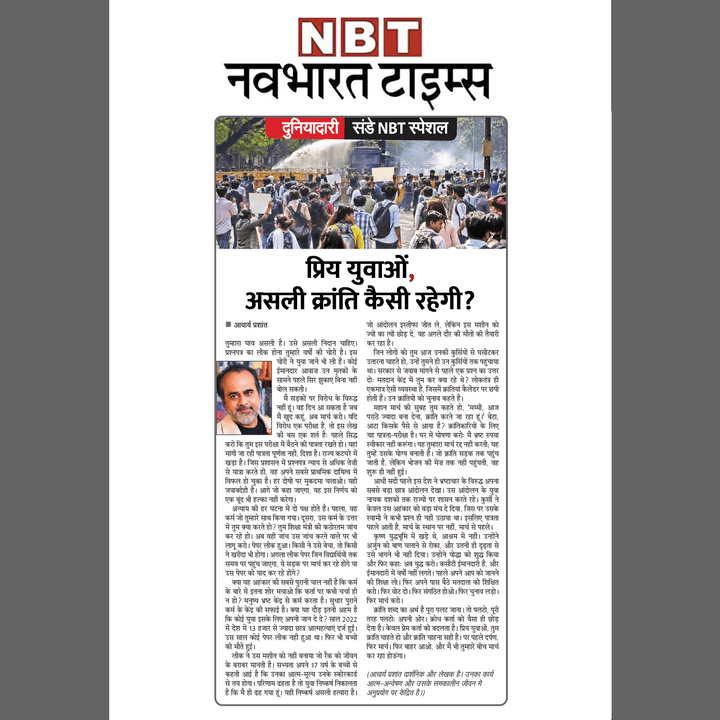
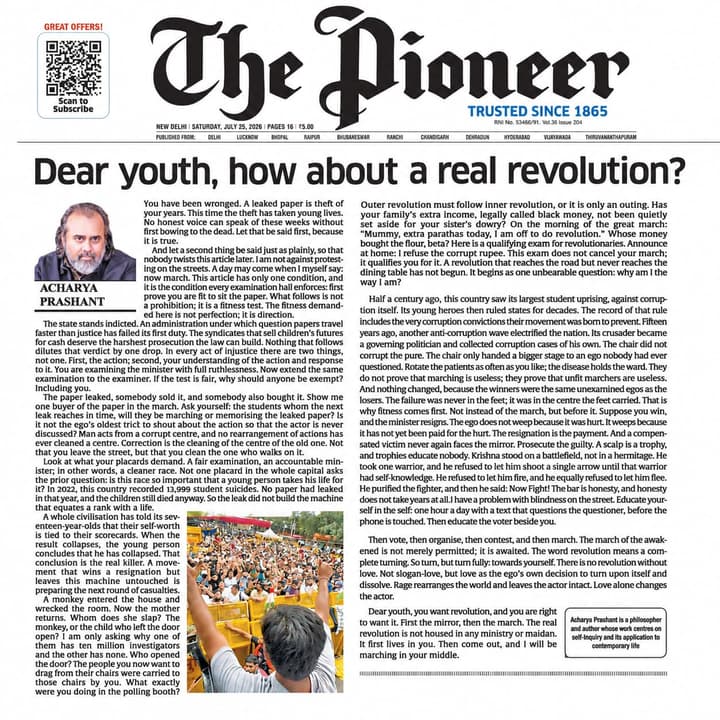
“The chair has never corrupted a truly sacred person. The chair only gives a bigger stage to that ego whose owner has never bothered to question it. You can keep changing the patients as many times as you like; the disease remains in the hospital.”

"I have no problems with a street protest. I have a problem with blindness on the street. Send the blind onto the road, and you will have accidents, not revolutions. First let the eyes open. Then I will myself say: now march."

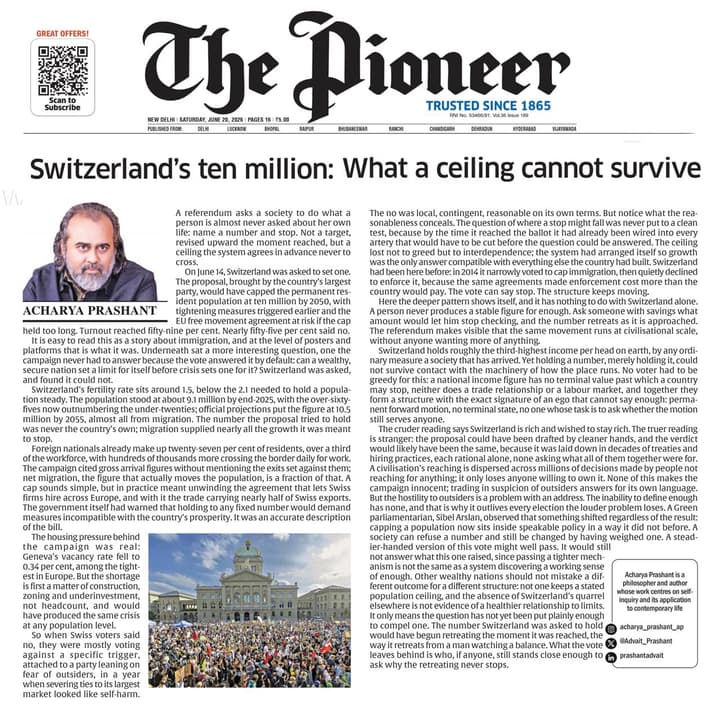
"A person never produces a stable figure for enough. Ask someone with savings what amount would let him stop checking, and the number retreats as it is approached. The Swiss population referendum makes visible that the same movement runs at civilisational scale, without anyone wanting more of anything. Together they form a structure with the exact signature of an ego that cannot say enough."

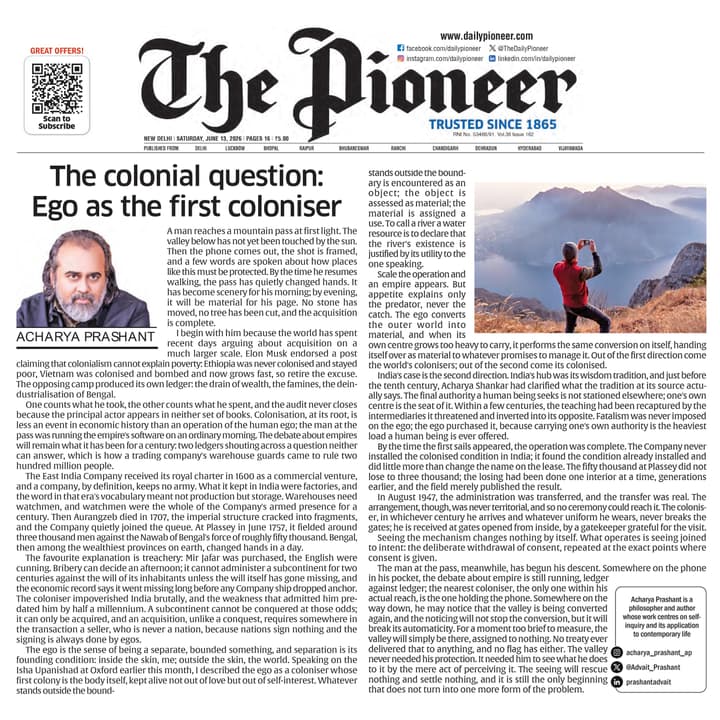
"A man reaches a mountain pass at first light, three hours of walking in the dark behind him. The valley below has not yet been entered by the sun; the river on its floor is a grey thread, older than the language he thinks in. He stands still for perhaps a minute."

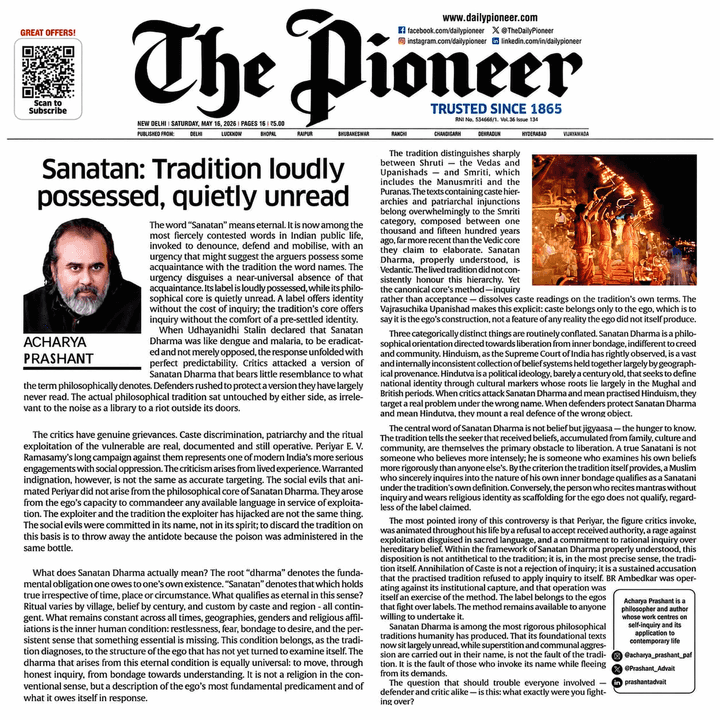
“When scriptures are reduced to symbols of identity instead of instruments of inquiry, tradition loses its living essence. Reverence without study creates pride, not understanding. And a civilisation that stops reading itself slowly becomes vulnerable to noise, imitation, and hollow ritual."

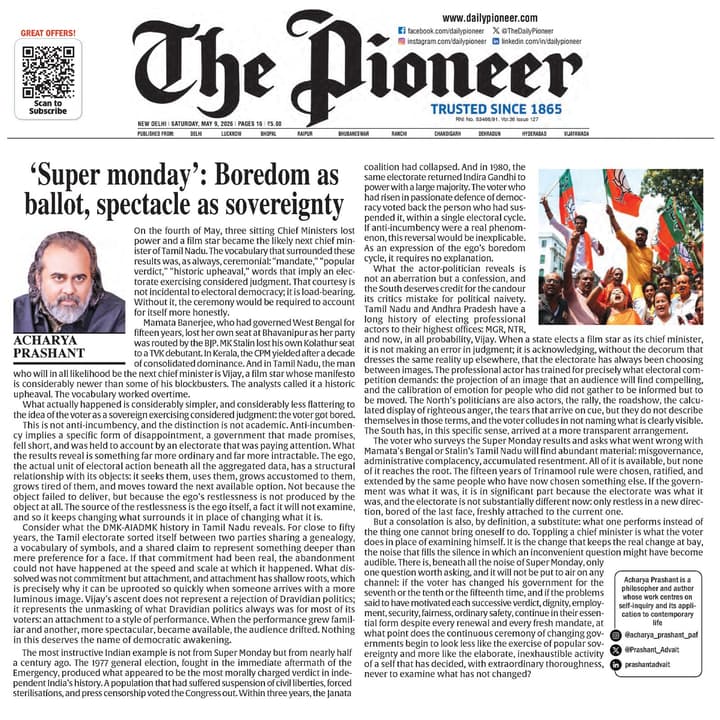
"Beneath all the noise of Super Monday, there's only one question worth asking: if the voter has changed his government for the seventh or the fifteenth time, and if the quality of what is governed has remained constant, if the problems said to have motivated each successive verdict continue in their essential form, at what point does the ceremony of changing governments begin to look less like the exercise of popular sovereignty and more like the elaborate activity of a self that has decided never to examine what has not changed?"

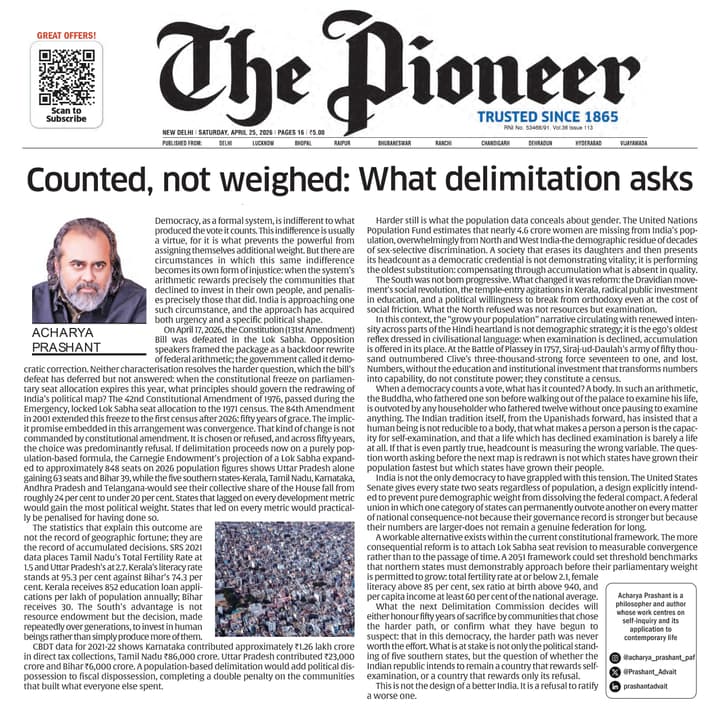
"A delimitation that diminishes the political standing of societies with its highest-performing institutions is not simply an injustice to them; it is a statement about what India believes political standing should be based on. A country that wants to earn its place in the world as a knowledge economy cannot build that future on a political architecture that the builders of its knowledge economy will experience as a systematic penalty for having built it."

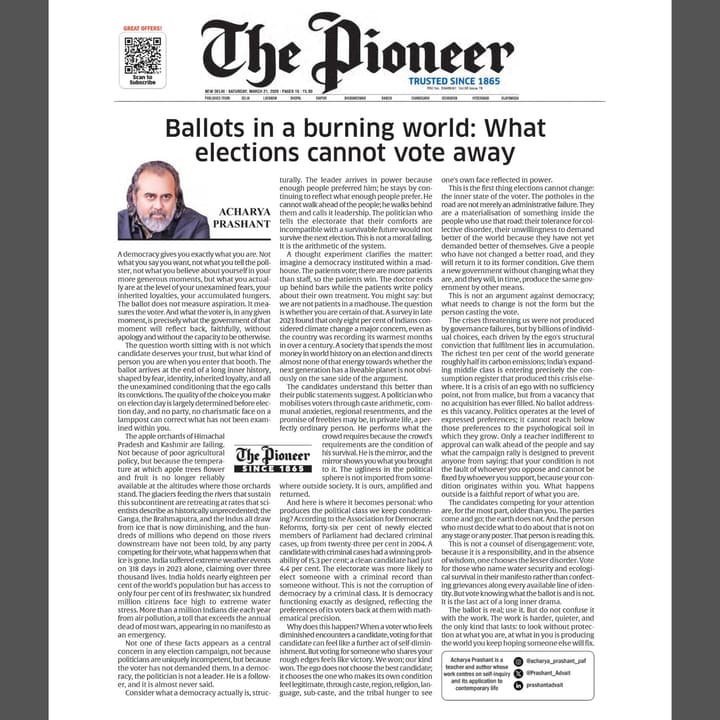
"Democracy does not give you what you want—it gives you what you are. A hard look at how the voter’s inner state shapes the nation more than any leader ever can."

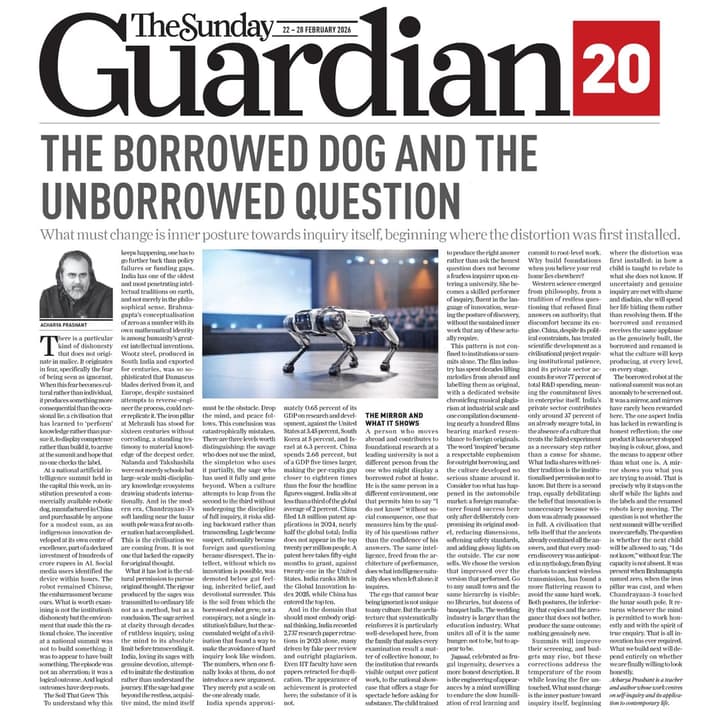
"Summits will improve their screening, and budgets may rise, but these corrections address the temperature of the room while leaving the fire untouched. What must change is the inner posture toward inquiry itself, beginning where the distortion was first installed."

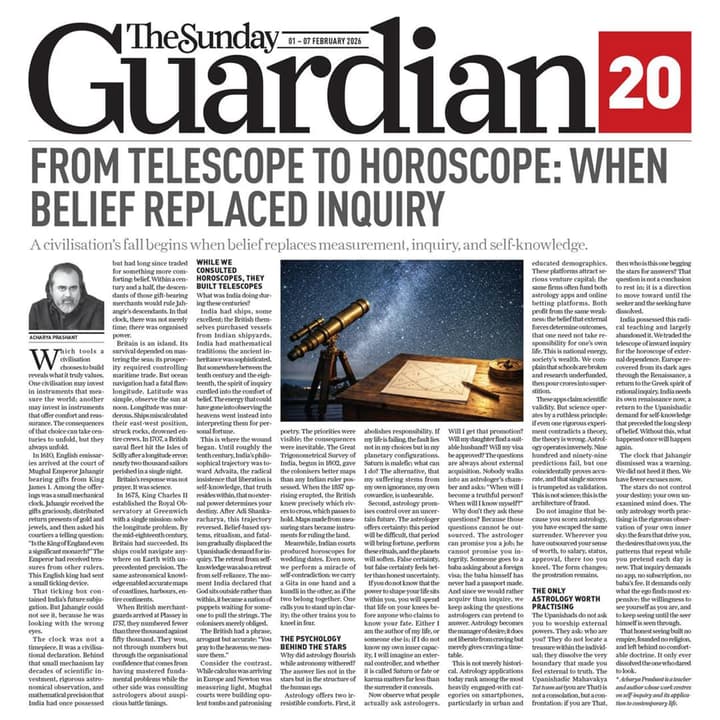
"One civilisation may invest in instruments that measure the world; another may invest in instruments that offer comfort and reassurance. The consequences of that choice can take centuries to unfold, but they always unfold."

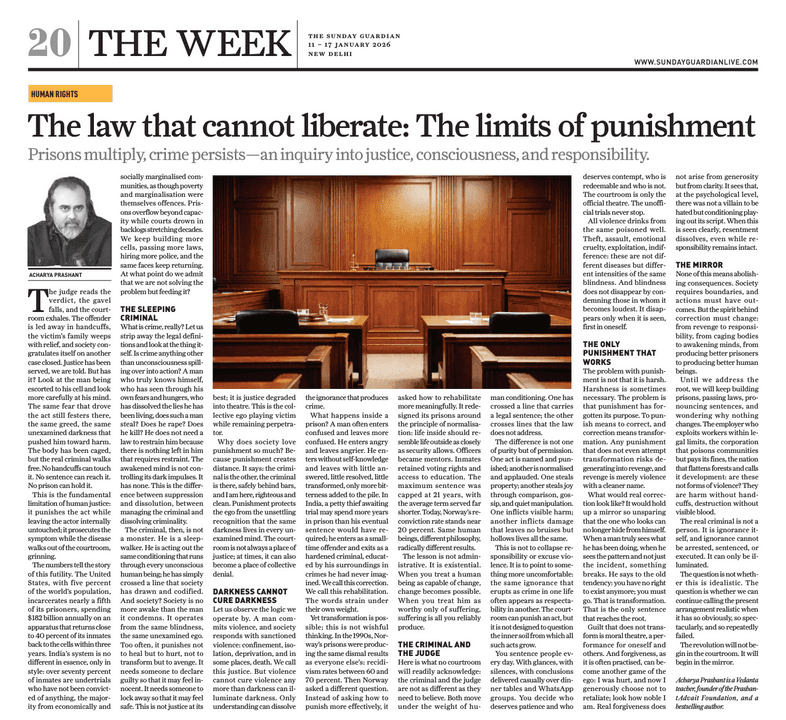
"Prisons multiply, crime persists—an inquiry into justice, consciousness, and responsibility."

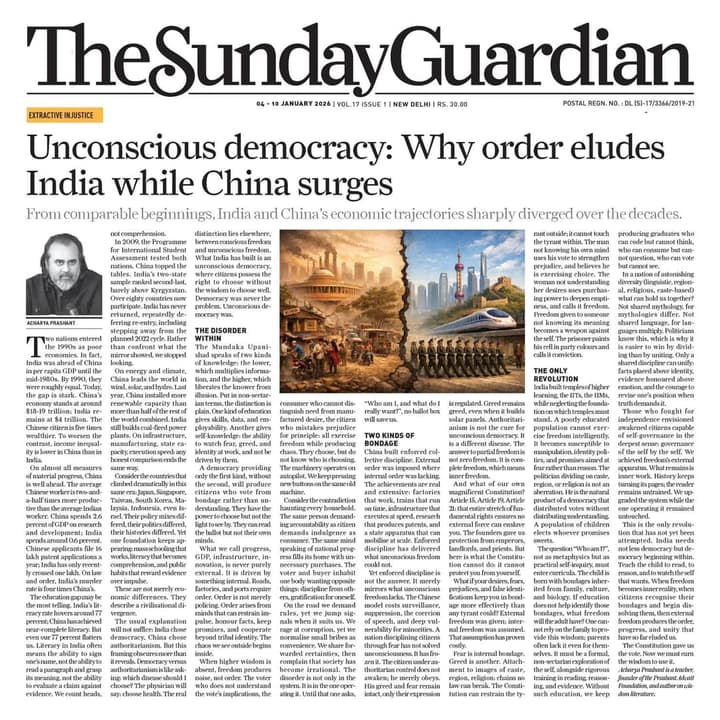
"Two nations entered the 1990s as poor economies. In fact, India was ahead of China in per capita GDP until the mid-1980s. By 1990, they were roughly equal. Today, the gap is stark. China’s economy stands at around $18–19 trillion; India remains at $4 trillion. The Chinese citizen is five times wealthier."