Acharya Prashant is a philosopher and author, an alumnus of IIT Delhi and IIM Ahmedabad. He is among the most widely read philosophical columnists writing in India today, with more than 190 published columns ranging across climate and consumption, elections and ideology, caste and religion, gender, education, geopolitics, technology, and the inner life.
What unifies this range is a single method: tracing every public crisis back to the unexamined self that produces it.
FOR COMMISSIONING EDITORS
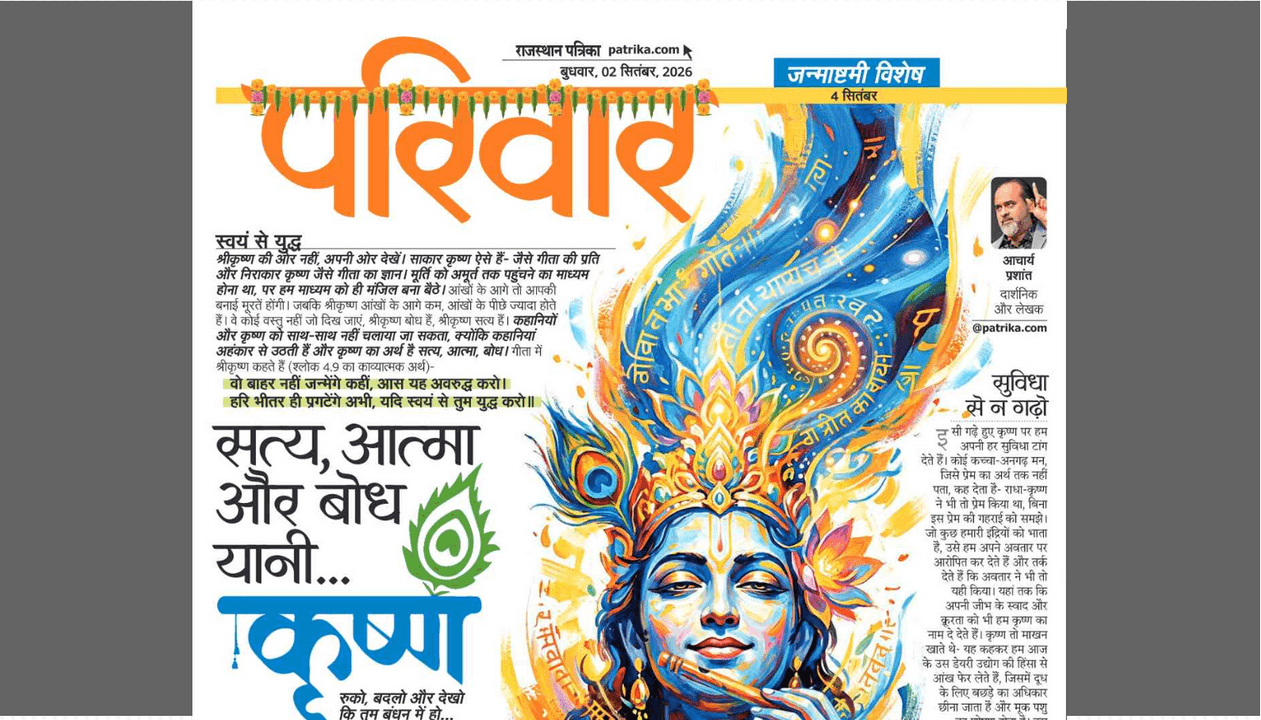
In this special Janmashtami feature published in Rajasthan Patrika, philosopher and author Acharya Prashant explains why the true Krishna is not an idol to be worshipped from a distance, but Truth, the Self, and Realization (Satya, Atma, Bodh) itself.

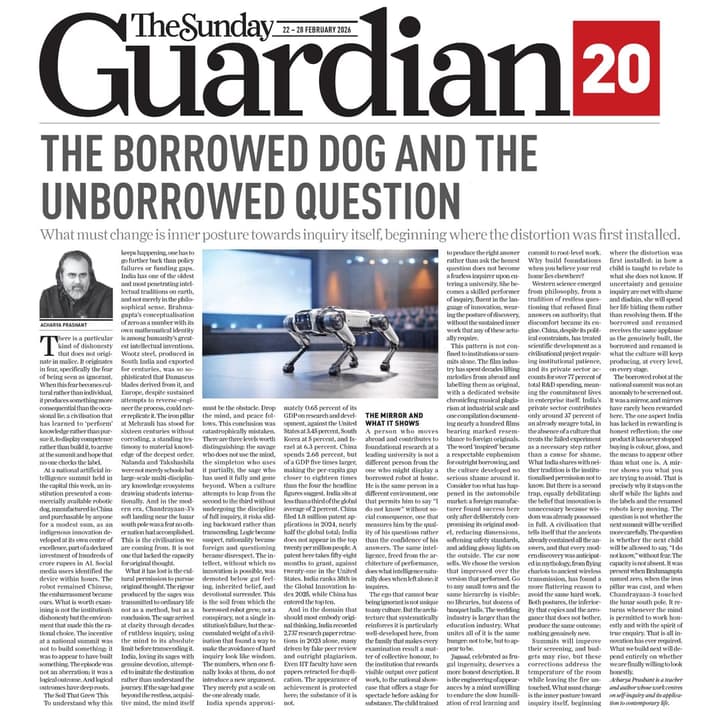
"Summits will improve their screening, and budgets may rise, but these corrections address the temperature of the room while leaving the fire untouched. What must change is the inner posture toward inquiry itself, beginning where the distortion was first installed."

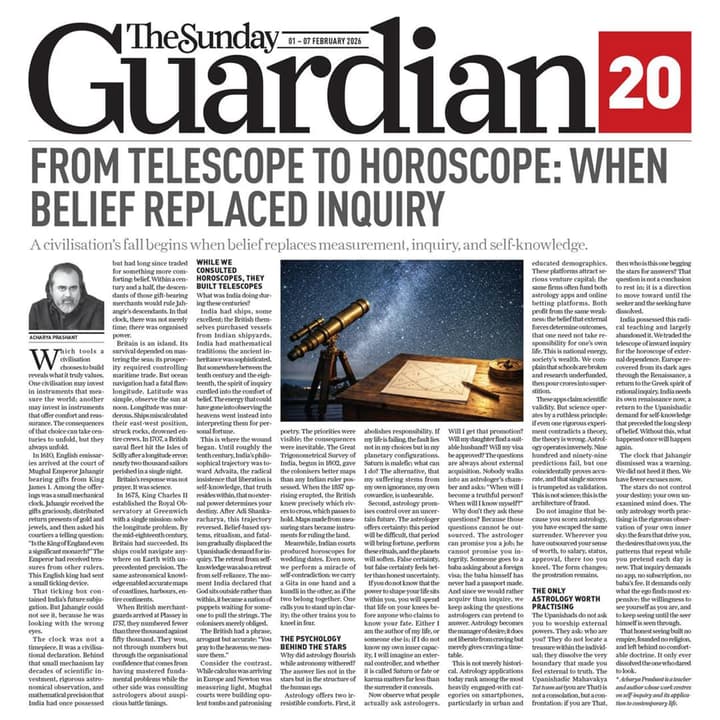
"One civilisation may invest in instruments that measure the world; another may invest in instruments that offer comfort and reassurance. The consequences of that choice can take centuries to unfold, but they always unfold."

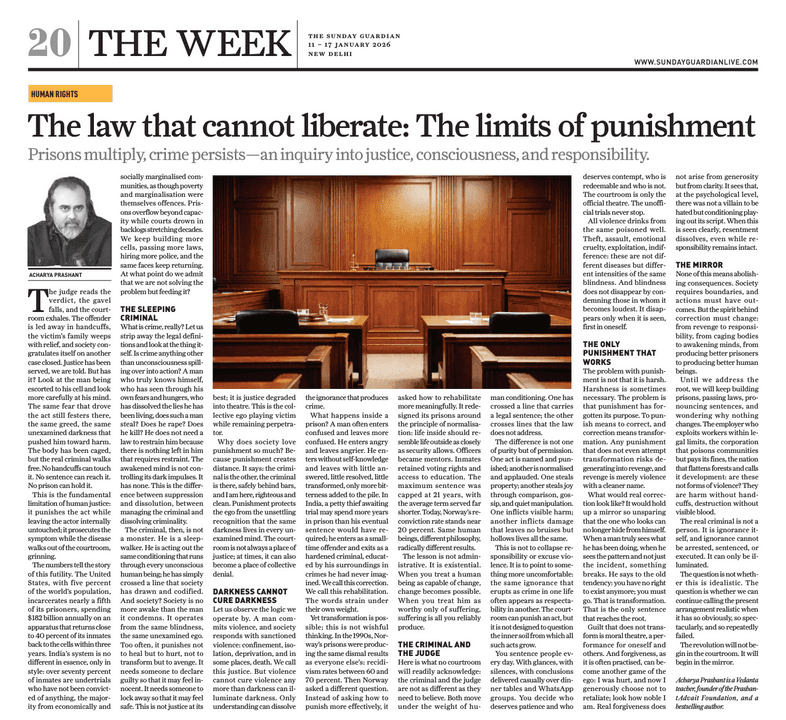
"Prisons multiply, crime persists—an inquiry into justice, consciousness, and responsibility."

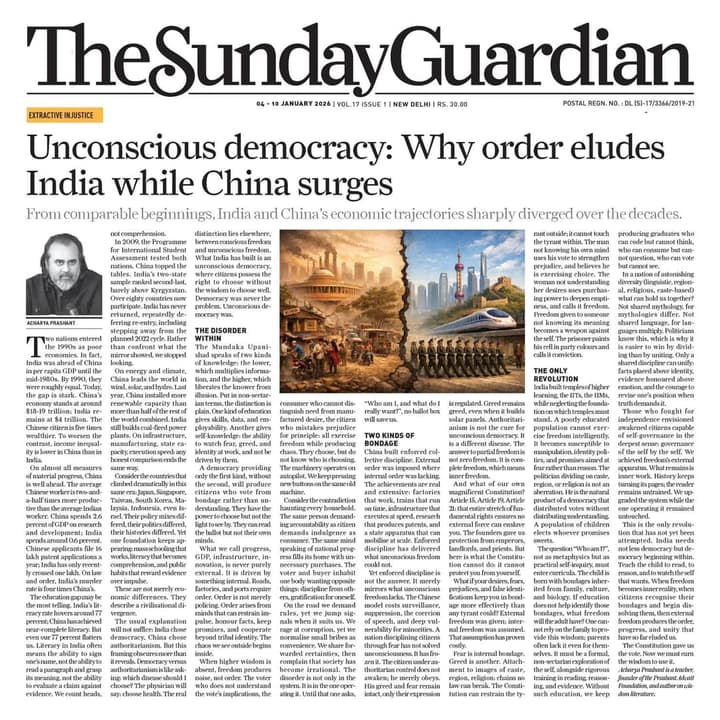
"Two nations entered the 1990s as poor economies. In fact, India was ahead of China in per capita GDP until the mid-1980s. By 1990, they were roughly equal. Today, the gap is stark. China’s economy stands at around $18–19 trillion; India remains at $4 trillion. The Chinese citizen is five times wealthier."

True independence combines political freedom with spiritual liberation, as the Gita teaches inner clarity and self-governance.

"A nation does not fall only to war. It crumbles when its own people begin to lose trust in it. When the youth no longer believe that merit leads to opportunity, they begin to lose faith in the very idea of a nation. The social contract is not printed on paper; it lives in the heart. When that heart withdraws, the contract collapses."

"The Constitution, in this regard, is a deeply spiritual document. At its heart lies a return to the Self—the quest for self-realization. It seeks not superficial compliance but deep, personal commitment. Such spiritual foundations reinforce, rather than undermine, the secular character of our democracy."

"A language is not merely a tool of communication; it carries within a worldview, a way of life, and an entire cultural and spiritual lineage. Its sounds are the history of a people and the thread that ties them to their roots. In India we speak hundreds of languages, and each one tells a unique story with a deep sense of belonging."

"Delimitation is the process of redrawing the boundaries of territorial constituencies in a state for the Lok Sabha and Legislative Assemblies to ensure fair representation. Since populations grow and shift over time, this process helps maintain balanced representation so that each MP or MLA represents roughly the same number of people."

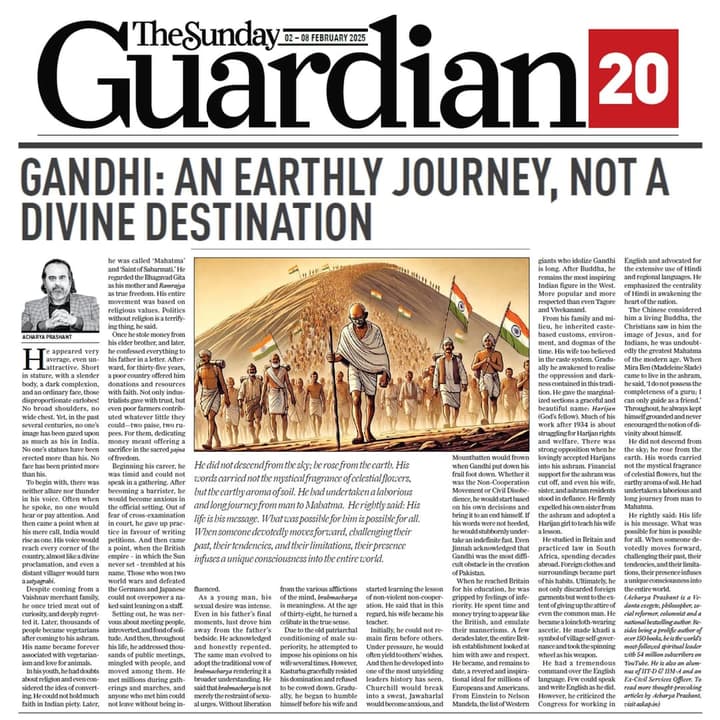
"He appeared very average, even unattractive. Short in stature, with a slender body, a dark complexion, and an ordinary face, those disproportionate earlobes! No broad shoulders, no wide chest."

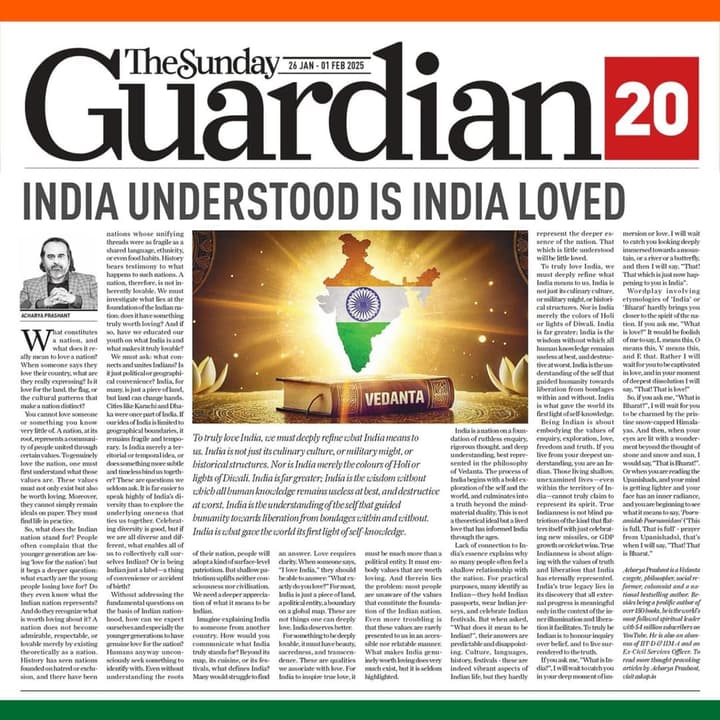
"What constitutes a nation, and what does it really mean to love a nation? When someone says they love their country, what are they really expressing? Is it love for the land, the flag, or the cultural patterns that make a nation distinct?"