Acharya Prashant is a philosopher and author, an alumnus of IIT Delhi and IIM Ahmedabad. He is among the most widely read philosophical columnists writing in India today, with more than 190 published columns ranging across climate and consumption, elections and ideology, caste and religion, gender, education, geopolitics, technology, and the inner life.
What unifies this range is a single method: tracing every public crisis back to the unexamined self that produces it.
FOR COMMISSIONING EDITORS
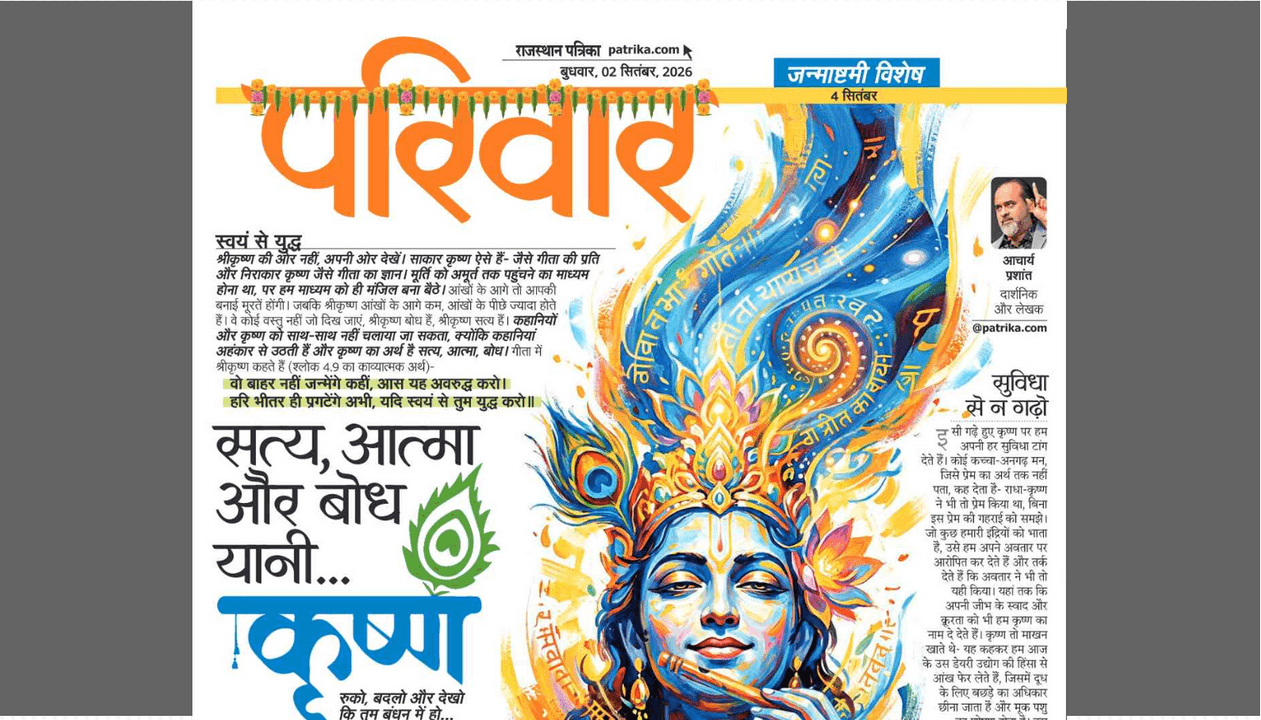
In this special Janmashtami feature published in Rajasthan Patrika, philosopher and author Acharya Prashant explains why the true Krishna is not an idol to be worshipped from a distance, but Truth, the Self, and Realization (Satya, Atma, Bodh) itself.

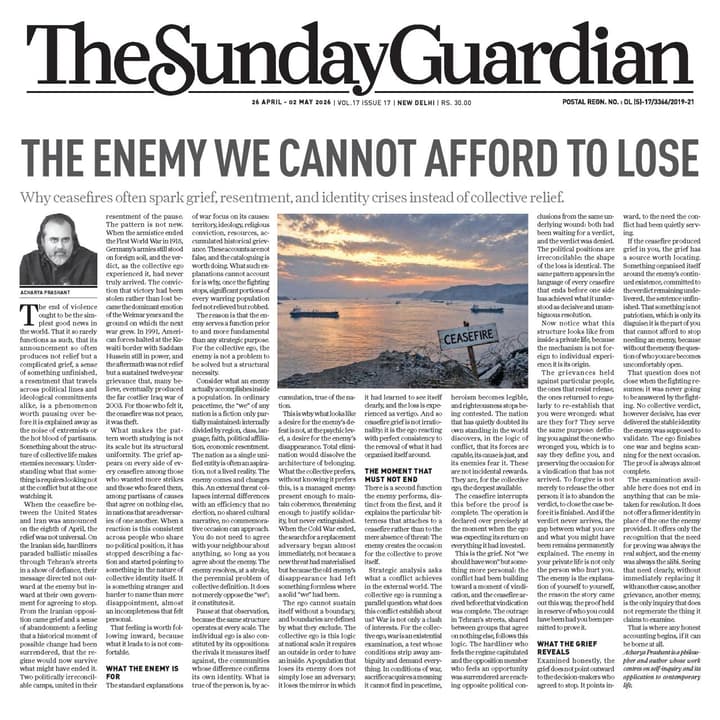
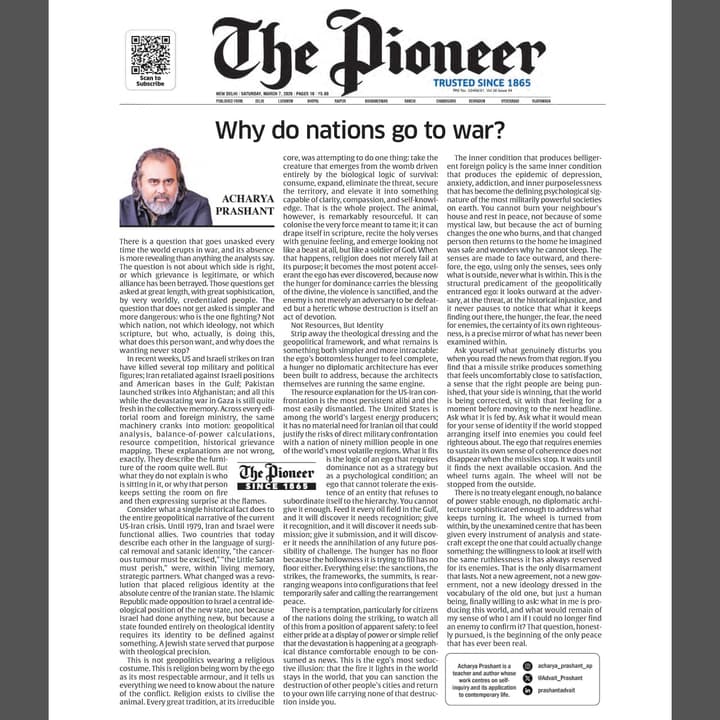
"The end of violence ought to be the simplest good news in the world. That it so rarely functions as such is a phenomenon worth pausing over. Something about the structure of collective life makes enemies necessary. Understanding what that something is, requires looking not at the conflict but at the one watching it."

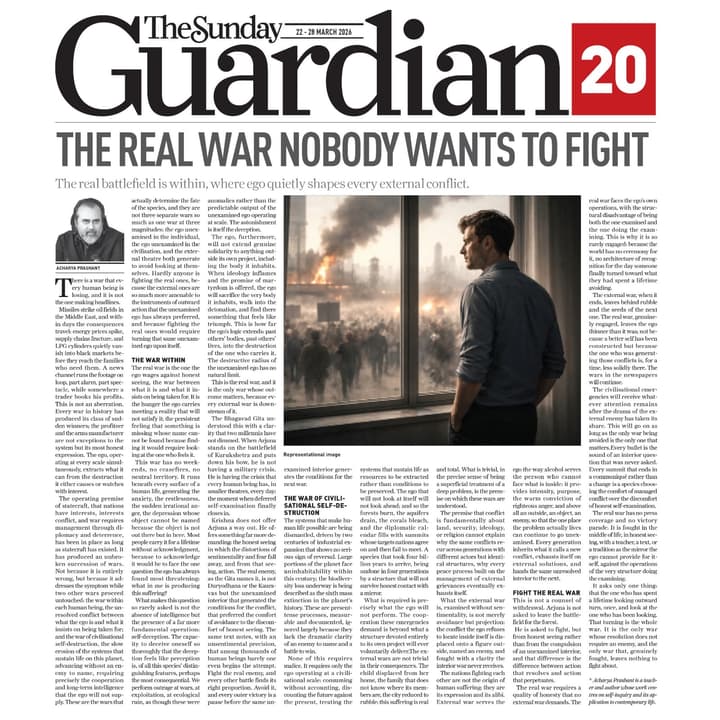
"The real war is the one the ego wages against honest seeing, the war between what it is and what it insists on being taken for. It is the hunger the ego carries meeting a reality that will not satisfy it; the persistent feeling that something is missing whose name cannot be found because finding it would require looking at the one who feels it."

"The inner condition that produces belligerent foreign policy is the same one that produces the epidemic of depression, anxiety, addiction, and inner purposelessness that's become the defining psychological signature of the most militarily powerful societies on earth. You cannot burn your neighbour’s house and rest in peace, not because of some mystical law, but because the act of burning changes the one who burns."

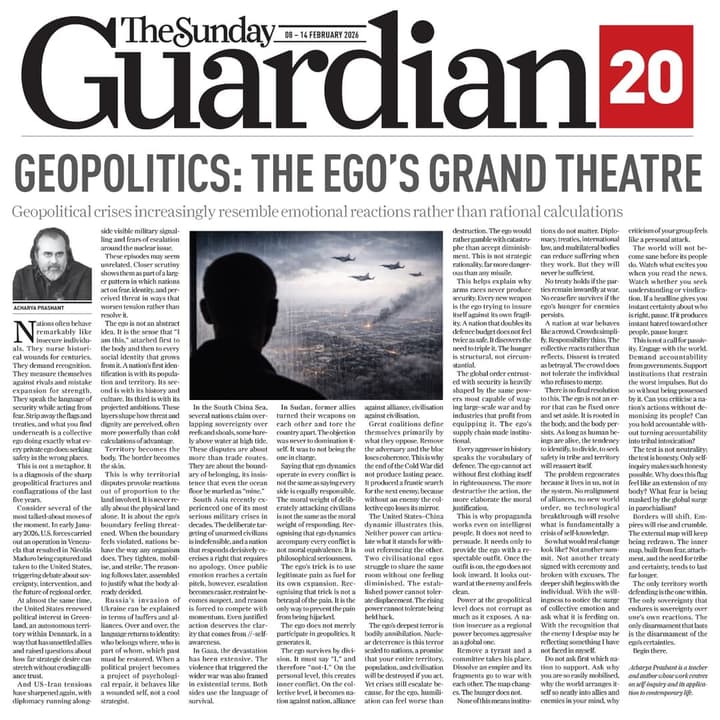
"Nations often behave remarkably like insecure individuals. They nurse historical wounds for centuries. They demand recognition. They measure themselves against rivals and mistake expansion for strength."

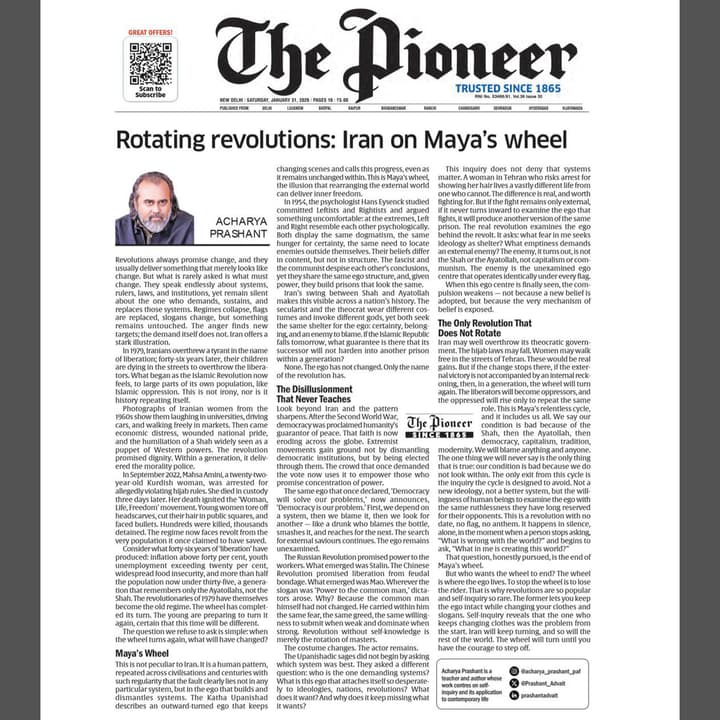
“Revolutions always promise change, and they usually deliver something that merely looks like change. Regimes collapse, flags are replaced, slogans change, but something remains untouched. The question we refuse to ask is simple: when the wheel turns again, what will have changed?”

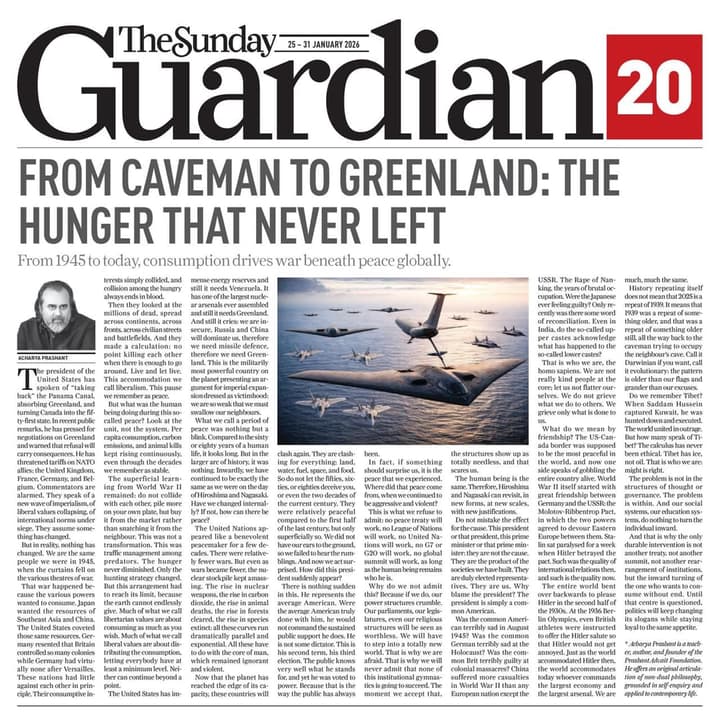
“But what was the human being doing during this so-called peace? Per capita consumption, carbon emissions, and animal kills kept rising continuously, even through the decades we remember as stable. The superficial learning from World War II remained: do not collide with each other, pile more on your own plate, but buy it from the market rather than snatching it from the neighbour. The hunger never diminished. Only the hunting strategy changed.”

"Violence never arrives announcing itself as violence. It arrives wrapped in reasons and slogans, in duty, in faith, in law, in nation, and demands that you honour it as necessary. It extracts your moral consent first, and only then does it spill blood."