Op-Eds & Columns
Acharya Prashant is a philosopher and author, an alumnus of IIT Delhi and IIM Ahmedabad. He is among the most widely read philosophical columnists writing in India today, with more than 190 published columns ranging across climate and consumption, elections and ideology, caste and religion, gender, education, geopolitics, technology, and the inner life.
What unifies this range is a single method: tracing every public crisis back to the unexamined self that produces it.
- TOTAL COLUMNS
- PUBLICATIONS









Featured Columns
Times Now28 Nov '26
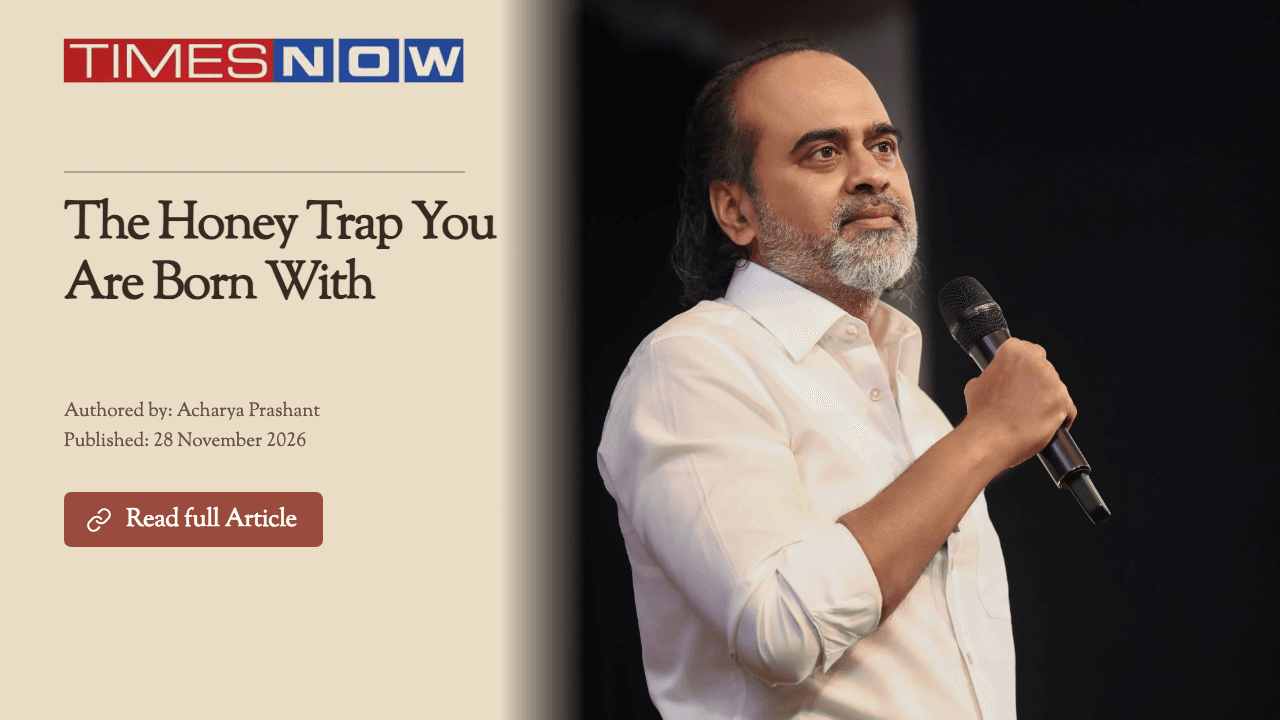
The Honey Trap You Are Born With
From ambition and power to sex and desire, a deeper exploration of the ego, why we chase external validation and why physical pleasures can never fulfil us.
The Pioneer28 Nov '26
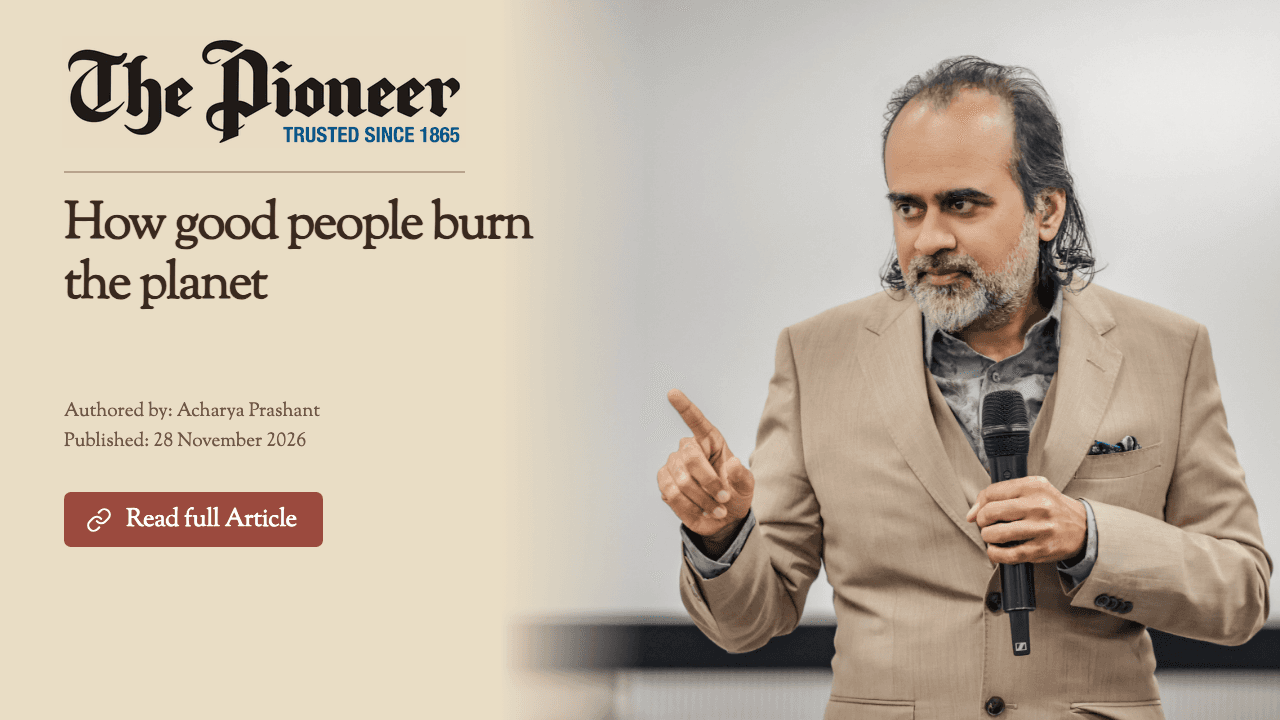
How good people burn the planet
Go to a wedding in a small Indian town, and you’ll often hear the generator before you hear the band. Somewhere behind the tent, near the cooks, an old diesel set chugs away all night so that the lights never dip and the music never stops.

Times Now22 Nov '26
The River I Worship, the River I Poison
Acharya Prashant examines Delhi's Yamuna pollution, questioning the contradiction between worshipping rivers and poisoning them through everyday choices, unchecked consumption and misplaced responsibility.
Times Now14 Nov '26
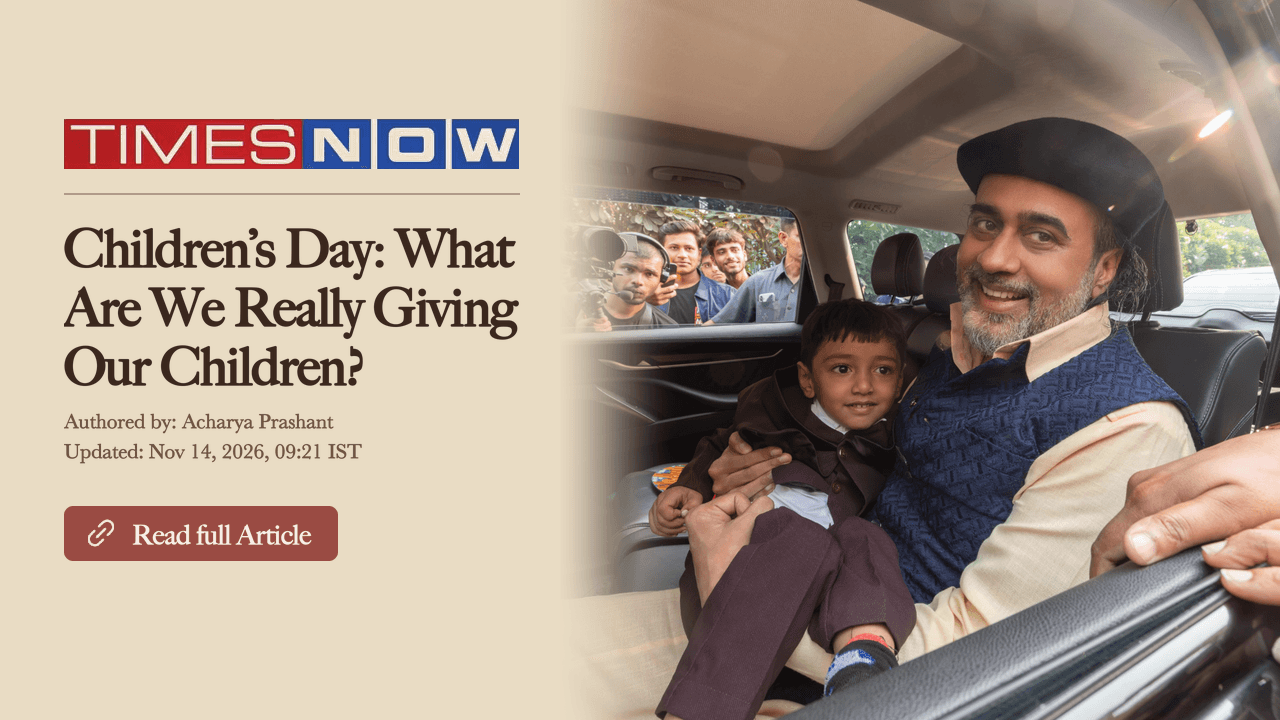
Children’s Day: What Are We Really Giving Our Children?
The article highlights the importance of fostering genuine understanding and freedom in children, rather than imposing expectations based on parental ego or societal norms.
The Pioneer07 Nov '26
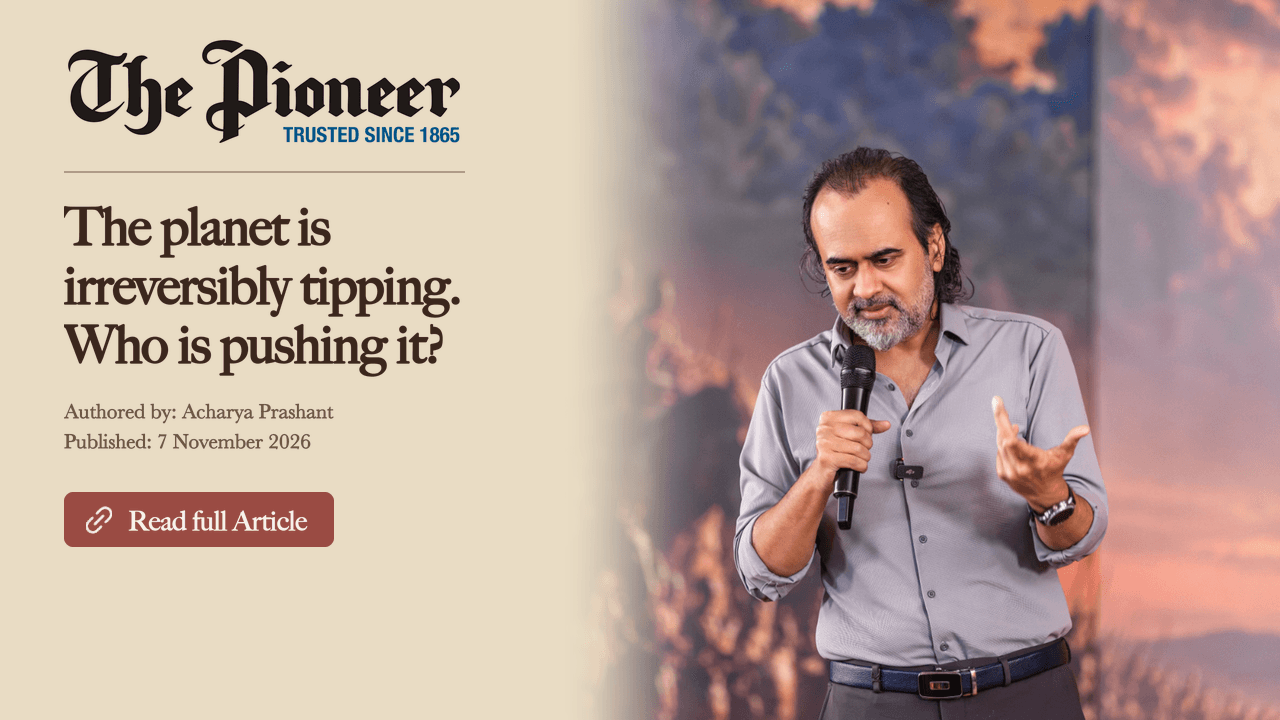
The planet is irreversibly tipping. Who is pushing it?
We have begun to speak of the future climate as though we could settle the bill later. We shall keep emitting greenhouse gases, warm the planet beyond the limit we have agreed upon and, when technology has improved, bring the temperature down again.
Times Now06 Nov '26
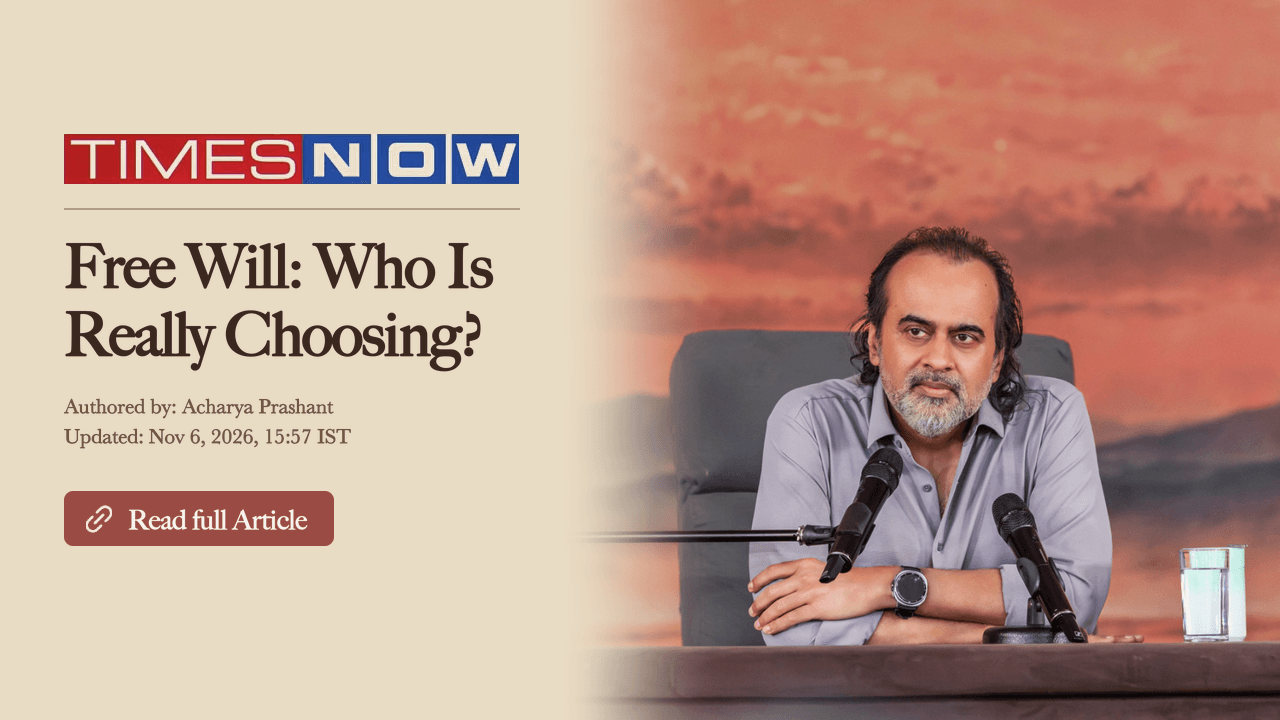
Free Will: Who Is Really Choosing?
"In 1983, neuroscientist Benjamin Libet published an experiment that put a very familiar human claim in some difficulty. Volunteers were asked to move a wrist whenever they wished and to report the moment at which they became conscious of wanting to move. In one set of trials, the brain activity associated with preparing the movement had begun about 350 milliseconds before the reported intention. So the brain was already preparing to act, and the person had not yet reported deciding."
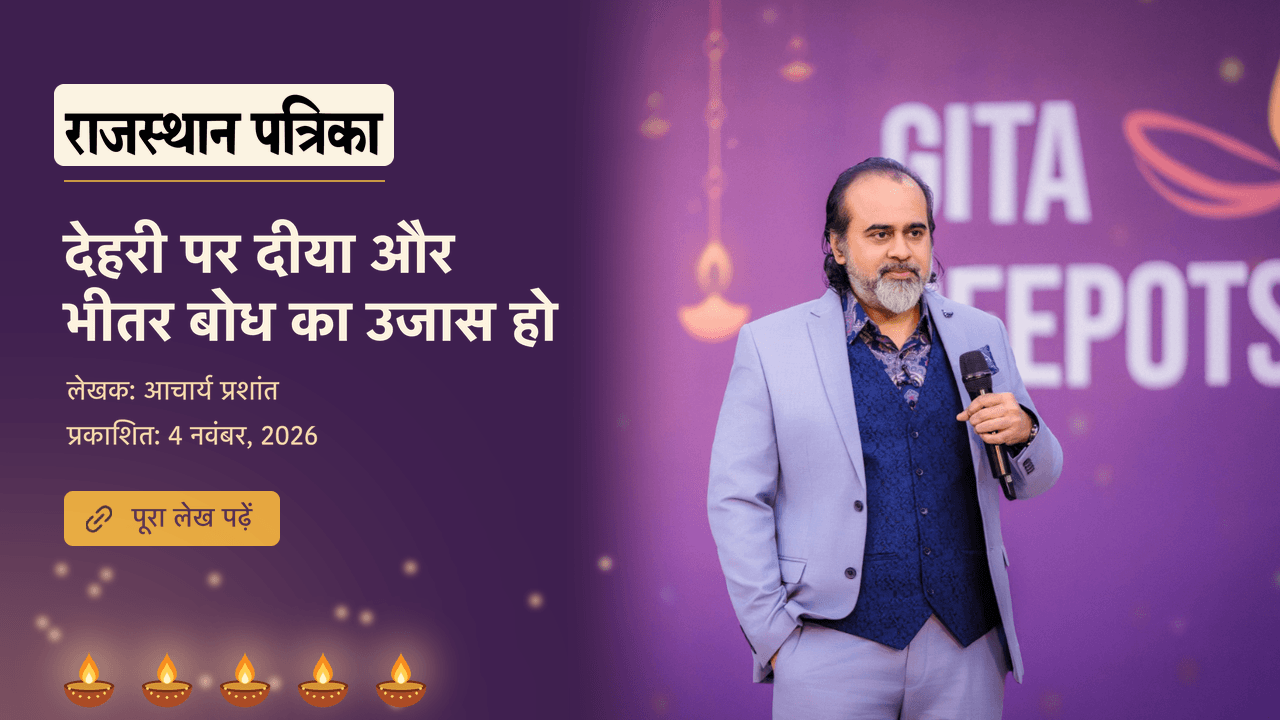
Patrika04 Nov '26
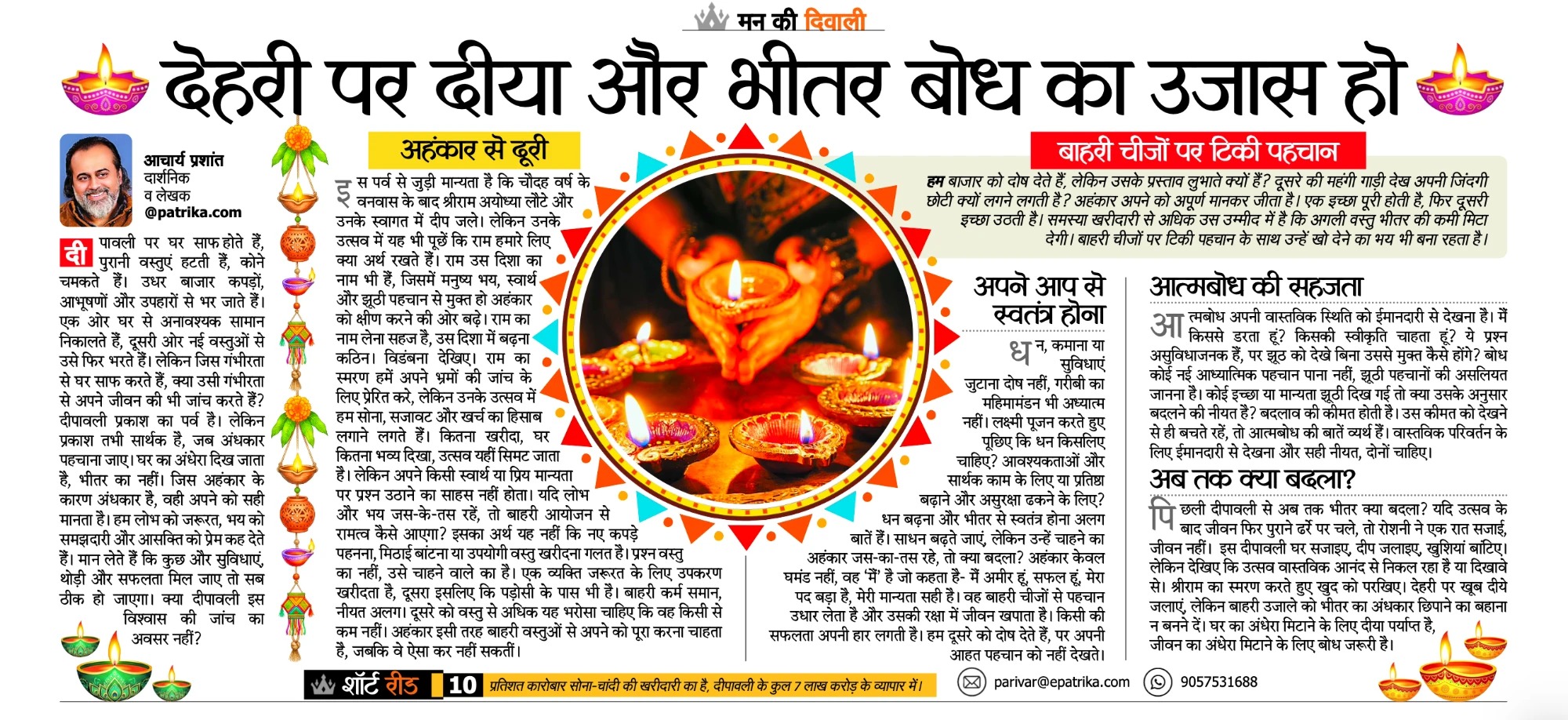
देहरी पर दीया और भीतर बोध का उजास हो
दीपावली पर घर साफ होते हैं, पुरानी वस्तुएं हटती हैं, कोने चमकते हैं। उधर बाजार कपड़ों, आभूषणों और उपहारों से भर जाते हैं। एक ओर घर से अनावश्यक सामान निकालते हैं, दूसरी ओर नई वस्तुओं से उसे फिर भरते हैं। लेकिन जिस गंभीरता से घर साफ करते हैं, क्या उसी गंभीरता से अपने जीवन की भी जांच करते हैं? दीपावली प्रकाश का पर्व है।
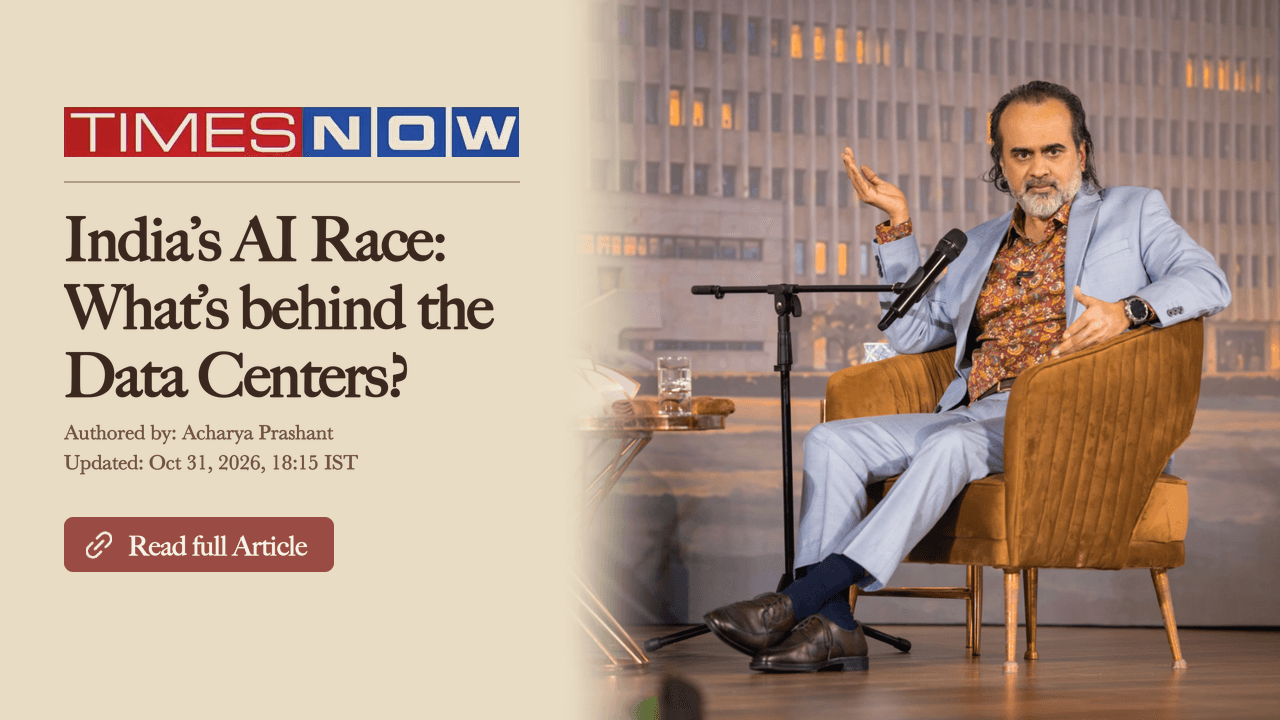
Times Now31 Oct '26
India's AI Race: What's behind the Data Centers?
India’s data-centre boom raises questions about environmental costs, public benefits and whether AI infrastructure is serving genuine human needs or amplifying endless consumption.
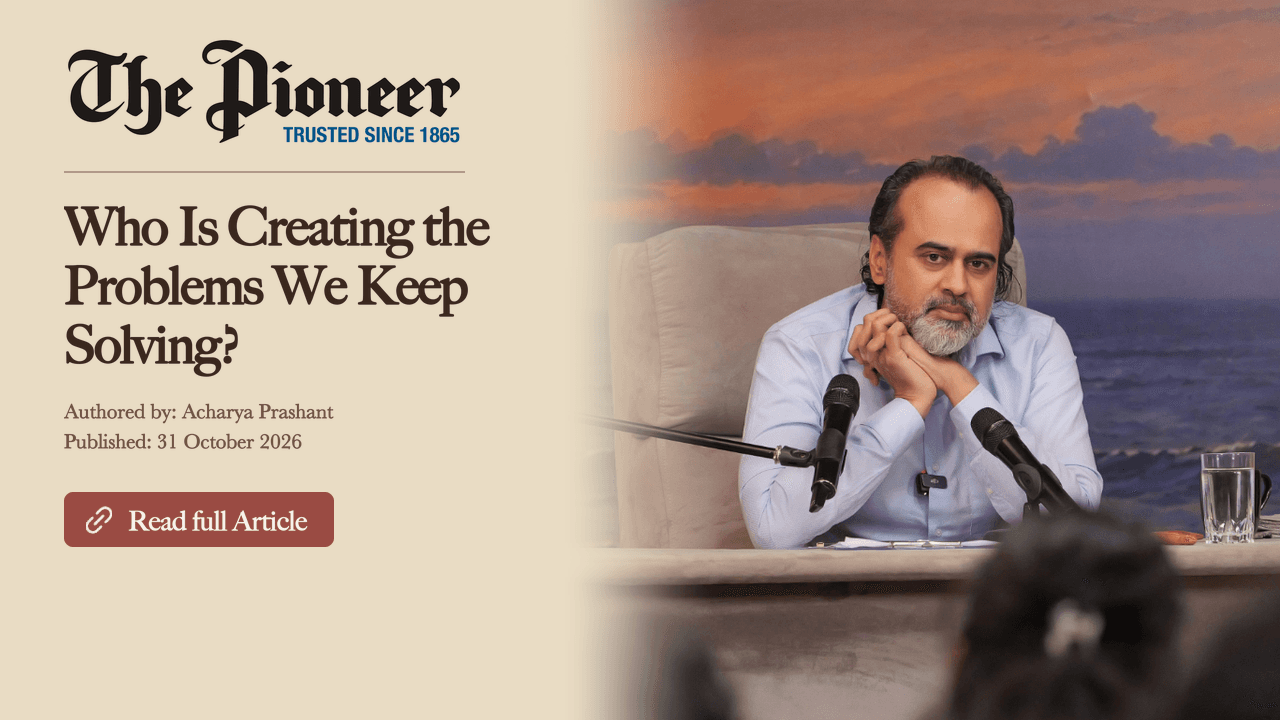
The Pioneer31 Oct '26
Who Is Creating the Problems We Keep Solving?
During London Climate Action Week earlier this year, I was asked where an ordinary individual should begin acting against climate change. The word ‘begin’ carried an assumption: we have been acting all along.
FOR COMMISSIONING EDITORS
Request Acharya Prashant to Write.
The publications that carry his columns offer their readers something rare: writing that treats the day's news as a doorway to something deeper.For a column, a feature, or syndication, editors are welcome to write to the editorial desk.
Email
Languages
EnglishHindi
Formats
WeeklyFortnightlyMonthlyFeatureLong-form Essay
Areas
Environment, Technology & the Future of CivilizationNation, Governance & Cultural IntrospectionGlobal Affairs, Geopolitics & Human NatureSociety, Culture & Contemporary Social IssuesMental Health, Psychology & Self-KnowledgePhilosophy, Ethics & Self-EnquiryFestivals, Symbolism & Inner Renewal
Full Index
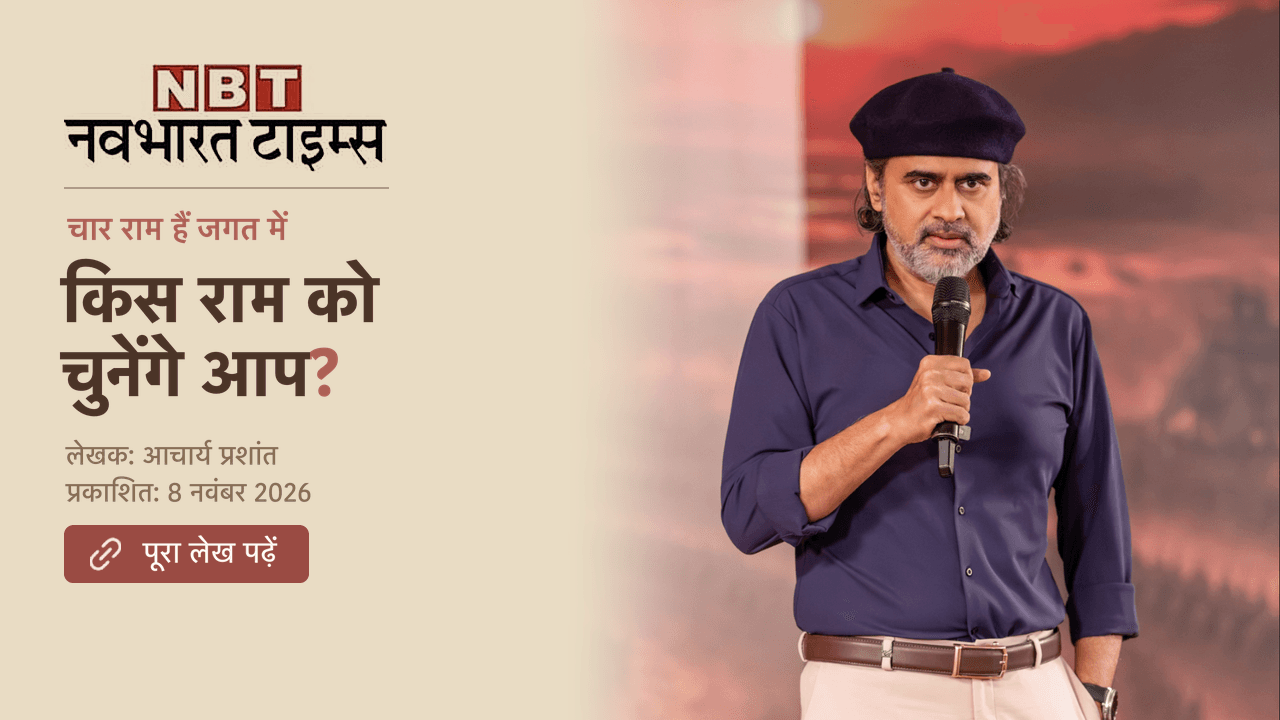
NBT Navbharat Times08 Nov '26
चार राम हैं जगत में, किस राम को चुनेंगे आप?
यह प्रश्न केवल ईश्वर के बारे में नहीं है। इससे कहीं ज़्यादा यह हमारे बारे में है। हम किसे राम कहते हैं, इससे पता चलता है कि हम स्वयं को क्या समझते हैं, किसमें सुरक्षा खोजते हैं और किसके लिए अपना जीवन लगा रहे हैं।
दीपावली पर घर साफ होते हैं, पुरानी वस्तुएं हटती हैं, कोने चमकते हैं। उधर बाजार कपड़ों, आभूषणों और उपहारों से भर जाते हैं। एक ओर घर से अनावश्यक सामान निकालते हैं, दूसरी ओर नई वस्तुओं से उसे फिर भरते हैं। लेकिन जिस गंभीरता से घर साफ करते हैं, क्या उसी गंभीरता से अपने जीवन की भी जांच करते हैं? दीपावली प्रकाश का पर्व है।
The Pioneer03 Oct '26
Fire Behind Folded Hands: The Gandhi India Never Understood
"If he is to be remembered, he should be remembered neither for truth nor for ahimsa but for his insistence, his aagrah. Learn aagrah from Gandhi, not ahimsa. Once something seemed right to him, it seemed right; whether it truly was right is a separate question, but having found it right, he stood on it. His name is usually linked to truth and non-violence, but the resolve made him unforgettable, and everyone dreaded that stubbornness."
Times Now02 Oct '26
Beyond the Garland: The Gandhi We Never Understood
"Out of the half-understanding, two Gandhis have grown. One is garlanded every October as a gentle saint who preached non-violence to the world. The other, in some town or other, has shoes and filth thrown at his statue, a villain whose every choice is called a betrayal. Between the garland and the stone, the man himself has gone missing."

NBT Navbharat Times20 Sep '26
विघ्नहर्ता के सामने खड़ा विघ्न: गणपति की कथाओं के संकेत
गणेश उत्सव की कथा का गहरा अर्थ: अहंकार, बोध, कामना और मुक्ति की यात्रा। जानें बाल गणेश, हाथी का सिर, मूषक और विसर्जन के पीछे छिपे वेदांतिक प्रतीकों को।
The Pioneer05 Sep '26
Janmashtami: The idol, the Gita, and the mirror
"Janmashtami carries two Krishnas. One is the fashioned Krishna: the butter-thief on his swing, dancing among the gopis, easy to remember because he asks nothing of you. The other is the Krishna of the Gita, dangerous, asking for everything. Janmashtami remembers the first and forgets the second. Why? Because remembering the second costs something, and the whole art of the ego is to avoid that cost."
NBT Navbharat Times04 Sep '26
जन्माष्टमी: मूर्ति, कहानी और गीता
एक कृष्ण वो हैं जिन्हें हमने गढ़ लिया है: माखन-चोर, झूले पर बैठे, गोपियों के बीच रास रचाते। इन्हें याद रखना आसान है, क्योंकि इनसे कोई माँग नहीं आती। दूसरी ओर वो कृष्ण हैं, जिन्हें आगे-पीछे से कोई लेना-देना नहीं। उनके जीवन में विरोधाभास-ही-विरोधाभास दिखेंगे, क्योंकि अद्वैत का अर्थ ही यही है कि उसमें सारे द्वैत समाये हुए हैं। कृष्ण की हमने जो अलौकिक छवि बना दी, उस छवि के कारण गीता हमसे छिन गई।
साकार कृष्ण ऐसे हैं- जैसे गीता की प्रति और निराकार कृष्ण जैसे गीता का ज्ञान। मूर्ति को अमूर्त तक पहुंचने का माध्यम होना था, पर हम माध्यम को ही मंजिल बना बैठे। कहानियों और कृष्ण को साथ-साथ नहीं चलाया जा सकता, क्योंकि कहानियां अहंकार से उठती हैं और कृष्ण का अर्थ है सत्य, आत्मा, बोध।
The Sunday Guardian21 Jun '26
The body bends, the year turns: What Yoga Day forgets to ask
"The case for treating yoga as primarily a physical correction was always weak. Arjuna stood on the battlefield of Kurukshetra as one of the most physically accomplished warriors of his age, trained since childhood in archery and combat, his body in no need of correction. Yet it was to him, not to some unfit or unwell bystander, that Krishna delivered eighteen chapters on yoga. Whatever yoga is, it was never primarily about the body, and a tradition that arrives there has mistaken the address for the resident."
Dainik Bhaskar02 Mar '26
होली का असली अर्थ: बाहर के रंग, भीतर का दहन
हर साल होली आती है, हर साल होलिका जलती है, और हर साल रंग-गुलाल उड़ता है, मित्र मिलते हैं, हर्ष होता है। यह सब ठीक है, यह सब होना चाहिए। पर इन सब के साथ में कुछ और भी होता है जो नहीं होना चाहिए।