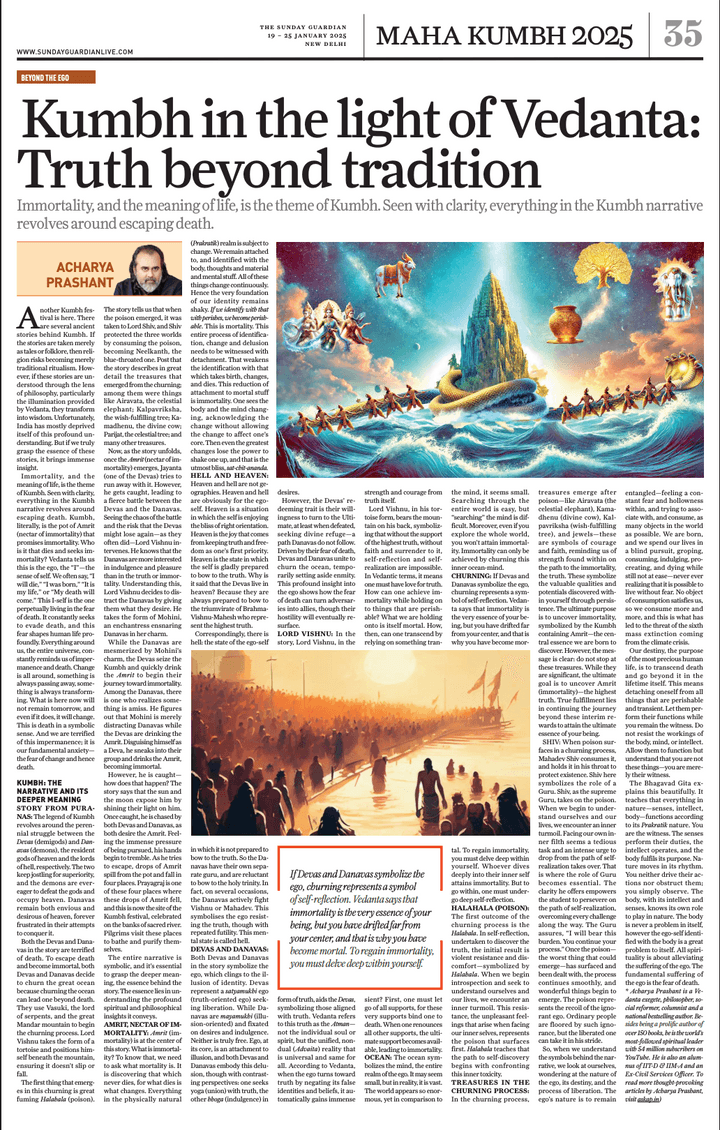
Acharya Prashant is a philosopher and author, an alumnus of IIT Delhi and IIM Ahmedabad. He is among the most widely read philosophical columnists writing in India today, with more than 190 published columns ranging across climate and consumption, elections and ideology, caste and religion, gender, education, geopolitics, technology, and the inner life.
What unifies this range is a single method: tracing every public crisis back to the unexamined self that produces it.
FOR COMMISSIONING EDITORS
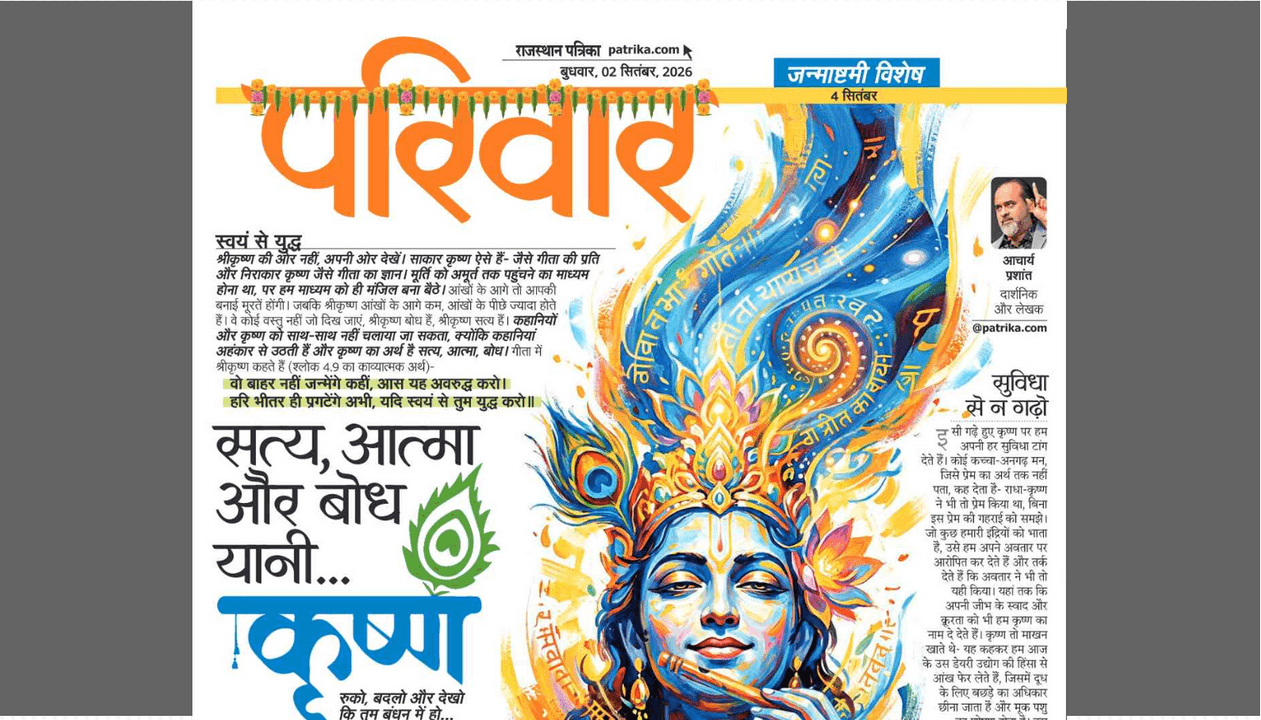
In this special Janmashtami feature published in Rajasthan Patrika, philosopher and author Acharya Prashant explains why the true Krishna is not an idol to be worshipped from a distance, but Truth, the Self, and Realization (Satya, Atma, Bodh) itself.

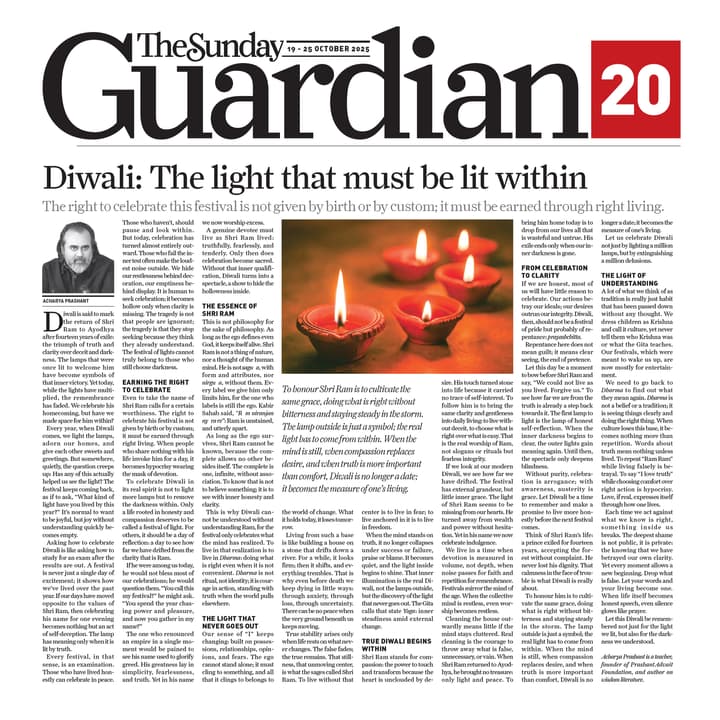
"To honour Shri Ram is to cultivate the same grace, doing what is right without bitterness and staying steady in the storm. The lamp outside is just a symbol; the real light has to come from within. When the mind is still, and when truth is more important than comfort, Diwali is no longer a date; it becomes the measure of one’s living."

Freedom is not a gift, but an achievement that each individual must earn. Political independence can be inherited, but mental freedom and freedom from the false self require constant effort.

Raksha Bandhan can be a reminder to collectively safeguard the Discretion and Compassion that give life its true meaning. Let this festival transcend the mere exchange of gifts and become an Intent—where we protect each other’s Sovereignty and the dissolution of the false.

Guru Purnima is not a celebration of any individual or tradition. It is a tribute to the one who gave us the vision to see, and left us when we learned to see. It is a tribute to the word that taught us to love the truth. The one who came close so that we could learn to walk alone without bowing.

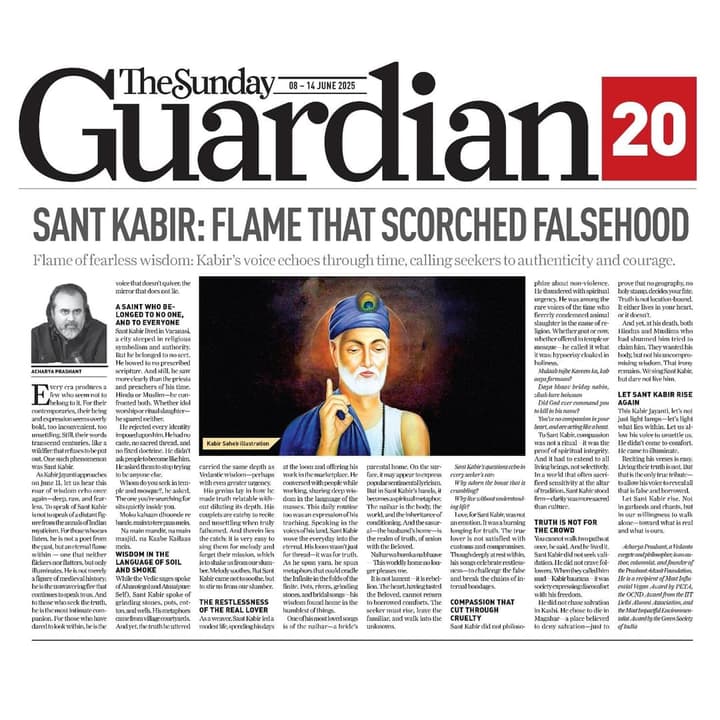
"Every era produces a few who seem not to belong to it. For their contemporaries, their being and expression seems overly bold, too inconvenient, too unsettling. Still, their words transcend centuries, like a wildfire that refuses to be put out."

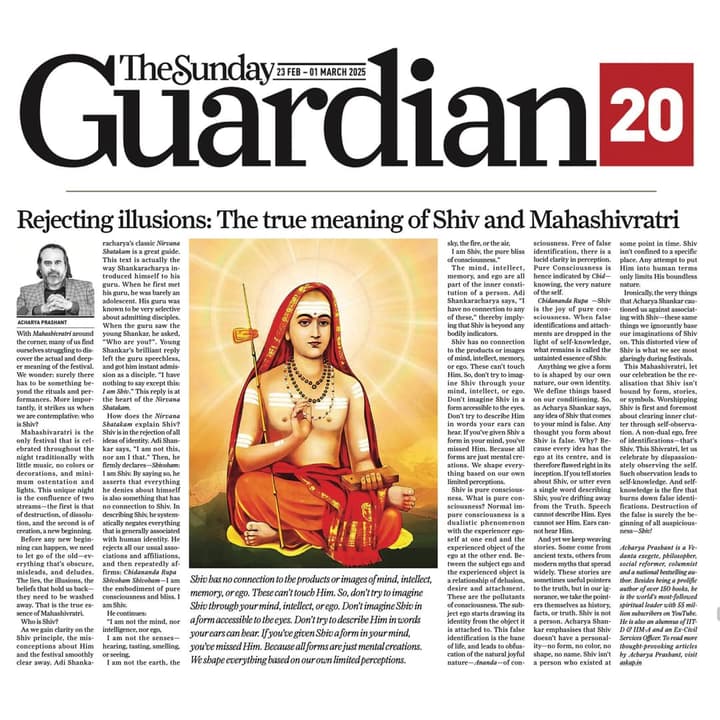
"With Mahashivratri around the corner, many of us find ourselves struggling to discover the actual and deeper meaning of the festival. We wonder: surely there has to be something beyond the rituals and performances. More importantly, it strikes us when we are contemplative: who is Shiv?"

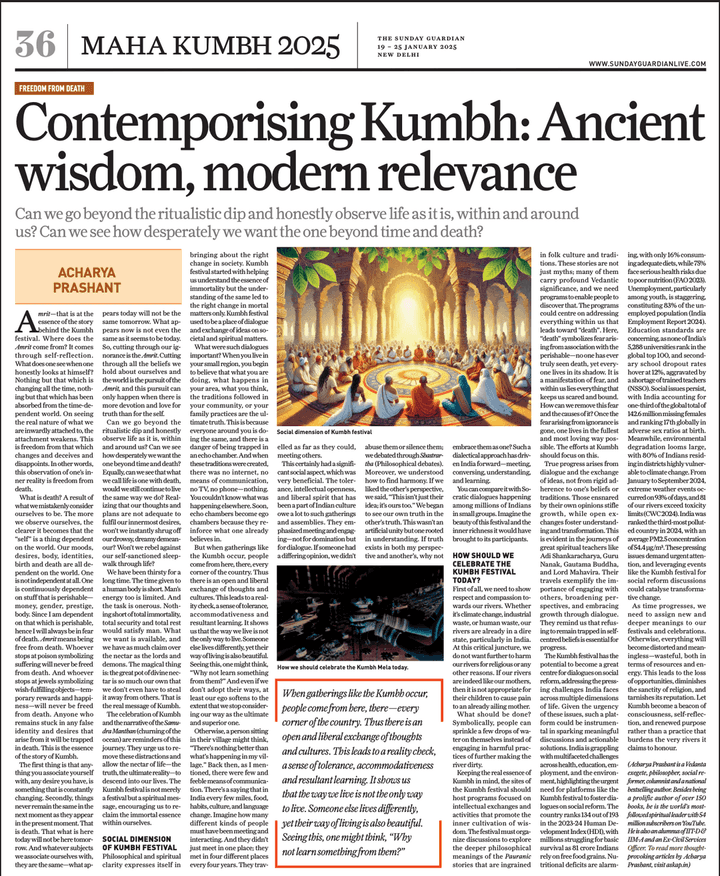
"Amrit—that is at the essence of the story behind the Kumbh festival. Where does the Amrit come from? It comes through self-reflection."

"Another Kumbh festival is here. There are several ancient stories behind Kumbh. If the stories are taken merely as tales or folklore, then religion risks becoming merely traditional ritualism."